February 6 in Art History
7 real events recorded on February 6, the earliest from 1755. 2 artists were born , 1 died on this date.
The day's biggest moments
Born on this day 2
- 1755 Born
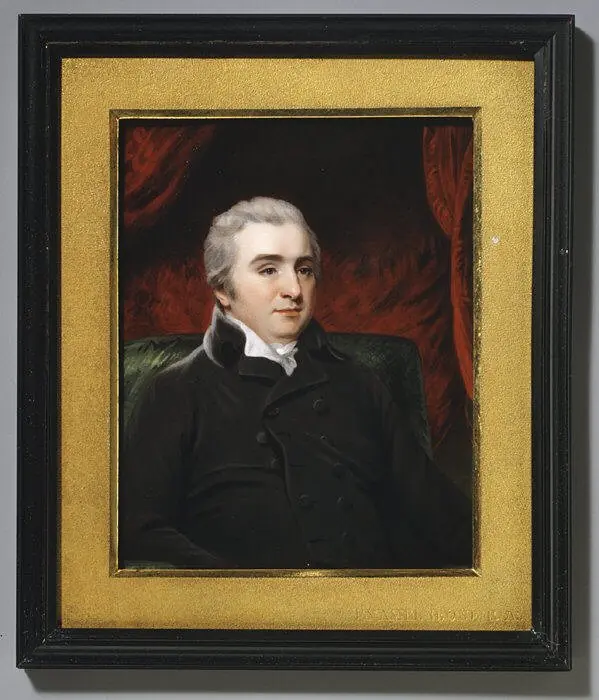
Born this day: Henry Bone
Henry Bone, born on February 6, 1755, was a British enamel painter known for his portrait miniatures, which earned him royal patronage during the reigns of three monarchs. He began his career painting porcelain and jewelry, later becoming a Royal Academician and creating the largest enamel paintings of his time.
Henry Bone's work remains significant in the history of British enamel painting, showcasing his technical skill and artistic innovation.
- 1843 Born
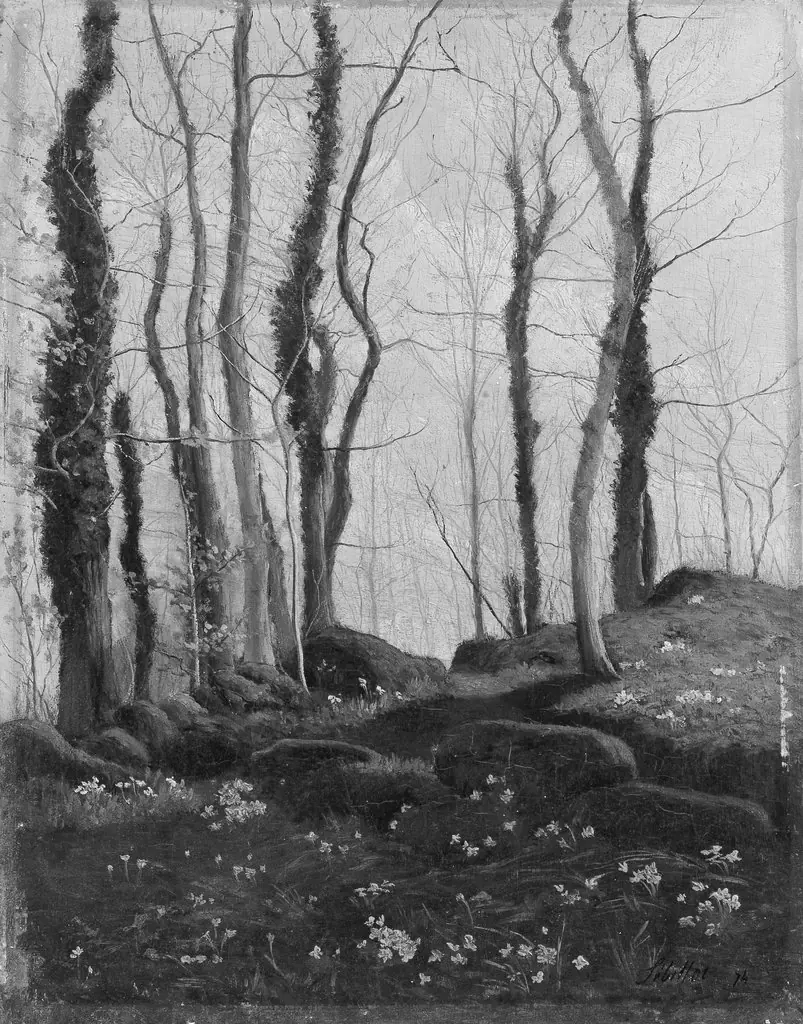
Born this day: Paul Sébillot
Paul Sébillot, a French folklorist, painter, and writer, was born on this day in 1843. His work often focused on his native Brittany, capturing its essence in pieces like 'Spring in Brittany'. Sébillot's diverse talents allowed him to express his love for the region through various mediums.
He remains a notable figure in French cultural heritage, particularly in the preservation and portrayal of Breton folklore and landscapes.
Died on this day 1
- 1891 Died
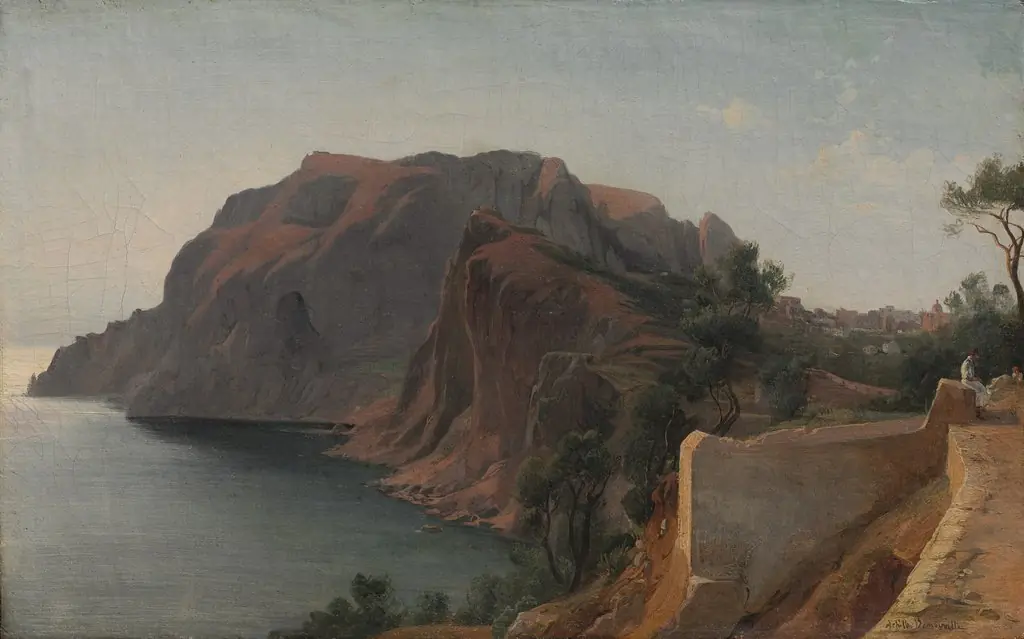
Died this day: Jean-Achille Benouville
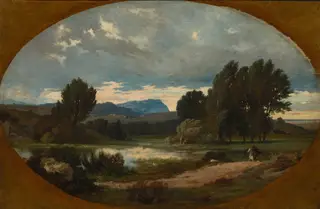
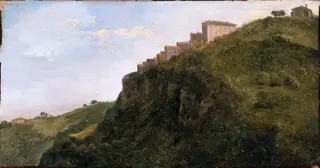
Jean-Achille Benouville, a French artist born in Paris in 1815, was known for his landscapes that often featured serene and idyllic scenes, as seen in works like 'Capri' and 'Italian Hill Town'. His art continues to evoke a sense of tranquility and connection to nature.
Benouville's landscapes remain a testament to his skill in capturing the beauty of the natural world.
Exhibitions & salons 3
- 1940 Exhibition
SFMOMA Opens Twentieth Century German Art (Banned)
On February 6, 1940, the San Francisco Museum of Art opened Twentieth Century German Art (Banned), an exhibition explicitly framed around modern art suppressed by Nazi cultural policy. The date and venue are recorded in Wikidata from SFMOMA's historical exhibition list, while contextual sources on Degenerate art document the Nazi campaign against modernism: artists associated with Expressionism, Cubism, Dada, Surrealism and other modern movements were removed from museums, banned from exhibiting, and publicly mocked in the 1937 Entartete Kunst exhibition. By presenting banned German modern art in an American museum shortly before the United States entered World War II, the San Francisco show translated European cultural repression into a public art-historical argument about modernism, freedom, and political censorship.
The exhibition helped position modern art as a cultural casualty of fascism and a cause for American museum advocacy.
- 1989 Exhibition Landmark
MoMA Opens Andy Warhol: A Retrospective
On February 6, 1989, the Museum of Modern Art opened Andy Warhol: A Retrospective, recorded in Wikidata as a MoMA exhibition running through May 2. The show arrived less than two years after Warhol's death and treated his paintings, films, photographs, publishing projects, and celebrity images as the work of a central postwar artist rather than merely a Pop-cultural phenomenon. Supporting sources on Warhol describe his role in Pop art, his use of mechanical reproduction, and his sustained attention to advertising, mass media, consumerism, and fame. The retrospective was therefore a canonizing museum event: it helped consolidate Warhol's reputation inside the modern-art museum at the same time that his market, foundation, and posthumous critical reception were rapidly expanding.
The retrospective reinforced Warhol's status as a defining artist of late twentieth-century visual culture.
- 2013 Exhibition
National Gallery Opens Through American Eyes
On February 6, 2013, the National Gallery in London opened Through American Eyes: Frederic Church and the Landscape Oil Sketch, a free exhibition in Room 1 devoted to Frederic Edwin Church's landscape oil sketches. The National Gallery page records the exact run, 6 February to 28 April 2013, and describes Church as a leading Hudson River School painter who used oil sketches at home and during travels to Niagara Falls, Labrador, Jamaica, Mexico, and the Middle East. The show mattered because it foregrounded a working format often treated as preparatory: the oil sketch. By presenting Church's sketches as fresh, original works worthy of study, the exhibition connected nineteenth-century American landscape practice with broader museum interest in process, travel, and the status of studies as artworks.
The exhibition strengthened public attention to Church's oil sketches as independent objects of aesthetic and scholarly value.
Openings & foundings 1
- 2010 Opening
Museo Nicolaiano Opens in Bari
On February 6, 2010, the Museo Nicolaiano opened in Bari, according to the Basilica di San Nicola's own museum page and matching Wikidata data. The museum was created to gather and interpret historic and artistic treasures connected with the Basilica of San Nicola, including material from the basilica archive and treasury: epigraphs, parchments, illuminated codices, enamels, coats of arms, reliquaries, chalices, silver objects, paintings, and sacred vestments. The Italian Wikipedia page adds that the museum transferred the treasury and selected artworks into thirteenth-century rooms behind the basilica, addressing conservation, security, and access problems that had limited earlier display. Although specialized, the opening is an art-history event because it made a medieval and early-modern ecclesiastical collection newly available as a structured museum installation.
The opening transformed a basilica treasury into a public museum route for Bari's religious and artistic heritage.