Artwork
Bacchus and Ariadne
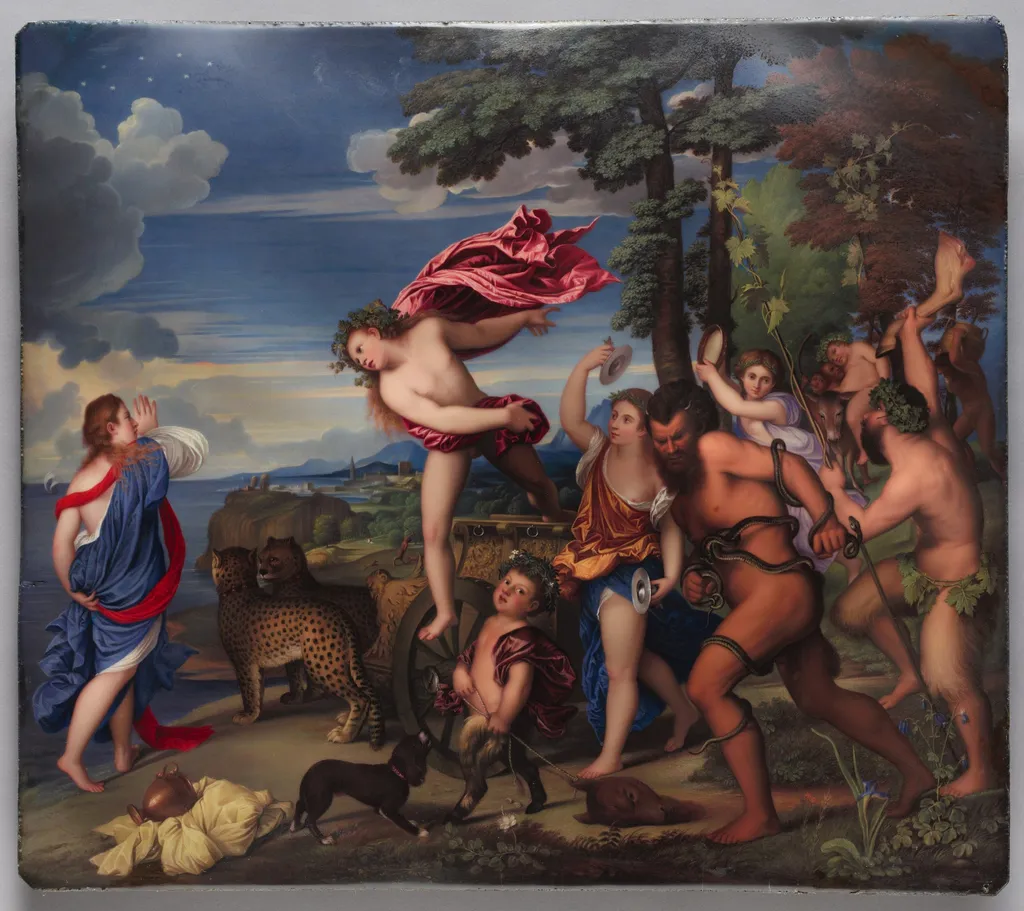
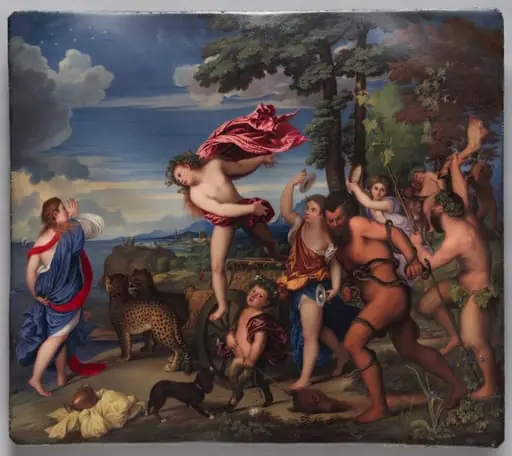
Bacchus and Ariadne is a paint painting by the Neoclassicist artist Henry Bone. It dates from 1809 and is held in the collection of the Cleveland Museum of Art.
About this work
Henry Bone spent three years reproducing Titian's Bacchus and Ariadne as an enamel on copper, each layer of color fired separately in the kiln, making it the largest such enamel ever attempted. When the Prince of Wales declined to buy it in 1811, Bone sold tickets to view it in his studio. It is now in the Cleveland Museum of Art.
Overview
Completed in 1811, the work translates the Venetian master's early sixteenth-century mythological canvas into a challenging medium.
Henry Bone, a prominent British enamel painter of the Regency period, dedicated three years to crafting this large-scale enamel on copper, a faithful reproduction of Titian's Bacchus and Ariadne. Completed in 1811, the work translates the Venetian master's early sixteenth-century mythological canvas into a challenging medium. Its creation marked a significant technical achievement, becoming the largest enamel of its kind at the time and reflecting the era's appreciation for skilled artistic replication.
Technique & Style
Bone's ambitious project involved transferring Titian's oil painting onto copper using the demanding enamel technique. This intricate process required fusing layers of painted glass to the metal surface, with each application of color necessitating precise temperature control during kiln firing. The resulting artwork, measuring 40.5 by 46 centimeters, represented an unprecedented scale for an enamel on copper, showcasing Bone's mastery and the technical limits of the medium during his time.
History & Provenance
Begun in 1808, this enamel was completed in March 1811. Bone initially intended to exhibit it at the Royal Academy, but a private viewing request from the Prince of Wales postponed its public debut. After the prince decided against purchasing it, Bone opened his London studio, distributing over 4,000 tickets for public viewing.
The work, presented in its original carved and gilded frame, was acquired by the Cleveland Museum of Art in 2013, where it now serves as a key piece in their nineteenth-century British art collection.
Context
This reproduction exemplifies the cultural value placed on highly skilled copies of revered Old Master paintings during the Regency era. Titian's original canvas, recently arrived in England from Rome, provided a prestigious subject for Bone, who was recognized as the foremost enamel painter of his generation. The work's monumental scale for its medium, coupled with its elaborate frame and the initial royal interest, underscored its perceived significance and artistic merit within contemporary British art circles.
Own this work as a print
Artist & collection

Artist
Henry Bone (6 February 1755 – 17 December 1834) was an English enamel painter. By c. 1800 he had attracted royal patronage for his portrait miniatures This patronage continued throughout the reigns of three monarchs;…