Subject
Mughal
Key artists
Overview
The Mughal Empire, reigning over the Indian subcontinent from 1526 to 1858, represents one of the most artistically prolific and politically powerful dynasties in global history. Founded by the Central Asian prince Babur, a descendant of both Timur and Genghis Khan, the empire derived its name from the Persian word for Mongol. At its territorial zenith, Mughal rule extended across nearly all of modern India, Pakistan, Bangladesh, and Afghanistan, governing an estimated 150 million people. The dynasty synthesized Persian, Indian, and Islamic cultural traditions, establishing an absolute monarchy sustained by a sophisticated bureaucracy. The tastes and patronage of the first six rulers, known as the Great Mughals, defined an era of extraordinary artistic production, from monumental architecture to intricate miniature paintings, establishing a visual culture that projected imperial wealth, cosmopolitan worldliness, and political authority.
Iconography & meaning
Mughal art utilized specific iconography to project imperial divinity, political legitimacy, and cultural authority. The Jharokha Darshan, or public display of the emperor from a balcony or window, became a daily ceremonial under Akbar, Jahangir, and Shah Jahan, visually reinforcing the ruler's quasi-divine status before being halted by Aurangzeb as un-Islamic. Portraits increasingly featured large halos around the emperors, symbolizing their aspiration to be seen as the representatives of Allah on earth. Equestrian portraits, heavily borrowed from Western art, emphasized martial power, while formal durbar scenes and hunting expeditions communicated sovereign control. Naturalistic studies of flora and fauna, highly prized by Jahangir and Shah Jahan, signified the emperor's dominion over the natural world and his refined connoisseurship. Architectural projects incorporated botanical imagery, such as the recognizable flowers and leaves carved into the Taj Mahal, while calligraphic inscriptions from the Quran on marble panels and architectural fragments underscored the Islamic foundations of the state.
In the collection
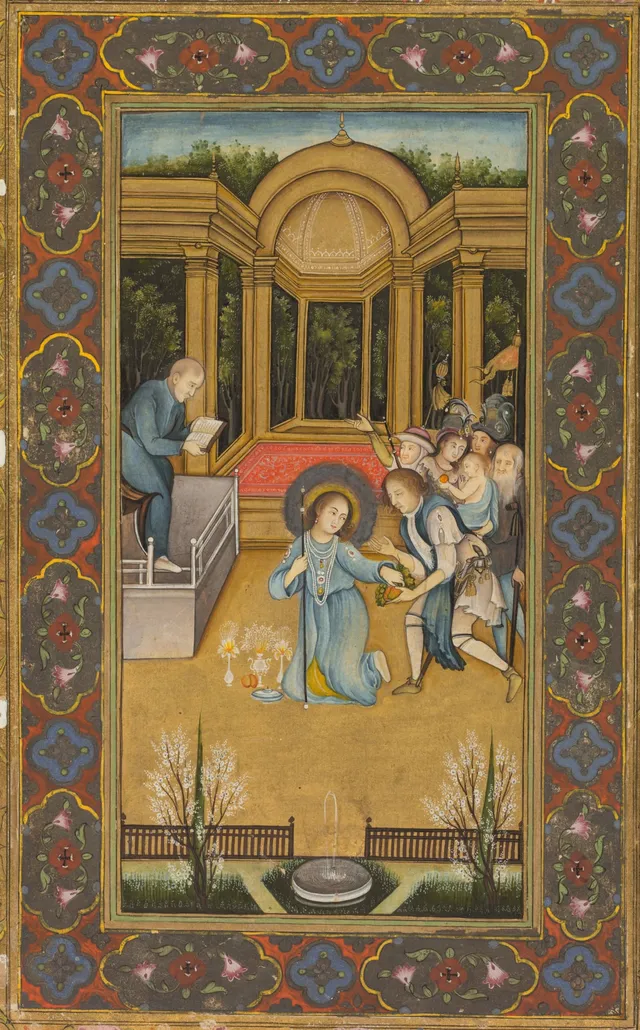
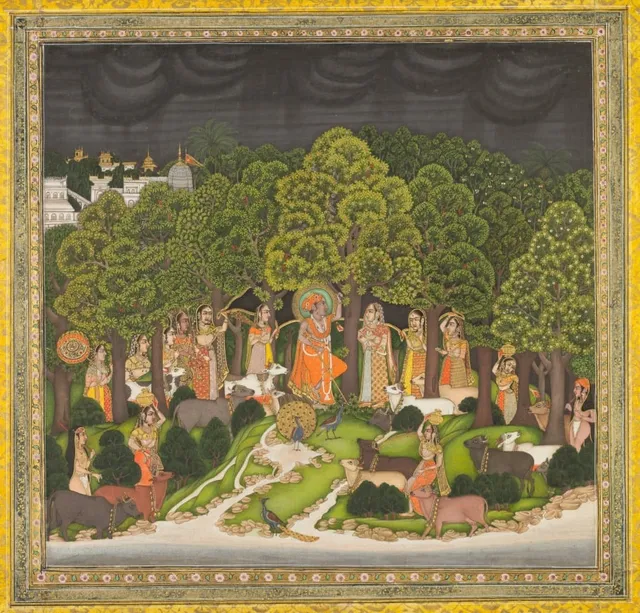
Within museum collections, the Mughal subject is depicted across a diverse array of 59 works, predominantly focusing on miniature paintings that capture the breadth of courtly and daily life. These works include religious and literary illustrations, such as scenes from the Razmnama, the Persian translation of the Hindu epic Mahabharata, and Christian themes like Jesus among the doctors in the Temple. Secular and romantic subjects feature prominently, seen in depictions of Radha and Krishna meeting in a forest during a storm, a blindfolded suitor brought before a princess, and women bathing before an architectural panorama. Courtly leisure is represented through images of a princess smoking a hookah, a court lady singing and playing the vina, and women enjoying a river at the forest's edge. Decorative arts also feature heavily, with collections housing intricately patterned textiles, metalwork, ceramics, and weapons such as Damascus steel swords and jeweled daggers, alongside coins and seals that document the empire's administrative history.
Across movements & periods
Mughal artistic treatment evolved significantly across imperial reigns. Under Akbar, the imperial workshops combined Persian, Indian, and European traditions, producing large scale, collaborative manuscript illustrations like the Hamzanama on cotton. Jahangir shifted towards single artist authorship, favoring realistic portraiture, Europeanized subjects, and meticulous botanical and animal studies. Shah Jahan prioritized formal portraiture, courtly scenes, and monumental architecture characterized by white marble inlay, moving away from the personal subject matter of his predecessor. Aurangzeb's orthodox beliefs led to a severe decline in imperial patronage, culminating in his 1680 ban on music and painting. This forced displaced Mughal artists to seek employment at regional courts, transforming painting at Hindu Rajasthani centers like Bikaner, Bundi, and Kota, as well as provincial Muslim courts like Lucknow and Murshidabad. These later regional styles, often termed post-Mughal or provincial Mughal, grew bolder but less refined. By the post-1760s British East India Company period, Mughal artistic production had fragmented, though architectural patronage persisted regionally, as seen in the founding of Jaipur and the construction of Safdarjang's tomb in Delhi.
Notable depictions
Among the most canonical depictions of the Mughal era are the surviving folios of the Hamzanama, created between approximately 1562 and 1577 under Akbar. Originally comprising 12 or 14 volumes with 100 paintings each, fewer than 200 survive, with the largest group of 60 in the Museum für angewandte Kunst in Vienna and 28 complete folios in the Victoria and Albert Museum. Under Jahangir, masters like Bishan Das, Manohar, Abu'l-Hasan, Govardhan, and Daulat emerged as recognizable artistic personalities, producing lavishly finished albums and portraits such as A Prince, Perhaps Parviz, with a Female Companion and Attendants. The major painting commission of Shah Jahan's reign was the Padshahnama, an illustrated official history completed through the 1640s. Architectural masterpieces also served as monumental depictions of Mughal grandeur, most notably the Taj Mahal, built between 1631 and 1647, and the vast Agra Fort, constructed in 1565, which housed the Diwan-e-Aam where the emperor addressed the public.
Legacy
The artistic and cultural legacy of the Mughal Empire endured long after the dynasty's political collapse. Although the 1739 raid of Delhi by Nadir Shah permanently dispersed the imperial artistic community, Mughal aesthetic conventions were absorbed by regional courts across India, fundamentally shaping the trajectory of Rajput and provincial Islamic art. The Mughal administrative and legal systems also formed the basis of early British law and governance in India. Modern institutions continue to preserve and interpret this legacy. The Agra Fort Museum, managed by the Archaeological Survey of India, showcases Mughal weapons, coins, and paintings within the historic Diwan-e-Aam. The newly opened Humayun Museum in Delhi, a collaboration between the Archaeological Survey of India, the National Museum, and the Aga Khan Trust for Culture, exhibits 700 artifacts, including Emperor Akbar's silver rupee inscribed with Ram, the marble throne of the last emperor Bahadur Shah Zafar, and the original 18-foot golden finial from Humayun's Tomb. International exhibitions, such as those organized by the Victoria and Albert Museum and the Virginia Museum of Fine Arts, continue to highlight the dynasty's synthesis of Indian and Iranian cultures and its global artistic exchanges.
Works
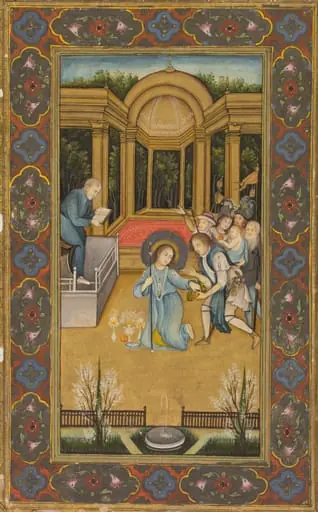 Jesus among the doctors in the Temple
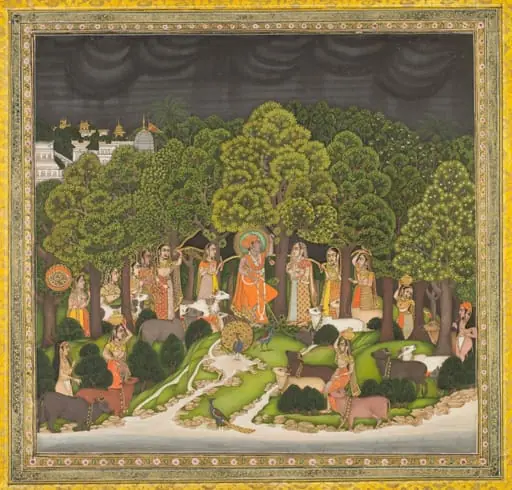 Radha and Krishna meet in the forest during a storm
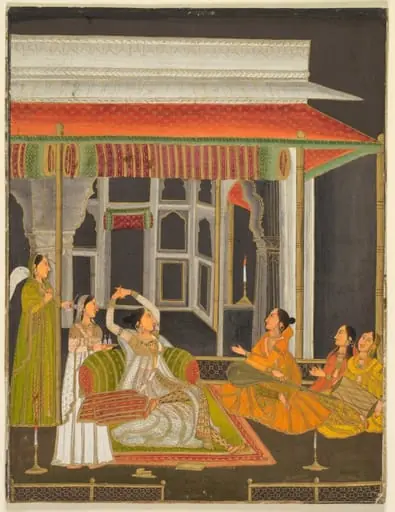 A Princess on a Terrace with Attendants at Night (recto)
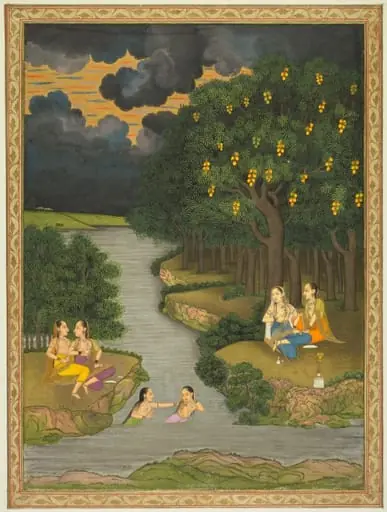 Women Enjoying the River at the Forest’s Edge (recto)
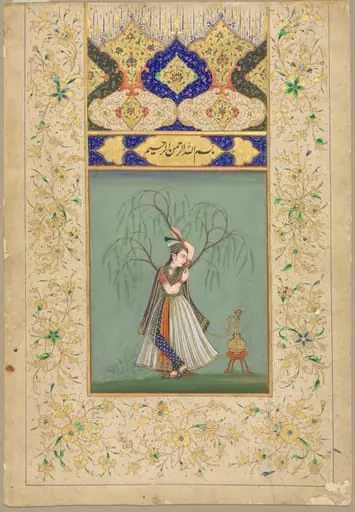 Princess Smoking a Hookah (as Salabhanjika)
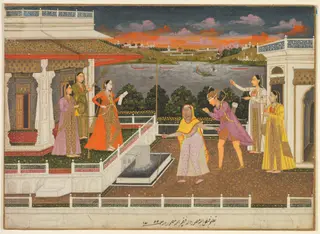 A blindfolded suitor is brought before a princess; verso: scrolling floral vines
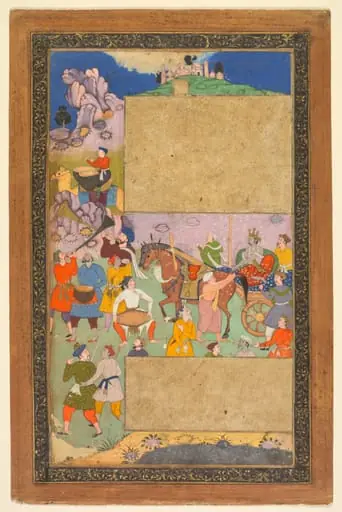 A charioteer riding through a rocky landscape with an entourage of footmen and musicians, page from a Razm-nama (Book of Wars) adapted from the Sanskrit Mahabharata and translated into Persian by Mir Ghiyath al-Din Ali Qazvini, known as Naqib Khan (Persian, d. 1614)
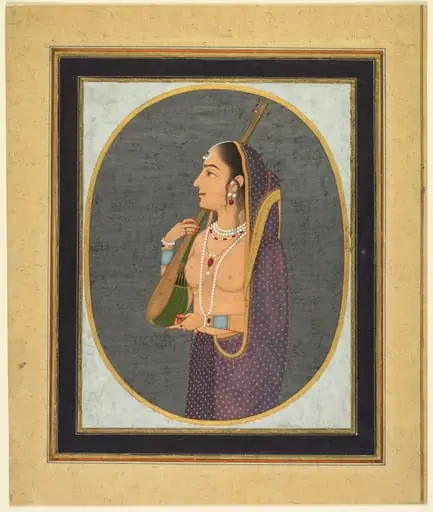 Court lady singing and playing the vina (recto)
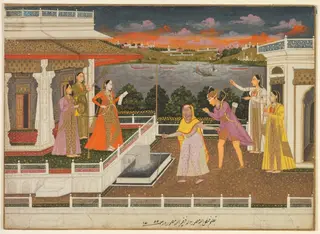 A blindfolded suitor is brought before a princess (recto)
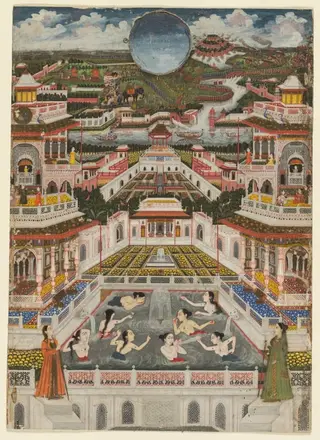 Women bathing before an architectural panorama
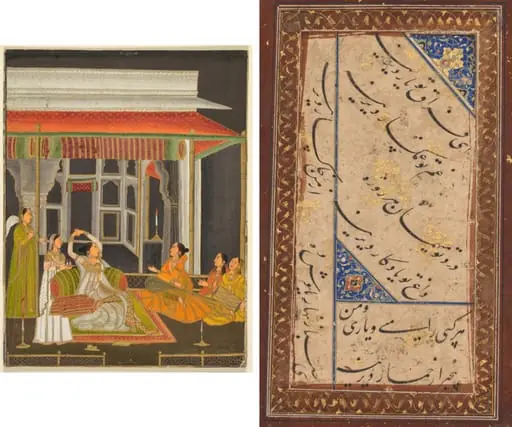 A princess on a terrace with attendants at night (recto); Calligraphy (verso)
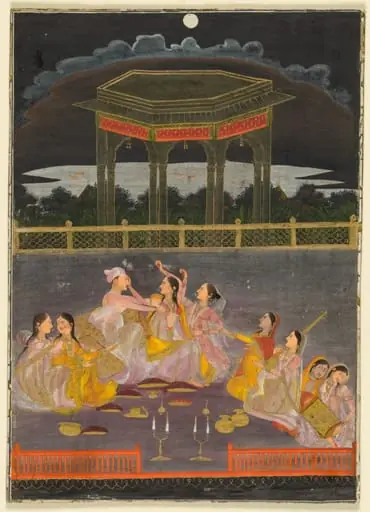 A prince celebrating Holi with palace women on a terrace at night (recto); calligraphy of a quatrain (verso)
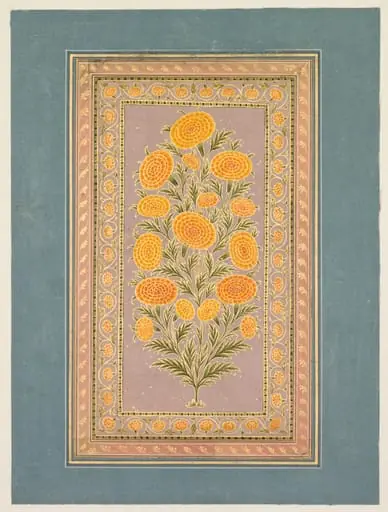 Flowering Marigold (verso)
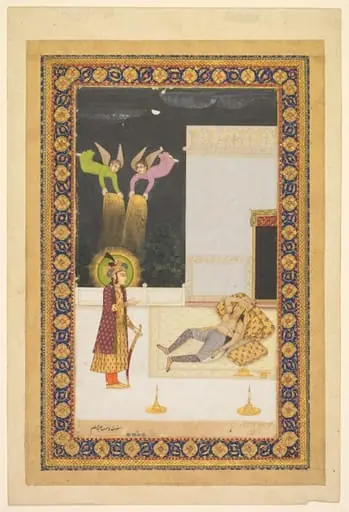 The Dream of Zuleykha
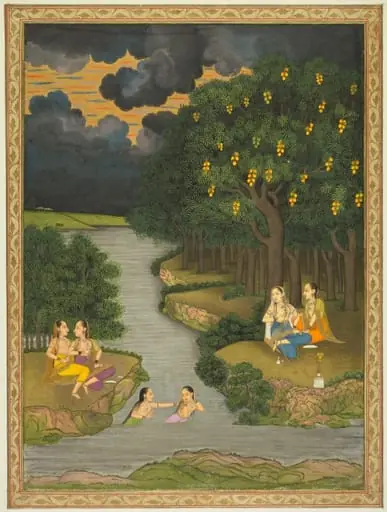 Women enjoying the river at the forest’s edge (recto) and flowering marigold (verso)
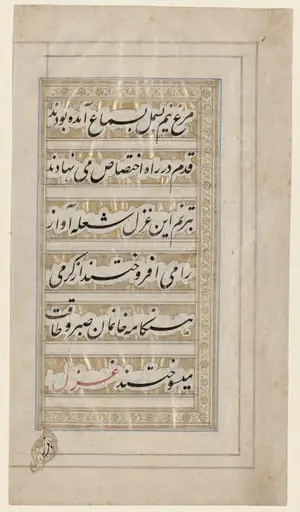 Page from the Poem of Beauty and Love
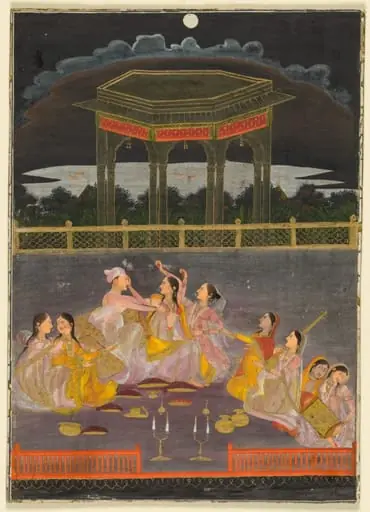 A prince celebrating Holi with palace women on a terrace at night (recto)
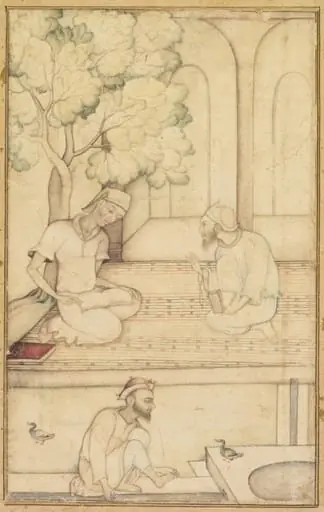 Kabir and Two Followers on a Terrace (recto)
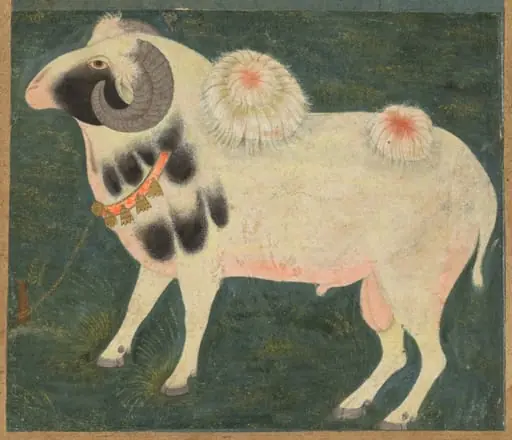 A royal ram with a gold chain
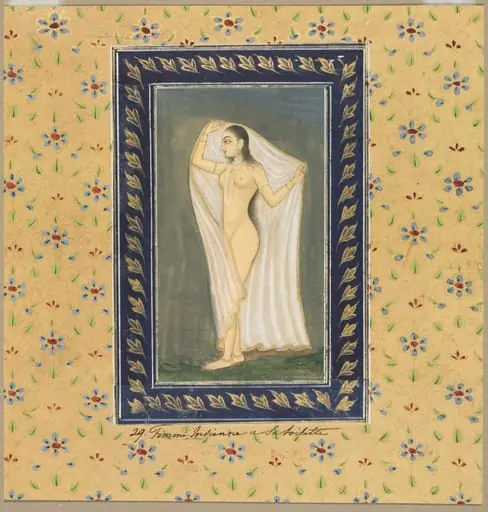 Lady after a Bath
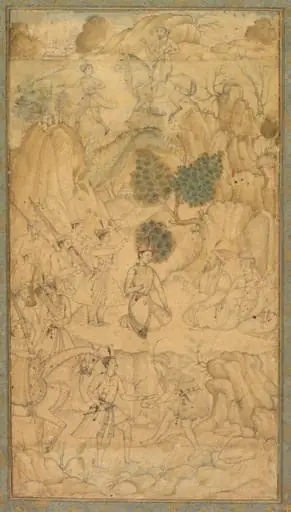 A Prince Visiting a Holy Man in a Rocky Landscape (recto)
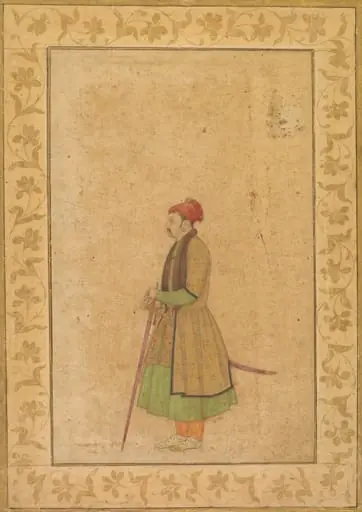 Portrait of Raja Ram Singh of Amber (r. 1667-1688) with a Deccan Sword (recto)
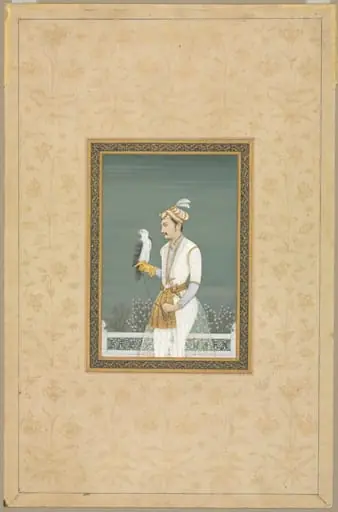 Portrait of a Prince with a Hawk
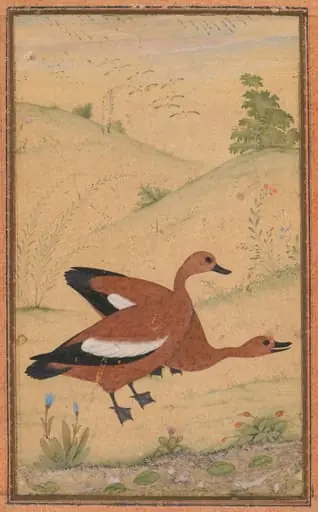 A pair of Brahminy ducks
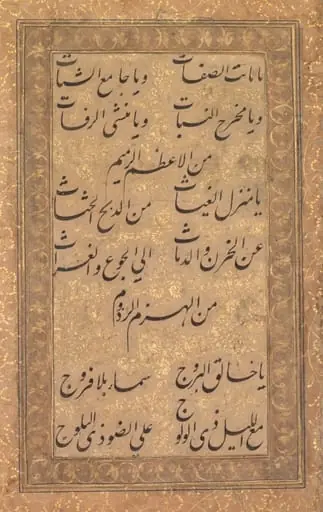 Calligraphy of a Pious Invocation in Rhyme (verso)
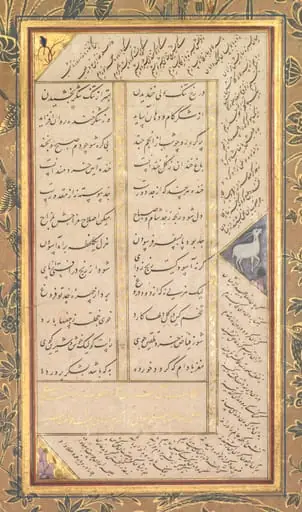 Page from a Panj Ganj (Five Treasures) of Abd al-Rahman Jami (Persian, 1414–1492), with two Persian
masnavis: Yusuf va Zulaykha (Joseph and Zulaykha) and Subhat al-abrar (Rosary of the Righteous) (verso)
Page from a Panj Ganj (Five Treasures) of Abd al-Rahman Jami (Persian, 1414–1492), with two Persian
masnavis: Yusuf va Zulaykha (Joseph and Zulaykha) and Subhat al-abrar (Rosary of the Righteous) (verso)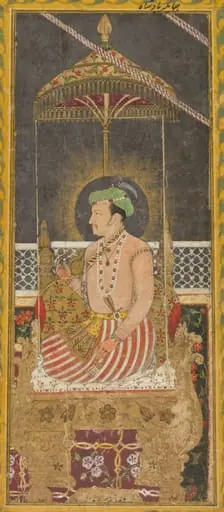 Posthumous portrait of Emperor Jahangir under a canopy (recto)
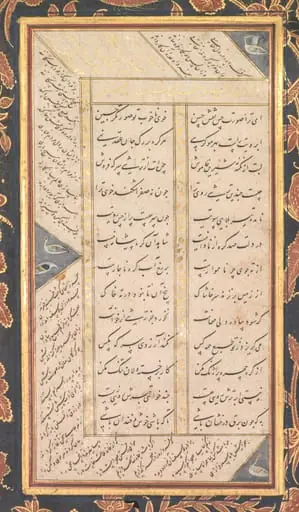 Folio B: Folio from the "Five Treasures" (Panj Ganj) of Jami (recto)
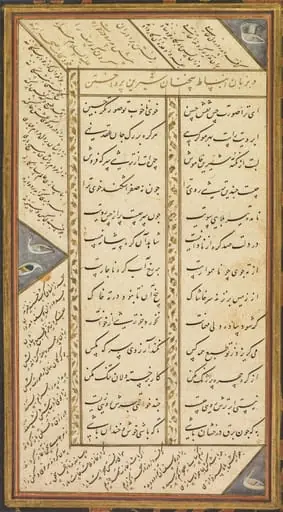 Page from the Panj Ganj (Five Treasures) of Abd al-Rahman Jami (Persian, 1414–1492), with two Persian masnavis (narrative poems): Yusuf va Zulaykha (Joseph and Zulaykha) and Subhat al-abrar (Rosary of the Righteous)
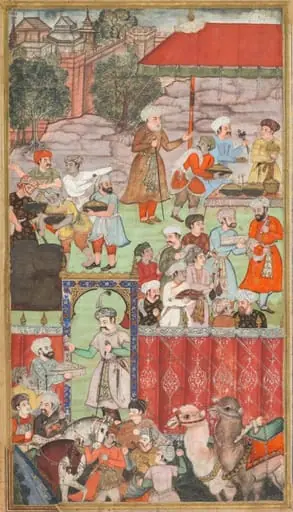 A feast for Babur hosted by his half-brother Jahangir Mirza in Ghazni in May 1505, from a Babur-nama (Memoirs of Babur)
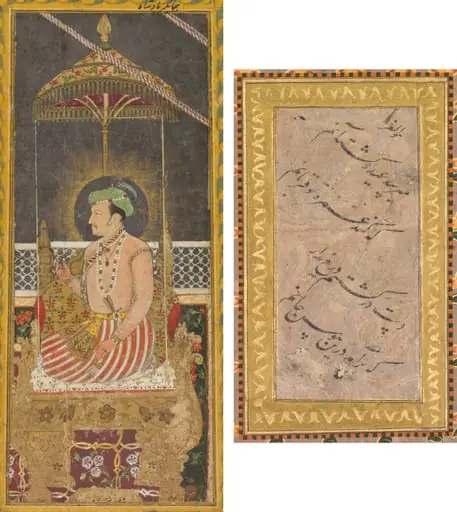 Posthumous portrait of Emperor Jahangir under a canopy (recto); Calligraphy (verso)
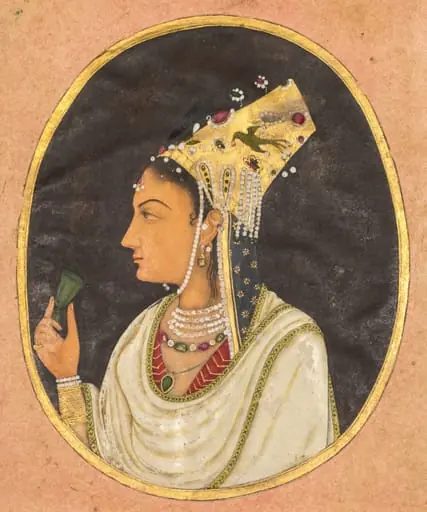 Oval portrait of a woman in a Chaghtai hat
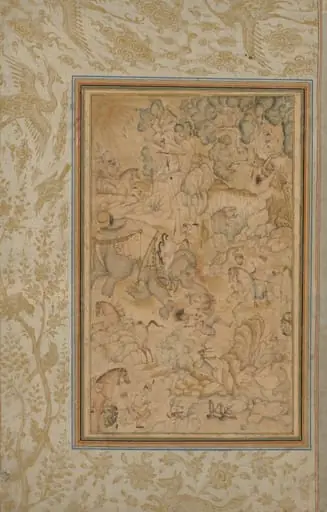 Princes hunting in a rocky landscape
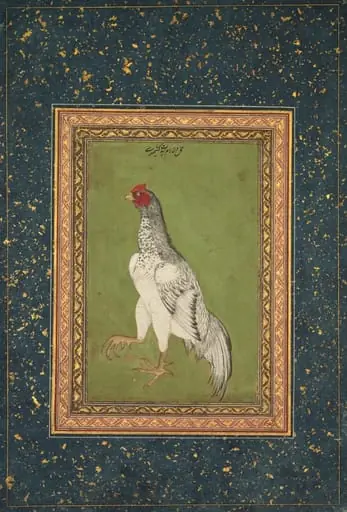 Rooster
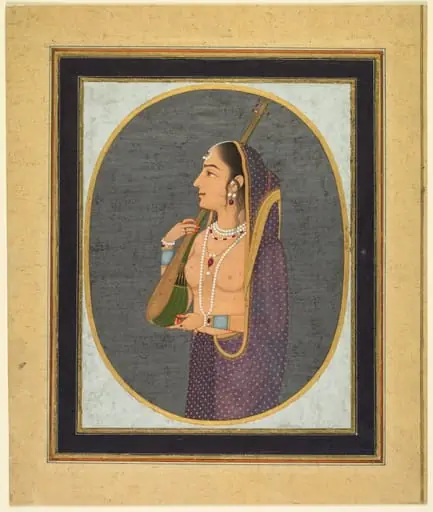 Court lady singing and playing the vina
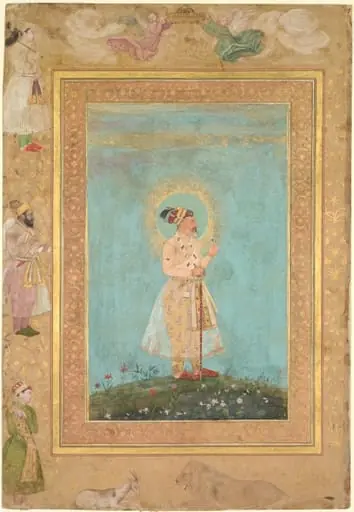 Shah Jahan holding a spinel and a long Deccan sword, from the Late Shah Jahan Album
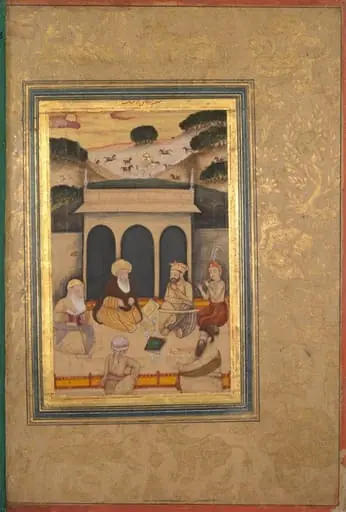 Nobleman Visiting Saint at his Shrine
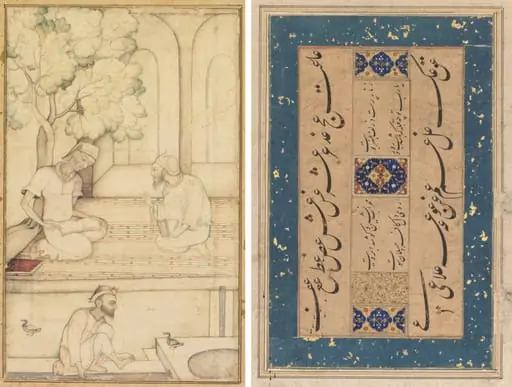 Kabir and Two Followers on a Terrace (recto); Calligraphy (verso)
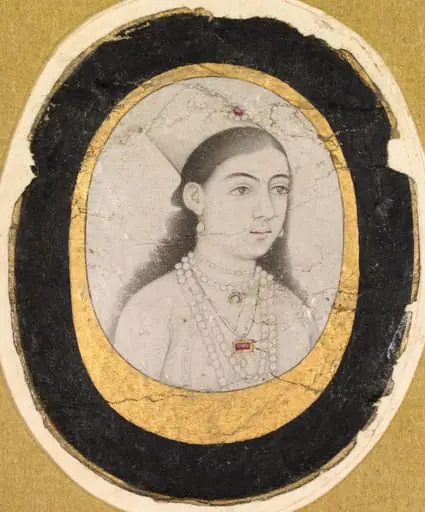 Jewel Portrait of a Young Girl
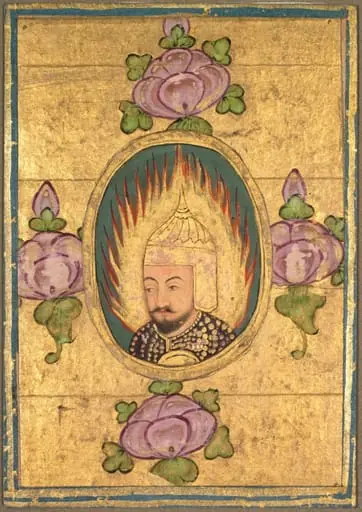 Babar(?)
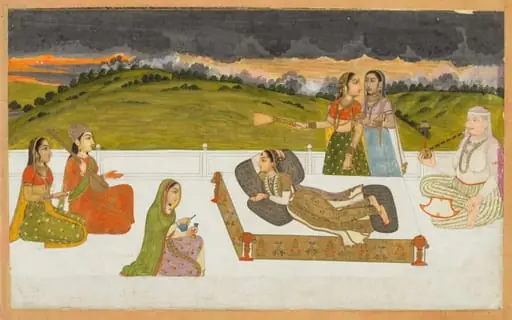 A princess reclining on a terrace with attendants
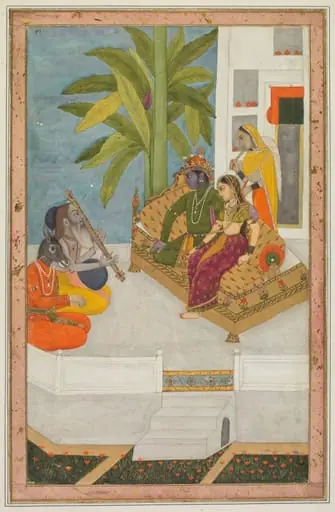 Shri Raga: An Illustration from a Ragamala Series
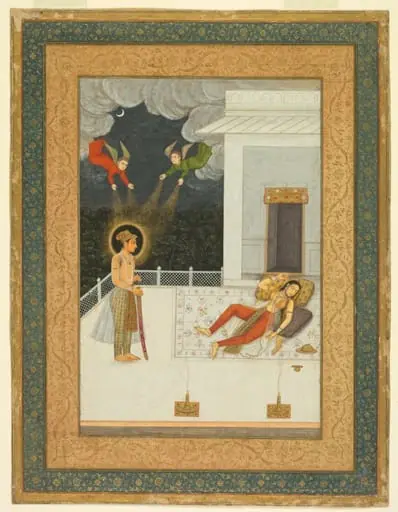 The dream of Zulaykha, from the Amber Album
Frequently asked questions
What is Mughal?
Mughal is a subject in art. family name
How many Mughal works does Artifact World Gallery have?
Artifact World Gallery holds 43 public-domain Mughal works, all free to view and download.
Who are the key Mughal artists?
Key Mughal artists in the collection include Hashim, Basawan and Mushfiq.
Where can I see Mughal works?
Mughal works in the collection are held by Cleveland Museum of Art.