Subject
Bengal
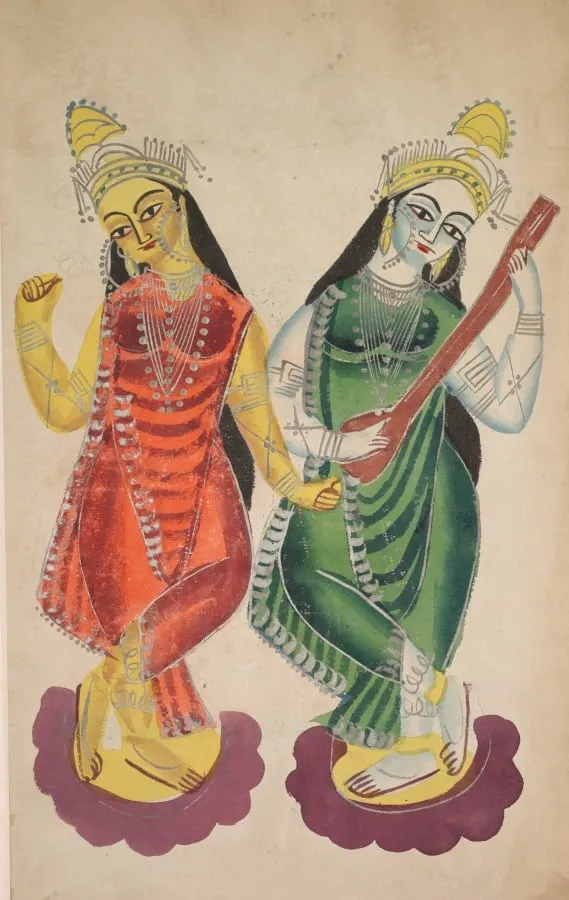
Bengal is a subject in art. The gallery holds 103 works in this subject in art, including works by Shri Gobinda Chandra Roy.
In art-historical terms, Bengal is less a single style than a fertile artistic milieu whose most distinctive painting tradition emerged in nineteenth-century Calcutta (now Kolkata). The hallmark school is Kalighat painting, named for the Kali temple at Kalighat that took its present form in roughly the first decades of the 1800s. Around it gathered the patuas—hereditary scroll painters who had migrated from rural Bengal—who abandoned long narrative scrolls for cheap single-sheet pictures sold to pilgrims and visitors. Working on machine-made paper with watercolour, lampblack ink, and a few broad brushes, they produced images at speed and in volume, making Kalighat one of South Asia's first genuinely popular, market-driven art forms.
The Kalighat manner is instantly recognisable: sweeping, calligraphic contour lines, swelling rounded forms shaded to suggest volume, saturated flat colour, and backgrounds stripped almost bare so a single figure or pairing fills the sheet. Subjects fall into two broad streams. The first is devotional—Hindu deities rendered with iconic directness, as in the museum's Kali Standing on Shiva, Goddesses Lakshmi and Sarasvati, and the Krishna and Balarama sheets, several from album sets and one signed by Shri Gobinda Chandra Roy. The second is sharply secular and satirical, lampooning the manners of colonial Calcutta—dandified babus, courtesans, and figures like the Barber Cleaning a Woman's Ear.
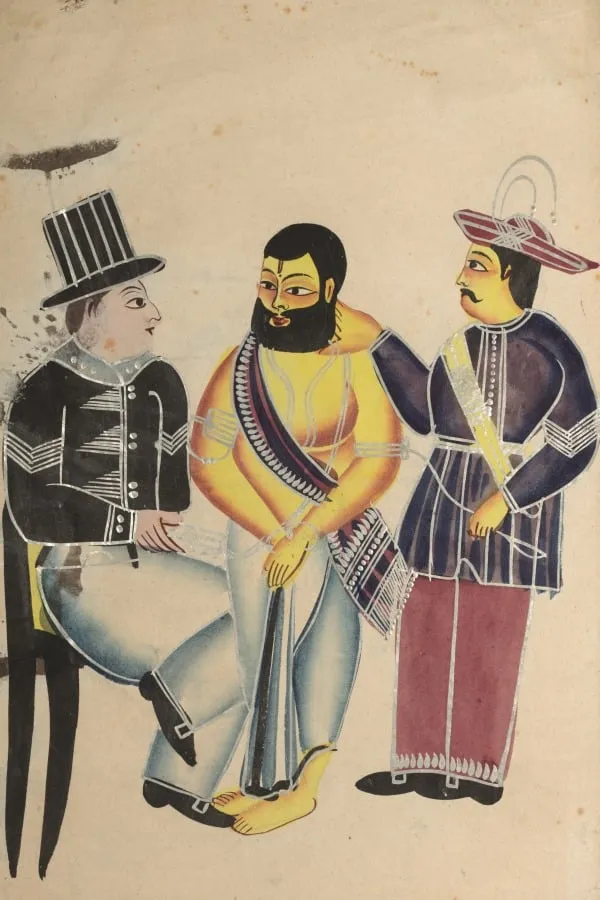
Kalighat painters also functioned as visual journalists. The catalogue's Jailer Receiving the Mahant of Tarakeshwar in Prison belongs to a celebrated cycle inspired by the Tarakeswar affair of 1873, when the young Elokeshi was murdered by her husband after an affair with the mahant of the Tarakeshwar Shiva temple; the sensational trial generated paintings, plays, and prints that "sold like hot cakes."
Kalighat's bold economy of line later drew the admiration of modernists such as Jamini Roy and is sometimes cited as an Indian precursor to pop art. It stands in instructive contrast to the other great Bengali current, the Bengal School of Art founded around 1905 by Abanindranath Tagore with E. B. Havell. Tied to the Swadeshi movement and steeped in Mughal, Rajput, and Japanese sources, the Bengal School's misty "wash technique" rejected Western naturalism in favour of a self-consciously nationalist Indian aesthetic—an elite counterpart to Kalighat's vigorous street art.
Key artists
Overview
Bengal is a geographical, ethnolinguistic, and historically geopolitical region in South Asia, located north of the Bay of Bengal. Today, it is politically divided among the sovereign state of Bangladesh, the Indian state of West Bengal, and the Karimganj district in the Indian state of Assam. Historically, the boundaries of the region were less clearly defined, and during the British colonial period, adjacent parts of Bihar, Jharkhand, and Odisha were also considered part of Bengal. The region takes its name from the Bay of Bengal to its south and encompasses the combined delta of the Ganges, Brahmaputra, and Meghna rivers. With an estimated population exceeding two hundred million, it ranks among the most densely populated areas on earth, housing the major metropolises of Dhaka and Calcutta.
Iconography & meaning
The name Bengal derives from the ancient Vanga Kingdom, a naval power reputed to have overseas colonies, including the first kingdom in Sri Lanka founded by the Bengali prince Vijaya. The earliest records of Vanga date to the Mahabharata epic in the first millennium BCE. An inscription from 409 CE in present-day Comilla mentions landlords with the suffix Vangala, and the Comilla copperplates of 720 CE refer to the Buddhist Deva King Ananda Deva as the moon of Bengal. South Indian records from the 11th century use the term Vangaladesa, while the 12th-century Sanskrit text Manasollasa uses Gaudabangala to denote the whole region. The modern term Bangala became prominent in the 14th century with the establishment of the Bengal Sultanate, whose first ruler, Shamsuddin Ilyas Shah, was known as the Shah of Bangala. Arab geographers like Ahmad ibn Majid and Sulaiman Al Mahri referred to the region as Bangala, and the Portuguese called it Bengala during the Age of Discovery.
Across movements & periods
The artistic and cultural representation of Bengal shifted dramatically across its historical periods. During the 8th to 12th centuries under the Buddhist Pala Empire, visual arts flourished, developing a distinct sculptural language visible in temple ruins like those at Paharpur, though it initially lagged behind the artistic centers of Magadha and western India. This era fostered a sense of a unique Bengali identity, language, and script. The subsequent Hindu Sena dynasty and the Malla dynasty, which reached its peak in the 10th century under Jagat Malla in Bishnupur, shifted patronage toward Hindu customs and Shaivite temple construction. The arrival of Islamic rule in the early 13th century introduced new cultural dynamics, culminating in the independent Bengal Sultanate from the 14th to 16th centuries, which became a major trading and cultural center. Under Mughal governance, Bengal was dubbed the paradise of nations due to its prosperity. During British colonial rule, Calcutta became the capital of British India and the center of modern commerce and culture, eventually giving rise to the distinctive Kalighat painting tradition in the 19th century.
Notable depictions
Notable depictions of Bengal in the visual arts include the ancient temple ruins at Paharpur and Malanda, which showcase the distinct sculptural power achieved during the Pala dynasty. The Malla dynasty left extraordinary religious monuments in Bishnupur. In the 19th century, the Kalighat painting tradition produced canonical works that captured the region's religious and social life, such as Kali Standing on Shiva, Goddesses Lakshmi and Sarasvati, and Kali Enshrined, which are preserved as versos in Kalighat albums. Secular life and social commentary were also notably depicted in works like Barber Cleaning a Woman's Ear and Jailer Receiving the Mahant of Tarakeshwar in Prison.
Legacy
The legacy of Bengal is defined by its profound cultural output and its complex political history. Bengali culture, particularly its literature, music, art, and cinema, is highly influential across South Asia and beyond. The region has also produced notable economic and social scientists, including several Nobel laureates. Politically, the region experienced repeated partitions. The British partition of 1905 created the short-lived province of Eastern Bengal and Assam, sparking widespread discontent. The 1947 partition of India divided Bengal into West Bengal, an Indian state, and East Bengal, which eventually became Bangladesh in 1971 after gaining independence from Pakistan. Despite historical tragedies like the devastating famines of 1770 and 1943, and the religious divisions that led to partition, Bengal today stands as a leader in South Asia in terms of gender parity, the gender pay gap, and other indices of human development.
Works
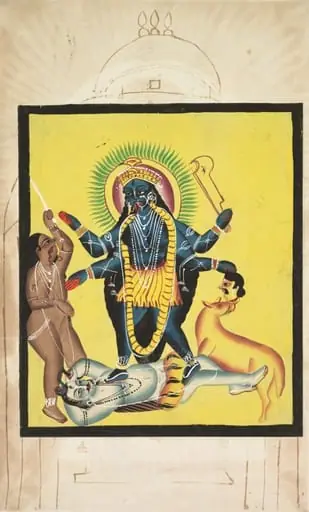 Kali Standing on Shiva (verso), from a Kalighat album
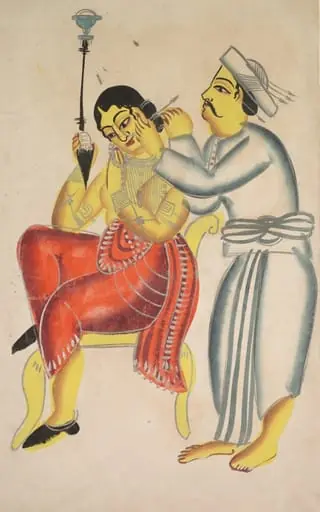 Barber Cleaning a Woman’s Ear
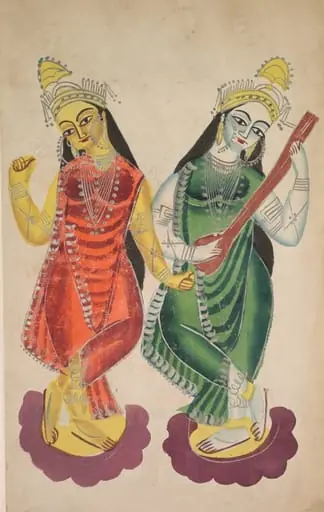 Goddesses Lakshmi and Sarasvati (verso), from a Kalighat album
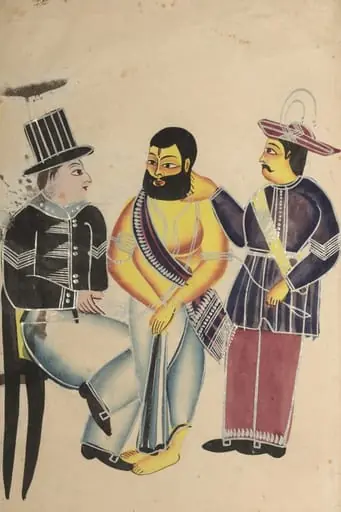 Jailer Receiving the Mahant of Tarakeshwar in Prison
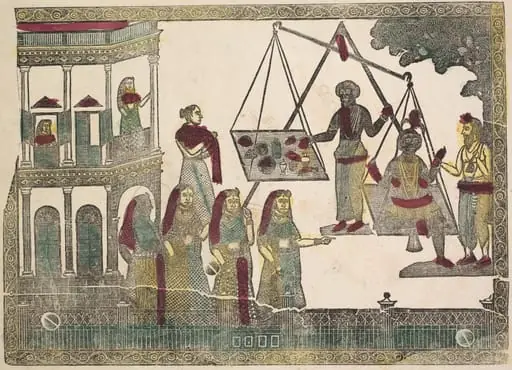 Krishna weighed against precious objects(?) (verso), from a Kalighat album
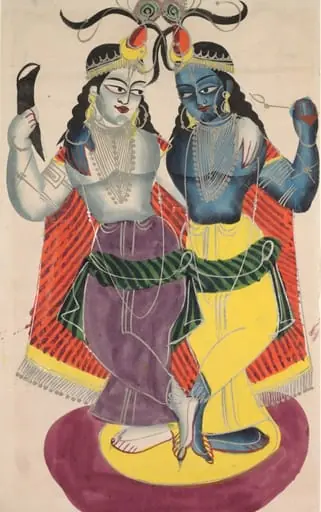 Balarama and Krishna
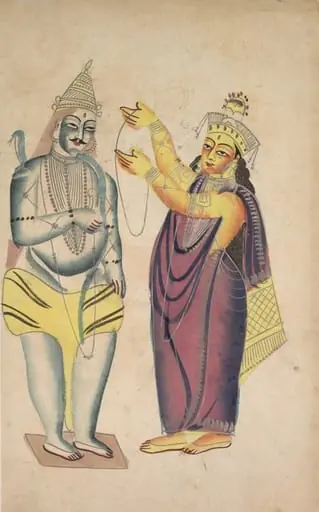 Parivati Placing a Wedding Garland on Shiva (verso)
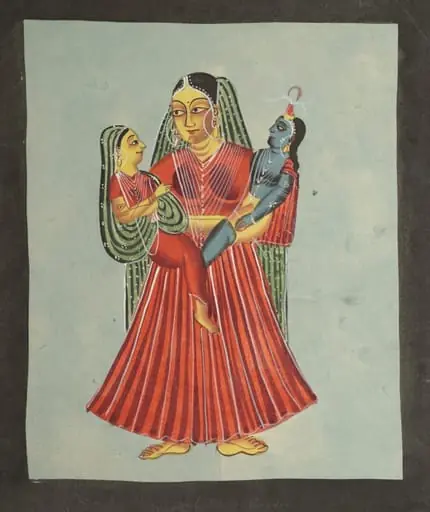 Yasoda Holding Krishna and Radha
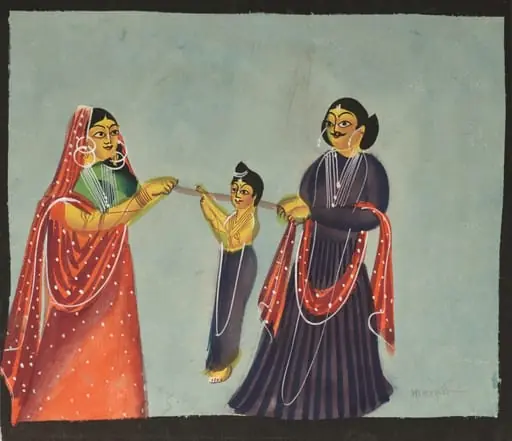 Kalighat Painting
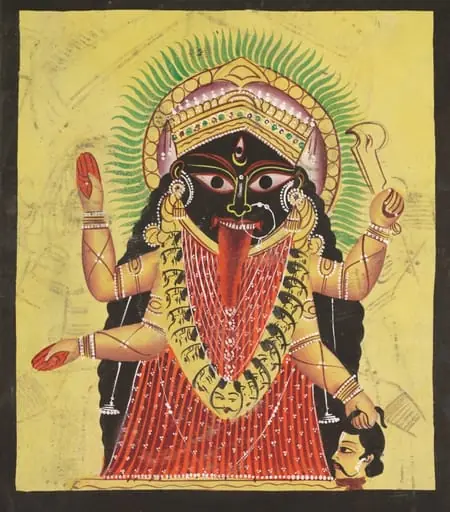 Kali Enshrined (verso), from a Kalighat album
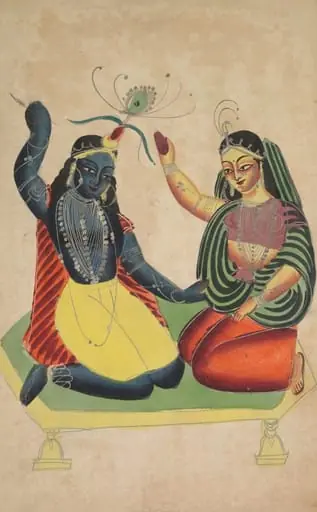 Radha and Krishna (verso), from a Kalighat album
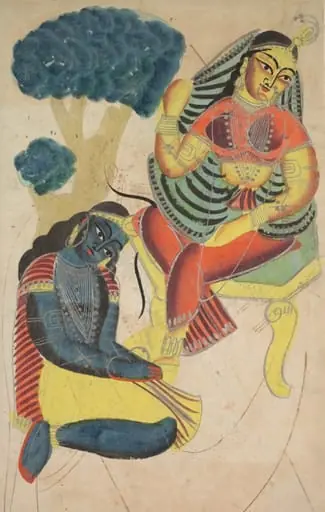 Krishna Stroking Radha's Feet (verso), from a Kalighat album
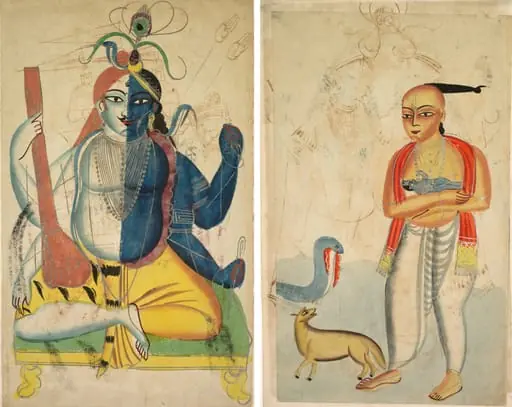 Leaf from a Kalighat album: Hari-Hara (recto); Vasudeva (Krishna's Father) Fleeing with Krishna Encounters a Cobra and a Jackal (verso)
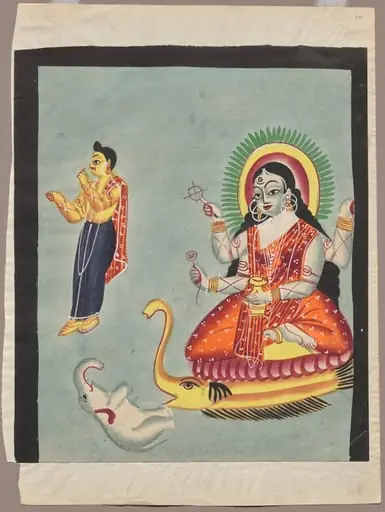 The Goddess Ganga, from a Kalighat album
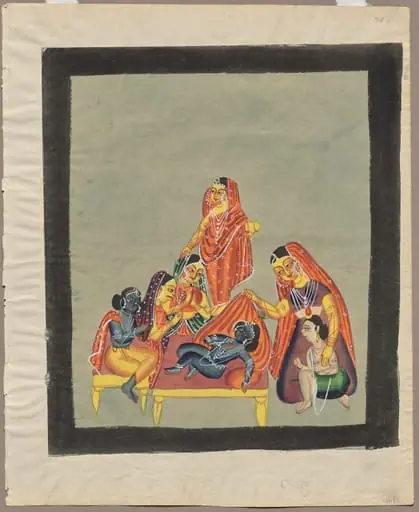 Worship of the Infant Krishna, from a Kalighat album
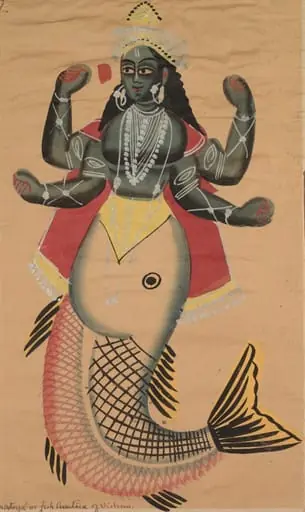 Matsya, Fish Avatara of Vishnu
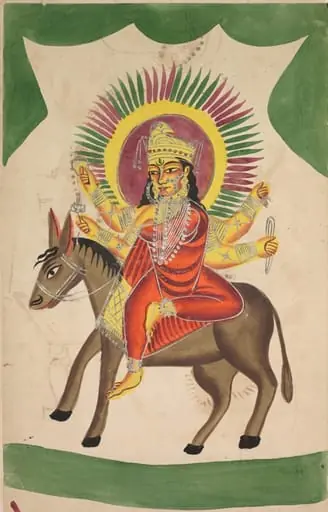 Sheetaladevi: The Smallpox Goddess (recto), from a Kalighat album
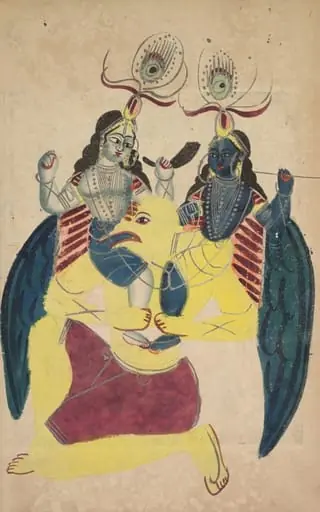 Garuda Carrying Balarama and Krishna (verso), from a Kalighat album
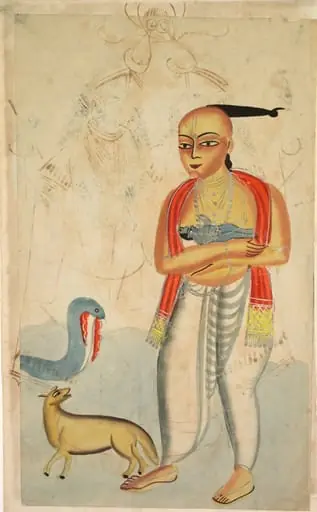 Vasudeva (Krishna's Father) Fleeing with Krishna Encounters a Cobra and a Jackal (verso), from a Kalighat album
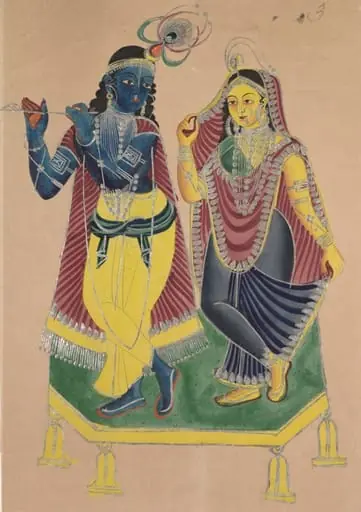 Radha and Krishna
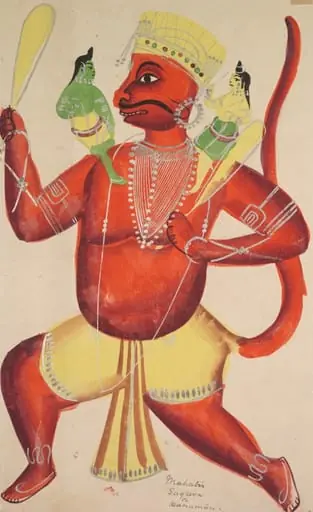 Hanuman with Rama and Lakshmana on his shoulders, from a Kalighat album
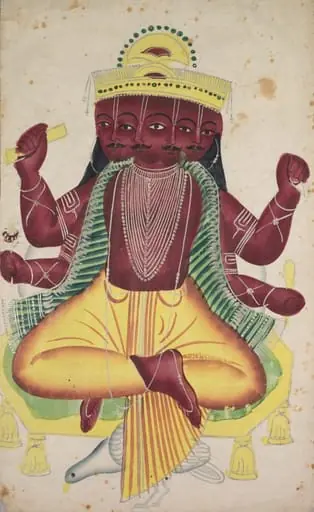 Brahma
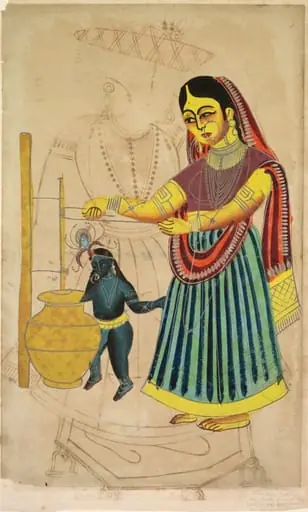 Yasoda Churning Butter (verso), from a Kalighat album
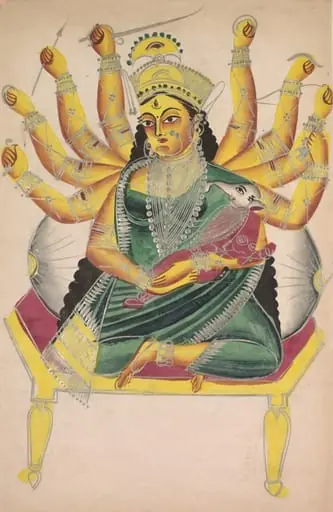 Ganesha-Janani (Mother of Ganesh)
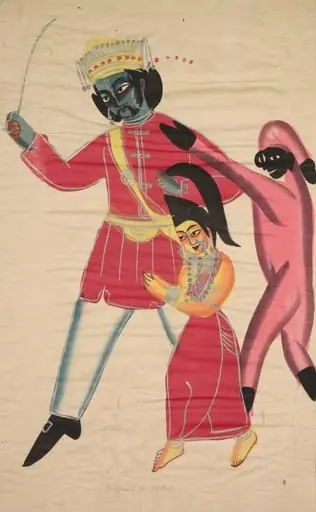 Megha-Nada (Indrajit, Son of Radha)
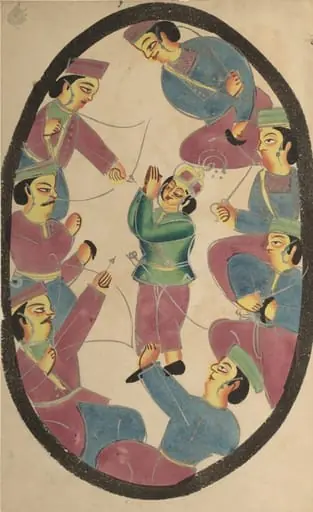 Seven Heroes or Warriors Killing Abhimanya, Son of Arjuna
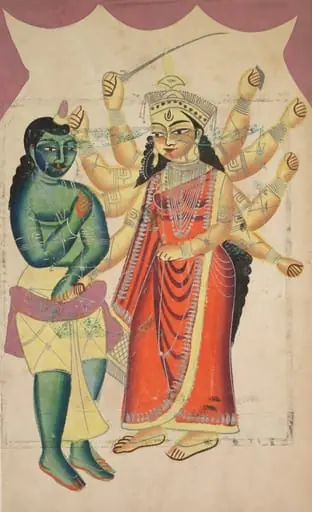 Durga (verso), from a Kalighat album
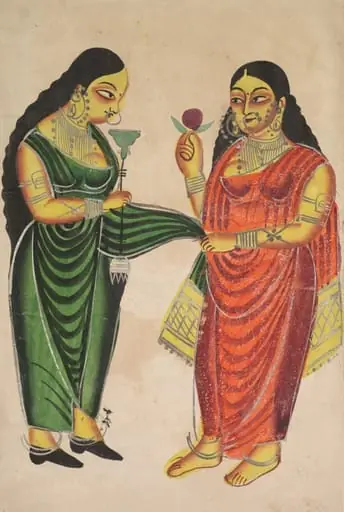 Maid bringing a hookah to a lady (recto), from a Kalighat album
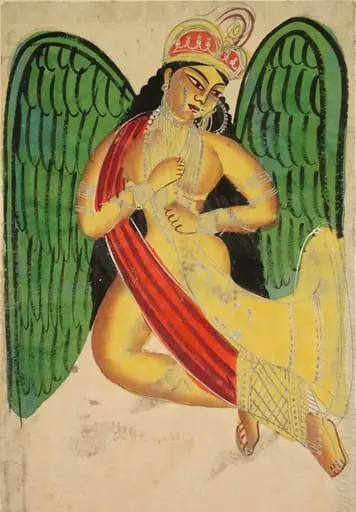 Winged Apsara with a Horn (recto)
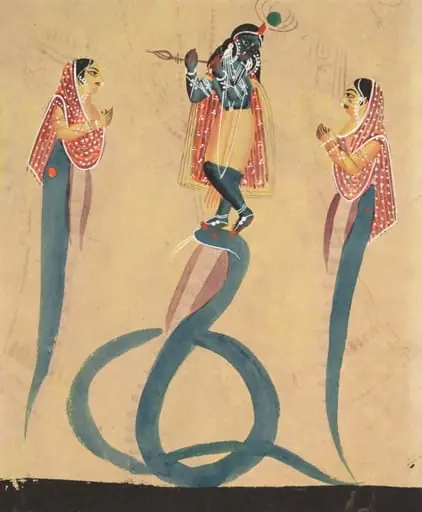 Krishna quells the serpent Kaliya (verso), from a Kalighat album
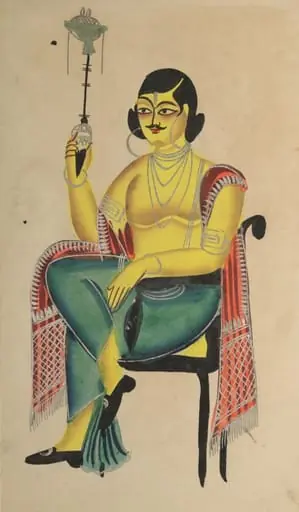 English Babu (Native Indian Clerk) Holding a Hookah
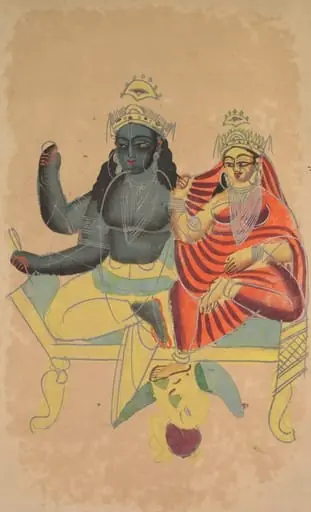 Vishnu and Lakshmi
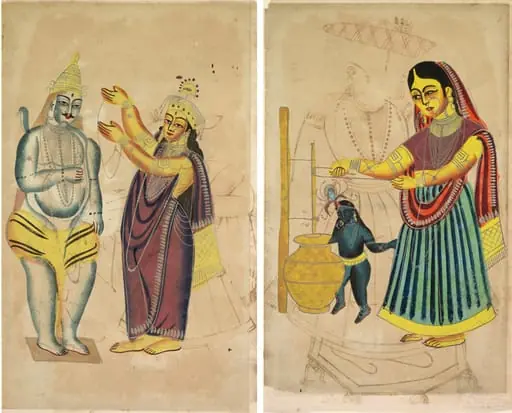 Leaf from a Kalighat album: Parvati Placing a Wedding Garland on Shiva (recto); Yasoda Churning Butter (verso)
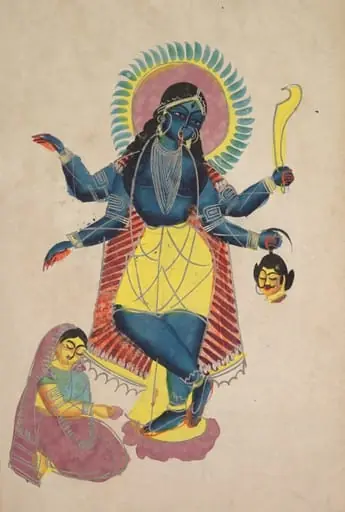 Krishna as Kali worshipped by Radha (recto), from a Kalighat album
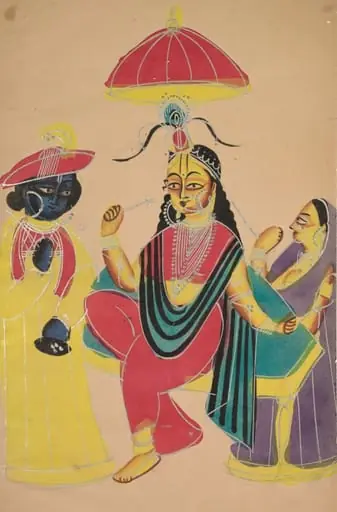 Krishna Standing by Radha who is Seated on a Chair
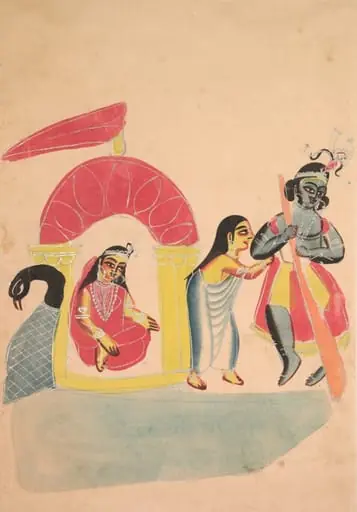 Krishna Ferrying Radha Across the Yamuna River
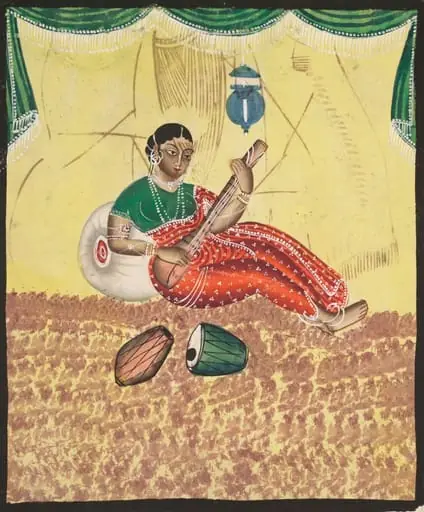 Woman Playing Music (recto), from a Kalighat album
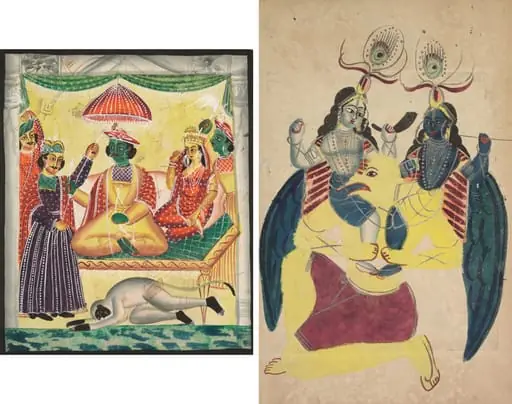 Leaf from a Kalighat album: Rama and Sita enthroned (recto); Garuda carrying Balarama and Krishna (verso)
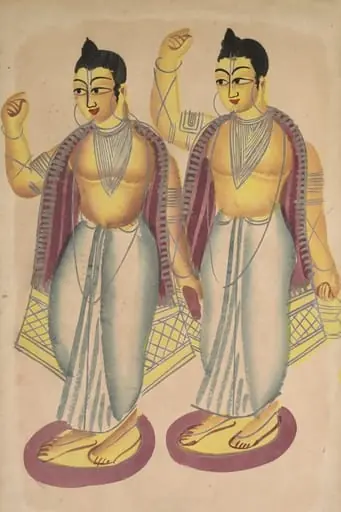 Nitai and Gaur
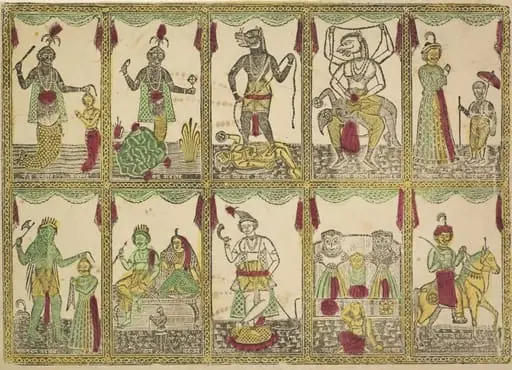 Das Avataras, Ten Incarnations of Vishnu (verso), from a Kalighat album
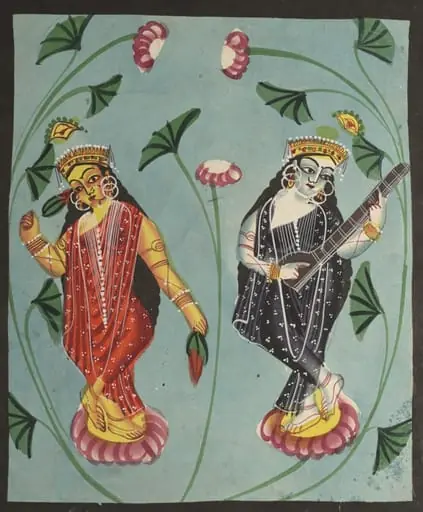 Lakshmi and Sarasvati
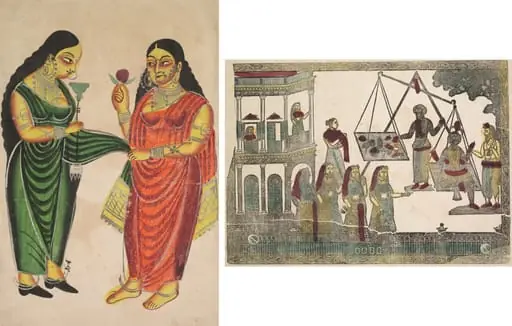 Leaf from a Kalighat album: Maid bringing a hookah to a lady (recto); Krishna weighed against precious objects(?) (verso)
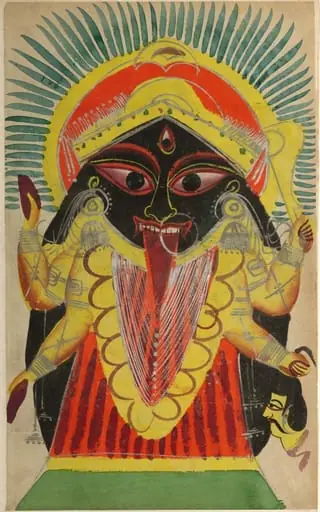 The Goddess Kali (recto), from a Kalighat album
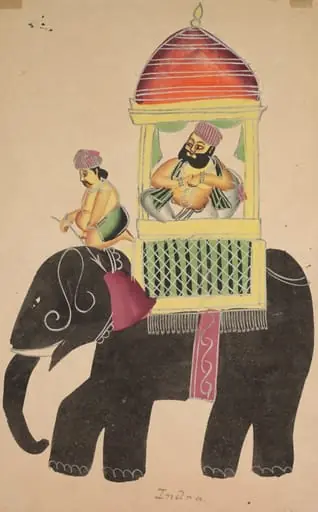 Mahant of Tarakeshwar Rides on an Elephant
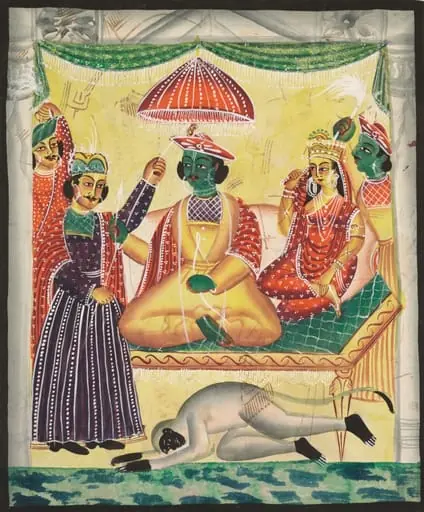 Rama and Sita enthroned (recto), from a Kalighat album
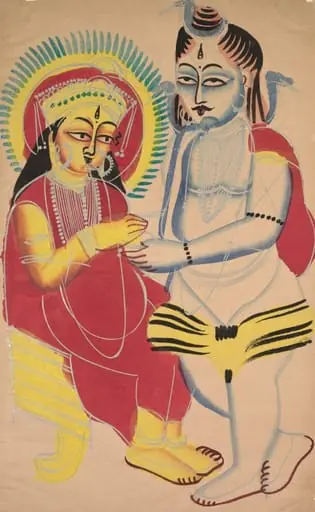 Annapurna and Shiva
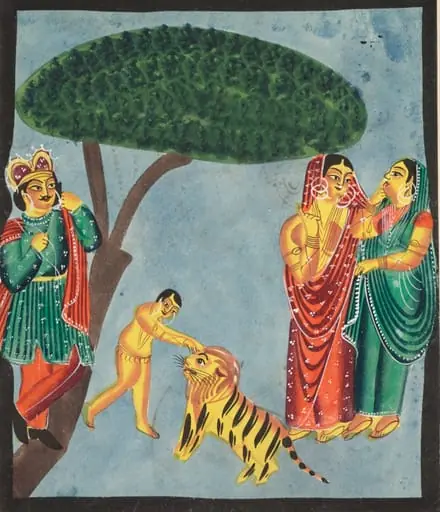 Dushyanta watching his son Bharat playing with the tiger at the end of the Abhijnanashakuntalam (verso), from a Kalighat album
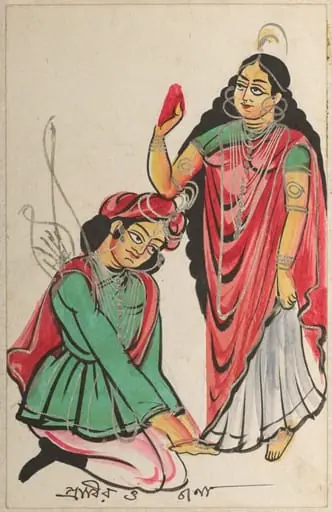 Pravira Kneeling at the Feet of Jana
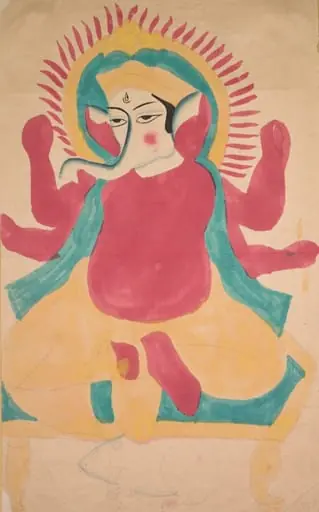 Ganesha
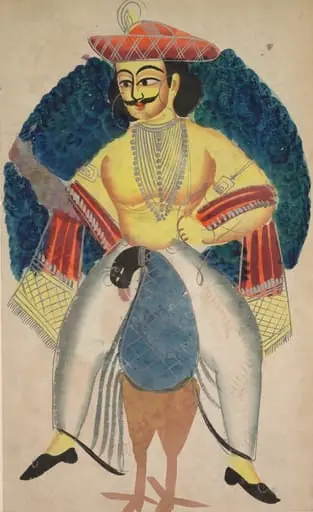 Kartikeya, from a Kalighat album
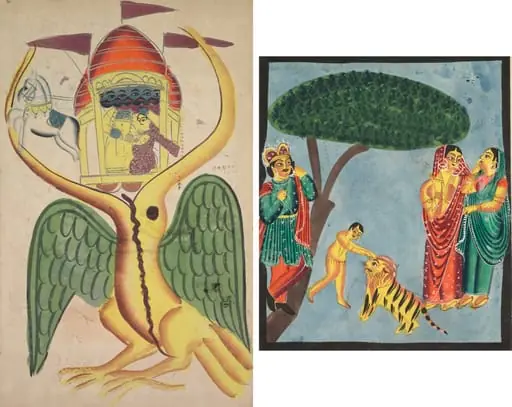 Leaf from a Kalighat album: Jatayu hinders Ravana’s chariot, trying to prevent the abduction of Sita (recto); Dushyanta watching his son Bharat playing with the tiger at the end of the Abhijnanashakuntalam (verso)
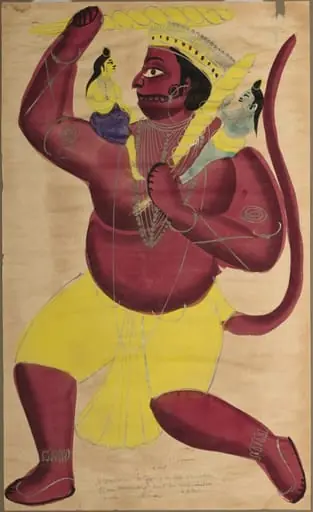 Hanuman
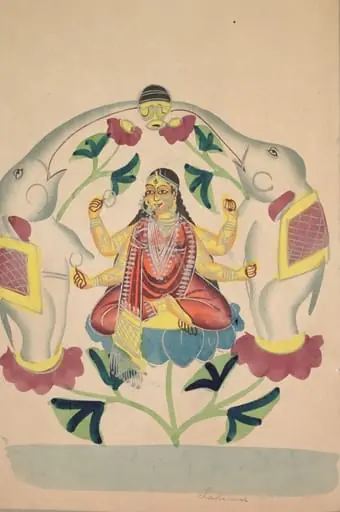 Gajalakshmi: Lakshmi with Elephants
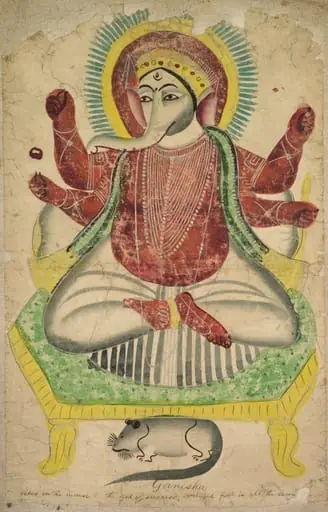 Ganesh
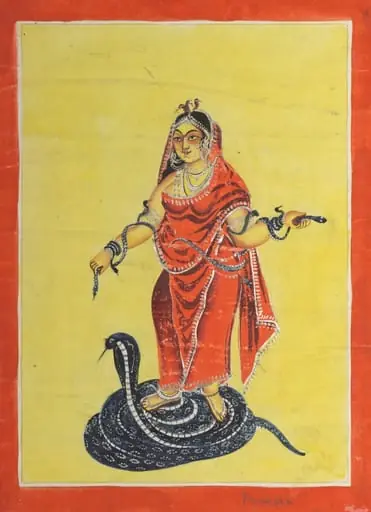 Manasa, The Snake Goddess
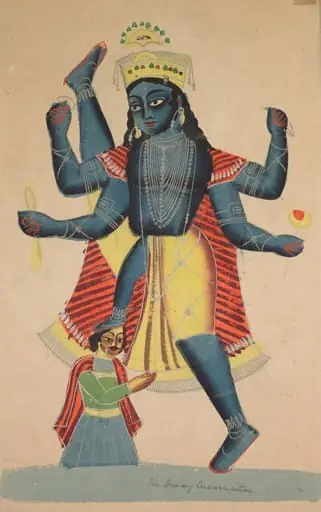 Trivikramapada (Three Steps of Vishnu)
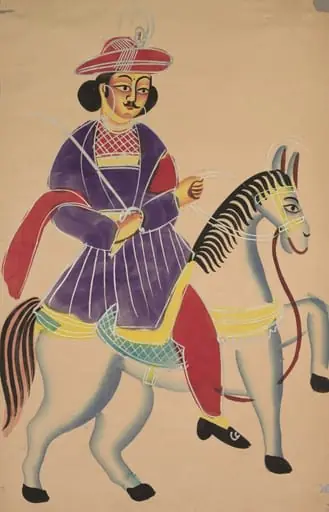 Raja Riding a Horse
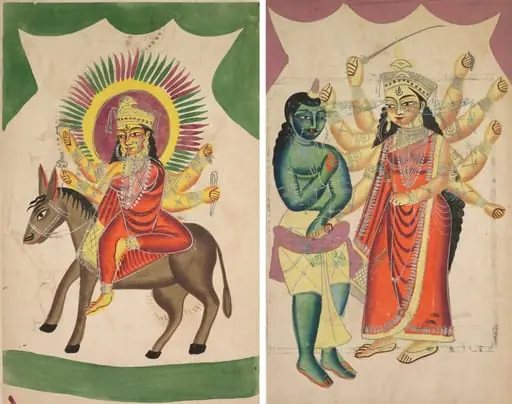 Leaf from a Kalighat album: Sheetaladevi: The Smallpox Goddess (recto); Durga (verso)
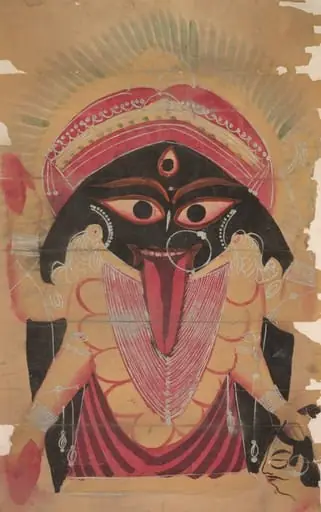 Kali
Kali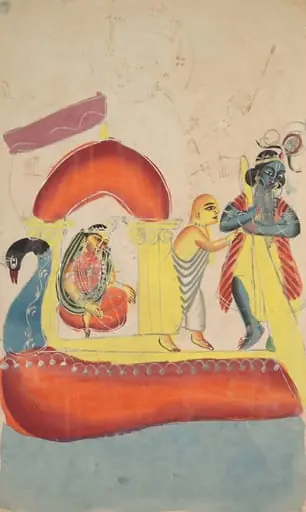 Krishna Ferrying Radha Across the Yamuna River (recto)
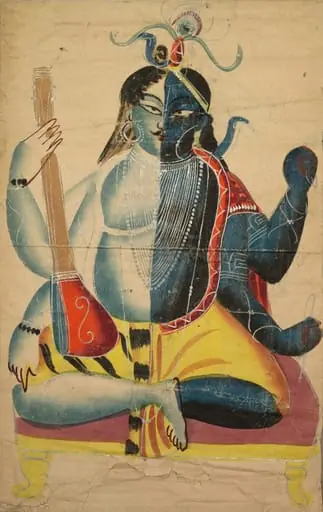 Hari-Hara
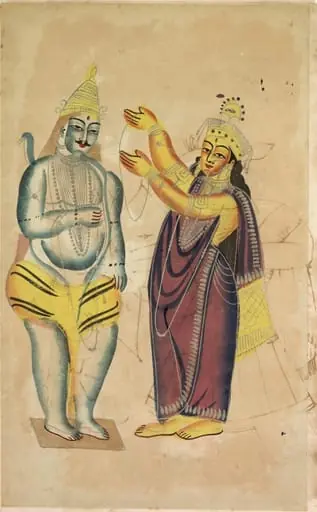 Parvati Placing a Wedding Garland on Shiva (recto), from a Kalighat album
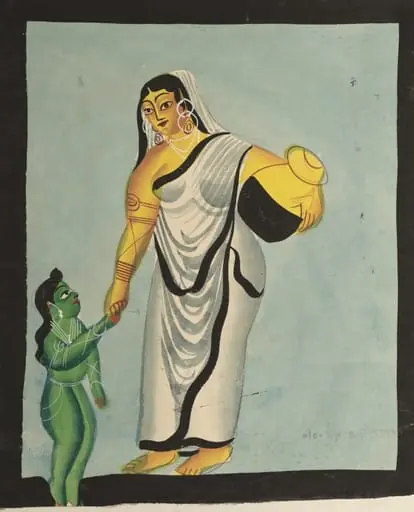 Yasoda Taking the Infant Krishna for a Walk
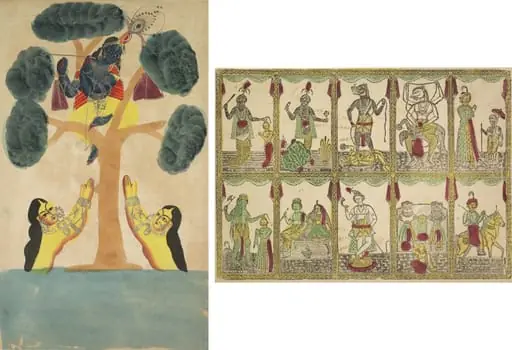 Leaf from a Kalighat album: Krishna Steals the Clothes of the Cowgirls (Gopis) (recto); Das Avataras, Ten Incarnations of Vishnu (verso)
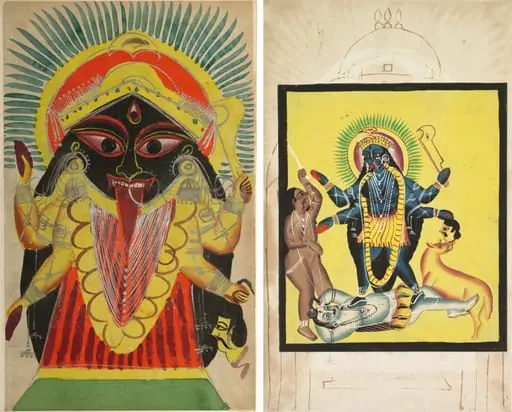 Leaf from a Kalighat album: The Goddess Kali (recto); Kali Standing on Shiva (verso)
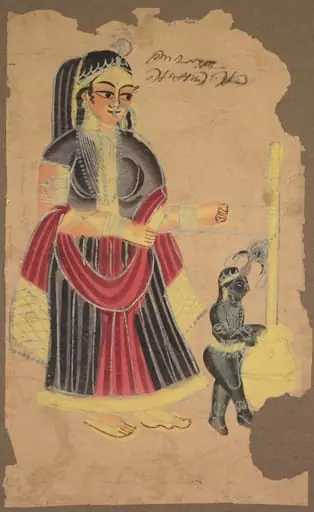 Yasoda and Krishna
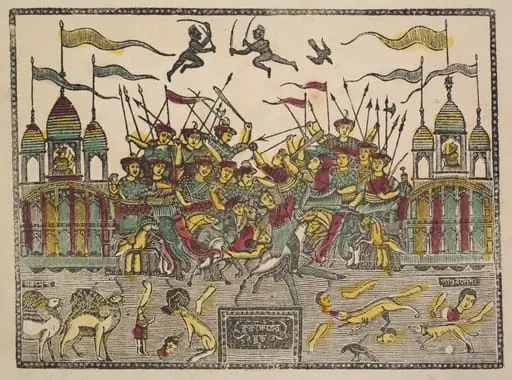 Battle Scene at Kurukshetra from the Mahabharata War (verso), from a Kalighat album
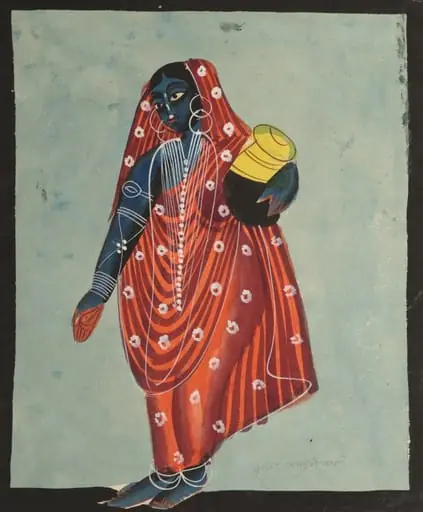 Vishnu in Female Form of Mohini Carrying Amrita for the Gods
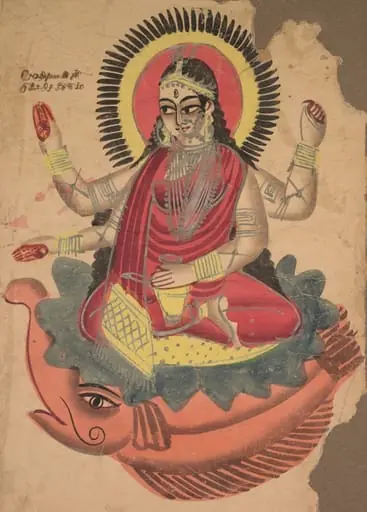 The Goddess Ganga
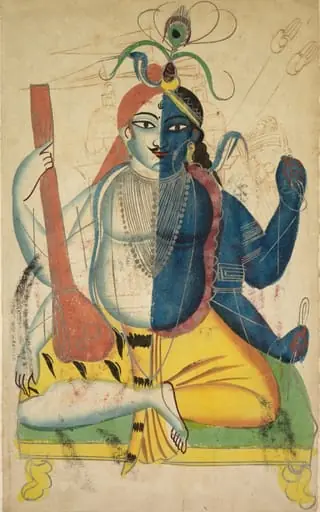 Hari-Hara (recto), from a Kalighat album
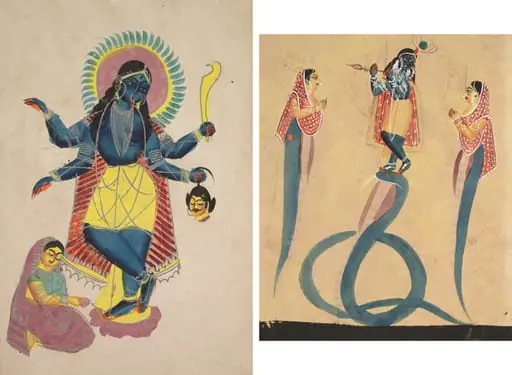 Leaf from a Kalighat album: Krishna as Kali worshipped by Radha (recto); Krishna quells the serpent Kaliya (verso)
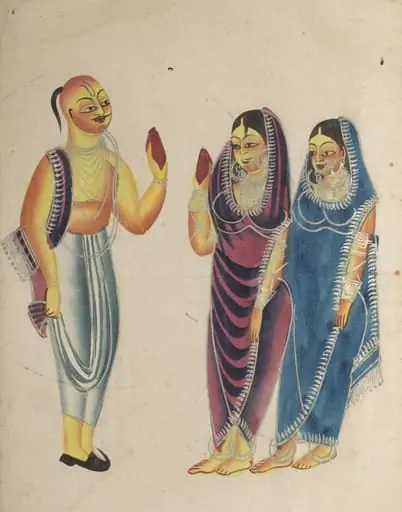 Vaishnava Devotee with Two Women
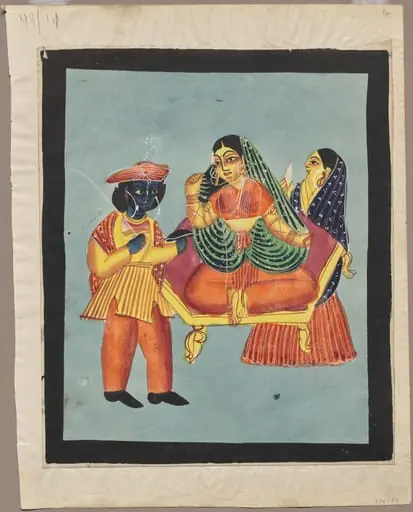 Rai Raja, from a Kalighat album
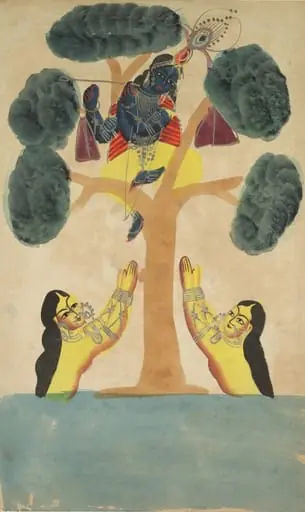 Krishna Steals the Clothes of the Cowgirls (Gopis) (recto), from a Kalighat album
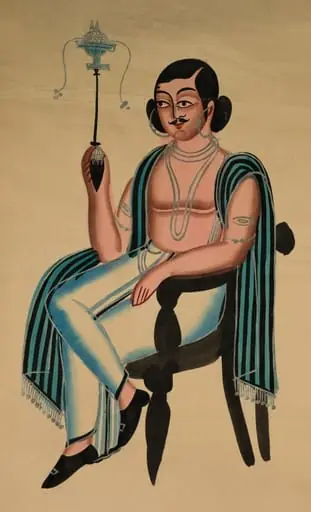 Man Seated in a European Chair Smoking a Margila Pipe, from a Kalighat album
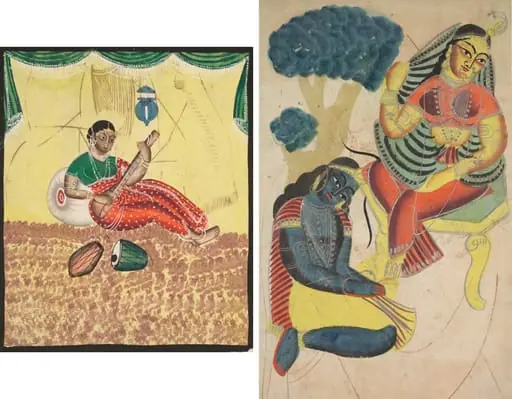 Leaf from a Kalighat album: Woman Playing Music (recto); Krishna Stroking Radha's Feet (verso)
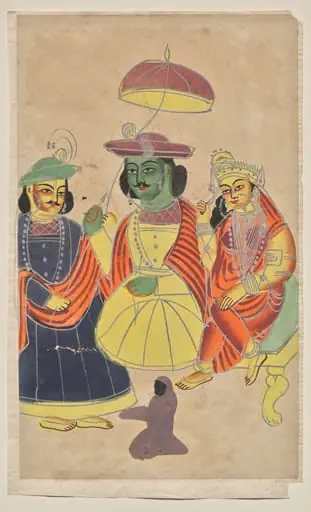 Rama and Sita enthroned with Lakshmana and Hanuman attending, from a Kalighat album
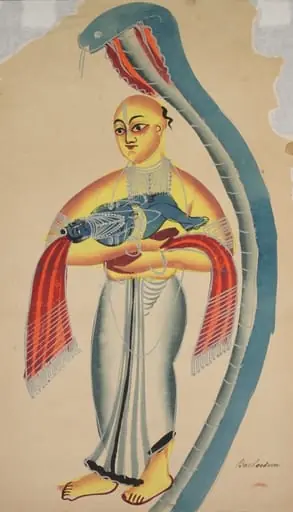 A Serpent Protects Vasudeva Taking His Infant Son Krishna to Safety
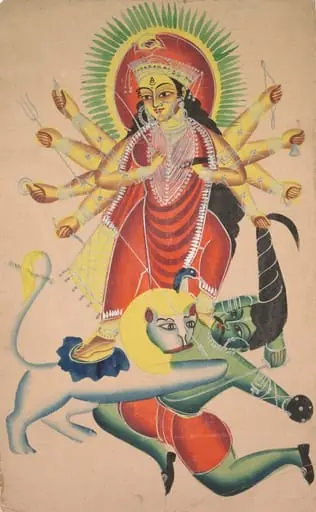 Durga Killing the Demon Mahisha
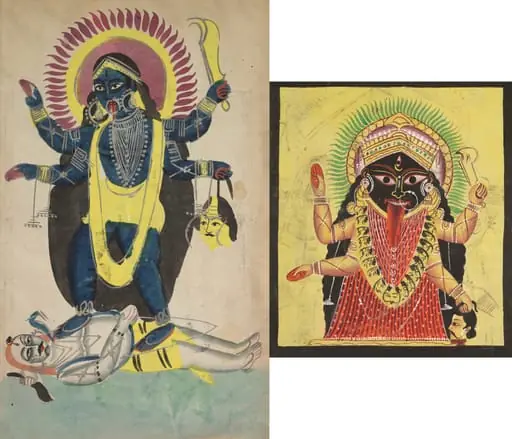 Leaf from a Kalighat album: Two Aspects of Kali
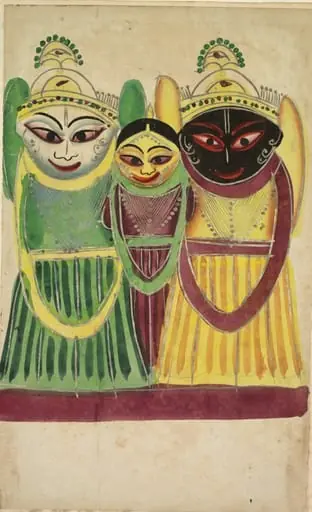 Jagannatha Trio (verso)
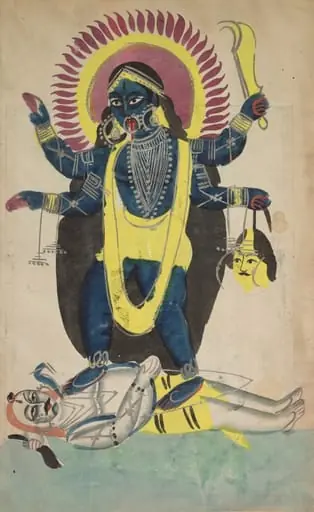 Kali Dancing on Shiva (recto), from a Kalighat album
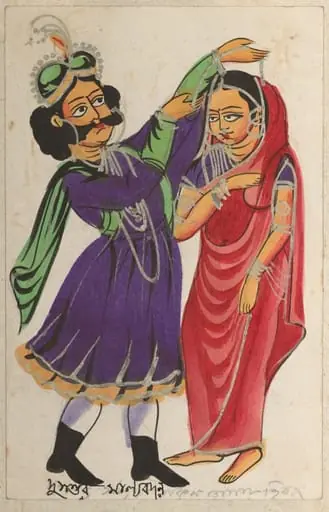 Dusmanta Garlanding Shakumtala
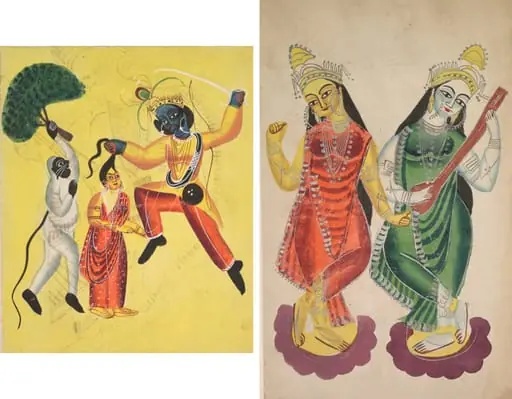 Leaf from a Kalighat album: Hanuman attacks Indrajit holding an apparition of Sita by the hair (recto); Goddesses Lakshmi and Sarasvati (verso)
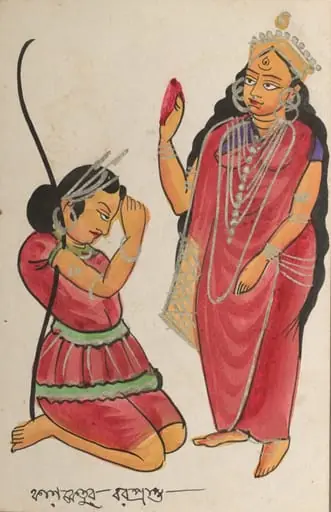 Kalaketu Receiving a Boon from the Goddess Chandi
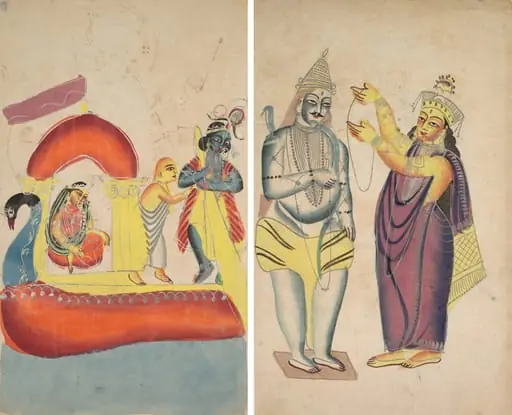 Krishna Ferrying Radha Across the Yamuna River (recto); Parivati Placing a Wedding Garland on Shiva (verso)
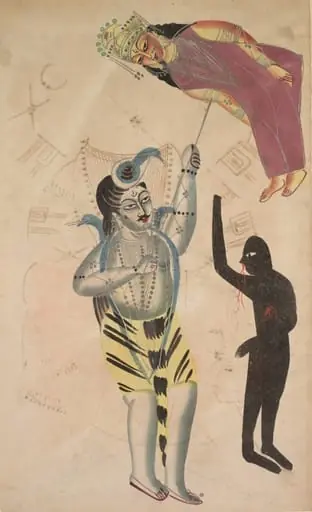 Shiva Bearing Aloft the Body of His Sati
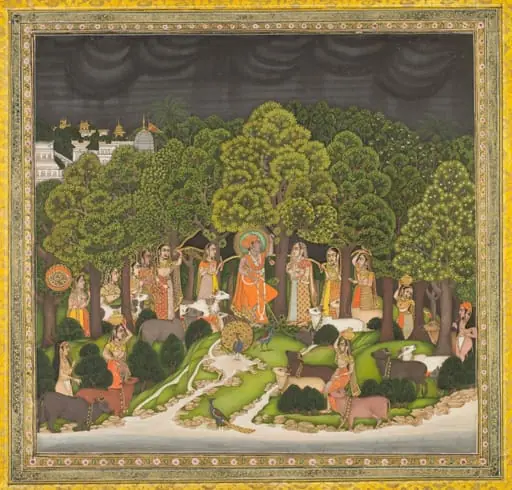 Radha and Krishna meet in the forest during a storm
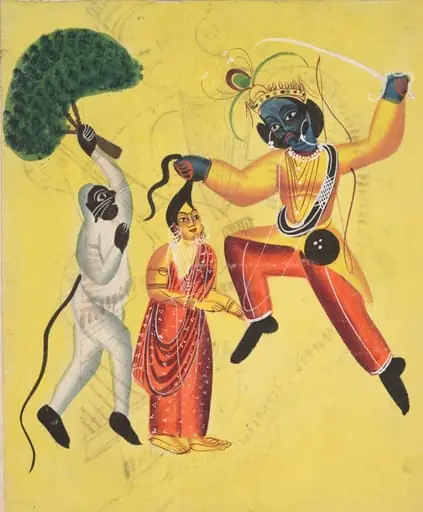 Hanuman attacks Indrajit holding an apparition of Sita by the hair
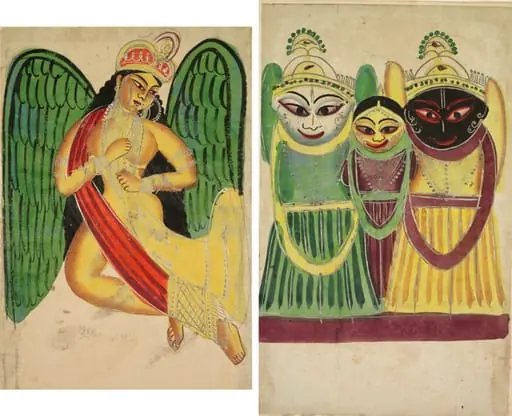 Winged Apsara with a Horn (recto); Jagannatha Trio (verso)
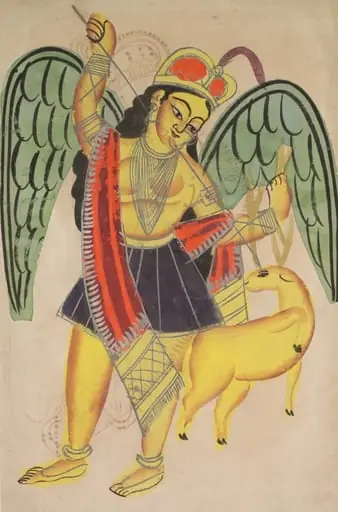 Diana or Artemis, Goddess of the Hunt
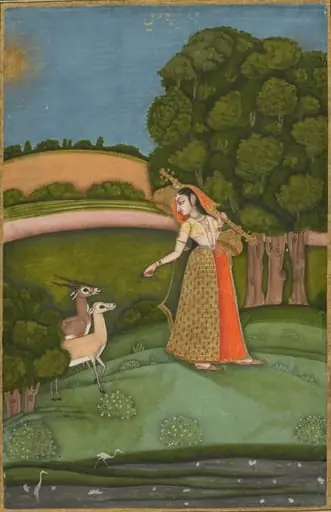 Todi Ragini, from a Ragamala Series
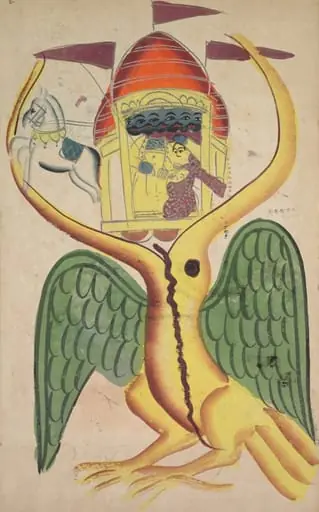 Jatayu hinders Ravana’s chariot, trying to prevent the abduction of Sita (recto), from a Kalighat album
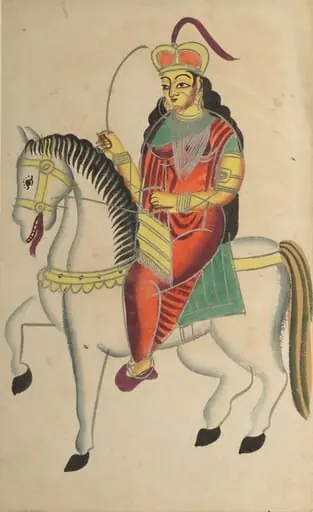 The Mutiny of the Heroine Rani Lakshmi Bai of Jhansi
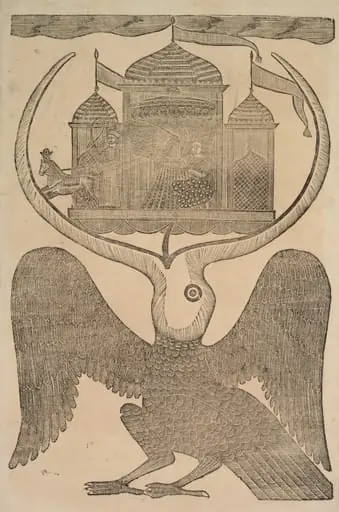 Jatayu hinders Ravana’s chariot trying to prevent Sita’s abduction (recto), from a Kalighat album
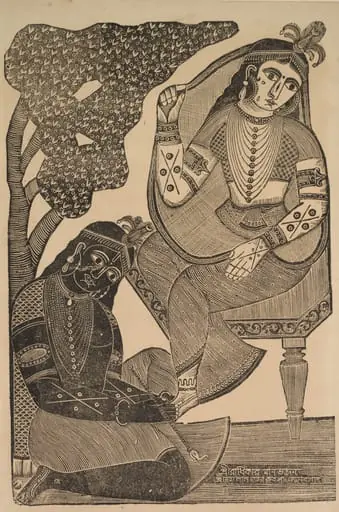 Krishna Stroking Radha's Feet
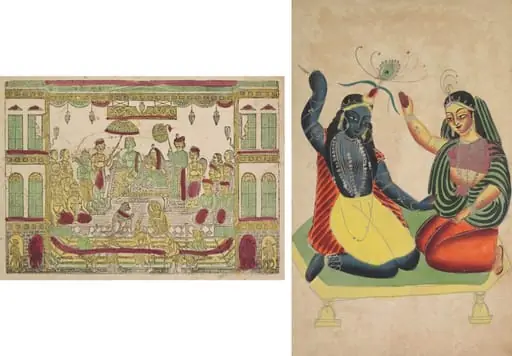 Leaf from a Kalighat album: Rama and Sita in the Royal Palace (recto); Radha and Krishna (verso)
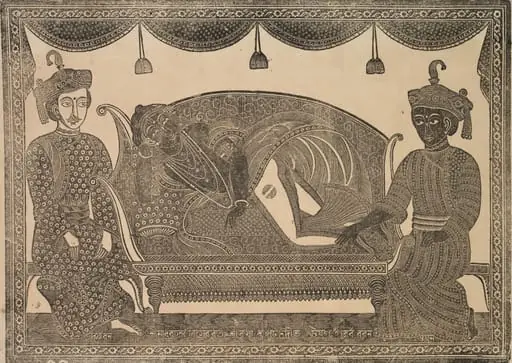 Kalighat Painting
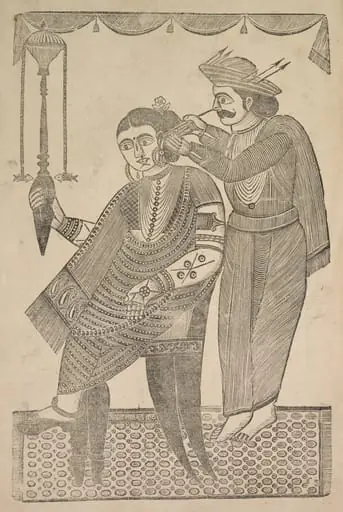 A Barber Cleaning the Ear of a Courtesan
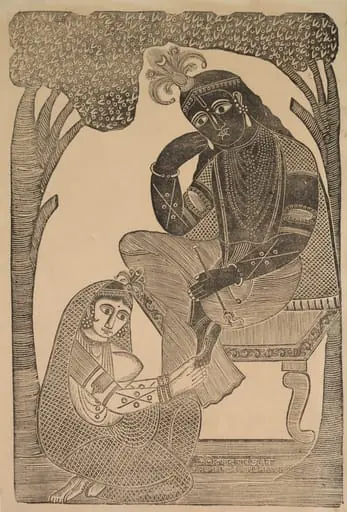 Radha Stroking Krishna's Feet
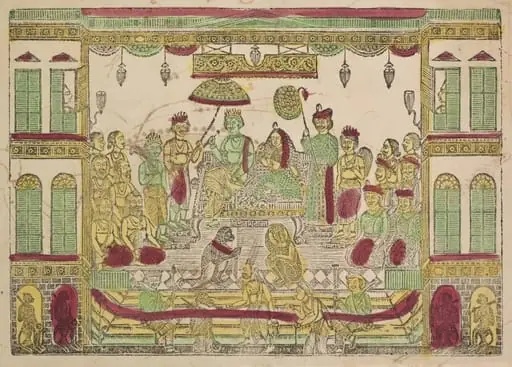 Rama and Sita in the royal palace (recto), from a Kalighat album
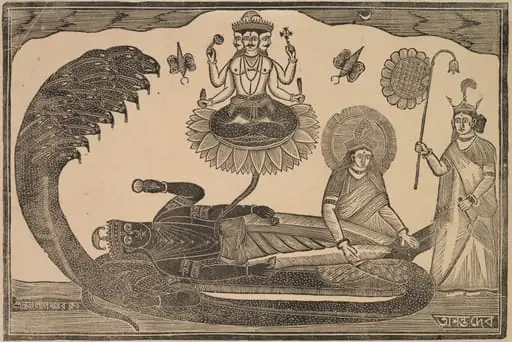 Anantasayan (Vishnu Reclining on Serpent Ananta)
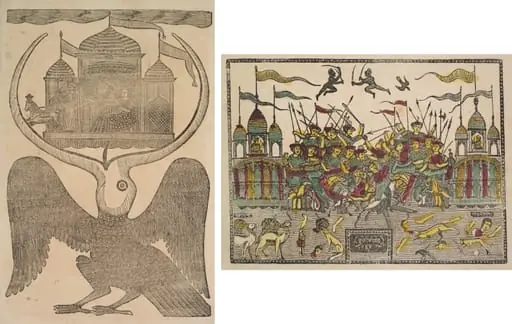 Leaf from a Kalighat album: Jatayu hinders Ravana’s chariot trying to prevent Sita’s abduction (recto); Battle Scene at Kurukshetra from the Mahabharata War (verso)
Frequently asked questions
What is Bengal?
Bengal ( ben-GAWL) is a geographical, ethnolinguistic, historically geopolitical region in South Asia, located north of the Bay of Bengal.
How many Bengal works does Artifact World Gallery have?
Artifact World Gallery holds 103 public-domain Bengal works, all free to view and download.
Who are the key Bengal artists?
Key Bengal artists in the collection include Shri Gobinda Chandra Roy.
Where can I see Bengal works?
Bengal works in the collection are held by Cleveland Museum of Art.