Artwork
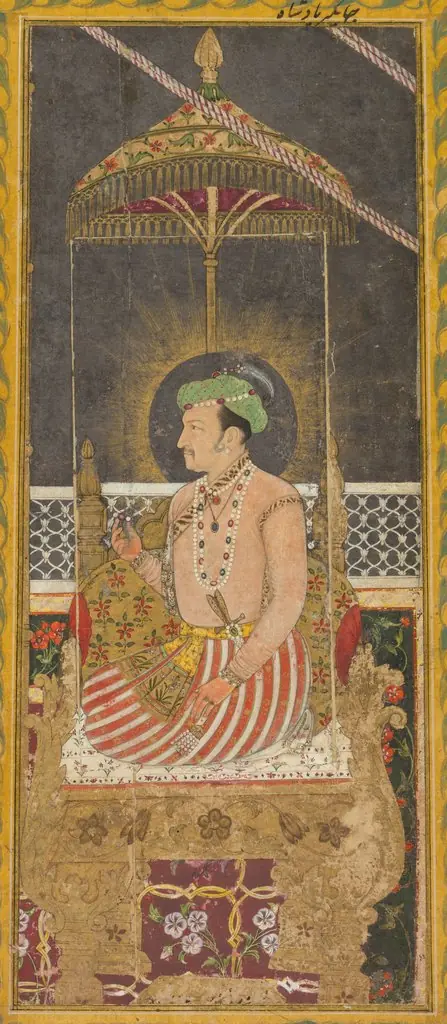
Posthumous portrait of Emperor Jahangir under a canopy (recto); Calligraphy (verso)
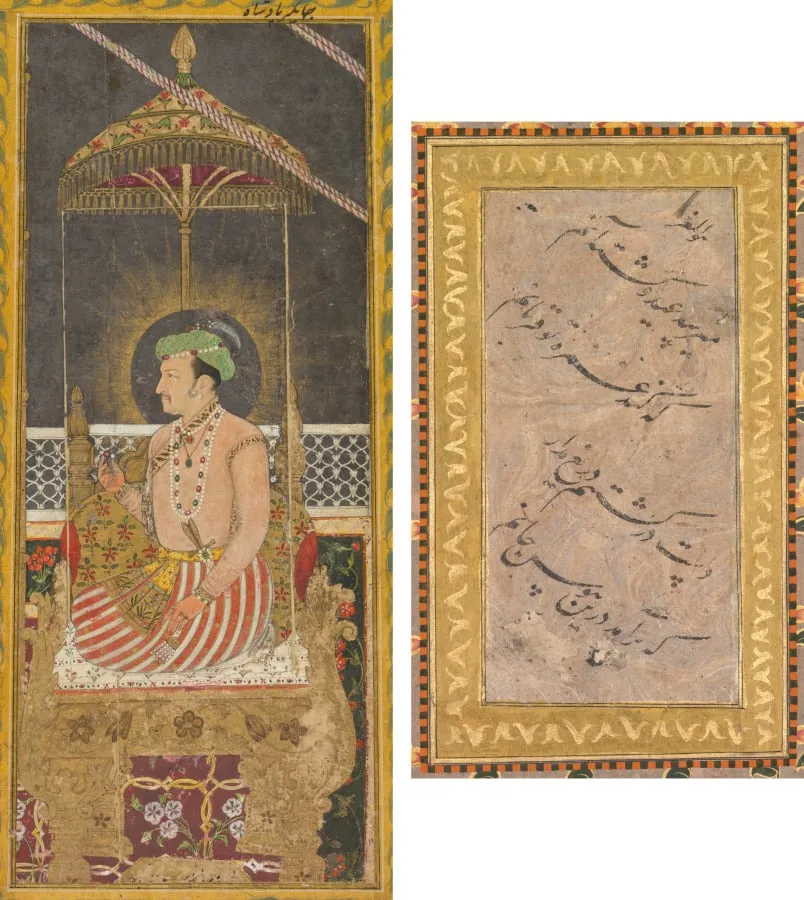
Posthumous portrait of Emperor Jahangir under a canopy (recto); Calligraphy (verso) is an unspecified painting by the Baroque artist Unknown. It dates from 1650 and is held in the collection of the Cleveland Museum of Art. The work is a posthumous portrait of the fourth Mughal ruler, Jahangir, who reigned from 1605 to 1627.
- Accession no.
- 2013.329
- Credit line
- Gift in honor of Madeline Neves Clapp; Gift of Mrs. Henry White Cannon by exchange; Bequest of Louise T. Cooper; Leonard C. Hanna Jr. Fund; From the Catherine and Ralph Benkaim Collection
About this work
The tiny details, like the flowers in the border, are typical of Mughal art, where every inch matters.
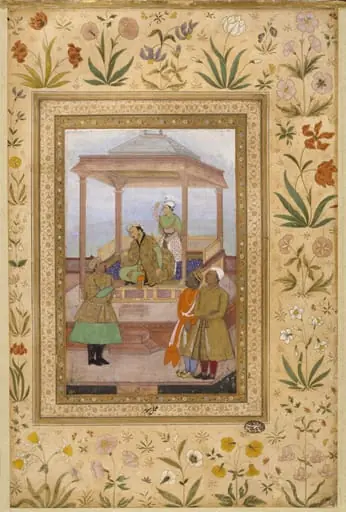
A man in a jeweled turban sits on a golden throne under a red canopy. He holds a globe and a book, surrounded by light.
This painting was made after the emperor died, so it’s not how he really looked. The artist showed him with a bright halo to suggest he was almost holy. The tiny details, like the flowers in the border, are typical of Mughal art, where every inch matters.
If you like this, look up 17th century.
Overview
The work is a posthumous portrait of the fourth Mughal ruler, Jahangir, who reigned from 1605 to 1627. Executed after his death, the painting presents the emperor seated beneath a red canopy, surrounded by symbols of authority and learning, and framed by a delicate ornamental border typical of Mughal court art.
Subject & Meaning
Jahangir is shown on a gilded throne, wearing a jeweled turban and holding a globe and a book, while a luminous halo crowns his head, implying a quasi‑divine sanction. The composition emphasizes his political power, scholarly interests, and the notion of an almost sanctified rulership.
Technique & Style
The artist employs fine brushwork to render intricate details such as the marble railing that separates the imperial space, the richly patterned textiles, and the minute floral motifs along the border. The use of bright colors and a subtle play of light creates a sense of opulence characteristic of 17th‑century Mughal painting.
History & Provenance
Created in the early 17th century, the portrait reflects the Mughal court’s practice of commemorating deceased monarchs through idealized images. It likely originated in the imperial workshop that produced official portraits for diplomatic and ceremonial purposes, though its later ownership record is not fully documented.
Context
Jahangir’s reign marked a period of expanding trade and diplomatic contacts with European powers, notably England and Portugal, situating the empire within the broader Age of Exploration. The portrait’s inclusion of a globe underscores this outward‑looking orientation and the emperor’s role in fostering international exchange.
Legacy
As a visual record, the painting illustrates how Mughal art blended realistic portraiture with symbolic embellishment to convey political legitimacy. It remains a valuable reference for scholars studying the visual culture of early modern South Asia and the ways rulers were memorialized after death.
Artist & collection









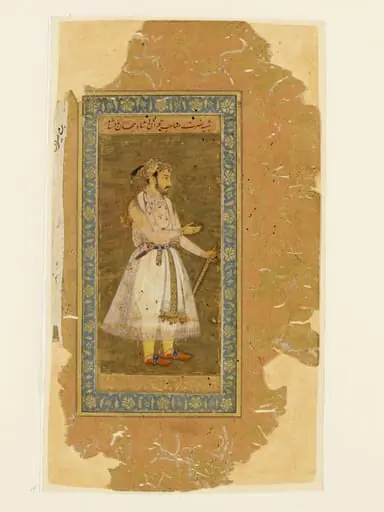
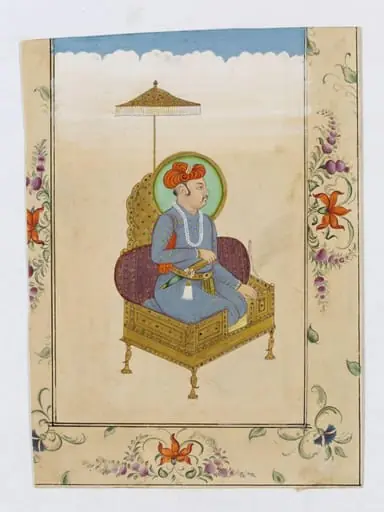
- The emperor Jahangir
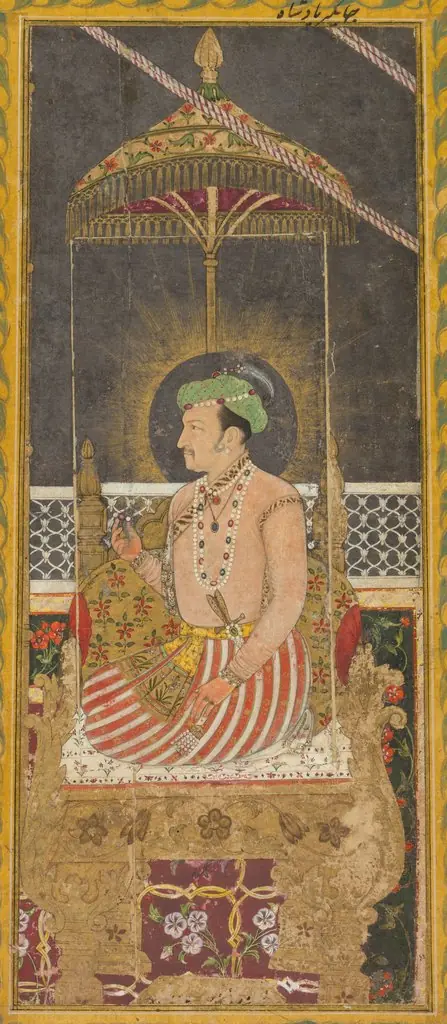 Posthumous portrait of Emperor Jahangir under a canopy (recto)
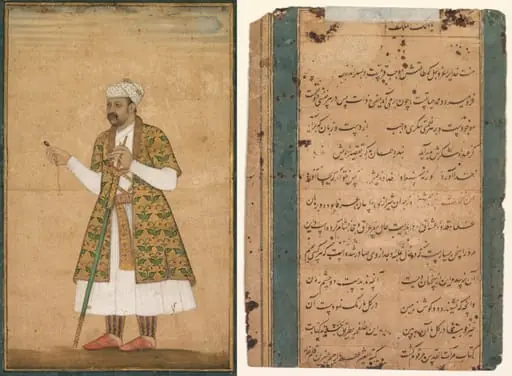 A Courtier, Possibly Khan Alam, Holding a Spinel and a Deccan Sword
 Posthumous portrait of Emperor Jahangir under a canopy (recto); Calligraphy (verso)
 Emperor Jahangir
 Zu'lfiqar Khan
 Untitled
 Untitled
 Jahangir and Qutb ad-Din Khan Koka
 Untitled
 Emperor Babur