Collection

Collection Crozat

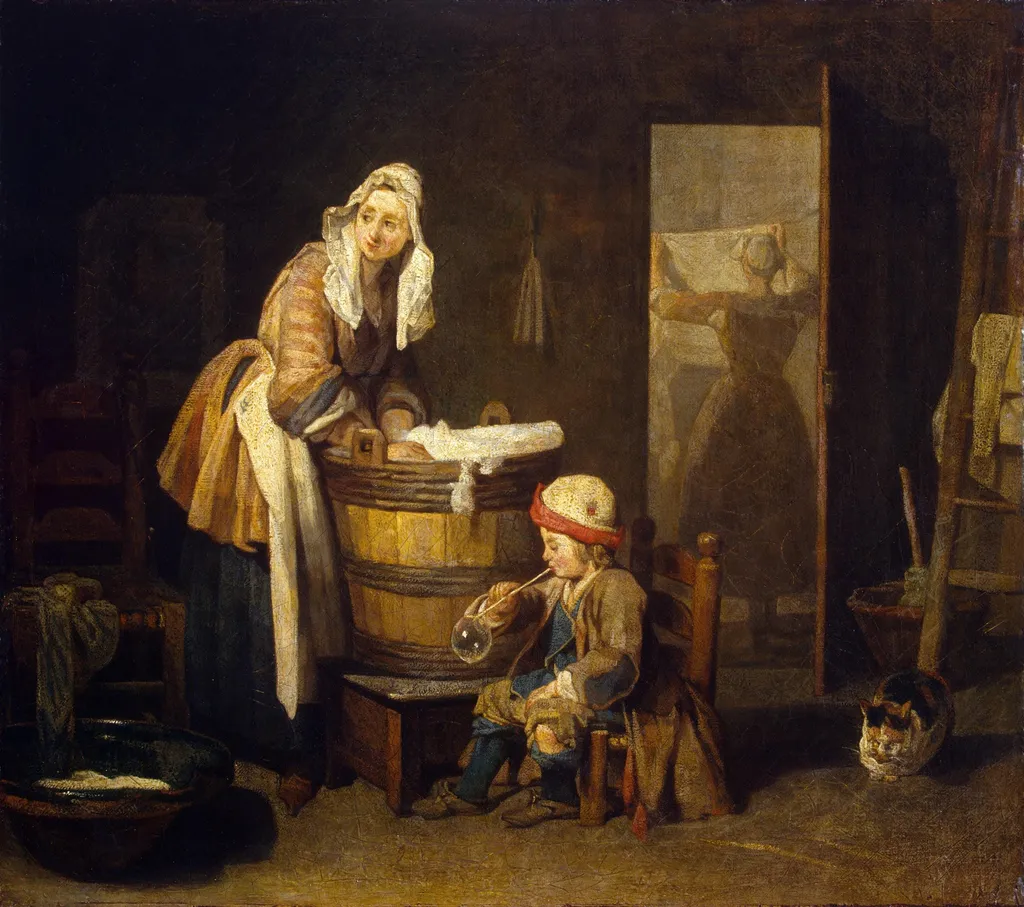
The Laundress, by Jean-Baptiste-Siméon Chardin, 1730

Collection Crozat is a collection. 1 work from its collection is in this catalog, including Jean-Baptiste-Siméon Chardin.

About Collection Crozat

collection purchased by Catherine II of Russia from estate of Louis Antoine Crozat

Works from Collection Crozat

Artworks shown from Collection Crozat are in the public domain; images via the open-access programs of their source collections. Spotted an error in this record? Tell us.

Overview

The Collection Crozat was one of the most important private art collections assembled in eighteenth-century France, consisting primarily of old master drawings and paintings. It was acquired en bloc by Catherine II of Russia in 1772 from the heirs of Louis Antoine Crozat, through the mediation of the philosopher Denis Diderot. The collection's subsequent transfer to the Imperial Hermitage Museum in Saint Petersburg represented a major shift of European artistic patrimony eastward and sparked contemporary debate about the export of national heritage.

Founding & history

The collection originated with Pierre Crozat (1665-1740), a Toulouse-born financier who moved to Paris around 1700 and was appointed treasurer to the king in 1704. Between 1683 and 1740, he amassed what was likely the largest collection of drawings of his era, alongside significant holdings of Italian and Flemish paintings. Pierre Crozat died without children in 1740, and his collection passed to his nephews. After the death of Louis François Crozat in 1750, the painting and sculpture collection went to his younger brother Louis Antoine Crozat, baron de Thiers, who also inherited the collection of another brother, Joseph Antoine Crozat, in 1751. Louis Antoine added these to his own holdings of Dutch and French paintings, then sold off some sculptures and paintings in June 1751. From 1751, he opened the remaining collection to the public at the hôtel d'Evreux, 19 place Vendôme, and published a catalogue in 1755. Upon his death in 1770, his three daughters decided to liquidate the collection amid financial difficulties. Denis Diderot, acting on behalf of Catherine II of Russia, negotiated the purchase with assistance from the Swiss banker and collector François Tronchin. On 4 January 1772, an act was signed committing 460,000 livres to the Crozat heirs. The shipment of paintings, pastels, and drawings took more than four months to reach Saint Petersburg by sea.

Collection scope

The collection was encyclopedic in character, reflecting Pierre Crozat's systematic approach to collecting. At his death in 1740, the holdings comprised approximately 19,201 drawings arranged in 202 portfolios, 1,369 prints, roughly 400 paintings, and about 400 sculptures. The drawings were organized geographically by school, Italian, Flemish, Dutch, German, and French, and then chronologically within each group, from Giotto to Bouchardon. This structure constituted what scholars have recognized as a cartography of European drawing styles, with approximately 70 percent Italian, 18 percent Northern European, and 12 percent French. Crozat also commissioned and collected prints, sponsoring the Recueil Crozat, a two-volume publication issued between 1729 and 1742 that reproduced paintings and drawings from his own and other French collections. The collection's scope thus extended beyond mere accumulation to a pedagogical and classificatory project, one that treated drawing as an autonomous art form rather than merely preparatory to painting.

Notable holdings

The painting collection included works by major European masters. Among the Italian school were a Raphael and four paintings by Veronese, including a self-portrait. The Northern schools were represented by twelve Rubens, seven van Dyck, eight Rembrandt, and several works by the Le Nain brothers, including La Visite à la grand-mère and La Famille de la laitière. The French school included three Watteau, five Poussin, and works by Claude Lorrain and Chardin, notably Le Bénédicité and La Blanchisseuse. Pierre Crozat had been the principal patron of Antoine Watteau, who painted a cycle of the Four Seasons for his Paris dining room. The drawing collection was equally distinguished, with sheets by Raphael, including an study for the Dispute du Saint-Sacrement now at the Musée Condé, Chantilly, and by Albrecht Dürer, such as the Nativity of 1514 now in the Albertina, Vienna. The print collection included plates by Nicolas-Dauphin de Beauvais, Charles-Nicolas Cochin, Louis Desplaces, Edme Jeaurat, Jacques-Philippe Le Bas, Jean-Baptiste Scotin, and Louis Surugue.
Visiting

The Collection Crozat no longer exists as an independent entity. Following its purchase by Catherine II of Russia in 1772, the works were incorporated into the collections of what became the State Hermitage Museum in Saint Petersburg. Approximately 400 works from the collection entered the Hermitage. The transaction, negotiated by Denis Diderot with the assistance of Prince Galitzine, was controversial from its inception. Diderot himself acknowledged public hostility in a letter to Catherine dated 20 March 1771, noting that he enjoyed 'the most decided public hatred' for sending the pictures abroad during a time of war. The sale price of 460,000 livres was widely considered low relative to the quality of the works, and the departure of a collection that had been publicly accessible in Paris intensified French concerns about the loss of national patrimony. Today, the dispersed holdings of the original Crozat collection remain accessible to scholars and the public through the Hermitage Museum and, in the case of works sold or separated from the core group, other institutions.