Museum
Royal Irish Academy
![A view of the round tower of Michael of Pole in the city of Dublin [...], by Gabriel, ca.1729-1817 Beranger, 1790](https://artifactworldgallery.com/img/gabriel-ca-1729-1817-beranger--a-view-of-the-round-tower-of-michael-of-pole-in-the-city-of--066346c3e06cc1f8-w1024.webp)
Royal Irish Academy is a museum. 35 works from its collection are in this catalog, including Gabriel, ca.1729-1817 Beranger.
About Royal Irish Academy
Overview & Identity
The Royal Irish Academy (RIA), established in 1785, is Ireland's leading independent learned society and academic body. Based in Dublin, it serves as an all-island forum for peer-elected experts in the sciences, humanities, and social sciences. The Academy's primary mission is to recognize academic excellence, support scholarship, and provide expert advice to government and the public on matters of national and international concern.
Election to membership is considered one of the highest academic honors in Ireland, with members entitled to use the designation 'MRIA' after their names. The Academy currently maintains a membership of approximately 680 individuals and employs around 80 staff to manage its research programs, publications, and library.
History & Founding
Founded in 1785, the Royal Irish Academy is one of the oldest learned societies in Ireland. Its first meetings were held at the personal residence of the Earl of Charlemont. By 1785, the Academy had already begun using a building on Grafton Street for its meetings.
In 1852, the Academy moved to its current permanent home at 19 Dawson Street, known as Academy House. For much of its early history, the Academy functioned as the custodian of Ireland's national collection of antiquities. However, in 1890, the majority of these archaeological artifacts were transferred to the Science and Art Museum in Dublin (now the National Museum of Ireland – Archaeology), marking a significant shift in the Academy's focus from museum curation to scholarly research and publishing.
Collection Highlights & Notable Holdings
While the Academy no longer holds the national archaeological collection, its library remains one of Ireland's premier research libraries, safeguarding major manuscript, book, pamphlet, and drawing collections. A centerpiece of the collection is the Cathach of St. Columba, the earliest example of Irish writing, which is held in the library. The library also possesses a fifteenth-century copy of Euclid's Elements of Geometry, printed in 1482 by Erhard Ratdolt, which is noted as a work of many hands.
The Meeting Room within Academy House contains historical furniture, including benches believed to have come from the House of Commons of the old Irish Parliament at College Green, a ceremonial chair once used by the Lord Chancellor, and gasoliers refitted with Murano glass lampshades. The room also displays a collection of seventy-eight terracotta busts of Roman emperors.
Significance & Legacy
The Royal Irish Academy plays a critical role in the Irish intellectual landscape by promoting study in the natural sciences, arts, literature, and social sciences. It operates nine academic research programs at the leading edge of scholarship and manages the Digital Repository of Ireland (DRI), a national digital archive. The Academy is a major publisher, having commenced publishing in 1787, and currently releases six journals and numerous research projects.
It administers prestigious awards, including the RIA Gold Medal in the Humanities and the Kathleen Lonsdale Chemistry Prize. Through its Young Academy Ireland initiative, it supports early-career researchers, and its standing committees on archaeology, international affairs, and north–south matters provide strategic input into policy and public concern. The Academy's work influences both scholarship and the wider community, reinforcing its status as a premier national institution.
What to see at Royal Irish Academy
Start with A view of the round tower of Michael of Pole in the city of Dublin [...] by Gabriel, ca.1729-1817 Beranger.
![A view of the round tower of Michael of Pole in the city of Dublin [...], by Gabriel, ca.1729-1817 Beranger, 1790](https://artifactworldgallery.com/img/gabriel-ca-1729-1817-beranger--a-view-of-the-round-tower-of-michael-of-pole-in-the-city-of--066346c3e06cc1f8-w320.webp) A view of the round tower of Michael of Pole in the city of Dublin [...]
A view of the round tower of Michael of Pole in the city of Dublin [...]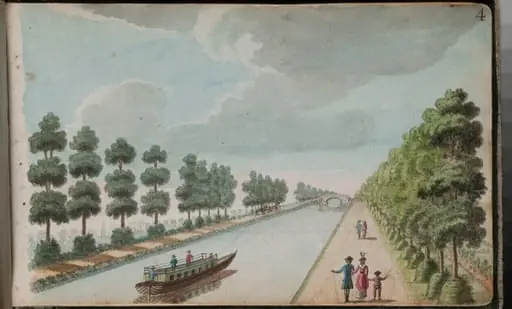 View of the Grand Canal, taken between the first bridge and the first lock looking towards Dublin
![View of the castle of Rabuck [Roebuck], 2 miles from Dublin [...], by Gabriel, ca.1729-1817 Beranger, 1790](https://artifactworldgallery.com/img/gabriel-ca-1729-1817-beranger--view-of-the-castle-of-rabuck-roebuck-2-miles-from-dublin--12853cdd66c2654f-w320.webp) View of the castle of Rabuck [Roebuck], 2 miles from Dublin [...]
View of the castle of Rabuck [Roebuck], 2 miles from Dublin [...]![Rathgar Castle, 1 1/2 miles from Dublin [...], by Gabriel, ca.1729-1817 Beranger, 1790](https://artifactworldgallery.com/img/gabriel-ca-1729-1817-beranger--rathgar-castle-1-1-2-miles-from-dublin--17cfe3f4e70405c2-w320.webp) Rathgar Castle, 1 1/2 miles from Dublin [...]
Rathgar Castle, 1 1/2 miles from Dublin [...]![Grange Castle, near Clondalken [Clondalkin], 6 miles from Dublin [...], by Gabriel, ca.1729-1817 Beranger, 1790](https://artifactworldgallery.com/img/gabriel-ca-1729-1817-beranger--grange-castle-near-clondalken-clondalkin-6-miles-from-dublin--29b767d07d01cfc8-w320.webp) Grange Castle, near Clondalken [Clondalkin], 6 miles from Dublin [...]
Grange Castle, near Clondalken [Clondalkin], 6 miles from Dublin [...]![View of Balymount [Ballymount] Castle, 3 miles from Dublin [...], by Gabriel, ca.1729-1817 Beranger, 1790](https://artifactworldgallery.com/img/gabriel-ca-1729-1817-beranger--view-of-balymount-ballymount-castle-3-miles-from-dublin--32c2f3cc4ed12e5f-w320.webp) View of Balymount [Ballymount] Castle, 3 miles from Dublin [...]
View of Balymount [Ballymount] Castle, 3 miles from Dublin [...]
Works from Royal Irish Academy
- A view of the round tower of Michael of Pole in the city of Dublin [...]
- View of the Grand Canal, taken between the first bridge and the first lock looking towards Dublin
- View of the castle of Rabuck [Roebuck], 2 miles from Dublin [...]
- Rathgar Castle, 1 1/2 miles from Dublin [...]
- Grange Castle, near Clondalken [Clondalkin], 6 miles from Dublin [...]
- View of Balymount [Ballymount] Castle, 3 miles from Dublin [...]
![A second view of Rathfarnham Castle, showing the front or entrance [...], by Gabriel, ca.1729-1817 Beranger, 1790](https://artifactworldgallery.com/img/gabriel-ca-1729-1817-beranger--a-second-view-of-rathfarnham-castle-showing-the-front-or-ent--3b1f8da88f33e09f-w320.webp) A second view of Rathfarnham Castle, showing the front or entrance [...]
A second view of Rathfarnham Castle, showing the front or entrance [...]![View of the Castle of Carrick, on the River Boyne, County of E[ast] Meath, 24 m[iles] fr[om] Dublin [...], by Gabriel, ca.1729-1817 Beranger, 1790](https://artifactworldgallery.com/img/gabriel-ca-1729-1817-beranger--view-of-the-castle-of-carrick-on-the-river-boyne-county-of-e--47a9c858b28e8890-w320.webp) View of the Castle of Carrick, on the River Boyne, County of E[ast] Meath, 24 m[iles] fr[om] Dublin [...]
View of the Castle of Carrick, on the River Boyne, County of E[ast] Meath, 24 m[iles] fr[om] Dublin [...]![Another view of Castleknock with an [sic] mutilated tower on a hill at some distance [...], by Gabriel, ca.1729-1817 Beranger, 1790](https://artifactworldgallery.com/img/gabriel-ca-1729-1817-beranger--another-view-of-castleknock-with-an-sic-mutilated-tower-on-a--4e08fdbddd5c4a48-w320.webp) Another view of Castleknock with an [sic] mutilated tower on a hill at some distance [...]
Another view of Castleknock with an [sic] mutilated tower on a hill at some distance [...]![View of Drumnagh [Drimnagh] Castle, near Crumlin [...], by Gabriel, ca.1729-1817 Beranger, 1790](https://artifactworldgallery.com/img/gabriel-ca-1729-1817-beranger--view-of-drumnagh-drimnagh-castle-near-crumlin--606b31c4594851c7-w320.webp) View of Drumnagh [Drimnagh] Castle, near Crumlin [...]
View of Drumnagh [Drimnagh] Castle, near Crumlin [...]![View of Cappoge Castle [...], by Gabriel, ca.1729-1817 Beranger, 1790](https://artifactworldgallery.com/img/gabriel-ca-1729-1817-beranger--view-of-cappoge-castle--885594fac18874cc-w320.webp) View of Cappoge Castle [...]
View of Cappoge Castle [...]![View of two more of Dalkey's castles, the old church and church yard [...], by Gabriel, ca.1729-1817 Beranger, 1790](https://artifactworldgallery.com/img/gabriel-ca-1729-1817-beranger--view-of-two-more-of-dalkey-s-castles-the-old-church-and-chur--8acaea1fbac6279c-w320.webp) View of two more of Dalkey's castles, the old church and church yard [...]
View of two more of Dalkey's castles, the old church and church yard [...]![View of the castle at Tallagh [Tallaght], 4 miles from Dublin [...], by Gabriel, ca.1729-1817 Beranger, 1790](https://artifactworldgallery.com/img/gabriel-ca-1729-1817-beranger--view-of-the-castle-at-tallagh-tallaght-4-miles-from-dublin--91b676c483b47739-w320.webp) View of the castle at Tallagh [Tallaght], 4 miles from Dublin [...]
View of the castle at Tallagh [Tallaght], 4 miles from Dublin [...]![View of Kilgoben [Kilgobbin] Castle, 5 miles from Dublin [...], by Gabriel, ca.1729-1817 Beranger, 1790](https://artifactworldgallery.com/img/gabriel-ca-1729-1817-beranger--view-of-kilgoben-kilgobbin-castle-5-miles-from-dublin--924293240c630cbc-w320.webp) View of Kilgoben [Kilgobbin] Castle, 5 miles from Dublin [...]
View of Kilgoben [Kilgobbin] Castle, 5 miles from Dublin [...]![A view of St. John's Tower in Dublin [...], by Gabriel, ca.1729-1817 Beranger, 1790](https://artifactworldgallery.com/img/gabriel-ca-1729-1817-beranger--a-view-of-st-john-s-tower-in-dublin--97423c1bd8cba9fa-w320.webp) A view of St. John's Tower in Dublin [...]
A view of St. John's Tower in Dublin [...]![View of Monkstown Castle, 4 1/2 miles from Dublin [...], by Gabriel, ca.1729-1817 Beranger, 1790](https://artifactworldgallery.com/img/gabriel-ca-1729-1817-beranger--view-of-monkstown-castle-4-1-2-miles-from-dublin--9cf4cde63d5dec9c-w320.webp) View of Monkstown Castle, 4 1/2 miles from Dublin [...]
View of Monkstown Castle, 4 1/2 miles from Dublin [...]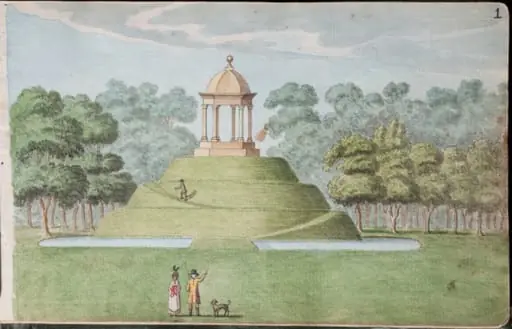 View at Temple-oge, in the demesne of Domville Esqr., 3 miles from Dublin
![View of the Plunket's [sic] Castle, near St. Margaret's, 5 1/2 miles from Dublin [...], by Gabriel, ca.1729-1817 Beranger, 1790](https://artifactworldgallery.com/img/gabriel-ca-1729-1817-beranger--view-of-the-plunket-s-sic-castle-near-st-margaret-s-5-1-2-mi--aaf2a207a5920843-w320.webp) View of the Plunket's [sic] Castle, near St. Margaret's, 5 1/2 miles from Dublin [...]
View of the Plunket's [sic] Castle, near St. Margaret's, 5 1/2 miles from Dublin [...]![View of the inside of the old church at Killester, 2 1/2 miles from Dublin [...], by Gabriel, ca.1729-1817 Beranger, 1790](https://artifactworldgallery.com/img/gabriel-ca-1729-1817-beranger--view-of-the-inside-of-the-old-church-at-killester-2-1-2-mile--abfebd83941373b2-w320.webp) View of the inside of the old church at Killester, 2 1/2 miles from Dublin [...]
View of the inside of the old church at Killester, 2 1/2 miles from Dublin [...]![View of the church and adjacent ruins at Dunshaghlin [Dunshaughlin], Co[unt]y of E[ast] Meath, 13 miles from Dublin [...], by Gabriel, ca.1729-1817 Beranger, 1790](https://artifactworldgallery.com/img/gabriel-ca-1729-1817-beranger--view-of-the-church-and-adjacent-ruins-at-dunshaghlin-dunshau--b4275bcb8c0ebd0f-w320.webp) View of the church and adjacent ruins at Dunshaghlin [Dunshaughlin], Co[unt]y of E[ast] Meath, 13 miles from Dublin [...]
View of the church and adjacent ruins at Dunshaghlin [Dunshaughlin], Co[unt]y of E[ast] Meath, 13 miles from Dublin [...]![View of Baggoths rath [Baggot Rath], a castle half a mile from Dublin [...], by Gabriel, ca.1729-1817 Beranger, 1790](https://artifactworldgallery.com/img/gabriel-ca-1729-1817-beranger--view-of-baggoths-rath-baggot-rath-a-castle-half-a-mile-from--c625749ddb0ab425-w320.webp) View of Baggoths rath [Baggot Rath], a castle half a mile from Dublin [...]
View of Baggoths rath [Baggot Rath], a castle half a mile from Dublin [...]![View of the moat at Navan, Co. of E[ast] Meath, 22 m[iles] from Dublin [...], by Gabriel, ca.1729-1817 Beranger, 1790](https://artifactworldgallery.com/img/gabriel-ca-1729-1817-beranger--view-of-the-moat-at-navan-co-of-e-ast-meath-22-m-iles-from-d--f82cec6c65e138b8-w320.webp) View of the moat at Navan, Co. of E[ast] Meath, 22 m[iles] from Dublin [...]
View of the moat at Navan, Co. of E[ast] Meath, 22 m[iles] from Dublin [...]![View of Rathcroghan, Co[unt]y of Roscommon & Province of Connaught, 84 or 85 miles from Dublin [...], by Gabriel, ca.1729-1817 Beranger, 1790](https://artifactworldgallery.com/img/gabriel-ca-1729-1817-beranger--view-of-rathcroghan-co-unt-y-of-roscommon-province-of-connau--fb427addab79d7b1-w320.webp) View of Rathcroghan, Co[unt]y of Roscommon & Province of Connaught, 84 or 85 miles from Dublin [...]
View of Rathcroghan, Co[unt]y of Roscommon & Province of Connaught, 84 or 85 miles from Dublin [...]![View of a cromliach [cromlech], call'd Fan-mac-cools Quoit at Howht [sic] 8 miles from Dublin [...], by Gabriel, ca.1729-1817 Beranger, 1790](https://artifactworldgallery.com/img/gabriel-ca-1729-1817-beranger--view-of-a-cromliach-cromlech-call-d-fan-mac-cools-quoit-at-h--1853ee772457212b-w320.webp) View of a cromliach [cromlech], call'd Fan-mac-cools Quoit at Howht [sic] 8 miles from Dublin [...]
View of a cromliach [cromlech], call'd Fan-mac-cools Quoit at Howht [sic] 8 miles from Dublin [...]![View of a cromliach [cromlech] on the lands of Loughlins town, 7 miles from Dublin [...], by Gabriel, ca.1729-1817 Beranger, 1790](https://artifactworldgallery.com/img/gabriel-ca-1729-1817-beranger--view-of-a-cromliach-cromlech-on-the-lands-of-loughlins-town--2ec5dcc741513545-w320.webp) View of a cromliach [cromlech] on the lands of Loughlins town, 7 miles from Dublin [...]
View of a cromliach [cromlech] on the lands of Loughlins town, 7 miles from Dublin [...]![View of the tumulus or barrow at Douth [Dowth], Co. of E[ast] Meath, 25 miles from Dublin [...], by Gabriel, ca.1729-1817 Beranger, 1790](https://artifactworldgallery.com/img/gabriel-ca-1729-1817-beranger--view-of-the-tumulus-or-barrow-at-douth-dowth-co-of-e-ast-mea--32266a93c2c75aee-w320.webp) View of the tumulus or barrow at Douth [Dowth], Co. of E[ast] Meath, 25 miles from Dublin [...]
View of the tumulus or barrow at Douth [Dowth], Co. of E[ast] Meath, 25 miles from Dublin [...]![A view of the ruins of Mallahidert [Mulhuddart] Church, on the road to Navan, at about 5 miles from Dublin [...], by Gabriel, ca.1729-1817 Beranger, 1790](https://artifactworldgallery.com/img/gabriel-ca-1729-1817-beranger--a-view-of-the-ruins-of-mallahidert-mulhuddart-church-on-the--3403306d8314c03b-w320.webp) A view of the ruins of Mallahidert [Mulhuddart] Church, on the road to Navan, at about 5 miles from Dublin [...]
A view of the ruins of Mallahidert [Mulhuddart] Church, on the road to Navan, at about 5 miles from Dublin [...]![View of Castle-knock, 3 miles from Dublin [...], by Gabriel, ca.1729-1817 Beranger, 1790](https://artifactworldgallery.com/img/gabriel-ca-1729-1817-beranger--view-of-castle-knock-3-miles-from-dublin--4e9a7099f4e41684-w320.webp) View of Castle-knock, 3 miles from Dublin [...]
View of Castle-knock, 3 miles from Dublin [...]![View of Clonskiagh [Clonskeagh], a village on the River Dodder, 1 1/2 miles from Dublin [...], by Gabriel, ca.1729-1817 Beranger, 1790](https://artifactworldgallery.com/img/gabriel-ca-1729-1817-beranger--view-of-clonskiagh-clonskeagh-a-village-on-the-river-dodder--593ec31d26102da2-w320.webp) View of Clonskiagh [Clonskeagh], a village on the River Dodder, 1 1/2 miles from Dublin [...]
View of Clonskiagh [Clonskeagh], a village on the River Dodder, 1 1/2 miles from Dublin [...]![View of the remains of a druidical monument at Douth [Dowth], Co[unty] of Meath, 2 miles from Slane, & 24 miles from Dublin [...], by Gabriel, ca.1729-1817 Beranger, 1790](https://artifactworldgallery.com/img/gabriel-ca-1729-1817-beranger--view-of-the-remains-of-a-druidical-monument-at-douth-dowth-c--599f96d588ed28a4-w320.webp) View of the remains of a druidical monument at Douth [Dowth], Co[unty] of Meath, 2 miles from Slane, & 24 miles from Dublin [...]
View of the remains of a druidical monument at Douth [Dowth], Co[unty] of Meath, 2 miles from Slane, & 24 miles from Dublin [...]![View of Dundrum Castle from the court yard [...], by Gabriel, ca.1729-1817 Beranger, 1790](https://artifactworldgallery.com/img/gabriel-ca-1729-1817-beranger--view-of-dundrum-castle-from-the-court-yard--9adf863f6e8a85bf-w320.webp) View of Dundrum Castle from the court yard [...]
View of Dundrum Castle from the court yard [...]![View of another castle at Monkstown [...], by Gabriel, ca.1729-1817 Beranger, 1790](https://artifactworldgallery.com/img/gabriel-ca-1729-1817-beranger--view-of-another-castle-at-monkstown--aa06605166c02b4a-w320.webp) View of another castle at Monkstown [...]
View of another castle at Monkstown [...]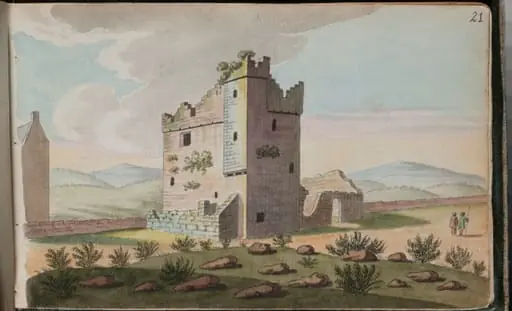 View of one of Dalkey's castles taken from the church yard on the opposite side
![View of the Black Castle at Wiclow [sic], County of Wicklow, 24 miles from Dublin [...], by Gabriel, ca.1729-1817 Beranger, 1790](https://artifactworldgallery.com/img/gabriel-ca-1729-1817-beranger--view-of-the-black-castle-at-wiclow-sic-county-of-wicklow-24--e655d3281baa9667-w320.webp) View of the Black Castle at Wiclow [sic], County of Wicklow, 24 miles from Dublin [...]
View of the Black Castle at Wiclow [sic], County of Wicklow, 24 miles from Dublin [...]![View of Merion [Merrion] Castle, 2 miles from Dublin [...], by Gabriel, ca.1729-1817 Beranger, 1790](https://artifactworldgallery.com/img/gabriel-ca-1729-1817-beranger--view-of-merion-merrion-castle-2-miles-from-dublin--ff55e85c19078a20-w320.webp) View of Merion [Merrion] Castle, 2 miles from Dublin [...]
View of Merion [Merrion] Castle, 2 miles from Dublin [...]