Impressionism had answered one question with great force: how to paint the fleeting appearance of the world, the light on the water at a given moment under a given sky. By the 1880s a younger generation of painters had absorbed that lesson and grown restless with it. They kept the Impressionists’ bright palette and their freedom from academic rules, but they wanted painting to do more than record a sensation. The loose grouping we now call Post-Impressionism is really a set of separate answers to a single question: after the light, what next?
Cézanne: structure under the surface
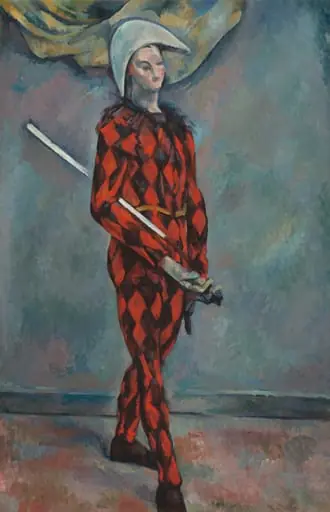
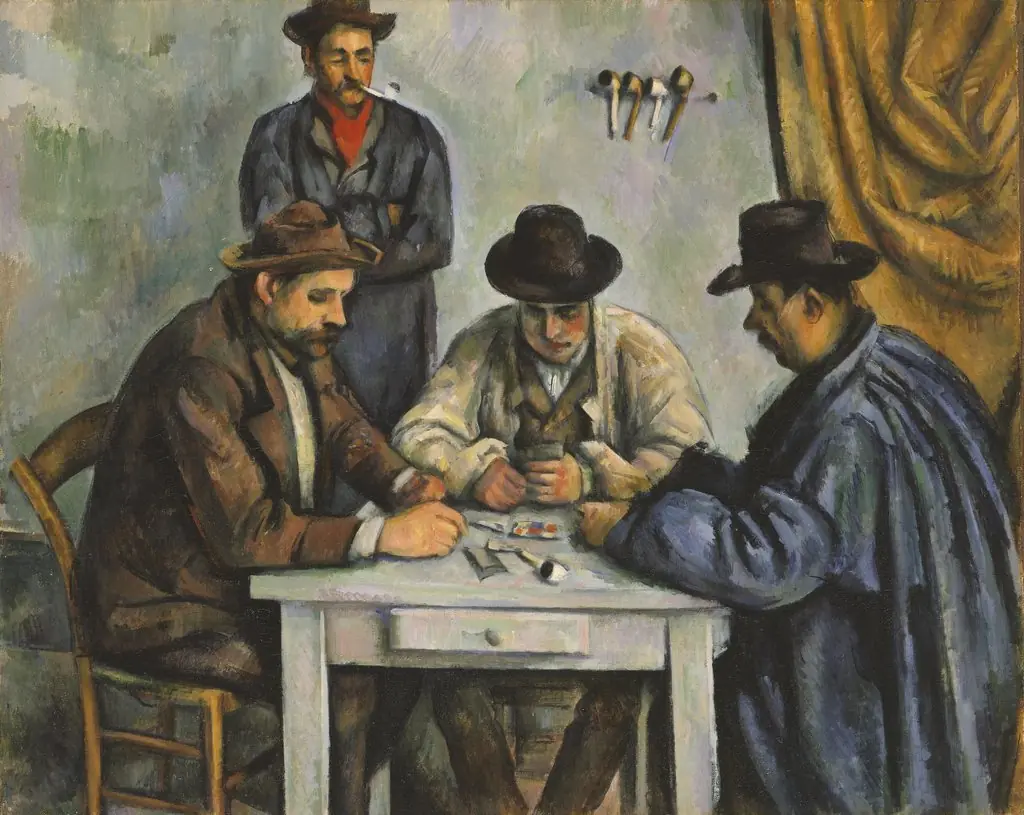
Paul Cézanne had shown with the Impressionists and shared their interest in observation, but he came to distrust the way Impressionism let a scene dissolve into shimmer. He wanted to put the solidity back. In paintings like The Card Players he builds his figures out of firm, deliberate planes of colour, each stroke laying down a facet of form rather than a flicker of light. His Harlequin stands with the same weighted presence, the body constructed almost architecturally.
Cézanne’s ambition was to make “of Impressionism something solid and durable, like the art of the museums.” That programme — finding the permanent structure underneath the passing appearance — fed directly into Cubism a generation later. He is the bridge between the Impressionist moment and the analytical painting of the twentieth century.
Van Gogh and Gauguin: feeling and symbol
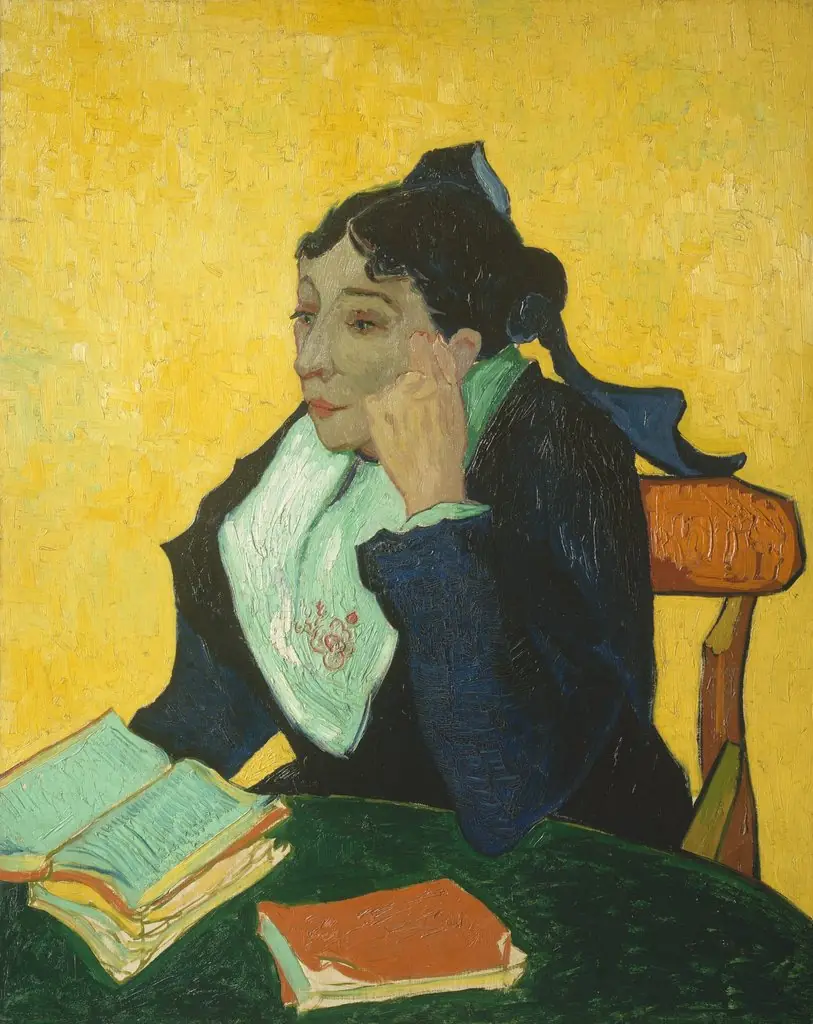
Where Cézanne pursued structure, Vincent van Gogh pursued feeling. He took the Impressionist brushstroke and charged it with emotion, until the stroke itself became expressive — thick, directional, urgent. His L’Arlésienne sets a single figure against a flat field of intense colour, the mood carried as much by the handling of paint as by the subject. The Impressionists had painted what the eye saw; Van Gogh painted what the subject made him feel.
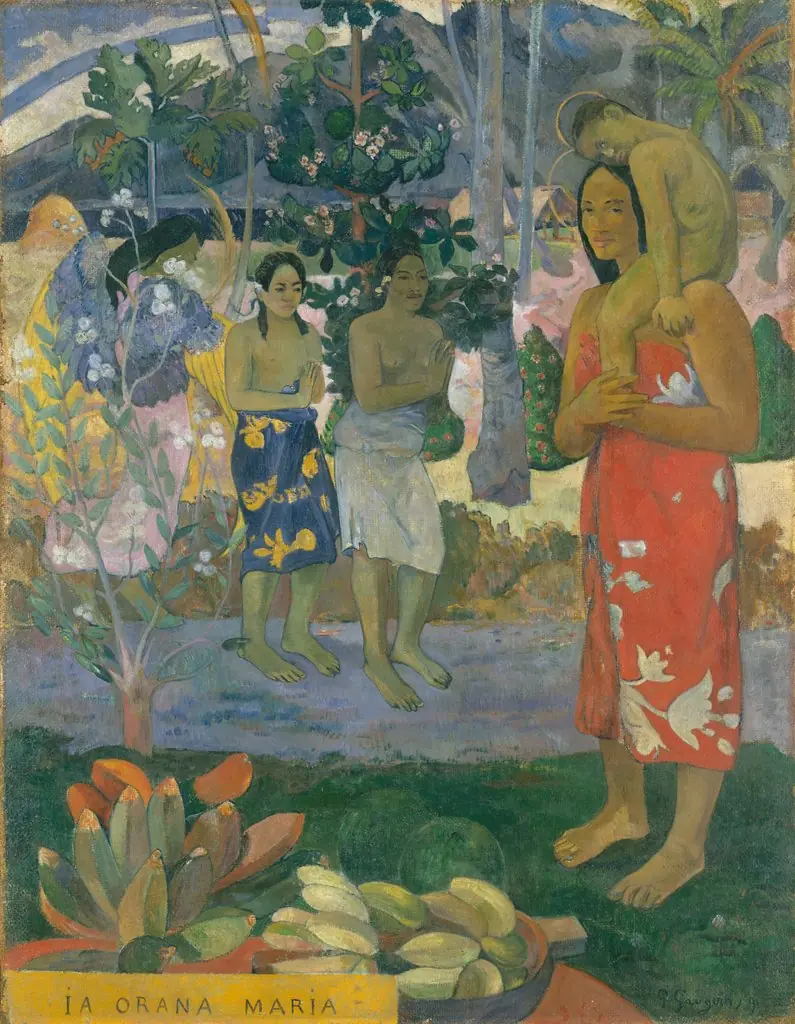
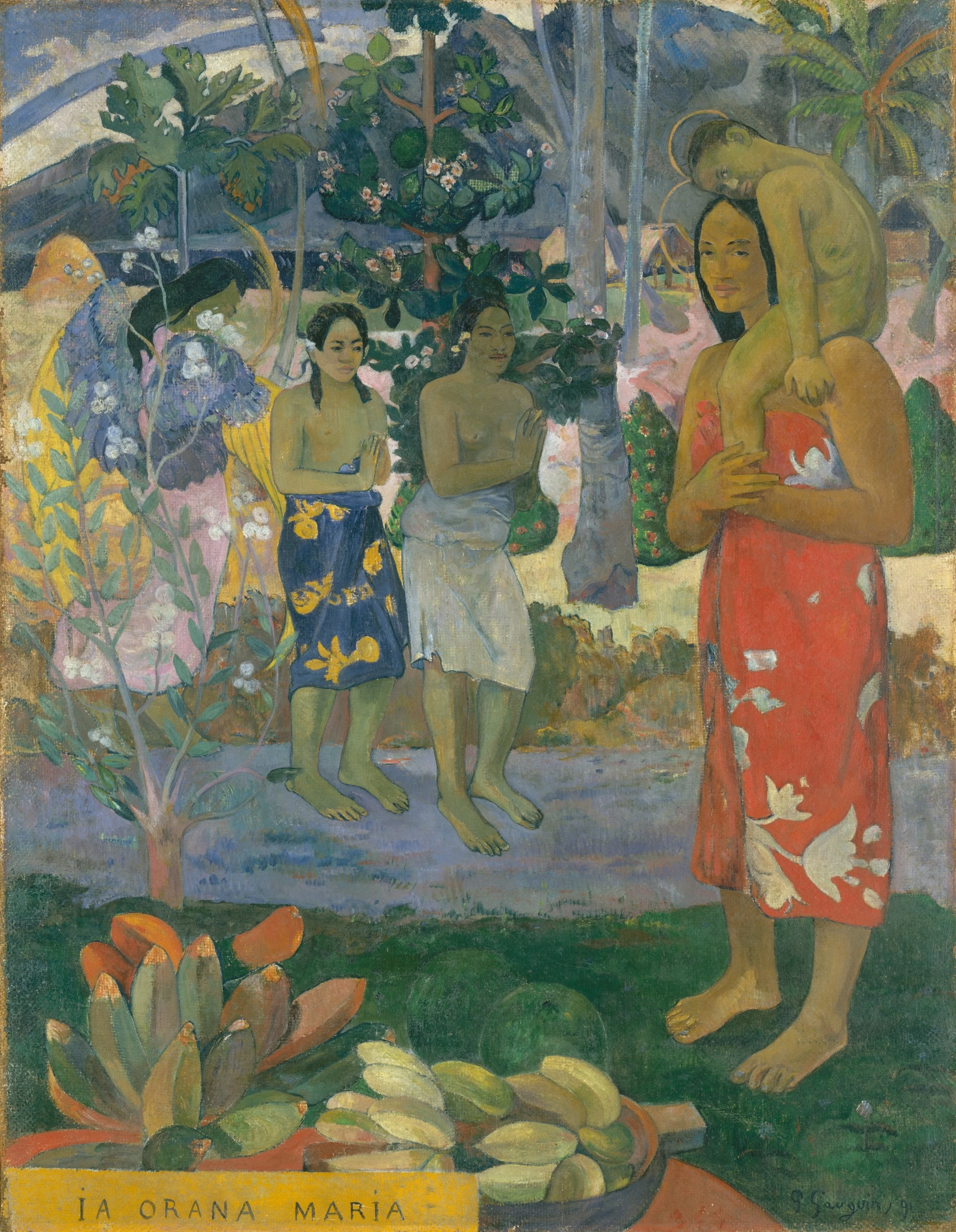
Paul Gauguin pushed further still, away from observation altogether and toward symbol. His Ia Orana Maria, painted in Tahiti, drapes a Christian subject in the colours and forms of the Pacific, using flat areas of colour and bold outline derived in part from the ukiyo-e prints then arriving in Europe. For Gauguin the point of a painting was not to reproduce a scene but to embody an idea and a mood. Colour became expressive rather than descriptive.
Many roads out of one moment
What unites these painters is less a shared style than a shared inheritance and a shared dissatisfaction. Each had learned from Impressionism that painting was free to abandon the academy and to trust the eye. Each then decided that the eye alone was not enough — that painting also needed structure, or feeling, or symbol. Cézanne went toward form, Van Gogh toward emotion, Gauguin toward the symbolic and the decorative.
Those divergent roads opened nearly everything that followed: Cubism out of Cézanne, Expressionism out of Van Gogh, the Symbolist and decorative currents out of Gauguin. For a sense of where they began, the Impressionist movement essay traces the moment these painters were reacting to.
For the movement itself, see the Post-Impressionism page.