Artist
Henry Farrer
United Kingdom of Great Britain and Ireland
Henry Farrer is an United Kingdom of Great Britain and Ireland Impressionism artist. 14 works are cataloged here, principally at National Gallery of Art.
American, London 1844–1903 New York
Overview
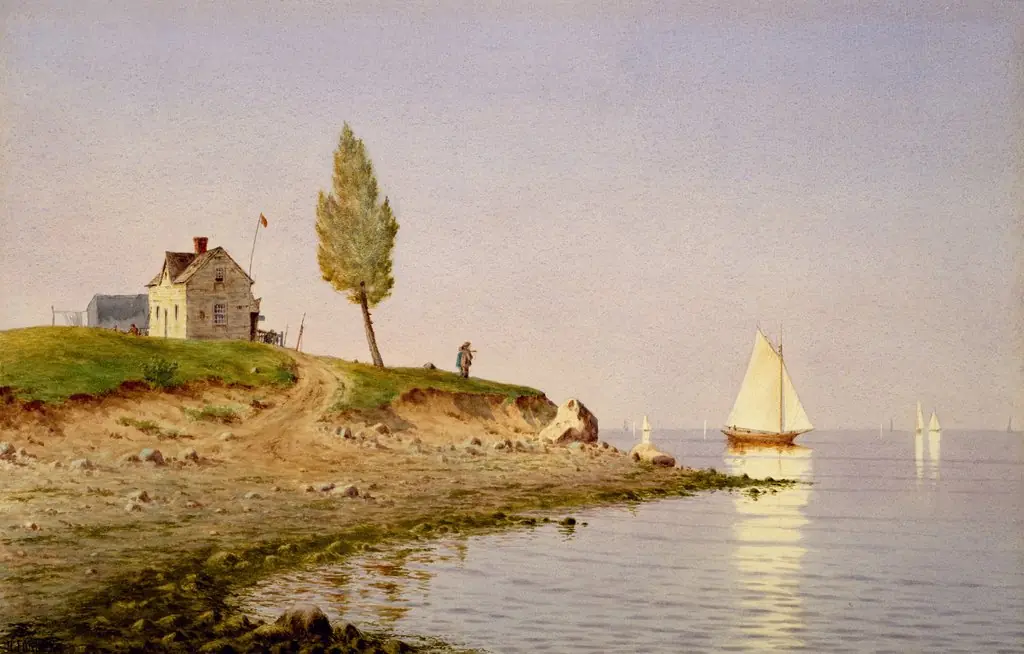
Henry Farrer (March 23, 1843 or 1844, February 24, 1903) was an English-born American artist celebrated for his tonalist watercolor landscapes and etchings. A self-taught painter who immigrated to the United States as a young man, Farrer became a pivotal figure in two distinct areas of American art: he co-founded the American Watercolor Society and helped spark the Etching Revival in America through his work with the New York Etching Club. His best-known works feature misty, meditative landscapes rendered in subdued, earthy tones, often depicting marshy foregrounds at sunset.
Biography & dates
Farrer was born in London, the younger brother of artist Thomas Charles Farrer, who had studied under John Ruskin and Dante Gabriel Rossetti of the Pre-Raphaelite Brotherhood. Sources differ on his exact birth year: the French Wikipedia gives 1843, while English and German sources state 1844. He emigrated to America in 1863 (though one source suggests 1861) and established a studio in New York. In his early professional years during the 1860s, he painted Pre-Raphaelite still lifes, landscapes, and marine works, and began experimenting with etching. He became a member of the Society for the Advancement of Truth in Art, a short-lived organization co-founded by his brother that championed the Pre-Raphaelite commitment to truthful, highly realistic depiction. Farrer exhibited at the National Academy of Design in New York from 1867 to 1881. He died on February 24, 1903, in Brooklyn and was buried in Brompton Cemetery, London.
Style & movement
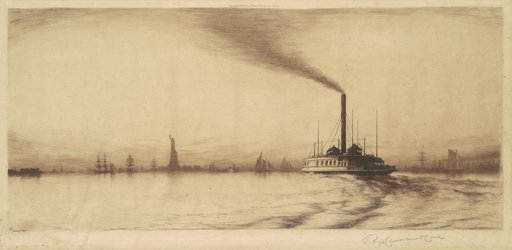
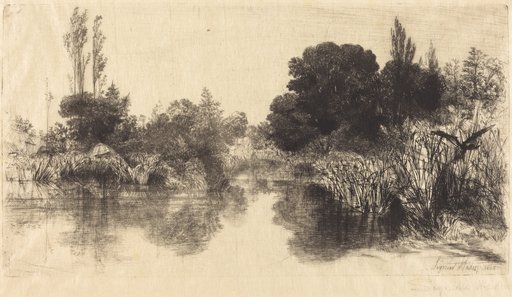
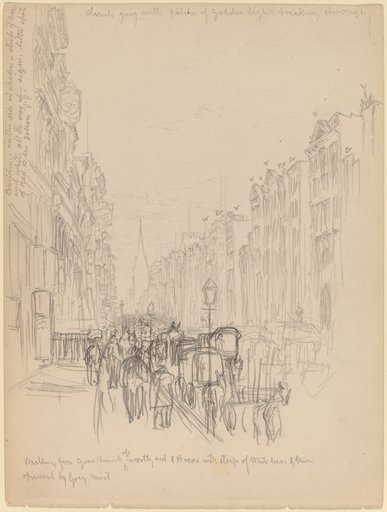
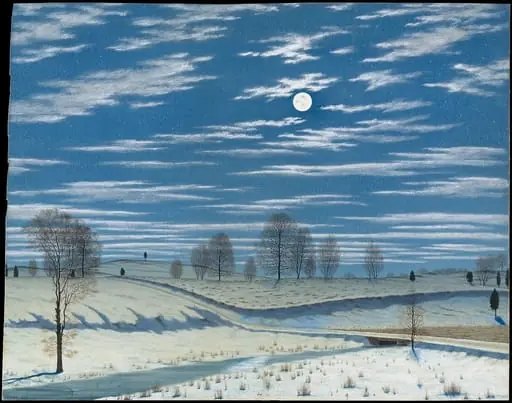
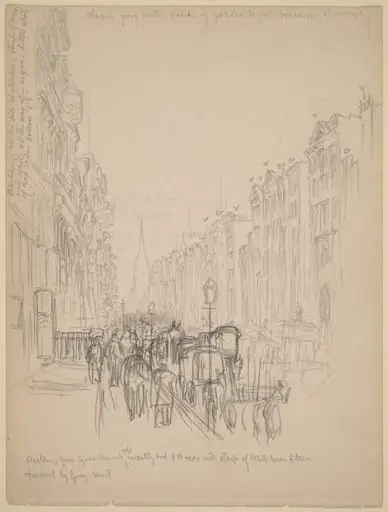
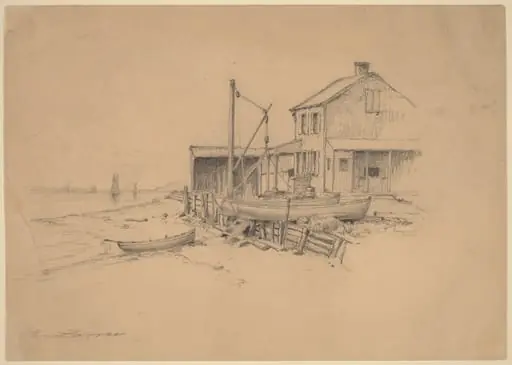
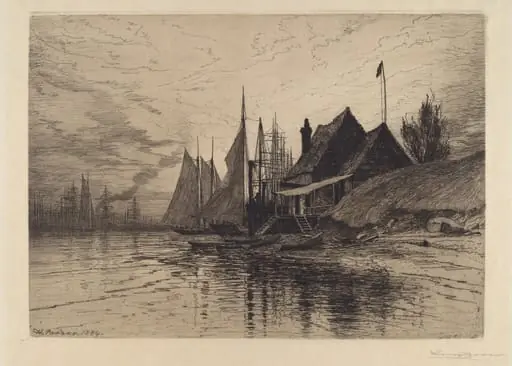
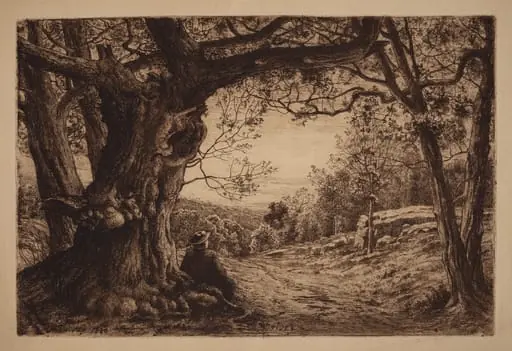
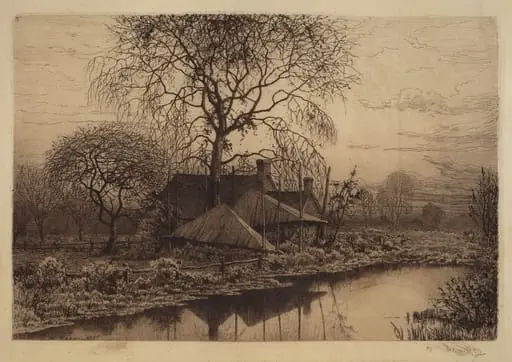
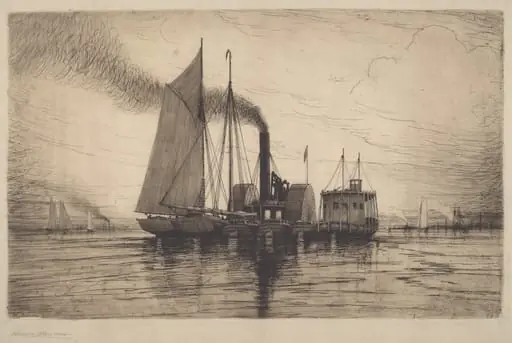
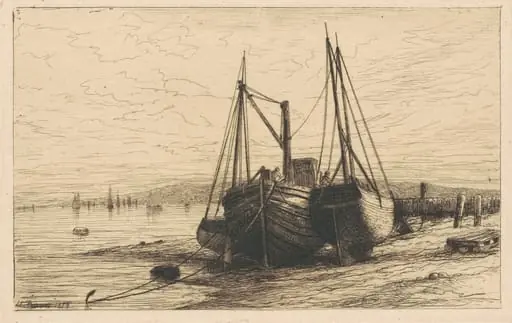
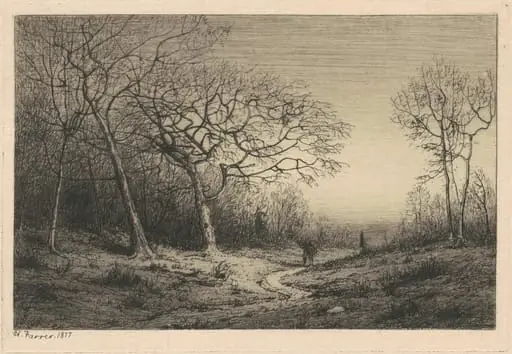
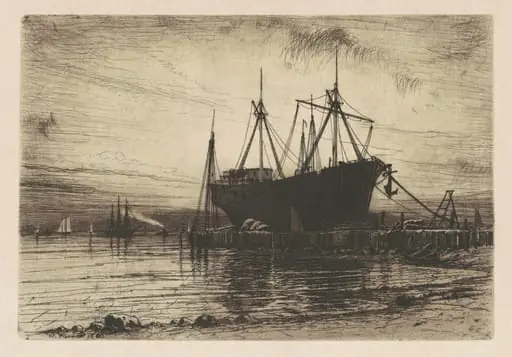
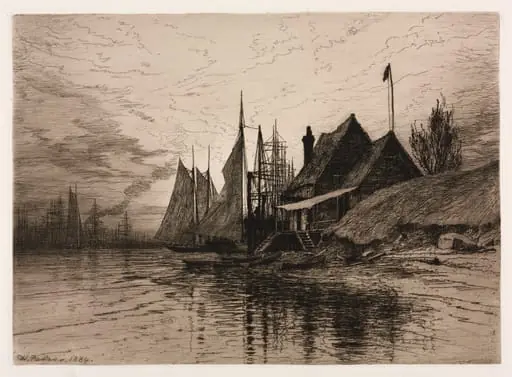
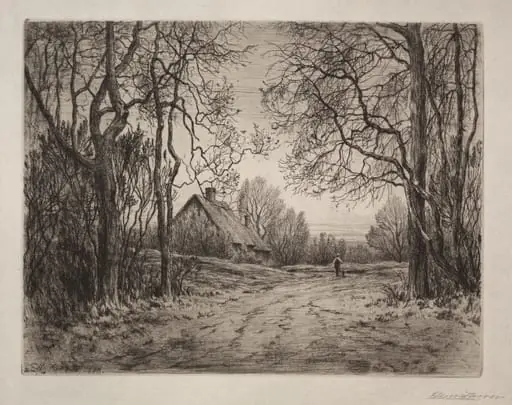
Farrer's artistic trajectory moved from Pre-Raphaelite realism to the tonalist style that defines his reputation. In the 1870s, his landscapes shifted toward tonalism, characterized by misty or cloudy atmospheres, marshes or small ponds in the foreground, and frequent sunset motifs that convey stillness and contemplation. Unlike most artists of his era, he worked almost exclusively in watercolor, employing subdued, earthy colors to achieve a meditative mood. Simultaneously, Farrer became a driving force in the Etching Revival in America, promoting etching as a creative medium rather than merely a reproductive one. His etchings of New York street scenes from the 1860s and harbor scenes from the late 1870s and 1880s represent significant contributions to the medium.
Major works
Farrer's major works fall into two categories: his tonalist watercolor landscapes and his etchings. His watercolor landscapes, produced from the 1870s through the 1890s, typically feature atmospheric marsh or pond scenes at dusk. His best-known etchings depict New York City, including a series of street scenes from the 1860s and another series of New York Harbor scenes from the late 1870s and 1880s. The Metropolitan Museum of Art holds works by Farrer in its collection.
Influences & students
Farrer's primary artistic influence was his older brother Thomas Charles Farrer, whose Pre-Raphaelite training under Ruskin and Rossetti shaped Henry's early approach. Henry aligned his style with his brother's and participated in the same Pre-Raphaelite-inspired artistic circles. The sources do not record any pupils or followers of Farrer, though his institutional leadership, including his role as a founder of the American Watercolor Society and the New York Etching Club, positioned him at the center of American watercolor and etching communities. He was also a member of the Royal Society of Engravers and Etchers in London, and later served as president of the New York Etching Club.
Legacy
Farrer's legacy rests on his dual role in advancing watercolor and etching in American art. As a co-founder of the American Watercolor Society, he unmatched in his dedication to watercolor at a time when most artists treated it as secondary to oil painting. His leadership in the New York Etching Club helped elevate etching from reproductive craft to fine art. His works are held in major institutions including the Metropolitan Museum of Art, the British Museum, the Musée d'Orsay, the National Gallery of Art, and the Smithsonian American Art Museum. The posthumous reputation of his Pre-Raphaelite still lifes and marine paintings has been overshadowed by his tonalist landscapes, which remain his most recognized contribution to American art.
Works by Henry Farrer
Collections represented


Artists in a similar vein