Artist
Joseph-Marie Vien
France
Joseph-Marie Vien is a France Baroque artist. 58 works are cataloged here, principally at National Gallery of Art.
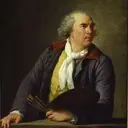
Joseph-Marie Vien (18 June 1716 – 27 March 1809) was a French painter. He was the last holder of the post of Premier peintre du Roi, serving from 1789 to 1791, before it was abolished during the French Revolution.
Overview
Joseph-Marie Vien (18 June 1716 to 27 March 1809) was a French painter, draughtsman, and engraver who bridged the transition from the Rococo to early Neoclassicism. Considered by his contemporaries as a precursor to the neoclassical movement, he applied a new severity and study of antiquity to French painting, reacting against the prevailing libertine style. He served as the last Premier peintre du Roi to Louis XVI from 1789 until the post was abolished during the French Revolution. His historical importance rests as much on his pedagogical contributions as his artistic output, having trained a generation of painters who would define the new classical school.
Biography & dates
Born in Montpellier in 1716 as the son of a locksmith, Vien received early training from a portrait painter named Legrand and Jacques Giral before working in a faience manufacture. He moved to Paris in 1740, entering the Academie royale de peinture et de sculpture in the studio of Charles-Joseph Natoire, where he was advised by Charles Parrocel and championed by the antiquaire Comte de Caylus. After winning the Prix de Rome in 1743, he departed for the French Academy in Rome in 1744. During his Roman sojourn, which lasted until 1750, he studied Renaissance masters and the Bolognese classicism of the seventeenth century under the influence of Jean-Francois de Troy. Returning to Paris, he founded a painting school in 1750 and was admitted to the Academie royale in 1751. He married the painter and engraver Marie-Therese Reboul in 1757, and their son, Joseph-Marie Vien the Younger, was born in 1761. Appointed director of the Academie de France in Rome from 1775 to 1781, he notably refused to take Jacques-Louis David among his pupils during this posting, claiming he was too old. Named Premier peintre du Roi in May 1789, his career was disrupted by the Revolution, though he won a government competition prize in 1796 at the age of eighty. Napoleon later appointed him senator in 1799, Count of the Empire in 1808, and Commander of the Legion of Honour. Vien died in Paris in 1809 and was buried in the crypt of the Pantheon with national funerals.
Style & movement
Vien is identified as a pivotal figure in the transition from French Rococo to early Neoclassicism. Upon discovering the ancient paintings unearthed at Herculaneum during his time in Rome, he became passionate about antiquity and adopted a more severe style that clashed with the fashionable, libertine manner of Francois Boucher. While he attempted to ally the imitation of nature with the study of ancient masters, his contemporaries often found his work cold. Boucher described him as a good painter but somewhat cold, and Denis Diderot, while initially praising his truth, simplicity, and compositional wisdom, later criticized him for lacking imagination, poetry, and warmth. Vien frequently took Rococo themes and modernized them superficially in a neoclassical mode, creating what has been termed an erotic neoclassicism. His compositions often featured maidens in Greek dress within interiors decorated with marble columns, Etruscan vases, and tripods. Later in his career, he executed monumental works of quiet solemnity inspired by Homer, moving away from genre-like classical scenes toward a more austere classicism influenced by Nicolas Poussin.
Major works
Vien produced numerous religious, mythological, and allegorical paintings. His reception piece for the Academie, Daedalus in the Labyrinth attaching the Wings to Icarus (circa 1754, Musee du Louvre), was his first preserved mythological subject and sparked controversy due to its divergence from reigning tastes. La Marchande d'Amours (1763, Palace of Fontainebleau), exhibited at the Salon of 1763, brought him wide fame and exemplifies his archaeological approach, as its composition and frieze-like arrangement were derived from a fresco discovered at Gragnano and reproduced in Le antichita di Ercolano esposte. Other significant works include the Sleeping Hermit (1750, Musee du Louvre), Sweet Melancholy (1756, Cleveland Museum of Art), Venus Wounded by Diomedes Saved by Iris (1775, Columbus Museum of Art), and Les adieux d'Hector et d'Andromaque (1786, Musee du Louvre). His religious commissions include a series of six scenes from the life of Saint Martha (1747 to 1751, Eglise Sainte-Marthe, Tarascon) and Saint Denis Preaching (1767, Church of Saint-Roch, Paris). For Madame du Barry, he painted four panels on the Progress of Love in the Hearts of Young Girls (now divided between the Louvre and the prefecture of Chambery), replacing works by Fragonard. His later career produced Homeric scenes such as Briseis Handed Over by Patroclus to the Envoys of Agamemnon (Musee des Beaux-Arts, Arras) and the pro-revolutionary allegory Love Fleeing Slavery (1789, Toulouse, Musee des Augustins).
Influences & students
Vien's primary artistic influences included his teacher Charles-Joseph Natoire, the classicist Jean-Francois de Troy, and the seventeenth-century Bolognese school he encountered in Rome. The Comte de Caylus played a crucial role as a protector, communicating his passion for antiquity and recent archaeological discoveries, which permanently oriented Vien's style. Vien's own pedagogical impact was profound. He founded a painting school in Paris in 1750 and led the Eleves proteges beginning in 1771, training a prodigious number of students. His most famous pupil was Jacques-Louis David, who pushed Vien's initial return to antiquity to its most rigorous and heroic conclusions, ultimately overshadowing his master. Other notable students included Francois-Andre Vincent, Jean-Antoine-Theodore Giroust, Jean-Baptiste Regnault, Joseph-Benoit Suvée, Jean-Pierre Saint-Ours, Francois-Guillaume Menageot, Jean-Joseph Taillasson, and Etienne-Barthelemy Garnier. He also taught his wife, Marie-Therese Reboul, and his son, Joseph-Marie Vien the Younger.
Legacy
Vien's historical legacy is largely defined by his role as the precursor to French Neoclassicism and the teacher of Jacques-Louis David. While he opened new pathways by reacting against Rococo frivolity, critics and historians have noted that his work often lacked the grandeur and emotional thrust demanded by strict neoclassical theory, resulting in an elegant but sometimes cold and mawkish antiquity. Consequently, David is more rightly credited with establishing the new school, leaving Vien primarily recognized as the initiator of the movement. Vien's posthumous recognition includes his burial in the Pantheon, where he remains the only painter to rest, an honor granted by Napoleon. Denis Diderot's critiques, which acknowledged his technical skill while condemning his lack of imagination, encapsulate the critical reception that has confined Vien to the role of a transitional figure rather than a major master of capital works. Nonetheless, his pedagogical contributions and his early adoption of archaeological sources fundamentally altered the trajectory of French painting.
Works by Joseph-Marie Vien
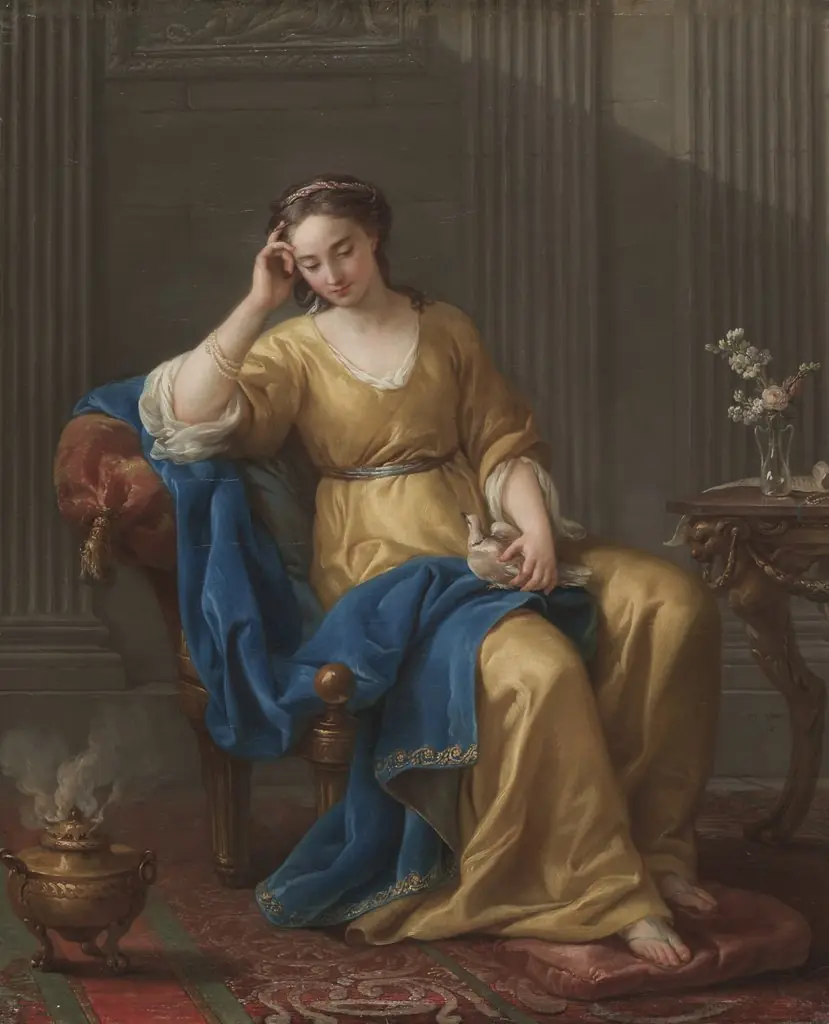 Sweet Melancholy
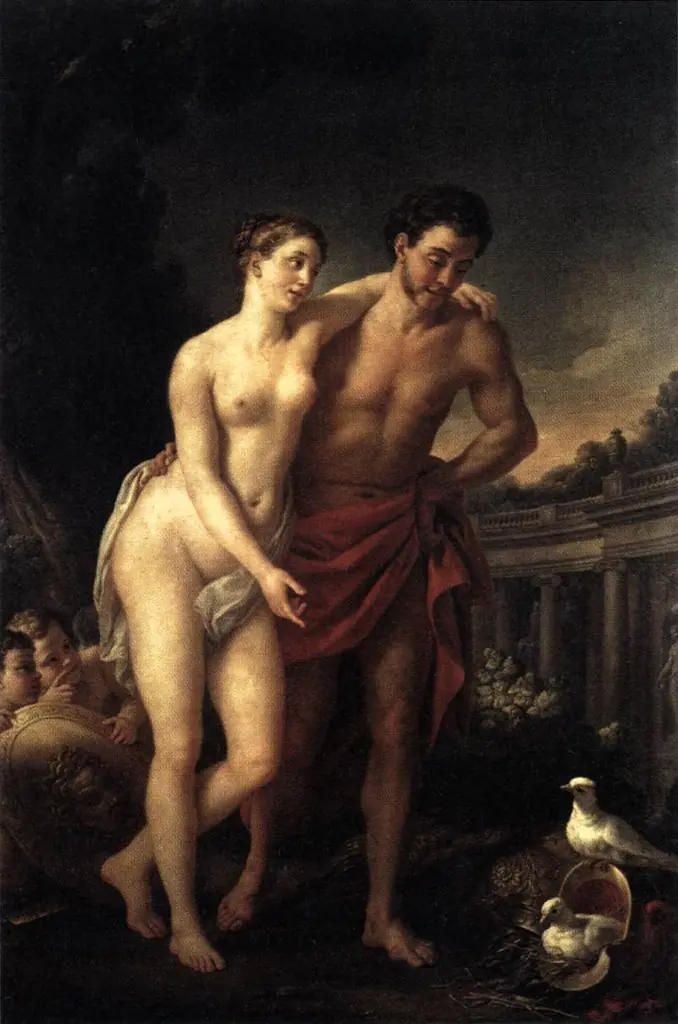 Mars and Venus
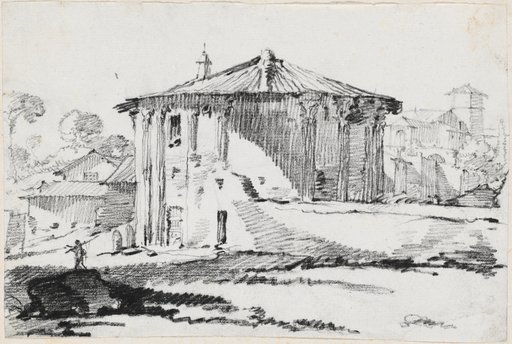
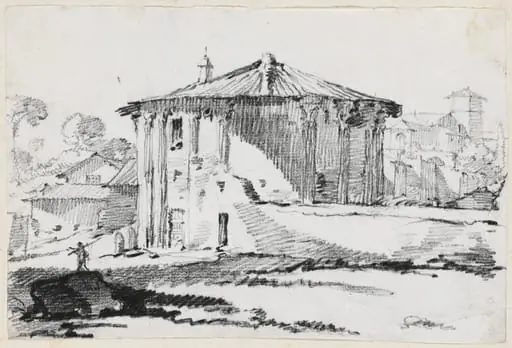 The Round Temple on the Piazza Bocca della Verità, Rome
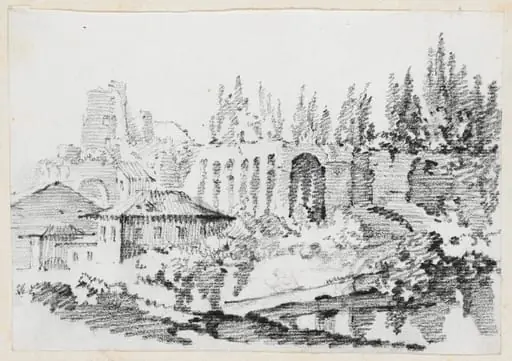 Ruins of the Imperial Palaces on the Palatine Hill
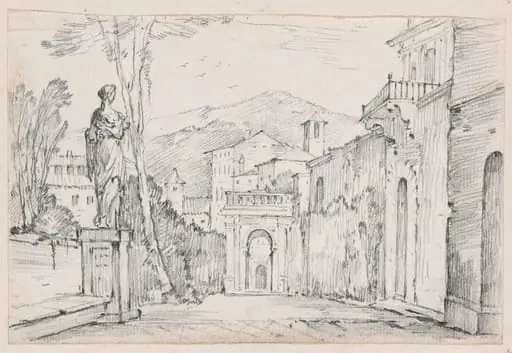 A Roman Street with Monte Cavo in the Distance
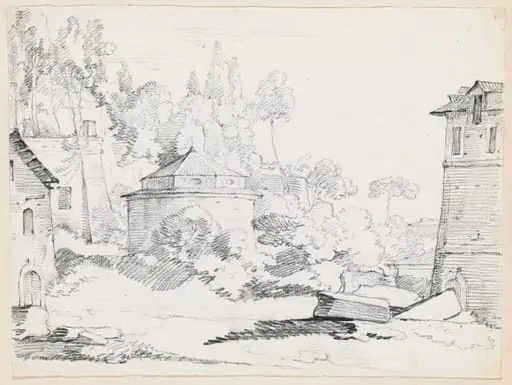 Landscape with the Church of San Teodoro
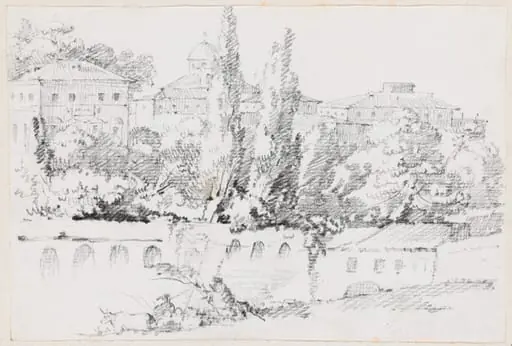 Walls of Rome with Santa Maria del Popolo in the Distance
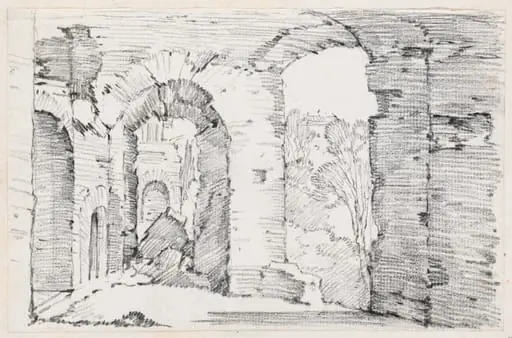 Arched Passageways of a Ruined Building
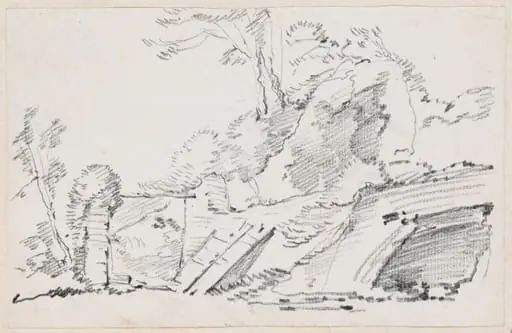 An Ancient Wall with a Ruined Gate
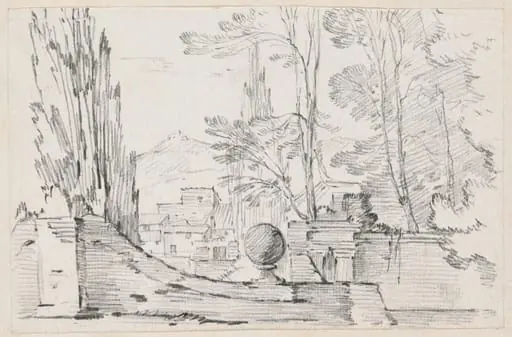 View across the Wall of an Italian Garden
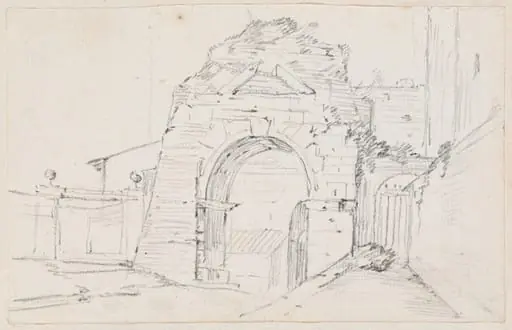 Arch of Drusus near the Appian Way
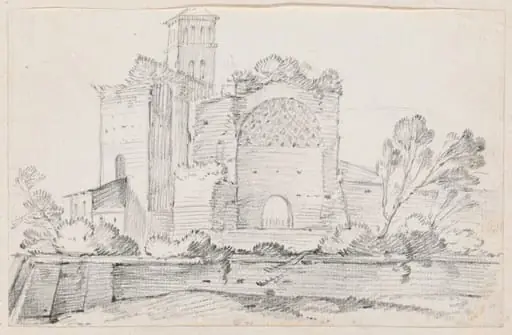 Ruins of the Temple of Venus and Rome in the Forum
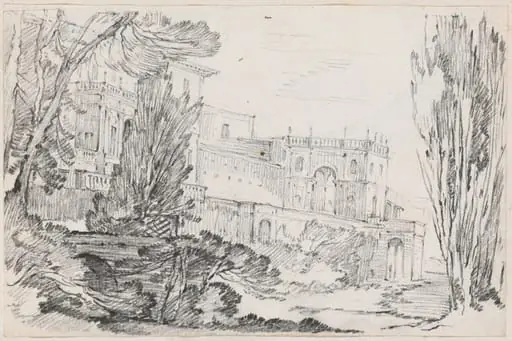 Villa d'Este, Tivoli
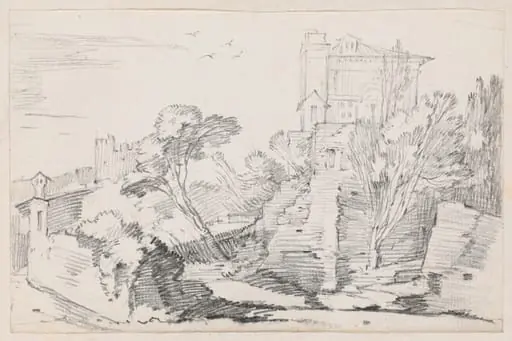 Casino Farnese on the Palatine Hill, Rome
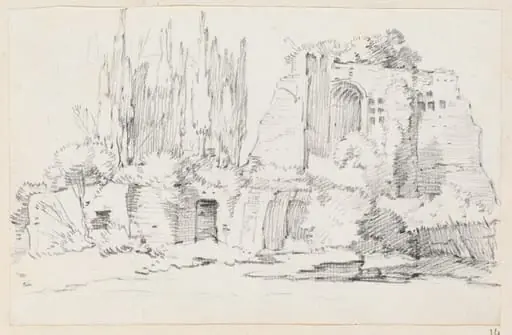 Roman Ruins with a Stand of Cypresses
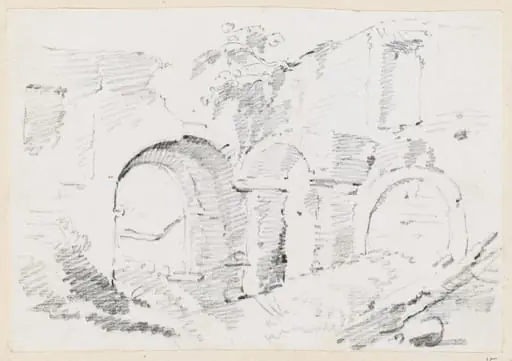 Roman Walls
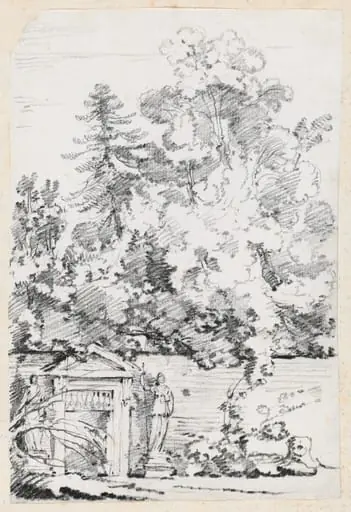 Entrance to a Walled Garden
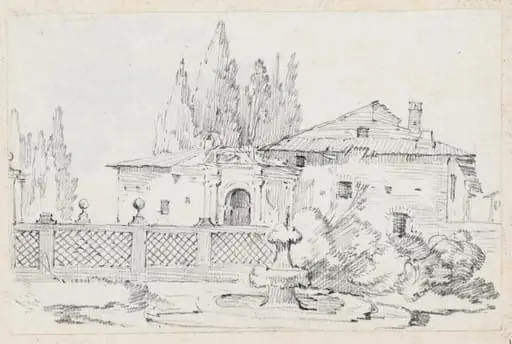 House and Trees across a Garden Wall
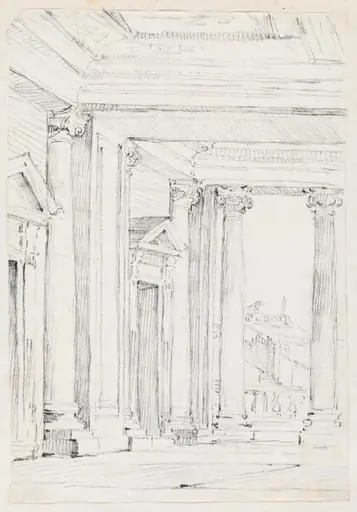 Portico of the Palazzo Nuovo, on the Campidoglio
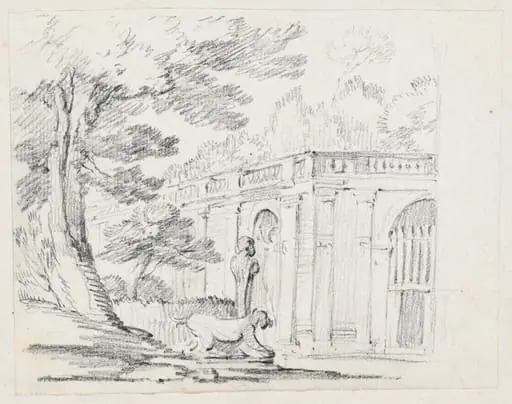 Loggia and Statuary in an Italian Garden
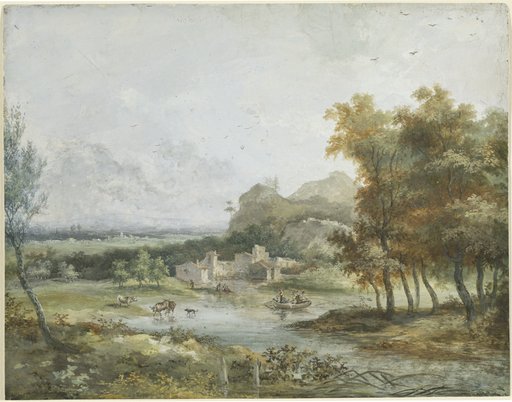
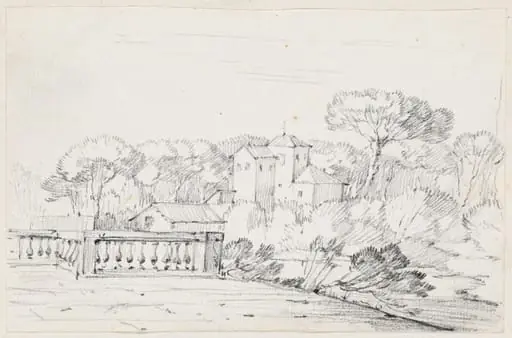 Terrace by a River with a Villa and Trees Beyond
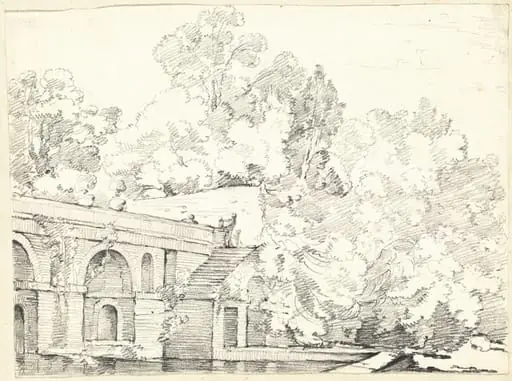 The Fishpond at Villa Madama
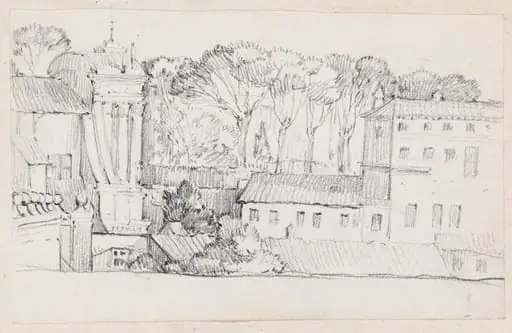 Roman Rooftops
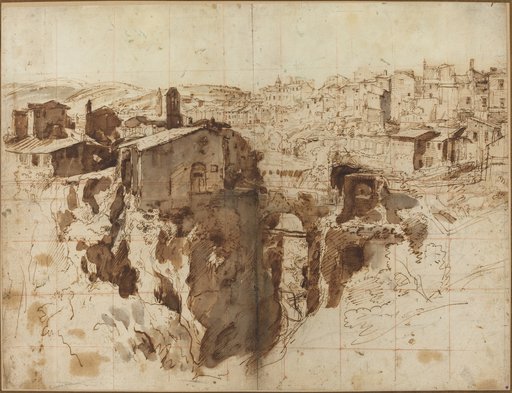
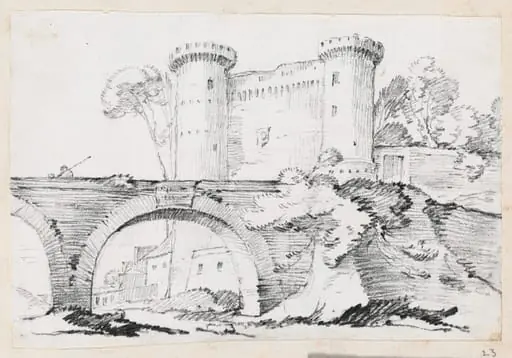 A Stone Bridge and the Fortified Entrance to a Town
58 works in the catalog · 24 shown
Collections represented


- Walls of Rome with Santa Maria del Popolo in the Distance
- Arched Passageways of a Ruined Building
- An Ancient Wall with a Ruined Gate
- View across the Wall of an Italian Garden
- Arch of Drusus near the Appian Way
- Ruins of the Temple of Venus and Rome in the Forum
- Villa d'Este, Tivoli
- Casino Farnese on the Palatine Hill, Rome
Artists in a similar vein