Artist
Louis Le Nain

France
Louis Le Nain is a France Barbizon school artist. 9 works are cataloged here, principally at Victoria and Albert Museum.
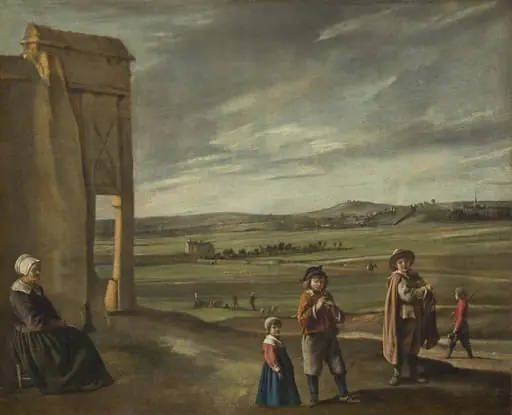
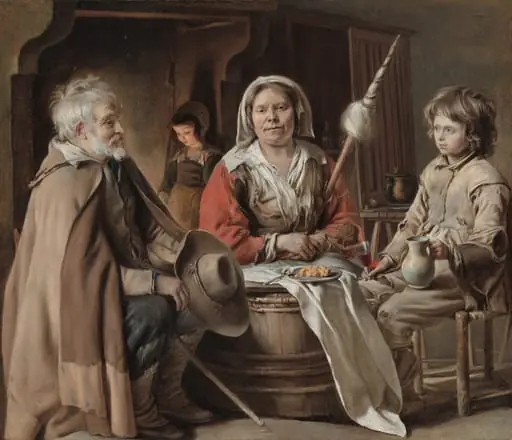
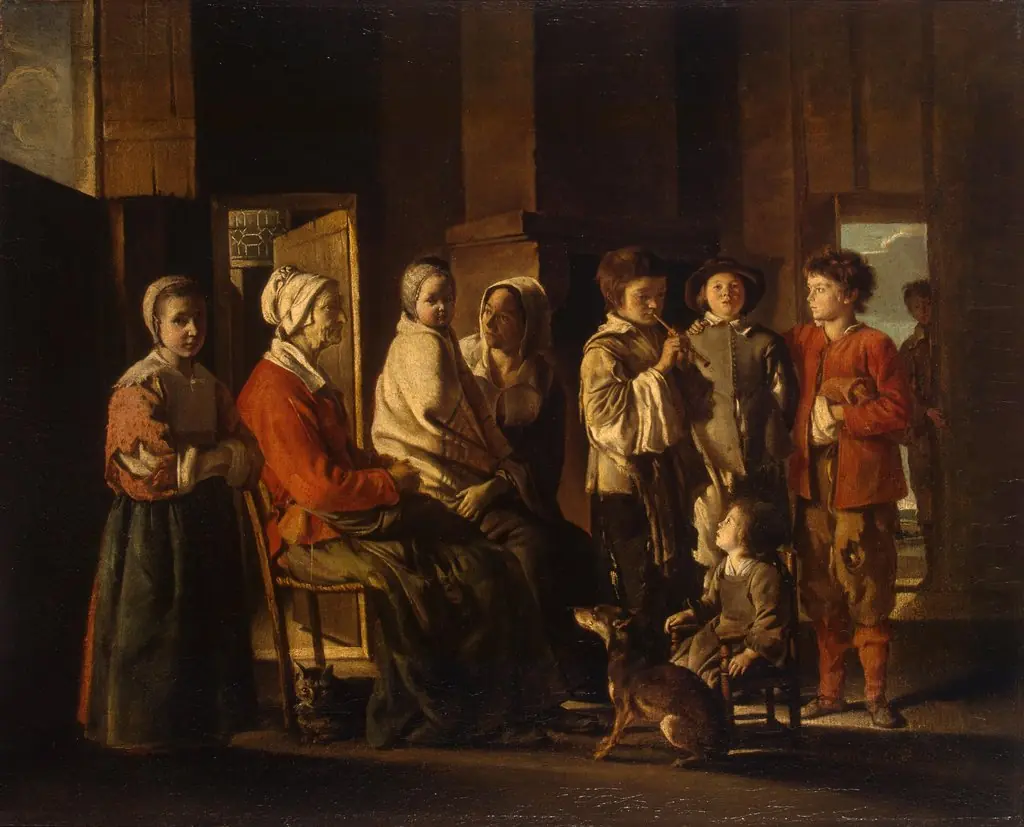
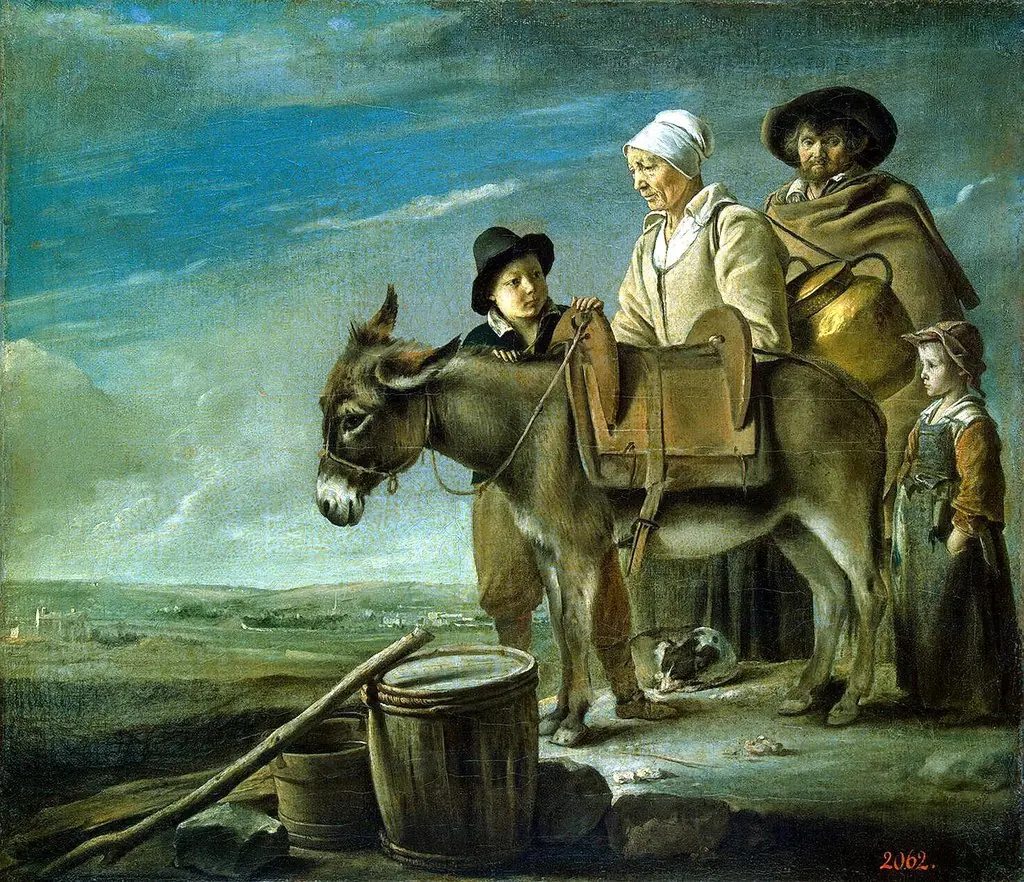
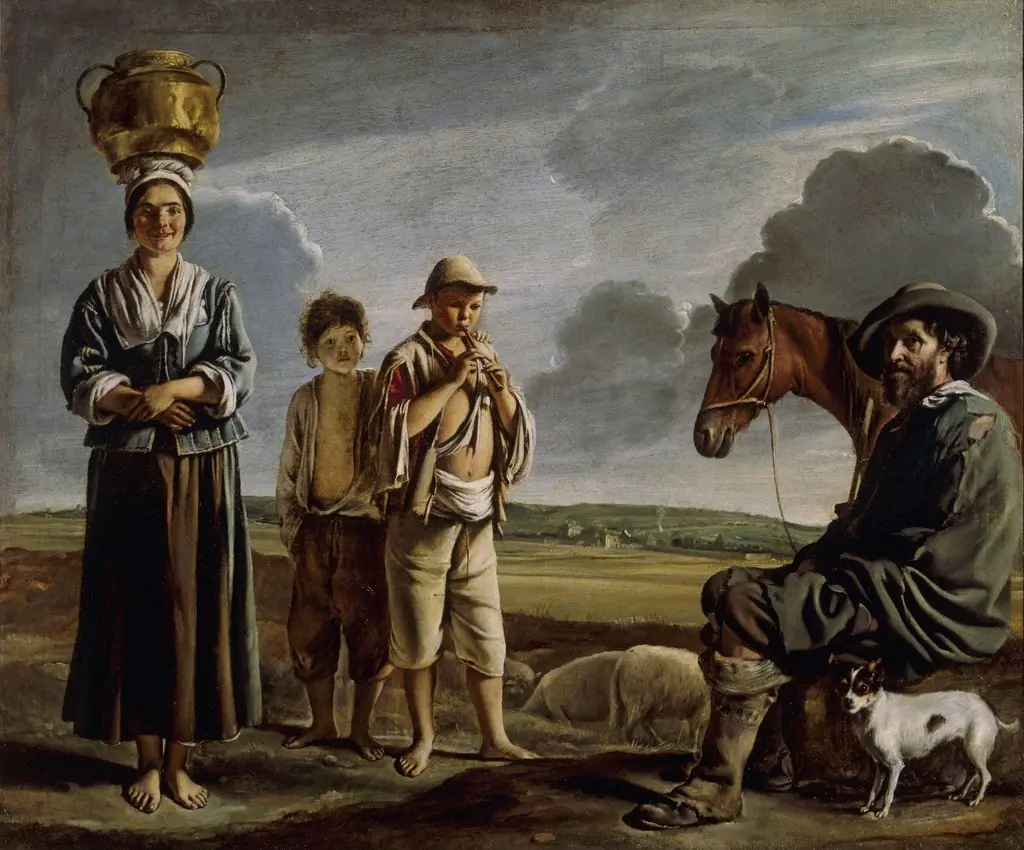
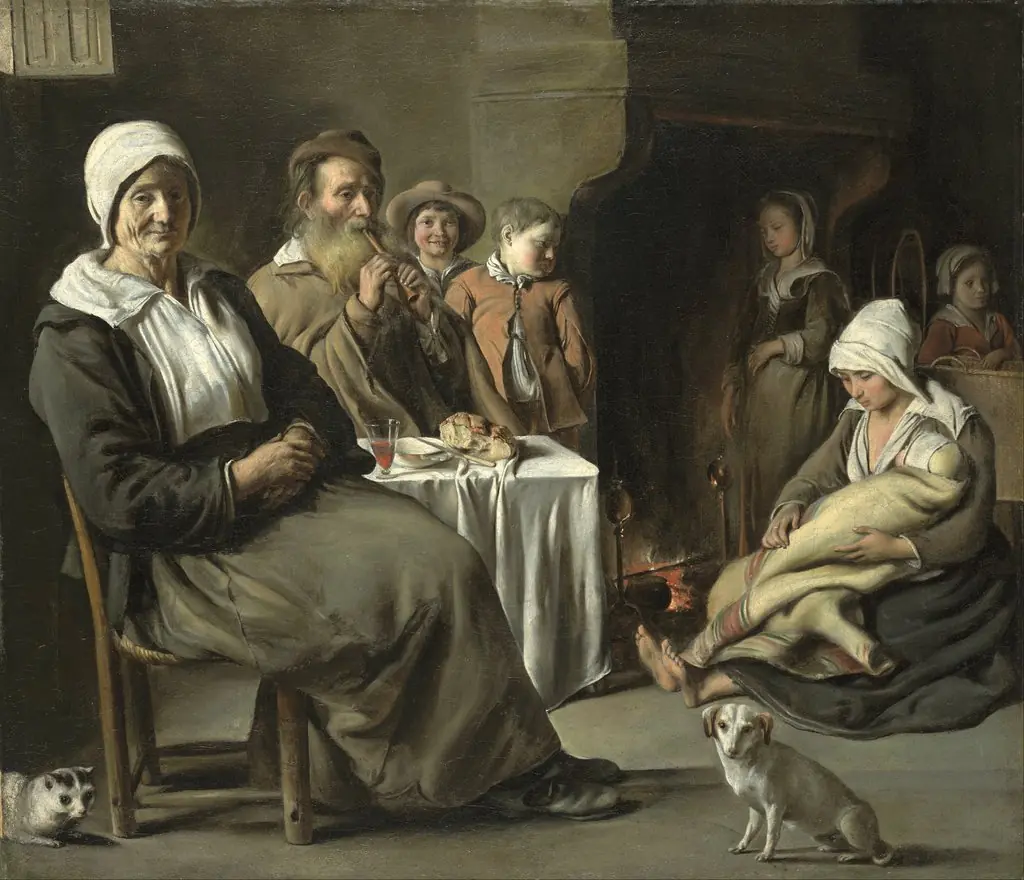
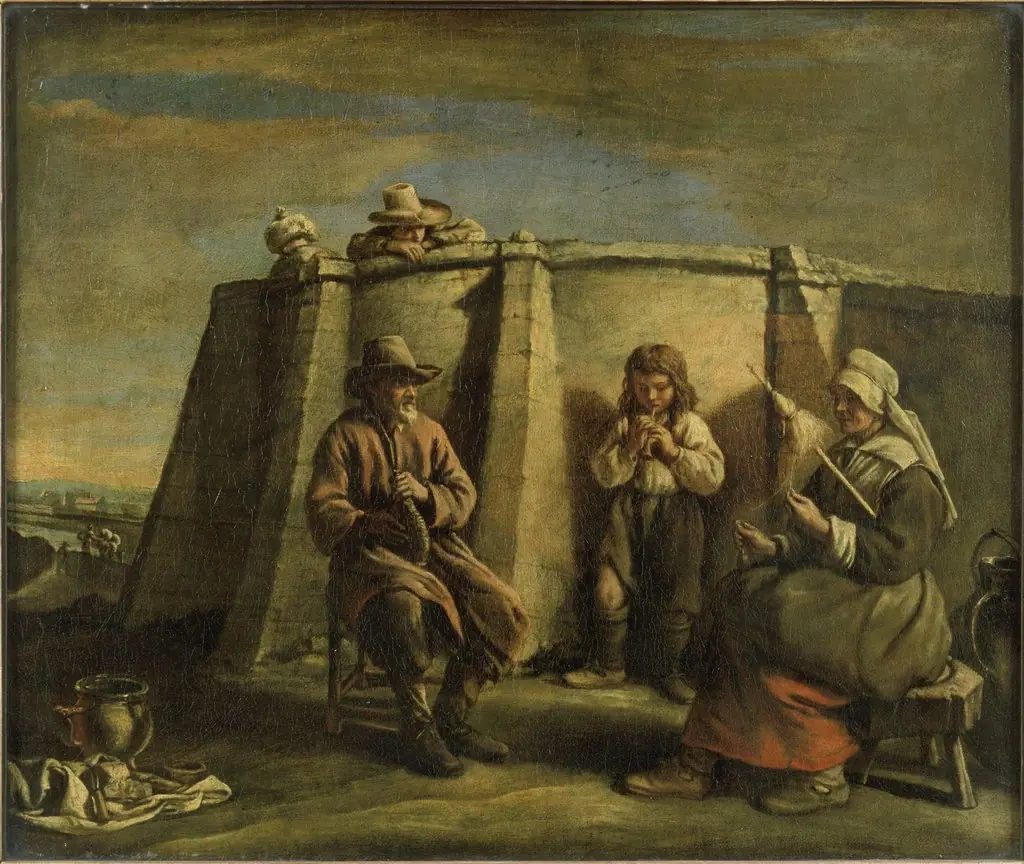
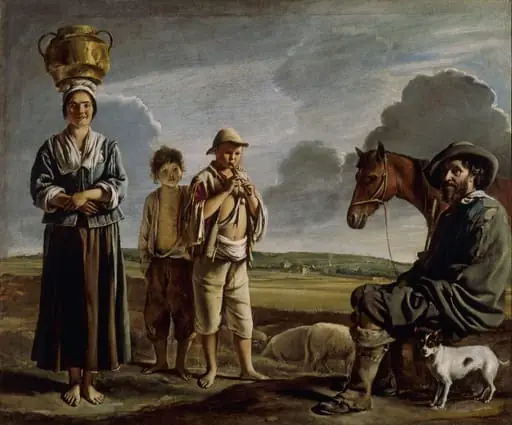
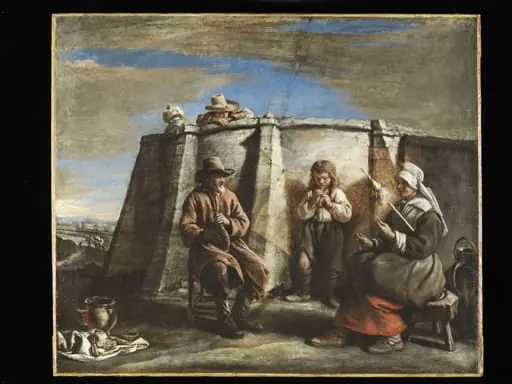
Louis Le Nain painted quiet moments of 17th-century French rural life in sober, earth-toned oils. His brush captured *Peasant Interior with an Old Flute Player* and *Milkmaid's Family*, scenes where light falls on worn faces and simple meals. These works sit in a tradition of genre painting that traded grand drama for quiet dignity. Tap into *The Resting Horseman* to see how he staged stillness in a landscape.
Overview
Louis Le Nain (c. 1593-1648) was a French painter of the 17th century, recognized as one of the most significant artists of the French Baroque period. Working primarily in Paris from 1629 until his death, he specialized in genre scenes depicting rural and peasant life with a distinctive sobriety and dignity that set his work apart from the classicist and courtly traditions of his contemporaries. Along with his brothers Antoine and Mathieu, also painters, he ran a flourishing workshop in the Rue Princesse. His restrained realism and focus on the everyday lives of common people have earned him a lasting place in art history as a key figure of Baroque realism in France.
Biography & dates
Louis Le Nain was born around 1593 in Laon, Picardie, the youngest or second-to-last of five sons of a prosperous farmer, vineyard owner, and later sergent royal at the salt storehouse. He and his brothers received their initial training in painting in Laon. Louis completed his artistic formation in Rome before settling in Paris with his brothers around 1629-1630. The brothers established their workshop in the Rue Princesse in the district of Saint-Germain-des-Prés, whose privileges exempted them from submitting to the rules of the painters' corporation. In 1648, Louis, Antoine, and Mathieu were all admitted to prestigious Académie royale de peinture et de sculpture, which had been founded shortly before. Louis Le Nain died in Paris on 23 May 1648, the same year as his brother Antoine.
Style & movement
Le Nain is associated with Baroque realism, a style characterized by its sober, dignified treatment of ordinary subjects, particularly peasants and rural life. His work stands in deliberate contrast to the classicism of Nicolas Poussin and the worldly, decorative manner of the Fontainebleau school. Le Nain's scenes of peasant life are notable for their restraint, compositional clarity, and the quiet grandeur with which he invested his humble subjects. Rather than romanticizing or caricaturing rural existence, he presented it with a measured, almost monumental solemnity. The technical approach typically involved oil on canvas, with careful attention to muted color harmonies and stable, pyramidal groupings of figures. The collaborative nature of the Le Nain workshop has complicated attribution of individual works, as the brothers often worked together.
Major works
Several key works are attributed to Louis Le Nain or the Le Nain workshop. Le Repas des Paysans (The Peasants' Meal), dated 1642, is an oil on canvas measuring 97 x 122 cm, now in the Musée du Louvre. La Forge (The Forge), an oil on canvas of 69 x 57 cm, is also held at the Louvre. Bacchus et Ariane, painted around 1635, is an oil on canvas of 102 x 152 cm in the Musée des Beaux-Arts d'Orléans. La Fiancée Normande is in the Musée national des beaux-arts d'Alger. La Halte du cavalier exists in a version with variants, with the primary version in London at the Victoria and Albert Museum. The collaborative nature of the workshop means that precise attribution of these works to Louis individually remains debated among scholars.
Influences & students
Louis Le Nain's early training came from his older brother Antoine, who had himself been formed in Laon under Dutch influences. This northern, Flemish-inflected training informed the realism that would characterize all the brothers' work. Louis further developed his art through study in Rome, where he absorbed Italian Baroque currents that he later synthesized with his northern roots. The three brothers, Louis, Antoine, and Mathieu, maintained an exceptionally close professional relationship, working collaboratively throughout their careers rather than establishing separate practices. No pupils outside the family circle are documented, and the workshop remained essentially a fraternal enterprise. Their joint admission to the Académie royale de peinture et de sculpture in 1648 recognized their collective stature in the French artistic establishment.
Legacy
The Le Nain brothers' work has been subject to renewed scholarly attention, with exhibitions such as Dans la lumière de Vermeer at the Musée de l'Orangerie in Paris in 1966 contributing to critical reassessment. Their paintings are held in major institutions including the Musée du Louvre, the Victoria and Albert Museum, and the Musée des Beaux-Arts d'Orléans. The difficulty of distinguishing between the three brothers' hands has made individual attribution a persistent challenge, with many works simply classified as by the Le Nain workshop. Louis Le Nain's particular contribution to the elevation of peasant subjects to a level of quiet dignity influenced subsequent French genre painting and anticipated later artistic interest in the lives of ordinary people. Their works are documented in standard reference works including the Dictionnaire Bénézit.
Works by Louis Le Nain
Collections represented


Artists in a similar vein