Artwork
Peasant Interior
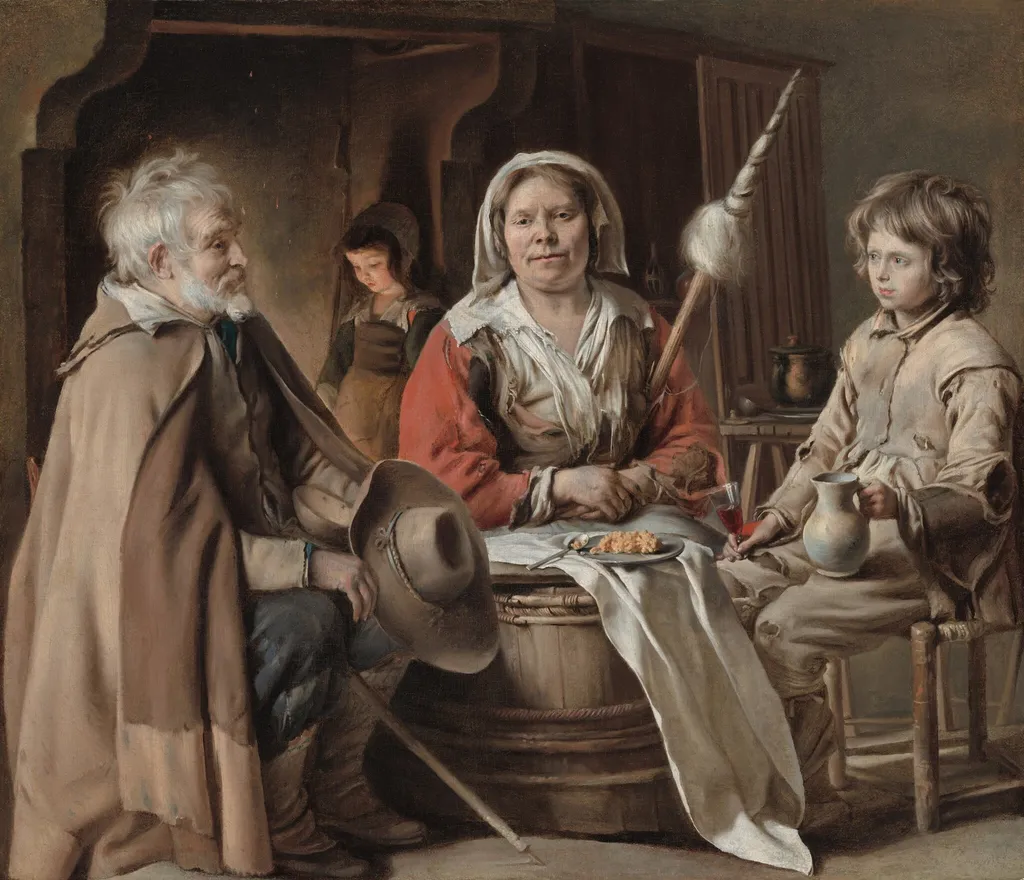
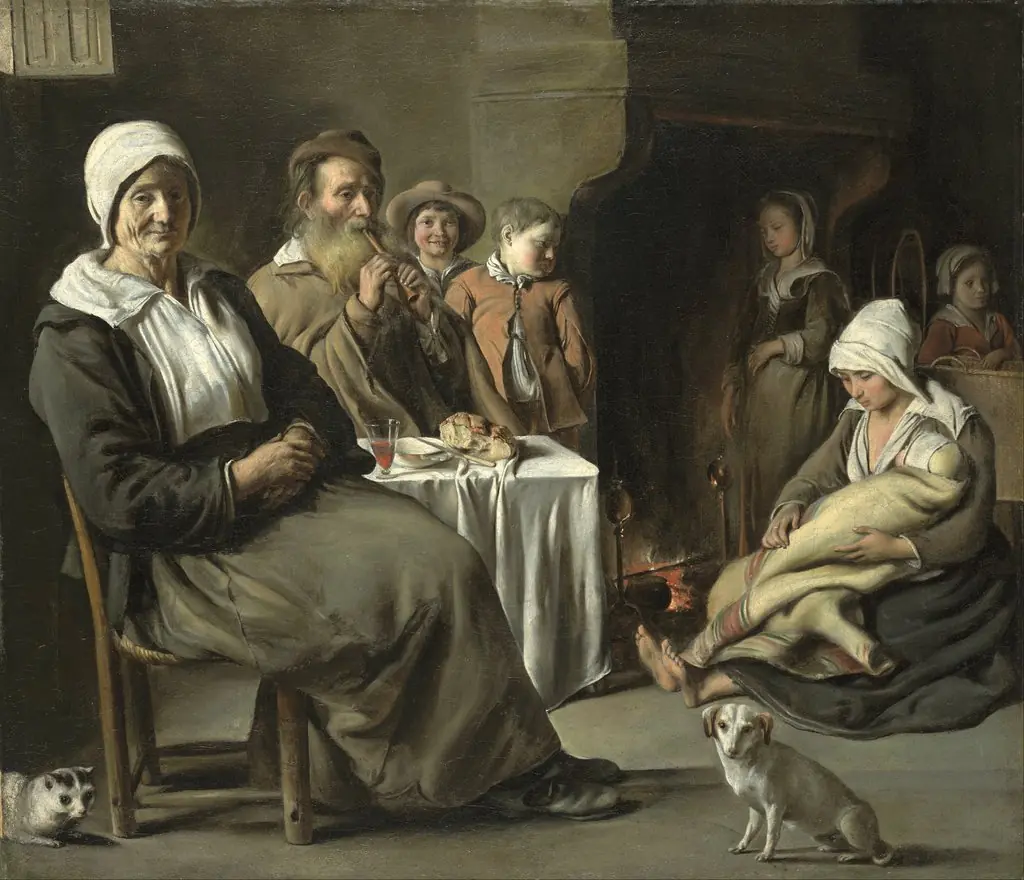
Peasant Interior is an oil painting by the Baroque artist Louis Le Nain. It dates from 1645 and is held in the collection of the National Gallery of Art.
About this work
Technique & Style
Created in 1645, Peasant Interior is executed in oil paint on a canvas support.
Created in 1645, Peasant Interior is executed in oil paint on a canvas support. The work measures 55.6 cm in height and 64.7 cm in width. While the specific handling of the brushwork and current physical condition are not detailed in the provided records, the painting's formal attribution rests on its identification as a French genre scene from the mid-17th century.
Historical documentation notes that the work was engraved in reverse during the mid-18th century under the title Le Bénédicité flamant, indicating its recognition as a distinct composition early in its history.
History & Provenance
Louis Le Nain created the oil-on-canvas painting Peasant Interior in 1645. The work was engraved in reverse by Catherine Elise Lempeurer during the mid-18th century under the title Le Bénédicité flamant, indicating its presence in France at that time. By 1902, the painting entered the collection of George Godolphin Osborne, 10th Duke of Leeds, at Hornby Castle, Yorkshire, where it was cataloged as Flemish Interior.
It passed by inheritance to his son, John Francis Godolphin Osborne, the 11th Duke of Leeds, before being sold in December 1945 to Wildenstein & Co. The dealer sold it to the Samuel H. Kress Foundation in New York in December 1946, which subsequently gifted the work to the National Gallery of Art in Washington, D.C., in 1952.
Peasant Interior is held in the collection of the National Gallery of Art in Washington, D.C., as part of the Samuel H. Kress Collection. The work entered the foundation's holdings in December 1946 after being purchased from Wildenstein & Co., and was formally gifted to the museum in 1952. Prior to this, the painting was recorded in the collection of George Godolphin Osborne, the 10th Duke of Leeds, at Hornby Castle by 1902, before passing by inheritance to his son, the 11th Duke.
It was subsequently sold by the family in December 1945. The painting's exhibition history includes its display in Le mystère Le Nain, alongside earlier showings documented in catalogs from 1910, 1934, and 1938.
Overview
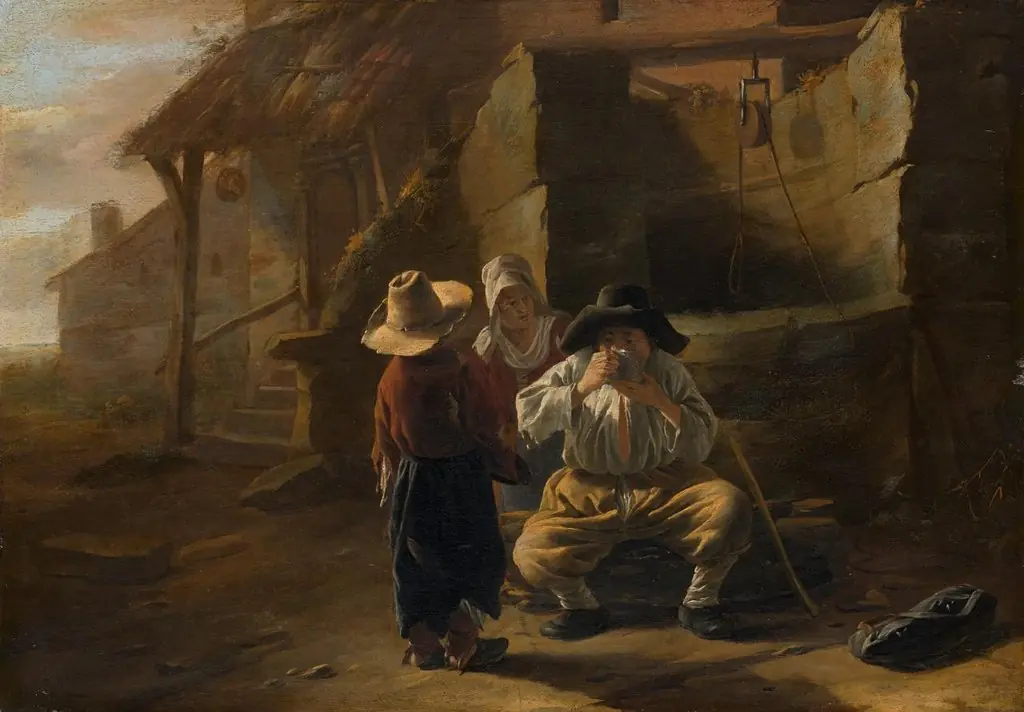
Louis Le Nain’s oil on canvas, dated around 1645, depicts a modest domestic scene. A bearded man in a brown cloak, a woman in a red dress with a white headscarf, and a young boy holding a jug occupy a dimly lit interior filled with everyday objects such as a broom, a table and a chair. The composition invites the viewer into a quiet, intimate moment of rural life.
Subject & Meaning
The work presents a simple gathering of peasants engaged in routine tasks, emphasizing the dignity of ordinary labor. The central placement of the woman and the attentive posture of the child suggest a familial bond, while the subdued interaction conveys a sense of calm and mutual reliance within a modest household.
Own this work as a print
Artist & collection

Artist
Louis Le Nain painted quiet moments of 17th-century French rural life in sober, earth-toned oils.

 The Pancake Baker with a Boy
 Visit to Grandmother
 Peasant Interior with an Old Flute Player
 At a Coppersmith’s Workshop
 I en kobbersmeds værksted
 Peasant Meal
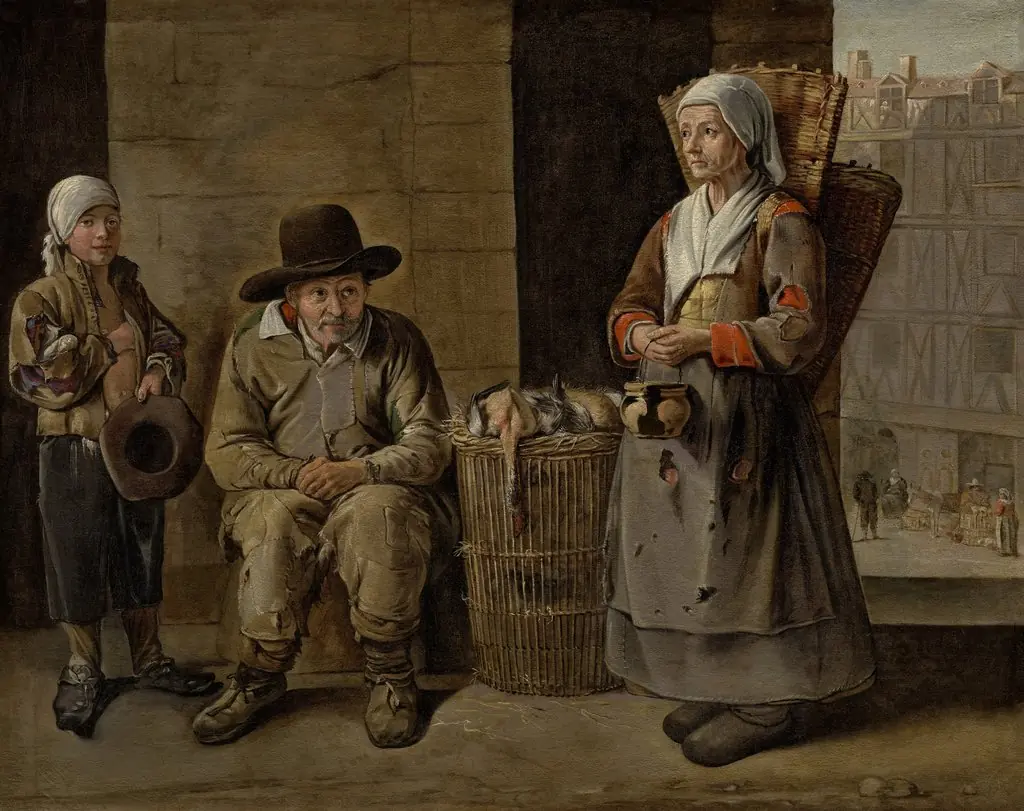 The Poultry Sellers
 The Prophet Elijah with the Widow of Zarephath and her Son
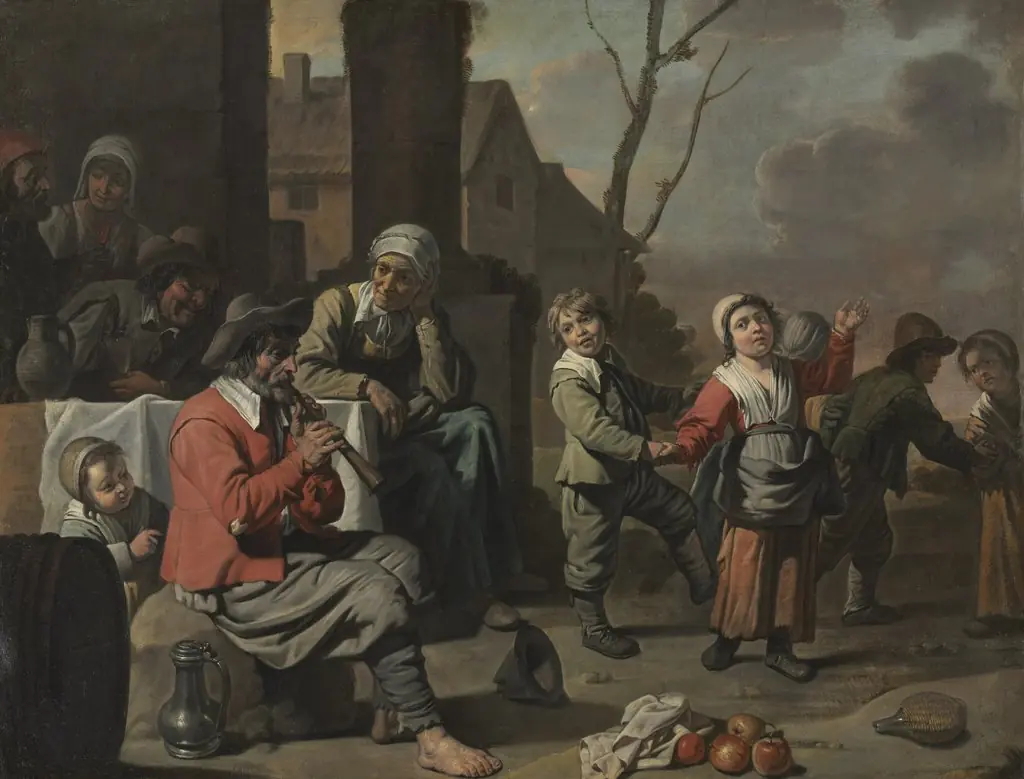 Peasant Children Dancing
 Peasant Children Dancing
 Travellers by a well
- In a peasant cottage