Artwork
The Flageolet Player
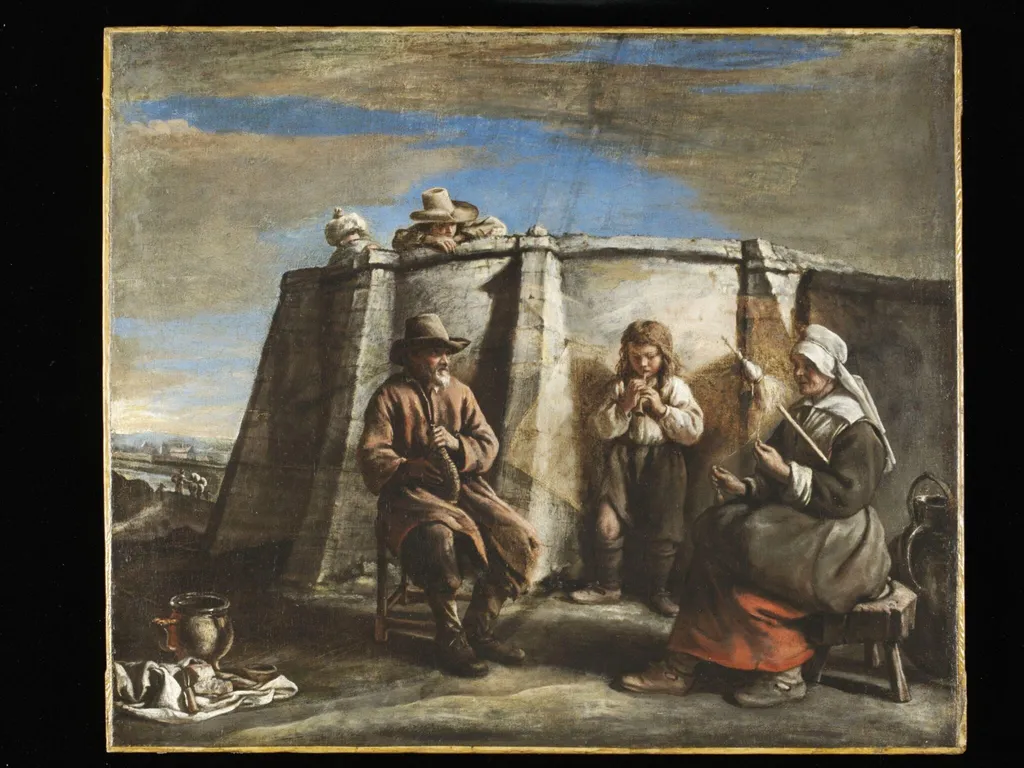
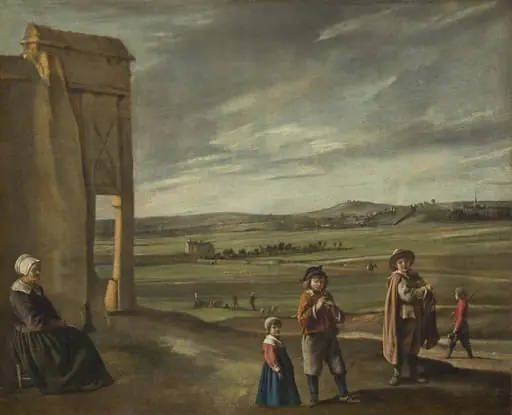
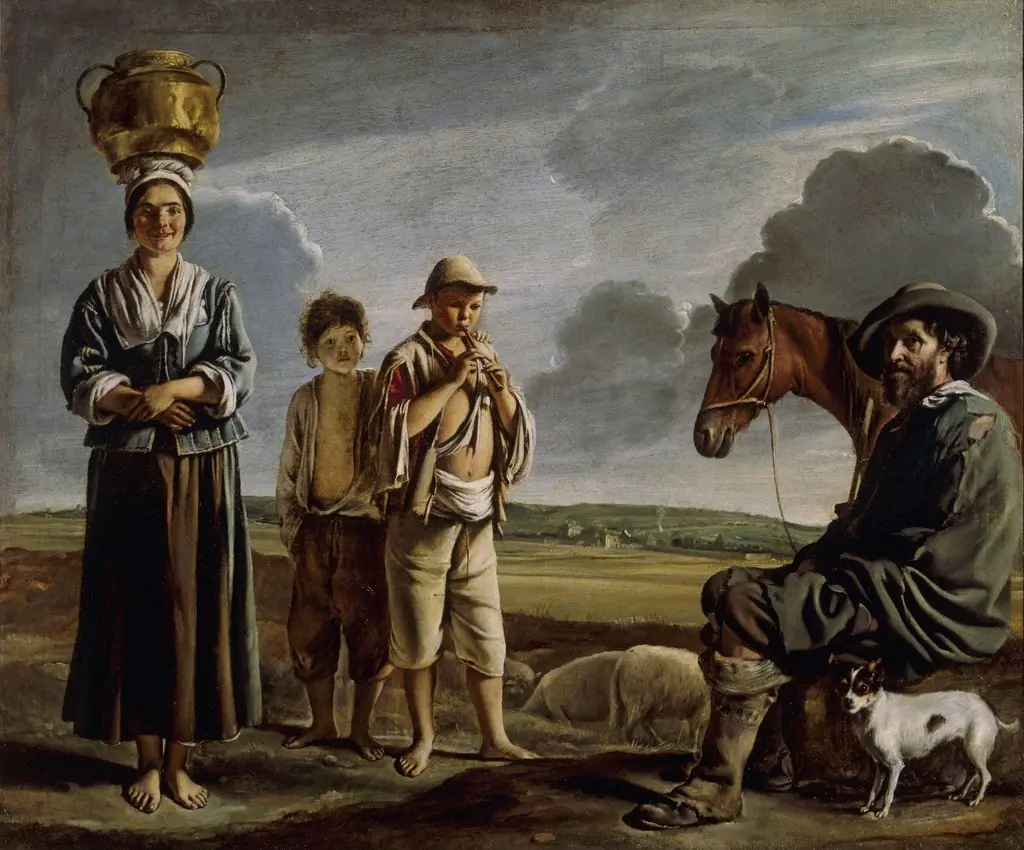
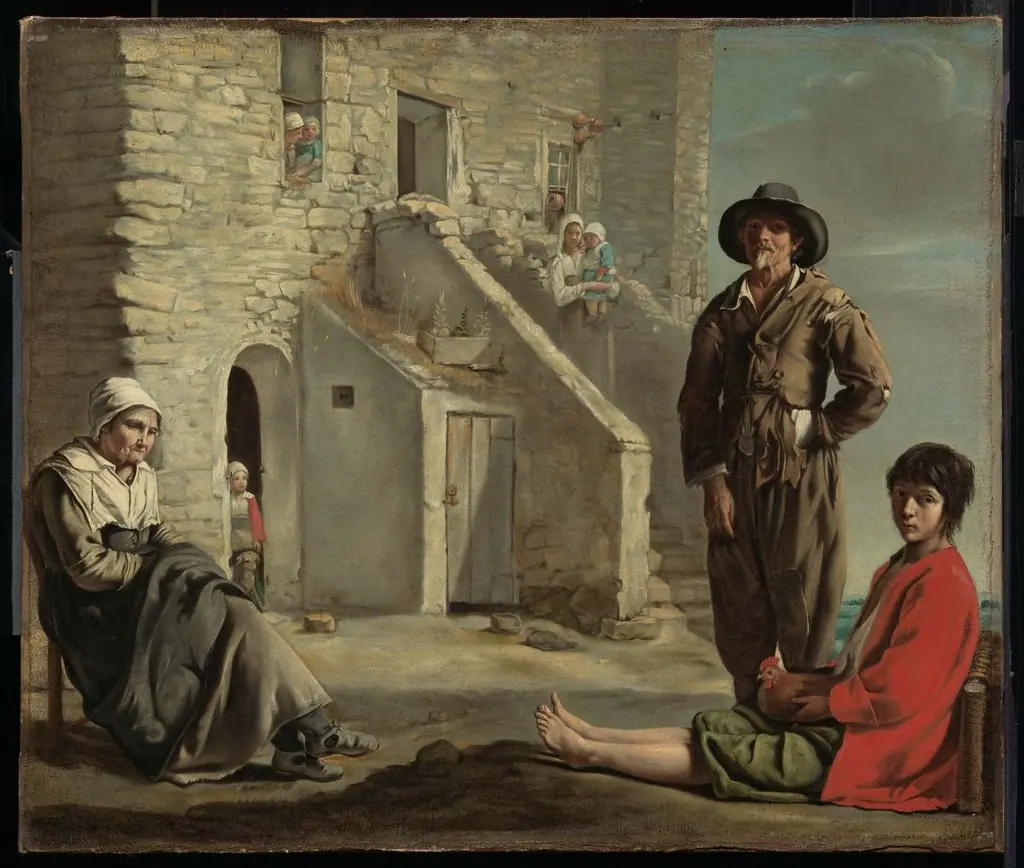
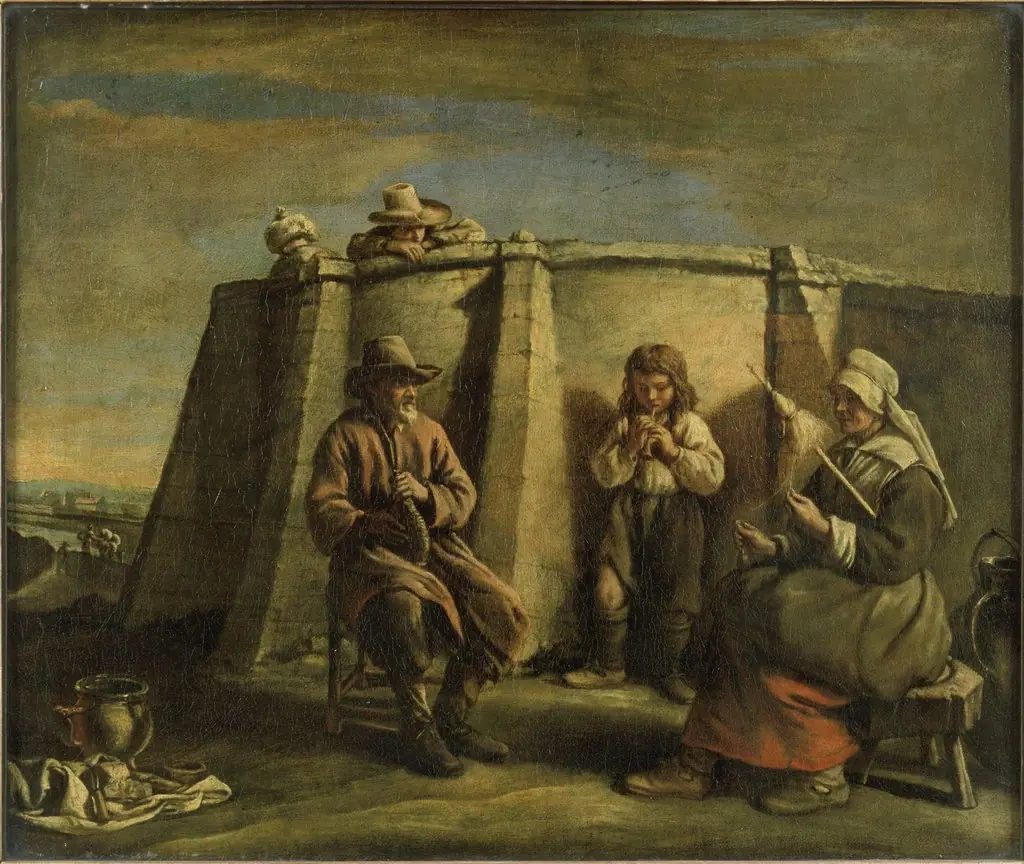
The Flageolet Player is an oil painting by the Baroque artist Louis Le Nain. It dates from 1644 and is held in the collection of the Victoria and Albert Museum. The work depicts a modest domestic scene set before a 17th‑century lime kiln.
About this work
Overview
The work depicts a modest domestic scene set before a 17th‑century lime kiln. A trio, a man, a woman, and a child, are arranged in a shallow outdoor space, each engaged in a simple activity. The composition balances labor and leisure, presenting everyday objects such as a wine jug, a spindle, and a small wind instrument.
Subject & Meaning
At the center, a young boy concentrates on a flageolet, a narrow flute‑like instrument, while the elder man holds a jug of wine, suggesting hospitality. The woman, positioned nearby, works with a spindle, alluding to textile production. Together the figures convey a harmonious blend of work, music, and communal life in a rural setting.
Technique & Style
The painter employs a restrained palette and careful modelling of light to give volume to the figures. Subtle chiaroscuro highlights the boy’s face and hands, while the surrounding shadows create depth. The brushwork is smooth, emphasizing the texture of clothing and the roughness of the kiln’s stone surface.
History & Provenance
Created in the early 1600s, the painting is attributed to the workshop of the Le Nain brothers, whose collaborative practice makes precise authorship difficult. Scholars have alternately assigned it to Louis or Matthieu Le Nain, reflecting the near‑identical styles the siblings cultivated while working together in Paris.
Context
The Le Nain brothers were pivotal in introducing genre scenes to French art during the first half of the 17th century. Their works often portrayed humble peasant life with dignity, contrasting with the grand historical and religious subjects popular at the time. This piece exemplifies their focus on ordinary people and everyday tasks.
Own this work as a print
Artist & collection

Artist
Louis Le Nain painted quiet moments of 17th-century French rural life in sober, earth-toned oils.