Artist
Marco Ricci
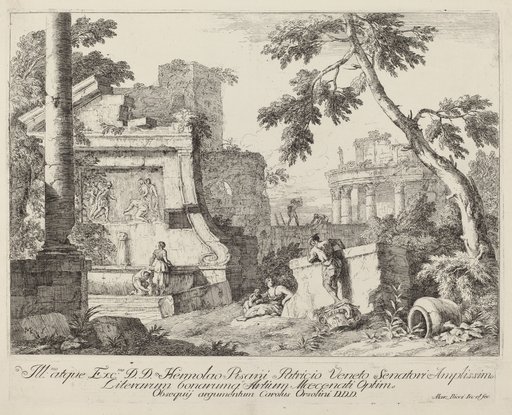
Republic of Venice
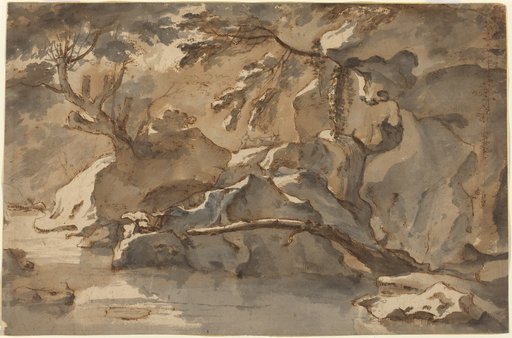
Marco Ricci is a Republic of Venice Baroque artist. 21 works are cataloged here, principally at National Gallery of Art.
Marco Ricci (1676–1729) was an artist.
Overview
Marco Ricci (5 June 1676-21 January 1730) was an Italian Baroque painter, engraver, and stage designer, born in Belluno in the Republic of Venice. Though long overshadowed by his celebrated uncle Sebastiano Ricci, he is now recognized as the principal initiator of a new Venetian landscape style in the eighteenth century that achieved immediate international success. Working across oil painting, tempera, gouache, and etching, he produced landscapes, capriccios, marine scenes, and theatrical designs, while also pioneering the use of tempera on goatskin. His work is distinguished by its atmospheric sensitivity, dramatic natural effects, and innovative approach to light that prefigured later developments in Venetian view painting.
Biography & dates
Marco Ricci was born in Belluno on 5 June 1676 to Girolamo Ricci and Girolama Trevissoi. His early training came from his uncle Sebastiano Ricci, likely in Milan between 1694 and 1696, and he subsequently moved to Venice with his uncle in 1696. However, he was forced to flee the city after killing a gondolier during a tavern brawl. He took refuge in Split (Spalato) in Dalmatia for approximately four years, where he worked in the studio of the view painter Antonio Francesco Peruzzini. He later visited Rome, where he painted perspective views, and from 1704 to 1708 he was in Florence. There he probably participated in the decoration of the antechamber to the summer apartment in the Palazzo Pitti, a commission his uncle had received from Ferdinando de' Medici, and he contributed a ceiling painting to the Palazzo Fenzi in 1706-1707. In late 1708, through the patronage of Charles Montagu, 4th Earl of Manchester, British ambassador to Venice, Ricci traveled to England, stopping in the Netherlands to study Dutch landscape painting. In London he collaborated with Giovanni Antonio Pellegrini on stage scenery for Italian operas at the Queen's Theatre in Haymarket, including works by Alessandro Scarlatti and Antonio Maria Bononcini. He also painted the British prima donna Catherine Tofts. He returned to Venice at the end of 1710, possibly due to a dispute with Pellegrini, but came back to England from 1711 to 1714 with his uncle Sebastiano, with whom he collaborated on several commissions. The two finally returned to Venice in 1716, where Marco lived with his uncle until his death. He was registered in the Fraglia dei pittori in 1726 and 1727, and died in Venice on 21 January 1730.
Style & movement
Marco Ricci's artistic development reflects a synthesis of diverse influences that coalesced into a distinctive Venetian landscape style. His early work shows the impact of Neapolitan painting, particularly the dramatic naturalism of Salvator Rosa, as well as the classical landscapes of Claude Lorrain and Gaspard Dughet. The loose paint handling and elongated, wiry figures of Alessandro Magnasco, whom he knew personally, also left their mark on his early canvases. During his English period, he absorbed Dutch landscape traditions, and his production as a landscapist encompassed four principal categories: alpine views and pastorals, violent country storms, ruins, and scenes of villages or courtyards. In maturity, his painting demonstrated a sensitive approach to nature, notably in his rendering of atmospheric variations according to season and weather. His ruin landscapes displayed a pre-Romantic sensibility, employing a light palette to capture solar effects and paving the way for the capriccios of Francesco Guardi. From 1723, he produced etchings, of which 33 are known, featuring views and landscapes with ruins and figures; a notable set of twenty-three prints anticipated the work of Piranesi. He also invented or notably developed tempera painting on goatskin, and about half of his smaller works employed this medium rather than oil on canvas. In his final years, his use of tempera and gouache on vellum and goatskin allowed him to lighten his palette further.
Major works
Ricci's oeuvre spans multiple media and subjects, with significant holdings in Italian collections. In Venice, the Gallerie dell'Accademia preserves several key works from 1715 onward: Landscape with Washerwomen, Stream and Monks (136 × 198 cm); Landscape with Horses at the Watering Place; Landscape with Woodcutters and Horsemen; and The Cascade, along with later works on goatskin including Landscape with Woodcutters and Horsemen (29 × 45 cm) and View of a Villa Park (30 × 44 cm). Ca' Rezzonico houses Winter Landscape, Landscape with Mill and Washerwomen, Landscape with Monks and Travelers, and View with Classical Roman Ruins. The Pinacoteca Querini-Stampalia holds Ruins and Pond in the Roman Countryside and a Landscape from 1720-1730 (96 × 132 cm each). In Bologna, the Pinacoteca Nazionale preserves his Marine paintings. Abroad, the Yale Center for British Art in New Haven holds the significant early work Opera Rehearsal (1709, 46.4 × 57.8 cm). The Royal Collection at Windsor possesses Courtyard (circa 1725-30). In France, the Musée des Beaux-Arts de Brest holds Fantastic Nocturnal Landscape (87.2 × 121 cm), while the Musée Baron-Martin at Gray preserves a pair of pendant seascapes and river landscapes (115 × 172 cm each). The Musée des Beaux-Arts de Narbonne holds Saint Jerome in the Desert.
Influences & students
Marco Ricci's formation was fundamentally shaped by his uncle and teacher Sebastiano Ricci, with whom he maintained a lifelong collaborative relationship that proved mutually complementary: Sebastiano's strengths lay in portraiture, while Marco excelled in stage scenery and landscape. His personal contacts included the Genoese painter Alessandro Magnasco, whose stylistic influence is visible in Ricci's early work, and the architect Filippo Juvarra, whose designs informed his theatrical work. During his English sojourn, he became closely associated with Giovanni Antonio Pellegrini, with whom he collaborated extensively on opera productions, and he moved within the circle of George Frideric Handel during the intrigues of the London opera world. The young Joseph Goupy, who stayed in Italy between 1705 and 1710, became his protégé. Important patrons included Consul Joseph Smith, who became a significant supporter after Catherine Tofts (whom Ricci had painted) married the British businessman in Venice around 1717, and Zanetti the Elder. In the 1720s, the House of Savoy in Turin provided numerous commissions. Among his pupils were Domenico Bernardo Zilotti and Giuseppe Valeriani.
Legacy
Marco Ricci's legacy rests primarily on his role as the initiator of a new Venetian landscape style that achieved immediate international currency, though his reputation long remained eclipsed by that of his uncle Sebastiano. Modern scholarship has substantially reevaluated his contribution, recognizing him as a pivotal figure in eighteenth-century Venetian art whose atmospheric landscapes and innovative techniques bridged Baroque naturalism and the more evocative approaches that would follow. His invention or refinement of tempera on goatskin represented a significant technical development, while his etchings, particularly the set of twenty-three prints with ruins and figures, anticipated Piranesi's architectural fantasies and influenced the visual vocabulary of ruin imagery. His stage designs for Venetian theatres including the Teatro San Giovanni Grisostomo and Teatro Sant'Angelo, developed in consultation with Juvarra's architectural conceptions, contributed to the spectacular visual culture of Baroque opera. The light palette and atmospheric effects of his mature work opened paths that Francesco Guardi would later explore. His works are now held in major institutions including the Gallerie dell'Accademia, Ca' Rezzonico, the Royal Collection, and the Yale Center for British Art, testament to the geographical range of his patronage and the enduring appeal of his landscapes across European collections.
Works by Marco Ricci
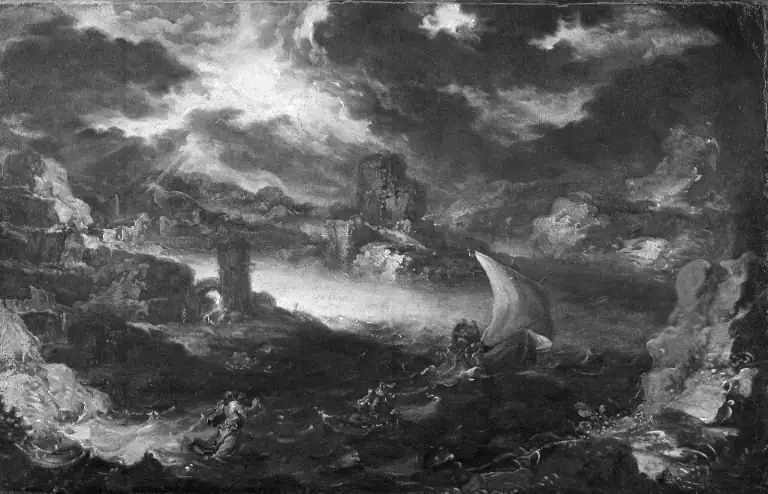 Christ on the Sea of Galilee
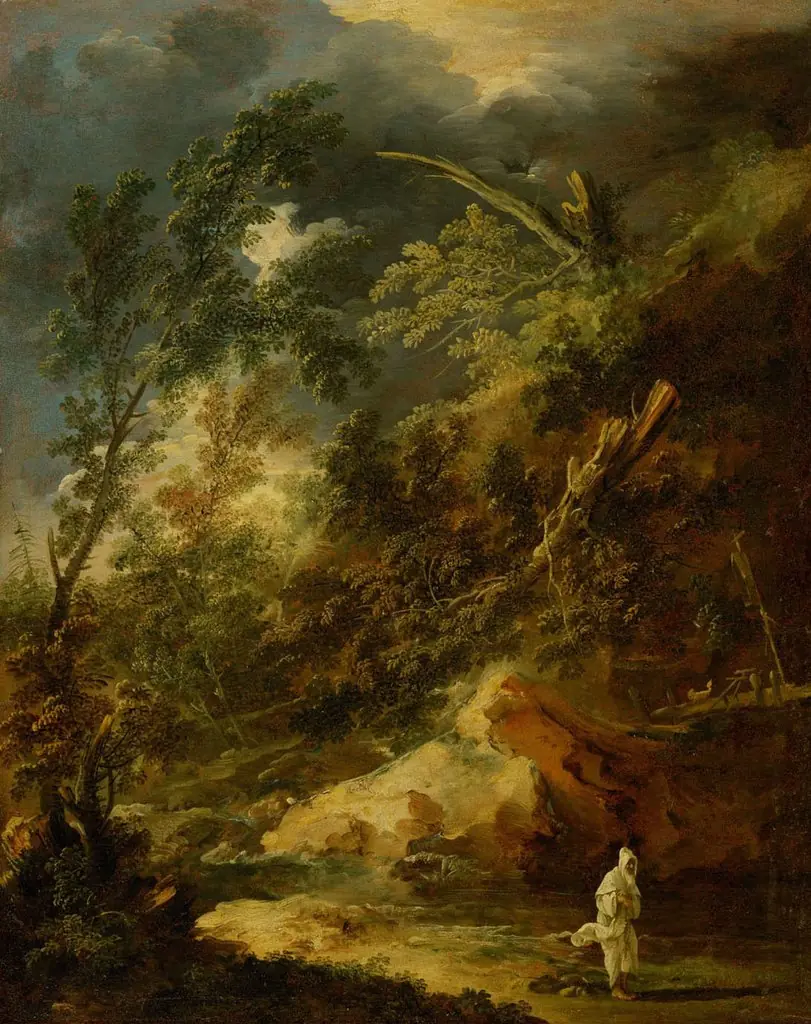 Landschaft mit einem Mönch im Wettersturm
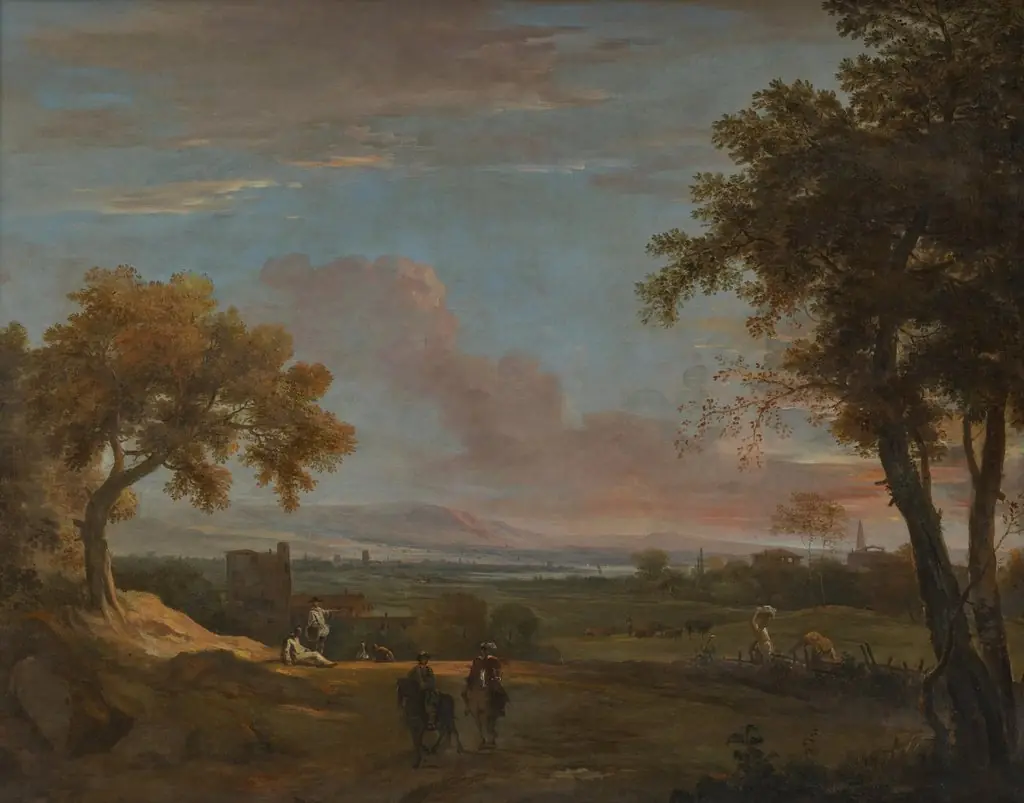 Südliche Landschaft im Abendlicht
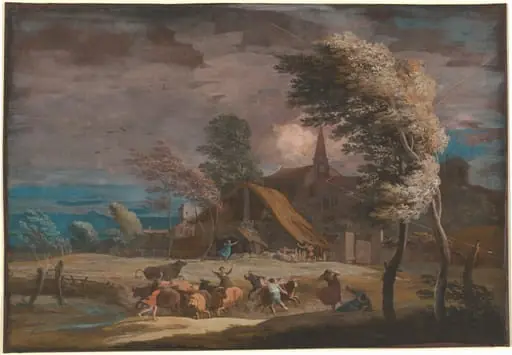 A Stormy Landscape
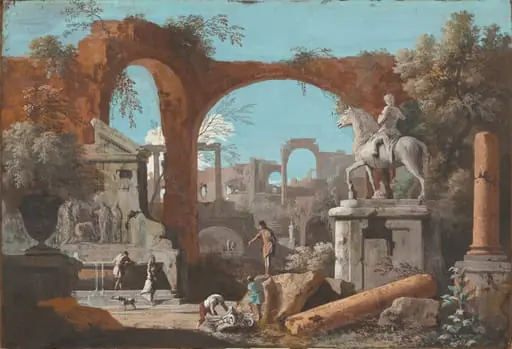 A Capriccio of Roman Ruins
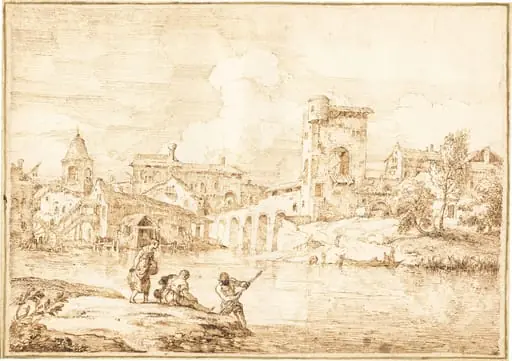 A Fortified Village along a River
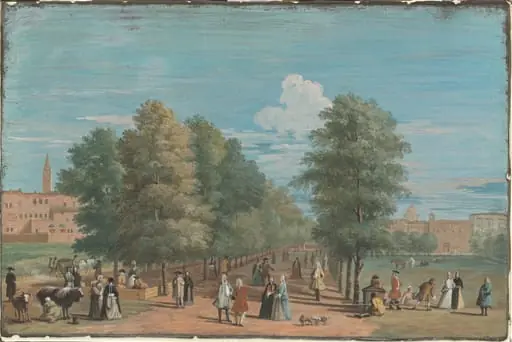 The Mall from Saint James' Park
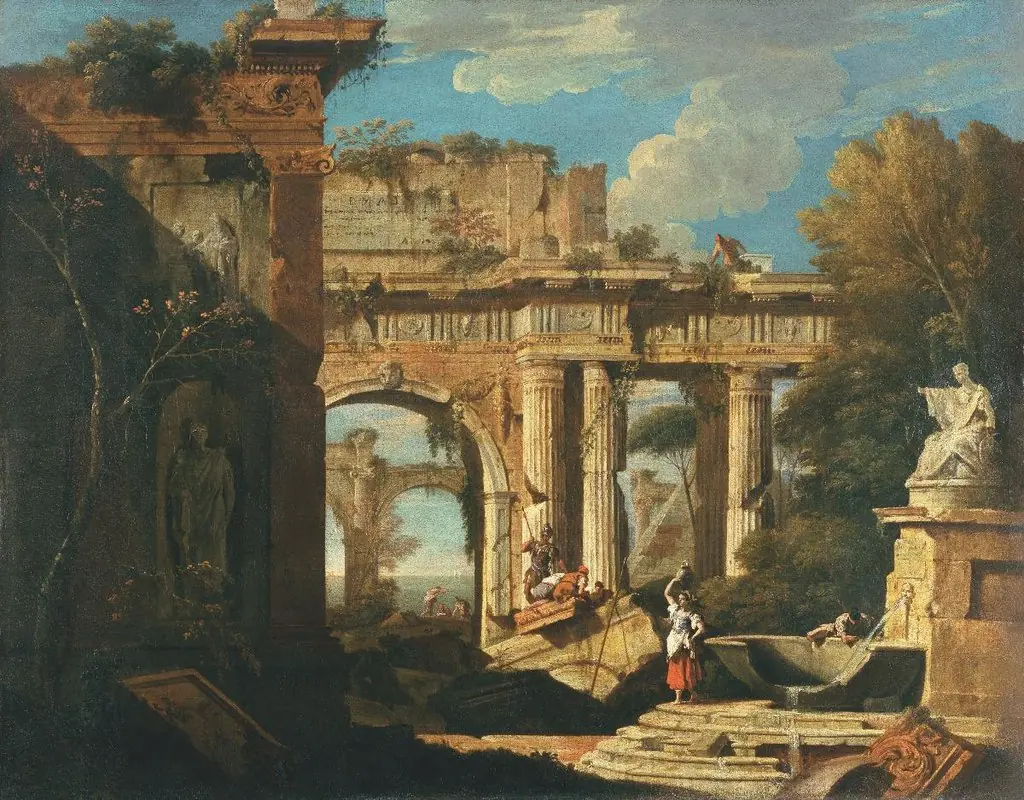 Capriccio con rovine romane
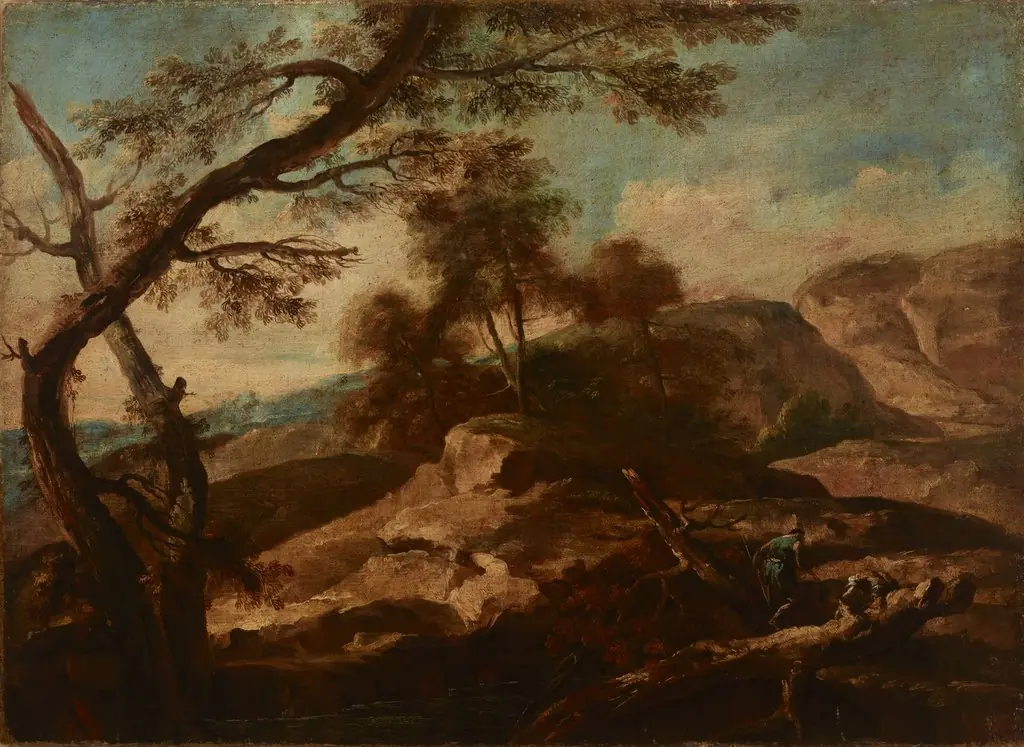 Landscape
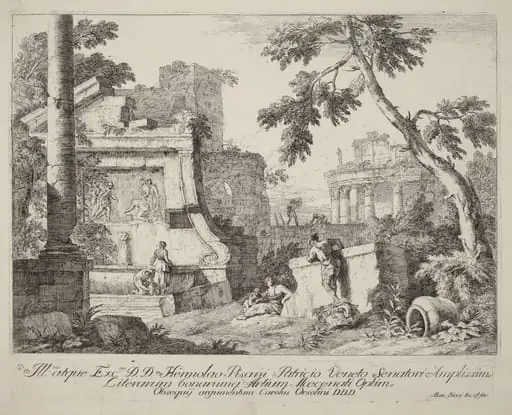 Landscape with Ruins
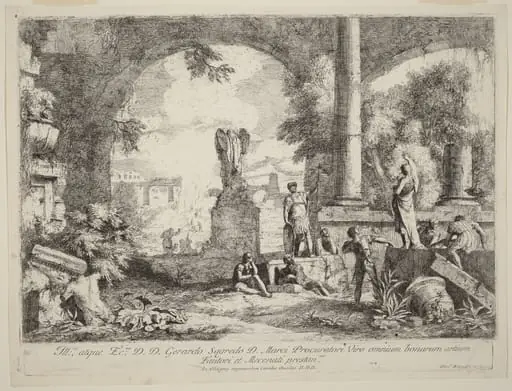 Landscape with Classical Ruins
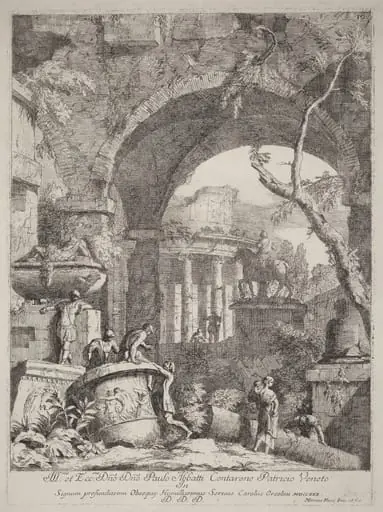 Capriccio: Ruins
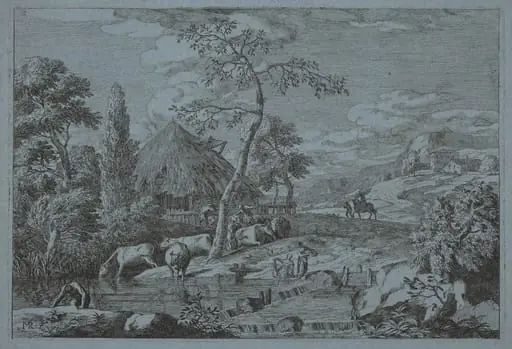 Cattle and Figures at a Farmyard Stream
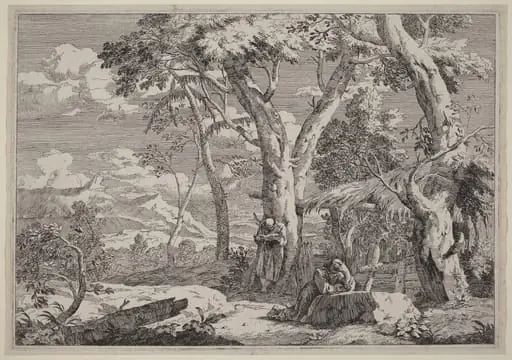 Wilderness Landscape with Two Monks
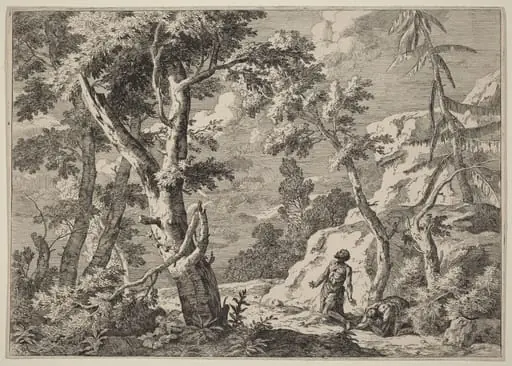 Two Men Penitent in the Wilderness
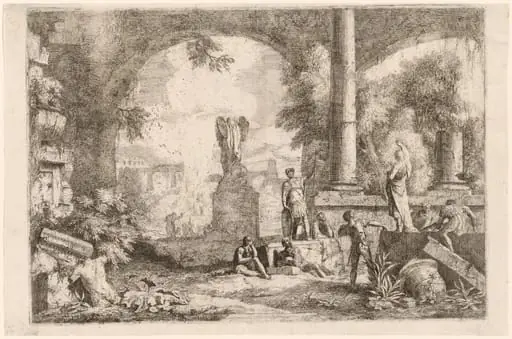 Capriccio of Antique Ruins with Men Gazing at a Classical Orator
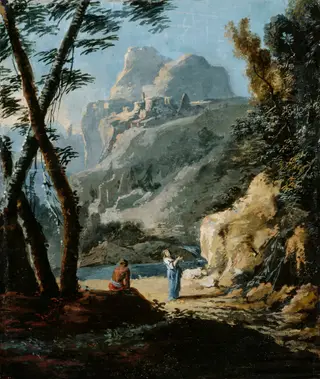 Vuoristomaisema
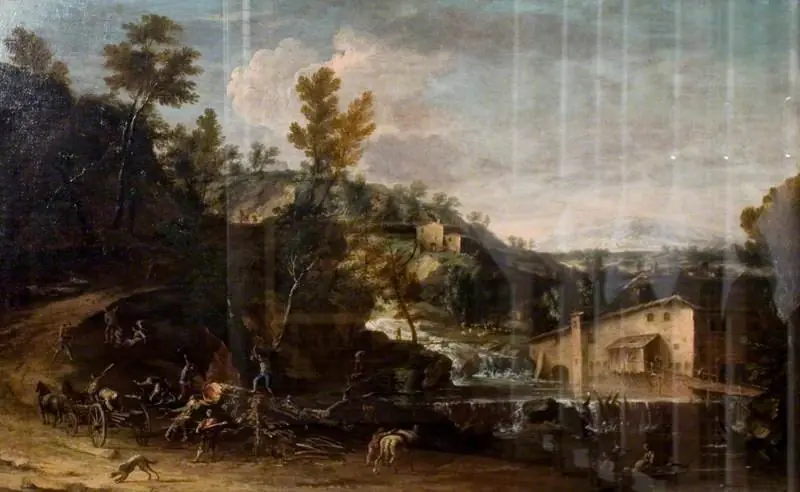 Landscape with Woodcutters
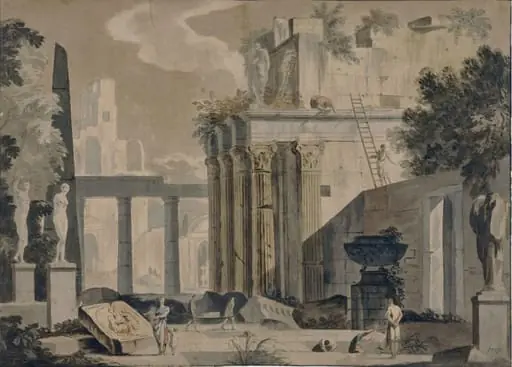 Roman Ruins
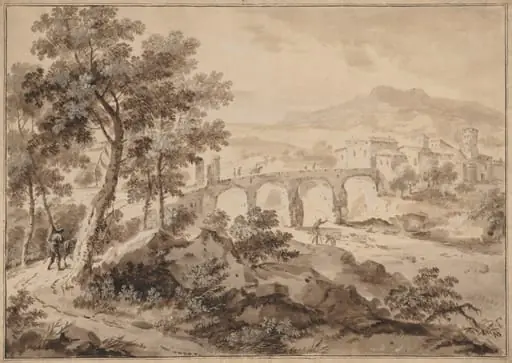 Landscape with Bridge
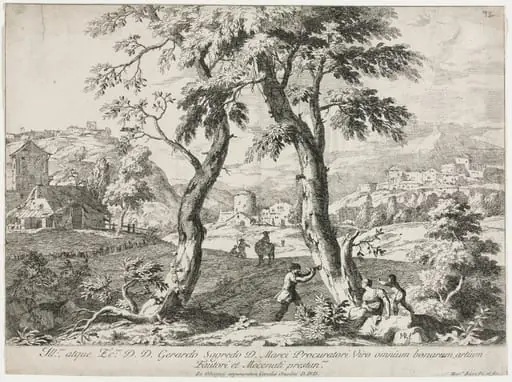 View of a Village with Figures in the Foreground
Collections represented


Artists in a similar vein