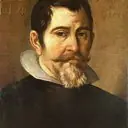
Artist
Antonio Maria Vassallo
history of Genoa, 1620–1664
Antonio Maria Vassallo was a history of Genoa Flemish Baroque painting artist. 4 works are cataloged here, principally at Hermitage Museum. Antonio Maria Vassallo was born in Genoa.
Overview
Antonio Maria Vassallo (c. 1620-1664/1673) was an Italian Baroque painter active mainly in Genoa, celebrated for his still lifes, animal paintings, mythological scenes, and rustic pastoral subjects. Though his biography remains poorly documented, he stands as a significant figure in the Genoese school of the seventeenth century, distinguished by a style that absorbed Flemish influences and earned him the epithet "the most Flemish of the Genoese." His work bridges the Flemish tradition of Rubens and Teniers with Italian Baroque sensibilities, and his paintings are now held in major collections including the Hermitage Museum, the Pushkin Museum, and the National Gallery of Art in Washington.
Biography & dates
Vassallo was born in Genoa around 1620 and died in Milan between 1664 and 1673, with the English Wikipedia specifying 1664/1673 and the Italian source narrowing this to 1664/1672. According to Raffaele Soprani's 1674 biography, the primary documentary source for his life, Vassallo trained under the Flemish artist Vincenzo Malò (c. 1605, c. 1650), who had himself studied with David Teniers the Elder and Peter Paul Rubens. This apprenticeship proved formative, as Vassallo absorbed the Flemish approach to still life and animal painting. Late in life, he relocated to Milan on medical advice, his doctors believing the Milanese climate more salubrious for his failing health. He died without children or pupils in the strict sense. His career unfolded primarily in Genoa, where he participated in a sophisticated artistic environment marked by strong Flemish-Italian exchange and wealthy patronage.
Style & movement
Vassallo worked within the Baroque period and the Genoese school, specializing in still lifes, animal subjects, mythological scenes, and rustic pastoral genre paintings. His style reflects a distinctive fusion of Flemish and Italian elements: the Italian Wikipedia notes he was called "the most Flemish of the Genoese" for his assimilation of Rubensian and Teniers-inspired techniques learned through Malò. Beyond this Flemish foundation, he was influenced by fellow Genoese painters Sinibaldo Scorza and Giovanni Benedetto Castiglione, with whom he shared philosophical and antiquarian interests according to the Italian source. This dialogue with Castiglione in particular enriched his approach to animal painting and still life. Vassallo developed a personal vision that maintained constant conversation with Flemish models while responding to the refined demands of Genoese patrons. His still lifes and animal scenes achieved notable appreciation, though he also executed religious and mythological compositions.
Major works
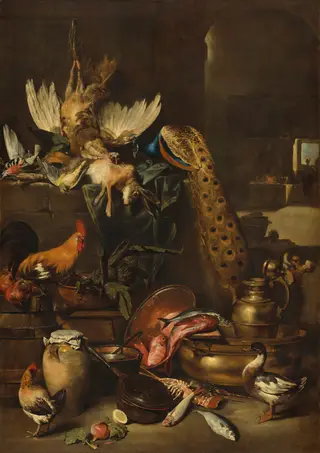
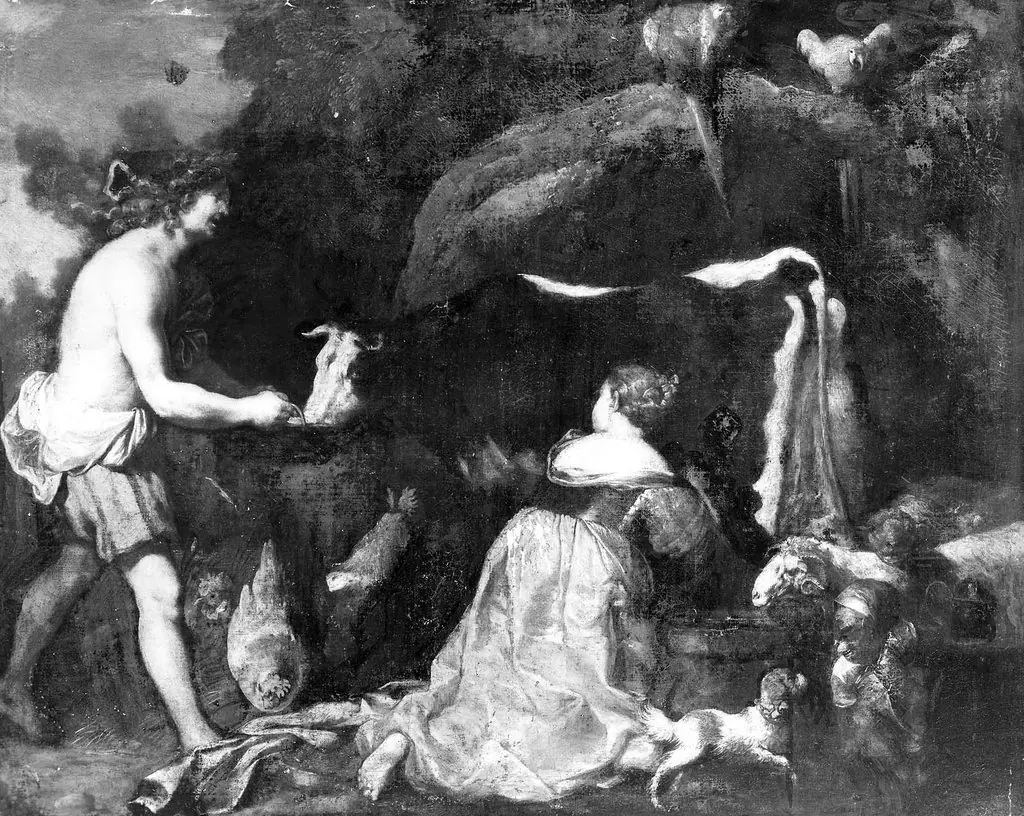
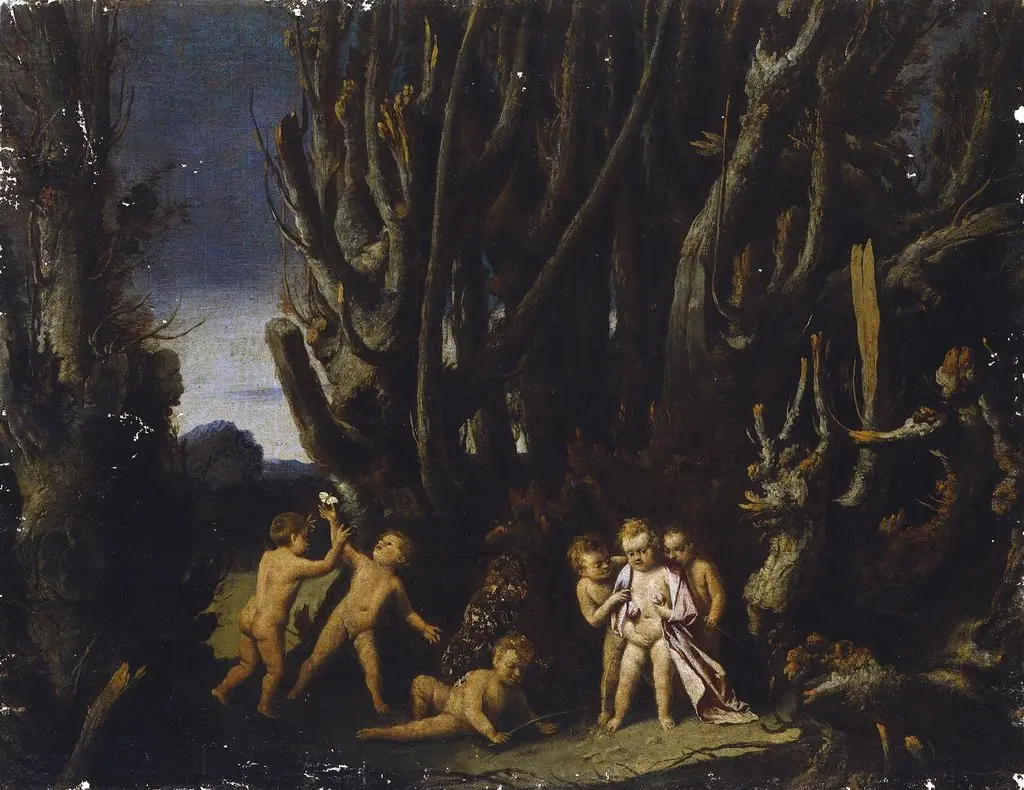
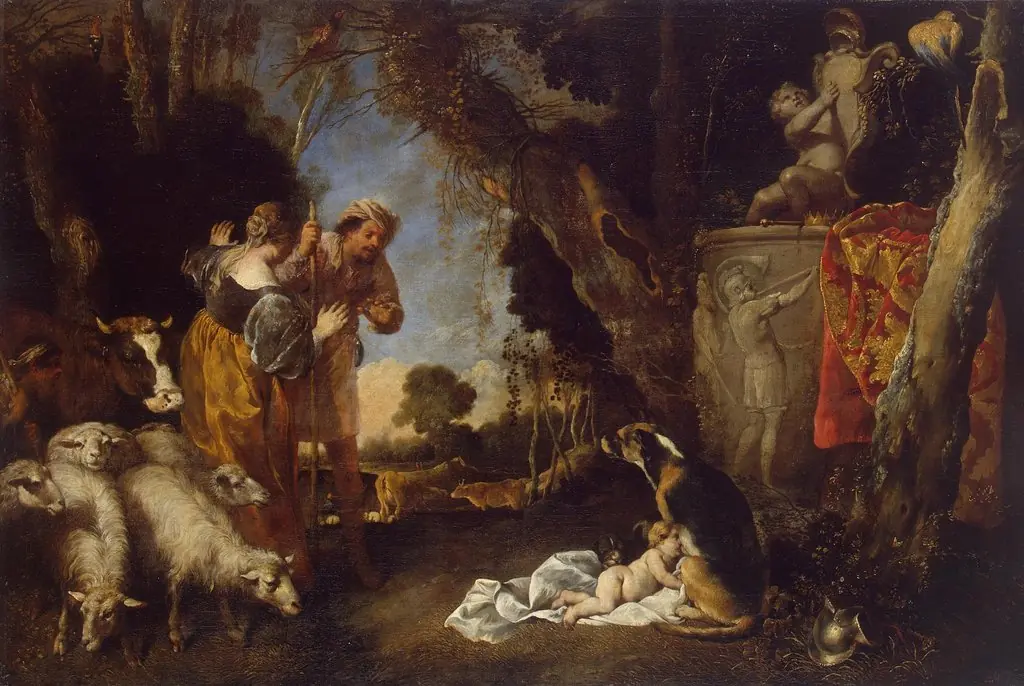
Vassallo's documented works include several significant commissions and paintings now dispersed across European museums. In 1648, he painted Saint Francis with Three Female Saints for the church of San Gerolamo in Quarto, now in the Palazzo Bianco gallery in Genoa. The Martyrdom of Saint Marcello Mastrilli, dated 1664, was executed for the Convento di Carignano. His mythological subjects include The Childhood of King Cyrus and The Finding of Cyrus, both held at the Hermitage Museum in Saint Petersburg, and Orpheus Charming the Animals at the Pushkin Museum in Moscow. The Spanish Wikipedia additionally lists The Pantry at the National Gallery of Art in Washington, and mentions a Flagellation of Christ. A Saint Rosalie in Glory, dated broadly 1626-1650 or 1651-1675, is held at the Musée des Augustins in Toulouse. Despite his known activity as a portraitist, no portraits by Vassallo are known to survive.
Influences & students
Vassallo's artistic formation was shaped by his master Vincenzo Malò, whose Flemish training under Rubens and Teniers the Elder provided the foundation for Vassallo's technique. Within the Genoese milieu, he was influenced by Sinibaldo Scorza and Giovanni Benedetto Castiglione, both specialists in still life and animal painting. The Italian source emphasizes that his relationship with Castiglione was deepened by shared philosophical and antiquarian interests. While the Italian Wikipedia states he had no pupils in the formal sense, his style influenced the compatriot Giovanni Agostino Cassana (c. 1658-1720), whom the English and Spanish sources identify as his closest follower in still-life painting. This transmission of a Flemish-inflected Genoese style to Cassana represents Vassallo's principal artistic legacy in terms of direct succession.
Legacy
Vassallo's posthumous reputation rests heavily on the biography by Raffaele Soprani, published in 1674 and later edited by Carlo Giuseppe Ratti in 1769, which remains the cornerstone of documentary knowledge about his life. Modern scholarship has sought to expand understanding of his oeuvre: Anna Orlando published a monograph on Vassallo in 1999 and contributed an update in 2004, while Gianluca Zanelli's 2020 entry in the Dizionario biografico degli italiani represents the most recent authoritative assessment. Grosso Orlando's 1922-1923 study in Dedalo examined his animal painting in the genres of early Genoese art. Vassallo's work appears in major museum collections and is catalogued in standard reference works including the Grove Encyclopedia of Art and the National Gallery of Art. The market for his paintings is documented through Artnet, and his images are collected on Wikimedia Commons. Despite the survival of relatively few works and the absence of extant portraits, his position as a key mediator of Flemish still-life and animal painting in Genoa remains secure.
Works by Antonio Maria Vassallo
Collections represented


Artists in a similar vein