Artwork
The Larder
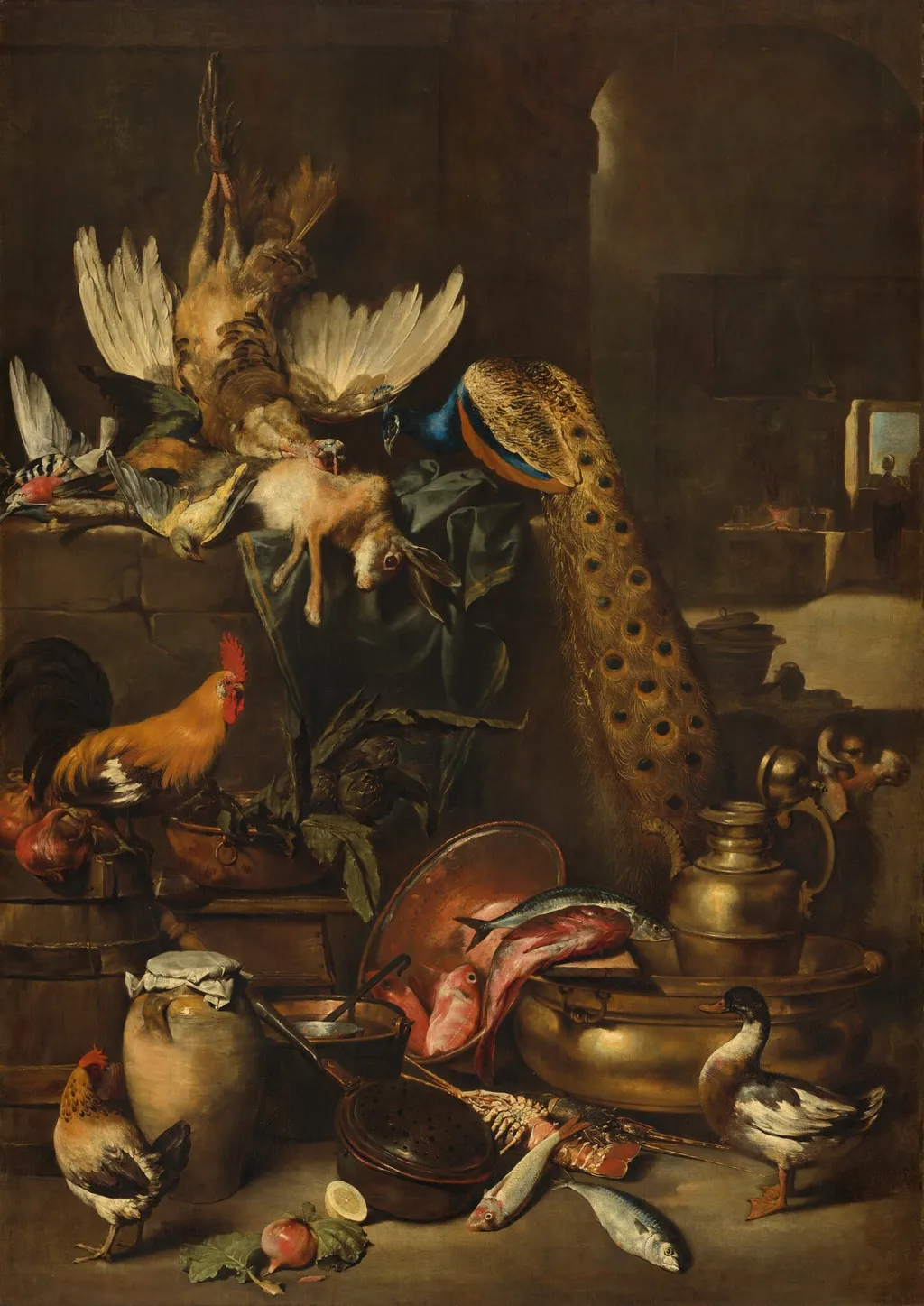
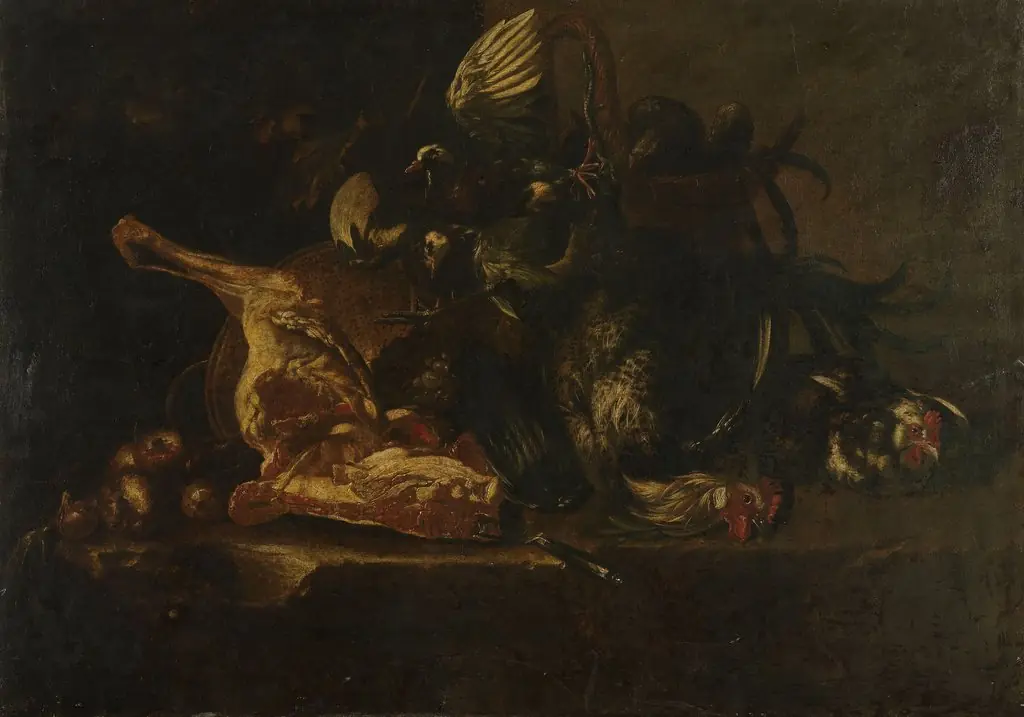
The Larder is an oil painting by the Baroque artist Antonio Maria Vassallo. It dates from 1655 and is held in the collection of the Cook collection. Anton Maria Vassallo’s oil on canvas, dated around 1655, presents a cluttered interior surface teeming with foodstuffs and animal carcasses.
About this work
Subject & Meaning
The painting depicts a still-life interior dominated by a larder shelf laden with foodstuffs, including bread, cheese, eggs, and hanging game birds, arranged against a plain background. This genre of kitchen or pantry scenes flourished in 17th-century Italy, where modest abundance signaled both domestic prosperity and the fleeting nature of earthly pleasures, a theme resonant with contemporary vanitas traditions. The precise rendering of textures and the careful balance of light and shadow emphasize the artist’s skill in translating humble subjects into objects of contemplation, aligning with the broader Genoese still-life tradition of the mid-seventeenth century.
The work’s title, _The Larder_, reflects its focus on sustenance and storage rather than narrative action, underscoring the contemplative and moralizing potential of still-life painting during this period.
Technique & Style
The physical dimensions and material composition define the formal scope of the piece, which was created by Anton Maria Vassallo around 1650 or 1660.
The Larder is executed in oil paint on a canvas support. The work measures 229.2 cm in height and 163.2 cm in width. As a painting classified within the genre of still life, it demonstrates the artist's handling of oil media on a large-scale textile ground.
The physical dimensions and material composition define the formal scope of the piece, which was created by Anton Maria Vassallo around 1650 or 1660.
History & Provenance
The Larder was likely painted by Antonio Maria Vassallo around 1650–1660. Its early provenance traces to Cardinal Joseph Fesch, who owned it in Rome after 1815. The painting appeared in Fesch’s posthumous 1841 catalogue as by Giovanni Benedetto Castiglione, and was sold in his 1845 Roman sale to Alessandro Aducci.
By 1876 it belonged to Reginald Cholmondely at Condover Hall, and was auctioned at Christie’s, London, in 1897. It was purchased for Sir John Charles Robinson by Martin Colnaghi, acting for Sir Francis Cook, entering the Cook collection at Doughty House, Richmond. It descended through the Cook family, Sir Frederick Lucas Cook, Sir Herbert Frederick Cook, and Sir Francis Ferdinand Maurice Cook, until sold in 1948 to Gualtiero Volterra for Count Alessandro Contini Bonacossi.
The Samuel H. Kress Foundation acquired it in March 1949 and donated it to the National Gallery of Art, Washington, in 1961.
The Larder is held by the National Gallery of Art in Washington, D.C., where it entered the collection in 1961 as a gift from the Samuel H. Kress Foundation. The work was previously part of the Cook collection, having been acquired by Sir Francis Cook, 1st Baronet, for Doughty House in Richmond, Surrey, and subsequently inherited by his descendants until its sale in 1948. Its accession history includes a 1949 purchase by the Kress Foundation from Count Alessandro Contini Bonacossi, following the painting's earlier ownership by Cardinal Joseph Fesch and the Cholmondely family. The inventory records identify it as part of the Samuel H. Kress Collection within the museum's holdings.
Context
The Larder by Antonio Maria Vassallo entered the National Gallery of Art through the Samuel H. Kress Foundation in 1961, forming part of the Cook collection.
Scholarly attention to the work has been limited, with early attributions to Giovanni Benedetto Castiglione and later reconsiderations of its authorship.
The painting's provenance traces a complex path from Cardinal Joseph Fesch in Rome through several British collectors before its acquisition by the Kress Foundation.
Its stylistic analysis situates it within the Baroque period, reflecting the influence of 17th-century Italian naturalistic still-life traditions.
The work is cataloged in the National Gallery of Art's collection as part of the Samuel H. Kress Collection, indicating its recognized significance within the canon of European art.
Overview
Anton Maria Vassallo’s oil on canvas, dated around 1655, presents a cluttered interior surface teeming with foodstuffs and animal carcasses. A rooster, a rabbit, and a peacock lie amid scattered fish, cookware, and a gourd, rendered in a palette of muted earth tones punctuated by occasional vivid accents such as the rooster’s red comb.
Own this work as a print
Artist & collection
Artist
Antonio Maria Vassallo (c. 1620–1664/1673) was an Italian painter of the Baroque period, active mainly in Genoa, and painting mythologic scenes and still lifes. His biography is poorly documented, and mainly depends on…
 A Still Life with Dead Birds and a Hare
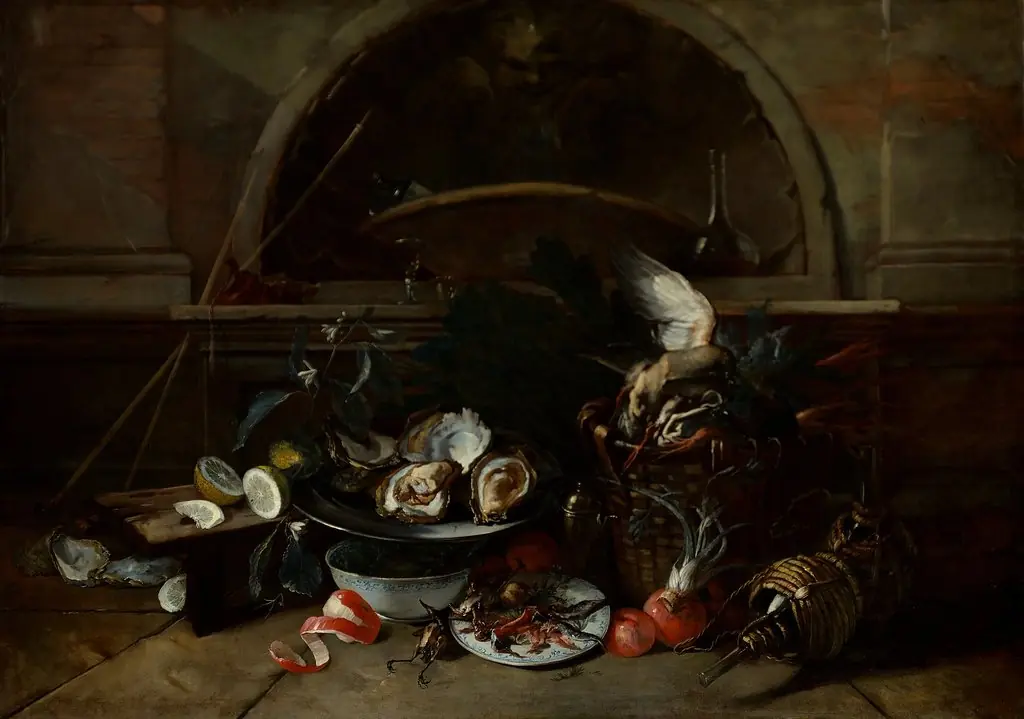 Still Life with Bottles and Oysters
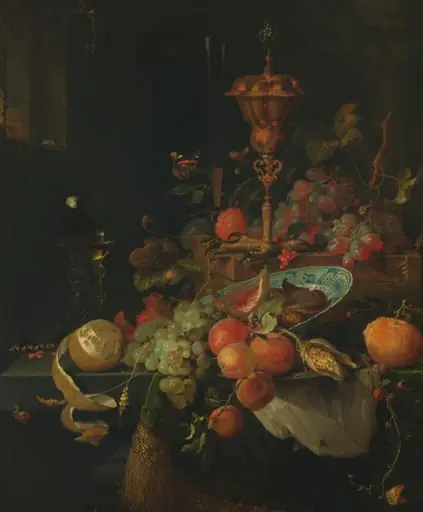 Still Life with Fruit and a Beaker on a Cock's Foot
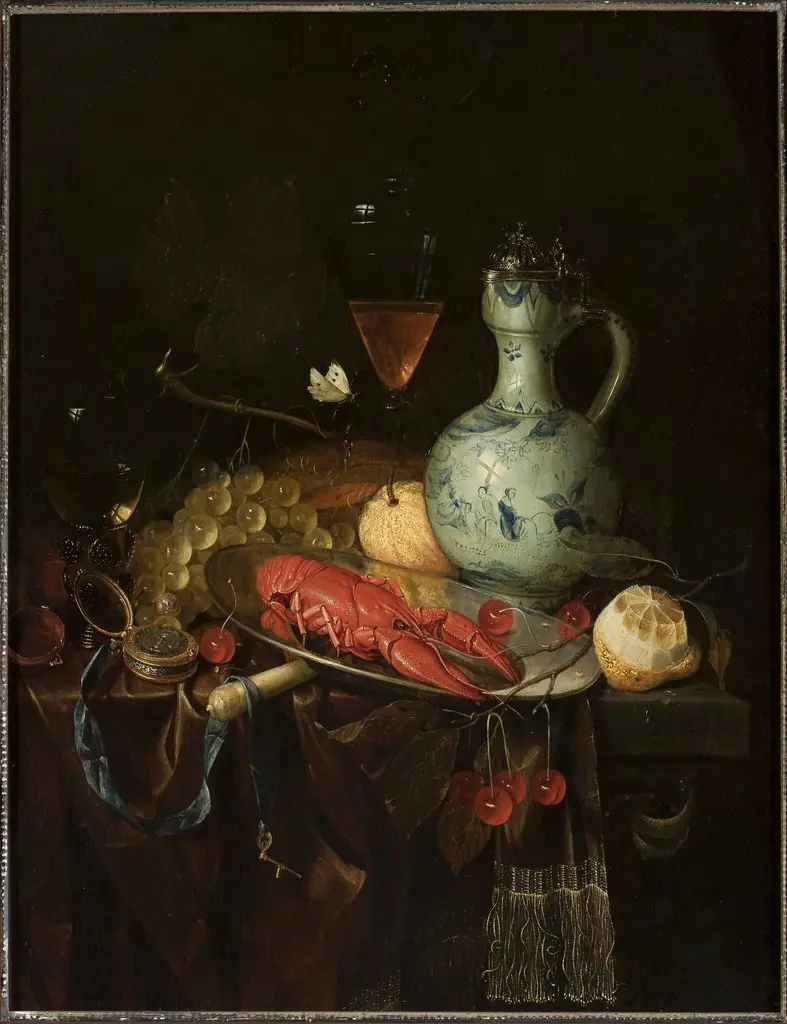 Still life with a watch
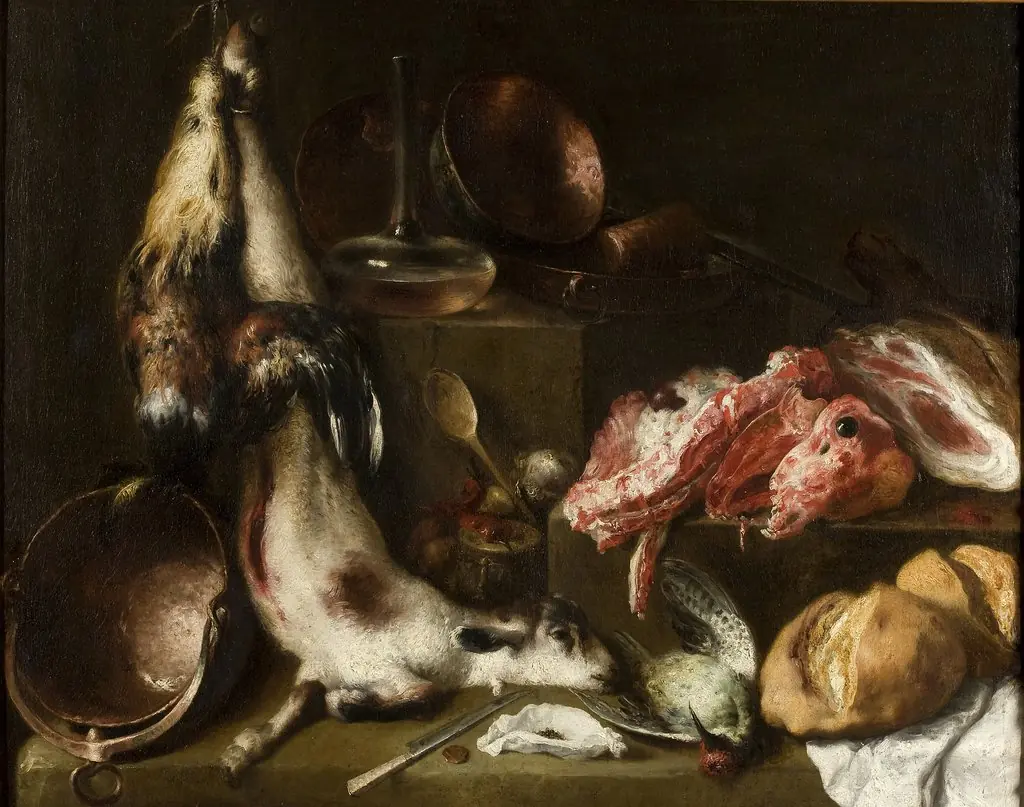 Kitchen Still Life
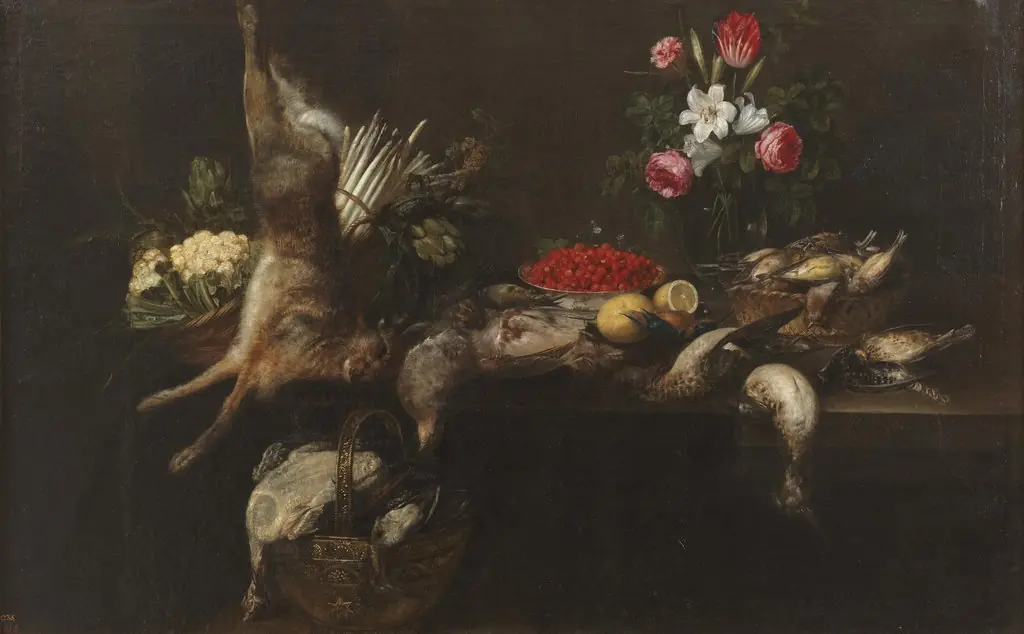 Pantry
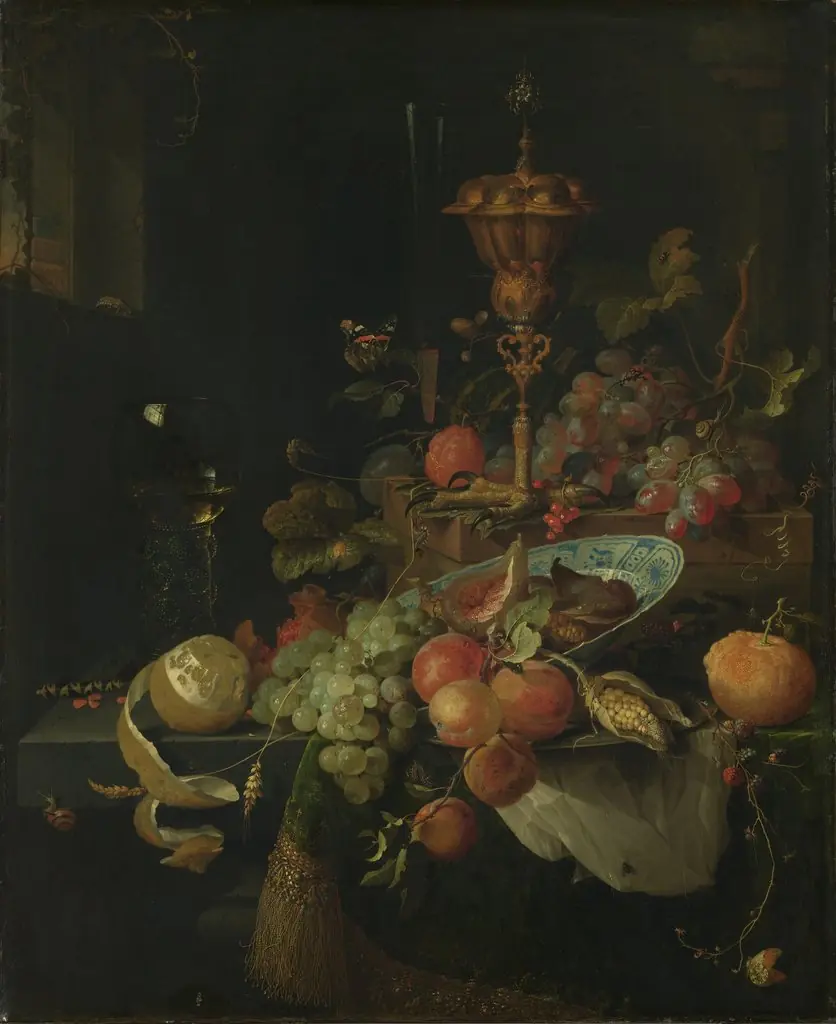 Still life with fruit and a beaker on a cock's foot
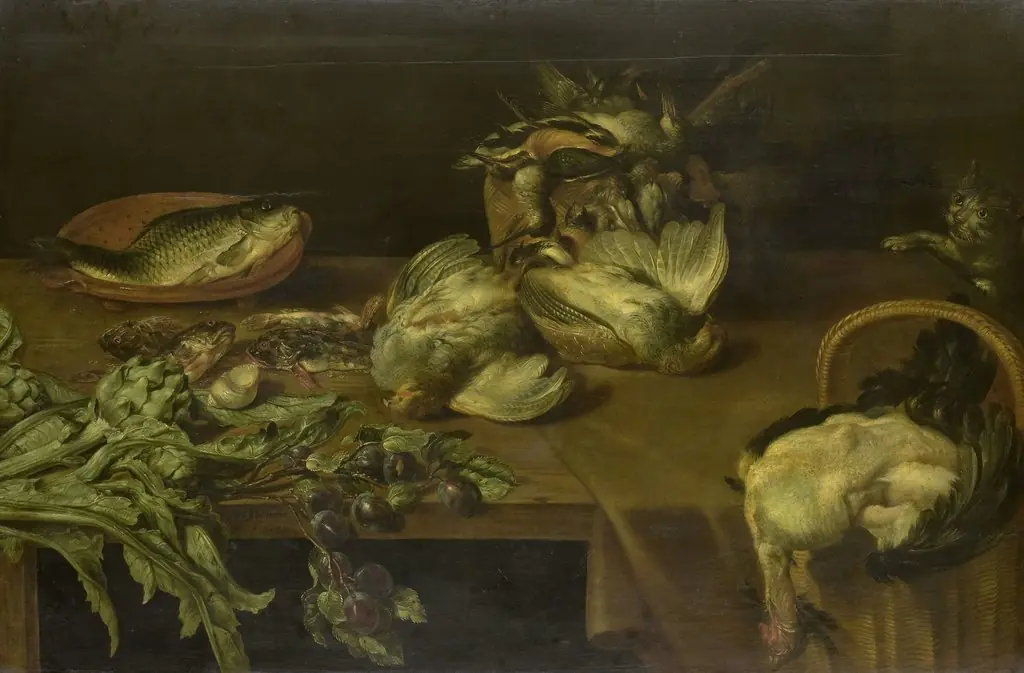 Still life with wild fowl
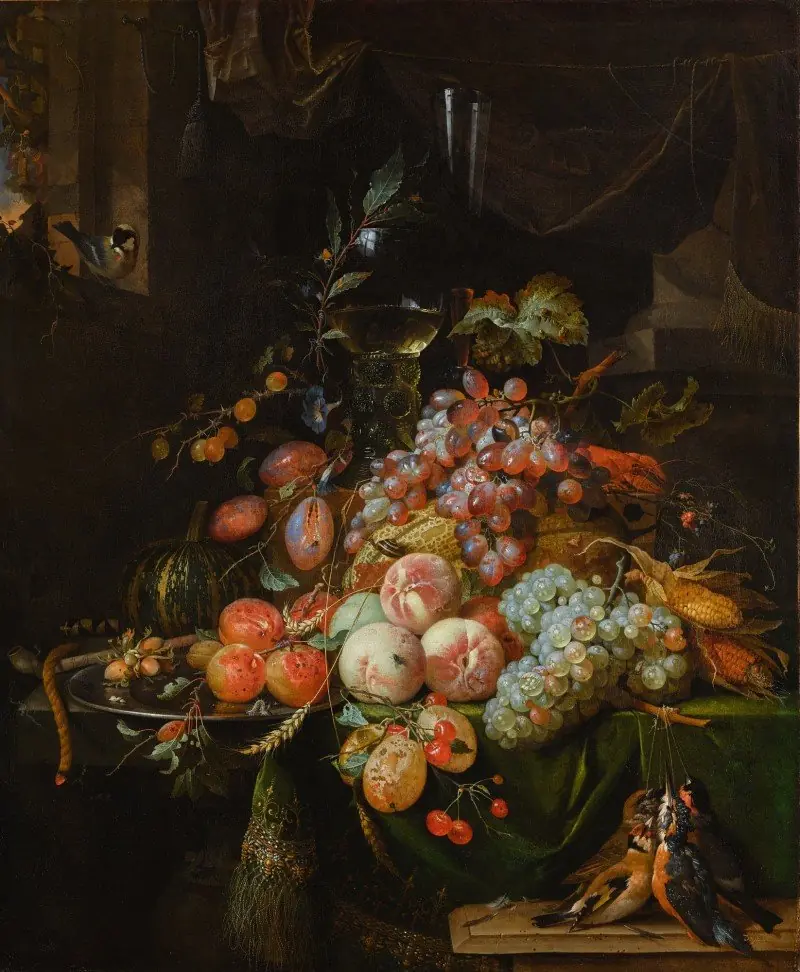 Still Life with Plums, Peaches, Apricots, Grapes and a Melon
 Still life with meat and dead birds