Movement
Die Brücke
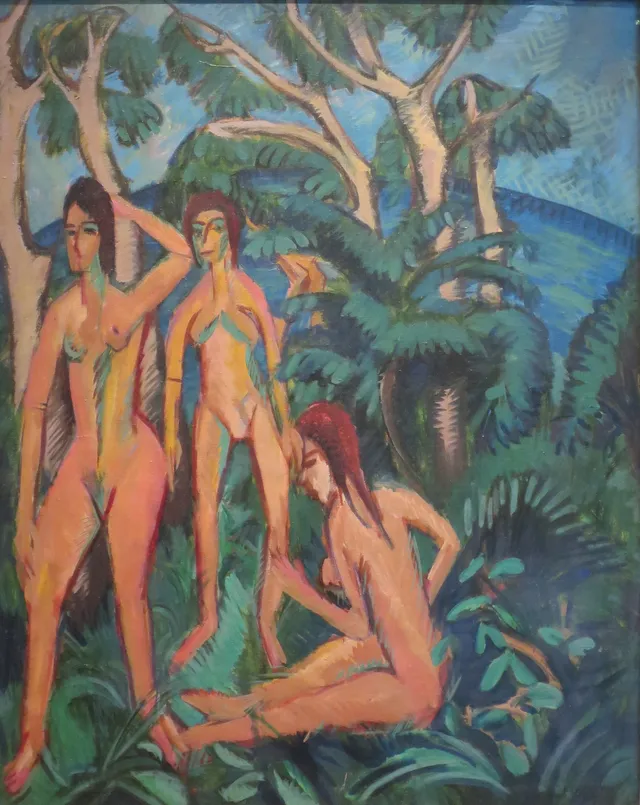
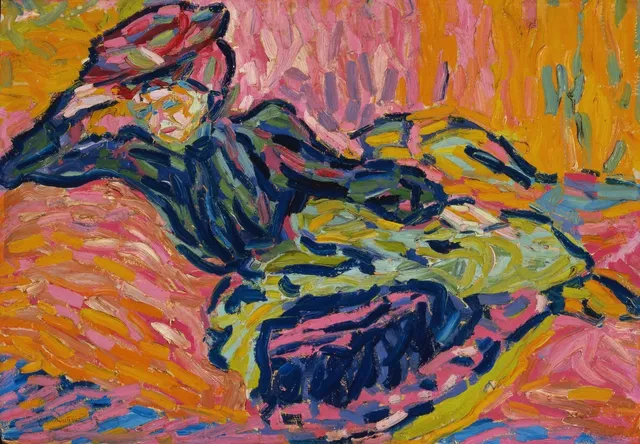
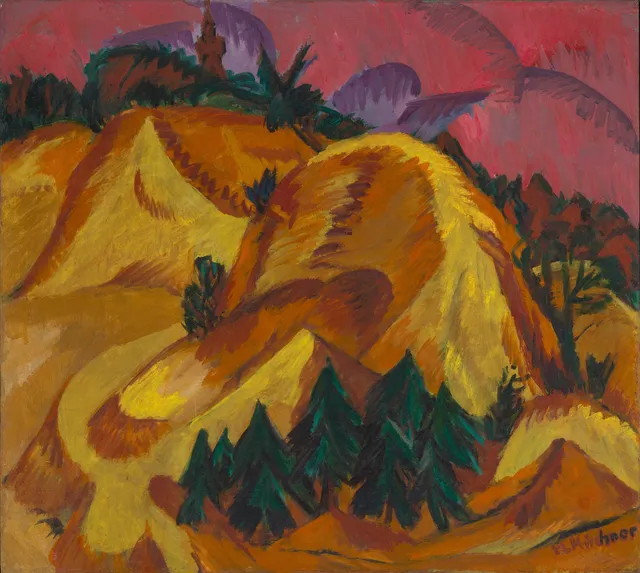
Die Brücke is an art movement of the 1905–1913 period. The gallery holds 3 works in this movement, including works by Ernst Ludwig Kirchner and Kees van Dongen. Browse Die Brücke paintings, portraits, pictures and artworks from the world's public-domain museum collections.
Die Brücke—German for "The Bridge"—was founded in Dresden on 7 June 1905 by four young architecture students at the city's Technical School: Ernst Ludwig Kirchner, Erich Heckel, Karl Schmidt-Rottluff, and Fritz Bleyl. Schmidt-Rottluff proposed the name, which expressed the group's ambition to act as a bridge between the staid academic art of the past and a more vital art of the future. Working in the industrializing, rapidly modernizing Germany of the Wilhelmine era, the members rejected both academic naturalism and Impressionism in favour of direct, spontaneous self-expression. Kirchner drafted the group's terse 1906 manifesto, and the collective is widely regarded as the fountainhead of German Expressionism.
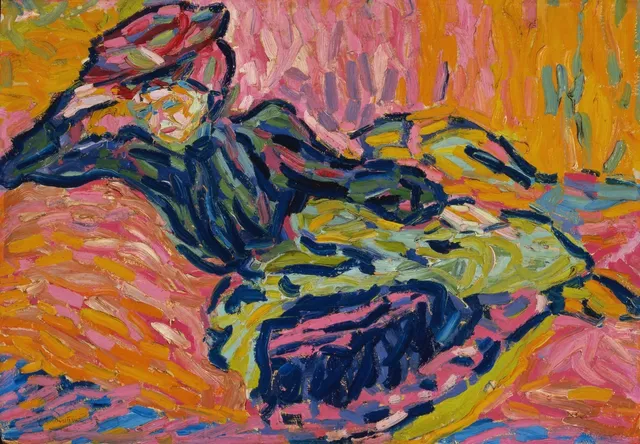
The Brücke style is unmistakable: jagged, distorted forms and deliberately harsh, anti-naturalistic colour intended to jolt the viewer into an emotional response. The members revived the woodcut as a primary medium, drawing on late German Gothic prints and the example of Edvard Munch, and their angular cutting gave even their paintings a hewn, splintered energy. Frequenting Dresden's ethnographic collections, they absorbed African and Oceanic art into a self-consciously "primitive" idiom that protested against bourgeois convention. In summers from 1909 to 1911 the group painted nudes in the open air at the Moritzburg lakes near Dresden, while Kirchner found a starker palette on the Baltic island of Fehmarn.
Kirchner remains the central figure, and our collection holds three of his canvases—Sand Hills near Grünau, Bathers beneath Trees, Fehmarn, and Girl on a Divan—works whose landscapes, bathers, and interiors echo the group's core preoccupations. Beyond the four founders, the membership grew to include Emil Nolde (briefly, 1906–07), Max Pechstein, Otto Müller, the Swiss painter Cuno Amiet, and the Dutch Fauvist Kees van Dongen, also represented in our holdings.
In 1911 most members relocated to Berlin, where Kirchner produced his celebrated, electrically tense street scenes of the alienating modern metropolis. Mounting artistic disagreements, inflamed by Kirchner's self-aggrandizing Chronik der Künstlergruppe Brücke, led the group to disband in 1913. Together with the contemporaneous, more lyrical and spiritual Munich-based Der Blaue Reiter, Die Brücke established Expressionism as a defining force in twentieth-century German art, profoundly shaping later figuration and the woodcut revival across Europe.
Key artists

Works
Frequently asked questions
What is Die Brücke?
Die Brücke is an art movement. The first German Expressionist group, founded in Dresden in 1905 by Ernst Ludwig Kirchner, Erich Heckel, and Karl Schmidt-Rottluff.
Who are the key Die Brücke artists?
Key Die Brücke artists in the collection include Ernst Ludwig Kirchner and Kees van Dongen.
When did Die Brücke take place?
Die Brücke dates from 1905–1913.
Where can I see Die Brücke works?
Die Brücke works in the collection are held by Museum of Modern Art and Norton Simon Museum.