Artist
Hyakusen

Japan
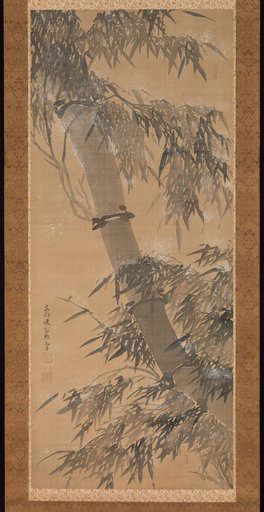
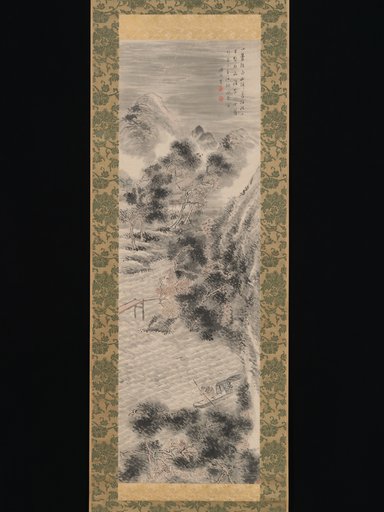
Hyakusen is a Japan Baroque artist. 4 works are cataloged here, principally at Los Angeles County Museum of Art.
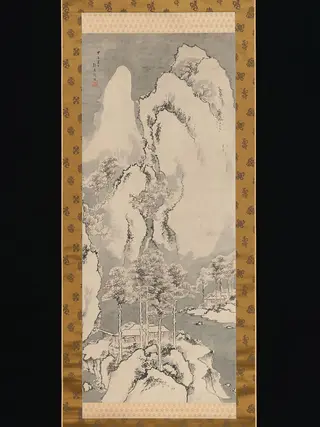
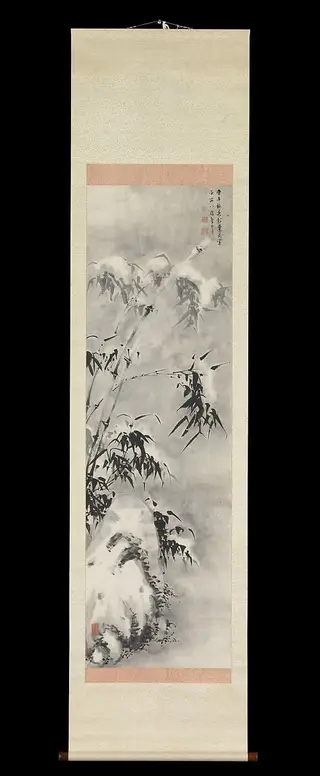
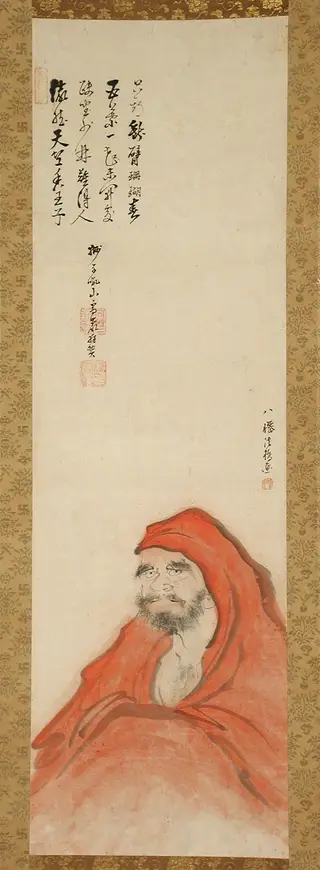
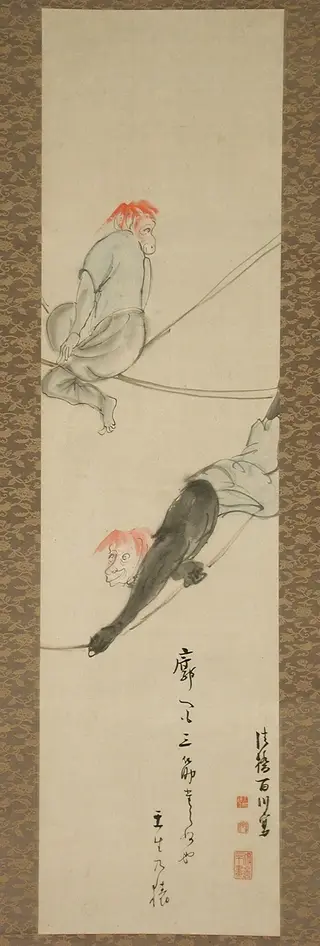
Sakaki Hyakusen, originally Shin'en (Japanese: 彭城 百川; (11 December 1697, in Nagoya – 2 October 1752, in Kyōto) was a Japanese painter in the nanga style. His other art names included Hōshū (蓬洲), Senkan (僊観) and Hassendō (八仙堂).
Overview
Sakaki Hyakusen, originally named Shin'en, was a Japanese painter and haiku poet of the mid-Edo period, active from 1697 to 1752. He is recognized as a foundational pioneer of the nanga, or bunjinga, literati painting style in Japan. Unlike many of his contemporaries in the early nanga movement who were Confucian scholars, Hyakusen was a townsman by birth and became one of the few nanga painters to earn a living entirely from his art. His dual practice in poetry and painting, particularly his development of haiga, bridged Chinese literati traditions with Japanese sensibilities, setting a precedent for later masters like Ike no Taiga and Yosa Buson.
Biography & dates
Sakaki Hyakusen was born on December 11, 1697, in Nagoya, and died on October 2, 1752, in Kyoto. His family operated a pharmacy selling Chinese medicinal herbs, and his ancestors were likely refugees from Pengcheng (Jiangsu Province, China), which gave him partial Chinese heritage and early exposure to imported Chinese texts and art. He began his artistic career studying Kanō school painting and haiku poetry under Kagami Shikō, a disciple of Matsuo Bashō, publishing a haiku collection in 1721. His earliest dated painting is from 1720. Around 1728, he relocated to Kyoto, where he intensified his painting practice and fully embraced the nanga style. In 1751, he published the Gen-min Gajin-ko, a biographical dictionary of Yuan and Ming dynasty painters. For his artistic achievements, particularly his wall paintings for temples, he was awarded the honorary Buddhist title Hokkyō.
Style & movement
Hyakusen was a pioneer of the nanga movement, transitioning from the orthodox Kanō and Tosa traditions to literati painting inspired by Chinese Yuan and Ming dynasty models. He studied imported Chinese painting manuals, including the Mustard Seed Garden Painting Manual, and directly incorporated elements from Chinese paintings into his compositions. His style is noted for its diversity, ranging from Chinese-style landscapes and Yamato-e to shinkei, or true view, landscapes depicting actual places. He was also a leading figure in haiga, creating simple ink paintings that accompanied haiku verse. While his broad approach sometimes led to variable quality and a lack of cohesion, his work is distinguished by its sensitive brushwork, nuanced tonal gradations, and complex yet clear compositions, which successfully merged Chinese techniques with Japanese traditions.
Major works
Hyakusen's most celebrated surviving work is the Screen with Landscapes, dated to 1747, which measures 160.0 by 368.1 centimeters and is held by the Tokyo National Museum as an Important Cultural Property. Another noted piece is the screen Plums and Bamboo, which is privately owned by the Takeno family. Other documented works include Men of High Character Viewing a Waterfall from 1730, Picture of a Red Lotus Flower from 1749, and Visiting a Friend in the Cold Mountains from 1750. He also produced wall paintings, such as those at Jimonin in Tanzan-jinja Shrine, which are recognized as Important Cultural Heritage. His works are widely held in international collections, including the Walters Art Museum, the University of Michigan Museum of Art, the British Museum, the Seattle Art Museum, the Asian Art Museum in San Francisco, the Harvard Art Museums, the Minneapolis Institute of Art, the Philadelphia Museum of Art, and the Metropolitan Museum of Art.
Influences & students
Hyakusen's artistic development was shaped by his early training in the Kanō school and his haiku master, Kagami Shikō. His shift to nanga was heavily influenced by his study of Chinese Yuan and Ming dynasty paintings and manuals, particularly after receiving the Mustard Seed Garden Painting Manual from the painter Gion Nankai in Kishu. He is considered a founder of Japanese nanga alongside Hattori Nankaku, Gion Nankai, and Yanagisawa Kien. Hyakusen exerted a profound influence on the next generation of nanga painters, particularly Ike no Taiga and Yosa Buson. Buson, who admired Hyakusen's integration of haiku and painting, studied Hyakusen's soga ink sketches and formalized the haiga painting style based on them. Hyakusen also influenced later artists like Kimura Kenkado.
Legacy
Hyakusen's legacy is defined by his role as a foundational figure who guided Japanese nanga toward independence from strict Chinese models by fusing imported literati aesthetics with Japanese pictorial and poetic traditions. His 1751 publication, the Gen-min Gajin-ko, became an important reference for later scholars and was expanded by Fuyo Ko, Kimura Kenkado, and Tobu Tairoku into the 1777 biographical dictionary of Yuan, Ming, and Qing painters. Although his broad stylistic range was sometimes criticized for lacking balance, his ability to synthesize Chinese brushwork with Japanese themes paved the way for the maturation of nanga under Taiga and Buson. His recognition with the Hokkyō title and his success as a professional painter demonstrated the viability of the nanga style as a livelihood, distinguishing him from the amateur scholar-painters of his era.
Works by Hyakusen
Collections represented


Artists in a similar vein