Artist
Antoine-Claude Ponthus-Cinier
France
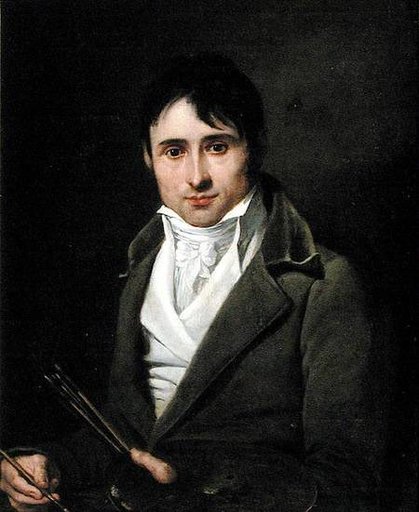
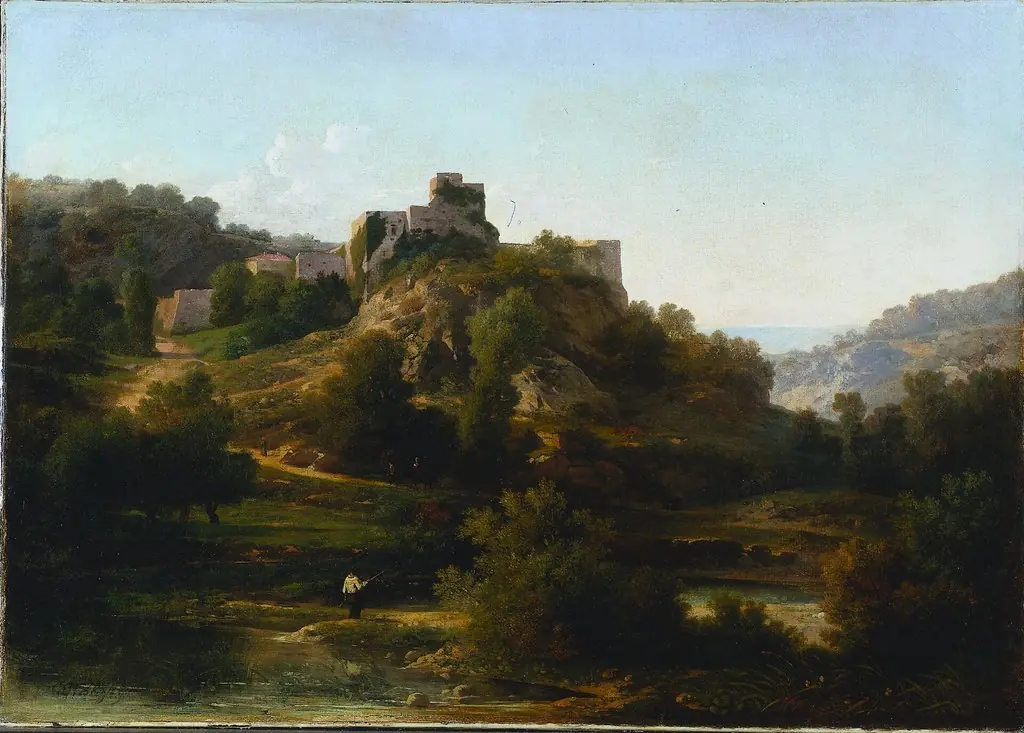
Antoine-Claude Ponthus-Cinier is a France Neoclassicism artist. 2 works are cataloged here, principally at Cleveland Museum of Art.
Antoine-Claude Ponthus-Cinier (1812–1885) was a French artist.
Overview
Antoine Claude Ponthus-Cinier (1812-1885) was a French painter and printmaker, born in Lyon, who became one of the leading exponents of Neoclassicism in that city. Working primarily in landscape painting, he developed an idyllic, arcadian style that blended Italianate compositional structures with French Romantic atmosphere. His career spanned nearly five decades of consistent production and exhibition, and his legacy persists through institutional collections across France and beyond, as well as through the prize he endowed at the École des Beaux-Arts in Lyon.
Biography & dates
Antoine Ponthus-Cinier was born on August 29, 1812, at 167 Rue Saint-Jean in Lyon, into a lower-middle-class family. His father, Jean Joseph Ponthus Cinier, served as secretary of the municipal administration before becoming clerk of the Royal Court of Lyon; his mother was Antoinette Novet, daughter of François Novet, who was executed in 1794 following the siege of Lyon. His brother Jean-Claude, born January 18, 1800, worked as a factory designer and later became a partner in a Tarare plush factory in 1844.
Ponthus-Cinier enrolled at the École des Beaux-Arts in Lyon in 1829, though sources indicate he may not have formally attended. He subsequently studied under Paul Delaroche at the École des Beaux-Arts in Paris. In 1840, he won second prize in a sketching competition with La Samaritaine. The following year, 1841, marked his breakthrough: he won the second Grand Prize of Rome for historical landscape painting with Adam and Eve Expelled from the Garden of Eden, receiving the award unanimously behind Félix-Hippolyte Lanoüe.
This prize enabled him to spend two years in Italy from 1842 to 1844, traveling to Florence, Rome, Genoa, and Naples, where he produced extensive drawings of landscapes, historical ruins, and monuments. During this stay he met Isidore Flachéron and Jean-François Montessuy. Upon his return, he undertook extensive journeys through the Dauphiné, the Dombes, Provence, the Alps, Savoy, and the Pyrenees, eventually settling in Lyon, where he remained until his death. He died on January 17, 1885, at 12 Quai Tilsitt. His studio was sold at auction in Lyon in March 1885.
Style & movement
Ponthus-Cinier is classified within the Neoclassical movement, specifically as a leader of its Lyon branch. His style evolved from early historical landscapes with biblical subjects toward a distinctive pastoral idyll, sometimes described as arcadian. After his Italian sojourn, he sought to merge French Romantic sensibilities with the illusionist realism of Italian landscape traditions, particularly the vedute painting of the eighteenth century exemplified by Giovanni Antonio Canaletto, infusing it with a more romantic atmosphere.
His mature landscapes are characterized by a consistent architectural structure, often incorporating water in the form of sheets or pools that soften the composition, animated vegetation, and luminous skies. Human presence, whether through canals, roads, bridges, or figures themselves, frequently appears within these idealized settings. Contemporary critics such as Jouve acknowledged his fine and suave touch, charming and truthful colors, and skill in illuminating a canvas, while questioning the repetitive family resemblance across his works and urging greater attention to nature's infinite variety.
His practice encompassed oil paintings, gouache-washed Indian ink drawings, watercolors, and etchings. He became a member of the Société des aquafortistes de Paris, where his engravings achieved considerable success.
Major works
Ponthus-Cinier's most celebrated early work is Adam and Eve Expelled from the Garden of Eden (also known as Adam and Eve Chased from Terrestrial Paradise), which won him the second Grand Prize of Rome in 1841. This painting is now held by the Museum of Fine Arts of Lyon.
His graphic production was substantial and varied. During his Italian travels from 1842 to 1844, he created numerous churning of historical sites in India ink, many of which are preserved in the reserves of the Lyons municipal library. He maintained a journal and a three-volume book of reason documenting his most significant works.
He also executed commissioned paintings, including door overmantels for the small dining room of the Lyon town hall and panels for the Palais du Commerce in Lyon, which were noted for their sureness of touch and warmth of color.
His exhibition record was extensive: he showed in Lyon between 1837 and 1885, in Paris between 1841 and 1867, and in numerous regional exhibitions including Montpellier, Bordeaux, Strasbourg, Nîmes, Geneva, Rouen, Dijon, Marseille, and Saint-Étienne. He frequently exhibited six to eight works at a single salon, demonstrating prolific and continuous output.
Influences & students
Ponthus-Cinier's formative training came from Paul Delaroche at the École des Beaux-Arts in Paris, establishing his foundation in historical and landscape painting. His 1842-1844 Italian journey proved decisive for his artistic development, exposing him to Italian natural scenery and the vedute tradition that would profoundly shape his subsequent work. During this period, he associated with Isidore Flachéron and Jean-François Montessuy, fellow artists traveling in Italy. His childhood friendship with Tony Desjardins led to frequent visits to Desjardins's Château d'Hostel at Belmont in the Bugey region, inspiring numerous views of that area. The sources do not record specific pupils or a formal teaching circle, though his position as a leading Lyon landscape painter placed him within a significant regional artistic network.
Legacy
Ponthus-Cinier's posthumous legacy is secured through substantial institutional bequests and collections. By testament, he donated fifty works on paper, his three-volume books of reason, drawings, and an endowment of 1,000 francs to the city of Lyon. This bequest established an annual prize bearing his name for "Landscape from a Decorative Perspective," awarded by the École des Beaux-Arts in Lyon.
The Museum of Fine Arts of Lyon holds his prize-winning Adam and Eve Expelled from the Garden of Eden as well as the fifty lavis he bequeathed. The municipal library of Lyon maintains another significant collection of his works. His art entered numerous public collections during and after his lifetime, including the Museum of the History of Lyon, and the fine arts museums of Chalon-sur-Saône, Besançon, Bourg-en-Bresse, Brou, Toulon, Puy-en-Velay, Chambéry, Chantilly, and Valence. Internationally, his works are held by the Newcomb Art Museum of Tulane University and in Cleveland, Ohio.
Works by Antoine-Claude Ponthus-Cinier
Collections represented

Artists in a similar vein