Artist
Thomas Barker

Wales
Thomas Barker is a Wales British Romanticism artist. 22 works are cataloged here, principally at Victoria and Albert Museum.
Thomas Barker painted portraits and landscapes in late-18th- to early-19th-century Wales. His oils and watercolors show quiet moments—like the spiky “A Boy Extracting a Thorn from His Foot” or the broad green sweep of “Bath Landscape.” His figures feel real, not posed. Next, tap “Hannah Mary de Cardonnel Lawson,” Barker’s solid three-quarter-length portrait of a thoughtful woman in pearl-gray silk.
Overview
Thomas Barker (1769-1847), commonly known as Barker of Bath, was a British painter of landscapes and rural genre scenes. Born in Wales and active primarily in Bath, Somerset, he achieved considerable popularity during his lifetime for depictions of rustic life, particularly his celebrated Woodman compositions. Though largely self-taught, Barker became one of the most widely reproduced artists of his generation, his imagery circulating across Staffordshire pottery, Worcester porcelain, Manchester cottons, and Glasgow linens. He was also a significant pioneer of lithography in Britain, producing the first single-artist series of lithographs by a British creator.
Biography & dates
Barker was born in 1769 at Trosnant near Pontypool, Monmouthshire, Wales, the son of Benjamin Barker, an artist who painted horse portraits and later worked as a Japanware decorator. From an early age Barker demonstrated exceptional drawing ability; he was entirely self-taught, having received no formal instruction in drawing or painting. In 1785, at age sixteen, his family relocated to Bath, where the patronage of Charles Spackman, a wealthy coach-builder, enabled him to pursue art professionally. During his first four years in Bath, Barker devoted himself to copying Dutch and Flemish old masters. In 1790, at age twenty-one, Spackman sent him to Rome with sufficient funds to maintain himself as a gentleman, though he painted little during this three-year sojourn, preferring society life. Upon his return to Britain, Barker settled in Bath and rapidly achieved both artistic recognition and financial success. He exhibited regularly at the Royal Academy and the British Institution from 1791 until 1829, showing nearly one hundred pictures over almost fifty years. At the height of his career, he amassed considerable wealth, building a mansion at Sion Hill, Bath, which he adorned with sculpture and works of art. He died in Bath on 11 December 1847. Barker had eight children, four of whom became painters: Thomas Jones Barker (1815-1882), who studied with Horace Vernet in Paris and painted military subjects; Benjamin Barker (1817-1889); John Joseph Barker (1824-1904); and Octavius William Barker (born 1826), who completed some of his father's late works and later gained notoriety as a forger of his father's paintings.
Style & movement
Barker's artistic development was shaped by his early immersion in copying Dutch and Flemish landscape masters, particularly Meindert Hobbema, and by his sustained engagement with the work of Thomas Gainsborough, whose compositions he frequently copied and adapted. His style evolved slowly; the German Wikipedia source notes that he found his own distinctive manner only later in his career. Barker specialized in romanticized landscapes and genre scenes of rural and rustic life, with particular attention to figures such as woodsmen, gypsies, and cattle herders. His treatment of gypsy subjects was heavily indebted to Gainsborough, and he painted numerous copies of Gainsborough's The Gipsies as well as original compositions on this theme. One of his 1789 self-portraits employed the grouping from Gainsborough's The Gipsies as its background. Barker's technical approach encompassed oil painting, drawing, and printmaking. He was among the first British artists, alongside Benjamin West and Richard Westall, to employ lithography as a print medium. His contributions to Specimens of Polyautography (1803, reissued 1806-07) included two lithographs, Young Boy Seated and Tilemakers. His 1813 series Rustic Figures after Nature, published in Bath in a small edition, represents the first series of lithographs by a single British artist; some of the original stones survive.
Major works
Barker's most celebrated painting, The Woodman, achieved extraordinary popular recognition. He painted at least two life-size versions from nature: the first was sold to Mr. Macklin for 500 guineas, and the second, for the same sum, to Lord W. Paulett. The Tate Gallery holds a related work, A Woodman and his Dog in a Storm, originally presented to the National Gallery in 1868. The Tate collection includes six paintings by Barker in total. Other significant works include The Sand Girl (1797, Victoria Art Gallery, Bath, 152 × 117 cm); a self-portrait with Charles Spackman (Victoria Art Gallery, Bath, 132 × 160 cm); and multiple versions of The Woodman with Dog, including one at Raby Castle (collection of Lord Barnard, 239 × 147 cm) and another at the Tate Gallery (236 × 148 cm). His 1821 painting The Trial of Queen Caroline featured portraits of many celebrated contemporaries. Perhaps his most ambitious work was the fresco The Inroad of the Turks upon Scio, April 1822, painted in 1825 on the walls of Doric House, Bath, measuring 30 feet in length and 12 feet in height. The British Museum holds drawings and prints by Barker. Wolverhampton Art Gallery possesses three of his landscapes: Italian Landscape (1808), Landscape with a Waterfall, and Landscape with Cattle. The Victoria and Albert Museum holds Market in Landsdown (1812, 104 × 76 cm). A painting of Wooded Landscape with Gipsies round a Camp Fire, featured on the BBC series Fake or Fortune? in 2019, was revealed to be a Barker painted over an earlier work by Michael Dahl. In November 2019, an episode of Britain's Lost Masterpieces identified and restored a forest scene at Birmingham Art Gallery, attributing it to Barker after conservation by Simon Gillespie.
Influences & students
Barker's formative influences were primarily the Dutch and Flemish old masters, whose works he copied assiduously during his early years in Bath, and Thomas Gainsborough, whose compositions and figure groupings he repeatedly emulated. Charles Spackman, the Bath coach-builder who became his patron, played a crucial enabling role in Barker's career, facilitating his study in London and his Italian sojourn. Within his own family, Barker's artistic legacy extended to multiple generations. His younger brother Benjamin Barker II (1776-1838) was an accomplished landscape painter who exhibited at the Royal Academy and whose works were engraved in aquatint by Thales Fielding. Barker's son Thomas Jones Barker trained in the studio of Horace Vernet in Paris and achieved recognition for military and historical paintings including Lord Clive's Relief of Lucknow and The Allied Generals before Sebastopol. Three other sons, Benjamin Barker, John Joseph Barker, and至少有两个人, and Octavius William Barker, also pursued painting careers. The latter completed some of his father's late works and later forged his father's paintings. A nephew, Charles Spackman Barker (1804-1879), became an organ builder.
Legacy
During his lifetime, Barker enjoyed exceptional popular favor; no contemporary artist, according to period accounts, held greater sway with the general public. The widespread reproduction of his imagery on domestic manufactured goods, Staffordshire pottery to Glasgow linens, attests to his broad cultural penetration, though this very popularity may have diminished his critical stature in subsequent decades. His posthumous reputation has been shaped by scholarly attention to his role in British lithographic history, his Gainsborough connections, and the gradual reattribution and conservation of works previously misidentified. The 2019 BBC programs Fake or Fortune? and Britain's Lost Masterpieces brought renewed public attention to his work, particularly regarding questions of attribution and the discovery of paintings concealed beneath later overpaints or misattributed to other hands. In the art market, two of his landscapes appeared in a 1920 exhibition at Walker's Galleries, 118 New Bond Street, priced at fifteen guineas each. Today his works are held in major public collections including the Tate Gallery, the British Museum, the Victoria and Albert Museum, the Victoria Art Gallery in Bath, the Holburne Museum of Art, and the National Gallery of Wales in Cardiff.
Works by Thomas Barker
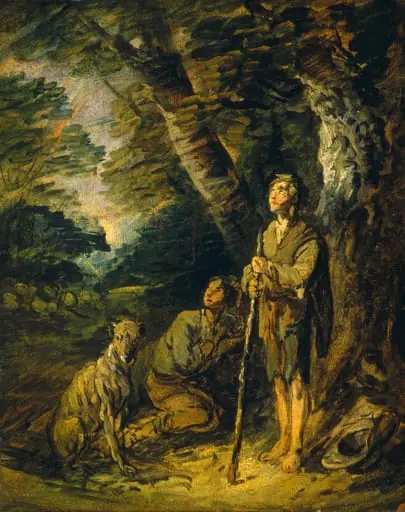 Shepherd Boys and Dog Sheltering from a Storm
![Figures in a Landscape [recto]](https://artifactworldgallery.com/img/thomas-barker--figures-in-a-landscape-recto--389a2c7e3e861324-w320.webp) Figures in a Landscape [recto]
Figures in a Landscape [recto]![Figures in a Landscape [verso]](https://artifactworldgallery.com/img/thomas-barker--figures-in-a-landscape-verso--f990b8d4da80a5bc-w320.webp) Figures in a Landscape [verso]
Figures in a Landscape [verso]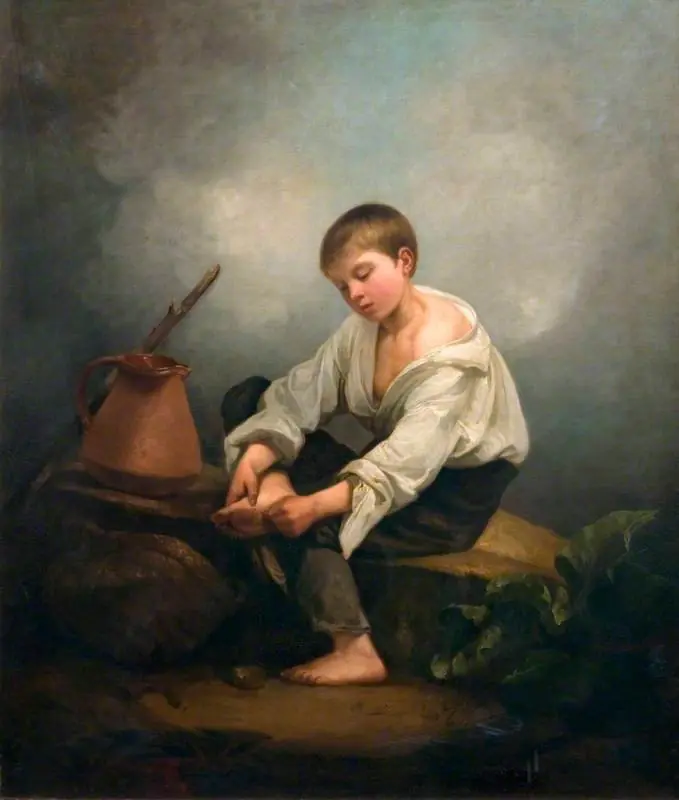 A Boy Extracting a Thorn from His Foot
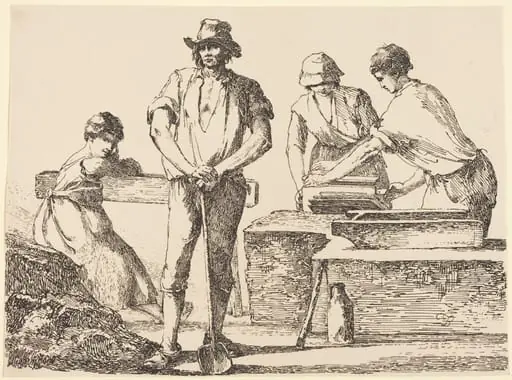 Tilemakers
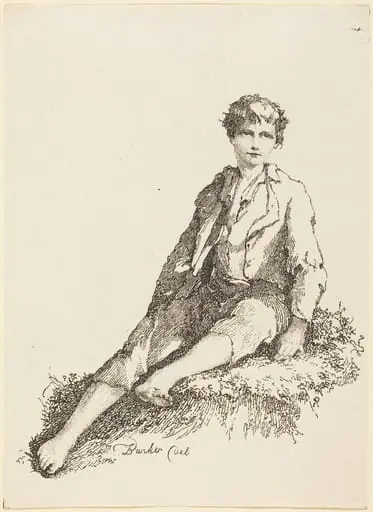 Young Boy Seated
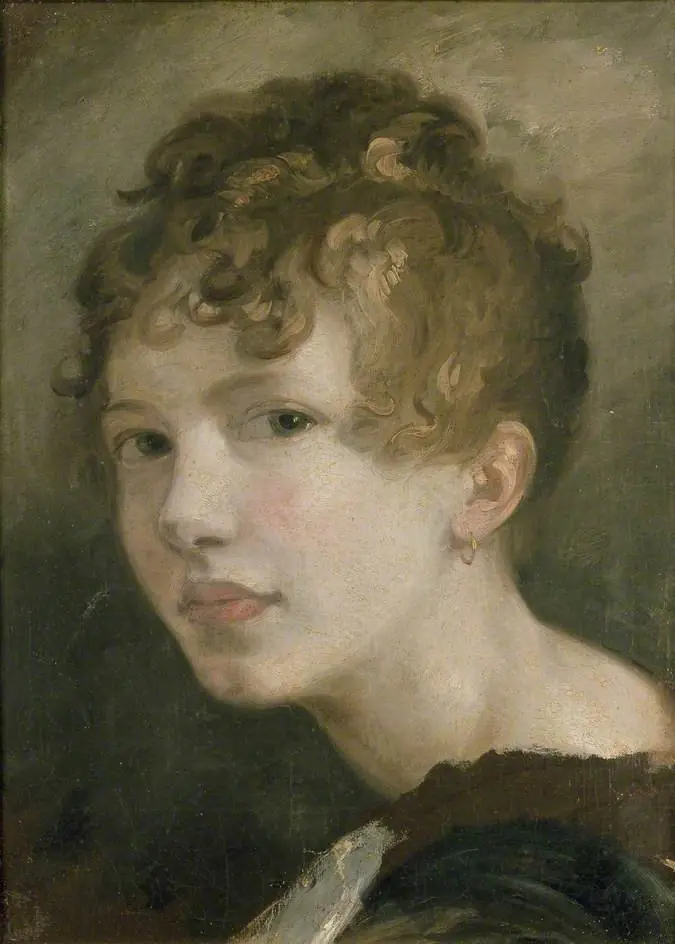 Hannah Mary de Cardonnel Lawson
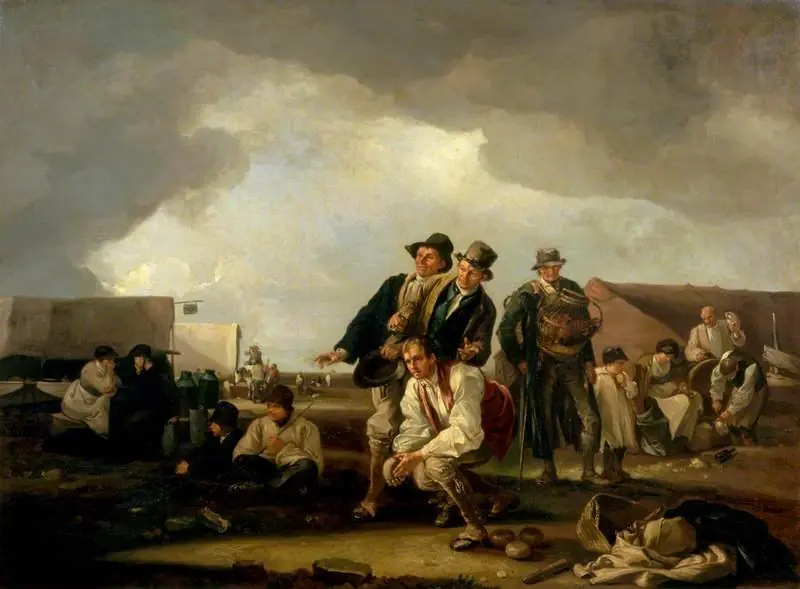 Lansdown Fair, near Bath
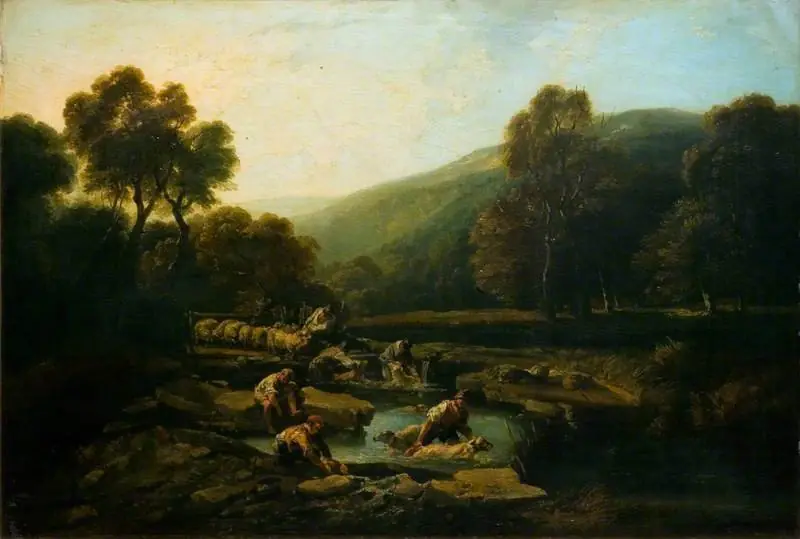 Sheep Washing
 Lansdown Fair, near Bath
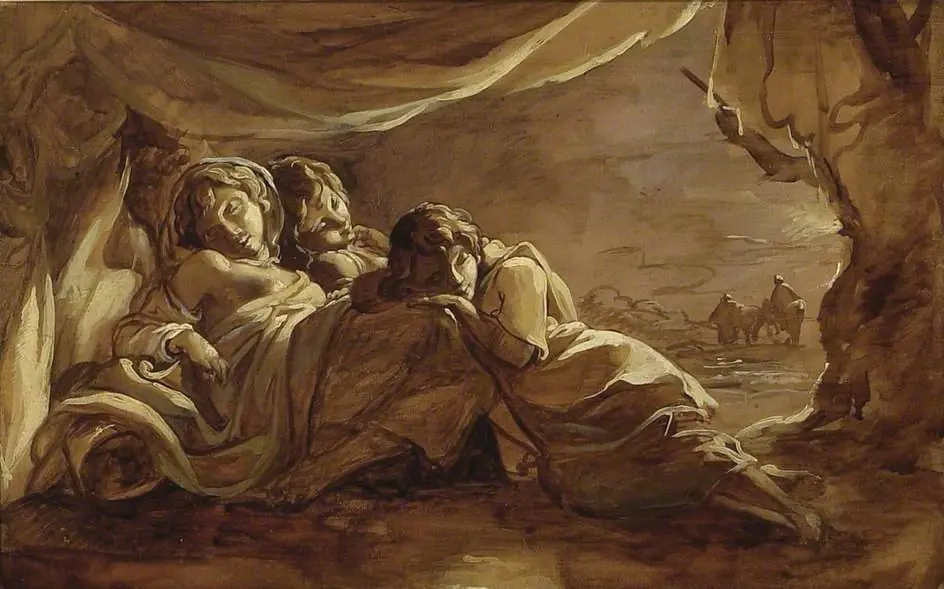 Three Girls asleep under a Tent - Morning
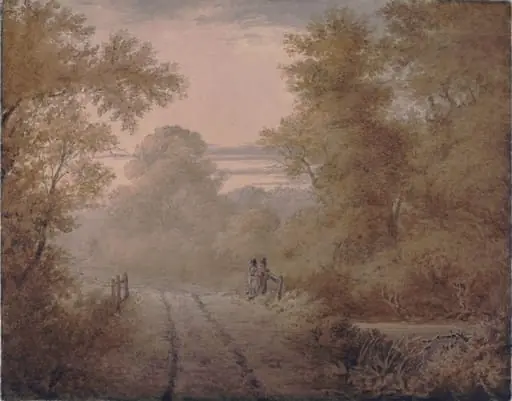 Landscape in Autumn
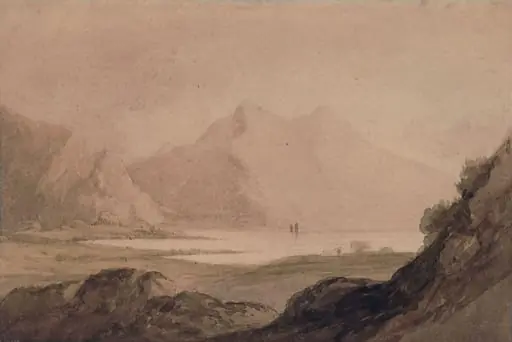 Snowdon with Llanberis Lake
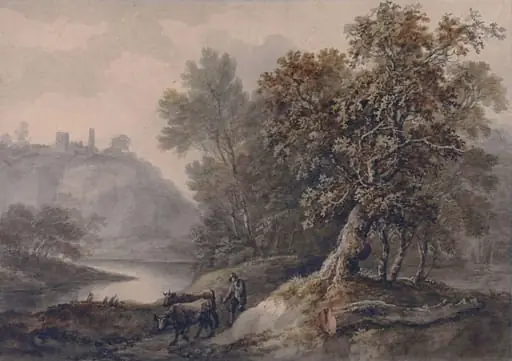 Bath Landscape
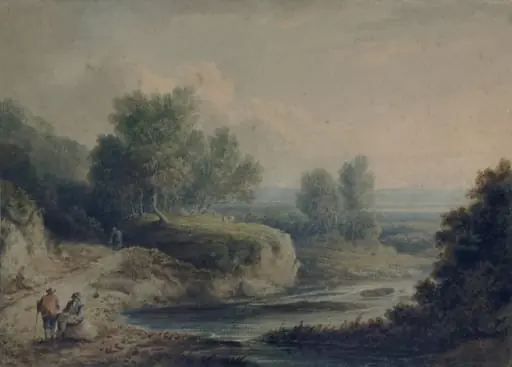 River scene with figures.
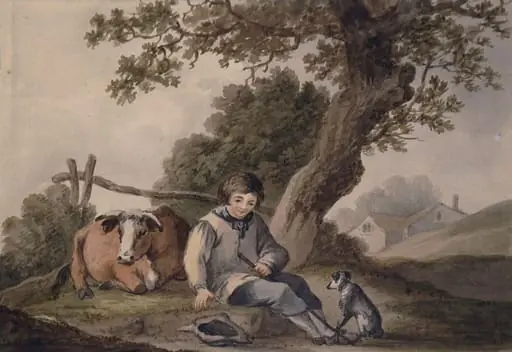 Landscape with cow and boy
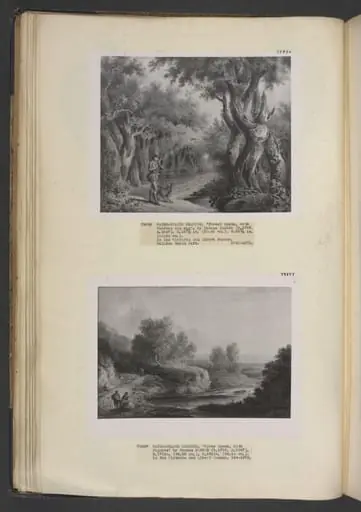 Forest Scene with woodman and dog
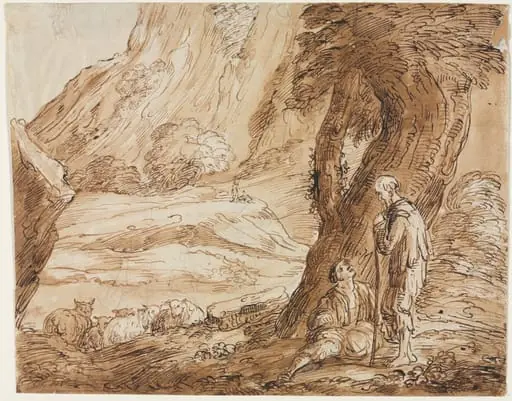 Landscape with Sheep and Two Shepherds
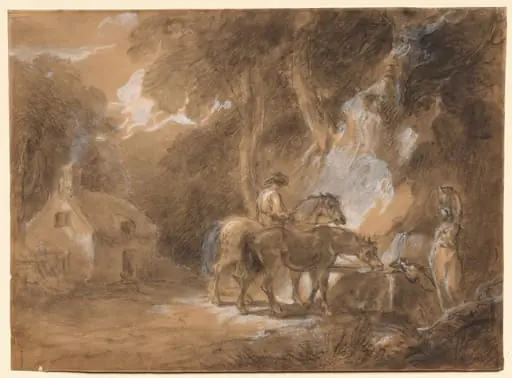 The Halt at the Spring
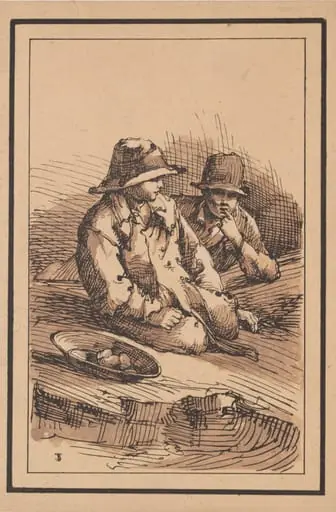 Rustic Figures: Two Boys
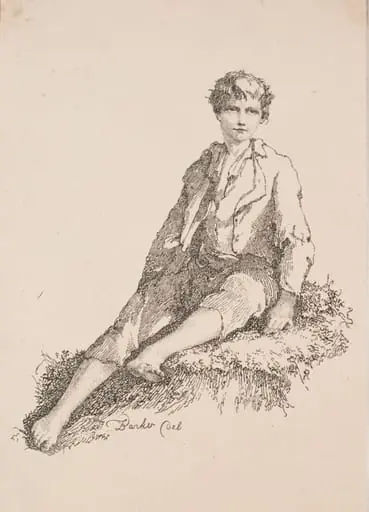 Specimens of Polyautography: Boy Seated on a Grassy Bank
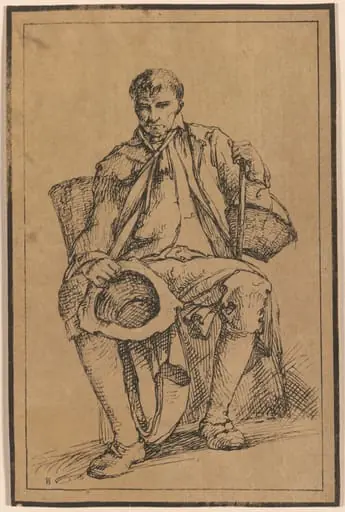 Forty Lithographic Impressions from Drawings of Landscape Scenery by Thomas Barker, Selected from His Studies of Rustic Figures after Nature: Seated Man with Baskets Holding Hat and Walking Stick
Collections represented


Artists in a similar vein