Artwork
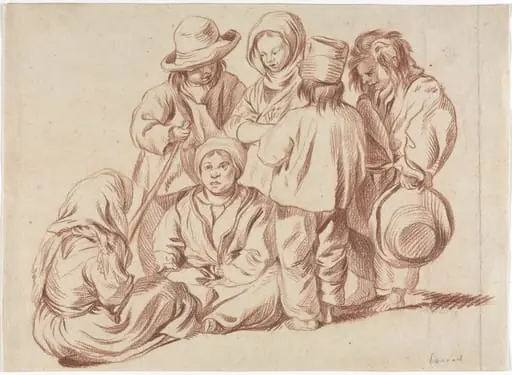
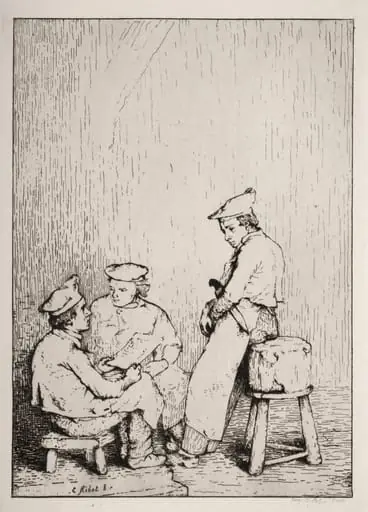
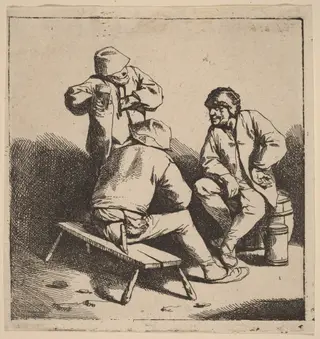
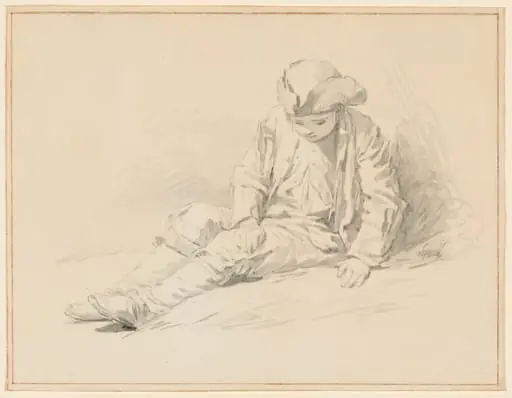
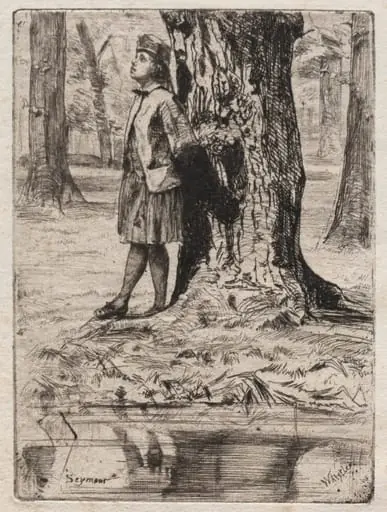
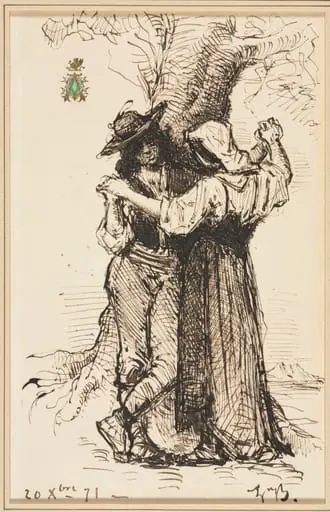
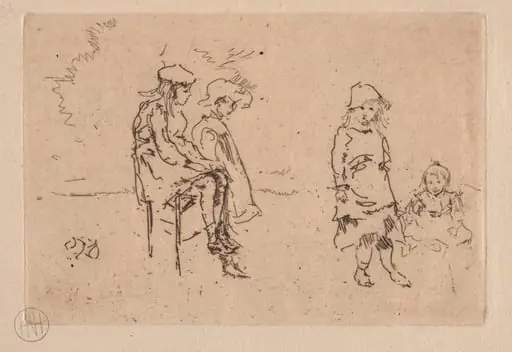
Rustic Figures: Two Boys
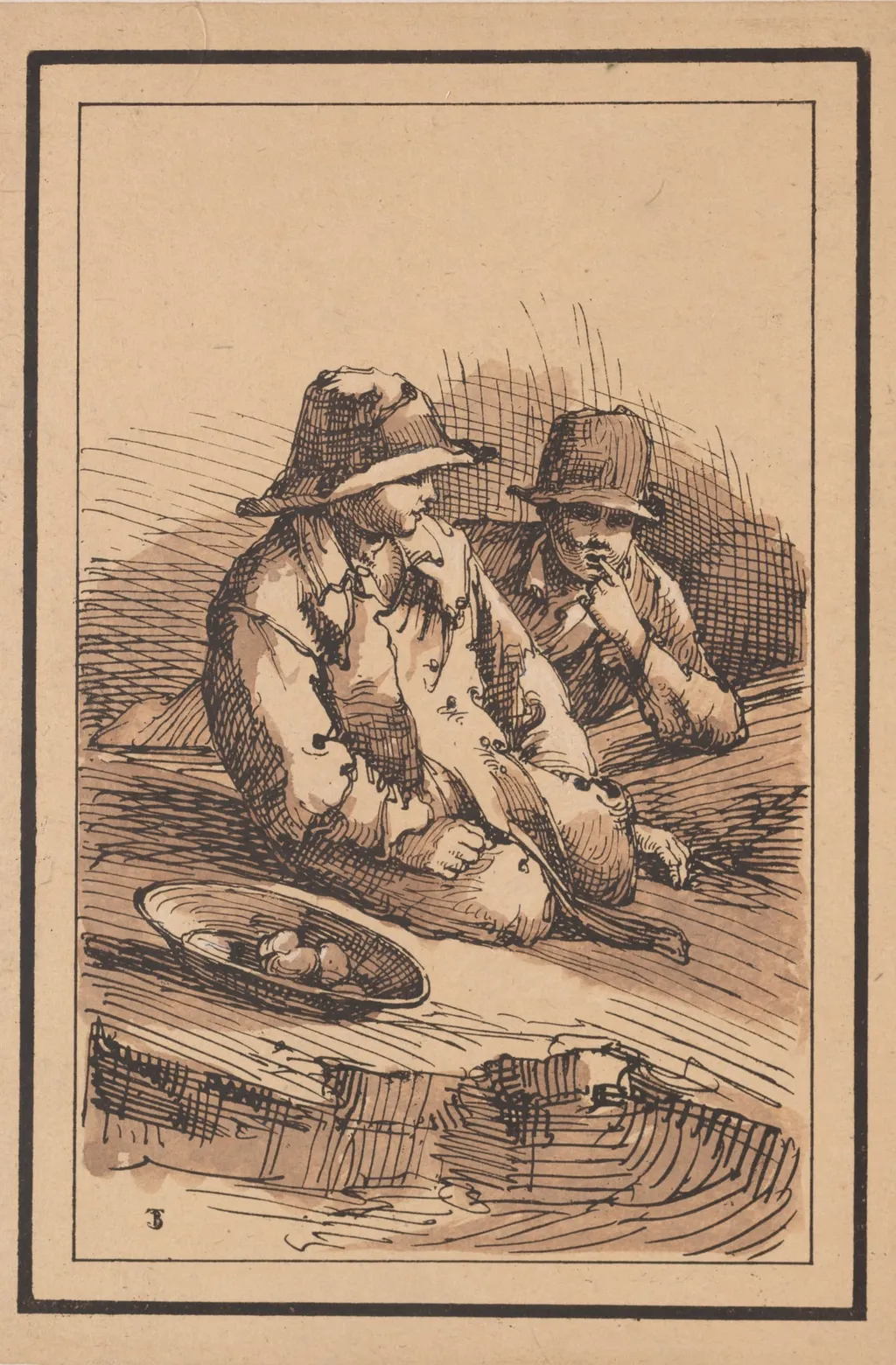
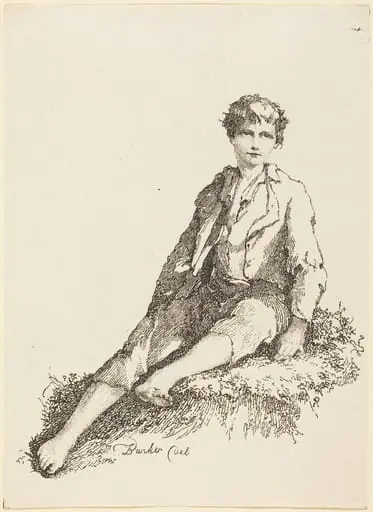
Rustic Figures: Two Boys is a print by the Romanticist artist Thomas Barker. It dates from 1801 and is held in the collection of the Cleveland Museum of Art.
- Accession no.
- 2001.169
- Credit line
- Gift of Marsha and Tom French in memory of Fred Schmidt
About this work
Overview
Produced in England, it reflects the rapid adoption of the medium by practitioners exploring its potential for tonal nuance and detail.
This lithograph, created shortly after the technique’s invention in 1798, represents one of the earliest examples of an artist using lithography for fine art rather than commercial purposes. Produced in England, it reflects the rapid adoption of the medium by practitioners exploring its potential for tonal nuance and detail. The work belongs to a small group of pioneering prints that helped establish lithography as a legitimate artistic medium.
Subject & Meaning
Two rural boys stand near a tree, dressed in plain, modest garments that suggest agrarian life. Their postures are unposed, conveying quiet companionship rather than narrative action. The scene avoids idealization, presenting ordinary youth in a natural setting.
The focus on humble figures aligns with early 19th-century interest in everyday rural existence, though no explicit symbolism is evident.
Technique & Style
The print demonstrates early lithographic experimentation, with subtle gradations of tone achieved through careful stone preparation and ink application. Lines are crisp yet soft, capturing texture in clothing and foliage without heavy engraving. The artist leveraged lithography’s capacity for direct drawing, allowing a hand-drawn quality uncommon in earlier relief or intaglio methods.
History & Provenance
Attributed to Thomas Barker, the work emerged during lithography’s formative years in England, when artists were adapting a German commercial process for artistic use. Its survival in a collection of early lithographs underscores its rarity and historical significance as a transitional object between industrial printing and fine art practice.
Context
In the early 1800s, lithography offered artists a more immediate alternative to etching and engraving, permitting spontaneous drawing on stone. While initially used for posters and maps, pioneers like Barker helped shift its perception. This print reflects broader cultural interest in rural life and the democratization of image-making during the Industrial Revolution.
Legacy
As one of the first artist-made lithographs in England, it contributed to the medium’s acceptance among fine artists. Its technical restraint and observational focus influenced later practitioners who valued lithography for its expressive line and tonal range. The work remains a quiet milestone in the evolution of printmaking.
Own this work as a print
Artist & collection

Artist
Thomas Barker painted portraits and landscapes in late-18th- to early-19th-century Wales.

![Figures in a Landscape [recto], by Thomas Barker](https://artifactworldgallery.com/img/thomas-barker--figures-in-a-landscape-recto--389a2c7e3e861324-w320.webp)
![Figures in a Landscape [verso], by Thomas Barker](https://artifactworldgallery.com/img/thomas-barker--figures-in-a-landscape-verso--f990b8d4da80a5bc-w320.webp)