Artwork
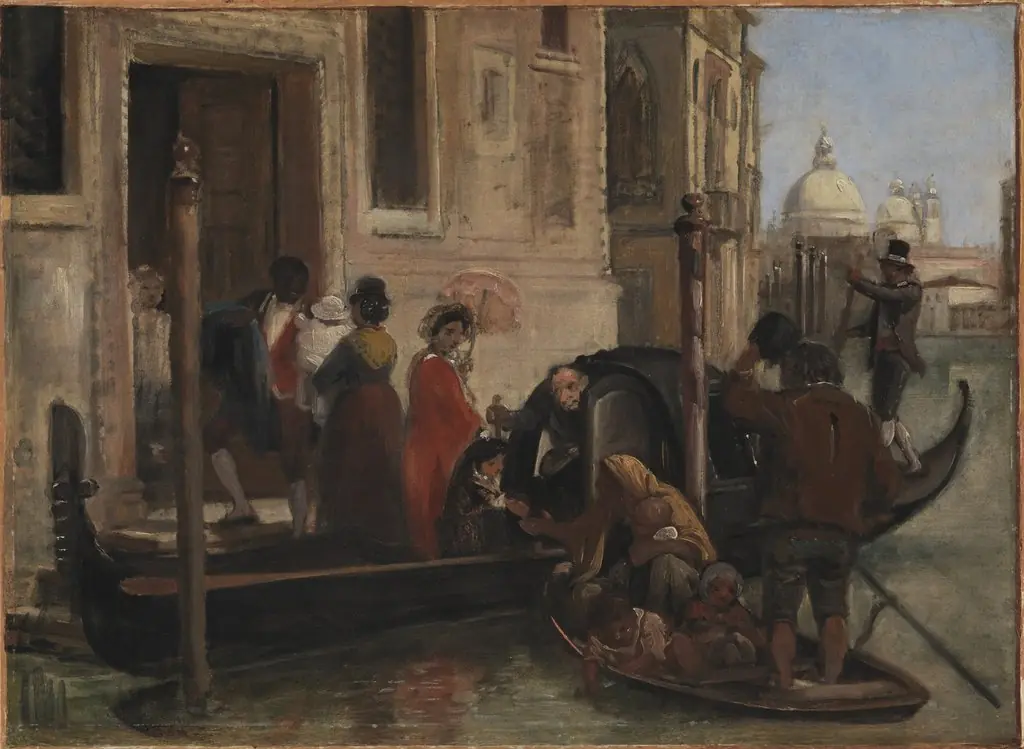
Alighting from a Gondola in Venice
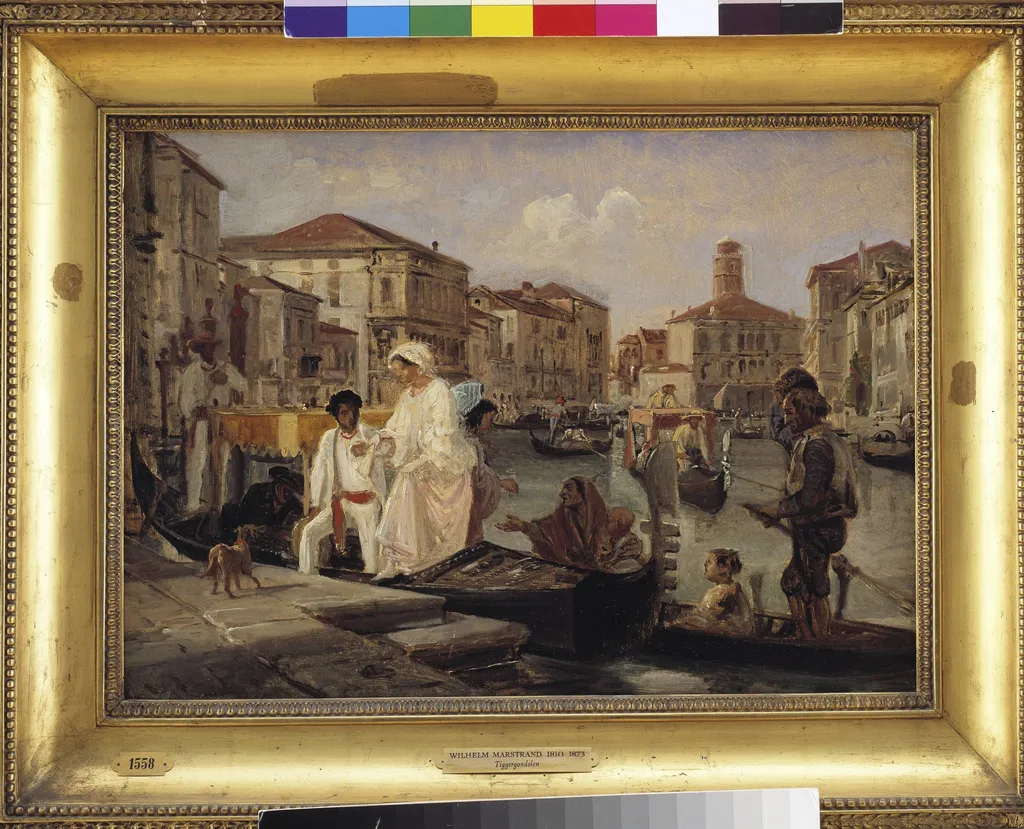
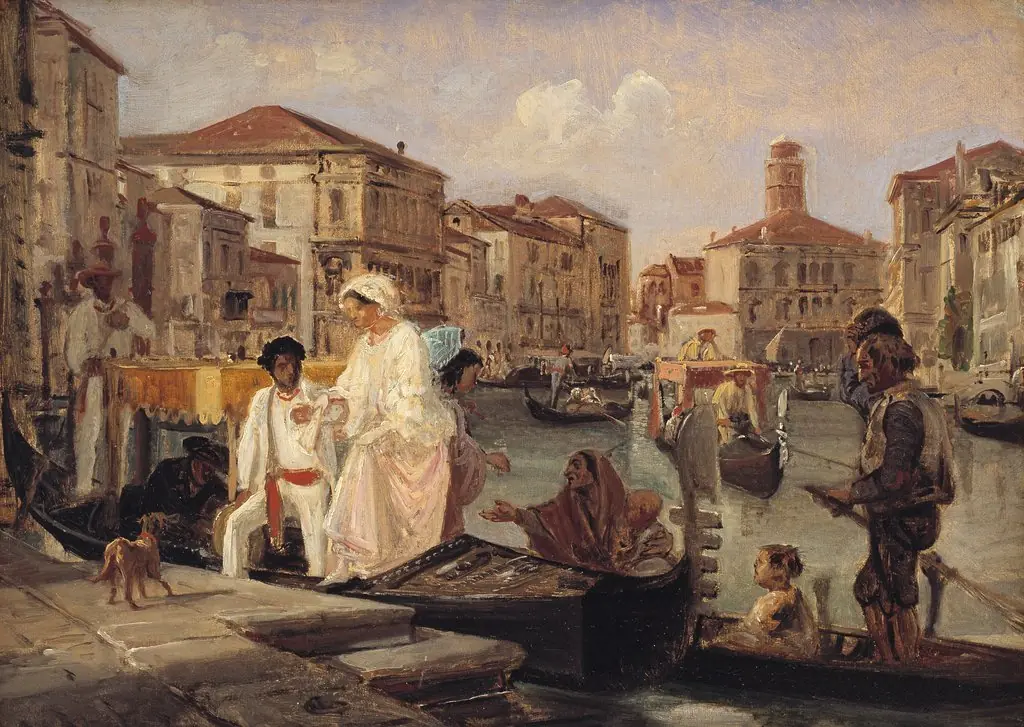
Alighting from a Gondola in Venice is a photography by Unknown. It dates from 1850 and is held in the collection of the Statens Museum for Kunst. Created around 1850, this image captures a quiet moment of arrival at a Venetian waterfront.
About this work
Overview
Around them, figures go about their routines, conversing, waiting, or working, while the architecture of the city frames the background.
Created around 1850, this image captures a quiet moment of arrival at a Venetian waterfront. The scene is neither grand nor theatrical, but grounded in daily life. A woman, dressed in a plain white garment, is assisted from a gondola by a man in a light shirt.
Around them, figures go about their routines, conversing, waiting, or working, while the architecture of the city frames the background. The composition emphasizes stillness amid motion.
Subject & Meaning
The central figure, a woman stepping ashore, stands apart in her attire, suggesting a visitor or someone of higher social standing. Her clean dress contrasts with the more worn clothing of bystanders, hinting at social distinction. The act of alighting is ordinary, yet the lighting draws attention to her, implying a moment of transition: arrival, perhaps, or departure. The scene avoids symbolism, instead offering a candid glimpse into urban rhythm.
Technique & Style
The image employs naturalistic lighting to isolate the woman’s face and dress, creating visual emphasis without theatricality. Details of the gondola, clothing, and architecture are rendered with quiet precision, suggesting observational accuracy over idealization. The background remains softly defined, allowing the foreground figures to dominate. The style reflects a documentary impulse, common in mid-19th-century visual records of everyday life.
History & Provenance
The work is held in the collection of the Museum of Ethnography, indicating its value as a cultural record rather than a fine art object. Its origin as a photograph or photographic print aligns with the rise of documentary imagery in the 1850s. The artist’s identity, listed as 330_person, remains unverified, suggesting the image may have been produced by an anonymous or commercial photographer active in Venice during that period.
Context
In mid-19th-century Venice, gondolas were essential for transport along canals, especially in areas inaccessible to wheeled vehicles. The Grand Canal served as the city’s primary artery, bustling with commerce and travel. This scene likely depicts a minor dock or side canal, where locals and visitors alike disembarked. The image reflects a Venice still shaped by pre-industrial modes of movement and social hierarchy.
Legacy
As a preserved record of daily life in Venice, the image contributes to the historical understanding of urban mobility and social interaction in the 1850s. It does not seek to glorify or romanticize, but to document. Its presence in an ethnographic collection underscores its role as evidence of cultural practice, offering insight into how ordinary moments were observed and preserved during the early age of photography.
Artist & collection