Artwork
The Holy Family
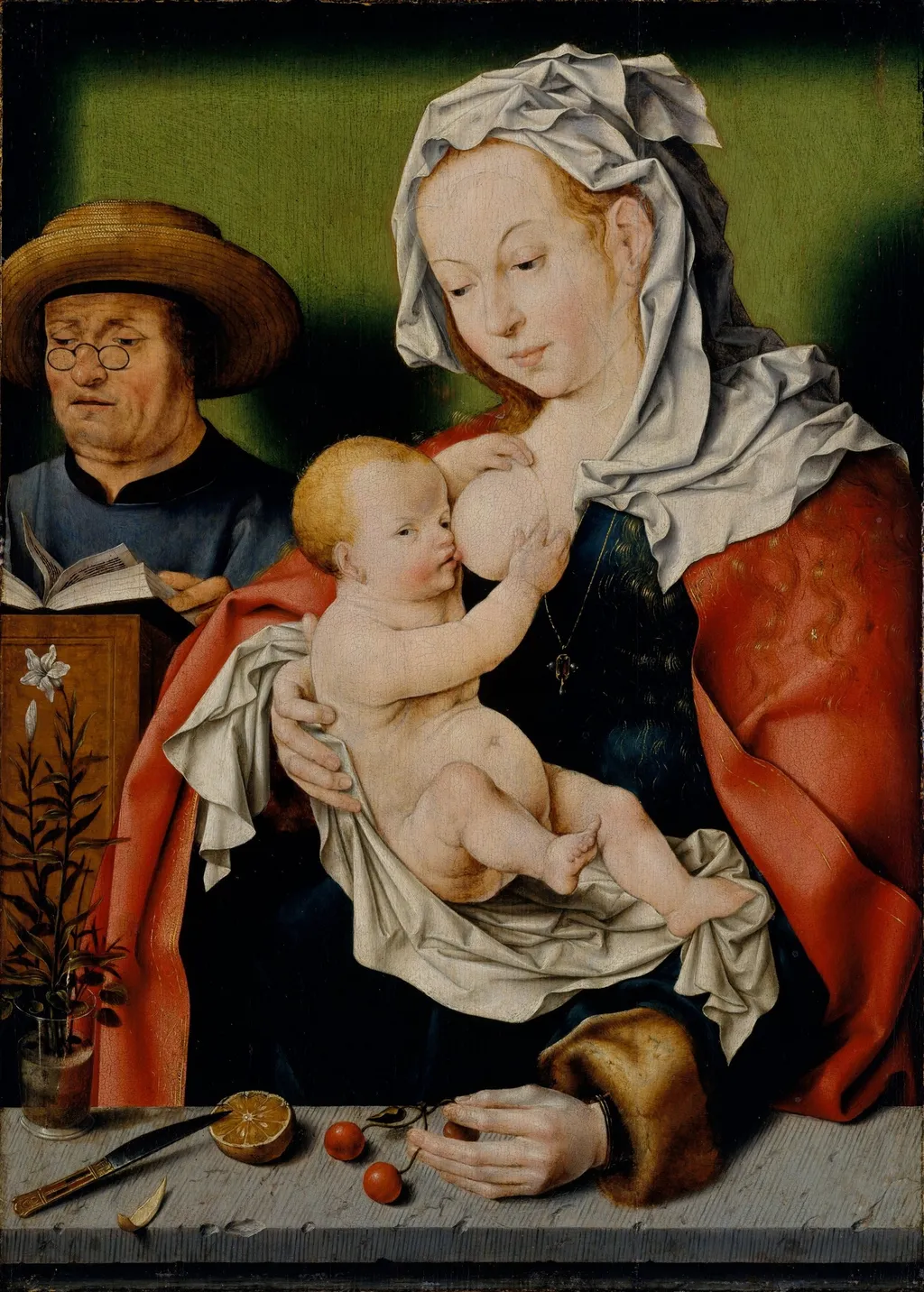
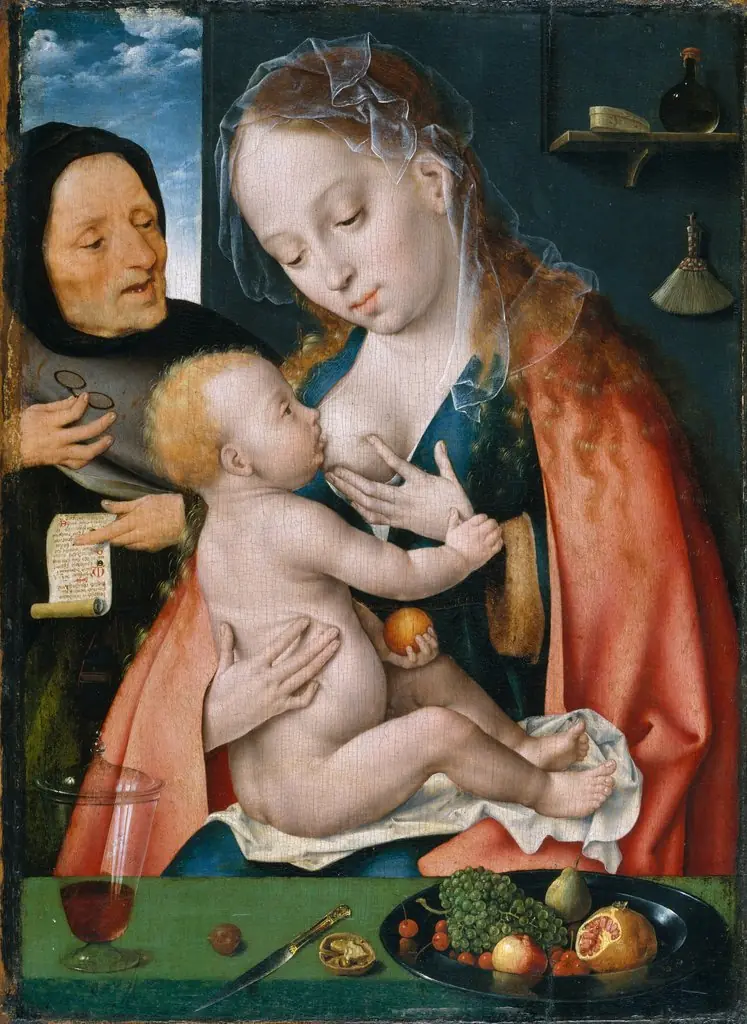
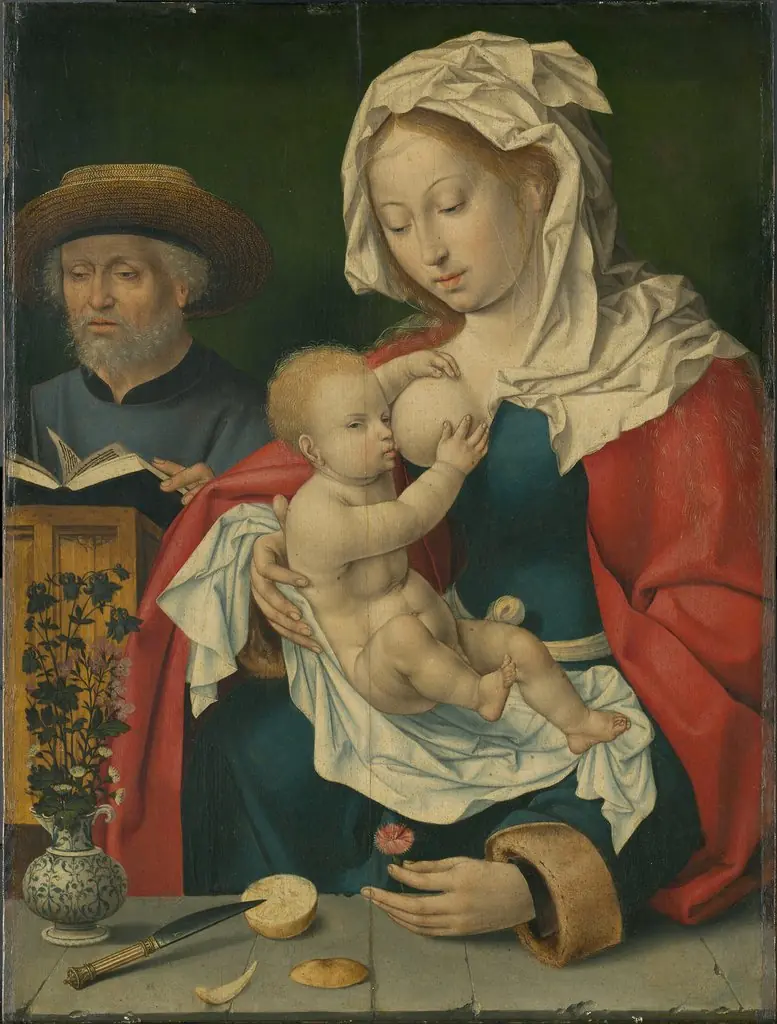
The Holy Family is an oil painting. It dates from 1515 and is held in the collection of the Metropolitan Museum of Art.
About this work
Subject & Meaning
The work's primary meaning is a devotional representation of the holy family, aligned with its classification as religious art.
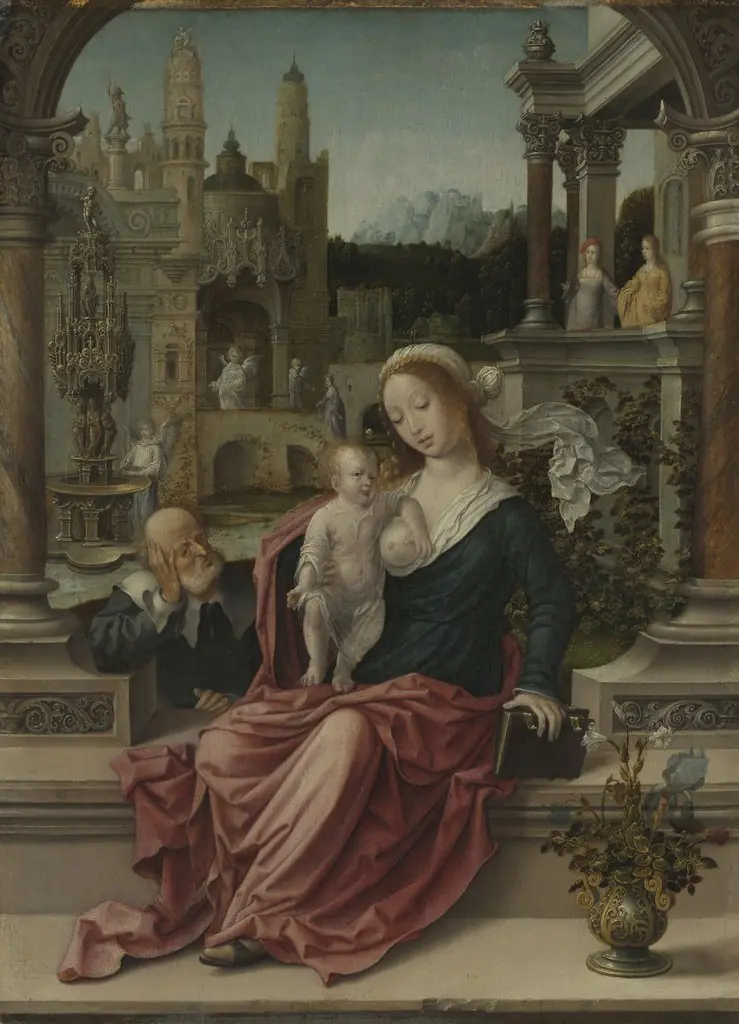
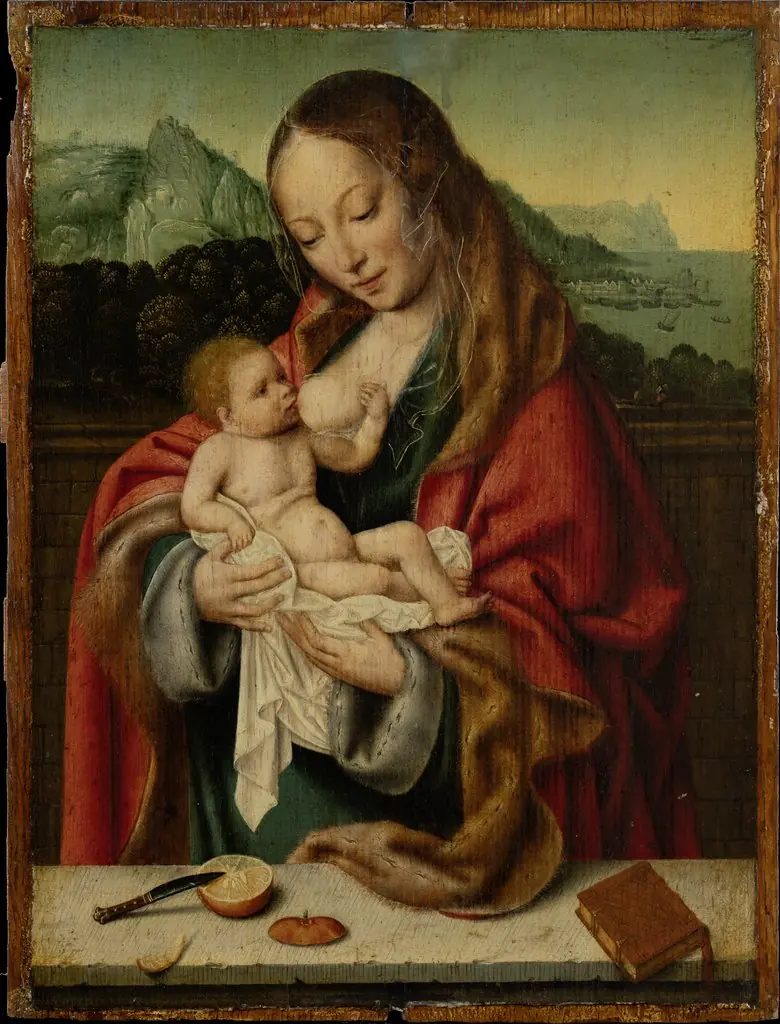
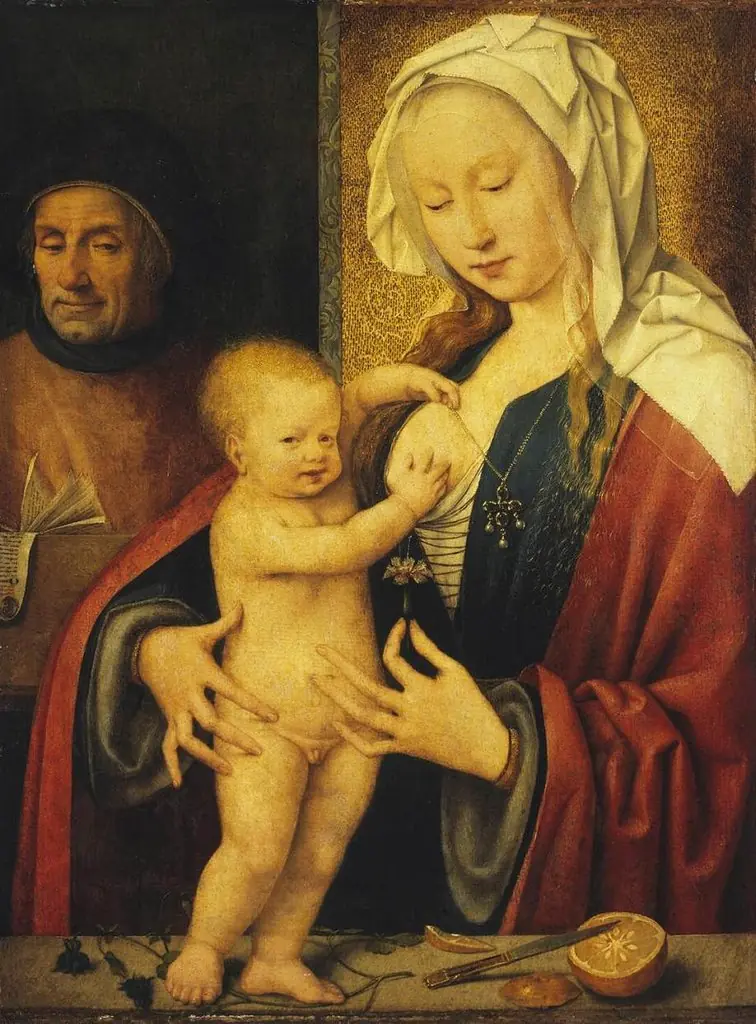
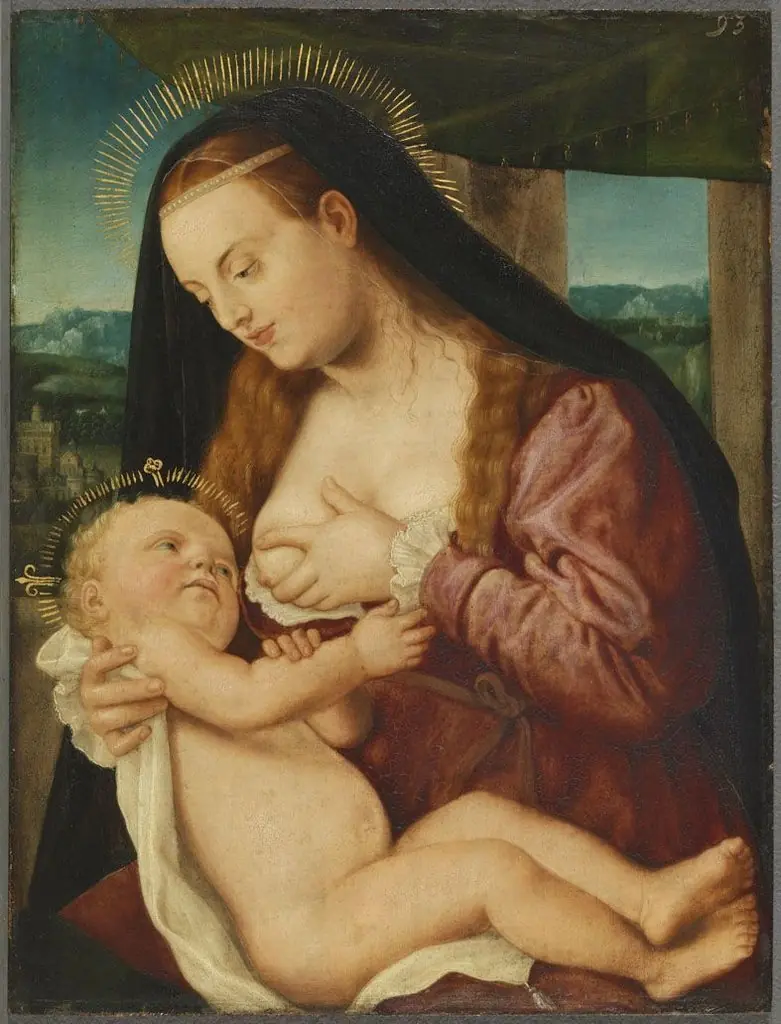
The painting depicts the Holy Family, a central subject in Christian art, featuring Jesus, Mary, and Joseph. Mary is shown breastfeeding the infant Jesus, an iconographic motif known as the Madonna lactans. The scene includes additional objects such as an orange, cherry, knife, flowering plant, glasses, straw hat, and necklace, which are typical of early Netherlandish religious painting and carry traditional symbolic associations, though their specific meanings are not elaborated in the provided sources.
The work's primary meaning is a devotional representation of the holy family, aligned with its classification as religious art.
Technique & Style
The Holy Family is executed in oil on canvas, a support that became increasingly common in Northern Renaissance painting. The work, dated to 1515, measures 51.8 × 37.1 cm and is attributed to the workshop of Joos van Cleve, indicating a collaborative execution within a master's atelier. Stylistically, the composition exemplifies the intimate devotional mode favored in early 16th-century Netherlandish art: the Holy Family is depicted with carefully observed domestic props, an orange, a cherry, a knife, and a flowering plant, that carry symbolic resonance.
The inclusion of a straw hat and glasses further personalizes the scene, while the soft modeling of figures and attention to varied textures (e.g., jewelry, fruit skin) reflect the workshop's refined handling of oil glazes. The overall formal balance and clear, readable arrangement of figures align with the teachings of Van Cleve's workshop, yet the precise painterly execution suggests a skilled assistant rather than the master himself.
History & Provenance
The painting was created in 1515 by the Workshop of Joos van Cleve. It was part of the collection of George Blumenthal before entering the Metropolitan Museum of Art, where it remains. No further provenance or commission details are provided in the sources.
The Holy Family is held in the collection of the Metropolitan Museum of Art in New York. It was formerly in the collection of George Blumenthal. The painting has been included in the exhibitions 'Old Masters from the Metropolitan' and 'From Van Eyck to Bruegel: Early Netherlandish Painting in The Metropolitan Museum of Art'. No specific inventory or accession number is recorded in the available sources.
Context
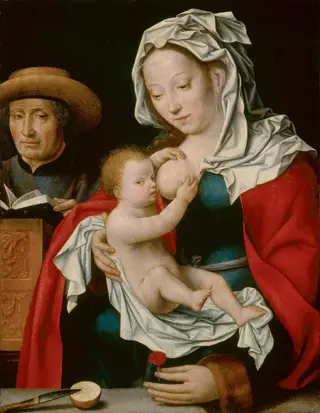
The Holy Family, attributed to the Workshop of Joos van Cleve (c. 1515), was included in the Metropolitan Museum of Art’s major exhibition From Van Eyck to Bruegel: Early Netherlandish Painting (1998), positioning it within the broader scholarly canon of Netherlandish art. The work, drawn from the George Blumenthal collection, reflects the Antwerp workshop production of the early 16th century, where Joos van Cleve’s studio replicated devotional compositions for a growing urban market. Its place in art history is as a representative example of workshop practice and the dissemination of religious iconography in the Northern Renaissance.
Overview
This oil painting, titled The Holy Family, depicts the Virgin Mary, the Christ Child, and Saint Joseph. Measuring 20 3/8 by 14 5/8 inches, it originated from the Antwerp workshop of Joos van Cleve around 1525. The panel, now in the Metropolitan Museum of Art (object number 41.190.19), represents one of many variations produced by the studio to meet the demand for devotional imagery. Its execution suggests the hand of an assistant rather than the master himself.
Artist & collection