Artwork
The Nymph of Fontainebleau
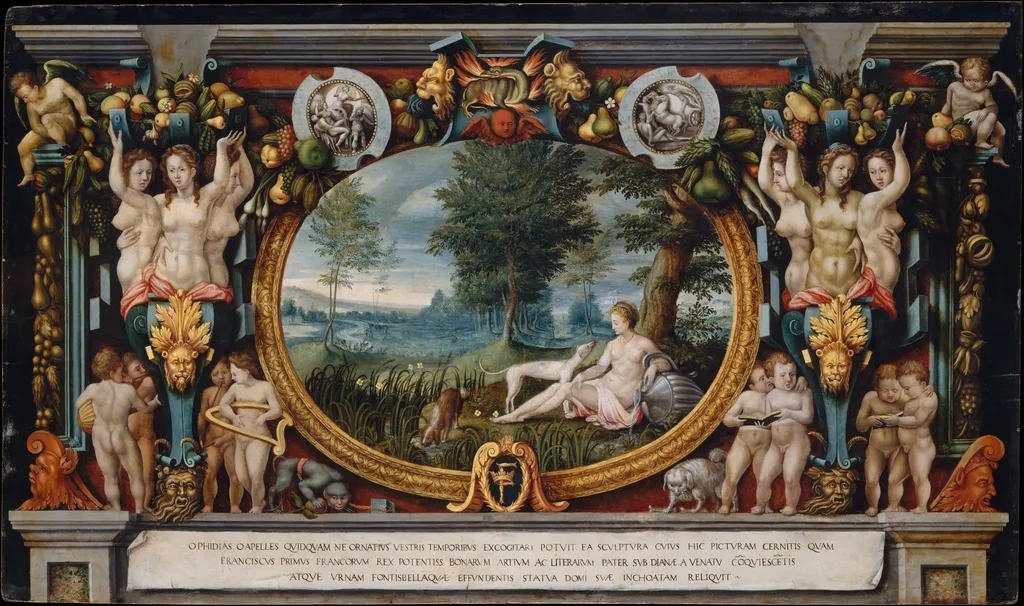
The Nymph of Fontainebleau is an oil painting. It dates from 1600 and is held in the collection of the Metropolitan Museum of Art.
About this work
Subject & Meaning
The landscape setting and the presence of reading and musical instruments may allude to virtuous leisure and the harmony of nature and culture.
The painting depicts a nymph reclining in a landscape, surrounded by a rich array of mythological and allegorical attributes. It includes putti, a dog, a monkey, a lion, a dragon, and a figure of Diana (the huntress goddess), along with objects such as a book, a lyre, an urn, fruit, and flowers. The subject draws on the classical mythology associated with the School of Fontainebleau, which often blended pastoral and mythological themes with layered symbolism.
The inclusion of Diana and the nymph suggests a scene from the myth of Diana and Actaeon or a generic Arcadian idyll. The landscape setting and the presence of reading and musical instruments may allude to virtuous leisure and the harmony of nature and culture.
Technique & Style
The painting is executed in oil on a wood panel, typical of the School of Fontainebleau's works around 1600. The dimensions (66 × 121.3 cm) indicate a moderately sized horizontal composition. Stylistically, it belongs to the French Mannerist School of Fontainebleau, characterized by elegant, elongated figures and a crowded, decorative arrangement of mythological and allegorical motifs.
The painting depicts a nymph, putti, a dog, a monkey, a dragon, Diana, and various objects such as a book, lyre, urn, fruit, and flowers, all set in a landscape. This rich iconography suggests a complex allegorical or mythological narrative, typical of the courtly style.
History & Provenance
The painting was created in 1600 and is attributed to the School of Fontainebleau. Its provenance traces through a succession of private owners before entering a museum collection: it was owned by Madame de Constantinovitch, then by Heyward Cutting, and subsequently by Constance R. Cutting. Ultimately, the work was acquired by the Metropolitan Museum of Art, where it remains in the collection. No specific commission details are recorded in the available sources.
Overview
The painting, "The Nymph of Fontainebleau," depicts a serene and contemplative scene on a wood panel. It features a nude female figure reclining on a rock, surrounded by verdant foliage and a placid lake. A red cloth is draped over her legs, and her hair is styled in an updo.
The composition is further animated by a dog drinking from the lake in the foreground, contributing to the overall tranquil atmosphere.
Artist & collection

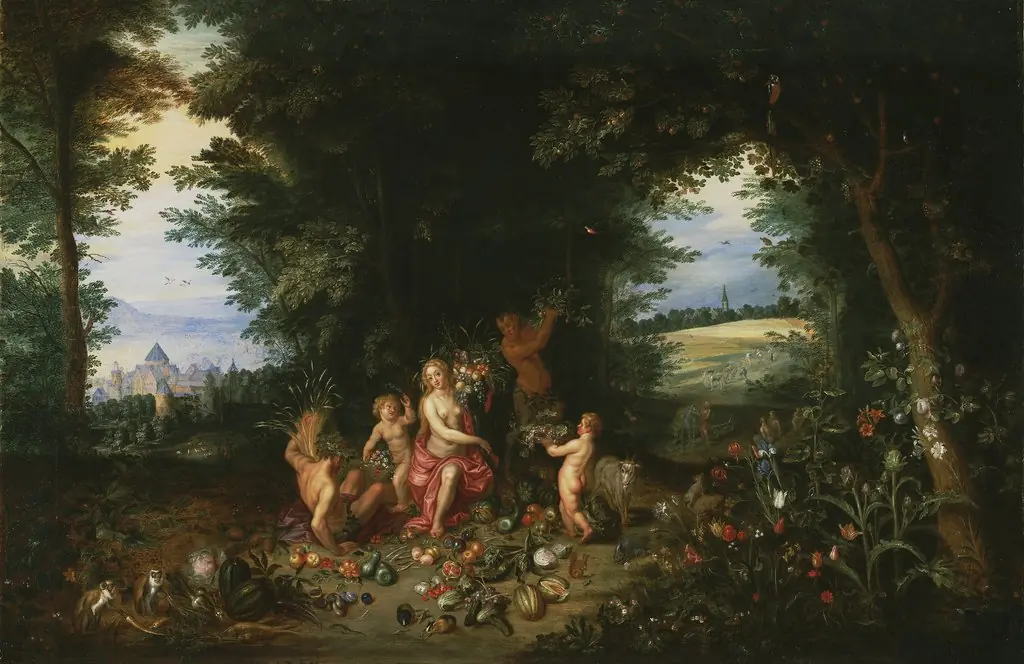
- Landscape with Ceres (Allegory of Earth)
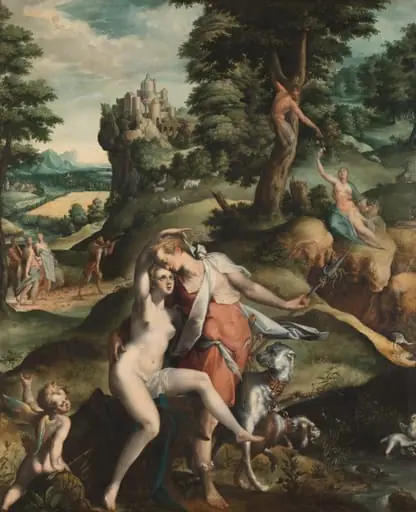 Venus and Adonis
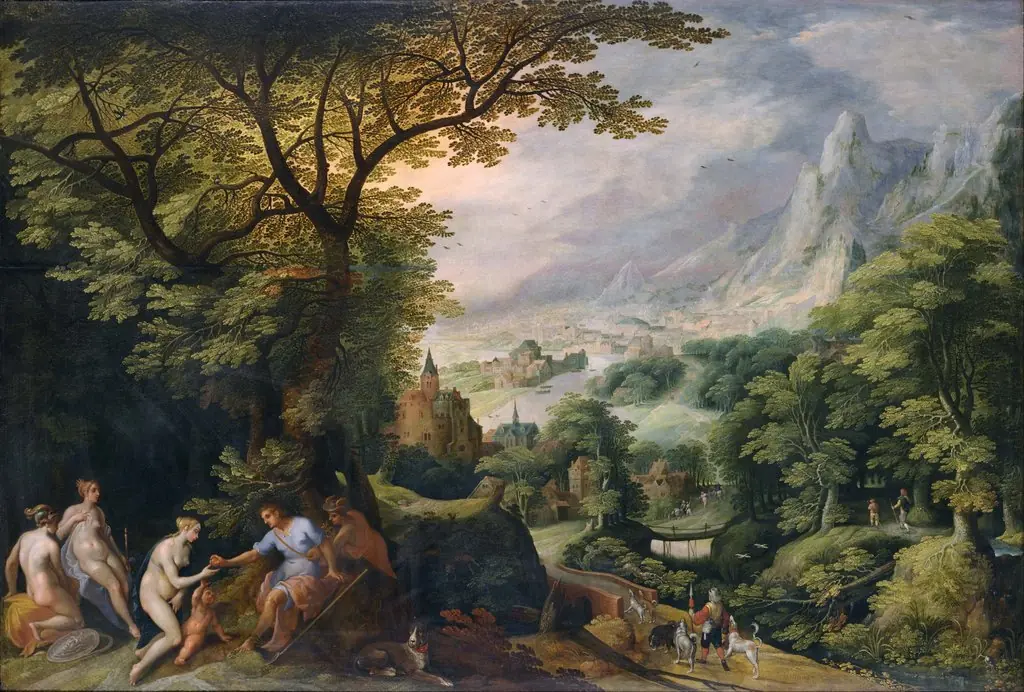 Landscape with the Judgement of Paris
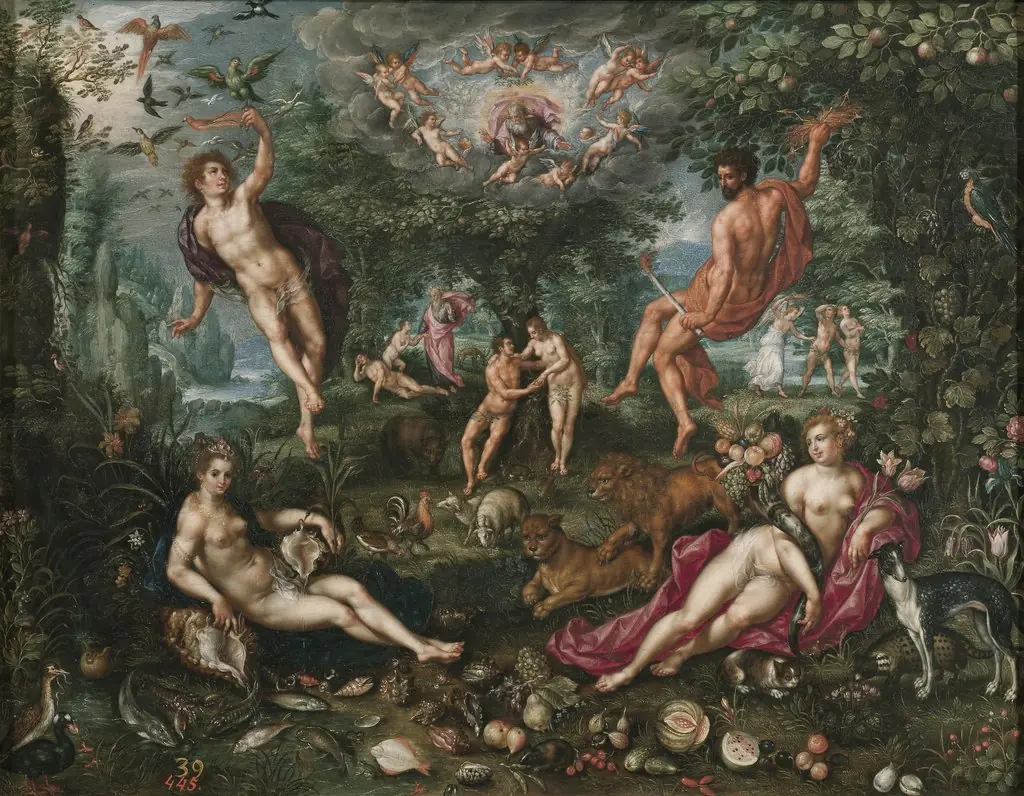 Paradise with the Four Elements
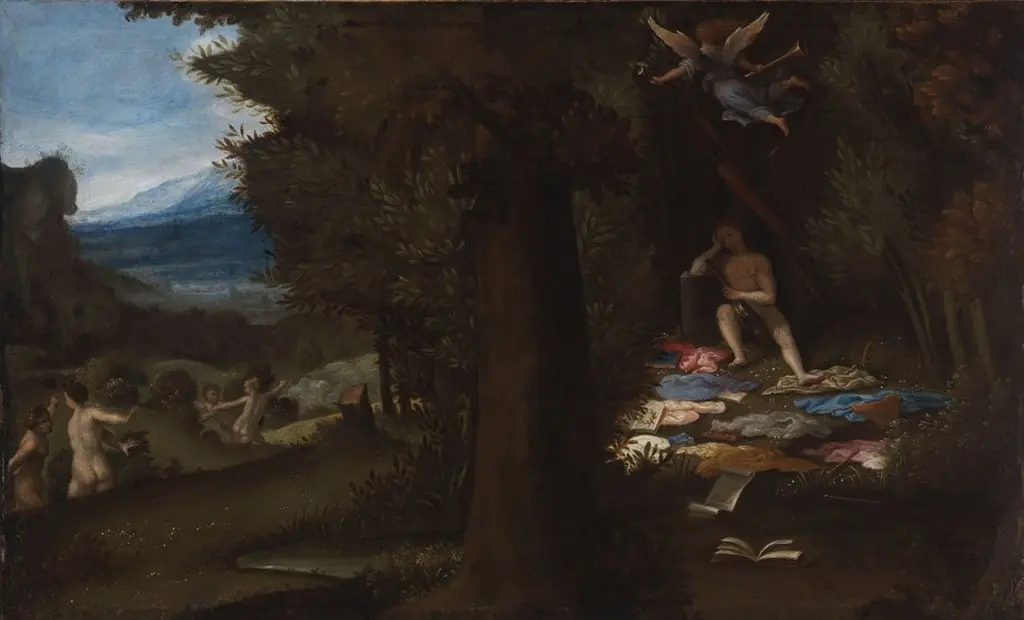 Sleeping Apollo and the Muses with Fame
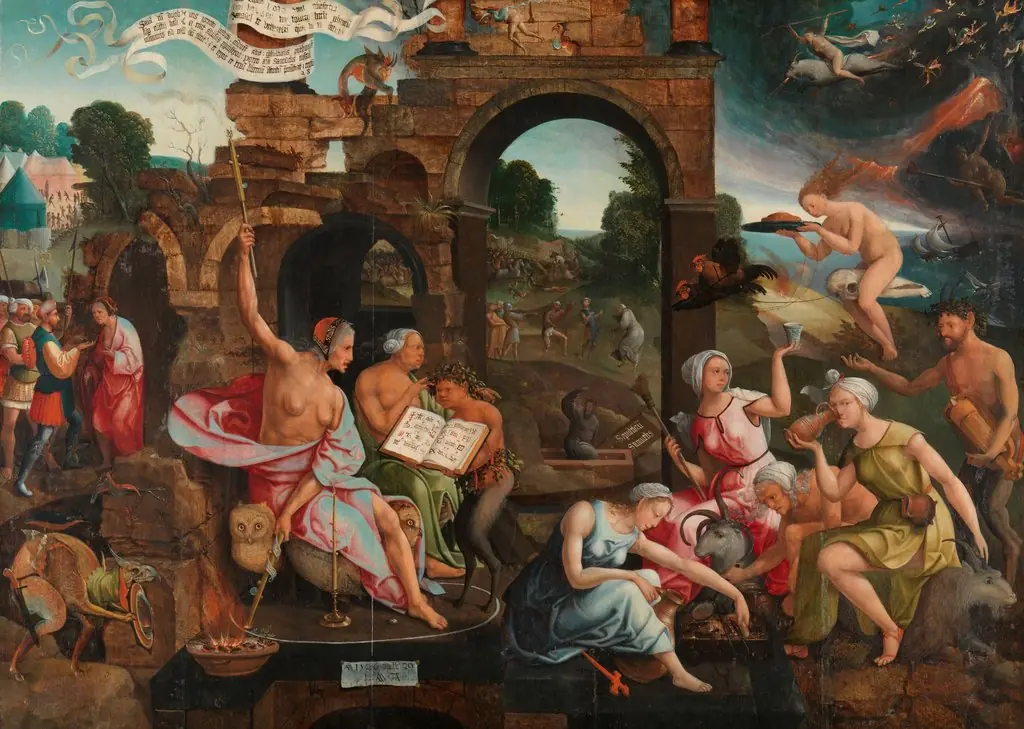 Saul and the Witch of Endor
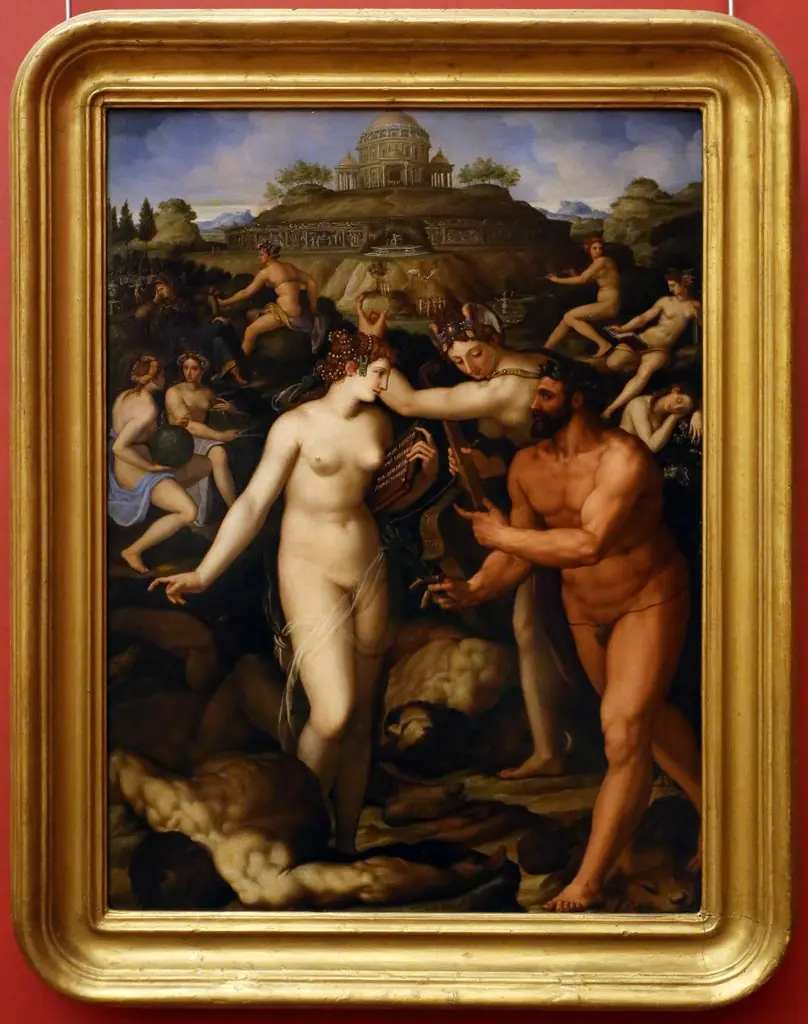 Hercules crowned by a Muse
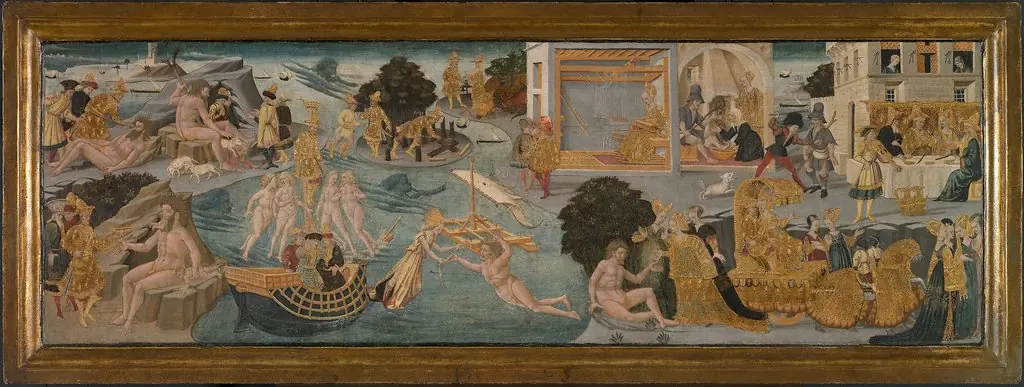 The Adventures of Ulysses
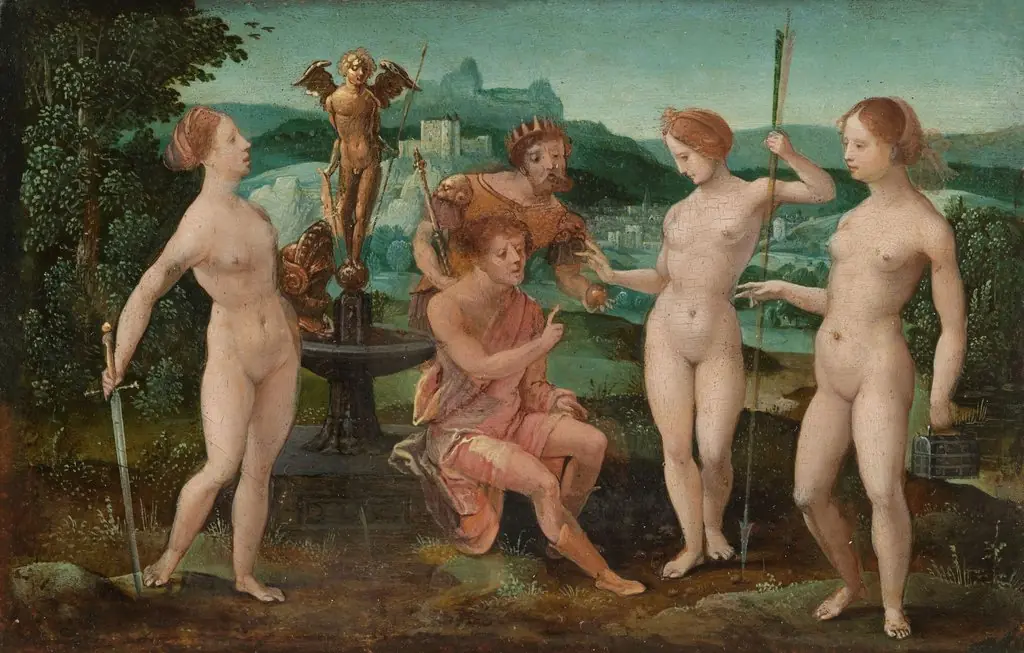 The judgement of Paris
 Judgement of Paris
 Venus and Minerva
 Judgment of Paris
 Saint George and the Dragon
 釈迦三尊十六羅漢像|Shaka (Shakyamuni), the Historical Buddha, with Two Attendant Bodhisattvas and Sixteen Arhats
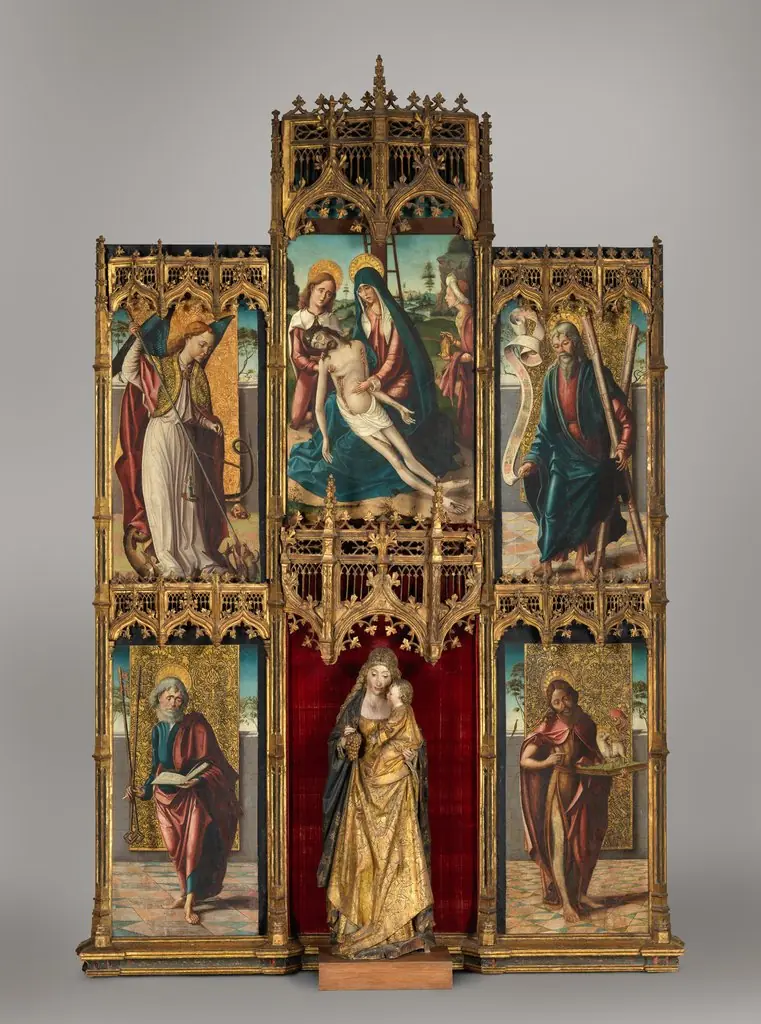 Virgin and Child with the Pietà and Saints
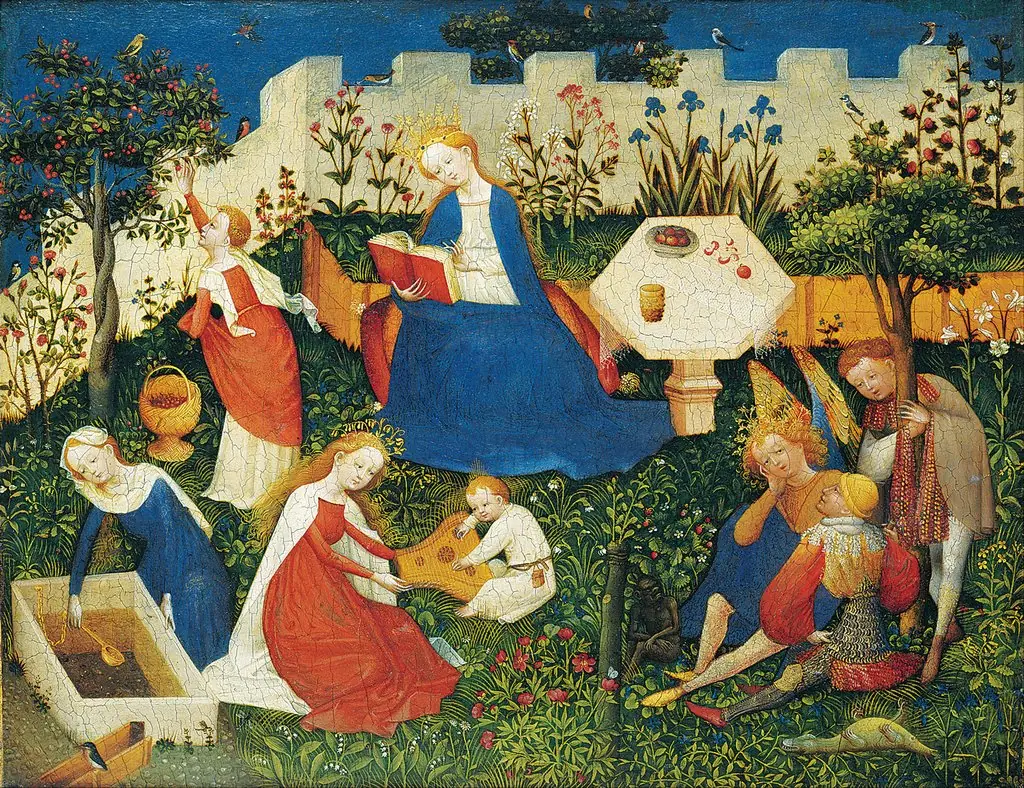 Paradiesgärtlein
 Untitled
 Saints Peter, Martha, Mary Magdalen, and Leonard
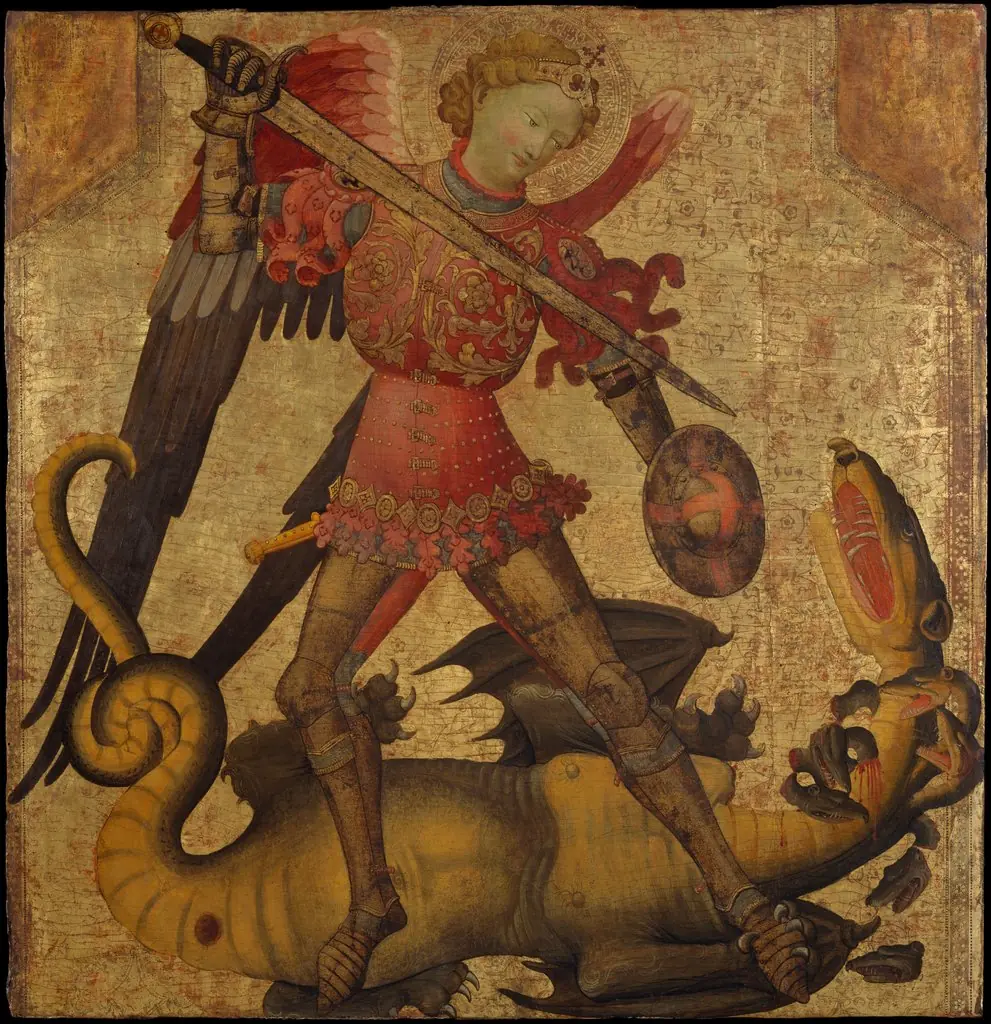 Saint Michael and the Dragon
 明 /清 佚名 李公麟 偽款 龍王請齋圖 卷|Buddhist luohans crossing the sea to the palace of the dragon king