Artwork
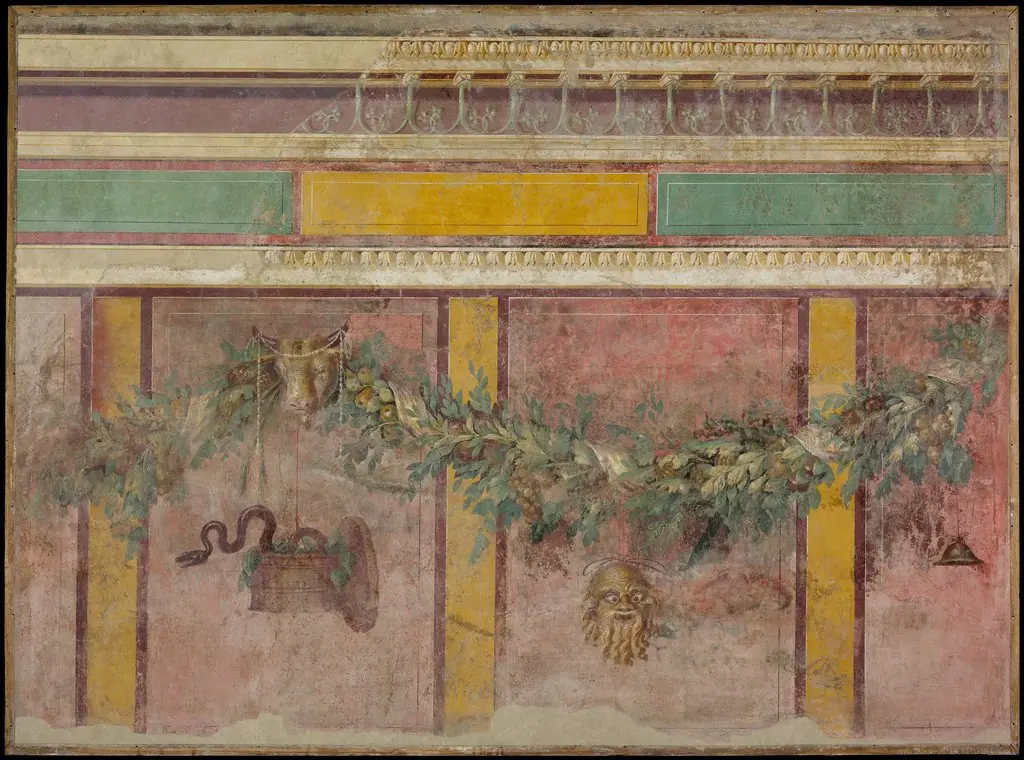
Wall painting from Room H of the Villa of P. Fannius Synistor at Boscoreale
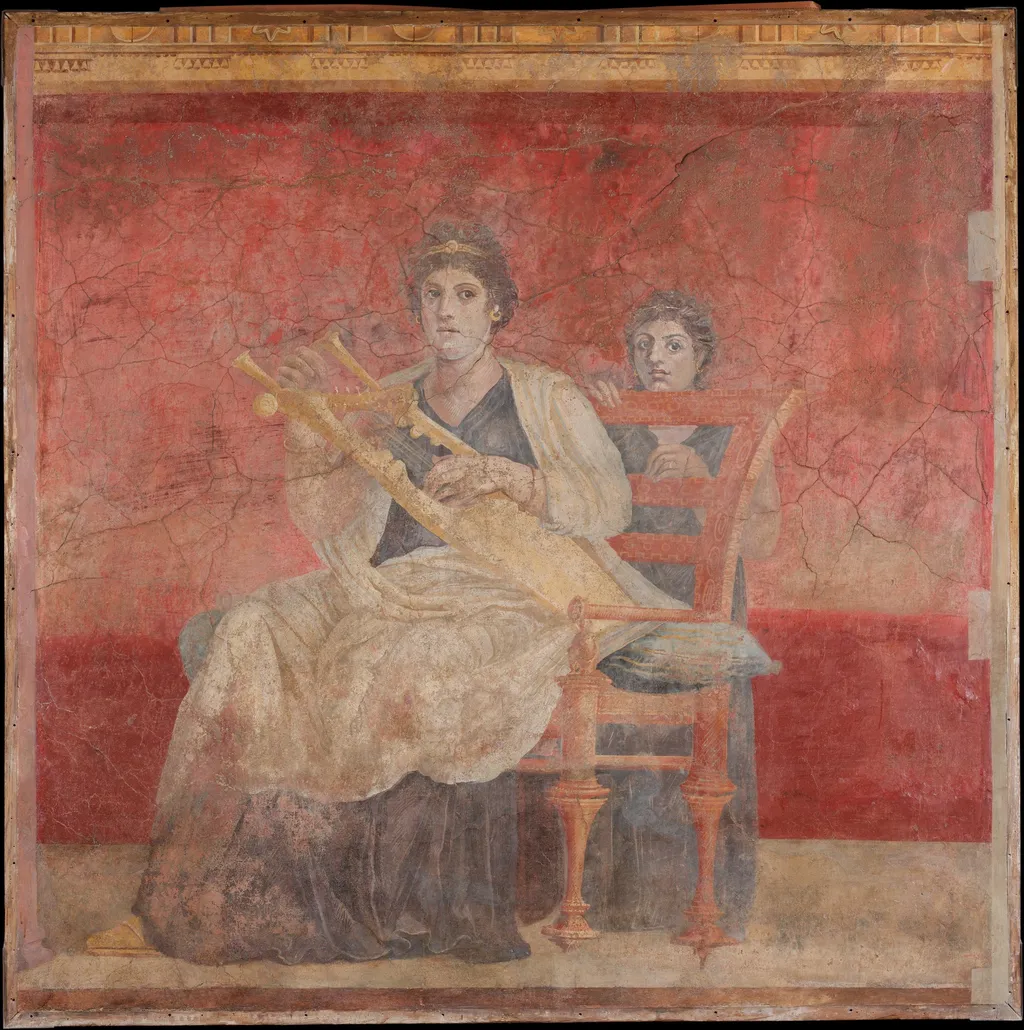
Wall painting from Room H of the Villa of P. Fannius Synistor at Boscoreale is a fresco painting. It dates from 1 and is held in the collection of the Metropolitan Museum of Art. This fresco originates from Room H, the main reception hall, of the Villa of P.
About this work
A gold diadem catches the light as a seated woman runs her fingers across a gilded kithara, one of three large frescoes that once lined the east wall of Room H at the Villa of P. Fannius Synistor in Boscoreale. Buried by Vesuvius in 79 CE and excavated in 1900, the panel is nearly 187 centimeters square, its loose brushwork and throne-like chair evoking a Hellenistic royal court.
Subject & Meaning
The fresco depicts a woman playing a kithara, a stringed instrument associated with Apollo and the Muses, within a domestic setting.
The fresco depicts a woman playing a kithara, a stringed instrument associated with Apollo and the Muses, within a domestic setting. She wears a chiton, himation, bracelets, earrings, and a headband, indicating elite status. A chair and a young girl also appear in the composition.
The iconography of a seated musician in such a setting likely alludes to cultural sophistication and the patron's embrace of Hellenistic traditions, personalizing these ideals for the villa's owner and blending depictions of daily life with allegorical resonance.
Technique & Style
The wall painting is executed in fresco, a technique in which pigments are applied to wet lime plaster, forming a durable bond as the plaster dries. It is a work of Roman art, measuring 186.7 cm in both height and width. Stylistically, the composition presents a refined, formal domestic scene centered on the seated woman with her kithara.
The use of fresco allowed for vibrant coloration and integration with the architectural surface of the Villa. Condition and handling details are not recorded in the available sources, but the medium and iconography align with typical Roman wall painting of the period.
Overview
This fresco originates from Room H, the main reception hall, of the Villa of P. Fannius Synistor at Boscoreale. Created around 50–40 BCE during the Late Republican period, it represents a key example of the Second Pompeiian Style. The painting, depicting a seated woman with a kithara, was one of three monumental panels that adorned the east wall of the villa. It was preserved by the eruption of Mount Vesuvius in 79 CE and rediscovered in 1900.
History & Provenance
The Villa of P. Fannius Synistor, along with its elaborate wall paintings, remained buried for centuries after the catastrophic eruption of Mount Vesuvius in 79 CE. Its rediscovery and excavation in 1900 brought these significant frescoes to light. This particular panel was subsequently acquired by The Metropolitan Museum of Art in 1903, entering the museum's collection through the Rogers Fund.
Artist & collection

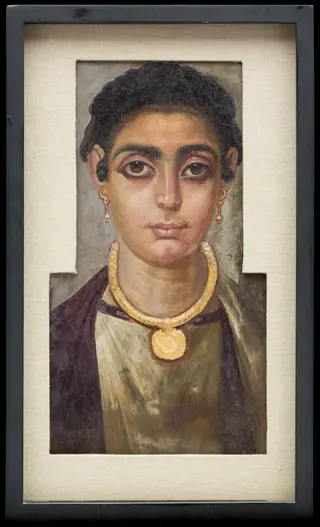 Head of a Woman
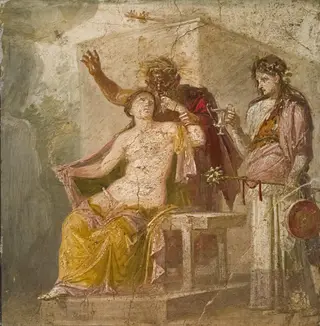 MAN Naples 27875
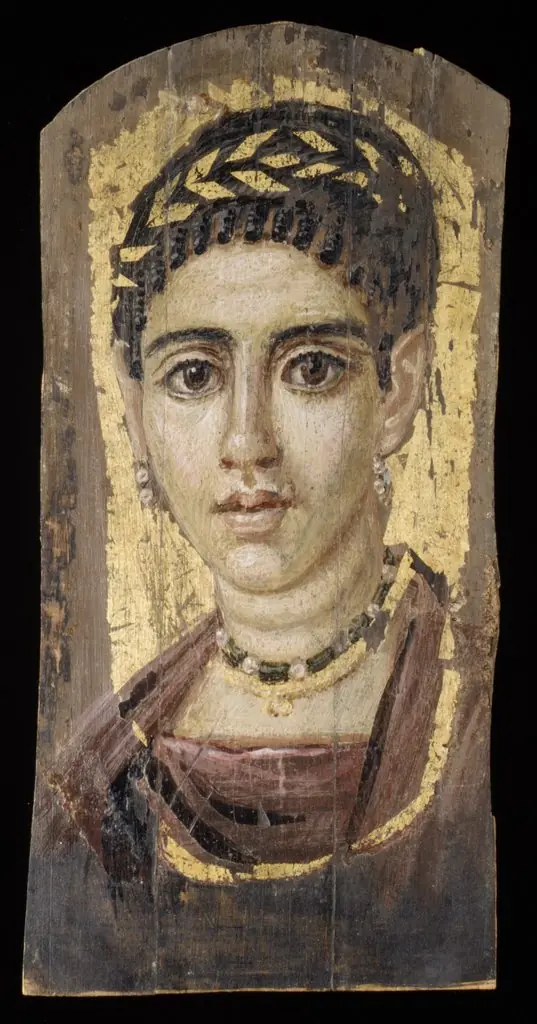 Portrait of a young woman with a gilded wreath
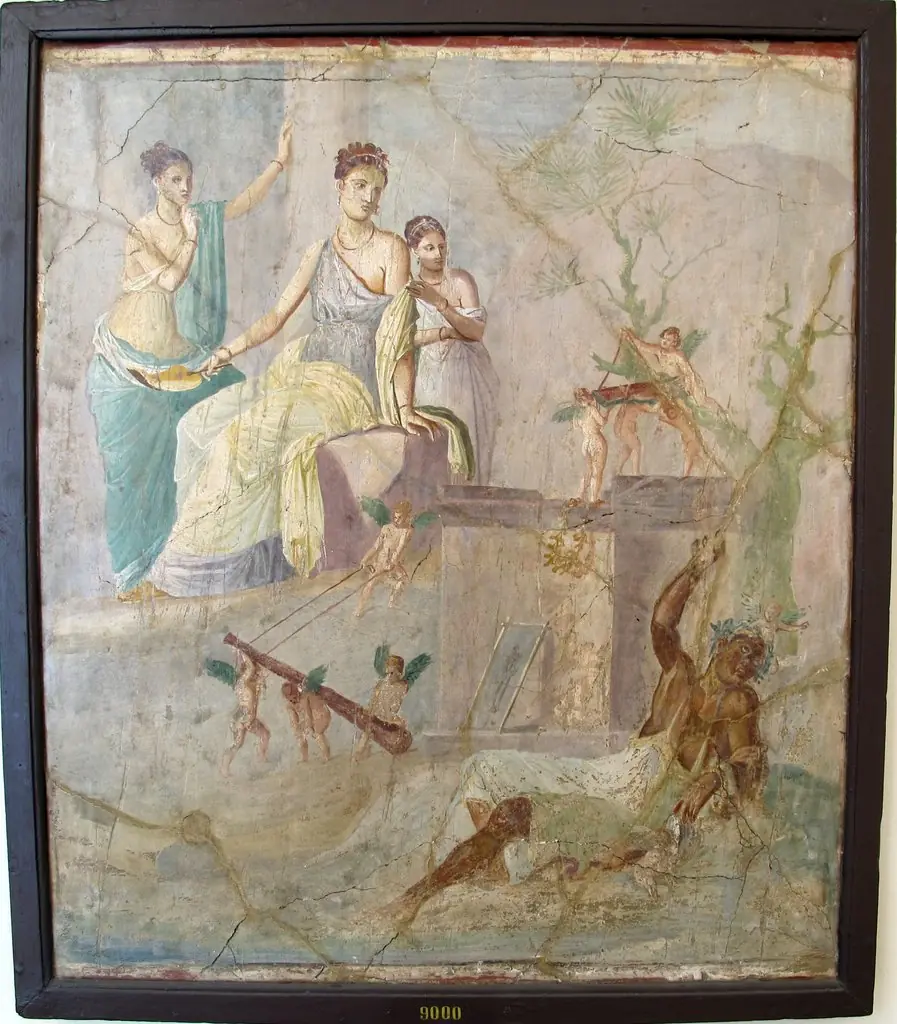 Heracles and Omphale
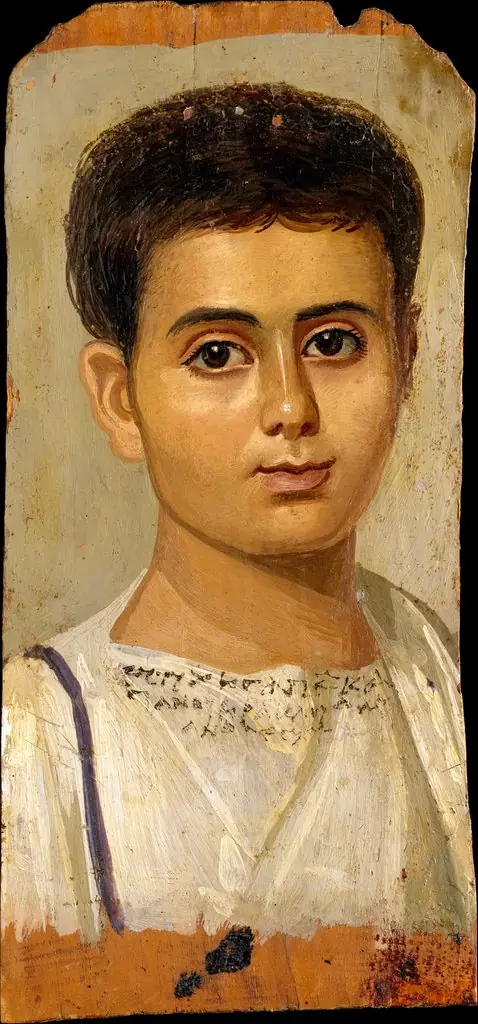 Portrait of the Boy Eutyches
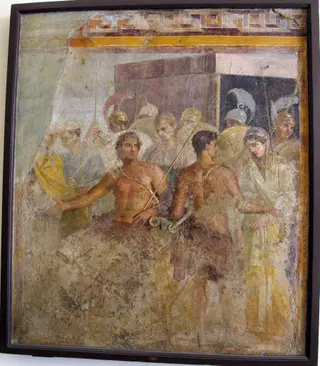 Achille costretto a cedere briseide a ad Agamennone
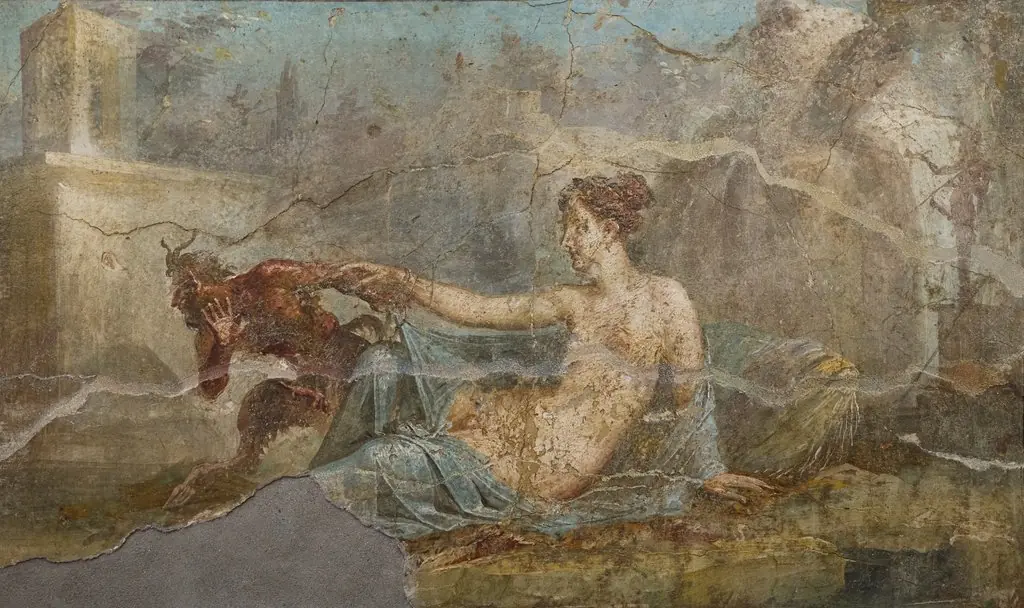 MAN Naples 27700
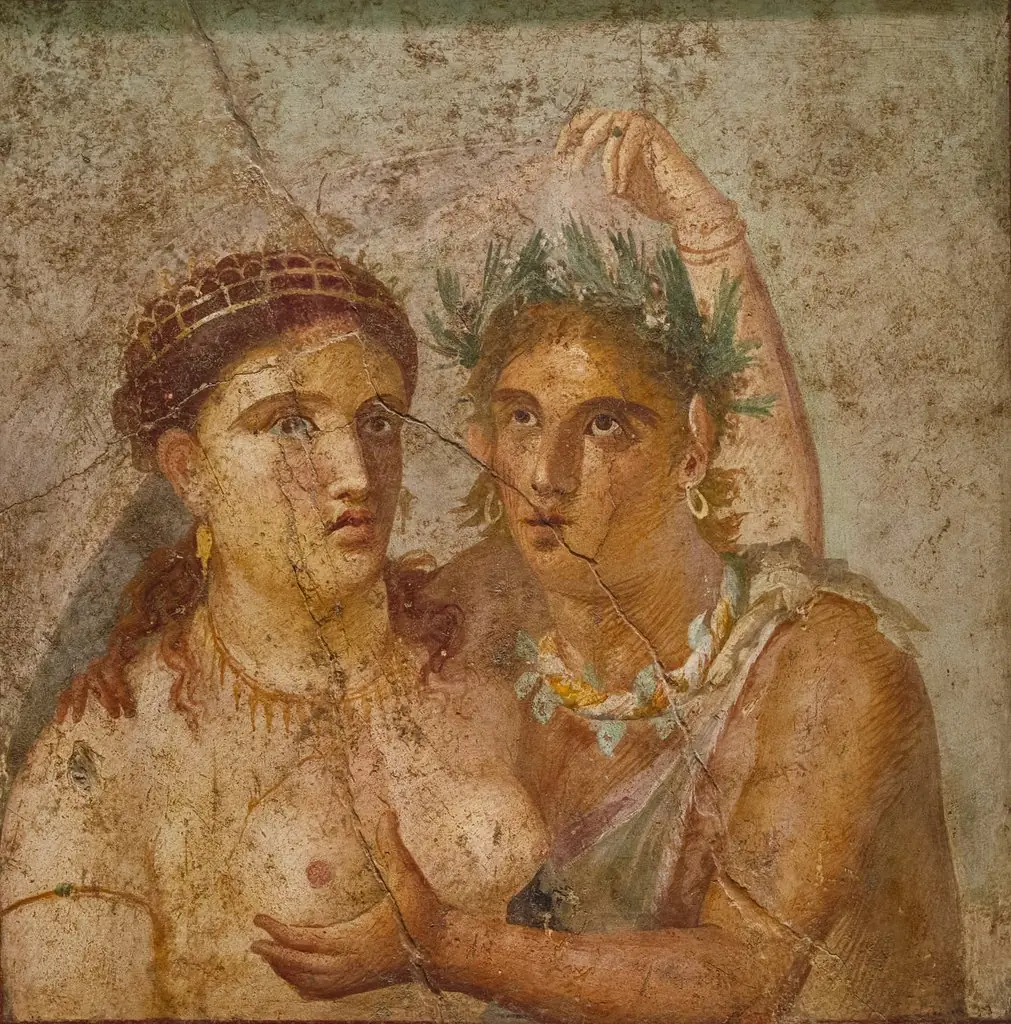 MAN Naples 110590
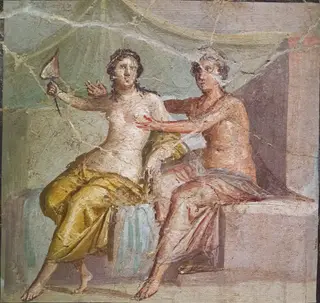 MAN Naples 9250
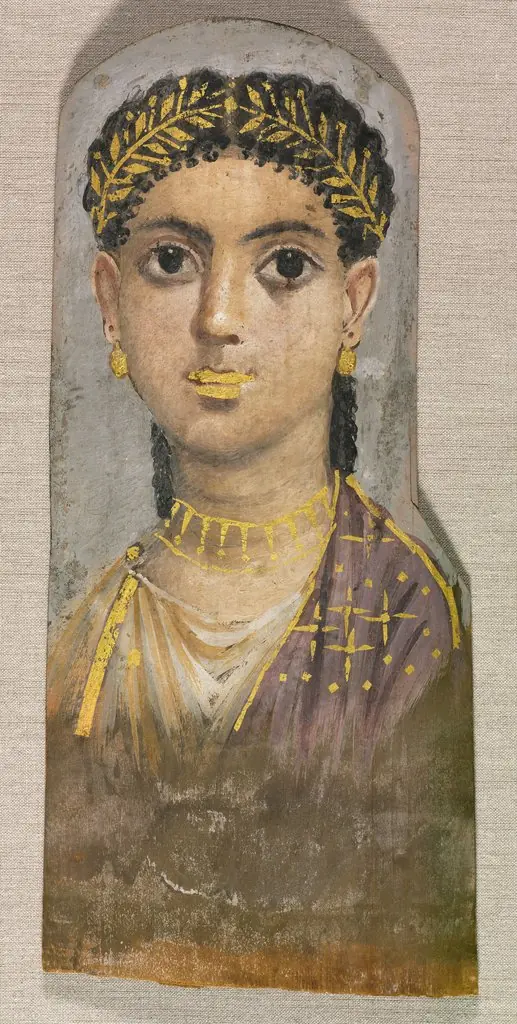 Funerary Portrait of a Young Girl
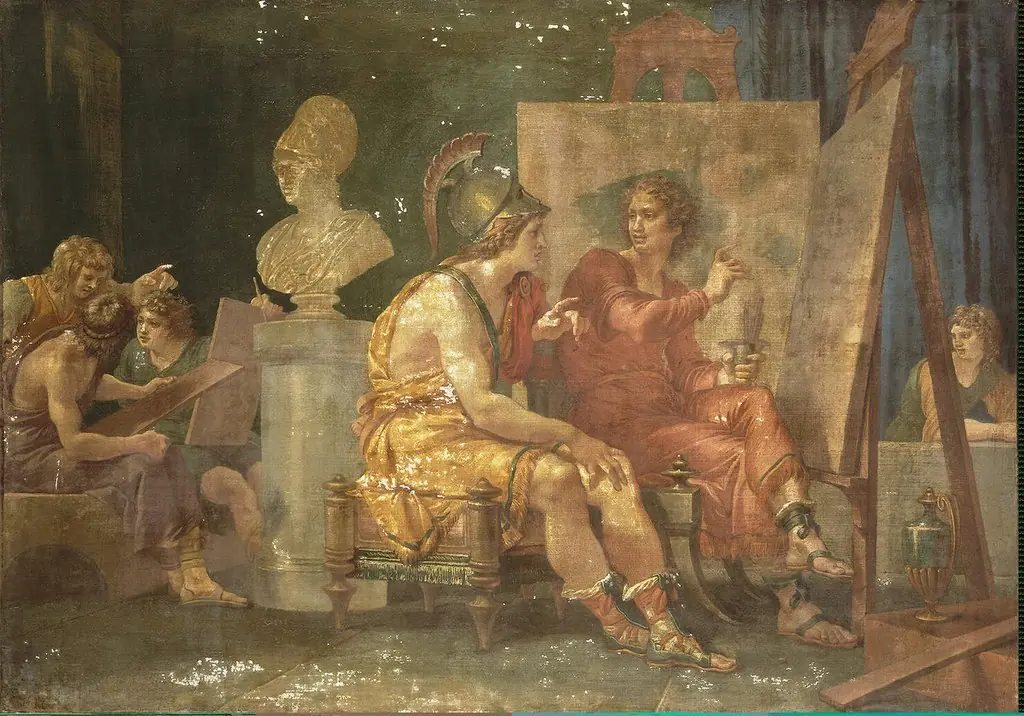 Alexander the Great in the Workshop of Apelles
- Wall painting from the west wall of Room L of the Villa of P. Fannius Synistor at Boscoreale