Artwork
釈迦三尊十六羅漢像|Shaka (Shakyamuni), the Historical Buddha, with Two Attendant Bodhisattvas and Sixteen Arhats
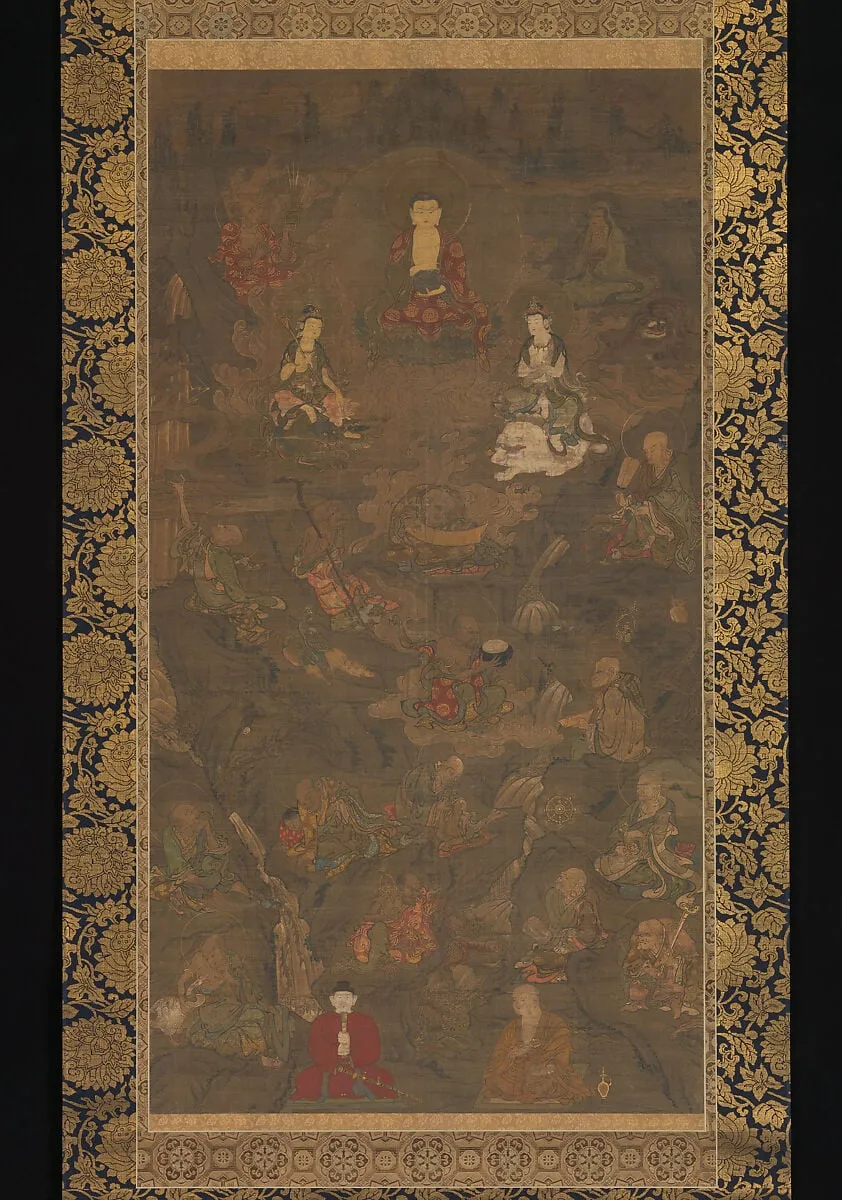
釈迦三尊十六羅漢像|Shaka (Shakyamuni), the Historical Buddha, with Two Attendant Bodhisattvas and Sixteen Arhats is an ink painting. It dates from 1350 and is held in the collection of the Metropolitan Museum of Art. This Japanese hanging scroll, dating to the fourteenth century, presents a complex Buddhist assembly.
About this work
This 14th-century Japanese hanging scroll in ink, color, and gold on silk entered the Metropolitan Museum of Art in 2015 with the Mary Griggs Burke Collection.
At Vulture Peak, the historical Buddha Shaka presides from a bank of swirling clouds, flanked by Fugen on a white elephant and Monju on a blue lion. Below, sixteen arhats roam a landscape of jagged rocks and waterfalls, joined by Prince Shōtoku Taishi and the monk Kūkai. This 14th-century Japanese hanging scroll in ink, color, and gold on silk entered the Metropolitan Museum of Art in 2015 with the Mary Griggs Burke Collection.
Overview
This Japanese hanging scroll, dating to the fourteenth century, presents a complex Buddhist assembly. At its center, the historical Buddha Shaka delivers a sermon from a cloud bank, accompanied by the bodhisattvas Monju and Fugen. Below them, sixteen arhats populate a rugged landscape, joined by two pivotal figures in Japanese Buddhism: Prince Shōtoku Taishi and the monk Kūkai. Rendered in ink, color, and gold on silk, the work exemplifies medieval devotional painting.
Subject & Meaning
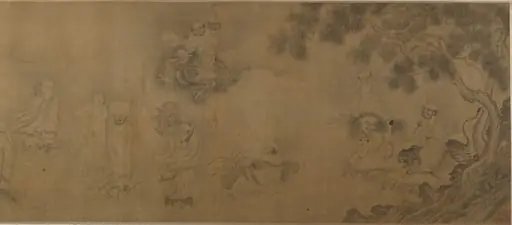
The composition centers on Shaka Buddha, shown preaching at Vulture Peak amidst celestial clouds. He is attended by Monju, riding a blue lion, and Fugen, mounted on a white elephant. Beneath this divine trio, sixteen arhats, enlightened disciples, are depicted engaged in various activities within a dramatic setting of sharp rocks and cascading water.
The inclusion of Prince Shōtoku Taishi and Kūkai further grounds the scene in the history of Japanese Buddhism.
Technique & Style
Executed with ink, vibrant colors, and gold on silk, this hanging scroll showcases the refined artistry of the Kamakura–Nanbokuchō period. The detailed rendering of figures and the dynamic landscape reflect established conventions for Buddhist imagery. The work's iconographic program and stylistic elements demonstrate a continued engagement with Chinese Buddhist painting traditions, which profoundly shaped Japanese devotional art during this era.
History & Provenance
This scroll became part of the Metropolitan Museum of Art's collection in 2015. It was a significant gift from the Mary and Jackson Burke Foundation, forming part of the extensive Mary Griggs Burke Collection. Cataloged as object number 2015.300.1, the artwork measures approximately 142.5 by 75.7 centimeters for the image itself, with the full mounting extending to nearly 245 centimeters.
Context
Created during Japan's Kamakura and Nanbokuchō periods, this painting illustrates the vibrant religious culture of medieval Japan. The inclusion of Prince Shōtoku Taishi, an early imperial proponent of Buddhism, and Kūkai, the founder of the Shingon sect, underscores the deep historical roots and diverse lineages within Japanese Buddhist practice. The work's iconography also highlights the ongoing transmission and adaptation of Buddhist artistic forms from continental Asia.
Artist & collection

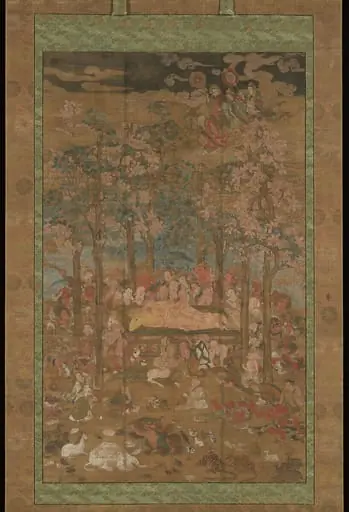 仏涅槃図|Death of the Historical Buddha (Nehan-zu)
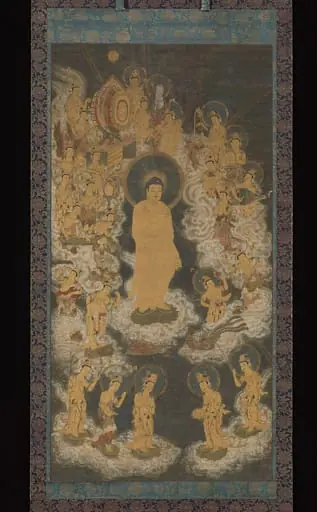
 Welcoming Descent of Amida, the Buddha of Infinite Light, and His Holy Retinue
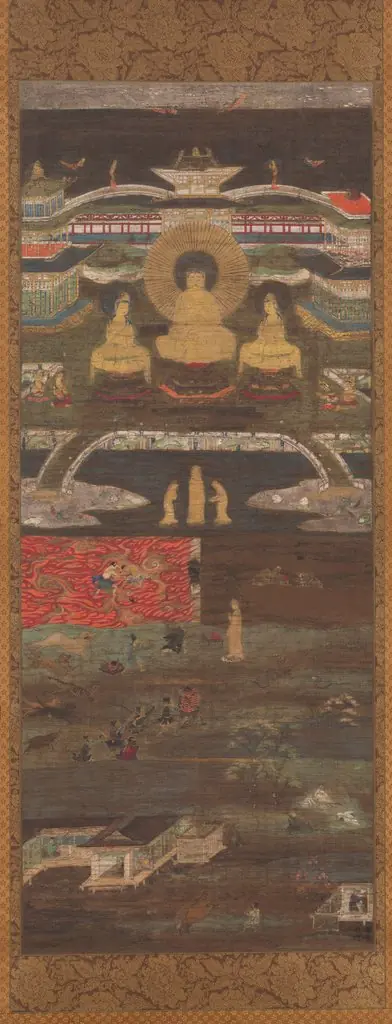 The White Path Between Two Rivers
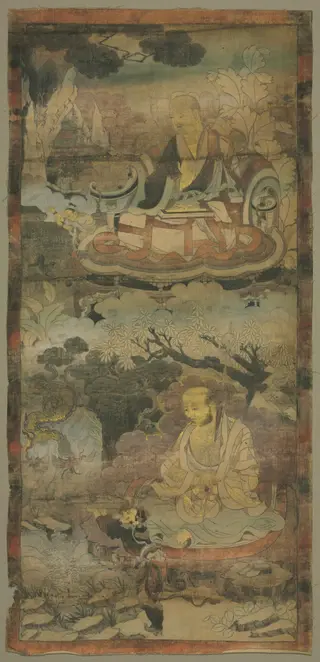 Lohans
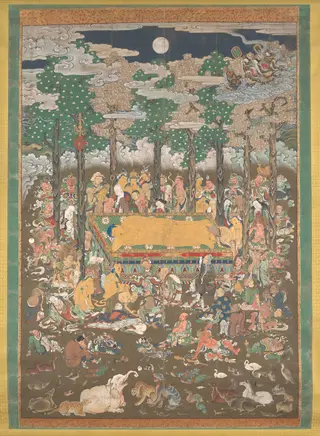 Nehan: Death of the Buddha
 宋陳居中文姬歸漢圖軸
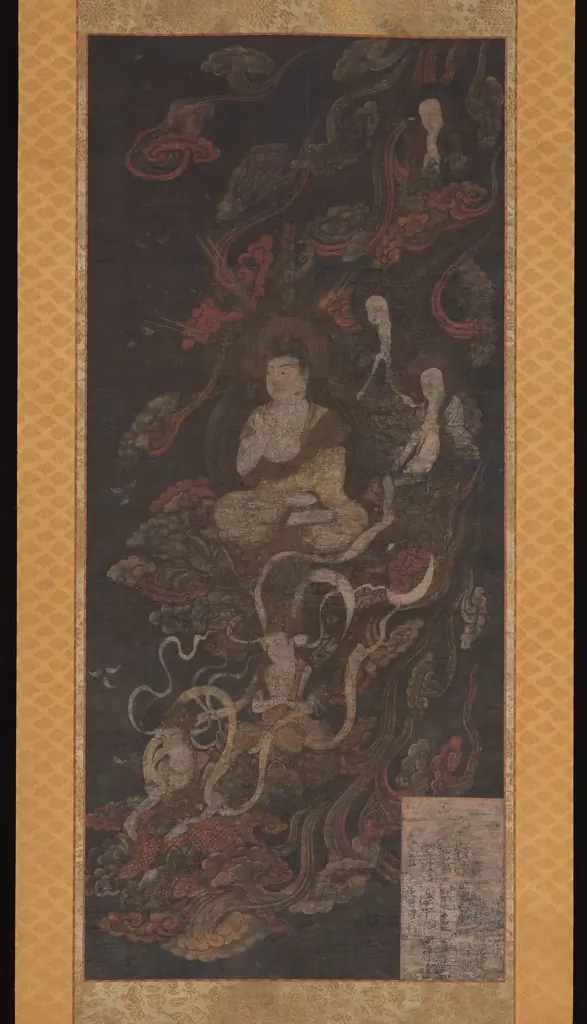
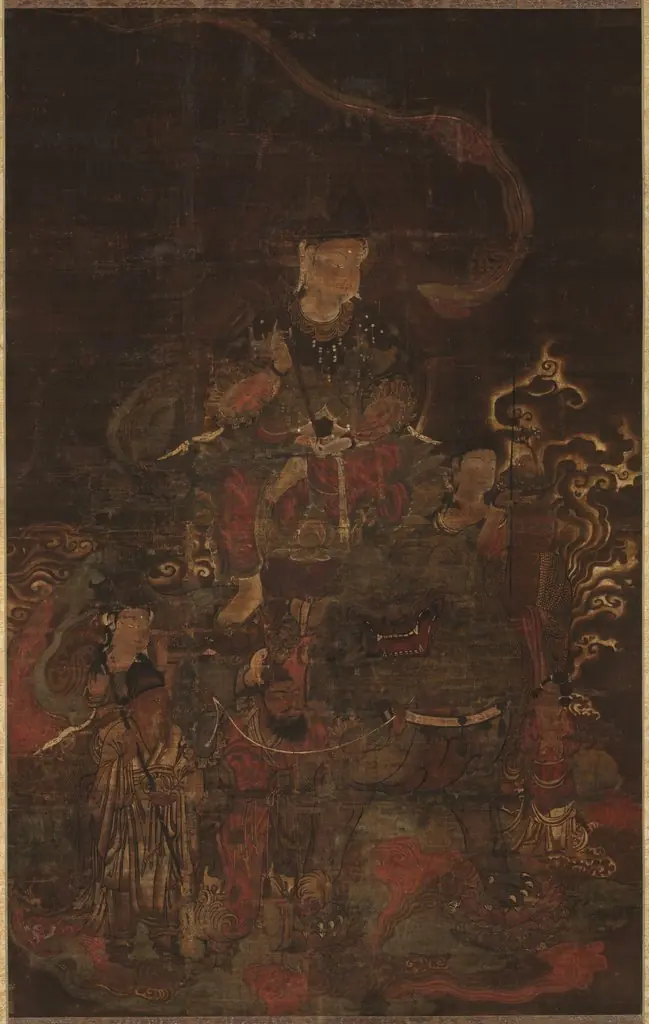 Monju Riding Lion with Attendants
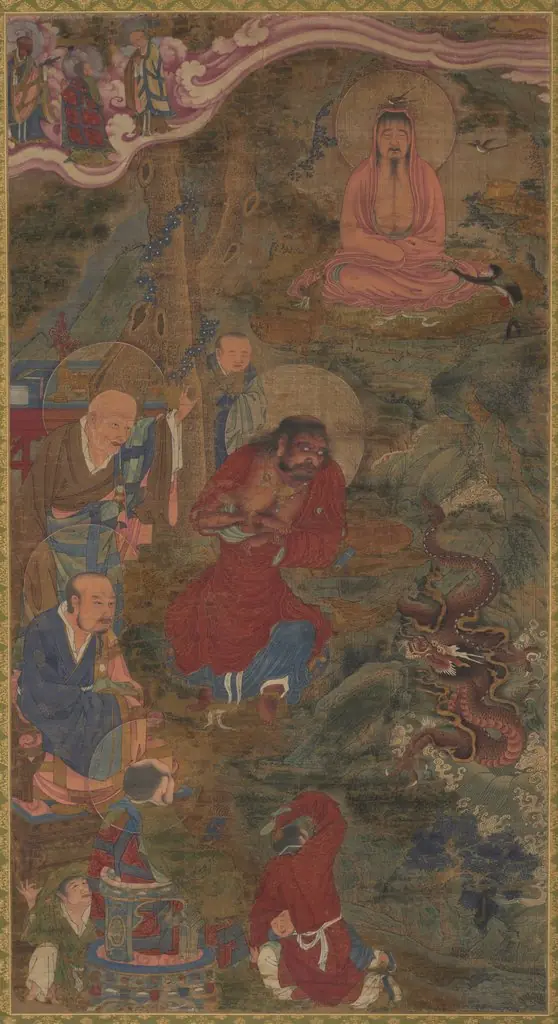 Miracle of the Dragon
 明 佚名 絹本設色 鳥販圖 軸|Bird peddler
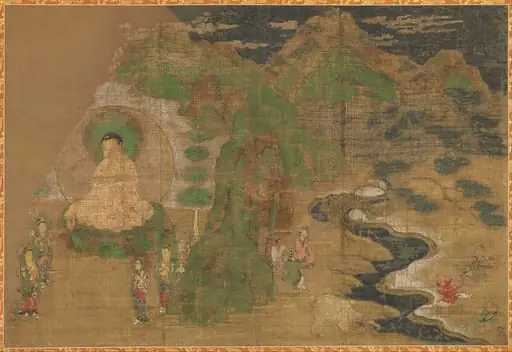 仏伝図|Scene from the Life of the Buddha
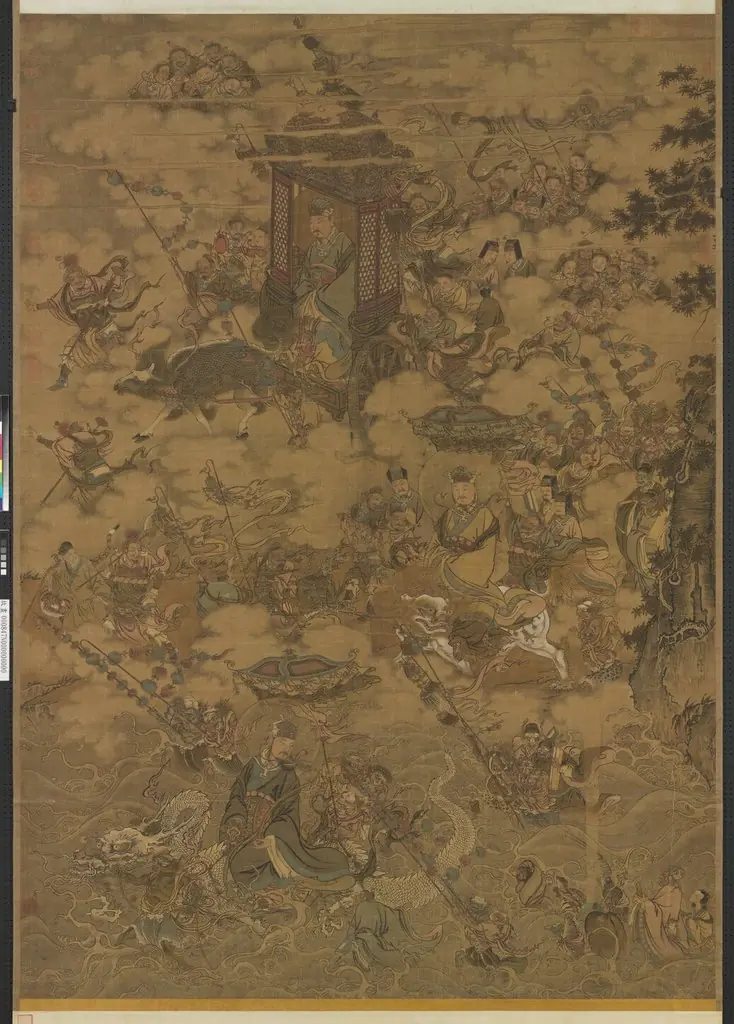 宋馬麟三官出巡圖 軸
- 阿弥陀聖衆来迎図 |Welcoming Descent of Amida and Bodhisattvas