Artwork
Judith shows Holofernes's head to the people (Judith 19)
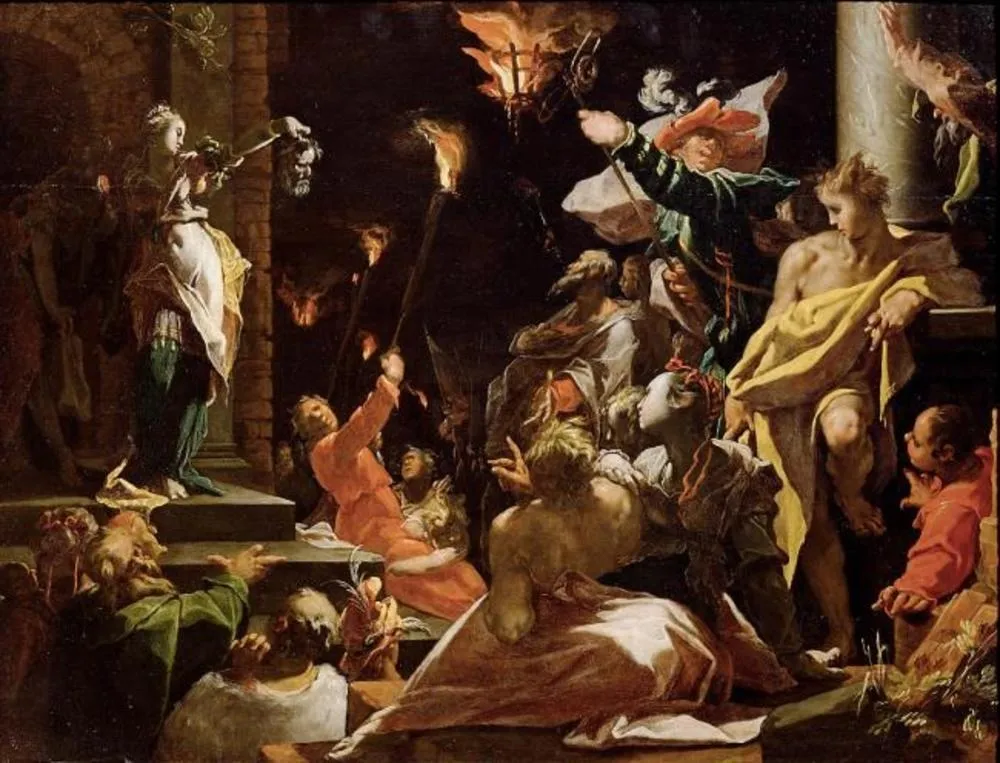
Judith shows Holofernes's head to the people (Judith 19) is an oil painting by the Early Baroque Italian artist Abraham Bloemaert. It dates from 1597 and is held in the collection of the Kunsthistorisches Museum.
About this work
Subject & Meaning
As a work of religious art, the composition centers on the dramatic moment of revelation, highlighting Judith as the protagonist of the story.
The painting depicts the biblical narrative in which Judith presents the severed head of the Assyrian general Holofernes to her people, a scene drawn from the Book of Judith. As a work of religious art, the composition centers on the dramatic moment of revelation, highlighting Judith as the protagonist of the story. The inclusion of the beheaded head serves as the primary visual symbol of the Israelites' deliverance and the triumph of virtue over tyranny.
This specific depiction, created by Abraham Bloemaert in 1593, focuses on the aftermath of the assassination, emphasizing the collective witness of the populace to the heroism of the widow.
History & Provenance
The painting Judith shows Holofernes’s head to the people (Judith 19) was executed by Abraham Bloemaert in 1593, as indicated by the work’s date and its inception recorded as 1593‑01‑01. It is an oil on oak panel measuring 34.5 cm by 44.5 cm. After its creation the work entered the collection of Gustav Ritter Hoschek, from whom it later passed to the Kunsthistorisches Museum in Vienna, where it is now housed. No documentary evidence of a specific commission has been identified in the available sources.
Legacy
The painting's dramatic composition and chiaroscuro influenced later Baroque artists seeking biblical intensity. Its depiction of Judith as an active agent reshaped interpretations of female heroism in art history. The work entered the Kunsthistorisches Museum collection through the bequest of Gustav Ritter Hoschek, ensuring its preservation and scholarly attention.
Overview
Created in 1597, this oil painting portrays the biblical heroine Judith presenting the severed head of the Assyrian commander Holofernes to an assembled crowd. The composition is set at night, with a single light source that highlights Judith’s white dress and green trousers as she stands on a raised platform, while surrounding figures react with shock, awe, and gestures of pointing or covering their faces.
Technique & Style
Executed in oil, the painting employs strong chiaroscuro to model the figures against a dark background, creating a dramatic contrast between illuminated forms and shadowed surroundings. The composition is dynamic, with vigorous gestures and a sense of movement that reflects Bloemaert’s transition from Haarlem Mannerist influences toward the emerging Baroque emphasis on emotional intensity and theatrical lighting.
Artist & collection

Artist
Abraham Bloemaert (25 December 1566 – 27 January 1651) was a Dutch painter and printmaker who used etching and engraving.

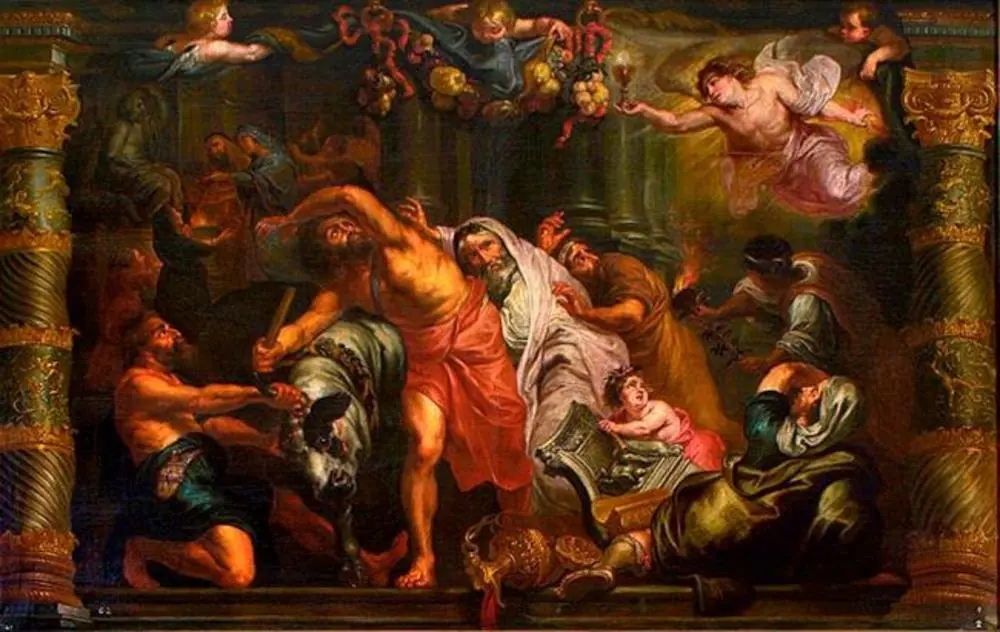 The Eucharist overcoming pagan sacrifices
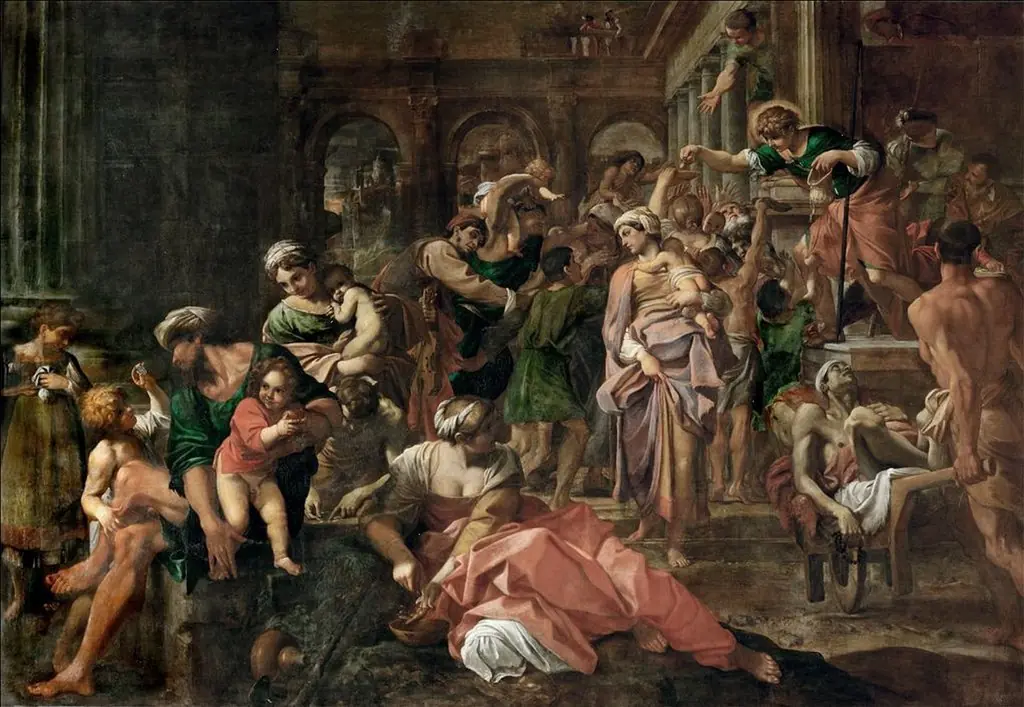 Saint Roch Distributing Alms
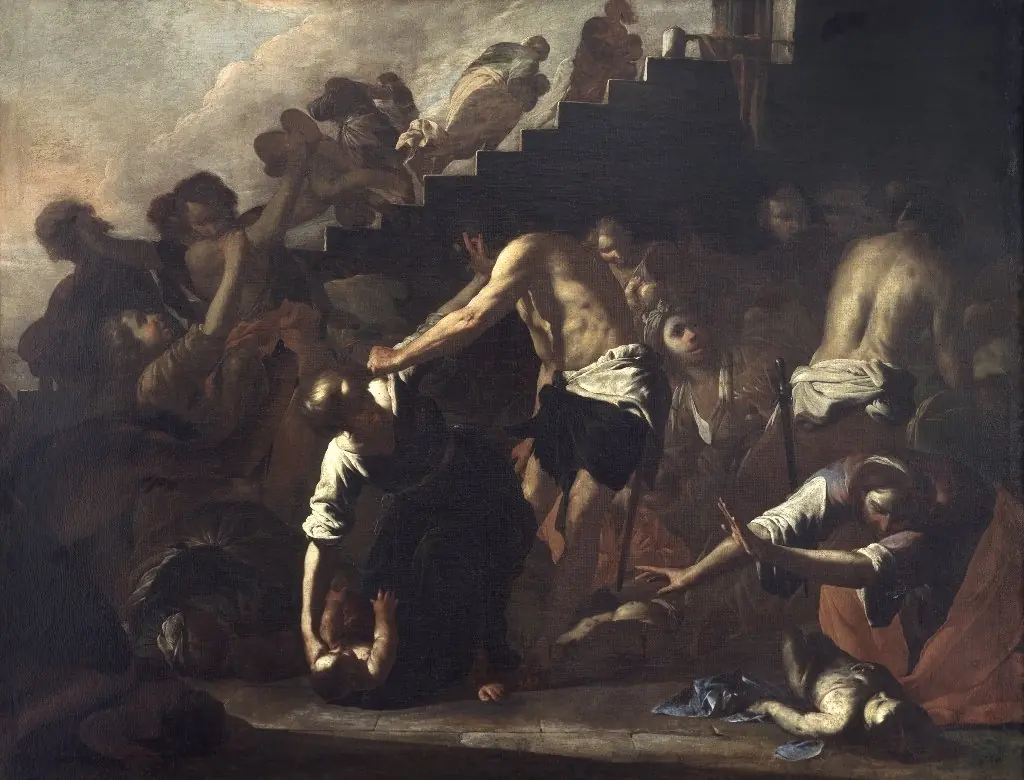 Massacre of the Innocents
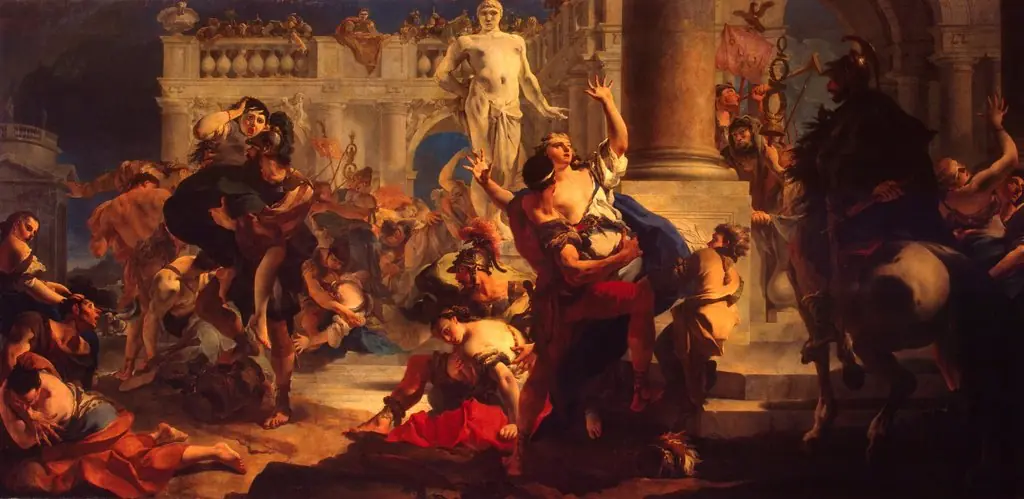 Rape of the Sabine Women
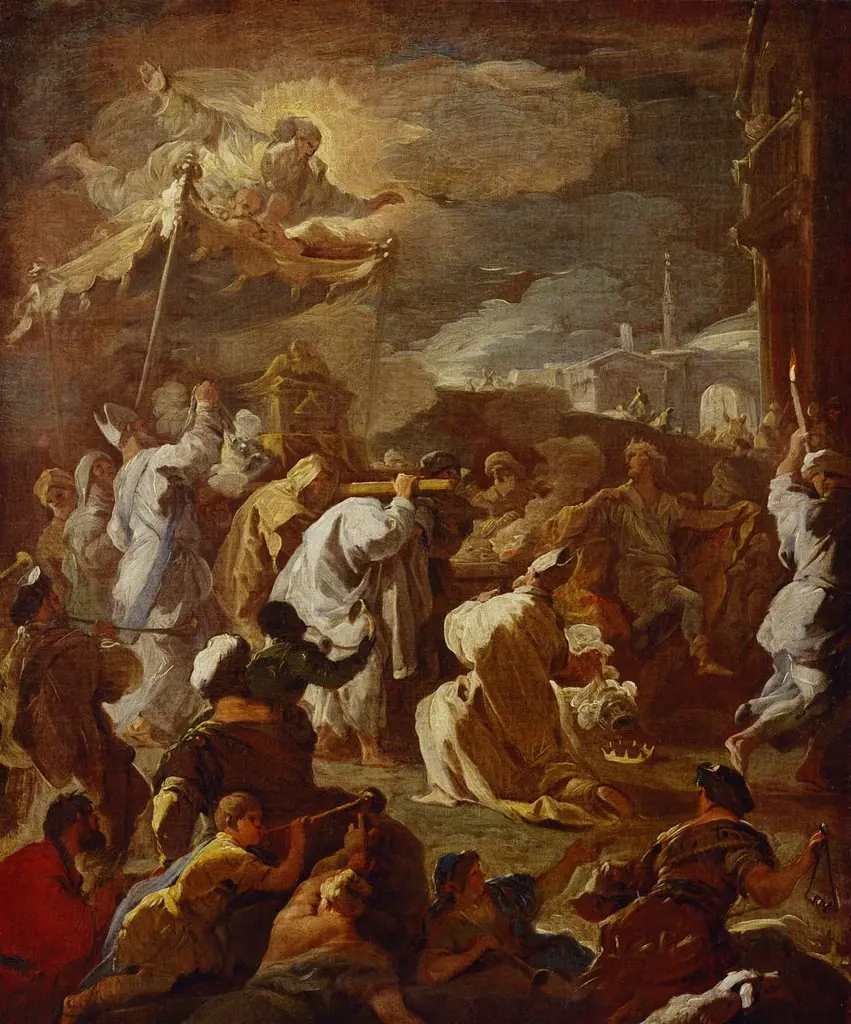 Transfer of the Ark of the Covenant by David
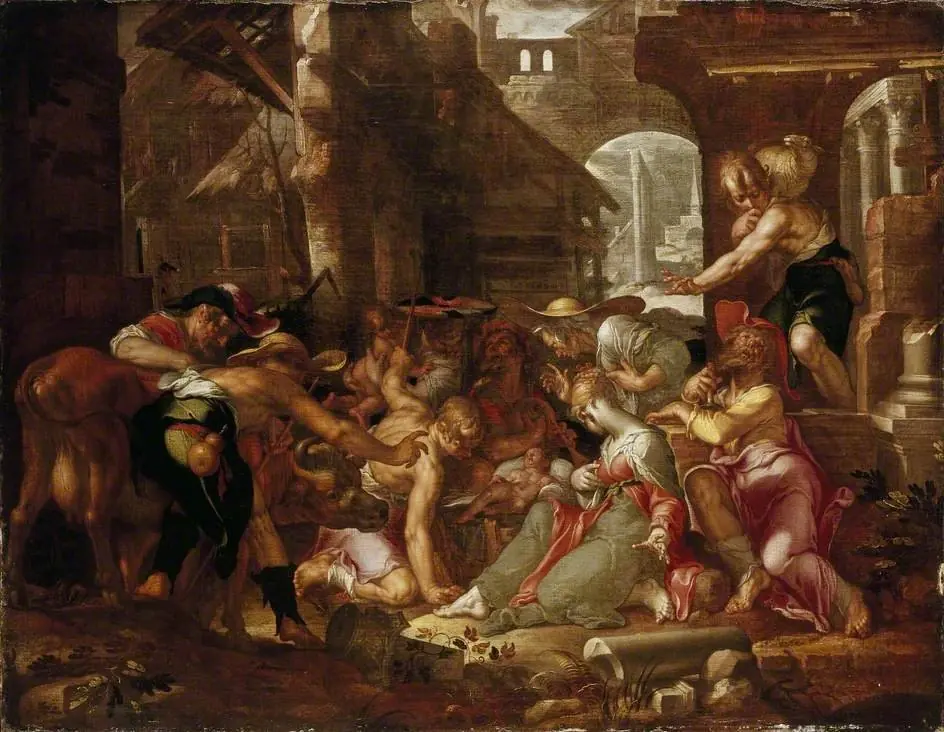 The Adoration of the Shepherds
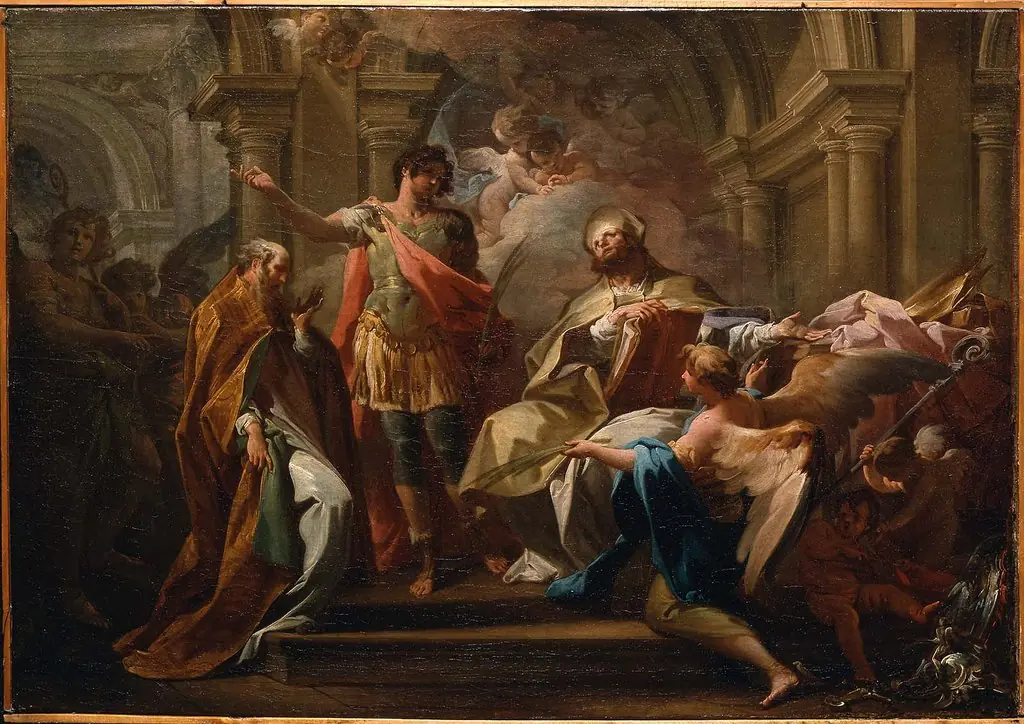 Saints Ippolito, Taurino, and Ercolano
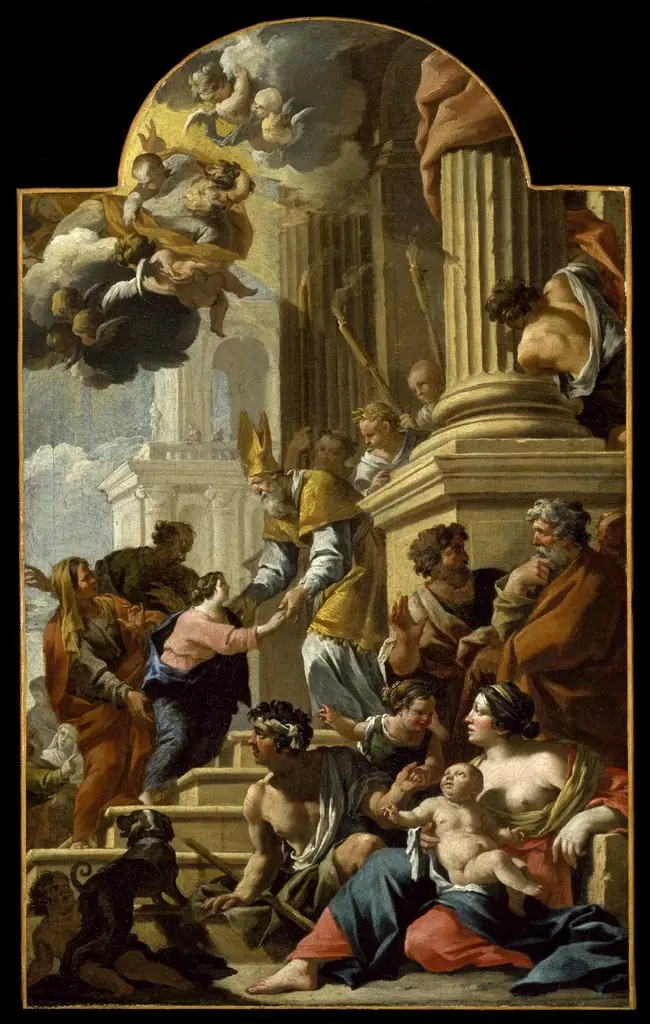 The Presentation of the Virgin in the Temple
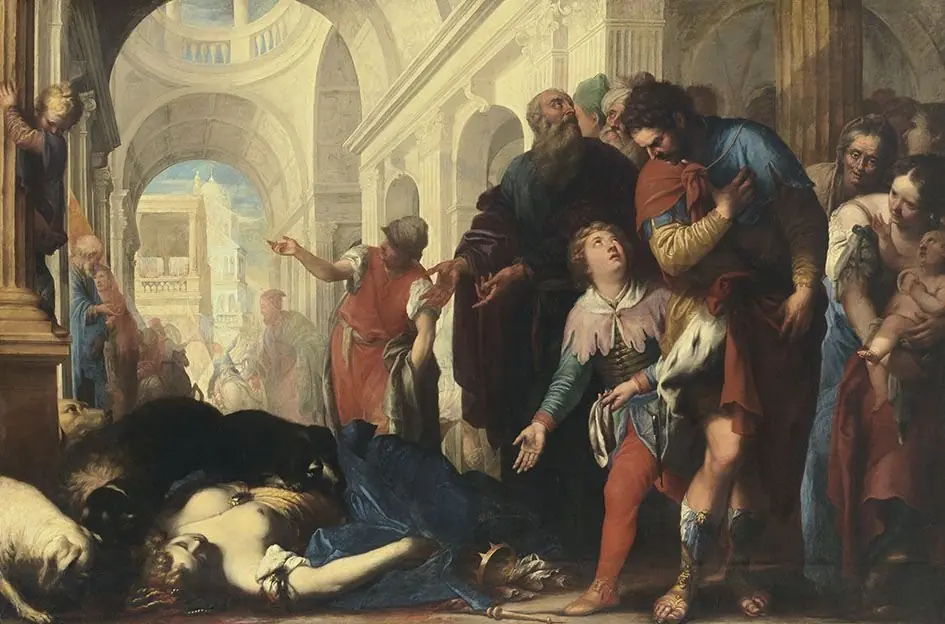 Königin Jezabel wird den Hunden vorgeworfen
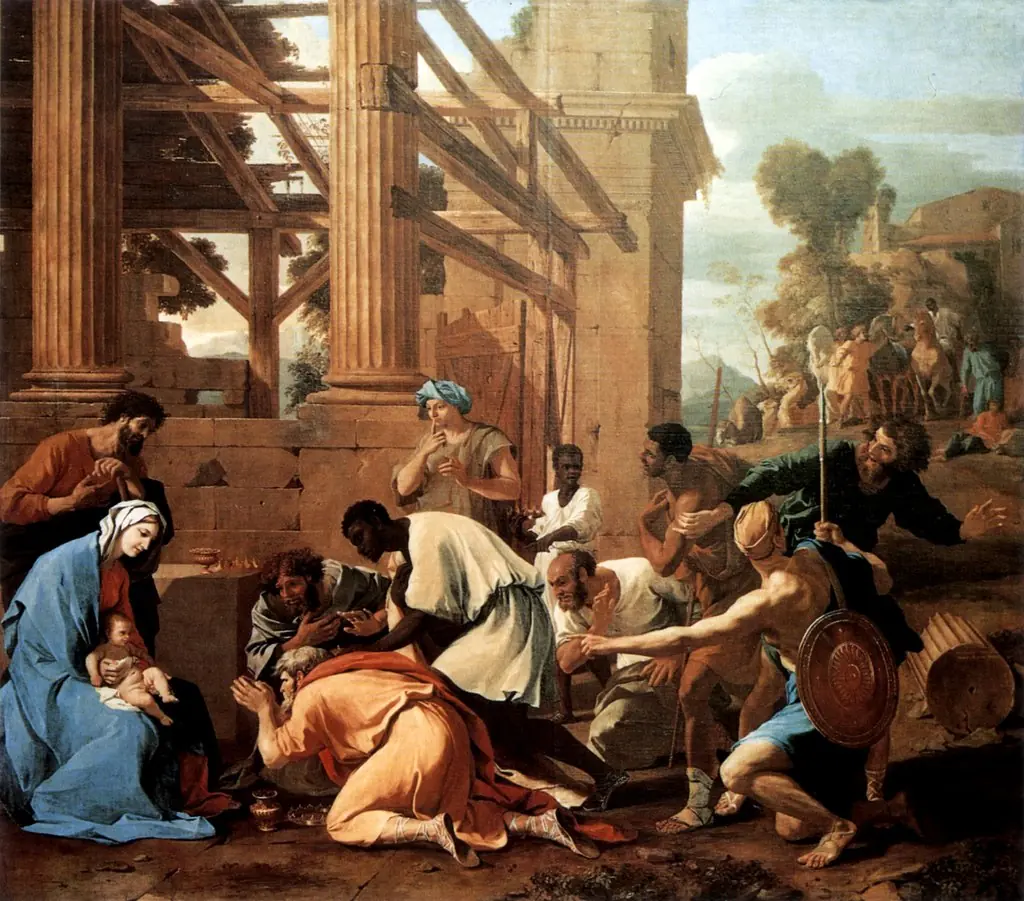 The Adoration of the Magi