Artwork
The Rest on the Flight into Egypt
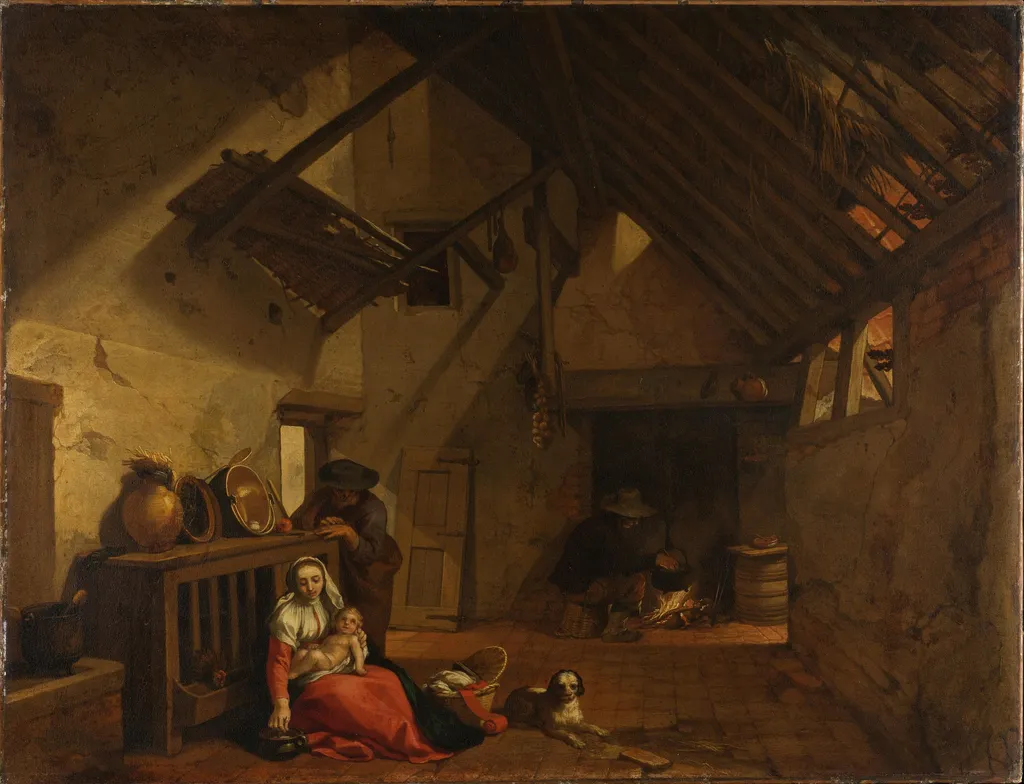
The Rest on the Flight into Egypt is an unspecified painting by the Caravaggisti artist Abraham Bloemaert. It dates from 1632 and is held in the collection of the Rijksmuseum.
About this work
Subject & Meaning
The piece exemplifies his transition from early Mannerist manner to a balanced classicism that merges history painting with landscape.
The painting portrays the Holy Family, Mary, Joseph and the infant Jesus, taking shelter during their flight into Egypt, a biblical episode that Bloemaert rendered as a domestic, landscape‑oriented composition. The work combines a narrative scene from the Gospel of Matthew with a naturalistic countryside, reflecting the artist’s habit of embedding religious stories within everyday settings. By situating the family in a tranquil, picturesque environment, Bloemaert emphasizes themes of protection and divine providence, aligning with Counter‑Reformation ideals of piety expressed through humble, observable moments.
The piece exemplifies his transition from early Mannerist manner to a balanced classicism that merges history painting with landscape.
History & Provenance
Abraham Bloemaert created the painting The Rest on the Flight into Egypt in 1632. The work is an oil on canvas measuring 113.1 by 160.9 cm and is currently held by the Centraal Museum in Utrecht. This piece dates to the later phase of Bloemaert's career, a period characterized by a shift toward a smoother, more uniform classicism following his brief engagement with Caravaggesque chiaroscuro in the early 1620s.
While the specific commissioning patron for this 1632 version is not identified in available records, Bloemaert frequently received commissions from Utrecht's clandestine Catholic churches and from the Southern Netherlands due to his own Catholic faith. The painting reflects his mature style, where religious figures are integrated into picturesque landscapes featuring pastoral elements, a genre he developed extensively from the early 17th century onward.
Context
Abraham Bloemaert is recognized as the father of the Utrecht School of painting, having trained most of the Utrecht Caravaggisti and exerting a profound influence on Dutch art at the turn of the seventeenth century. His career bridged the gap between the Haarlem Mannerists and the emerging Baroque style, initially employing an exaggerated mannerist approach before adopting a moderate classicism around 1600. Although he briefly experimented with Caravaggesque chiaroscuro in the 1620s following insights from pupils who had traveled to Italy, his later works evolved toward a smoother, more uniform aesthetic.
Bloemaert's extensive output of paintings, drawings, and prints served as vital study material for artists well into the nineteenth century. Modern scholarship has revisited his legacy through exhibitions such as The Bloemaert Effect, highlighting his role in color and composition during the Dutch Golden Age.
Legacy
Abraham Bloemaert is widely recognized as the father of the seventeenth-century Utrecht School of painting due to his profound influence on the region's artistic development. His legacy was significantly extended through the prints produced by his four sons, which ensured the wide dissemination of his compositions across Europe. Furthermore, his extensive collection of drawings served as essential study material for artists well into the nineteenth century.
This enduring impact was formally acknowledged in modern times through major exhibitions such as "The Bloemaert Effect," held in Utrecht and Schwerin between 2011 and 2012, which highlighted his role in bridging Mannerism and the Baroque style.
Overview
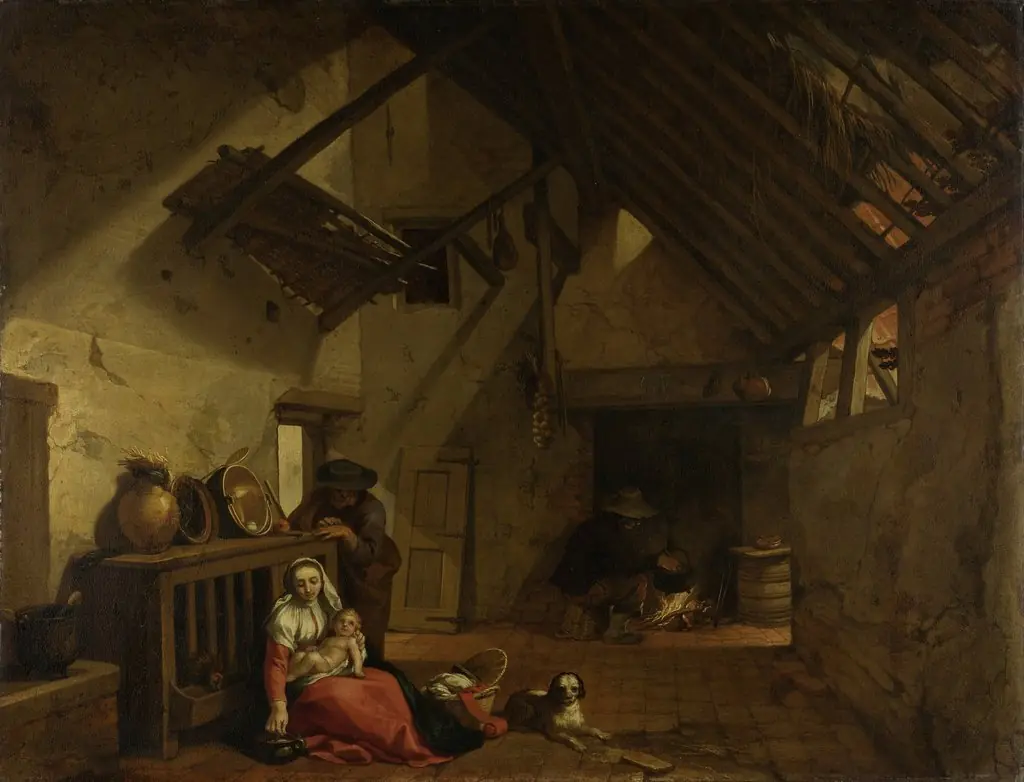
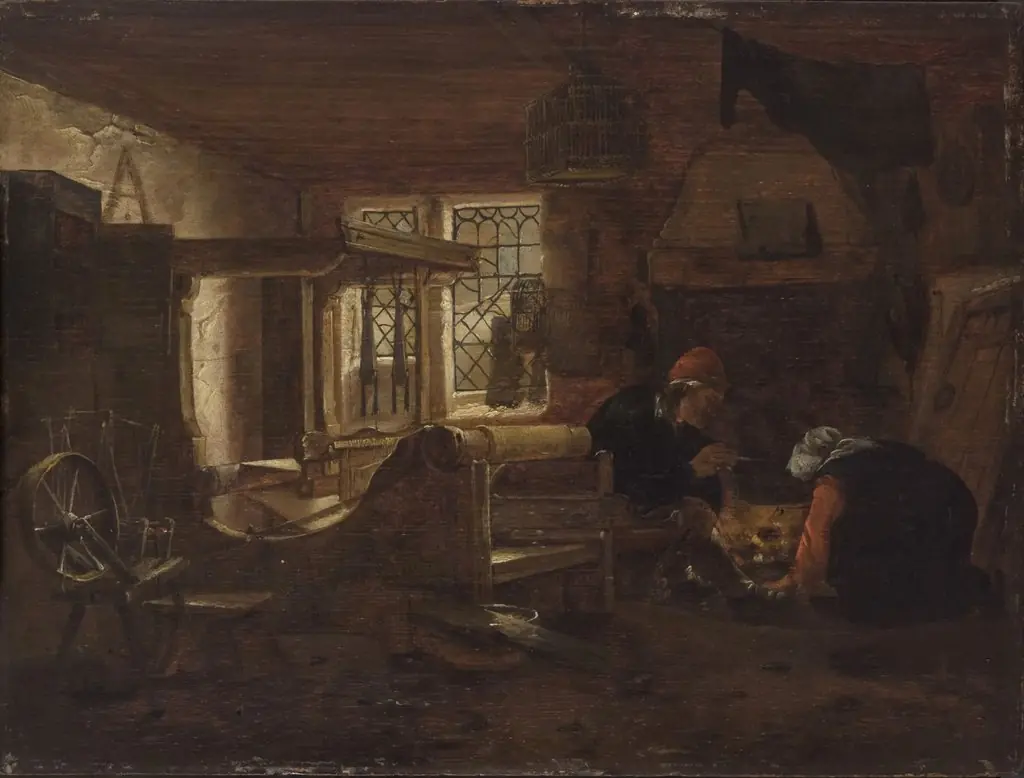
The painting "The Rest on the Flight into Egypt" captures a serene interlude for the Holy Family during their journey. Mary, Joseph, and the infant Jesus have found shelter within a humble peasant dwelling. The composition focuses on a quiet, domestic scene: Mary prepares food on the dirt floor, leaning against a chicken coop, while Joseph stands by a fire. A farmer observes the family from the background, emphasizing the ordinary nature of their refuge.
Technique & Style
The artist employs a pronounced use of light and shadow, a technique known as chiaroscuro, to define the scene. This dramatic contrast creates a focused illumination, akin to a spotlight, which accentuates the figures and imbues them with a sense of three-dimensionality. This intense interplay of light and dark not only enhances the painting's realism but also draws the viewer into the intimate, dimly lit environment of the farmhouse, making the moment feel immediate.
Own this work as a print
Artist & collection

Artist
Abraham Bloemaert (25 December 1566 – 27 January 1651) was a Dutch painter and printmaker who used etching and engraving.

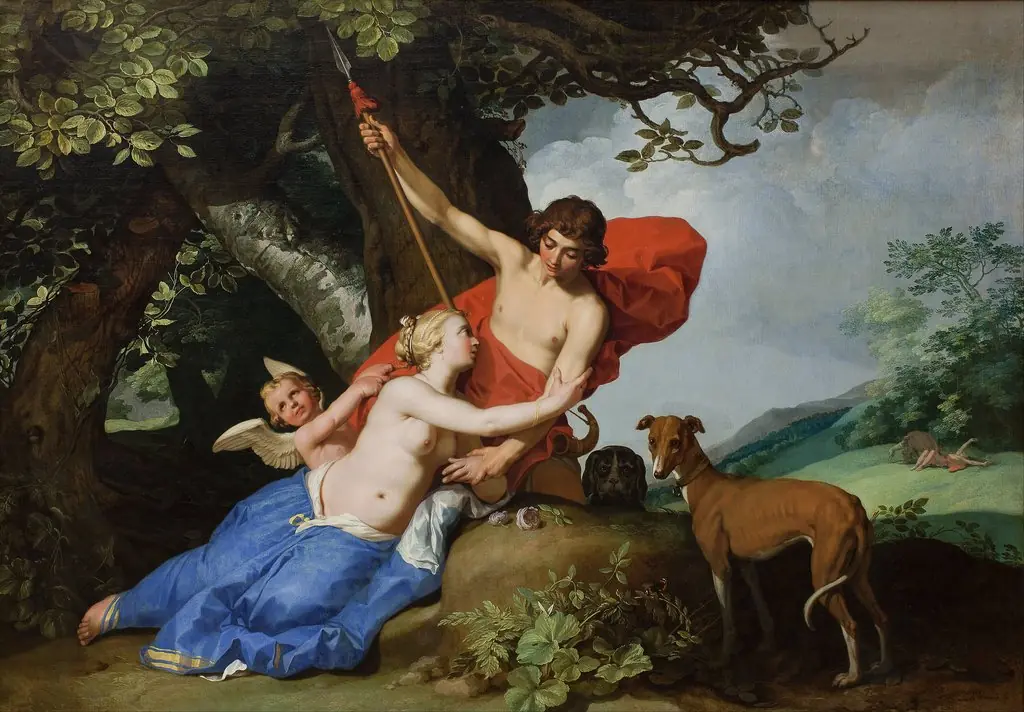
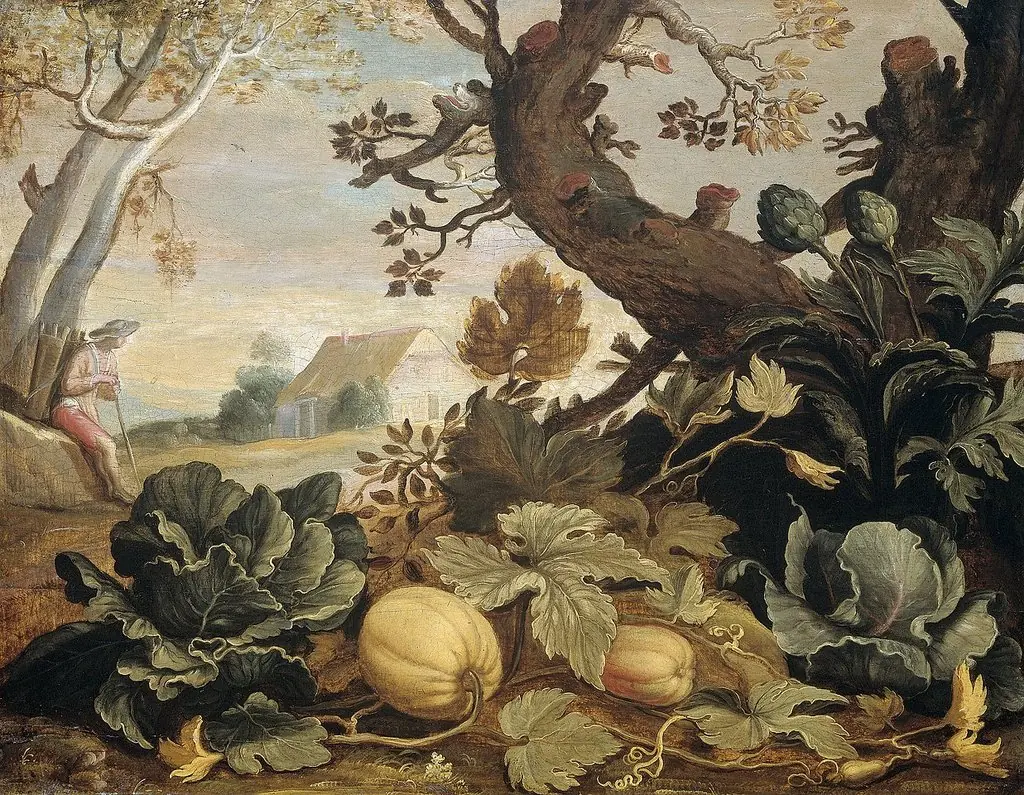
- The Rest on the Flight into Egypt
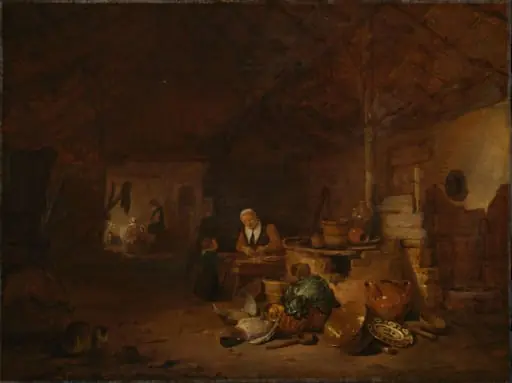 Interior of a barn
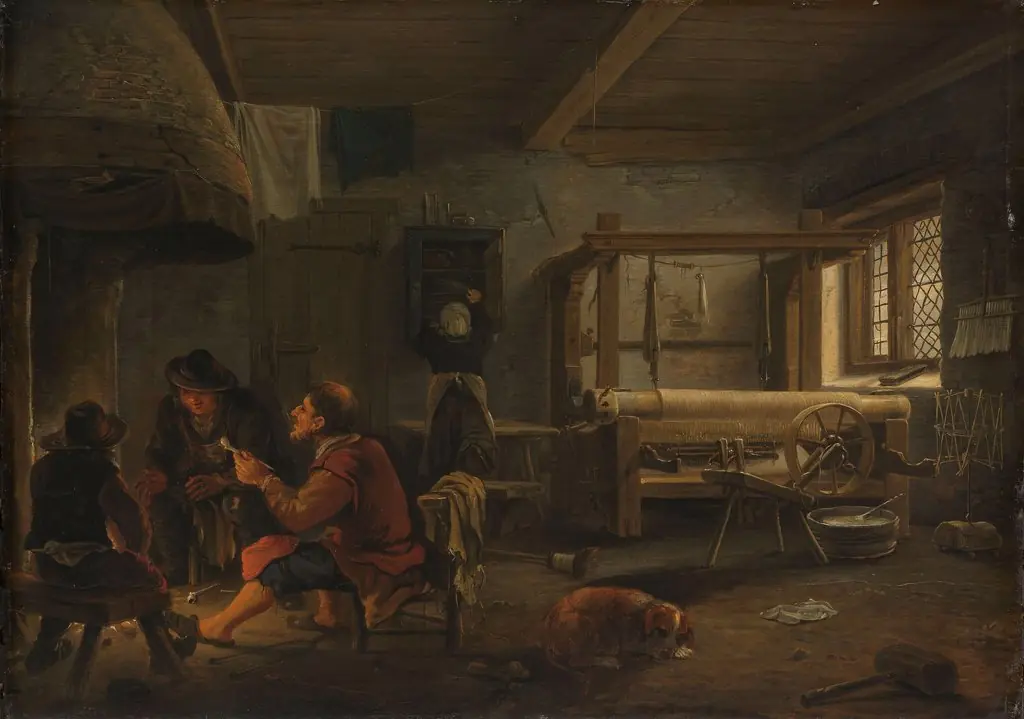 A Weaver's Workshop
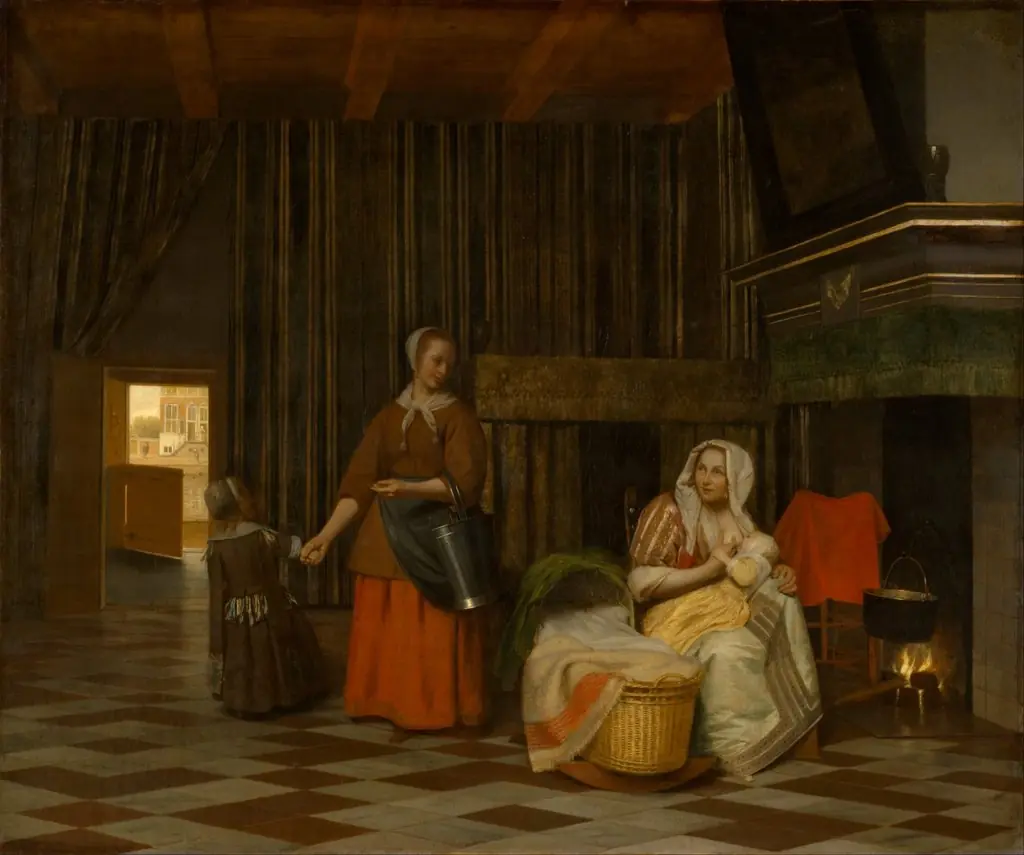 Nursing Mother, and Child with Serving Maid
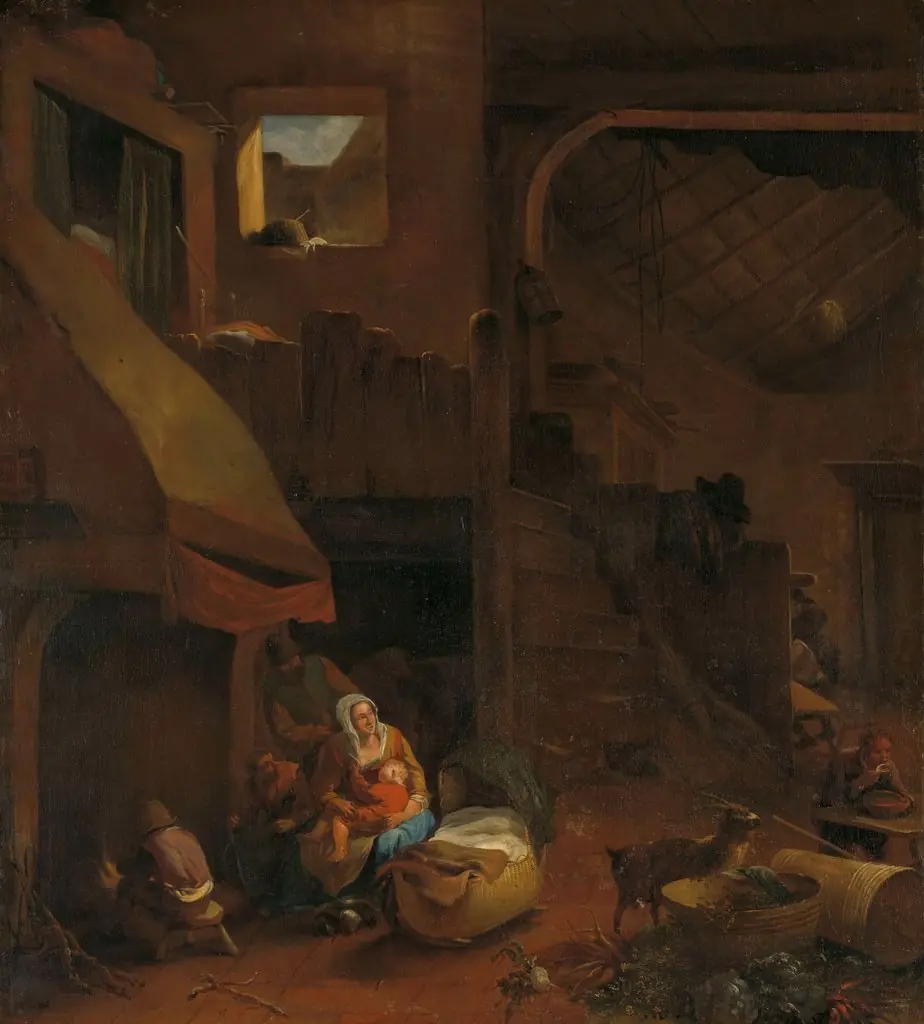 Interior of a peasant hut
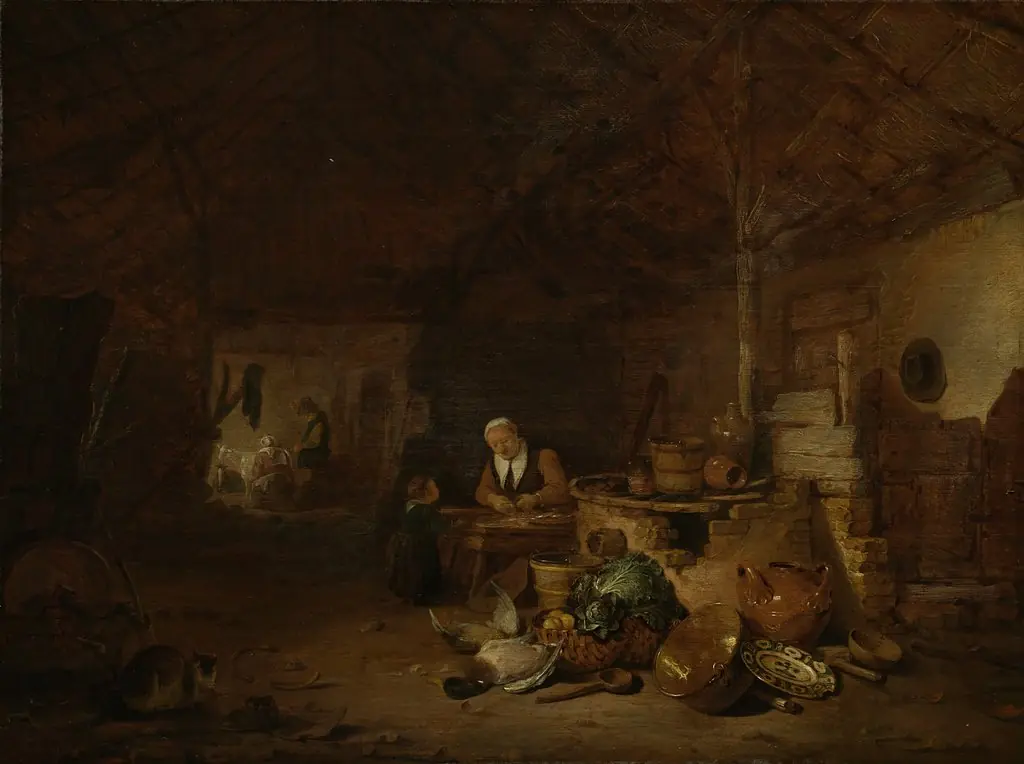 Interior of a barn
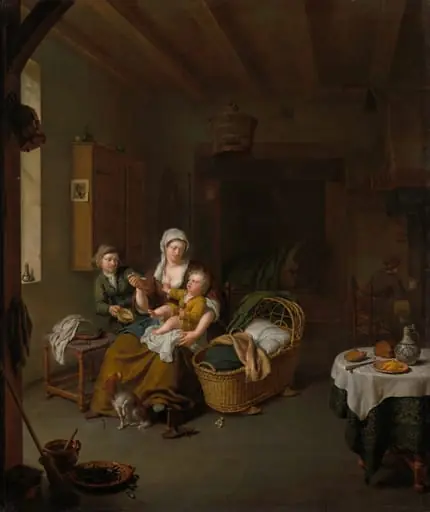 A Mother Feeding her Child (The Happy Mother)
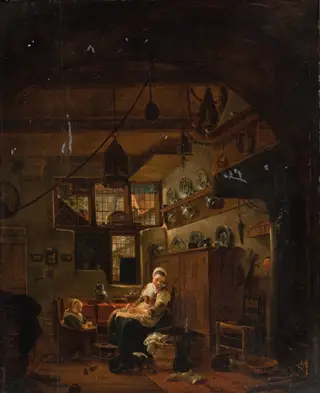 Interior of a Dutch Farm Cottage
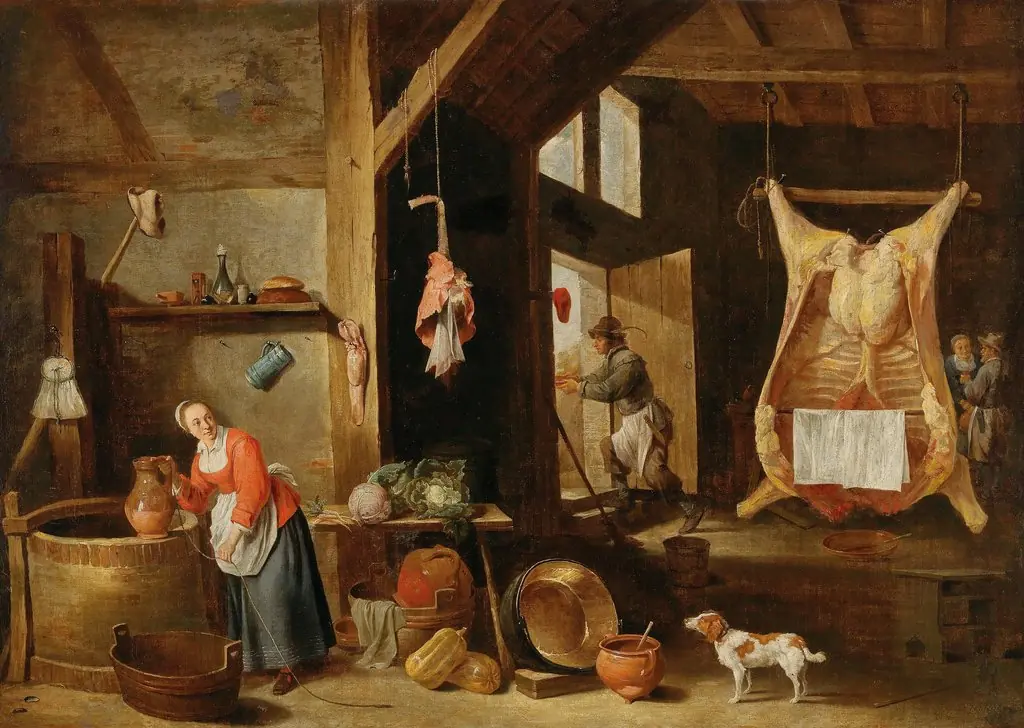 An interior of a barn with a scullery maid at a well
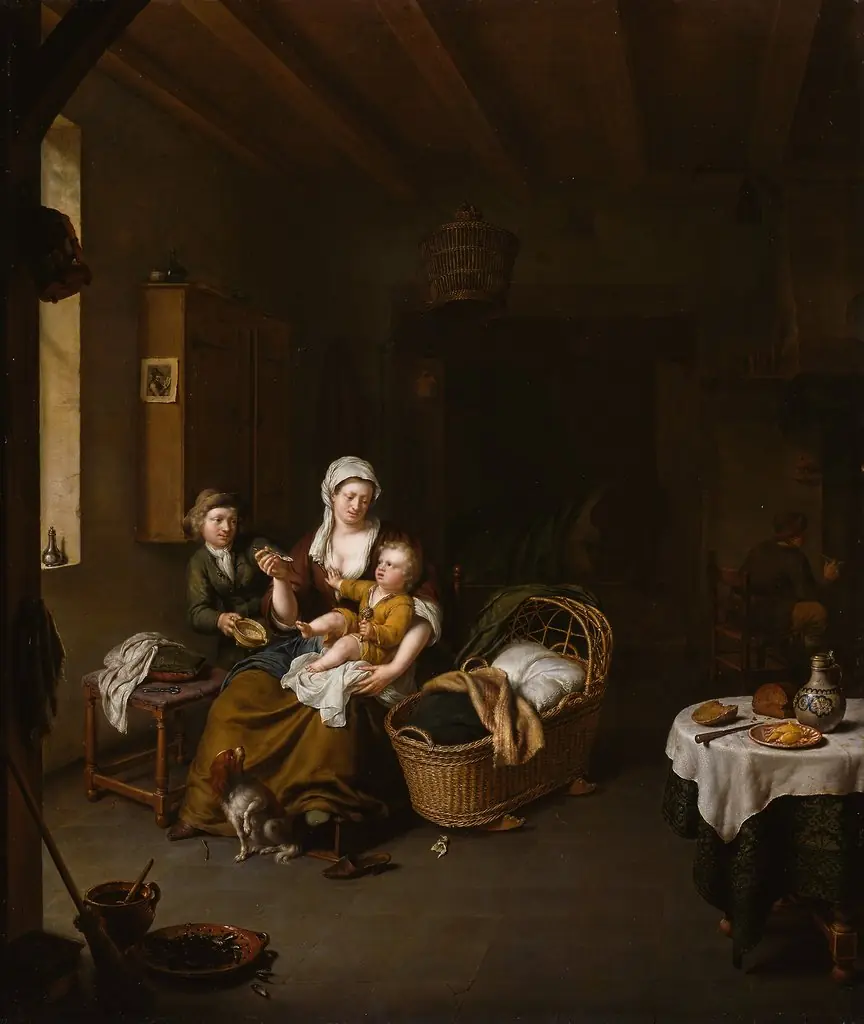 A Mother Feeding her Child (The Happy Mother)
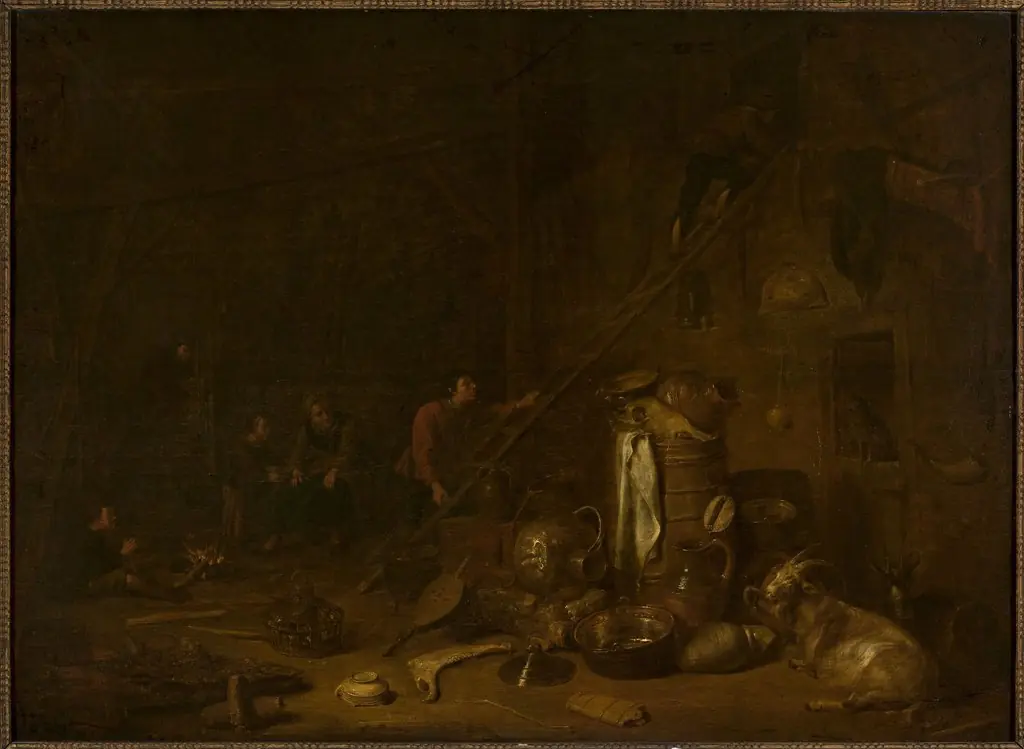 Excursion to the attic
 The Weaver