Artwork
Königin Jezabel wird den Hunden vorgeworfen
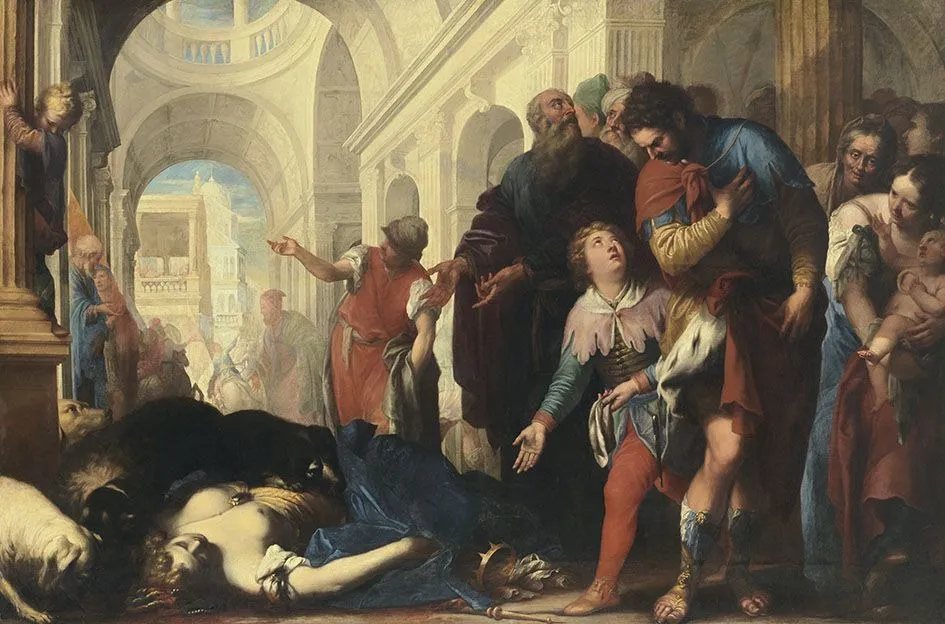
Königin Jezabel wird den Hunden vorgeworfen is an unspecified painting by the Early Baroque Italian artist Claudio Ridolfi. It is held in the collection of the Bavarian State Painting Collections.
About this work
Subject & Meaning
The composition visualizes the grim conclusion of Jezebel's life, emphasizing the severity of her crimes and the fulfillment of scriptural prophecy.
Created in 1650 by Claudio Ridolfi, this religious painting depicts the biblical narrative of Queen Jezebel being thrown to dogs. The work illustrates the fulfillment of the prophetic judgment against the Phoenician queen, a story recorded in the Books of Kings where her body is consumed by animals as divine retribution for her idolatry and persecution of prophets. As a piece of religious art, the scene serves as a moral exemplar, symbolizing the ultimate downfall of tyrannical power and the inevitability of divine justice.
The composition visualizes the grim conclusion of Jezebel's life, emphasizing the severity of her crimes and the fulfillment of scriptural prophecy.
Technique & Style
The work is executed in oil on canvas, measuring 213 cm in height and 323 cm in width. It depicts Queen Jezebel being accused before dogs, rendered in a Baroque style characteristic of 17th‑century religious painting. The composition shows dramatic chiaroscuro and a dynamic arrangement of figures, reflecting Ridolfi’s emphasis on narrative clarity and expressive gesture.
History & Provenance
The painting has been in the holdings of the Bavarian State Painting Collections, where it is held at the Alte Pinakothek in Munich. Its inception is recorded as 1650, and the canvas measures 213 cm in height by 323 cm in width.
No specific inventory or accession number is documented in the available sources, and no exhibition history is recorded for the work.
Overview
Claudio Ridolfi’s mid‑17th‑century canvas, dated around 1650, presents a biblical episode centered on the figure of Jezebel. Executed in the Baroque period, the work is part of the Alte Pinakothek’s collection in Munich and is classified as a religious painting.
Context
The depiction of Jezebel aligns with Counter‑Reformation interests in moral exempla, using dramatic storytelling to reinforce ecclesiastical teachings. Ridolfi’s choice of a crowded interior and expressive gestures reflects contemporary trends in Italian Baroque art, which sought to engage viewers emotionally through theatricality.
Artist & collection

- Massacre of the Innocents
 The Empress Marta de Constantinople before Alfonso X. Ramón Bayeu and Subías
 Joseph orders Simeon’s Imprisonment
 Martyrium der hl. Justina
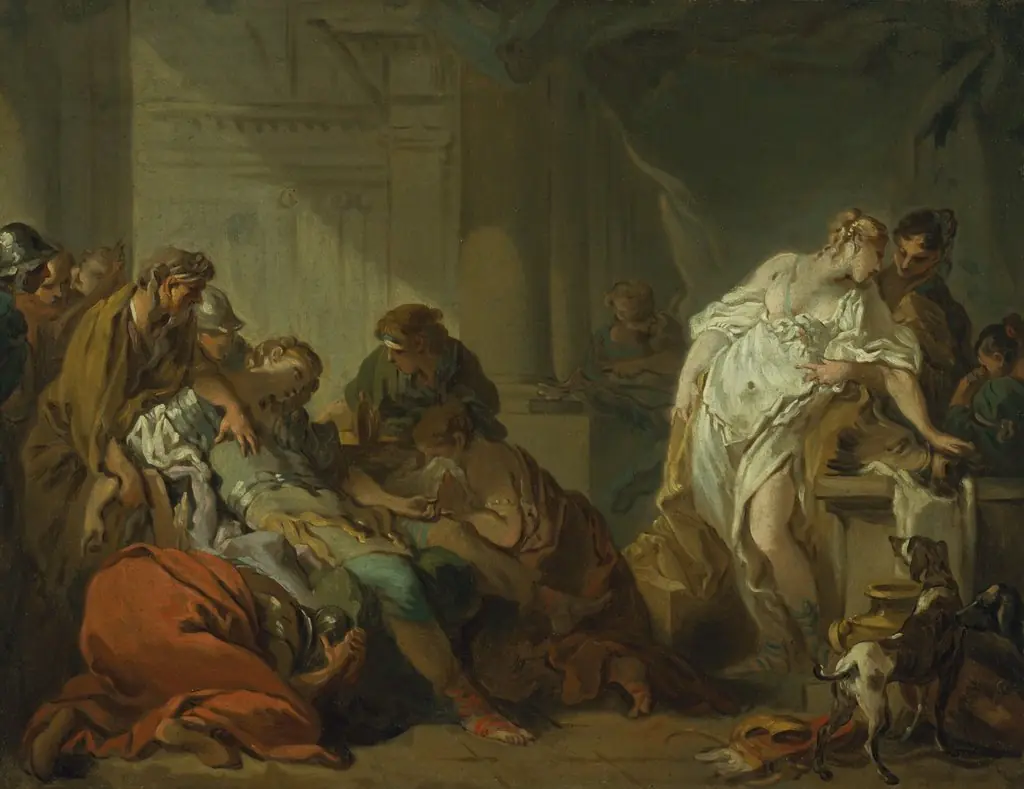 Death of Meleager
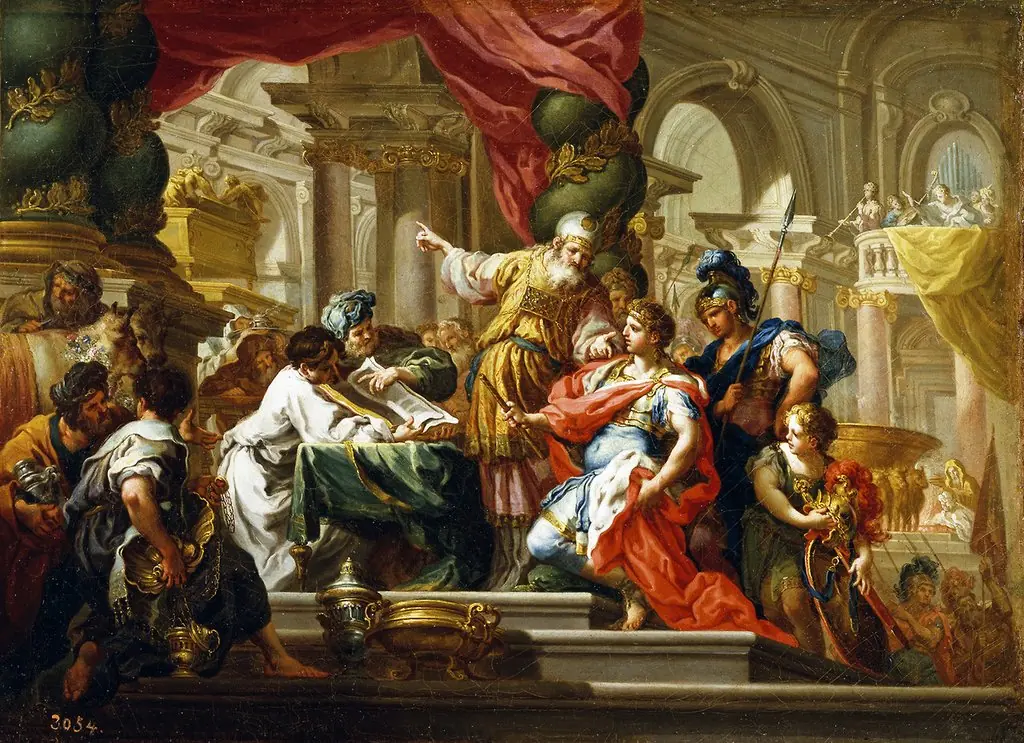 Alexander the Great in the Temple of Jerusalem
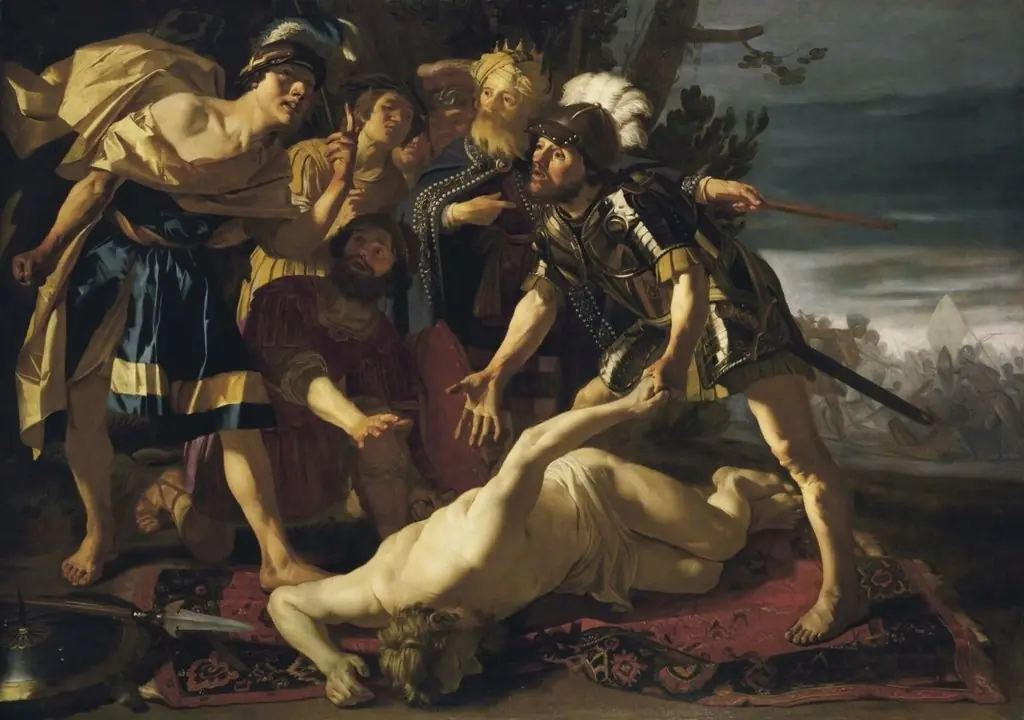 Achilles preparing to avenge the death of Patroclus
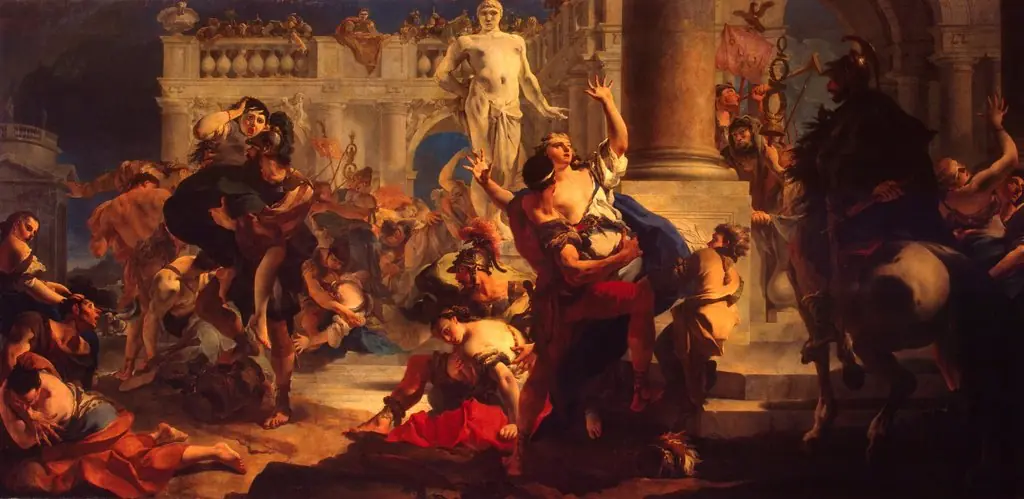 Rape of the Sabine Women
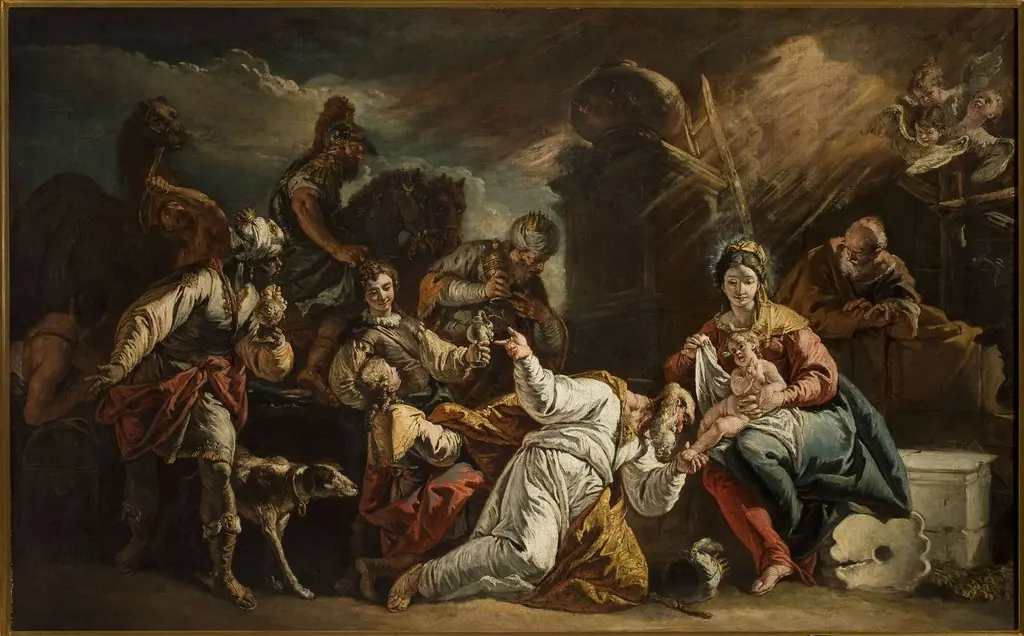 Adoration of the Magi
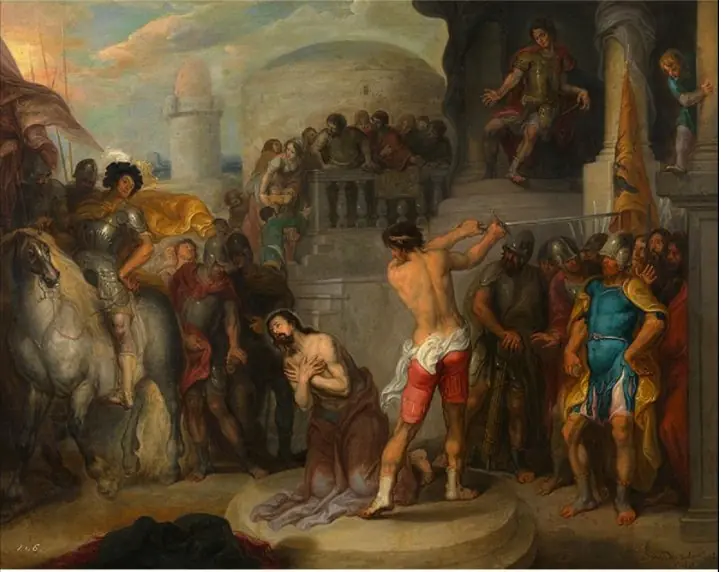 The Beheading of Saint Paul
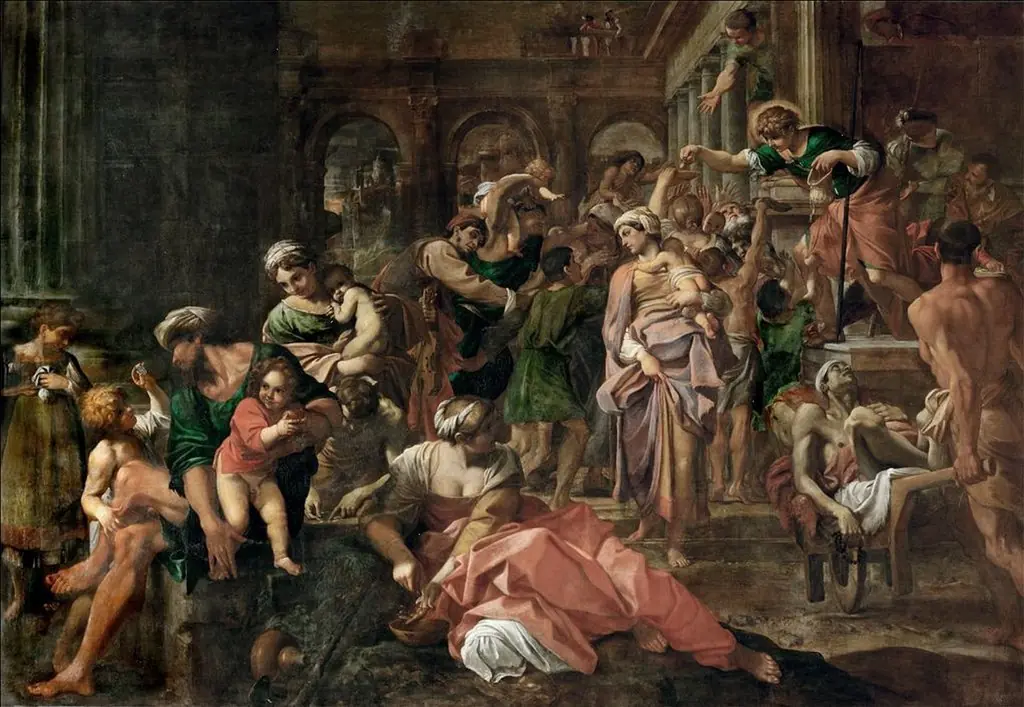 Saint Roch Distributing Alms
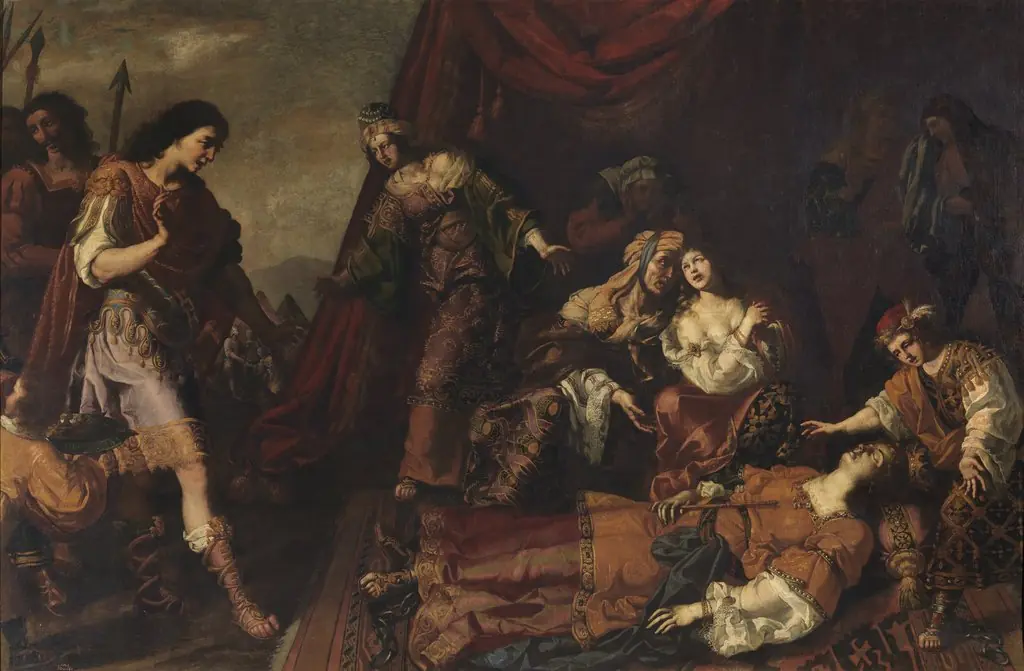 Masinissa Mourning Over the Death of Sophonisba (?)