Artwork
Tavern scene
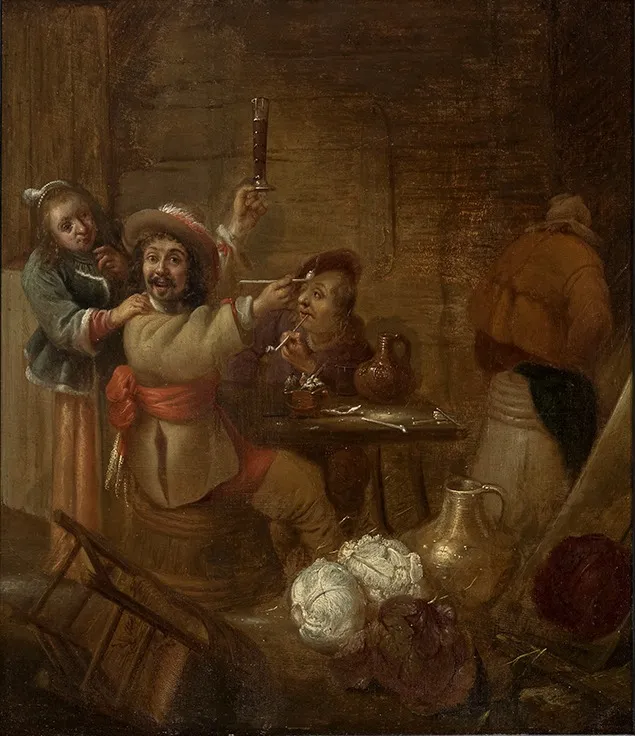
Tavern scene is an oil painting by the Dutch Golden Age artist Abraham van den Hecken the Younger. It dates from 1601 and is held in the collection of the Groeningemuseum.
About this work
Overview
Tavern scene is an oil painting on panel by the Dutch-Flemish artist Abraham van den Hecken the Younger, dated 1601.
Tavern scene is an oil painting on panel by the Dutch-Flemish artist Abraham van den Hecken the Younger, dated 1601. Measuring 55.5 by 47.3 centimetres, the work is held in the collection of the Groeningemuseum in Bruges. The painting exemplifies the genre of merry company scenes that proliferated in Dutch and Flemish art during the seventeenth century, offering insight into early genre painting before the mature Dutch Golden Age. Its attribution to Van den Hecken, who was baptized in Antwerp in 1616 and died between 1655 and 1669, presents a chronological puzzle, as the date of 1601 predates his birth by fifteen years. This discrepancy suggests either an error in dating, a misattribution, or the possibility that the date refers to an earlier work upon which this painting was based. The work matters as a representative example of tavern genre painting that bridges Flemish and Dutch artistic traditions, incorporating still life elements within a narrative scene.
Subject & Meaning
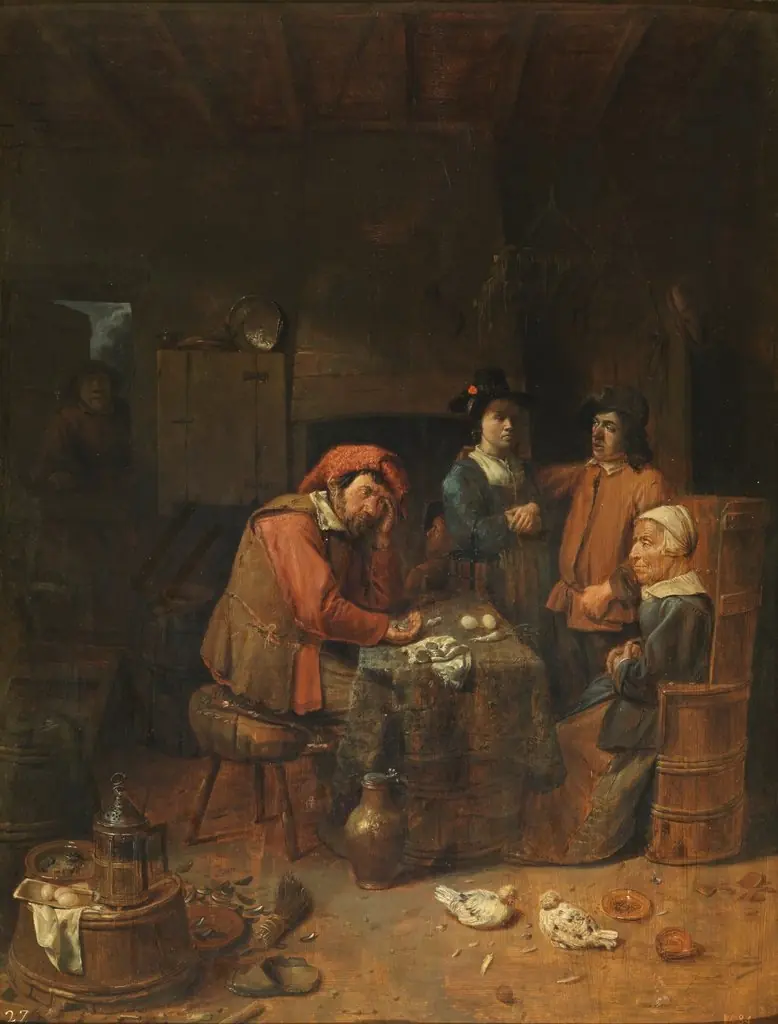
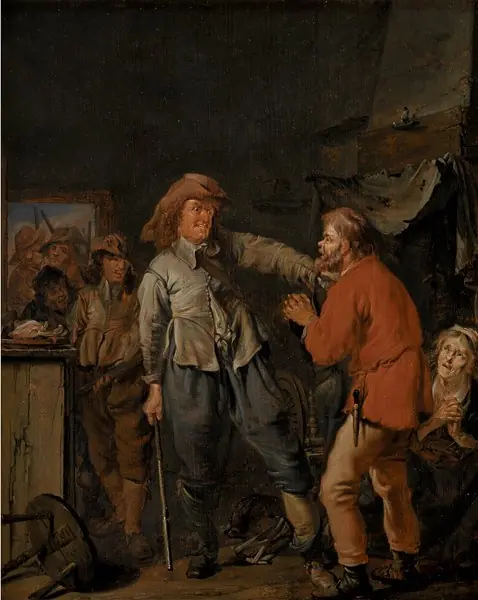
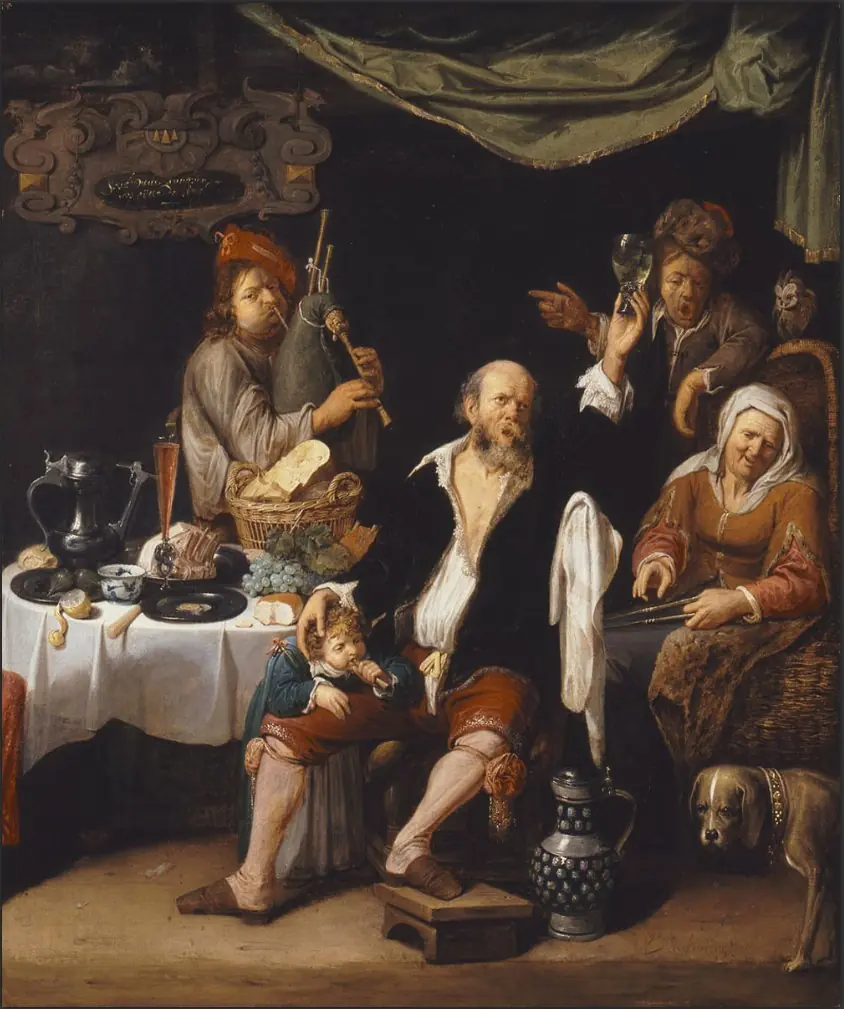
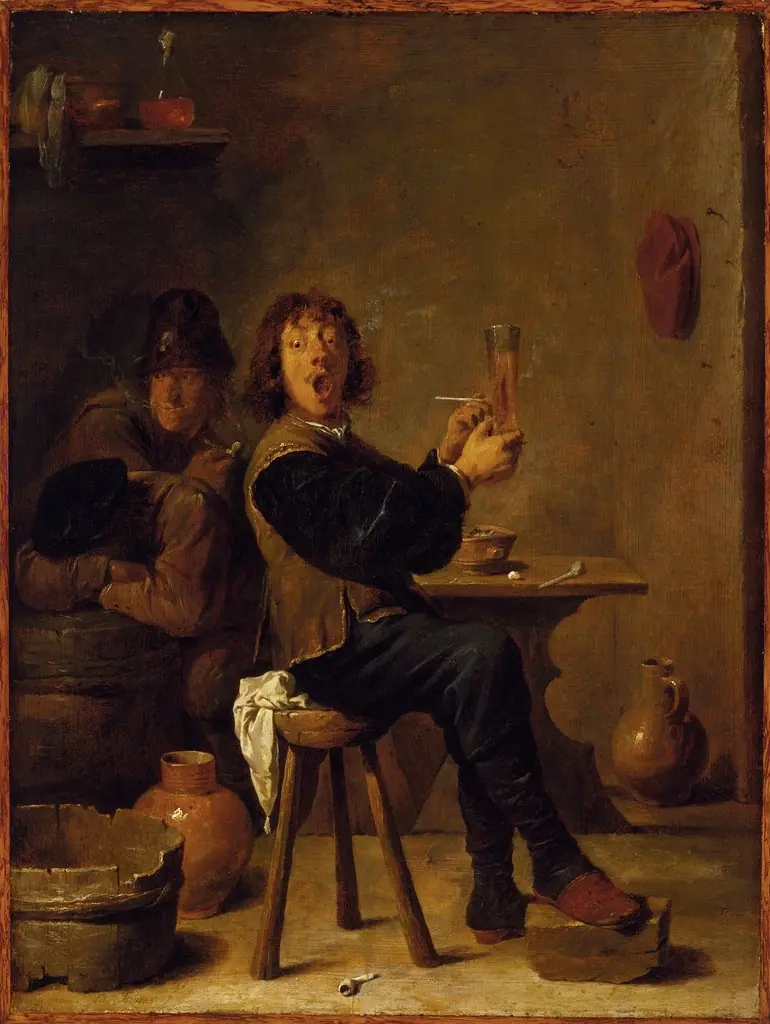
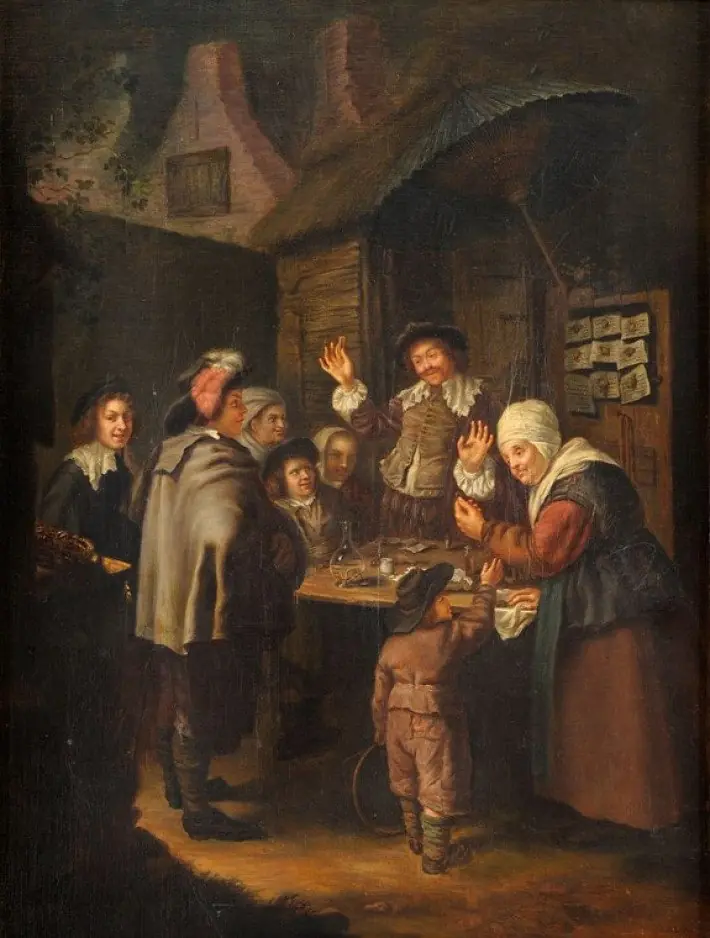
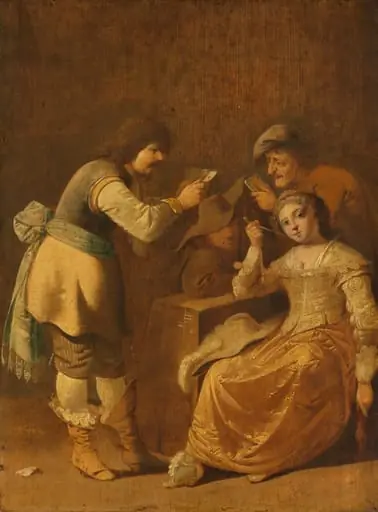
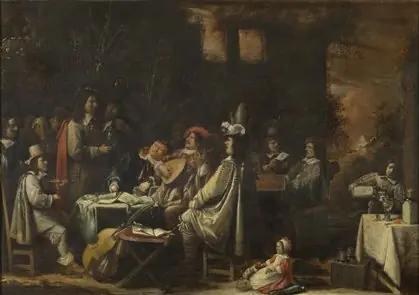
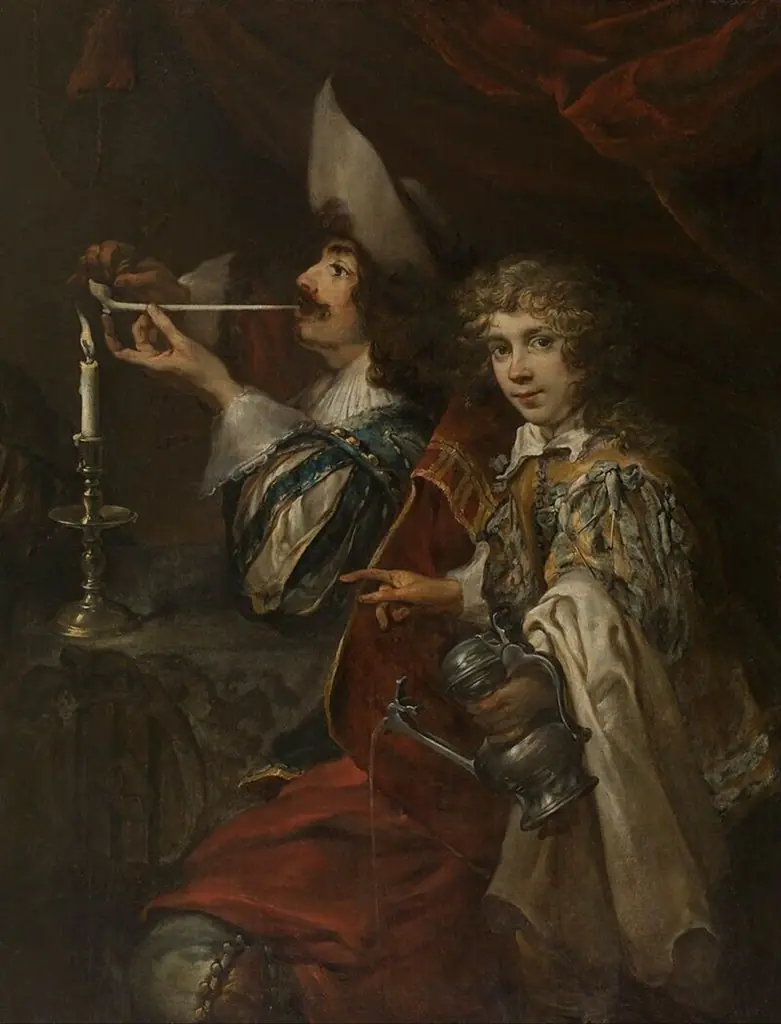
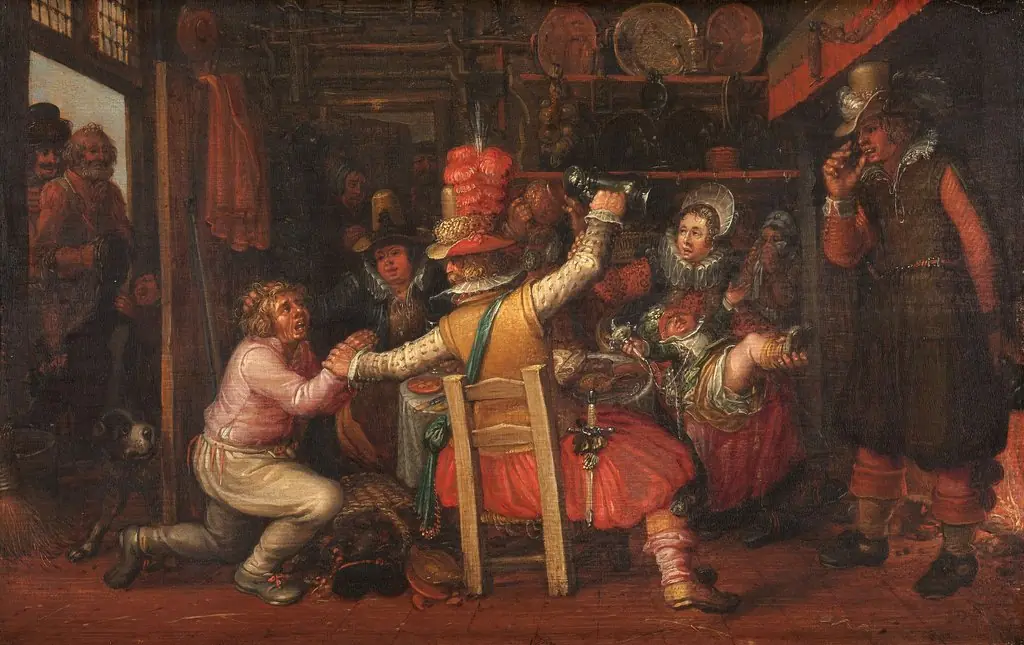
The painting depicts a dimly lit tavern interior with four figures engaged in leisurely drinking and smoking. At centre left, a seated man in a cream doublet and red sash raises a tall glass in his right hand, while a woman in a blue bodice and pink skirt stands behind him with her hands on his shoulders. To his right, another seated figure in a red cap holds a long pipe. A fourth figure in an orange jacket and white apron stands with back turned at far right, near a draped table or counter. The foreground contains a wooden wheel, two pale cabbages, a metal pitcher, and a dark red vegetable, while a small table between the seated figures holds a brown jug, a pipe, and small dishes. The scene belongs to the merry company tradition, a genre showing small groups enjoying themselves with drinks, which art historians estimate comprised nearly two thirds of Dutch genre scenes. Such paintings often carried ambiguous moral messages, simultaneously depicting and potentially warning against the pleasures and dangers of drink, low company, and excess. The presence of the woman with her hands on the man's shoulders, combined with the informal tavern setting, may suggest undertones of prostitution or at least the blurred social boundaries characteristic of such establishments, where taverns and brothels were frequently the same establishments.
Technique & Style
The work is executed in oil paint, with a palette dominated by browns, ochres, and muted reds, enlivened by touches of cream and blue. Light falls from the left, illuminating faces, hands, and the raised glass, creating a dramatic chiaroscuro effect that organises the composition and draws attention to the central drinking figure. The brushwork is relatively smooth in the figures, with looser handling in the background and foreground objects, a technique that creates textural variation and spatial depth. The composition is crowded and informal, with diagonal elements creating depth and leading the eye through the scene. The inclusion of still life details, such as the cabbages, metal pitcher, wooden wheel, and tableware, reflects the painter's family background, his father Samuel van den Hecken being a landscape and still life painter and his sister Magdalena also a still life painter. These stilleven-achtige details, as they have been described, are characteristic of Van den Hecken's later genre scenes and demonstrate the integration of Flemish still life traditions with Dutch genre painting. The handling of light and the informal composition align with broader developments in Netherlandish painting of the period, though the specific date of 1601 would place it remarkably early in the evolution of these conventions.
Context
Abraham van den Hecken the Younger was born in Antwerp in 1616 into an artistic family; his father Samuel was a landscape and still life painter who moved to the Dutch Republic in the 1620s, and his sister Magdalena became a still life painter. Van den Hecken posted banns of marriage in Amsterdam in 1635, married Catharina Lundens in Sloterdijk, and maintained an active career across the Dutch Republic, working in The Hague from 1647 to 1649, returning to Amsterdam, then traveling to London in 1652 where he served as deacon of the Dutch Church, before returning to The Hague in 1653. He died between 1655 and 1669. His oeuvre encompassed genre scenes, history painting, portraits, Christian religious scenes, fruit still lifes, and flower still lifes. The critical reception of Tavern scene is hampered by the chronological discrepancy between its date of 1601 and the artist's birth in 1616. This has not been resolved in the available scholarship, and the painting has received limited dedicated critical attention. The work's place in art history rests primarily on its value as an example of genre painting that combines narrative scene with still life elements, reflecting the cross-pollination between Flemish and Dutch artistic traditions during a period of significant migration and exchange between the Spanish Netherlands and the Dutch Republic.
Artist & collection
Artist
Abraham van den Hecken the Younger
Abraham van den Hecken or Abraham van den Hecken the Younger (Antwerp, 1616 - between 1655 and 1669) was a Dutch-Flemish painter. He is known for his genre pieces, religious and historical scenes, portraits and still lifes.