Artwork
Pheasants
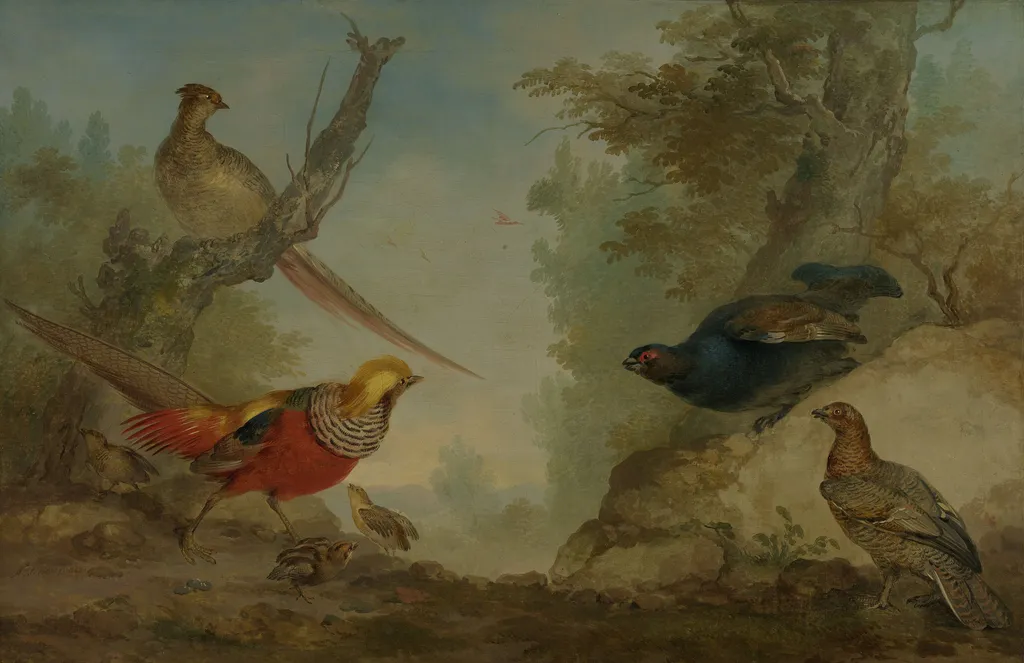
Pheasants is an oil painting by the Rococo painting artist Aert Schouman. It dates from 1750 and is held in the collection of the Rijksmuseum.
About this work
Subject & Meaning
The birds are shown perched among foliage, a motif that references both natural observation and moral allegory within 18th‑century Dutch art.
The painting depicts a pair of pheasants rendered in oil on canvas, symbolizing fertility and abundance in Dutch still‑life tradition. The birds are shown perched among foliage, a motif that references both natural observation and moral allegory within 18th‑century Dutch art. Schouman’s precise rendering emphasizes the texture of plumage and the subtle play of light, underscoring the work’s role as a study of avian life rather than a narrative scene.
The composition aligns with the artist’s broader interest in documenting the natural world with scientific accuracy, reflecting Enlightenment ideals of cataloguing and classifying nature.
The work is housed in the Rijksmuseum collection, where it is catalogued as part of the museum’s holdings of Dutch Golden Age paintings.
Technique & Style
Aert Schouman's Pheasants, created in 1750, is an oil painting executed on a canvas support. The work measures 99 cm in height and 151 cm in width, presenting a substantial scale for a depiction of birds. As an oil painting from the mid-eighteenth century, the piece relies on the traditional medium of oil paint applied to the woven fabric, a standard technique for substantial easel paintings of the period. The composition focuses on avian subjects, consistent with Schouman's known specialization in animal and bird imagery.
History & Provenance
The painting Pheasants by Aert Schouman is held in the collection of the Rijksmuseum in Amsterdam, formerly known as the Nederlandsch Museum voor Geschiedenis en Kunst. Created in 1750, the work is executed in oil on canvas and measures 99 cm in height by 151 cm in width. The provided sources do not contain a specific inventory or accession number for this piece, nor do they record any exhibition history.
Legacy
The painting Pheasants by Aert Schouman has been cited as an example of 18th-century Dutch bird painting and is included in discussions of the artist's role in the transition from Rococo decorative works to more naturalistic wildlife subjects, influencing later bird illustrators who sought greater anatomical accuracy and atmospheric depth in their compositions
The work's presence in the Rijksmuseum collection has contributed to its scholarly visibility, supporting research into Schouman's technique and his impact on Dutch natural history art during the late 1700s
Its detailed rendering of plumage and posture set a precedent for subsequent artists documenting avian species, particularly those working in the Netherlands and Germany in the early 19th century
Overview
Pheasants is an oil-on-canvas painting created around 1750 by Aert Schouman, a Dutch artist known for his work in multiple mediums.
Own this work as a print
Artist & collection
Artist
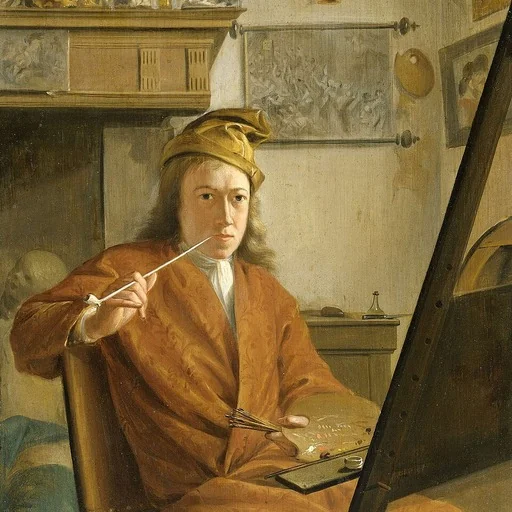
Aert Schouman or Aart Schouman (4 March 1710 – 5 July 1792) was an 18th-century painter, now better known as a glass engraver, from the Dutch Republic.

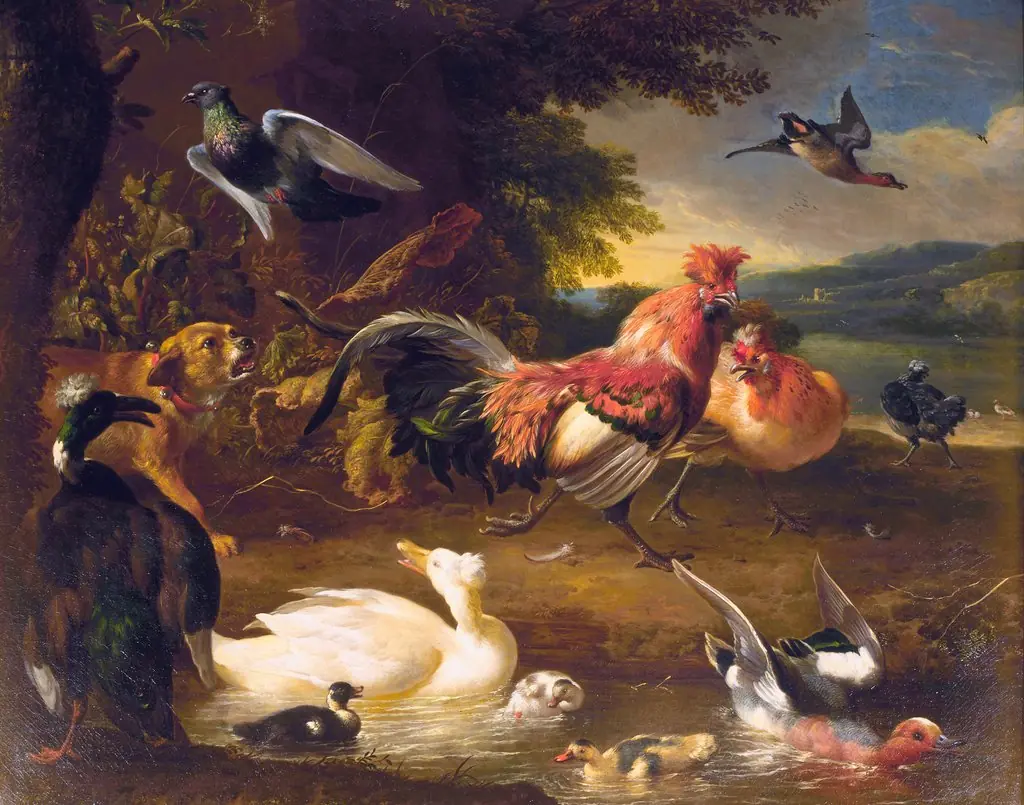 Chickens and Ducks
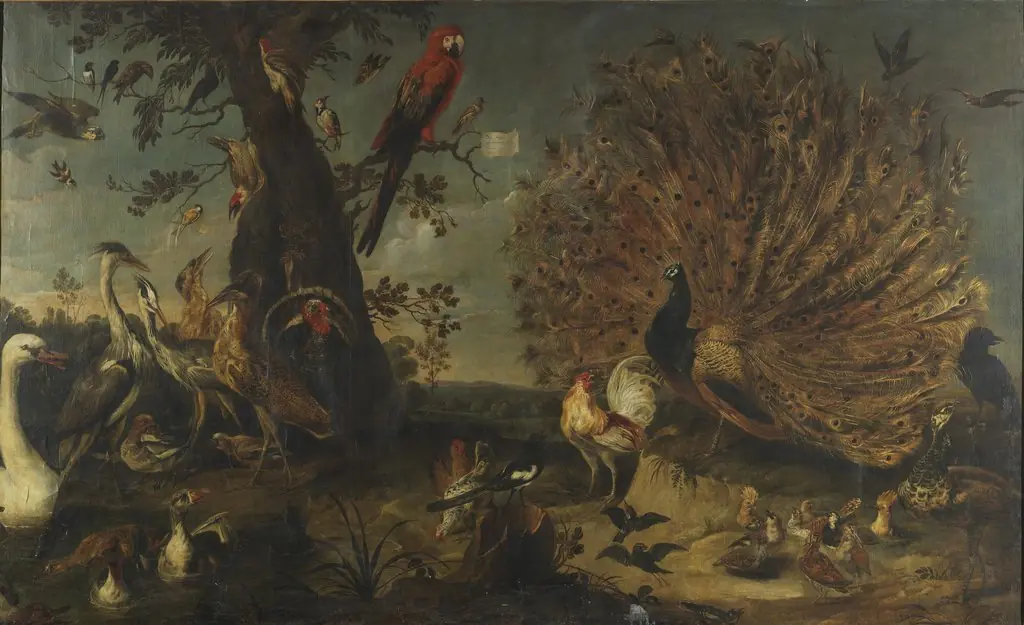 Concierto de aves
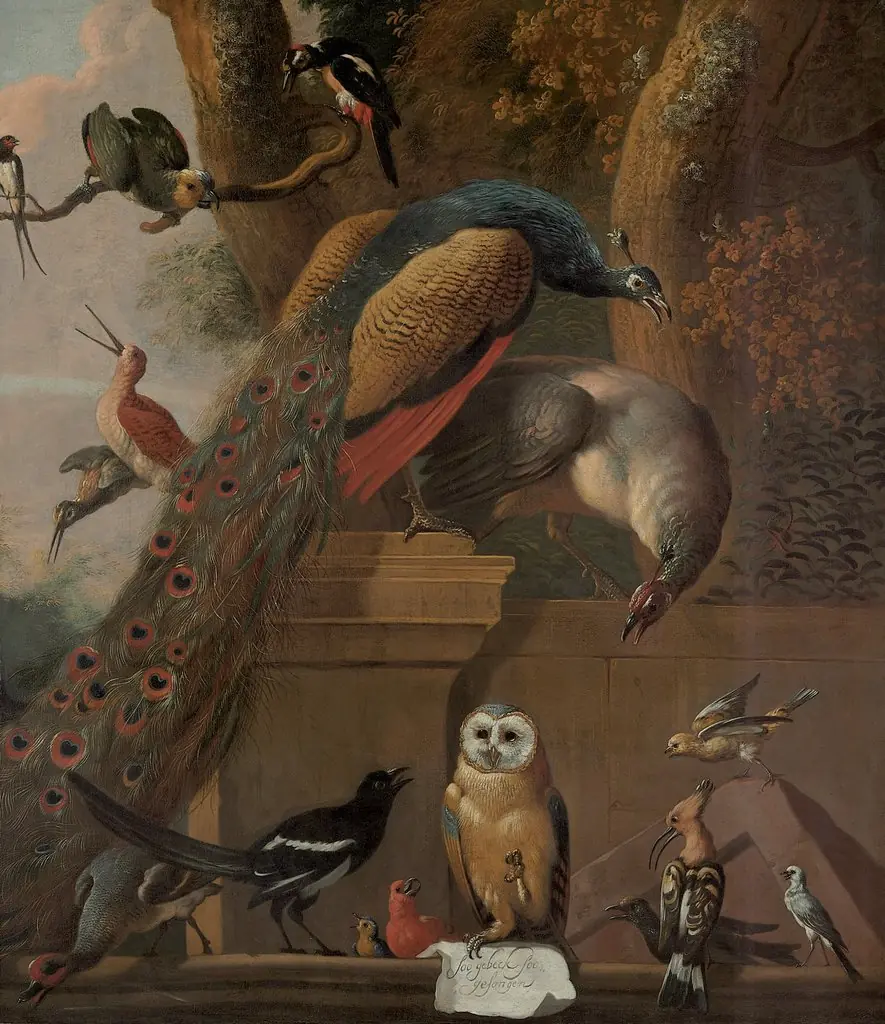 Bird Concert
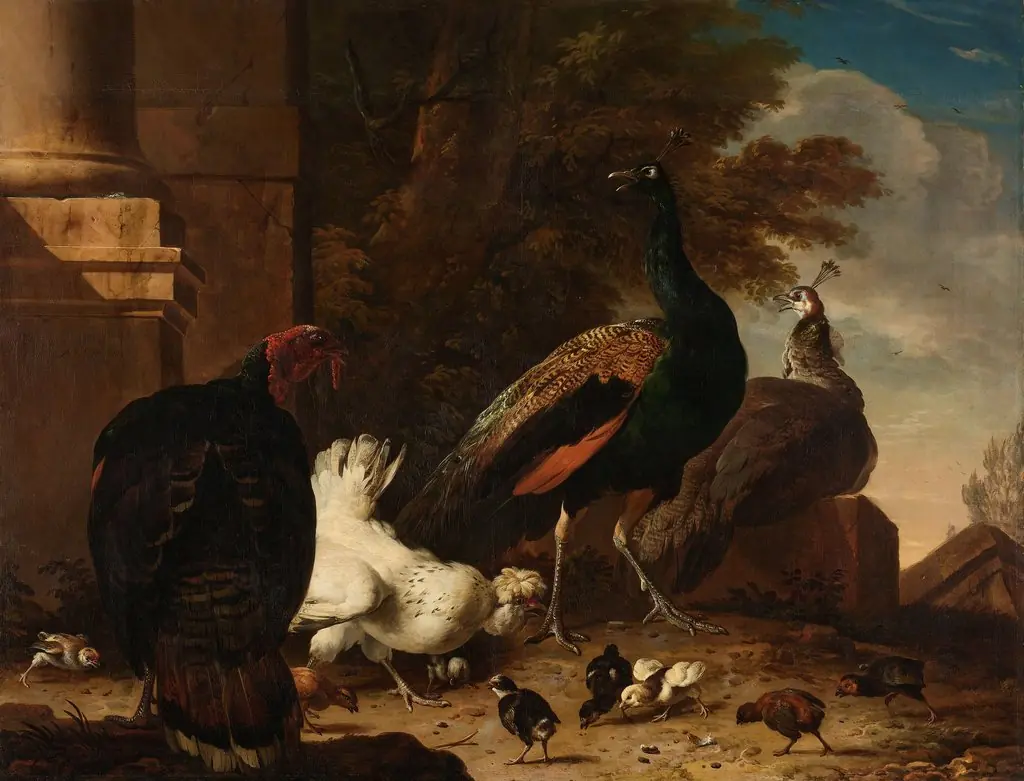 A Hen with Peacocks and a Turkey
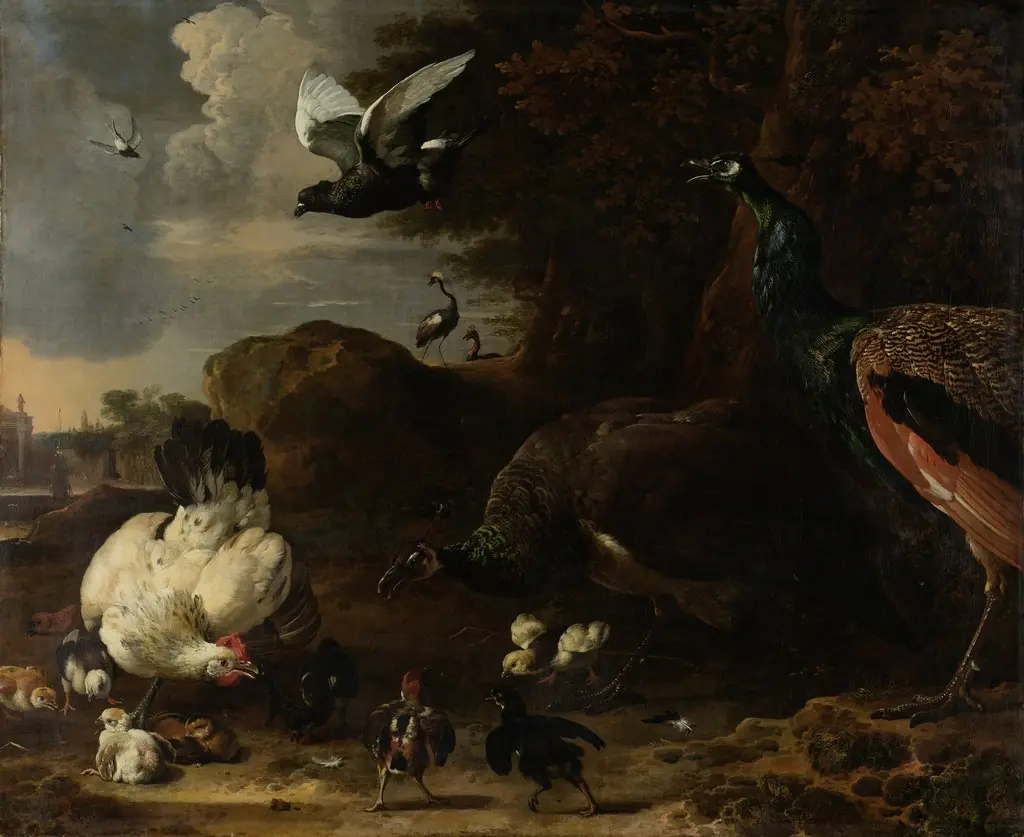 Two Peacocks Threatening a Hen with Chicks, Known as ‘The Threatened Hen’
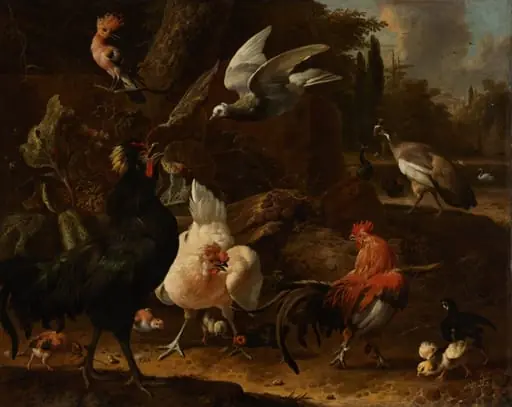 Birds in a Park
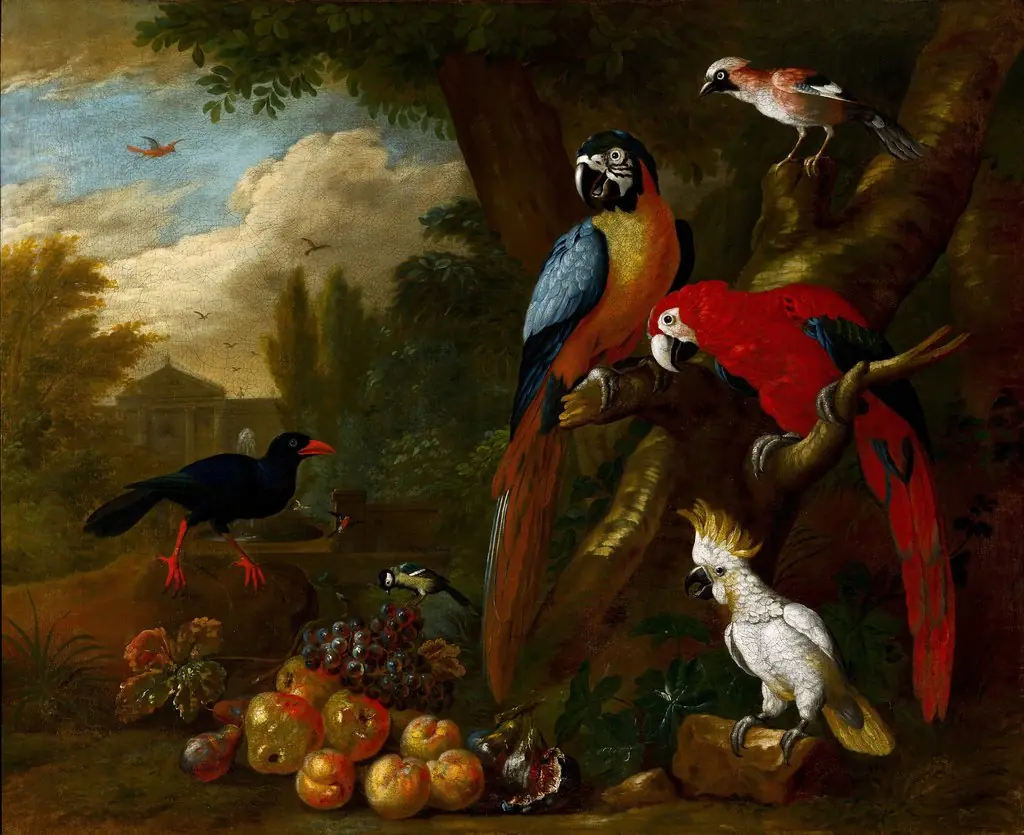 Two Macaws, a Cockatoo and a Jay, with Fruit
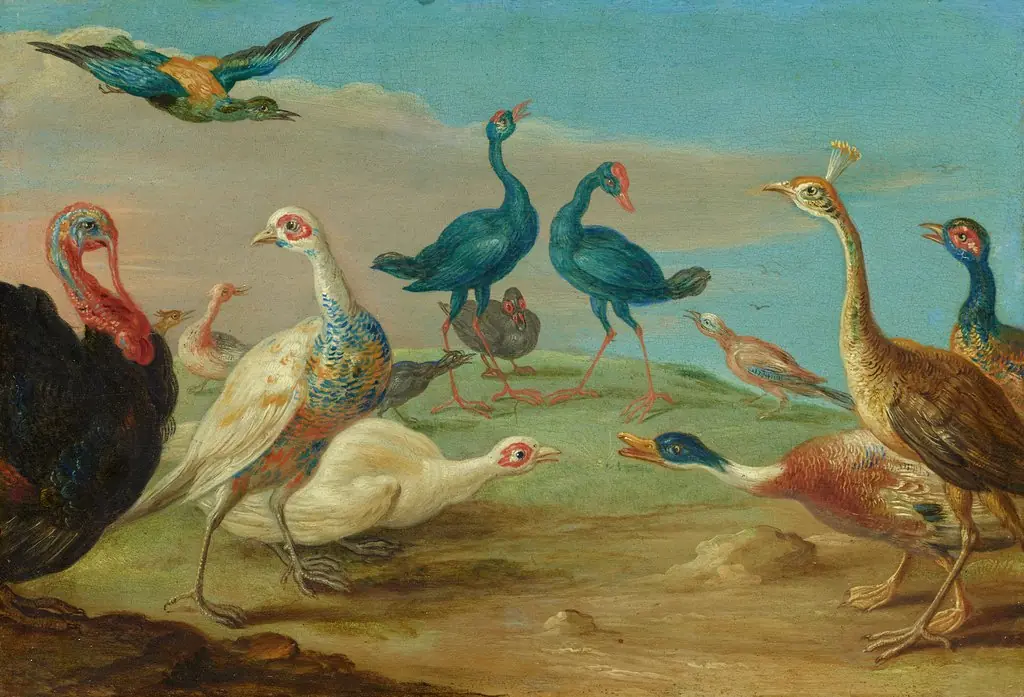 A Landscape with Birds
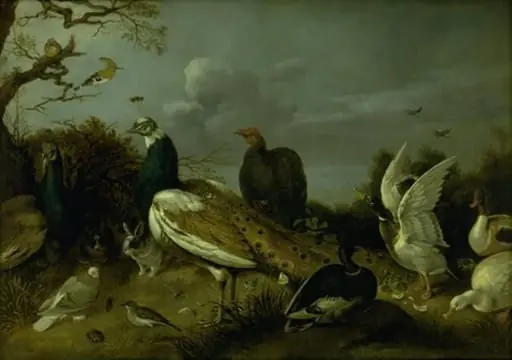 Peacocks, Ducks and other Animals
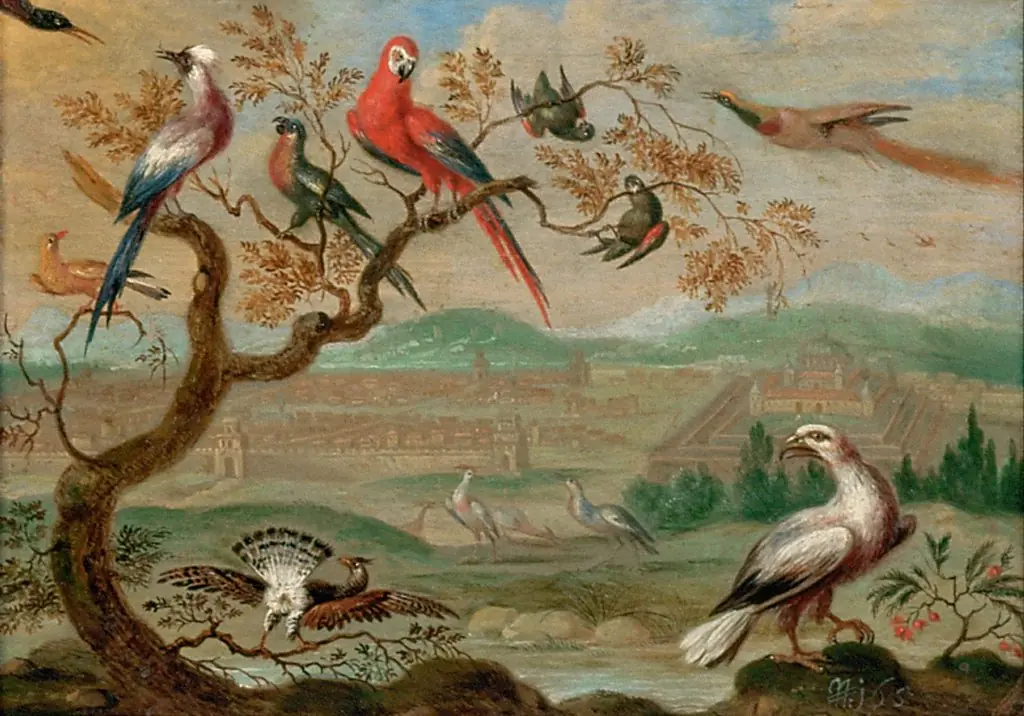 Ansichten aus den vier Weltteilen mit Szenen von Tieren: Cusco