Artwork
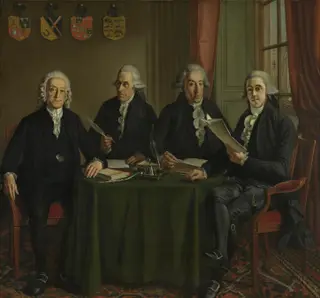
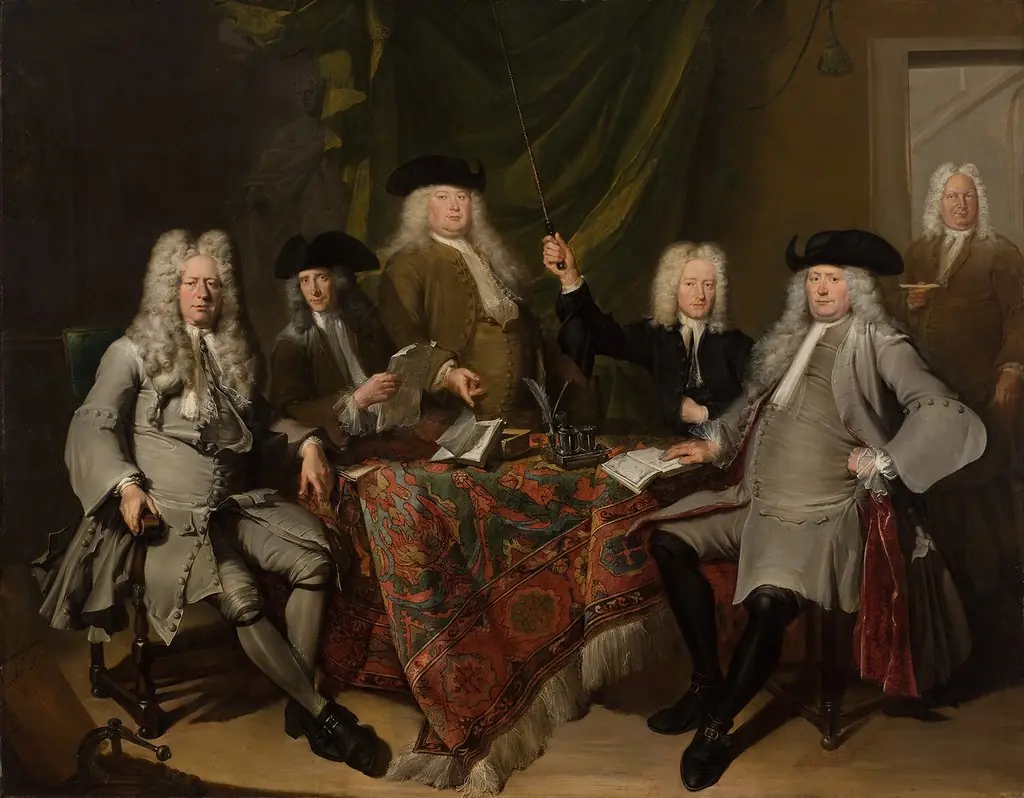
Four regents and the pater of the House of Corrections in Middelburg, 1764
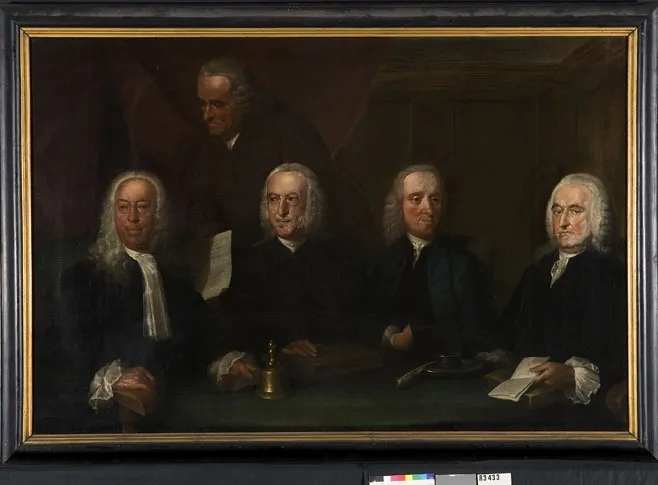
Four regents and the pater of the House of Corrections in Middelburg, 1764 is an oil painting by the Rococo painting artist Aert Schouman. It dates from 1764.
About this work
Subject & Meaning
This genre of painting was traditionally used to honor the civic leadership and financial stewardship of the subjects within their community.
The work is a group portrait depicting four regents and the pater of the House of Corrections in Middelburg. As a regents' group portrait, the painting serves to document the specific individuals responsible for the administration and governance of this charitable and correctional institution in 1764. The composition identifies these figures by their official roles rather than through elaborate allegorical symbolism, focusing on their collective authority and duty.
This genre of painting was traditionally used to honor the civic leadership and financial stewardship of the subjects within their community.
Technique & Style
Four regents and the pater of the House of Corrections in Middelburg, 1764 is executed in oil paint on canvas, a standard combination for Dutch group portraiture of the period. The canvas measures 132 cm in height by 192 cm in width, a broad horizontal format suited to the multi-figure composition of the regents and their pater. The work is classified as a painting and belongs to the genre of group portraiture, specifically the regents group portrait tradition.
Stylistically, it follows the conventions of that Dutch civic portrait type, in which governing officials are arranged together in a single composition.
The work is held in the collection of the Rijksmuseum, with related holdings at the Cultural Heritage Agency of the Netherlands Art Collection, the former Rijksdienst Beeldende Kunst, and the Instituut Collectie Nederland, and is currently located in the Rijksmuseum depot RCE.
History & Provenance
Aert Schouman created this group portrait in 1764, depicting four regents and the pater of the House of Corrections in Middelburg. Executed in oil on canvas, the work measures 132 cm in height and 192 cm in width. The painting currently resides within the depot of the Rijksdienst Beeldende Kunst (Cultural Heritage Agency of the Netherlands), where it is managed as part of the national art collection and housed at the Rijksmuseum.
Context
The painting Four regents and the pater of the House of Corrections in Middelburg, 1764 by Aert Schouman occupies a distinctive position in 18th-century Dutch portraiture as an example of the regents group portrait genre, reflecting the civic authority structures within Dutch institutions. Schouman’s work, housed in the Rijksmuseum collection, demonstrates his specialization in large-scale group compositions that document administrative and municipal leadership, situating his practice within the broader trajectory of Dutch civic realism during the late 1700s. This artwork contributes to scholarly discussions on the visual representation of institutional power in the Netherlands, particularly in relation to contemporaneous portraiture traditions.
Overview
Aert Schouman’s 1764 oil on canvas presents a group portrait of the five men who governed the House of Corrections in Middelburg. Executed in the Rococo idiom, the work now belongs to the Rijksmuseum’s collection. The composition captures the regents and the institution’s pater in a formal, dimly lit setting, emphasizing their authority.
Artist & collection
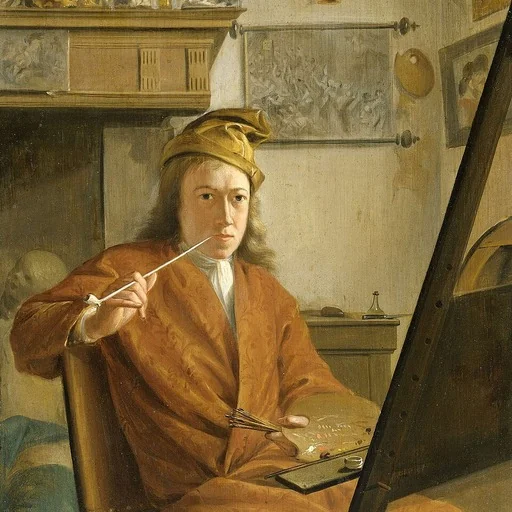
Artist
Aert Schouman or Aart Schouman (4 March 1710 – 5 July 1792) was an 18th-century painter, now better known as a glass engraver, from the Dutch Republic.