Artwork
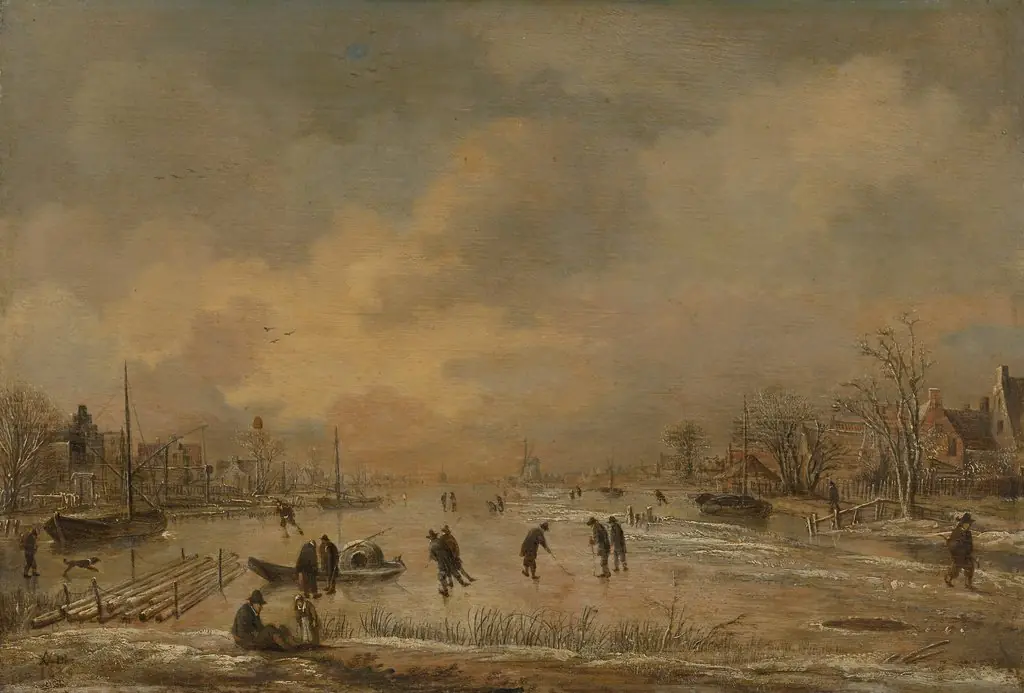
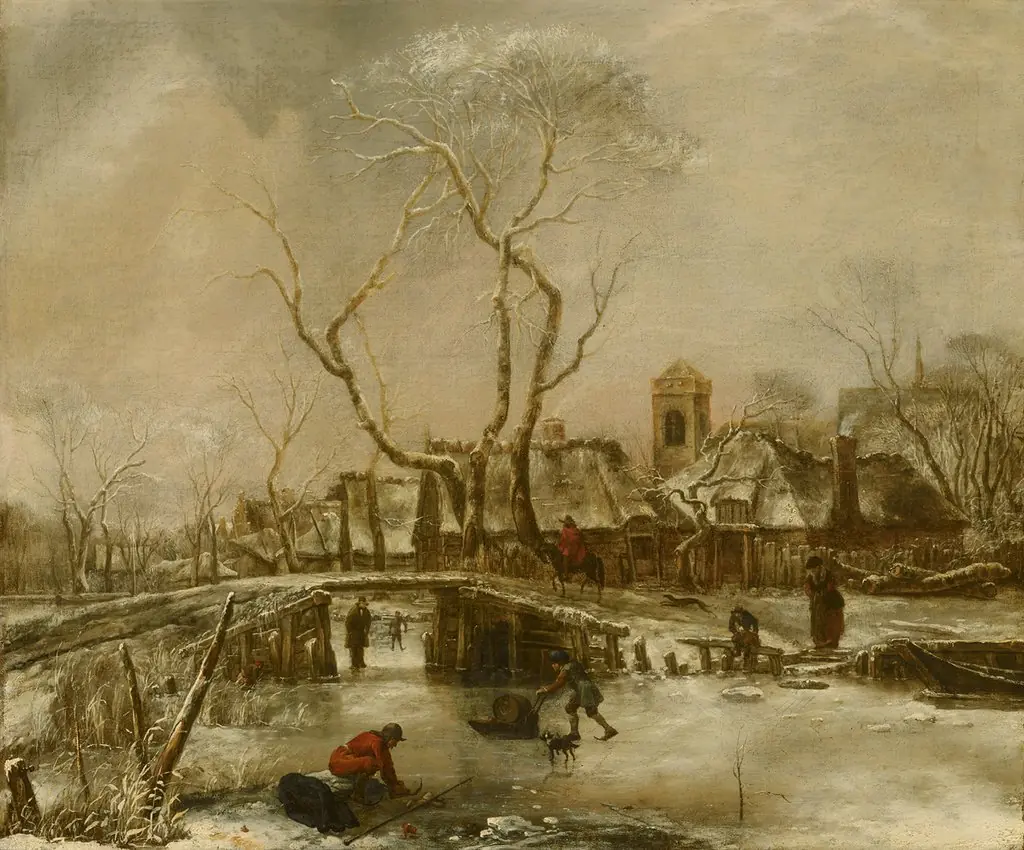
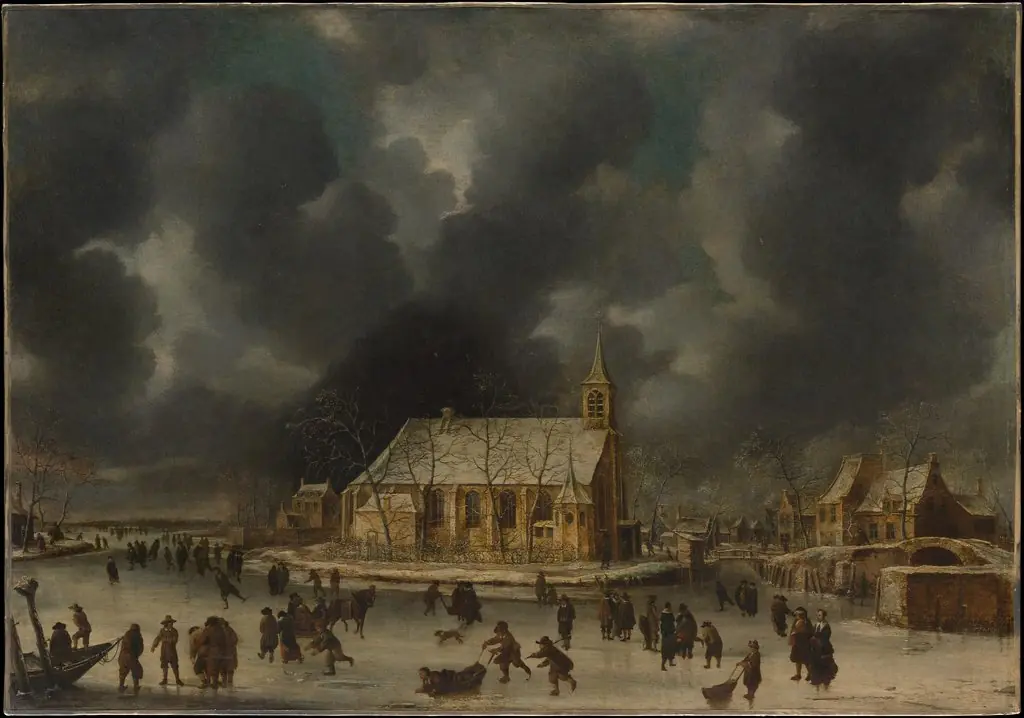
Snowfall on a village beside a frozen canal
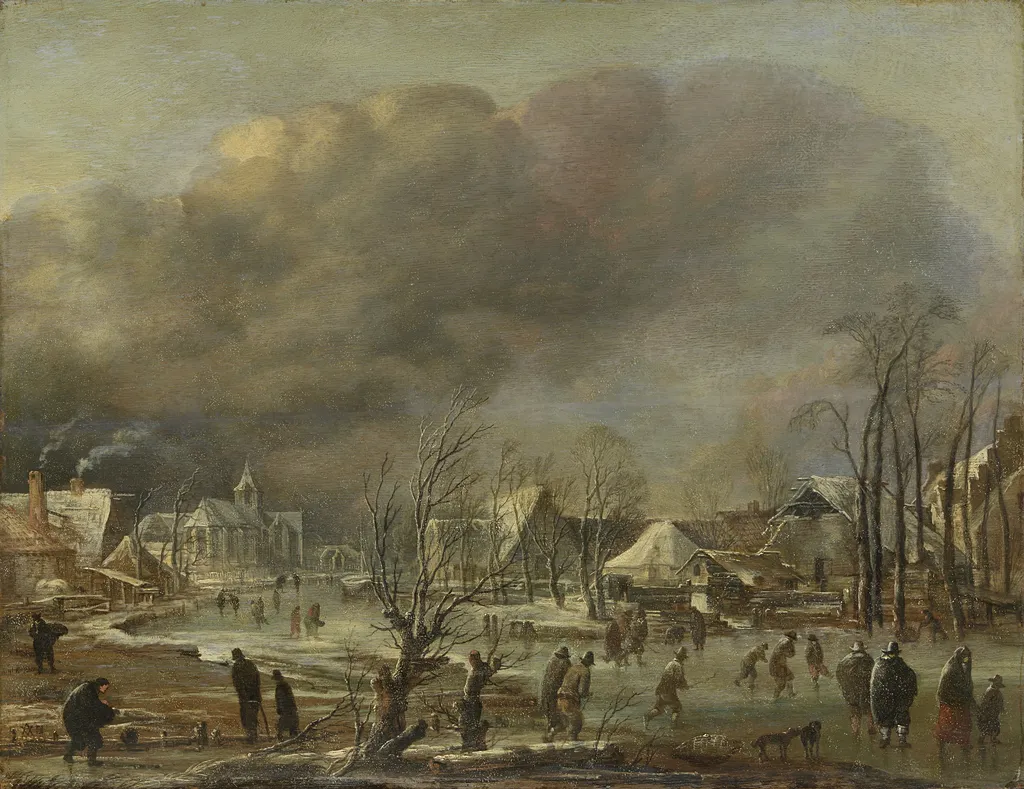
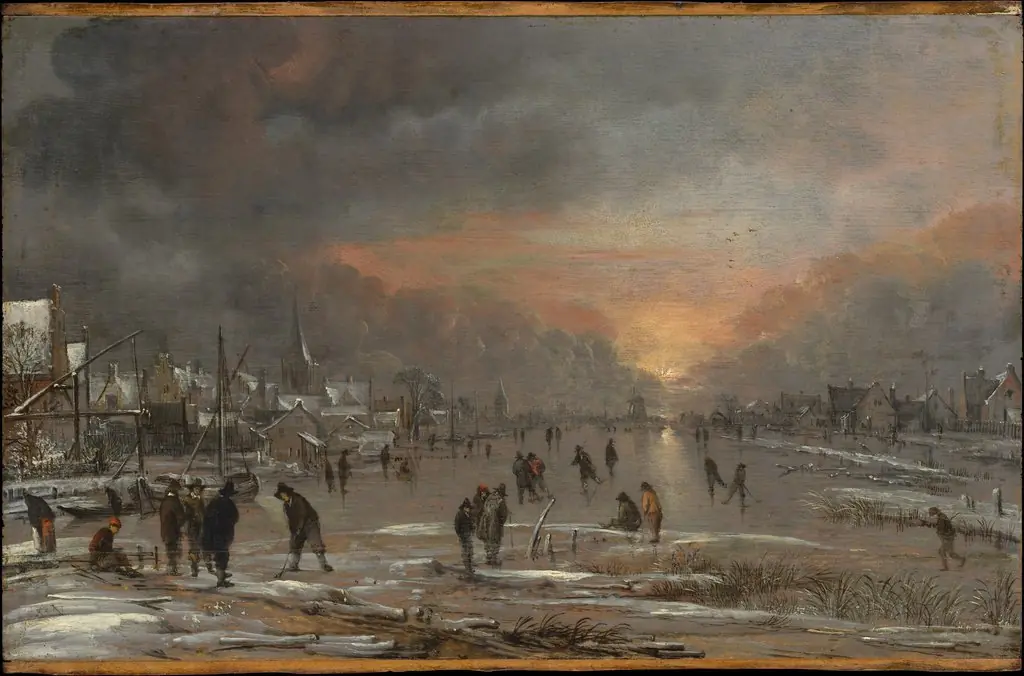
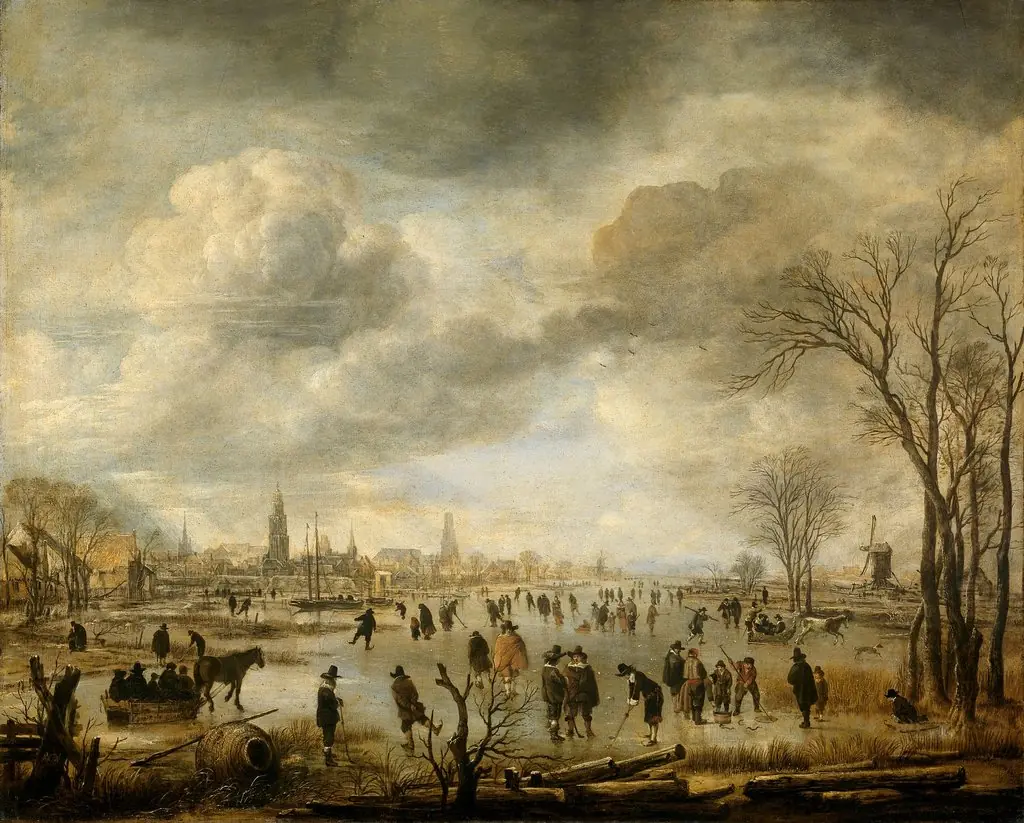
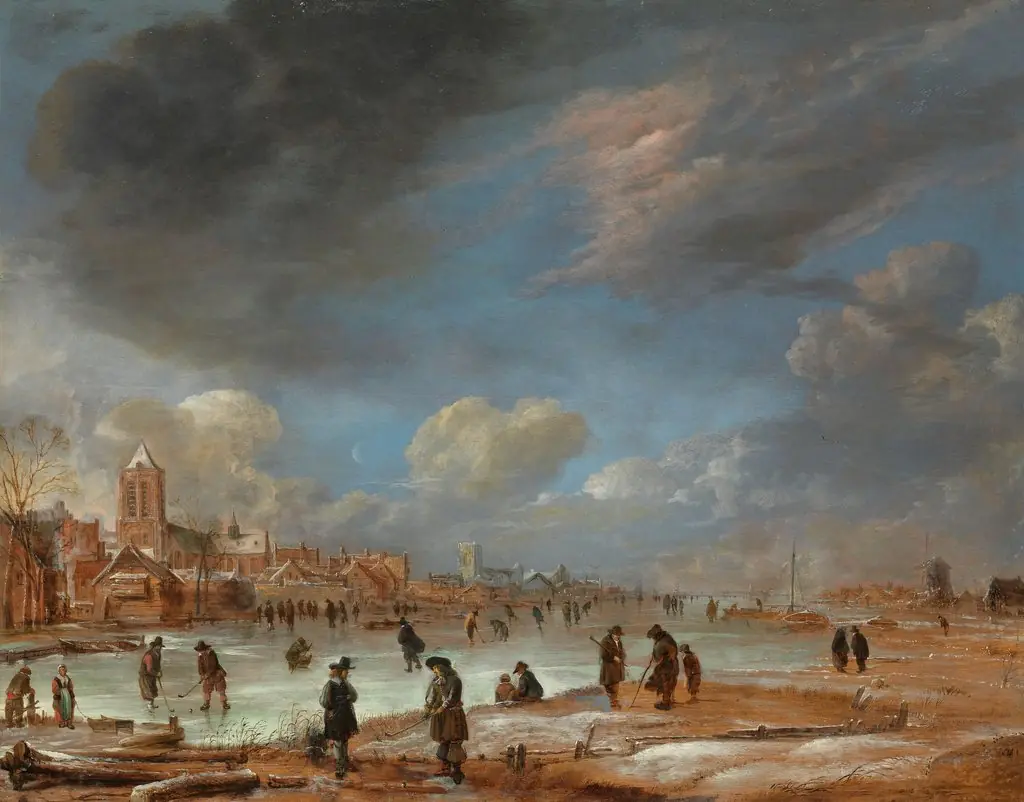
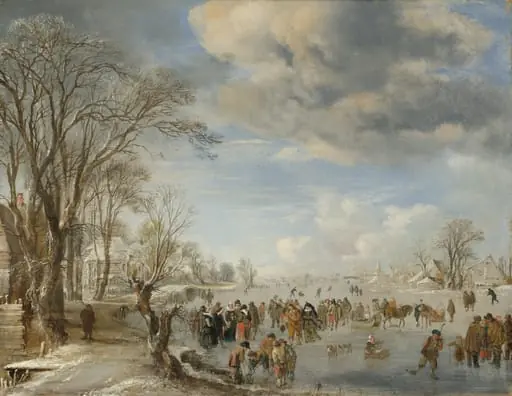
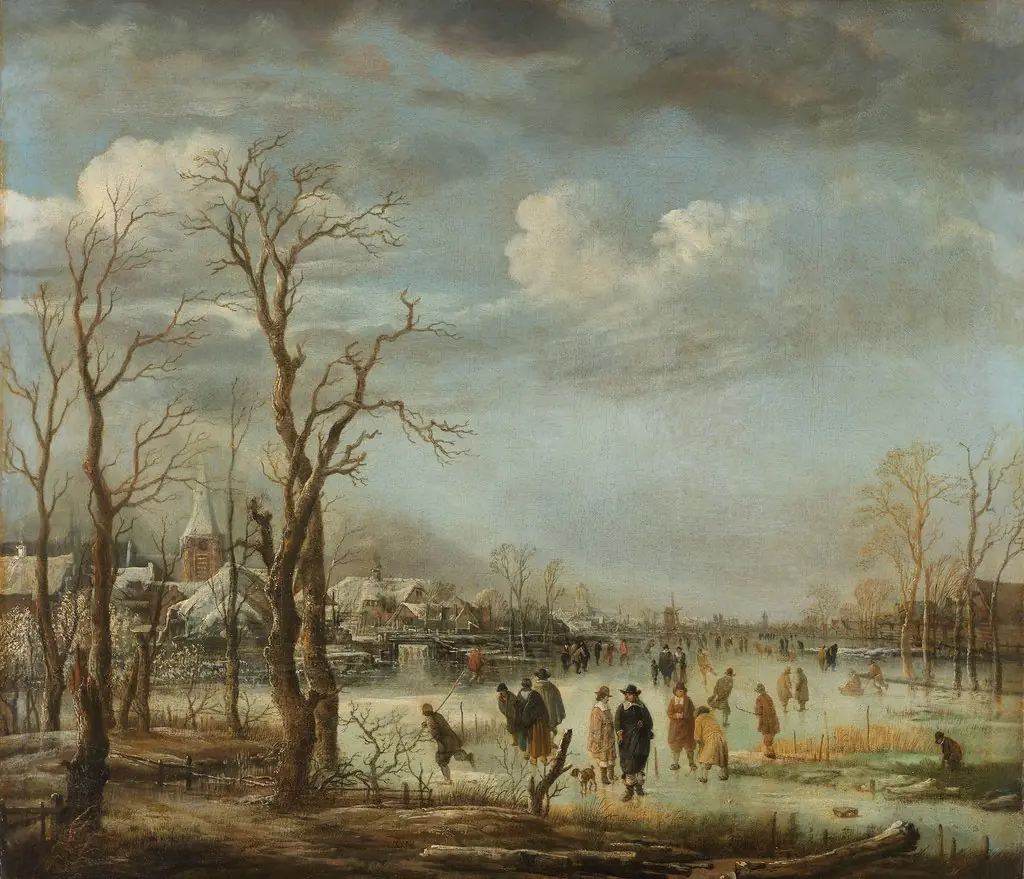
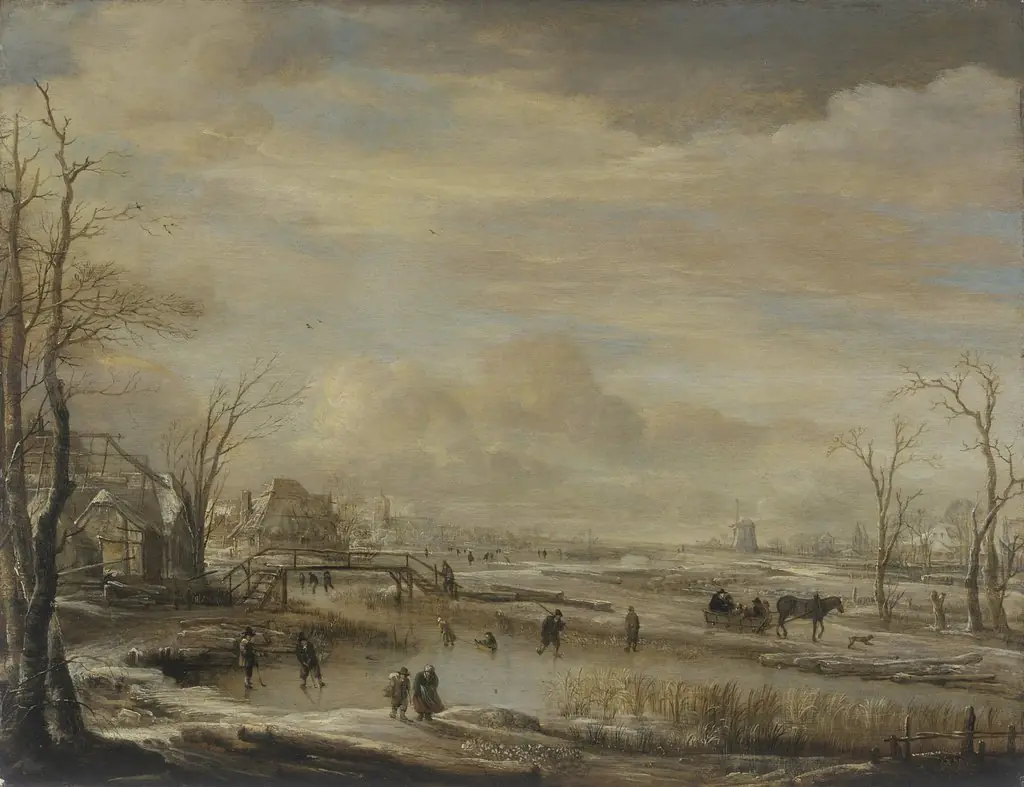
Snowfall on a village beside a frozen canal is an oil painting by the Dutch Golden Age artist Aert van der Neer. It dates from 1650 and is held in the collection of the Rijksmuseum. Created circa 1650, this oil painting portrays a tranquil winter village bisected by a frozen canal.
About this work
Technique & Style
Aert van der Neer utilized oil paint to render a winter landscape featuring trees and boats alongside a frozen waterway.
Created in 1650, Snowfall on a village beside a frozen canal is an oil painting executed on a wooden panel support. The work measures 41.5 cm in height and 53.5 cm in width. Aert van der Neer utilized oil paint to render a winter landscape featuring trees and boats alongside a frozen waterway.
The medium and panel construction are characteristic of the artist's approach to capturing atmospheric light and seasonal conditions during the Dutch Golden Age.
History & Provenance
The painting was created in 1650 as an oil work on panel by Aert van der Neer. It entered the collection of Anna Christina Maria Helena Hülsmann before being acquired by the Rijksmuseum, where it remains on display in the museum's collection.
The work measures 41.5 cm in height and 53.5 cm in width and is classified as a painting depicting a village scene with a frozen canal.
Overview
Created circa 1650, this oil painting portrays a tranquil winter village bisected by a frozen canal. Figures traverse the ice, some skating, while modest houses with steep roofs cluster beyond a line of leafless trees. A muted sky, heavy with cloud, allows a soft light to diffuse across the scene, lending it a quiet, atmospheric quality.
Subject & Meaning
The composition captures everyday life under winter conditions, emphasizing communal activity on the frozen waterway. The solitary tree and subdued architecture serve as focal points that balance the human presence, suggesting a harmonious relationship between the villagers and their harsh environment. The gentle illumination hints at either moonlight or distant fire, reinforcing a sense of calm endurance.
Context
During the mid‑17th century, Dutch society was fascinated by the interplay of light and weather, a theme reflected in the prolific production of winter genre scenes. Van der Neer’s focus on nocturnal or low‑light settings aligns with contemporary interests in atmospheric effects, while his modest compositions contrast with the grander landscapes of peers such as Cuyp and Hobbema.
Own this work as a print
Artist & collection
Artist
Aert van der Neer, or Aernout or Artus (c. 1603 – 9 November 1677), was a landscape painter of the Dutch Golden Age, who specialized in small night scenes lit only by moonlight and fires, and snowy winter landscapes,…