Artwork
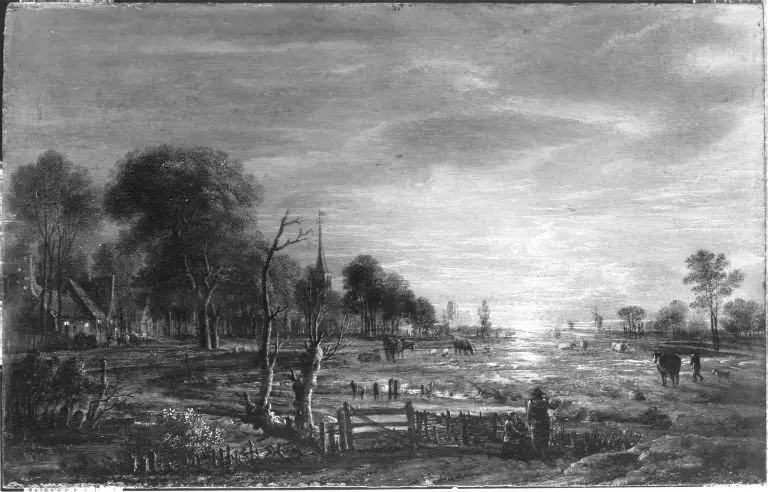
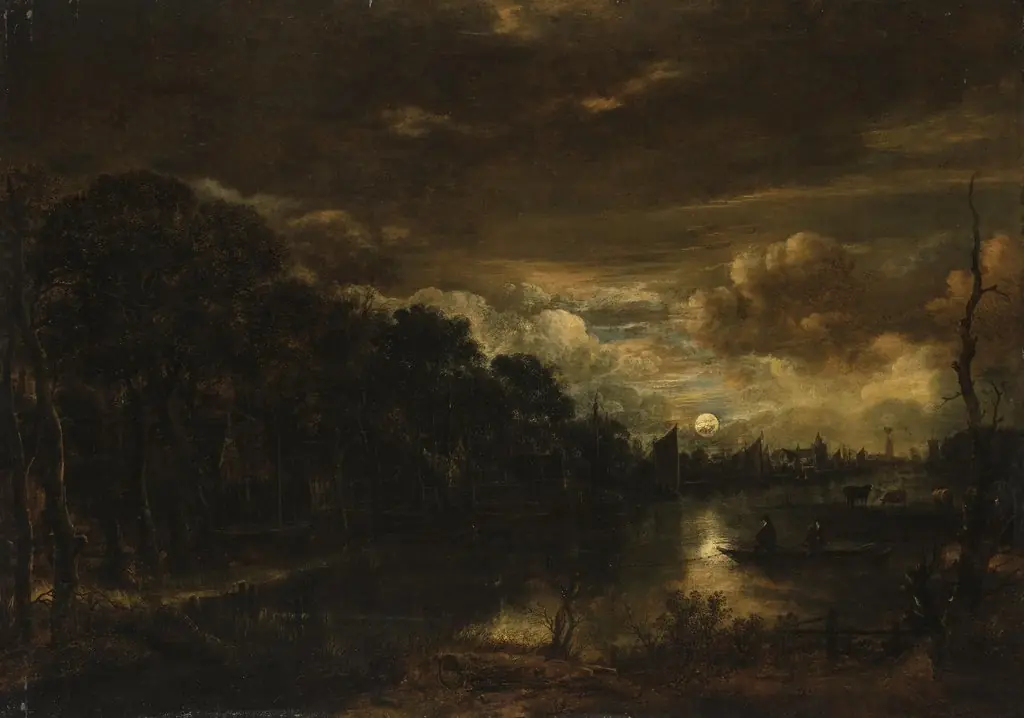
Moonlit Landscape with Bridge
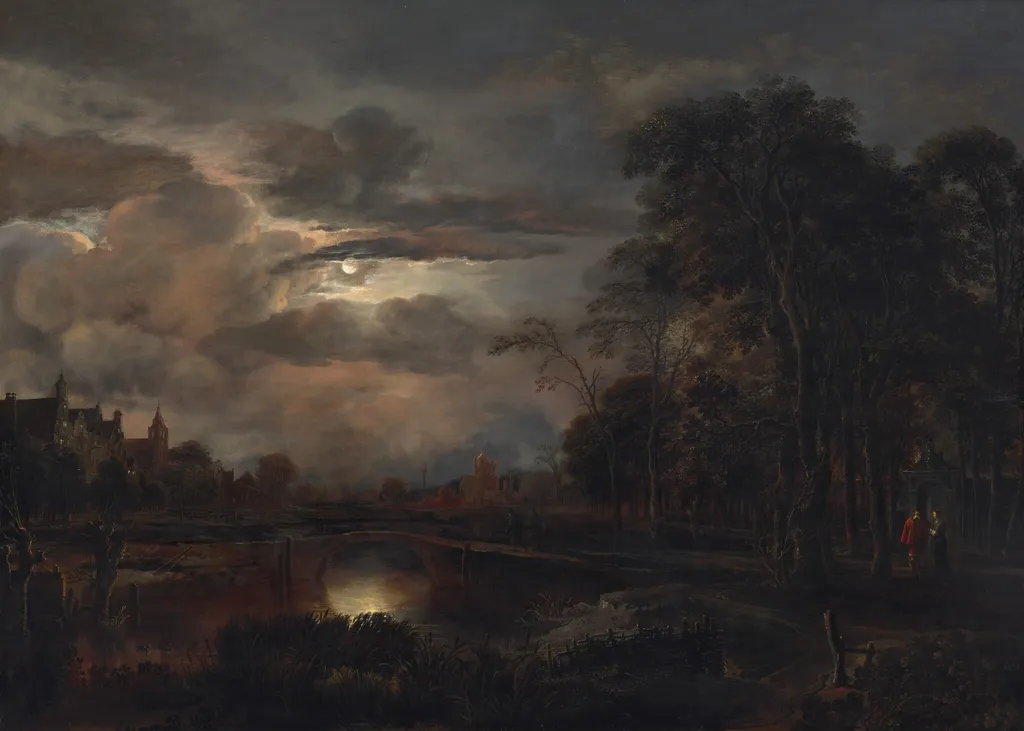
Moonlit Landscape with Bridge is an oil painting by the Baroque artist Aert van der Neer. It dates from 1649 and is held in the collection of the National Gallery of Art.
- Inscription
- Inscribed:lower right, in ligature: AvdN
About this work
Technique & Style
Classified as a landscape, the piece exemplifies the genre through its nocturnal setting featuring a bridge under moonlight.
Executed in 1649, Moonlit Landscape with Bridge is an oil painting applied to a wooden panel support. The work measures 78.4 cm in height and 110.2 cm in width. Classified as a landscape, the piece exemplifies the genre through its nocturnal setting featuring a bridge under moonlight.
The medium of oil on panel was a standard and durable choice for Dutch Golden Age painters, allowing for the detailed rendering of atmospheric effects and textures characteristic of Aert van der Neer's style.
History & Provenance
Aert van der Neer painted Moonlit Landscape with Bridge in 1649 using oil on panel, a work classified as a Dutch Golden Age landscape. Its provenance traces back to the 1828 sale of Jacob Frederikszn van Beek in Amsterdam, after which the painting passed through the collections of F. Tielens in Brussels and J. Walter in London before entering the Thyssen-Bornemisza family in the early 20th century, passing from Baron Heinrich Thyssen-Bornemisza to his daughter Gabrielle and her husband Baron Adolphe Bentinck van Schoonheten.
By the late 1980s the work was held by Galerie Sanct Lucas in Vienna, and it was acquired by the National Gallery of Art in Washington, D.C., on 29 January 1990, where it remains. The source material details this extensive ownership history but does not record any specific exhibition history for the artwork.
Legacy
The 1649 oil panel Moonlit Landscape with Bridge entered the National Gallery of Art in Washington, D.C., in 1990 after a documented chain of ownership that began with Jacob Frederikszn van Beek and passed through several collectors, including the Thyssen family, before its acquisition. Early scholarly attention by Cornelis Hofstede de Groot noted the work's quality and listed its sale price, helping to establish its importance within the Dutch Golden Age landscape tradition. Its inclusion in a major public collection has allowed continued study of Aert van der Neer's atmospheric treatment of night scenes, influencing later interpretations of nocturnal landscape painting.
Overview
Aert van der Neer's Moonlit Landscape with Bridge, an oil on panel created around 1649, exemplifies the artist's signature approach to nocturnal scenery. This work from the Dutch Golden Age presents a tranquil, dimly lit vista, showcasing his ability to capture atmospheric effects under the subtle glow of moonlight. It reflects his consistent preference for serene, sparsely populated river and canal views.
Subject & Meaning
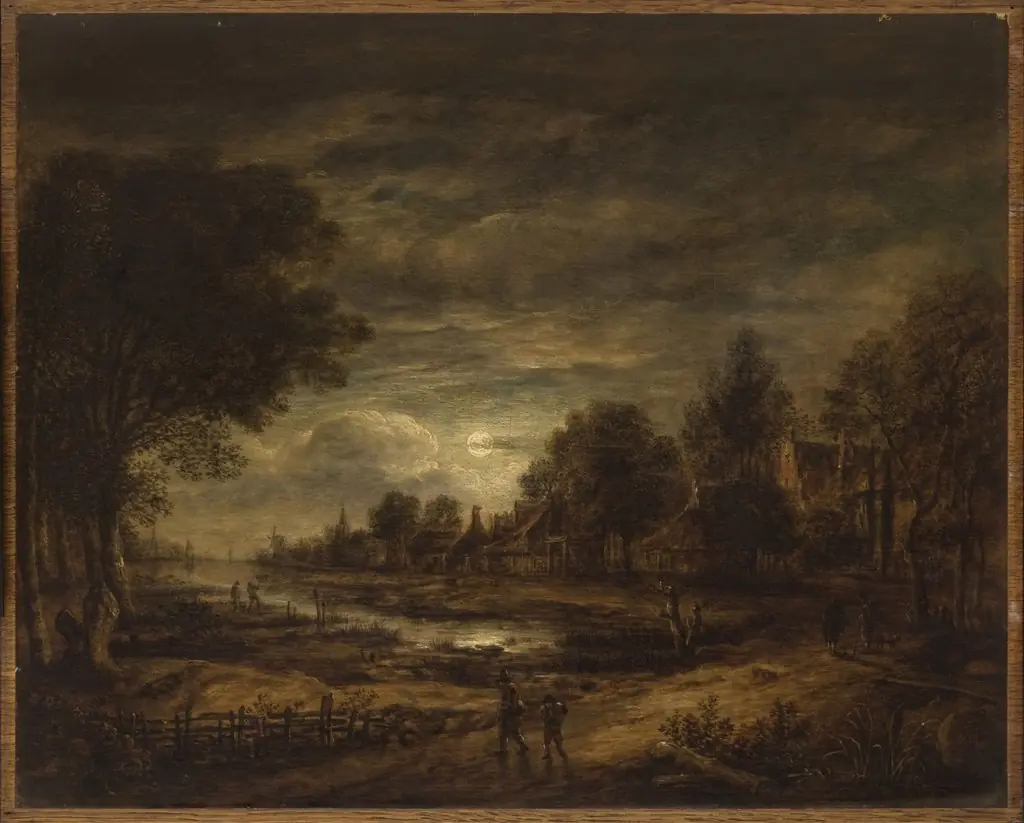
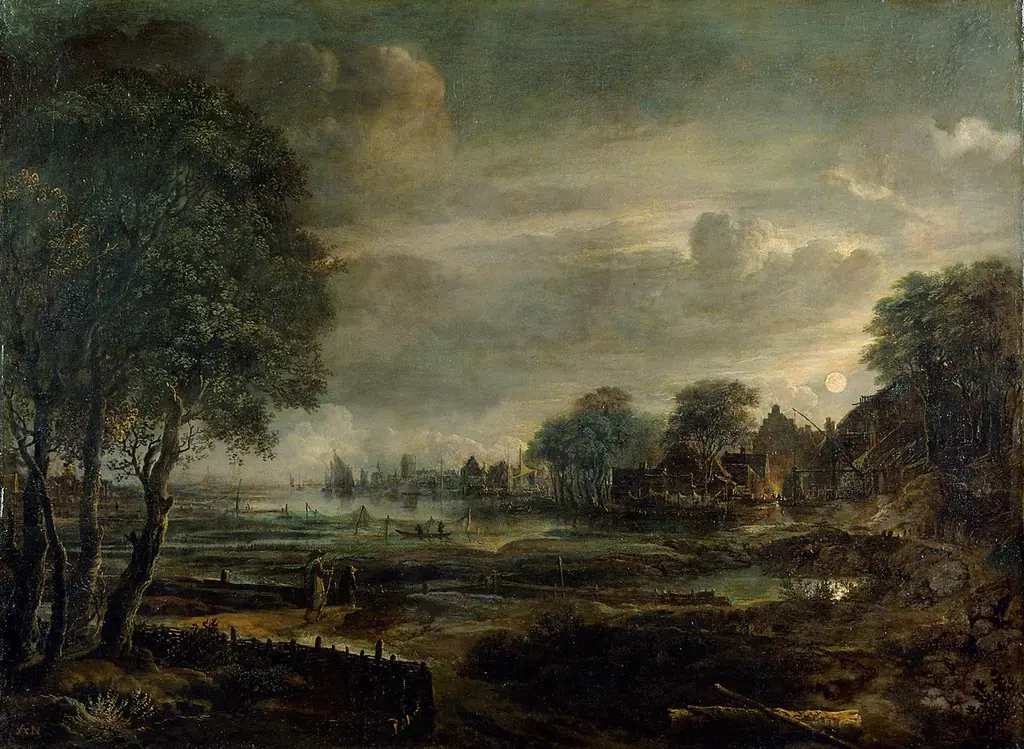
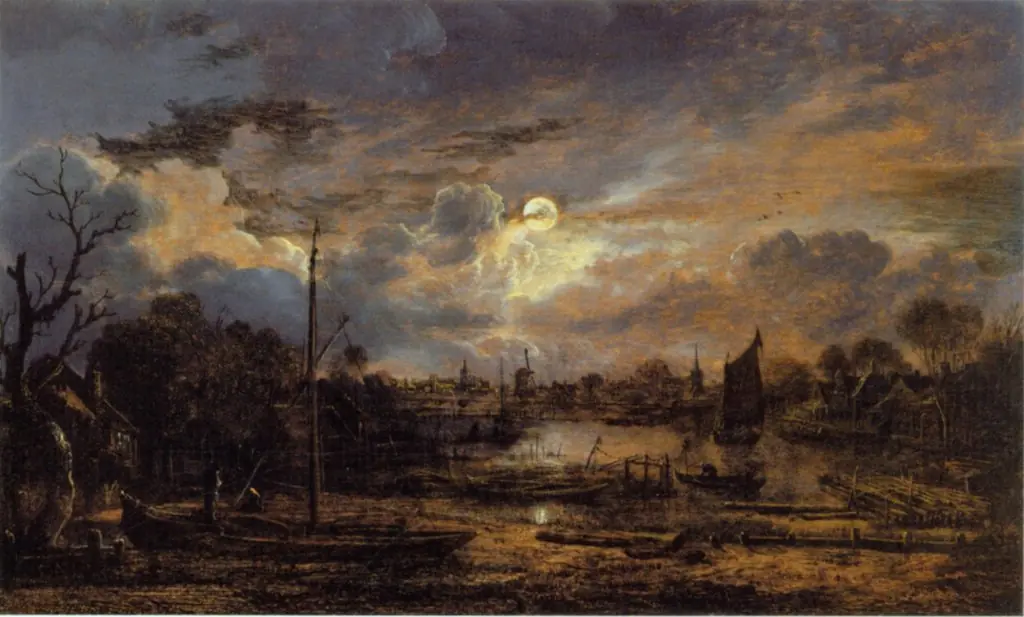
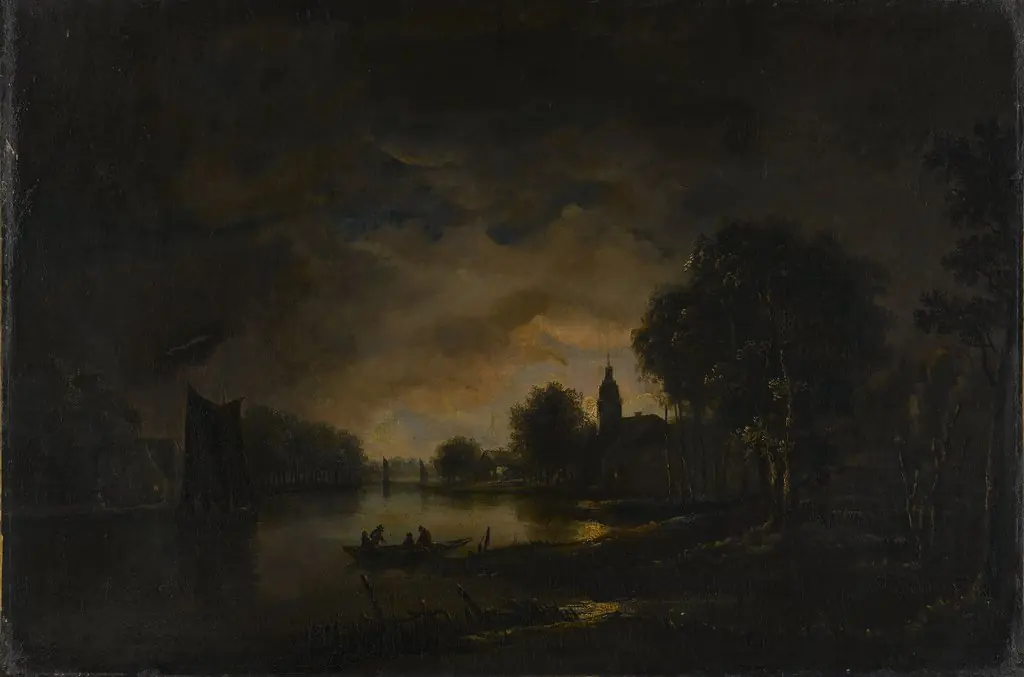
The painting portrays a quiet, dark landscape where a bridge spans a body of water. Moonlight, piercing through a largely cloudy sky, serves as the primary light source, casting soft reflections upon the water. Architectural elements and the bridge are positioned on the left, while trees and two small figures occupy the right, contributing to the scene's contemplative solitude.
Context
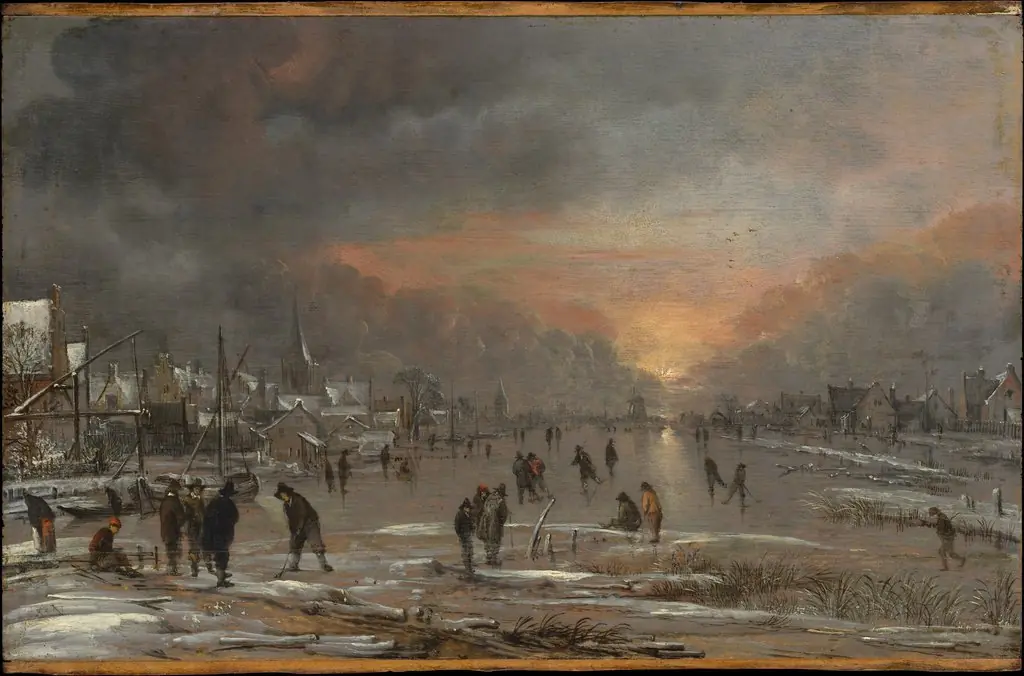
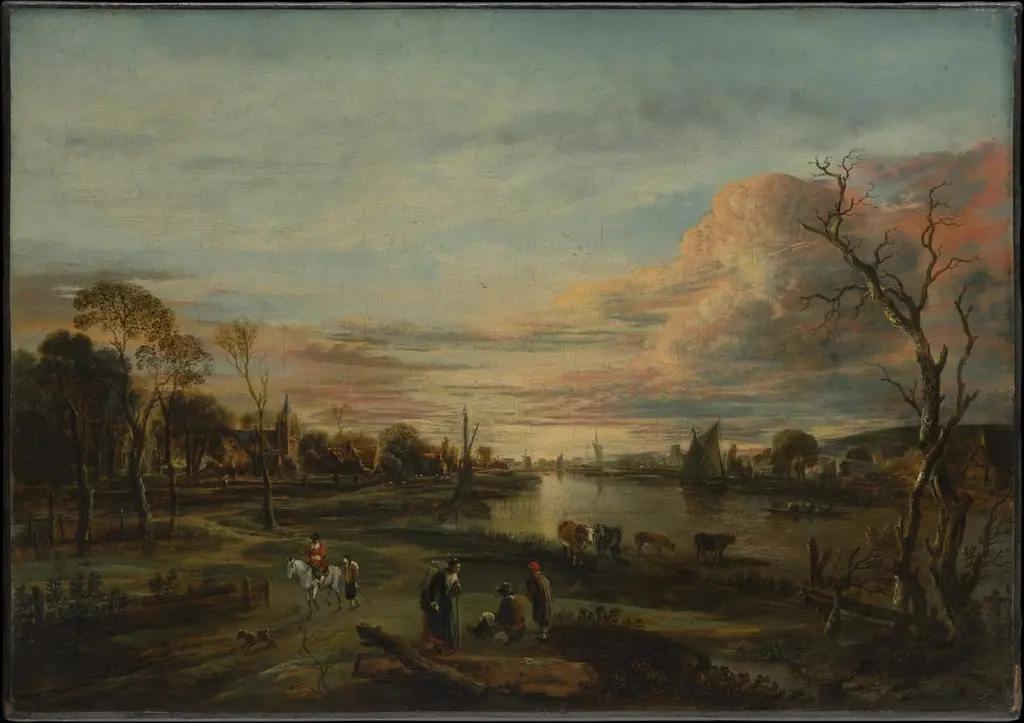
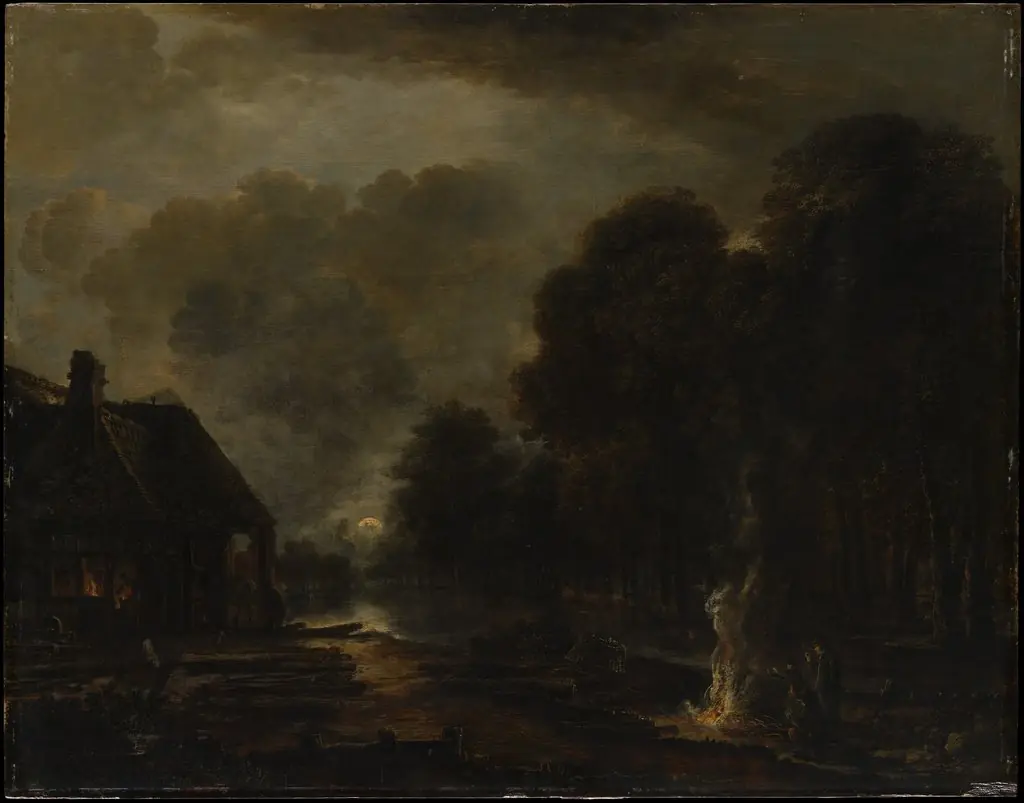
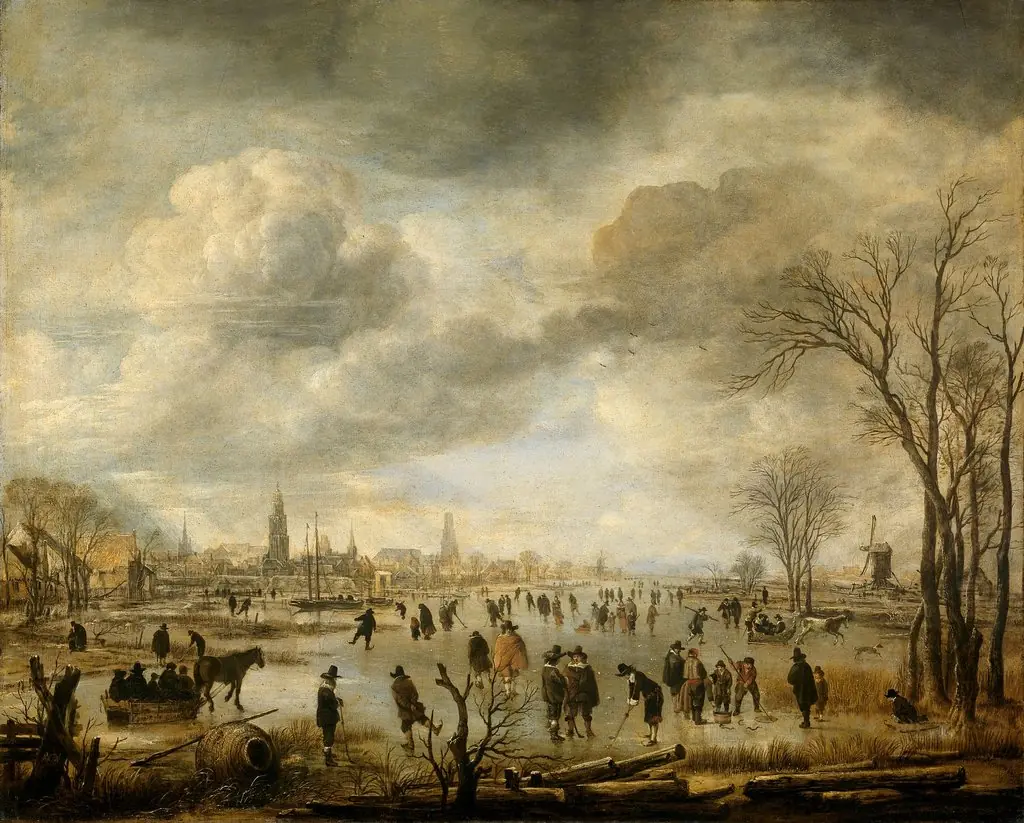
Active primarily in Amsterdam, Aert van der Neer was a notable landscape painter of the Dutch Golden Age. He cultivated a distinct specialization in small-format night scenes, often featuring illumination from either moonlight or firelight. His body of work consistently includes quiet, atmospheric depictions of rivers and canals, frequently rendered under the evocative conditions of evening or winter.
Own this work as a print
Artist & collection
Artist
Aert van der Neer, or Aernout or Artus (c. 1603 – 9 November 1677), was a landscape painter of the Dutch Golden Age, who specialized in small night scenes lit only by moonlight and fires, and snowy winter landscapes,…