Artwork
The Farrier
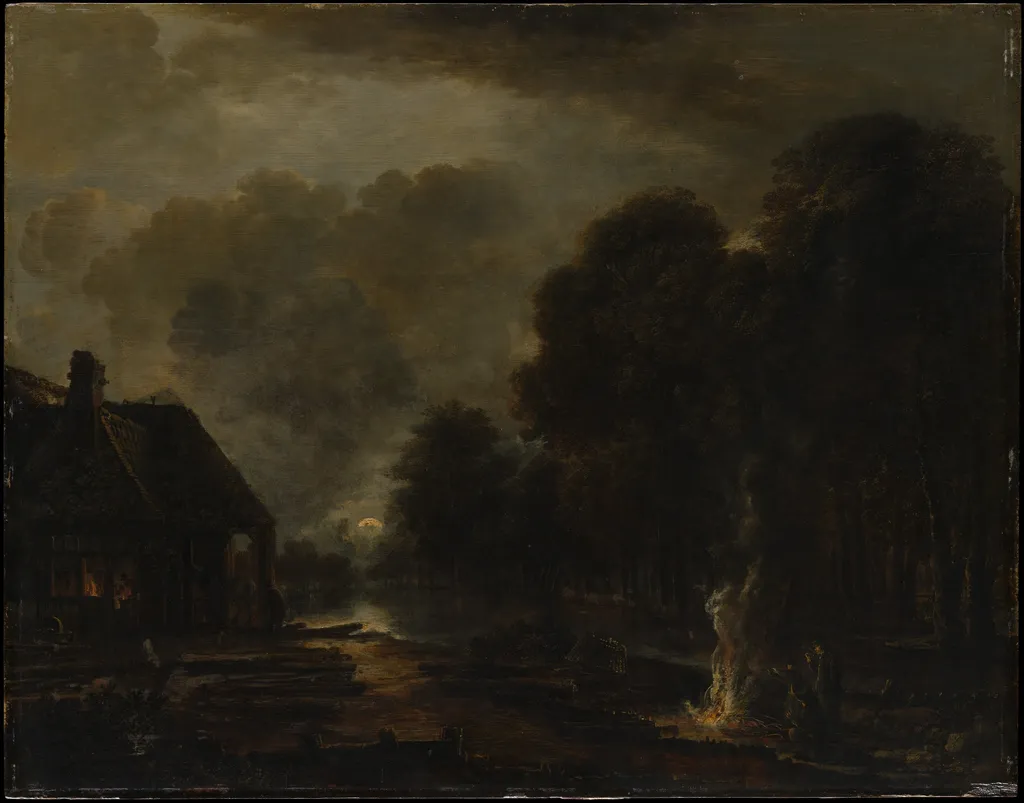
The Farrier is an oil painting by the Dutch Golden Age artist Aert van der Neer. It dates from 1653 and is held in the collection of the Metropolitan Museum of Art.
About this work
Technique & Style
The work belongs to the landscape genre and portrays a nocturnal scene dominated by a flickering fire, a composition typical of Dutch nocturnal landscapes.
The Farrier, painted by Aert van der Neer in 1653, is an oil painting executed on a wooden panel. The work belongs to the landscape genre and portrays a nocturnal scene dominated by a flickering fire, a composition typical of Dutch nocturnal landscapes. Van der Neer employs delicate brushwork to render the glow of the flames and the surrounding darkness, creating a strong contrast between light and shadow.
The painting's restrained palette emphasizes the interplay of firelight on foliage and water, and its surface retains the smooth finish characteristic of oil on panel from the mid-seventeenth century.
History & Provenance
The Farrier was created by Aert van der Neer in 1653 as an oil on panel, measuring 48.3 cm in height by 61.3 cm in width. Belonging to the landscape genre, it dates from the artist's mature period and reflects his characteristic nocturnal scenes. The work is held by the Metropolitan Museum of Art, New York; an early owner was the collector William T. Blodgett. Its exhibition history is not documented in the available sources.
Overview
Aert van der Neer's oil painting, The Farrier, completed in 1653, is a characteristic example of the artist's focus on nocturnal landscapes during the Dutch Golden Age. This work depicts a scene of human activity illuminated by firelight against a dark, village backdrop. As a landscape painting, it showcases van der Neer's talent for rendering atmospheric conditions and the intricate interplay of light and shadow. The painting is part of the collection at The Metropolitan Museum of Art.
Subject & Meaning
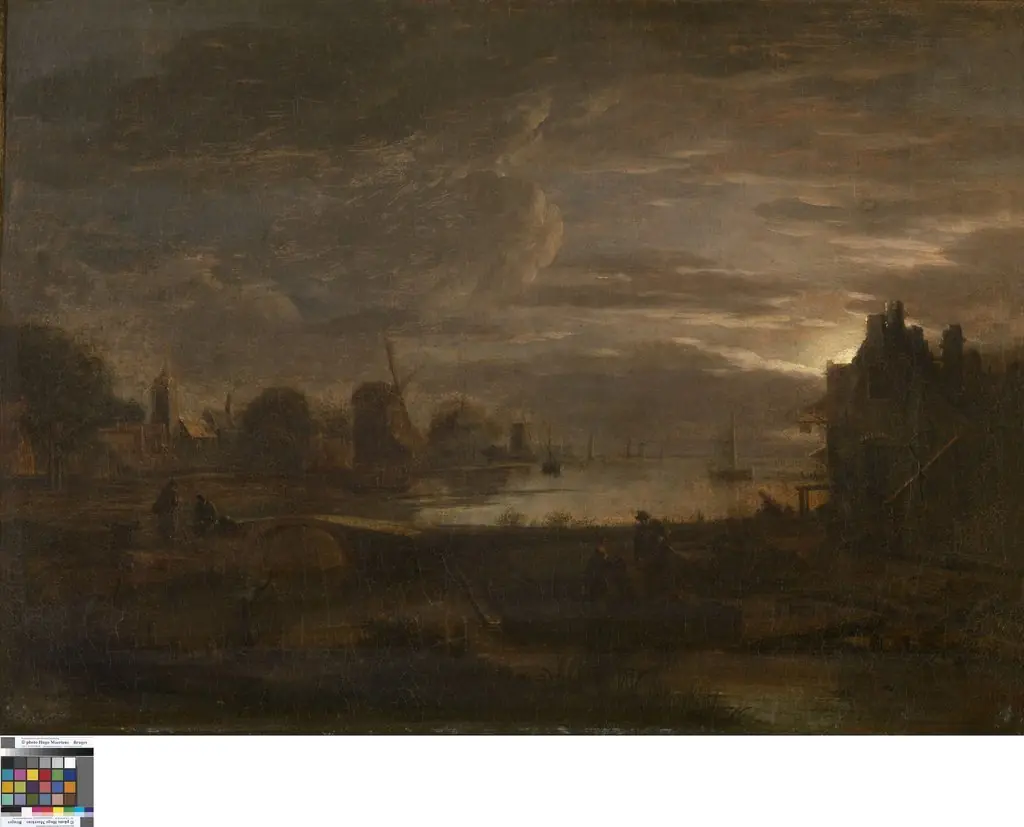
The artwork portrays a small village street enveloped in darkness, where a farrier is actively engaged in his craft. A dim fire in the foreground casts a warm glow, highlighting the worker. On one side, houses appear with dark windows, while trees loom on the other, all set beneath a sky heavy with clouds.
A subtle moonlight penetrates the cloud cover, providing a faint illumination along the path, contrasting with the more intense, flickering light of the forge.
Context
Working within the Dutch Golden Age, Aert van der Neer specialized in landscape painting, particularly known for his evocative portrayals of canals and rivers under specific conditions, such as snow or nighttime. The Farrier aligns with this artistic tradition, illustrating his consistent interest in capturing the delicate qualities of light in dark environments. His contributions enrich the genre of Dutch landscape art, offering intimate views of daily life framed by dramatic natural and artificial light.
Own this work as a print
Artist & collection
Artist
Aert van der Neer, or Aernout or Artus (c. 1603 – 9 November 1677), was a landscape painter of the Dutch Golden Age, who specialized in small night scenes lit only by moonlight and fires, and snowy winter landscapes,…

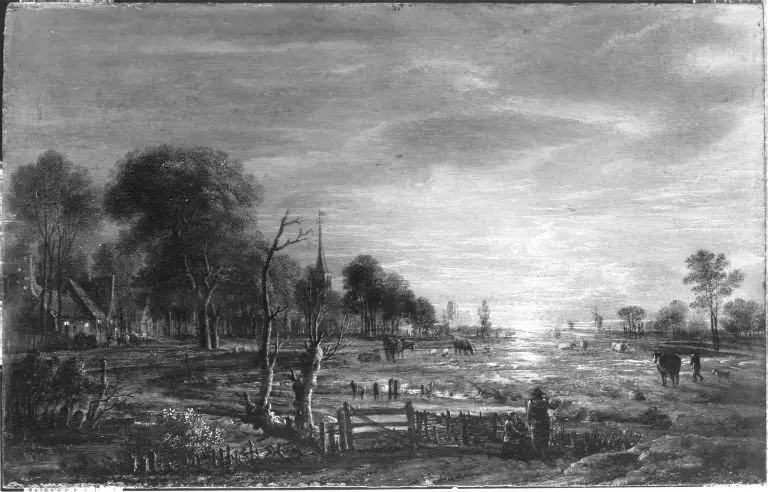
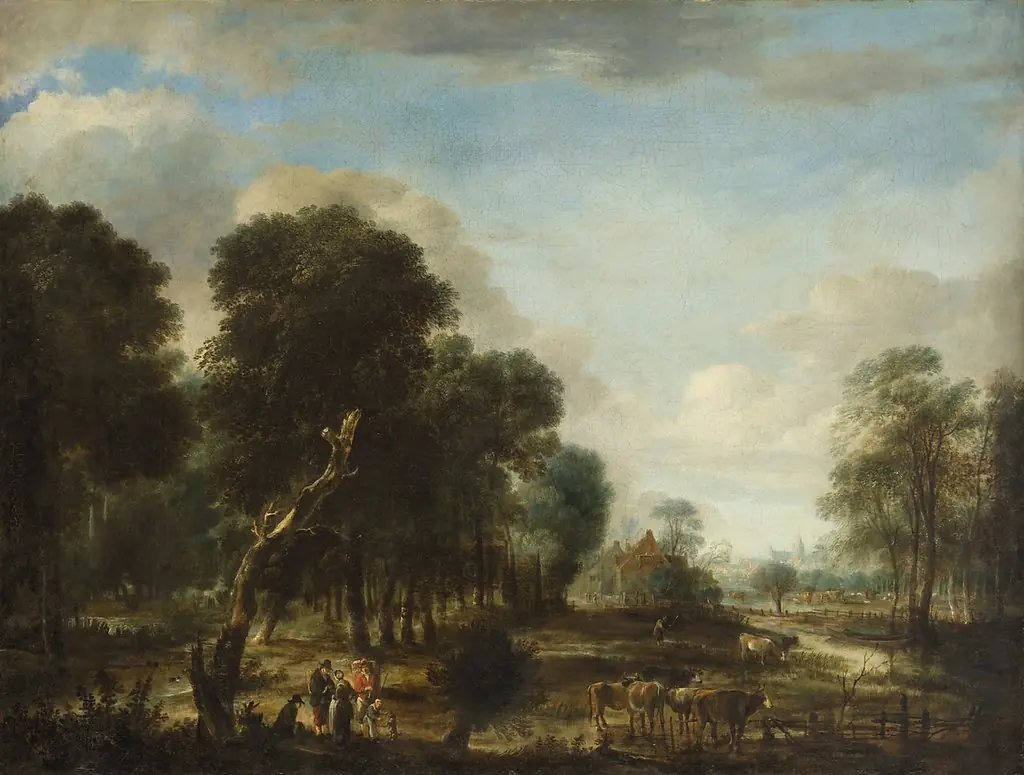
- Landscape
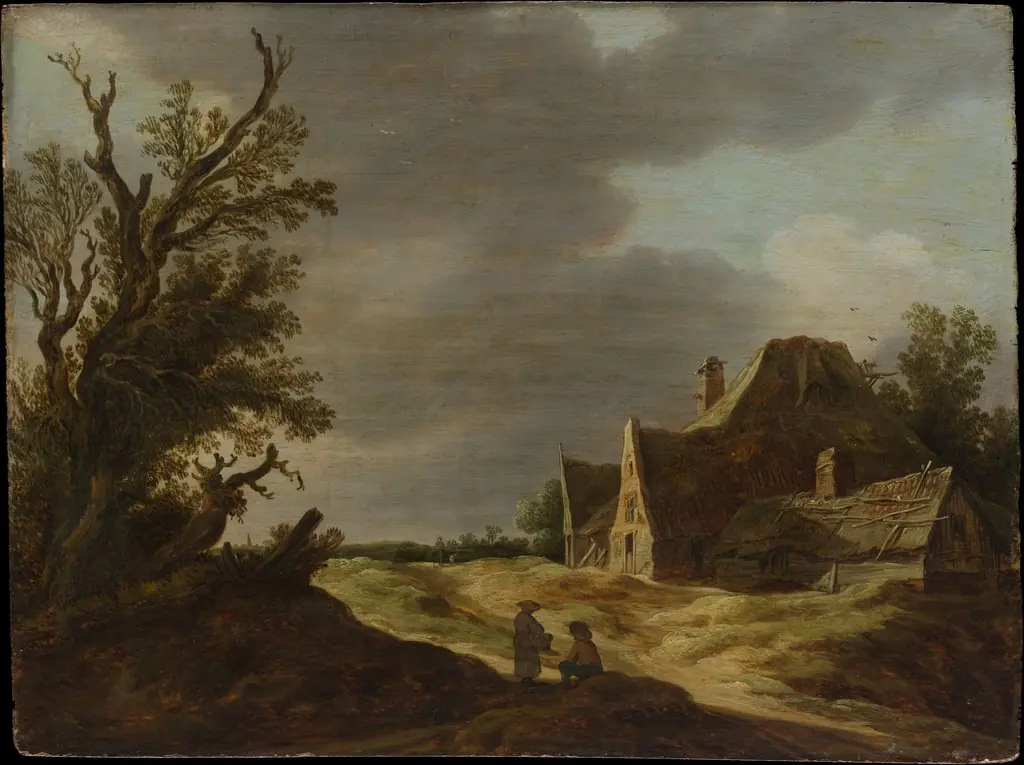 Sandy Road with a Farmhouse
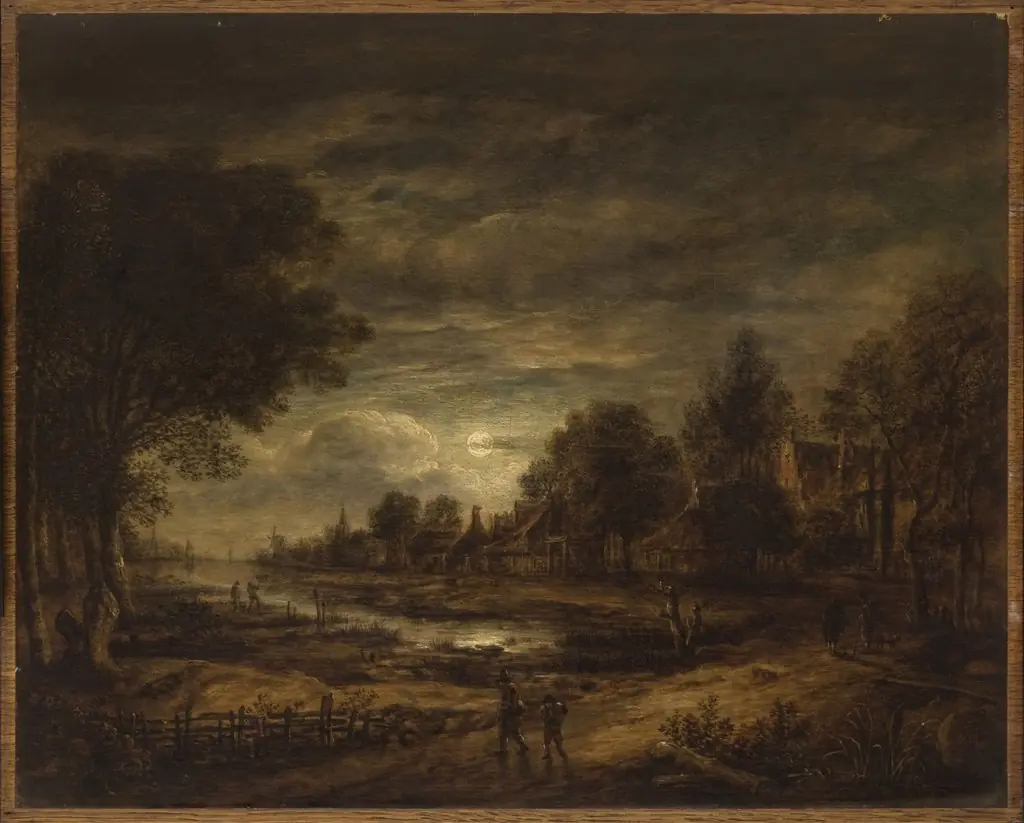 Moonlight on a Canal
 Wooded Landscape with Cottage and Horseman
 River view by night
 Landscape by moonlight
 Wooded Landscape with Cottage and Horseman
 View of the Town of Alkmaar
 Landscape with a Brook and a Village in Moonlight
 Old country cottage on the water
 Moonlight Landscape with village
 Landschap bij maneschijn