Artwork
Road through a wet forest
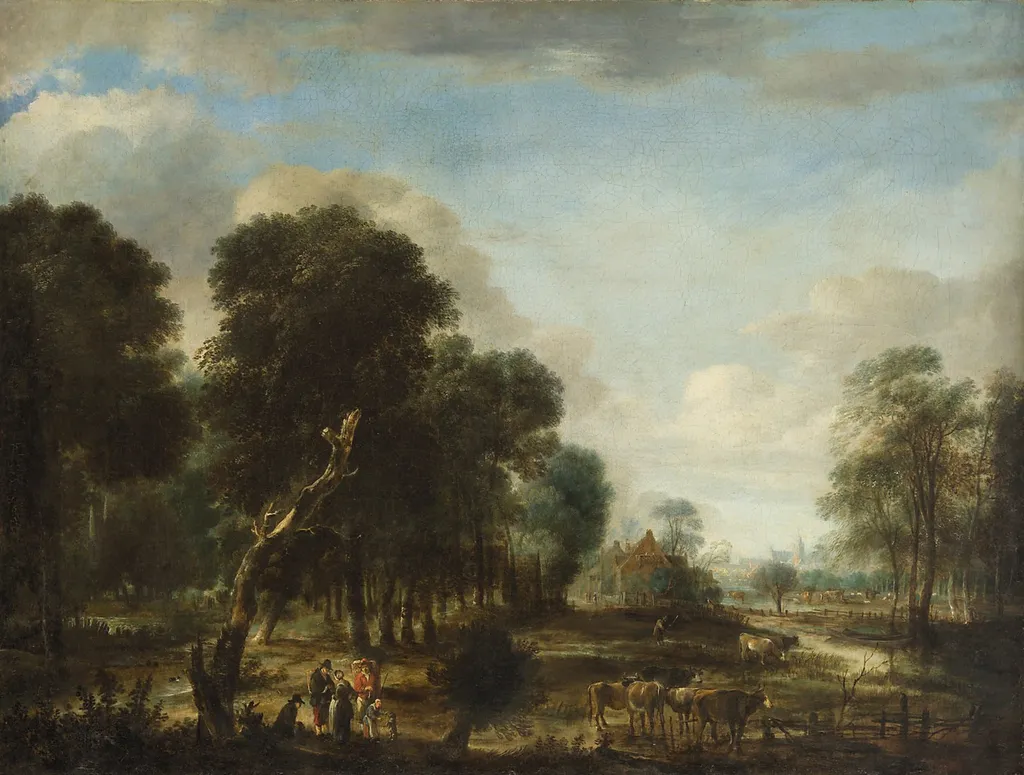
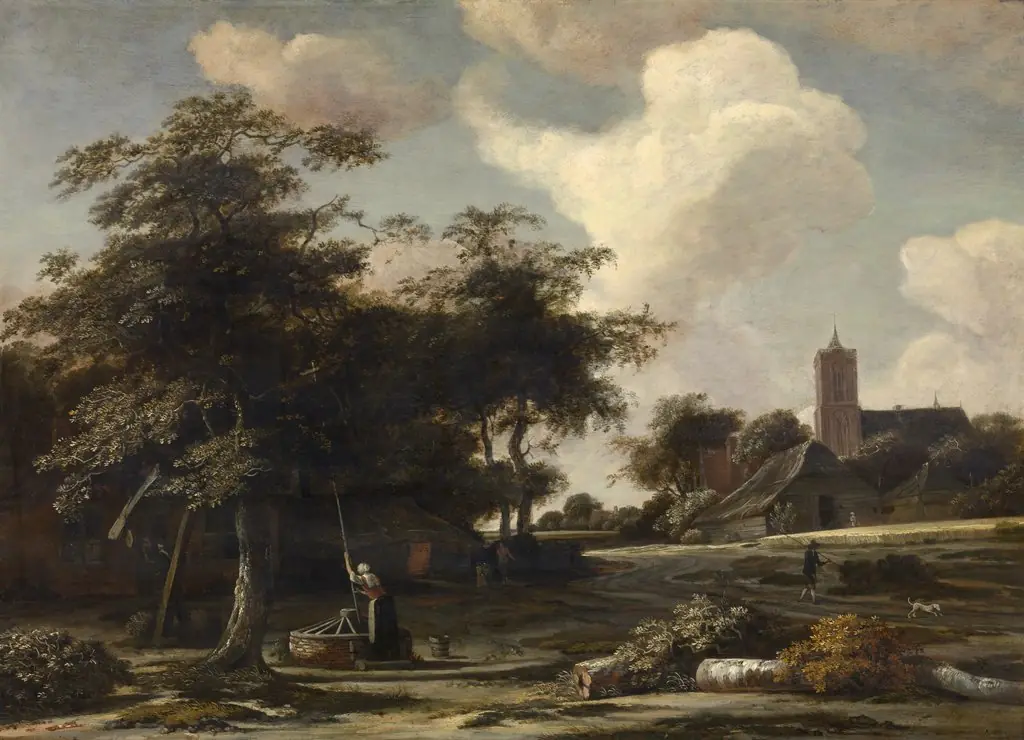
Road through a wet forest is an unspecified painting by the Dutch Golden Age artist Aert van der Neer. It dates from 1645 and is held in the collection of the Kunsthistorisches Museum.
About this work
Subject & Meaning
The inclusion of villagers and travelers on the road reinforces this reading of the landscape as a lived, working environment rather than a purely wild one.
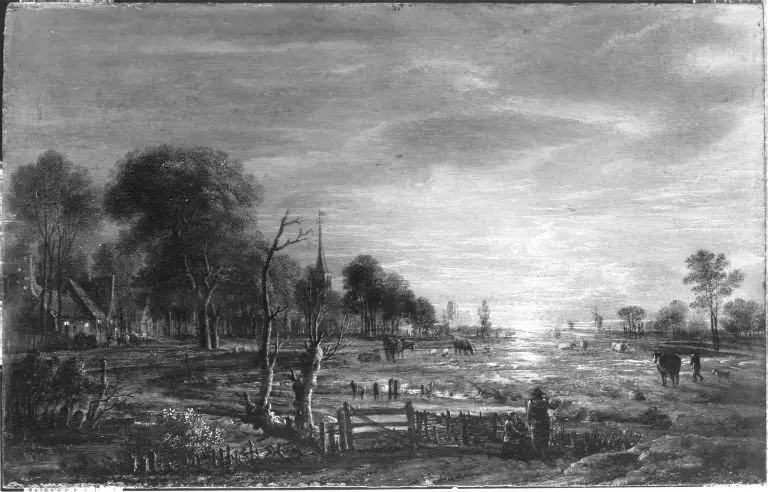
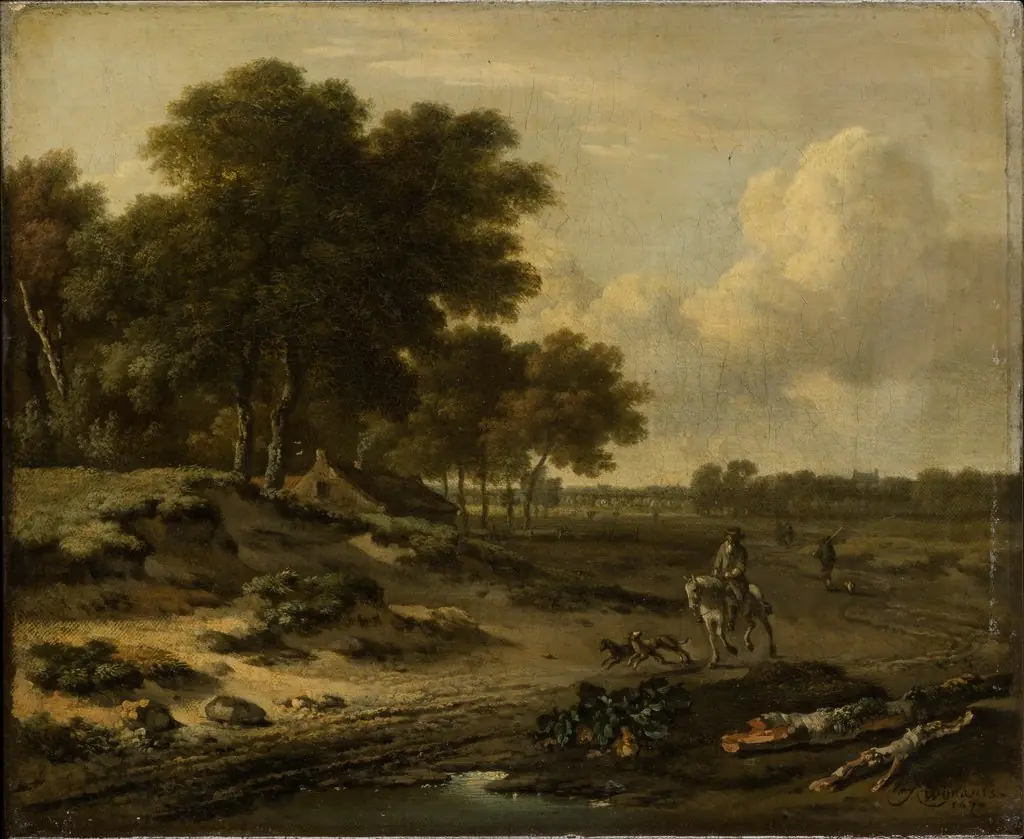
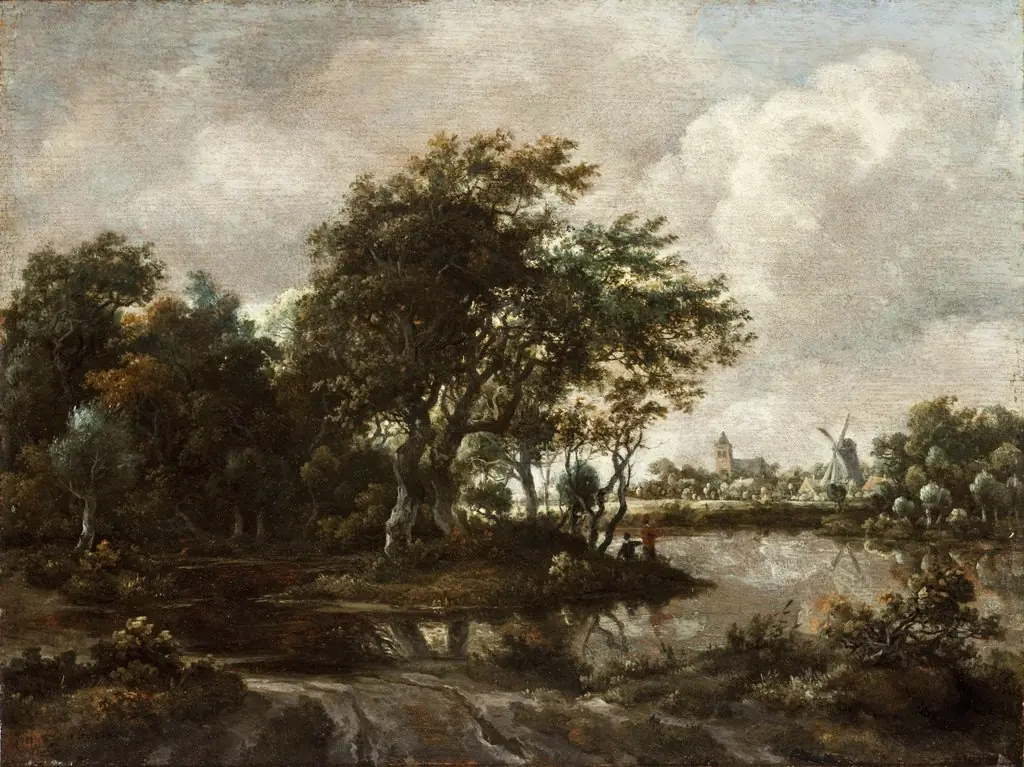
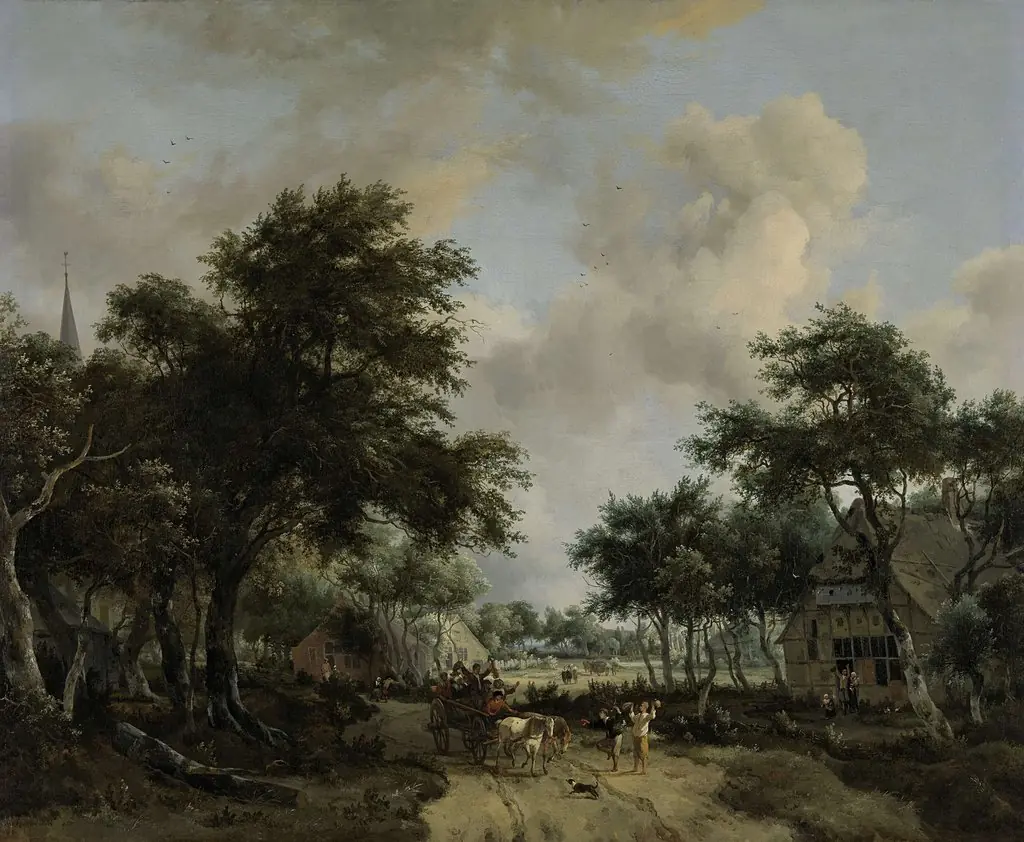
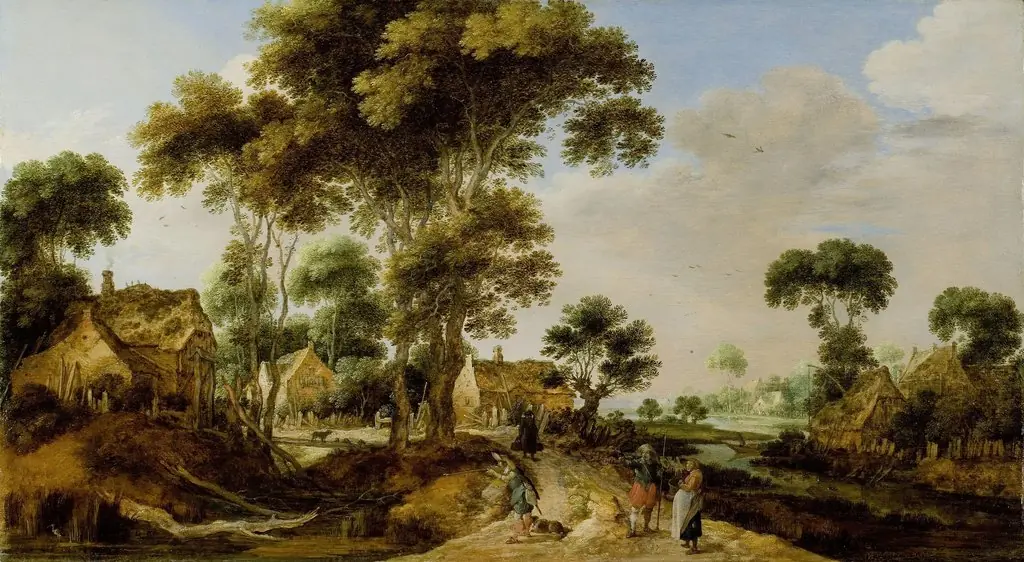
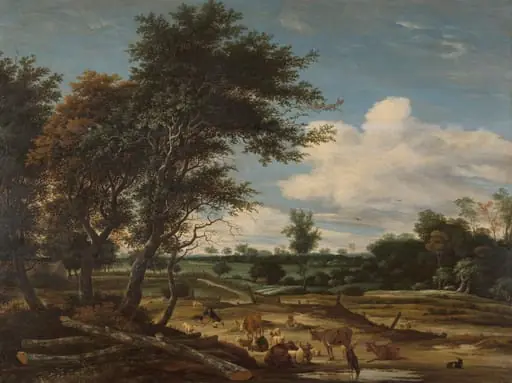
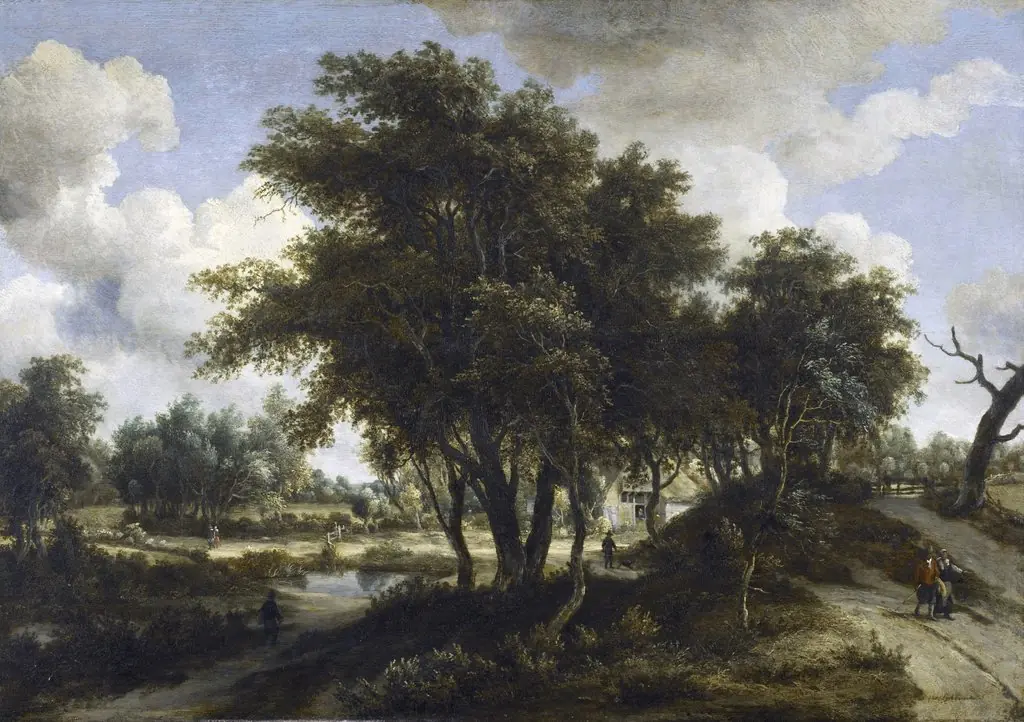
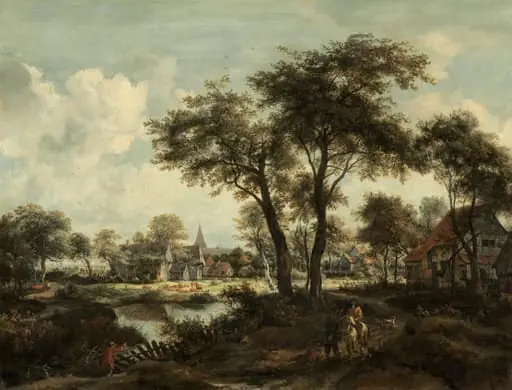
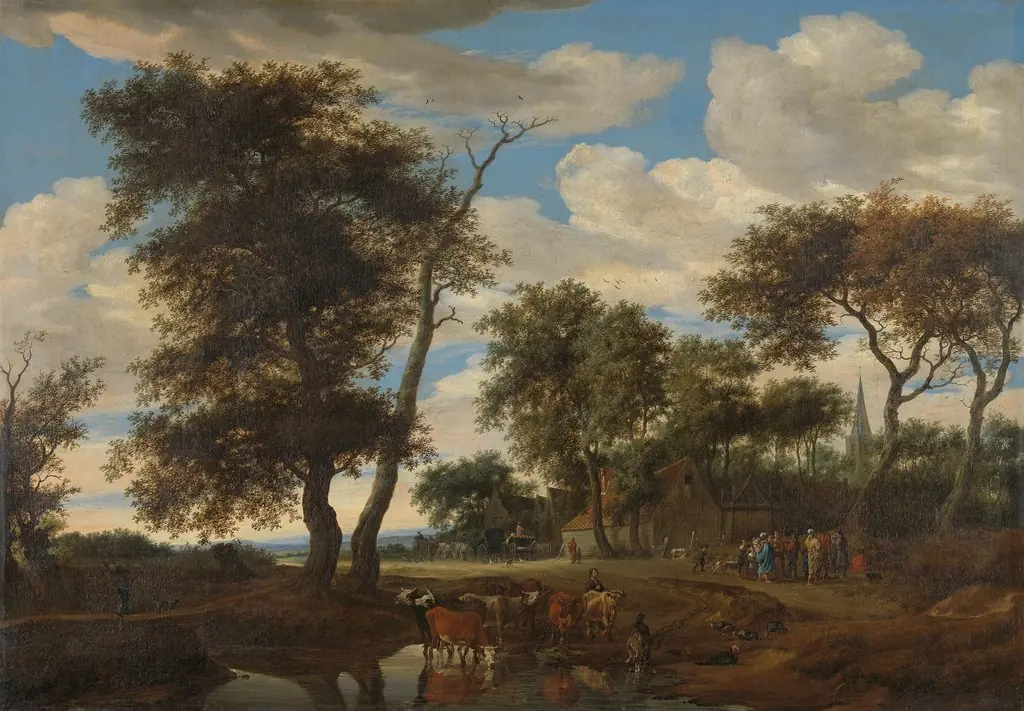
Road through a wet forest is a landscape painting that situates a rural pathway within a dense, damp woodland setting. The depicted scene combines natural and inhabited elements: a forest, an adjacent village, and open pasture where cattle graze. Human presence is registered through a man and a woman traveling along the road, with the woman carrying a backpack, suggesting everyday rural movement rather than a narrative event.
The composition pairs the enclosure of the wet forest with signs of pastoral habitation, a hallmark pairing in Dutch seventeenth-century landscape imagery where woodland paths and grazing livestock evoke the productive, inhabited countryside. The inclusion of villagers and travelers on the road reinforces this reading of the landscape as a lived, working environment rather than a purely wild one.
History & Provenance
Road through a wet forest was painted by Aert van der Neer in 1645 (inception date 1645-01-01). The work is presently housed in the Kunsthistorisches Museum in Vienna, where it forms part of the museum's collection. No further details regarding commission, earlier owners, or provenance are provided in the available sources.
The painting Road through a wet forest by Aert van der Neer is held in the collection of the Kunsthistorisches Museum. Created in 1645, the work depicts a landscape featuring a village, forest, pasture, and figures including men, women, and cattle. While the piece is confirmed as part of the museum's holdings, the available records do not specify a particular inventory number or detail any past exhibition history for this specific artwork.
Overview
Aert van der Neer's Road through a Wet Forest, painted in 1645, exemplifies the Dutch Golden Age tradition of landscape painting. This oil on panel work captures a tranquil forest scene, featuring a path traversed by figures and livestock under a muted sky. The painting is part of the collection at the Kunsthistorisches Museum, offering insight into the artist's characteristic approach to natural environments.
Technique & Style
Van der Neer's distinctive style is evident in the painting's atmospheric rendering and subtle illumination. He masterfully depicts light filtering through the dense canopy, creating contrasts between glowing branches and deep shadows. The pale, cloudy sky and damp ground suggest a recent rain, contributing to the work's quiet, reflective mood. This attention to light and weather is a hallmark of his landscape compositions.
Context
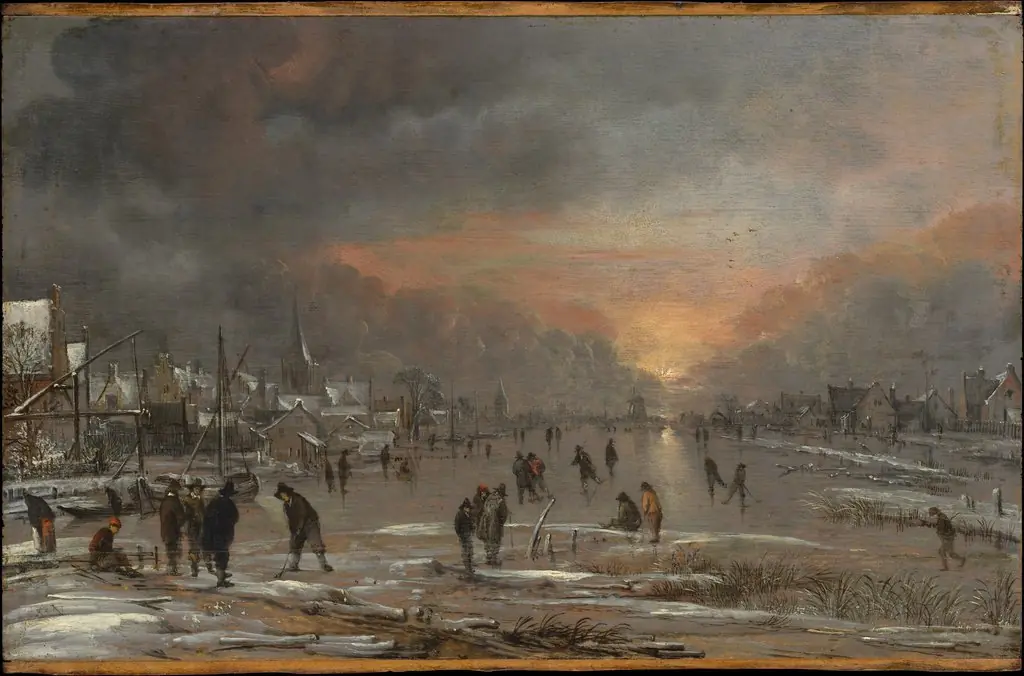
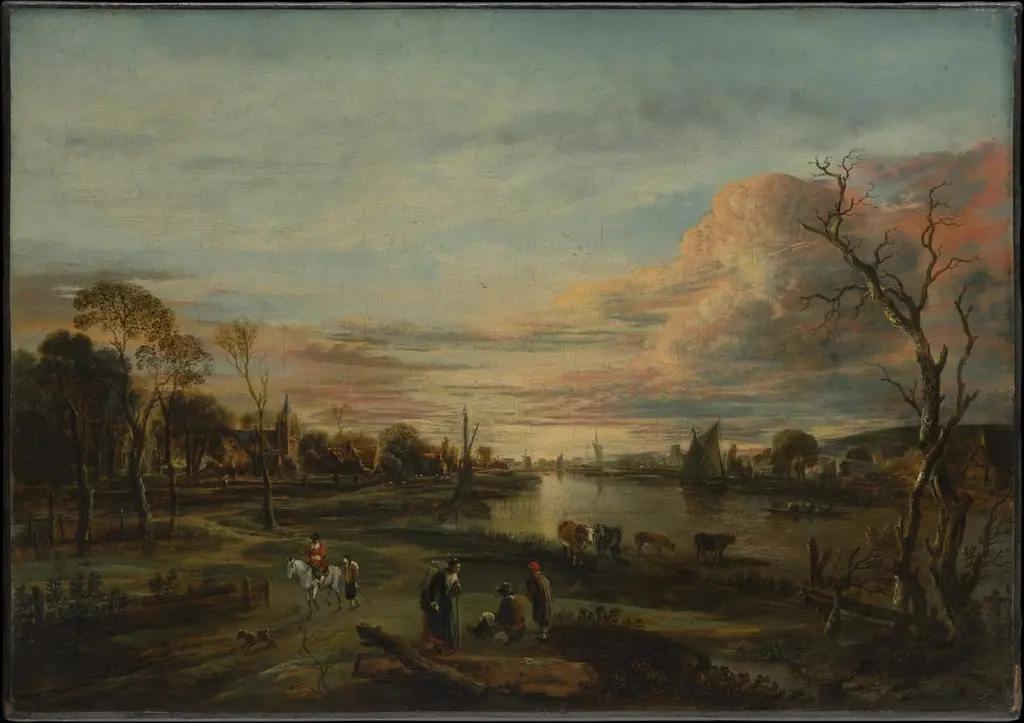
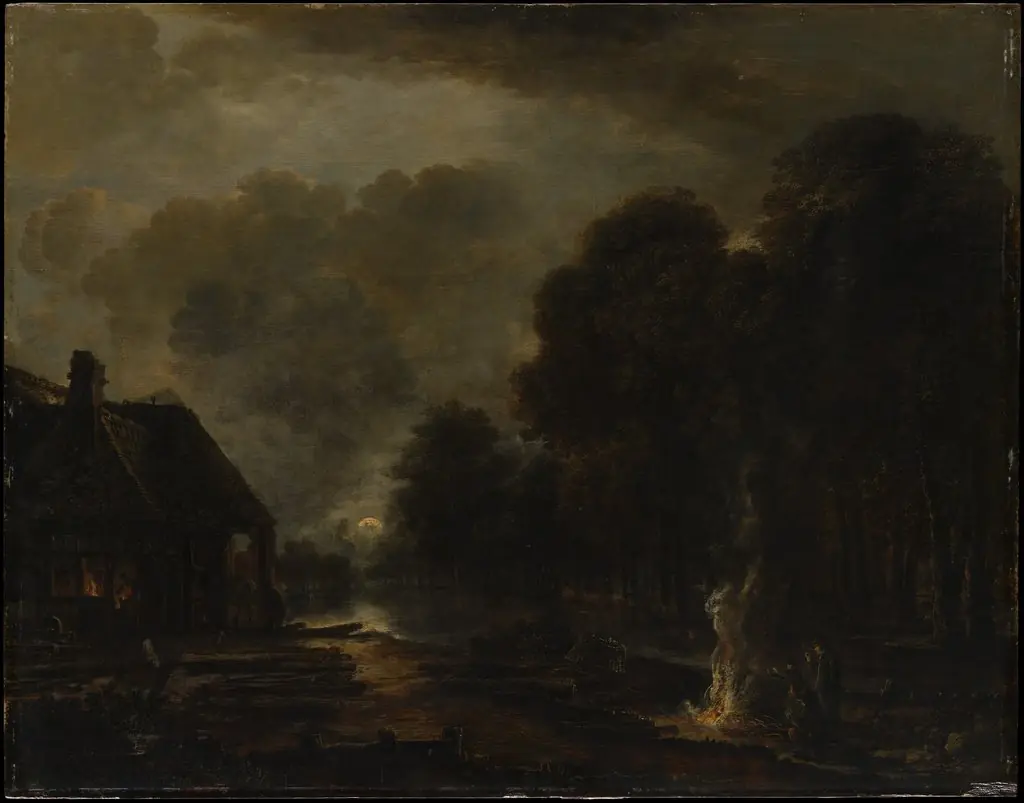
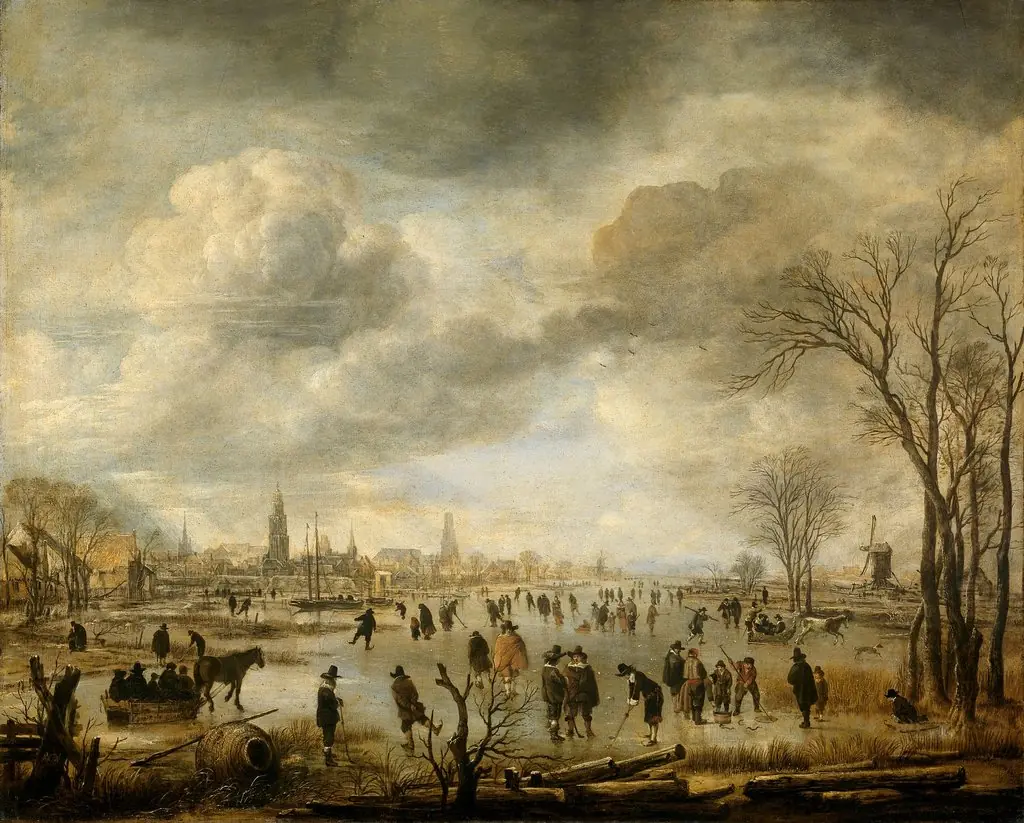
Aert van der Neer was active during the Dutch Golden Age, a period rich with landscape painters. While his contemporaries like Aelbert Cuyp and Meindert Hobbema achieved greater renown, van der Neer developed a unique specialization in atmospheric scenes, particularly night and winter landscapes. His work, though less celebrated in his time, contributes significantly to the diverse artistic output of 17th-century Dutch art.
Artist & collection
Artist
Aert van der Neer, or Aernout or Artus (c. 1603 – 9 November 1677), was a landscape painter of the Dutch Golden Age, who specialized in small night scenes lit only by moonlight and fires, and snowy winter landscapes,…