Artwork
School Festival at Ipiranga
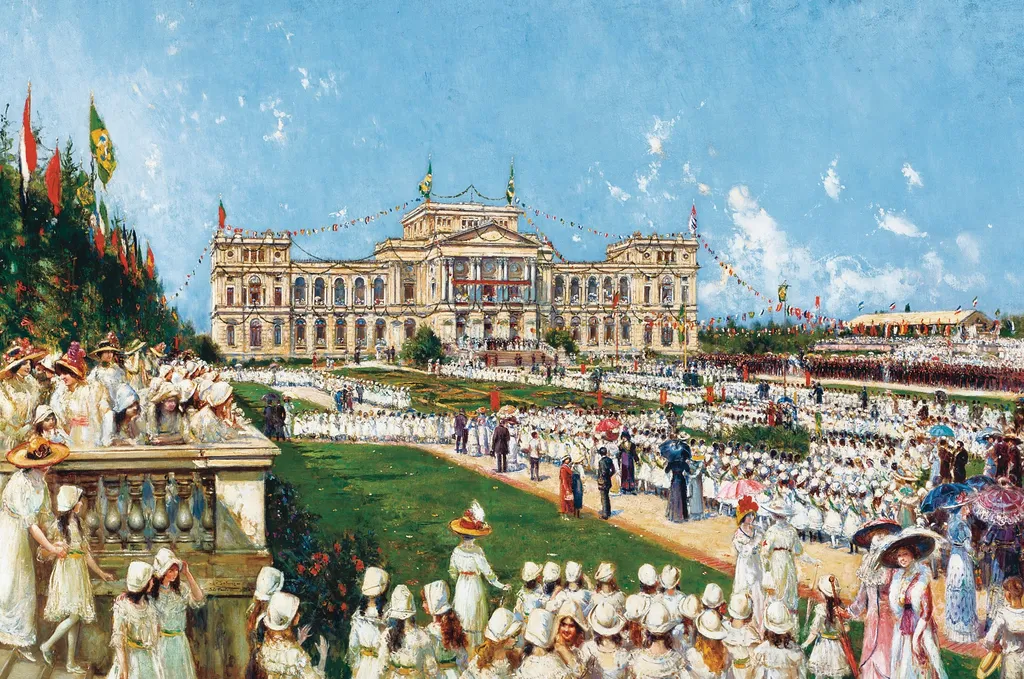
School Festival at Ipiranga is an oil painting by the Naïve art artist Agustín Salinas Teruel. It dates from 1912 and is held in the collection of the Pinacoteca de São Paulo.
About this work
Overview
Painted in 1912 by Agustín Salinas Teruel, this oil on canvas work captures a public celebration at Ipiranga, a site of historical significance in São Paulo.
Painted in 1912 by Agustín Salinas Teruel, this oil on canvas work captures a public celebration at Ipiranga, a site of historical significance in São Paulo. The painting is part of the Pinacoteca do Estado de São Paulo’s collection, where it remains a documented example of early 20th-century Brazilian social portraiture. Its scale and detail reflect a deliberate effort to record communal life during a period of national identity formation.
Subject & Meaning
The scene portrays a school festival attended by a diverse crowd in formal attire, suggesting an official or civic occasion. Figures gather beneath an ornate architectural backdrop, while women in white dresses stand on a balcony, observing the assembly. The composition emphasizes order and collective participation, possibly symbolizing education’s role in emerging urban society, rather than depicting a specific event.
Technique & Style
Salinas Teruel employed oil paint with careful brushwork to render textures of fabric, architecture, and movement. The palette is rich but restrained, with attention to light falling across figures and surfaces. While not relying on dramatic chiaroscuro, the painting uses subtle tonal contrasts to define depth and volume, enhancing the sense of a real, inhabited space.
History & Provenance
Created in 1912, the painting entered the Pinacoteca do Estado de São Paulo’s collection shortly after its completion. It was acquired during a period when the institution was actively building a national artistic canon. Its preservation reflects early institutional interest in documenting everyday civic life beyond elite or historical themes.
Context
The painting emerged during Brazil’s transition from empire to republic, when public festivals became tools for fostering civic unity. Ipiranga, site of Brazil’s independence declaration, lent symbolic weight to such gatherings. School events like this were promoted as vehicles for moral and national education, particularly in growing urban centers like São Paulo.
Legacy
Though not widely exhibited outside Brazil, the work contributes to understanding how regional artists engaged with public life in the early republic. It stands as a quiet record of social rituals, offering insight into class, gender, and public space in a modernizing society, without overt political messaging or romanticized nationalism.
Own this work as a print
Artist & collection

- Pe terasă la Sinaia
 View of St.Charles’s Church and the Polytechnic Institute
 Laying out the March Dead
 The Frederiksplein in Amsterdam during the arrival of Queen Wilhelmina, 5 September 1898
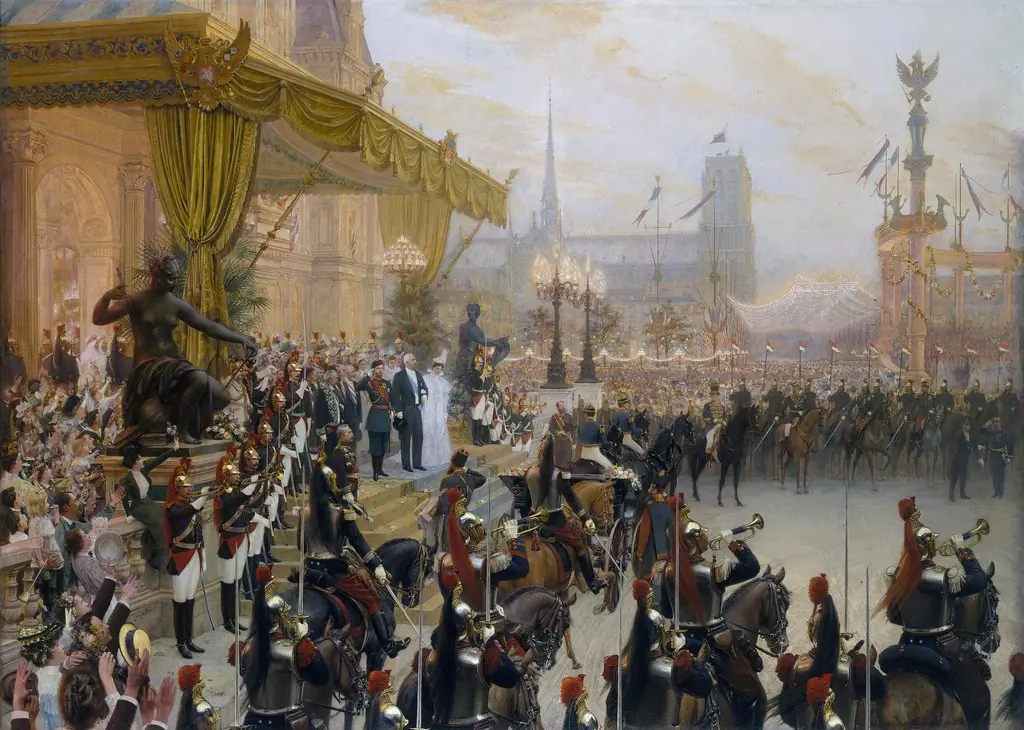 Ceremonial Reception of Nicholas II in Paris
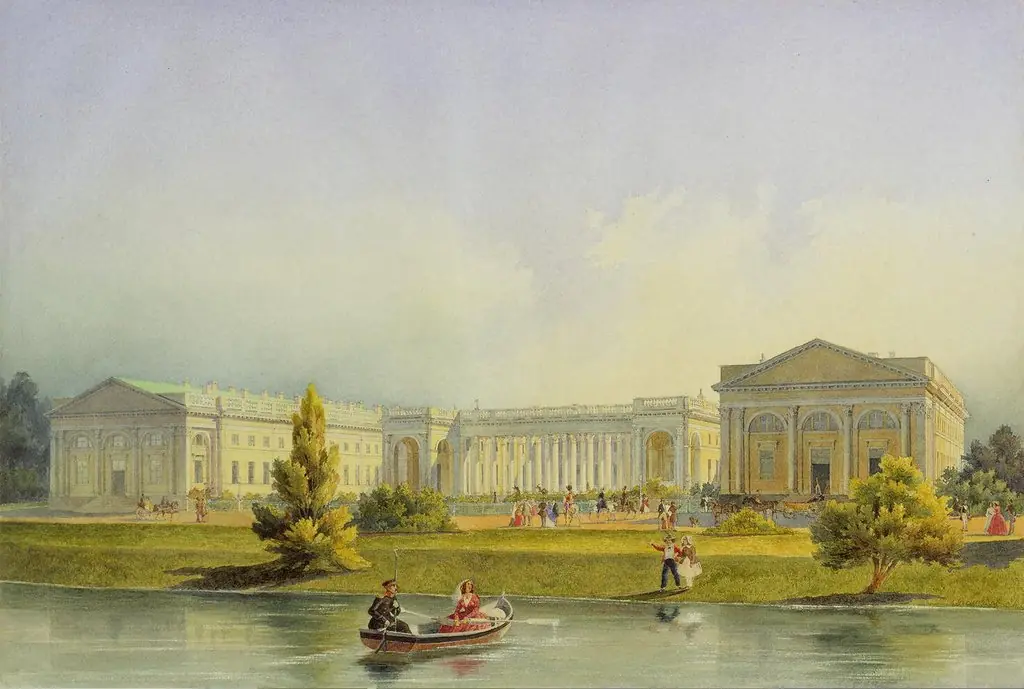 Alexander Palace in Tsarskoye Selo
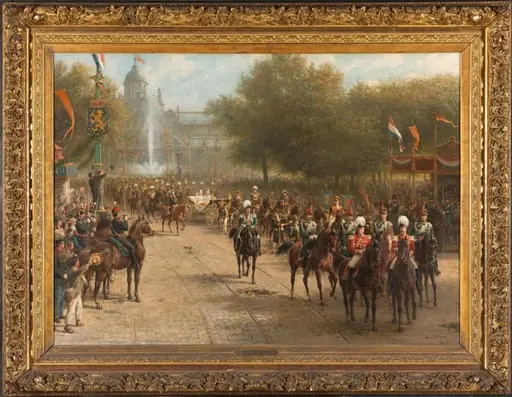 Untitled
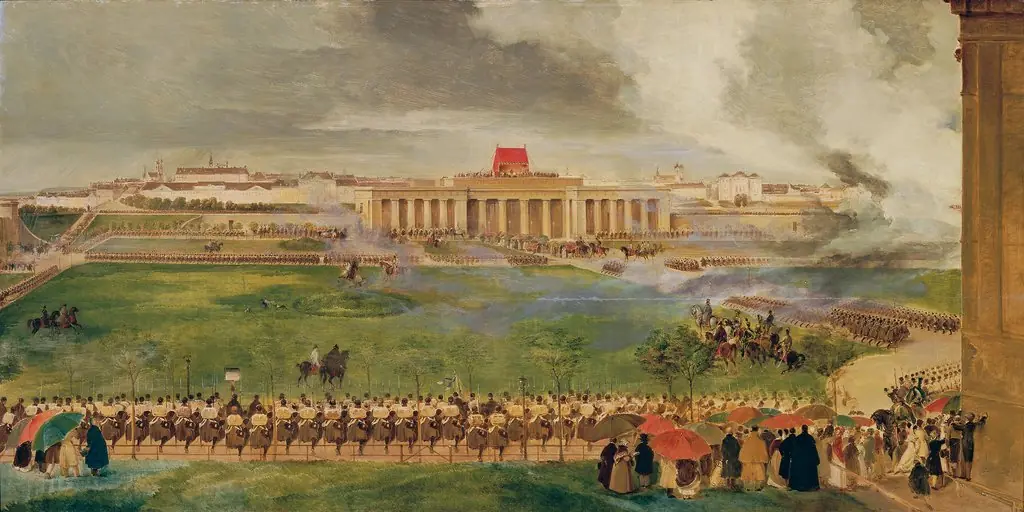 The Field Fair on the Outer Burgplatz on 13 April 1826
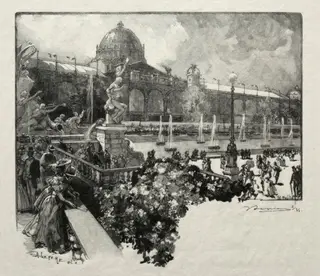 Le Palais des Arts Liberaux, Extérieur
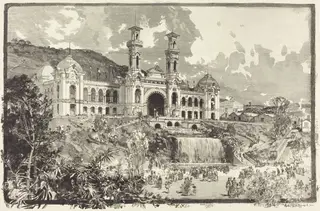 Exposition de Nice
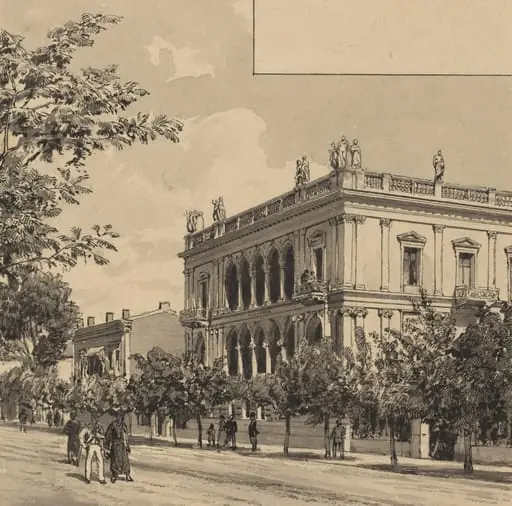 House of Heinrich Schliemann
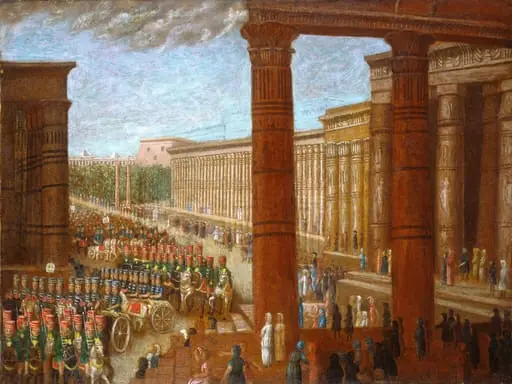 Pharaoh's Army Marching