Artwork
The Toilers of the Sea
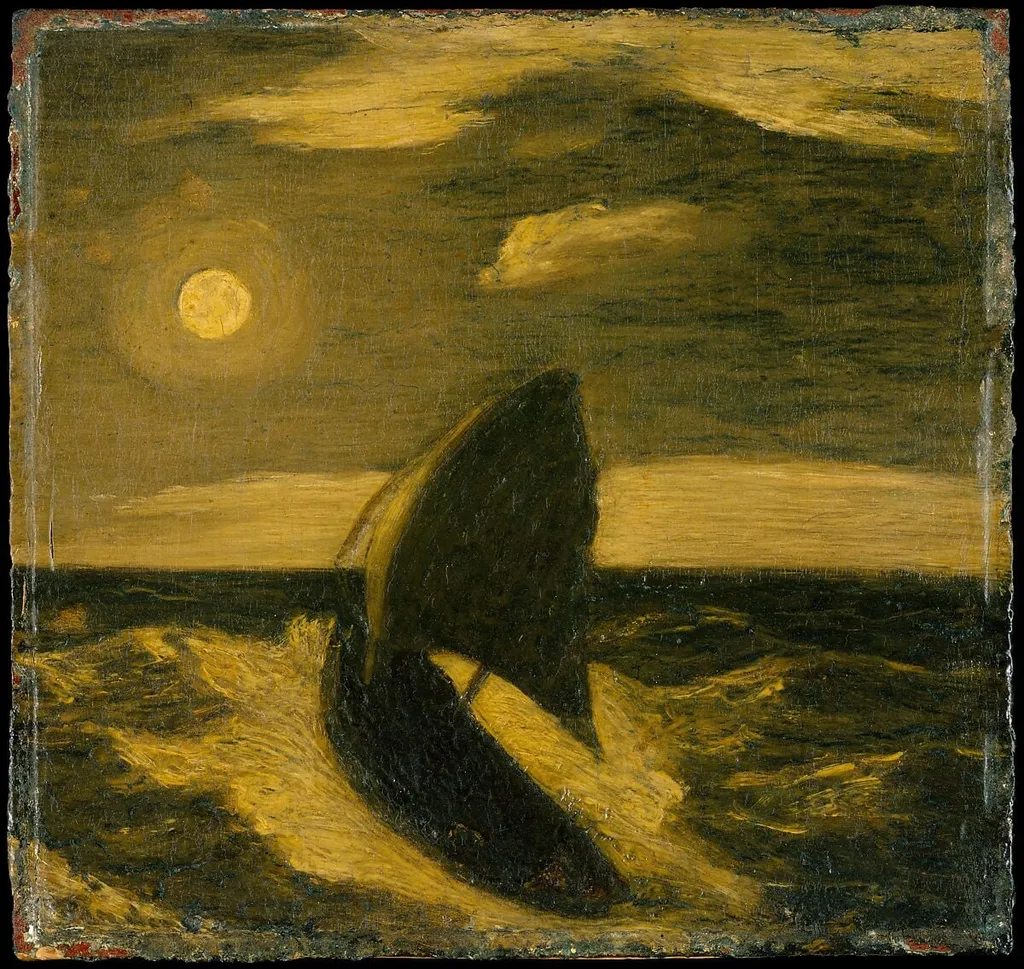
The Toilers of the Sea is an oil painting by the American Impressionist artist Albert Pinkham Ryder. It dates from 1882 and is held in the collection of the Metropolitan Museum of Art.
About this work
Technique & Style
The classification of the object places it within the realm of American painting, specifically noted for its depiction of maritime subjects.
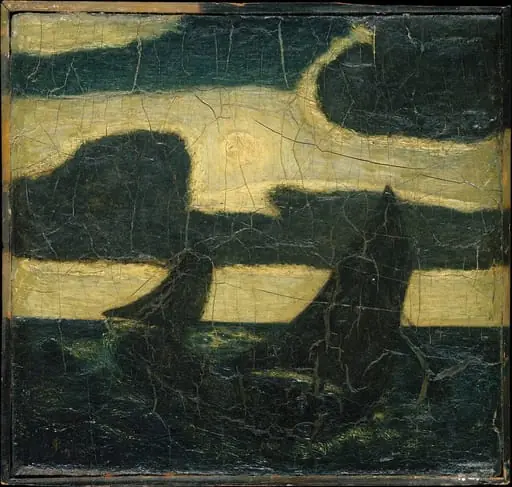
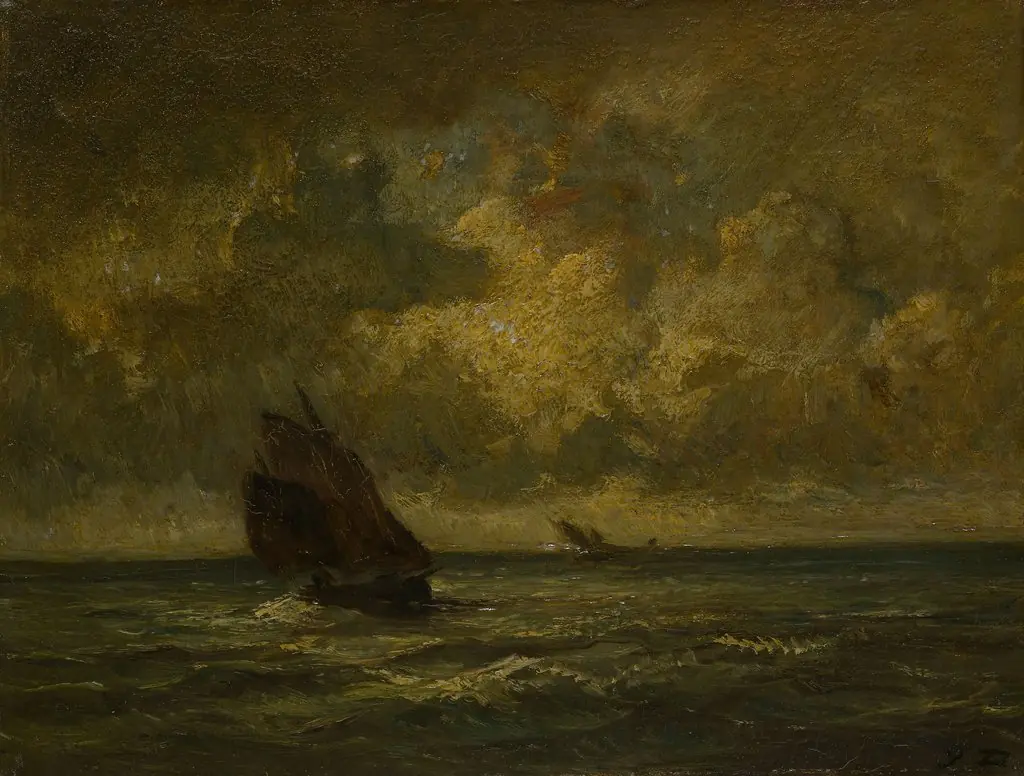
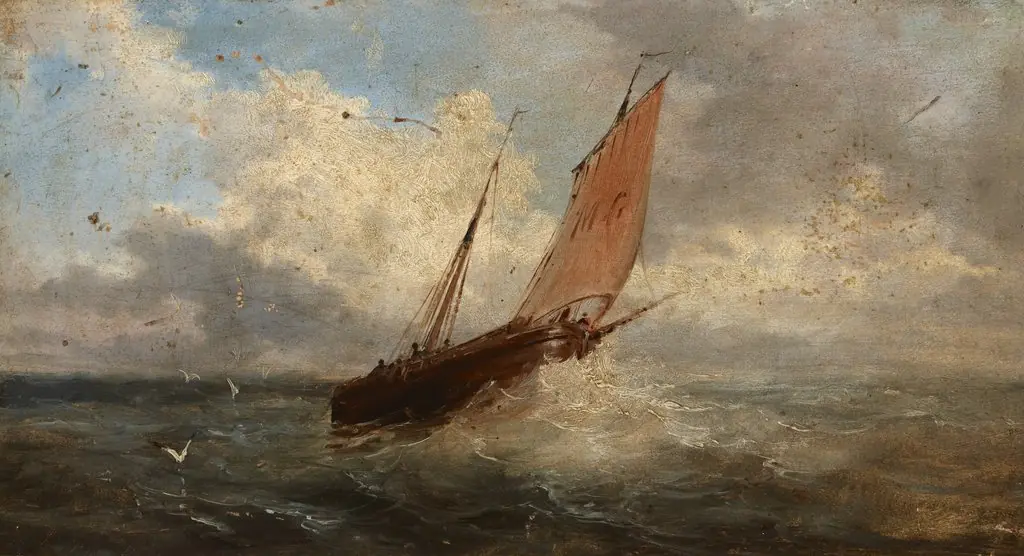
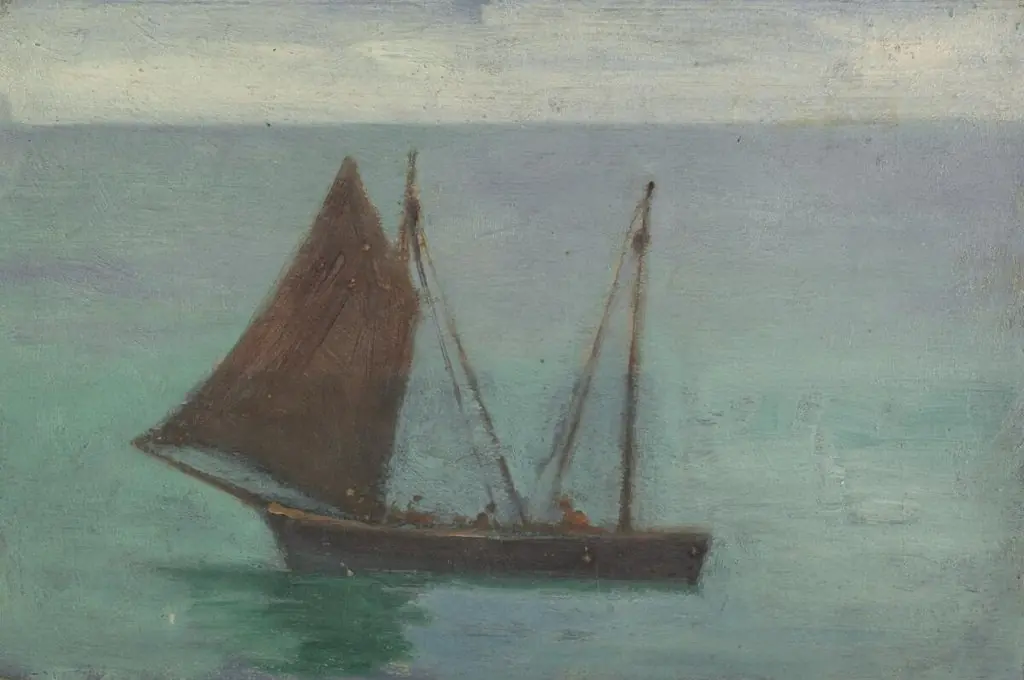
Executed in 1880, this marine work by Albert Pinkham Ryder utilizes oil paint applied to a wood panel support. The composition focuses on a boat within a seascape, adhering to the genre of marine art. Physically, the piece measures 29.2 centimeters in height and 30.5 centimeters in width.
The classification of the object places it within the realm of American painting, specifically noted for its depiction of maritime subjects. While the specific handling of the brushwork or current condition reports are not detailed in the available records, the fundamental material construction is established as oil on panel, a medium choice consistent with the artist's output during this period.
History & Provenance
The Toilers of the Sea was created by Albert Pinkham Ryder in 1880, executed in oil on wood. The painting entered the collection of the Metropolitan Museum of Art, where it is classified within the museum's American Wing and held as part of its holdings. No further details regarding commission, prior ownership, or intermediate provenance are documented in the available sources.
Albert Pinkham Ryder's painting The Toilers of the Sea is held in the collection of the Metropolitan Museum of Art, where it is classified within the American Wing. The work, executed in oil on panel around 1880, measures 29.2 by 30.5 centimeters. While the provided sources confirm its current location and physical attributes, they do not supply specific accession or inventory numbers for the piece.
Furthermore, the available documentation does not record a detailed exhibition history or a chronological list of public displays for this marine subject.
Overview
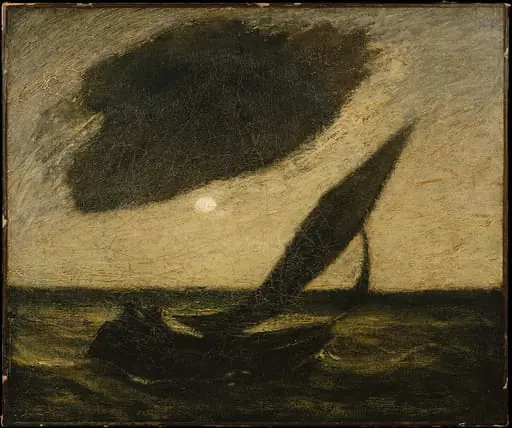
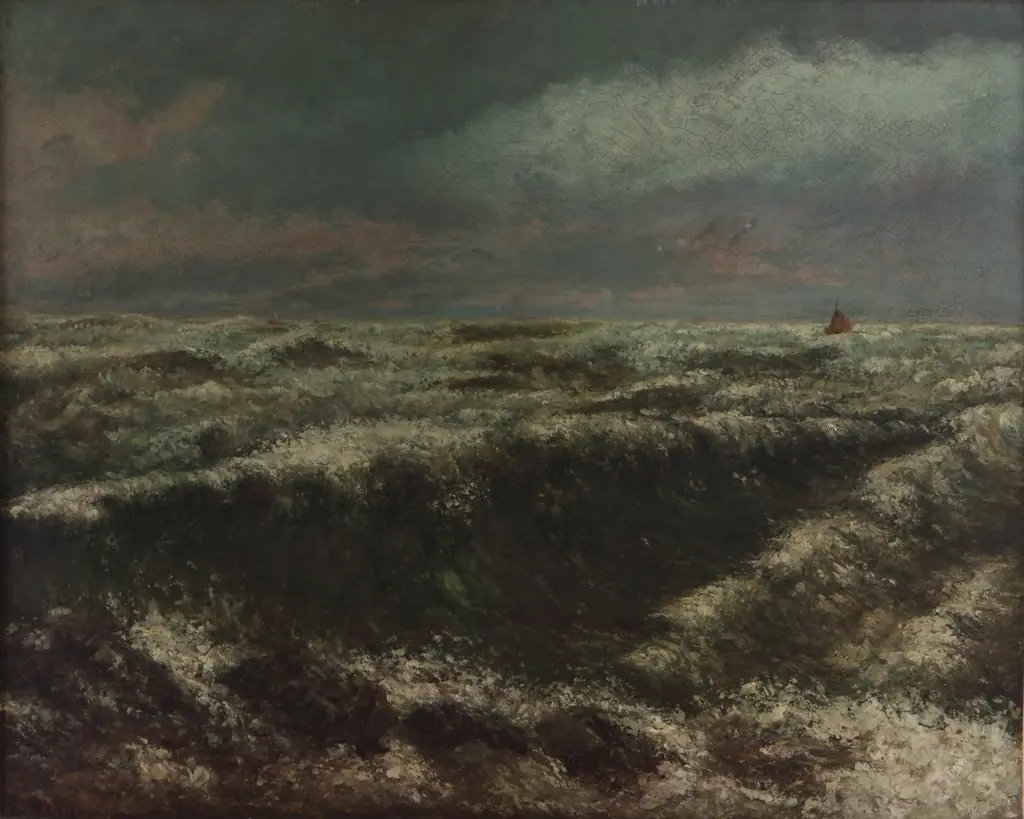
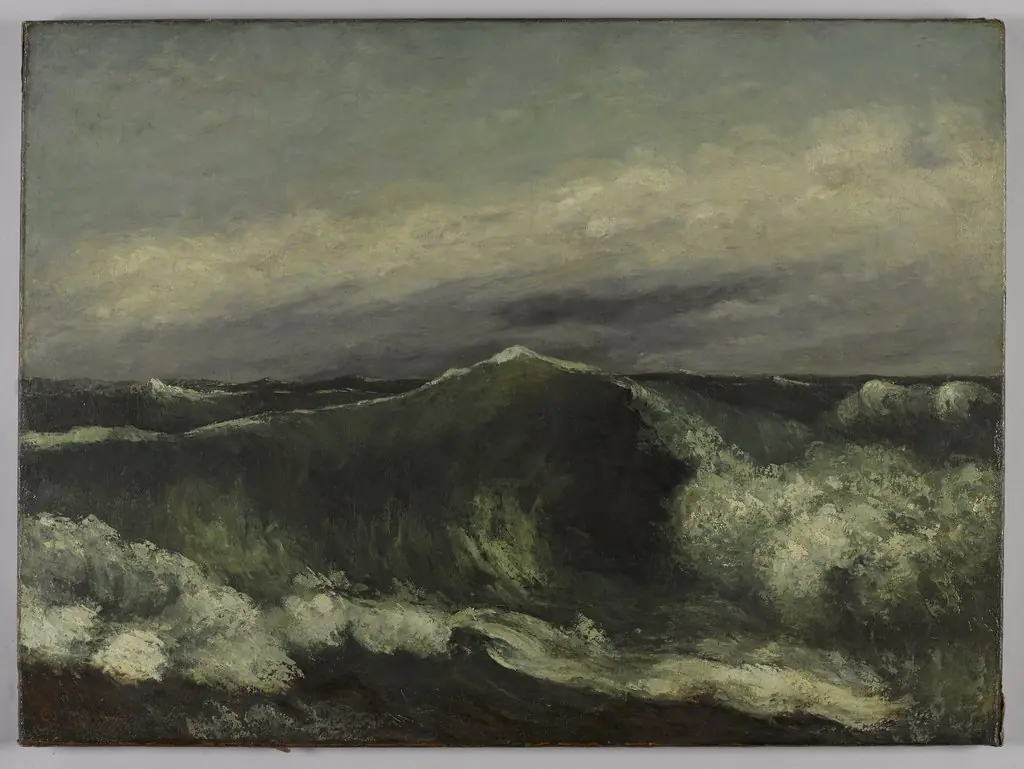
The Toilers of the Sea (1882) by Albert Pinkham Ryder is a marine painting executed in oil on wood panel. The composition depicts a turbulent, nocturnal seascape where a small boat is overwhelmed by towering, churning waves. A lone figure clings desperately to the mast, arms outstretched against the dark, stormy sky.
A ghostly, luminous moon pierces the clouds, casting an eerie, spectral light that contrasts with the deep shadows of the water. Ryder constructed the image using multiple layers of thin, translucent glazes, a technique that creates a glowing, atmospheric depth and enhances the sense of mystery and isolation. This work exemplifies Ryder's mature style, characterized by his preference for wood supports and his focus on literary and maritime themes drawn from literature and personal imagination.
Painted during a period when the artist was increasingly turning away from direct observation toward symbolic and romantic interpretations of nature, The Toilers of the Sea reflects his unique approach to capturing the sublime power of the ocean and the fragility of human endeavor within it.
Subject & Meaning
The painting portrays a dark, stormy night at sea, illuminated by a faint, ethereal moon. A small boat, overwhelmed by towering waves, appears to be sinking. A solitary figure desperately clings to the vessel's mast, arms outstretched, symbolizing a profound struggle against the elements. This dramatic composition evokes themes of human perseverance and the formidable power of the natural world.
Context
As a significant example of American marine painting, The Toilers of the Sea resides within the American Wing collection. Ryder was known for his highly individualistic and often melancholic interpretations of natural scenes, frequently imbued with a sense of the sublime or the dramatic. This piece reflects his characteristic focus on atmospheric effects and the emotional resonance of the landscape.
Artist & collection

Artist
Albert Pinkham Ryder was an American painter best known for his poetic and moody allegorical works and seascapes, as well as his eccentric personality.