Artwork
Susanna and the Elders
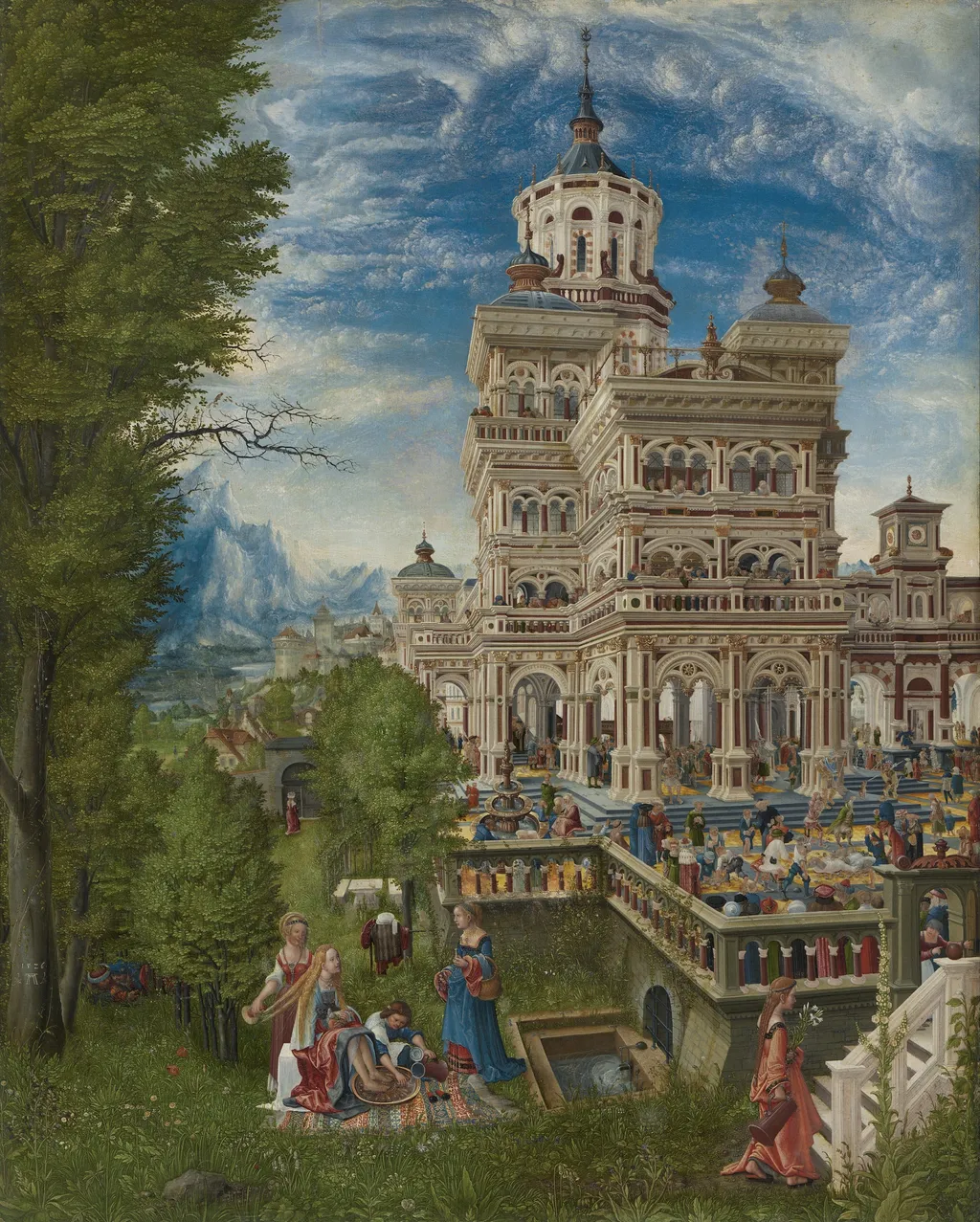
Susanna and the Elders is an oil painting by the Early Baroque Italian artist Albrecht Altdorfer. It dates from 1526 and is held in the collection of the Bavarian State Painting Collections.
About this work
Subject & Meaning
Rather than isolating the protagonists, he subordinates them into a bustling, fairy-tale palace setting filled with numerous figures conversing and relaxing.
The painting illustrates the Old Testament story of Susanna from the Book of Daniel, a tale in which two lustful elders secretly observe the chaste Susanna bathing, attempt to coerce her, and falsely accuse her of adultery, ultimately leading to their exposure by the prophet Daniel and execution by stoning. While artists frequently used this narrative as a pretext to depict a female nude, Altdorfer took a rare, more secular approach by portraying Susanna fully clothed. Rather than isolating the protagonists, he subordinates them into a bustling, fairy-tale palace setting filled with numerous figures conversing and relaxing.
Altdorfer weaves multiple narrative threads sequentially across the composition: Susanna walking toward the pool, seated while maids wash her feet and comb her hair, the two elders barely visible in the bushes, and her subsequent return to the palace. She carries a white lily, a symbol of innocence representing her chastity and resistance to the elders' threats, and holds a small dog on her lap, a symbol of fidelity. The narrative concludes on the right with the stoning of the elders as punishment for their false testimony, observed by onlookers from windows and terraces.
Technique & Style
Susanna and the Elders is executed in oil paint on a lime wood panel, measuring 74.8 × 61.2 cm. Altdorfer's handling departs from the conventional treatment of the bathing Susanna theme: rather than foregrounding a female nude, he embeds the narrative within an elaborate architectural and landscape setting dominated by the palace of Jehoiakim, with extensive terraces, cloisters, halls, and adjacent gardens populated by numerous small figures conversing, eating, and observing.
Stylistically, the work is notable for its secular, genre-like emphasis on the built environment, making it one of the most unusual renderings of the subject. The composition distributes multiple episodes of the story across the panel, Susanna walking toward the pool, her toilet with maids, the elders hidden in the foliage, and the later stoning scene, woven into the densely populated palace complex. Susanna is depicted clothed, with a red dress and a white lily as an attribute of innocence, and the elders nearly disappear into the surrounding leafage.
History & Provenance
Painted in 1526 by Albrecht Altdorfer, Susanna and the Elders was commissioned by Wilhelm IV, Duke of Bavaria. The work entered the collection of the Bavarian State Painting Collections and remains in the Alte Pinakothek, Munich, where it is catalogued as Inv.-Nr. 698.
The painting's dimensions are 74.8 cm in height and 61.2 cm in width. It has been continuously held by the Alte Pinakothek since its acquisition, with no recorded changes of ownership after its initial placement in the ducal collection. The painting was featured in the exhibition titled "The Old Testament, Stories and Figures."
Context
Albrecht Altdorfer's 1526 painting is recognized as one of the most extraordinary depictions of Susanna in art history due to its secular and genre-based approach. Unlike contemporaries who utilized the biblical narrative primarily to showcase a female nude, Altdorfer subordinates the figures to an elaborate architectural setting dominated by the palace of Jehoiakim. The protagonists and the voyeuristic elders are rendered as minor details within a bustling scene of courtly life, marking a rare exception in the iconographic tradition.
Scholars have analyzed this composition through various lenses, including political allegory connecting the work to Regensburg's context during the Turkish wars, as well as studies on voyeurism in Western art. The narrative complexity is heightened by the inclusion of multiple chronological moments, from the bath to the eventual stoning of the false accusers, all integrated into a single, densely populated landscape.
Overview
Albrecht Altdorfer's painting, Susanna and the Elders, completed in 1526, depicts a scene from the Old Testament. Executed in oil on wood, this work by the German artist is presently housed in the Alte Pinakothek in Munich. It illustrates the narrative of Susanna, a virtuous woman, as she is observed while bathing, a moment central to the biblical account.
Own this work as a print
Artist & collection
Artist
Albrecht Altdorfer (c. 1480 – 12 February 1538) was a German painter, engraver and architect of the Renaissance working in Regensburg. Along with Lucas Cranach the Elder and Wolf Huber he is regarded to be the main…

- The Legend of Saint Christopher
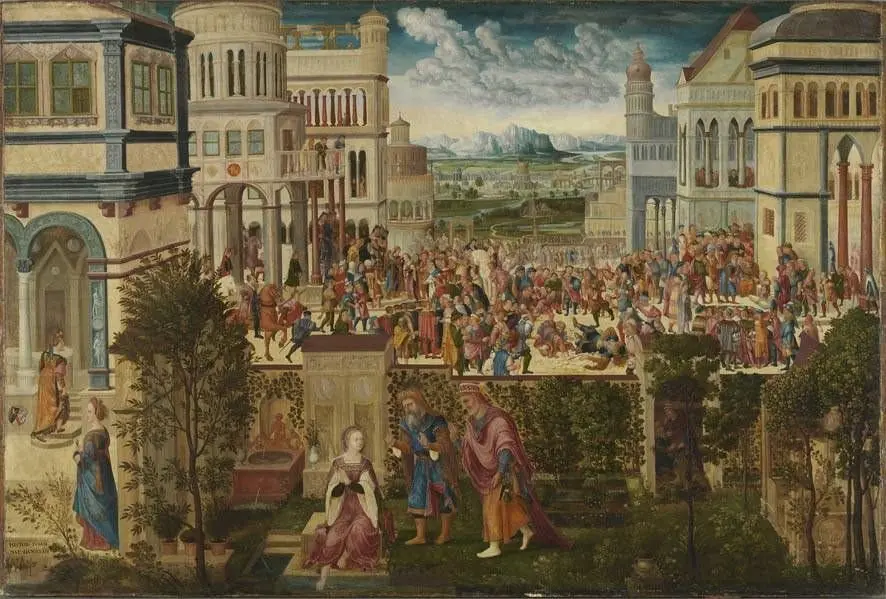 Historienzyklus: Geschichte der Susanna
 The Twelve Months of the Year (Los doce meses del año)
 Rest on the Flight to Egypt
 Martyrdom of the Ten Thousand
 Landscape with the Penitent Saint Jerome
 Landscape with Saint John the Baptist
 Landscape with the Flight into Egypt
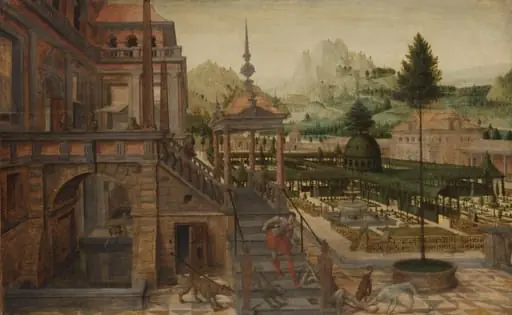 Palace Gardens with Poor Lazarus in the foreground
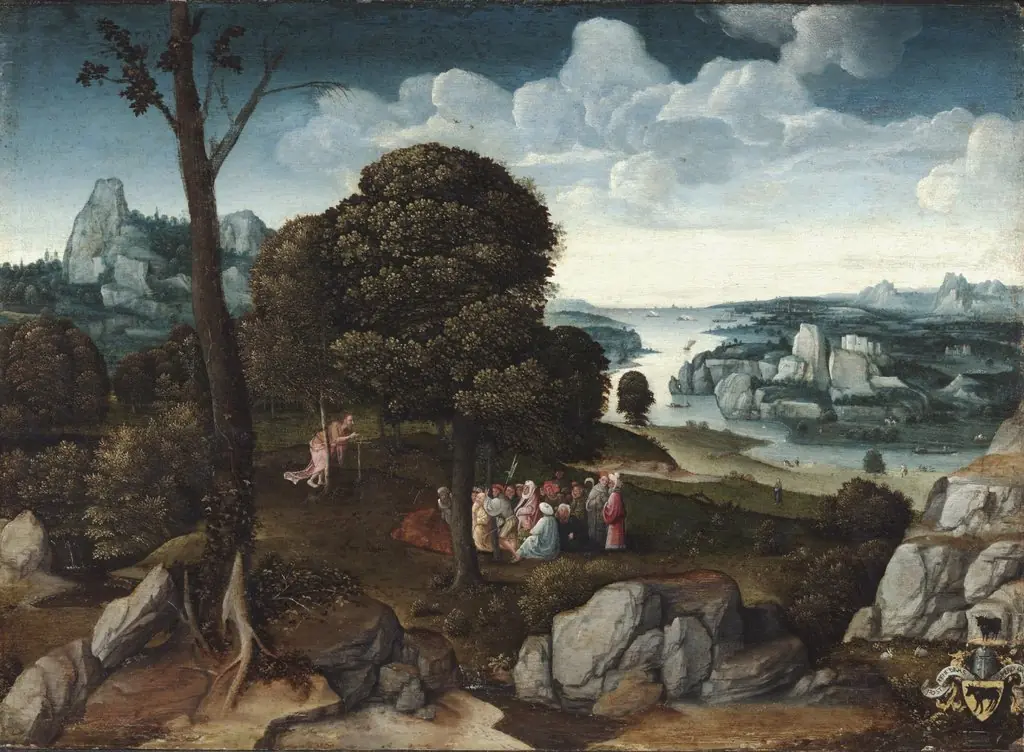 Landscape with Saint John the Baptist Preaching
 Landscape with the Rest on the Flight into Egypt
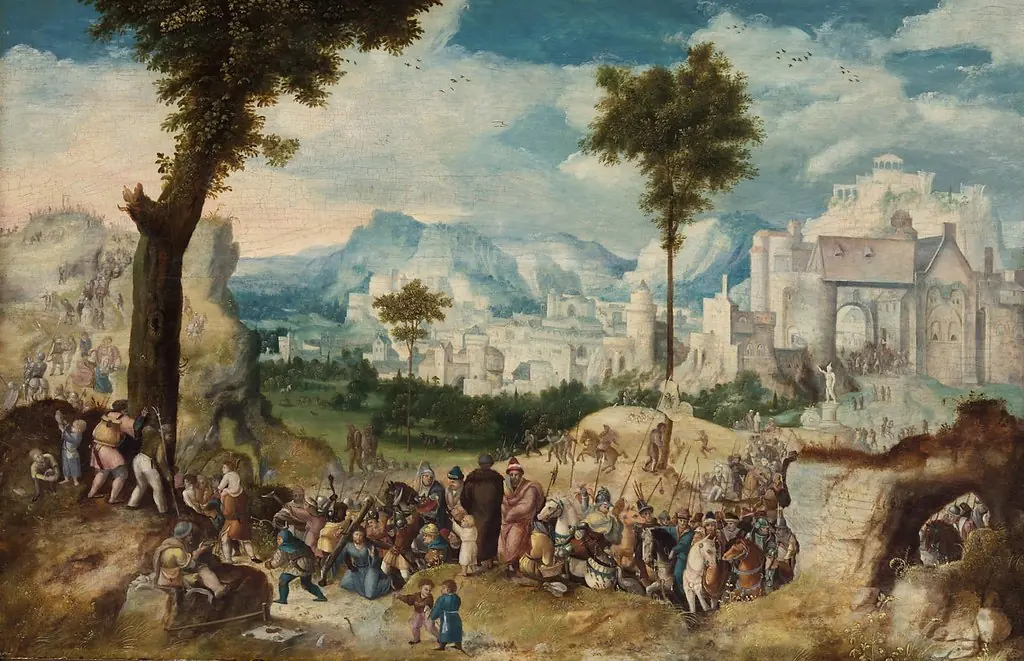 Kreuztragung Christi