Artist
Albrecht Altdorfer
Germany
Albrecht Altdorfer is a Germany Early Baroque Italian artist. 261 works are cataloged here, principally at National Gallery of Art.
Overview
Albrecht Altdorfer (c. 1480-12 February 1538) was a German painter, engraver, printmaker, and architect of the Renaissance, active throughout his career in Regensburg. He is regarded as one of the principal founders of landscape painting as an independent genre in European art, and as the leading representative of the Danube School alongside Lucas Cranach the Elder and Wolf Huber. Working in multiple media including oil, tempera, engraving, woodcut, and etching, Altdorfer produced biblical and historical subjects set against expressive, atmospheric landscapes of unprecedented autonomy. His innovative approach to nature, light, and color established models that influenced generations of later artists from Pieter Bruegel to J.M.W. Turner.
Biography & dates
Altdorfer was born around 1480, probably in Regensburg or nearby Altdorf in the Holy Roman Empire. His father, Ulrich Altdorfer, was a painter and miniaturist active in Regensburg from 1478 to 1491, and from him the young Altdorfer acquired his initial training. The first surviving document concerning him dates to 13 March 1505, when he obtained citizenship in Regensburg and was recorded as a "painter from Amberg." He became a fully enfranchised citizen three years later and amassed considerable wealth, acquiring substantial property including a house with tower and courtyard near St. Veit's Brook. Around 1511 or earlier, he traveled down the Danube and south into the Alps, an experience that profoundly shaped his subsequent artistic direction. From 1513 he served Emperor Maximilian I in Innsbruck, receiving commissions from the imperial court. In 1517 he acquired a second house, and in 1519 was elected to the Outer Council of Regensburg. He served as a lay assessor in the city's Hansgrafenamt from 1520 to 1525, an office with extensive supervisory authority over guild and commercial matters. In 1526 he rose to the Inner Council and was appointed city architect, supervising construction of a slaughterhouse (1527), a wine storehouse, and a market tower. When elected mayor on 15 September 1528, he declined the office in order to complete what was likely The Battle of Alexander at Issus for Duke William IV of Bavaria. In 1529-30 he directed the strengthening of Regensburg's fortifications against the Turkish threat. His wife died in 1532. In 1533 he signed as one of fifteen council members issuing a call for a Protestant preacher, and in 1535 he traveled to Vienna as the city's envoy to Ferdinand I, delivering a letter of apology for Regensburg's political and religious disturbances. He died in Regensburg on 12 February 1538 and was buried in the church of the former Augustinian monastery, whose stewardship he had held since 1535. His detailed testament inventoried his considerable possessions, and his gravestone is now preserved in the Museum of the City of Regensburg.
Style & movement
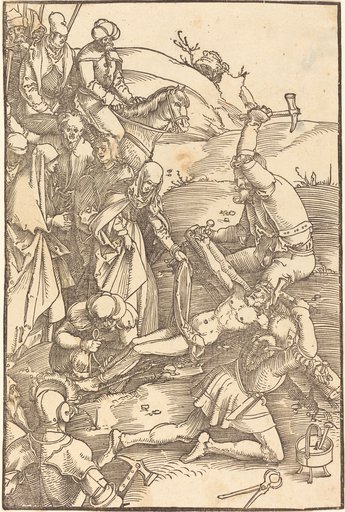
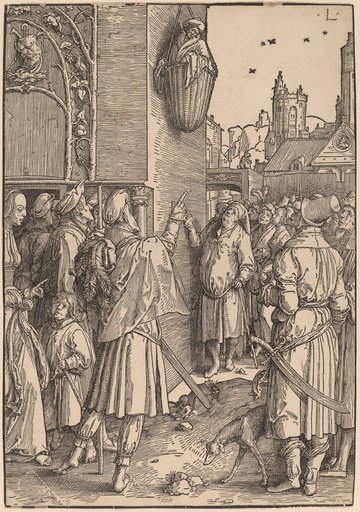
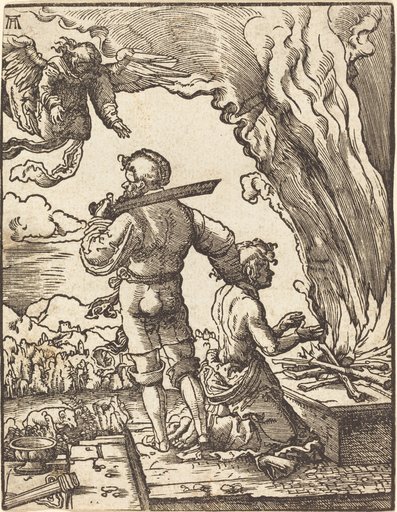
Altdorfer is the central figure of the Danube School, a stylistic movement of painters working along the Danube in Bavaria and Austria whose members were known as the "wild painters of the Danube." His early work was characterized by small-scale, intimate compositions in unconventional media with eccentric subject matter, signed with a double-A monogram. The minute detail and painstaking technique of these works suggest training as a miniaturist. Around 1511, his encounter with Alpine scenery transformed his artistic priorities, making him arguably the first painter in the modern sense to treat landscape as an autonomous subject. He developed a distinctive approach to the Weltlandschaft, or world landscape, in which human figures became subordinate to nature rather than dominant over it. His landscapes feature the hilly terrain and dense forests of the Danube valley, with drooping firs and larches hung with moss, rendered in expressive, often dramatic color keyed to sunrise or sunset. He frequently distorted perspective for subtle effect and painted donor figures out of scale with main scenes, in a manner recalling earlier centuries. His religious works are notable for their intensity, glistening light, and glowing color that sometimes verges on the expressionistic. In later works he moved toward mannerism, conforming the human figure more closely to Italian models and employing frank, bold colors. He was also among the first to exploit the possibilities of torchlight, starlight, and twilight in night scenes, and among the earliest to depict sunset lighting and picturesque ruins in twilight. Though there is no evidence he traveled to Italy, his work reveals knowledge of Italian painting, particularly mythological and allegorical compositions, likely through prints. His graphic work, comprising engravings, woodcuts, and etchings, is distinguished by playful inventiveness and belongs to the tradition of the Nurenberg Little Masters.
Major works
Altdorfer's surviving oeuvre comprises approximately 55 panels, 120 drawings, 125 woodcuts, 78 engravings, 36 etchings, 24 paintings on parchment, and fragments from a mural for the bathhouse of the Kaiserhof in Regensburg, spanning the period 1504-1537. His first signed and dated works appear around 1506, including engravings and drawings such as the Stigmatization of St. Francis and St. Jerome. The Saint Florian Altarpiece, commissioned in 1509 and completed in 1518, is considered his major early masterpiece; this polyptych for St. Florian's Priory near Linz combined the Legend of St. Sebastian with the Passion of Christ. When closed, the altarpiece displayed four panels of St. Sebastian's martyrdom; when opened, the wings revealed the Stations of the Cross. The altarpiece has since been dismantled, with the predella panels of the Entombment and Resurrection sold to the Kunsthistorisches Museum in Vienna in 1923 and 1930 respectively. The Resurrection panel bears the date 1518. His Landscape with Footbridge (National Gallery, London), dated 1518-1520, is claimed to be the first pure landscape in oil, featuring a large central tree cut off by the margins that serves as the compositional axis. The Regensburg Landscape (c. 1522-1525) is another landmark pure landscape without human figures. The Battle of Alexander at Issus (1528-1529), commissioned by Duke William IV of Bavaria and now in the Alte Pinakothek, Munich, measures 158.4 × 120.3 cm and depicts Alexander the Great's victory over Darius III at the Battle of Issus in 333 BCE against a vast panoramic sunset landscape. Other significant paintings include Susanna in her Bath (1526, Alte Pinakothek, Munich), The Victory of Charlemagne (1518, Germanisches Nationalmuseum, Nuremberg), Christ Taking Leave of his Mother (c. 1520, National Gallery, London), and numerous pure landscape drawings in pen and watercolor such as Landscape with the Woodcutter (152 Tiny seated figure with knife and axe, 1522). The Albertina in Vienna holds the largest collection of his works on paper, while the Alte Pinakothek in Munich preserves the most important ensemble of his paintings.
Influences & students
Altdorfer's artistic formation drew primarily from his father Ulrich Altdorfer, a painter and miniaturist, and from his study of graphic works by Jacopo de Barbari and Albrecht Dürer, whose niellos and copper engravings served as early models. He admired and carefully studied the work of Dürer and Lucas Cranach the Elder, developing Cranach's landscape style into something more autonomous. The influence reverse also obtained: his own landscape innovations influenced Cranach in turn. He worked alongside Dürer, Cranach, Baldung Grien, Burgkmair, and Breu on the marginal illustrations for Emperor Maximilian I's Book of Hours, now in the municipal library of Besançon. The Italian painter Giorgione influenced his later work, as evidenced in paintings such as his Crucifixion. Wolf Huber was his contemporary and fellow principal of the Danube School, though the precise nature of their artistic exchange remains unclear. Max Reichlich has also been cited as an influence on his early development. There is no documentary evidence of formal pupils, and the sources do not identify specific students or followers in his circle. However, his graphic work as one of the Nuremberg Little Masters established a model for small-scale, intricate engraving that had broad influence. The sources note that Dmitri Zhilinsky was among later artists influenced by his work.
Legacy
Altdorfer's posthumous reputation rests on his revolutionary establishment of landscape as an independent genre in Western painting, a contribution that links him spiritually to both Baroque and Romantic landscapists and influenced artists from Pieter Bruegel to J.M.W. Turner. His works are held in major collections worldwide: the Alte Pinakothek in Munich possesses the most important ensemble of his paintings, including The Battle of Alexander at Issus; the Albertina in Vienna holds the largest collection of his drawings and prints; other significant holdings are in the Gemäldegalerie, Berlin, the Kunsthistorisches Museum, Vienna, the National Gallery, London, and the Hermitage, St. Petersburg. The Musée Wittert in Liège also preserves an important group of his prints. In 2020-2021, the Louvre in Paris, which holds no paintings by Altdorfer, organized the exhibition "Albrecht Altdorfer, Master of the German Renaissance" in collaboration with the Albertina, assembling fifteen autograph paintings with drawings and engravings. Modern commemoration includes the asteroid (8121) Altdorfer, named for him in 1999; streets named Altdorferstraße in Regensburg, Wörth an der Donau, and Vienna's 10th district; and the Albrecht-Altdorfer-Gymnasium in Regensburg. The writer Hans Watzlik honored him with the biographical poem Der Meister von Regensburg. His gravestone survives in the Museum of the City of Regensburg.
Works by Albrecht Altdorfer
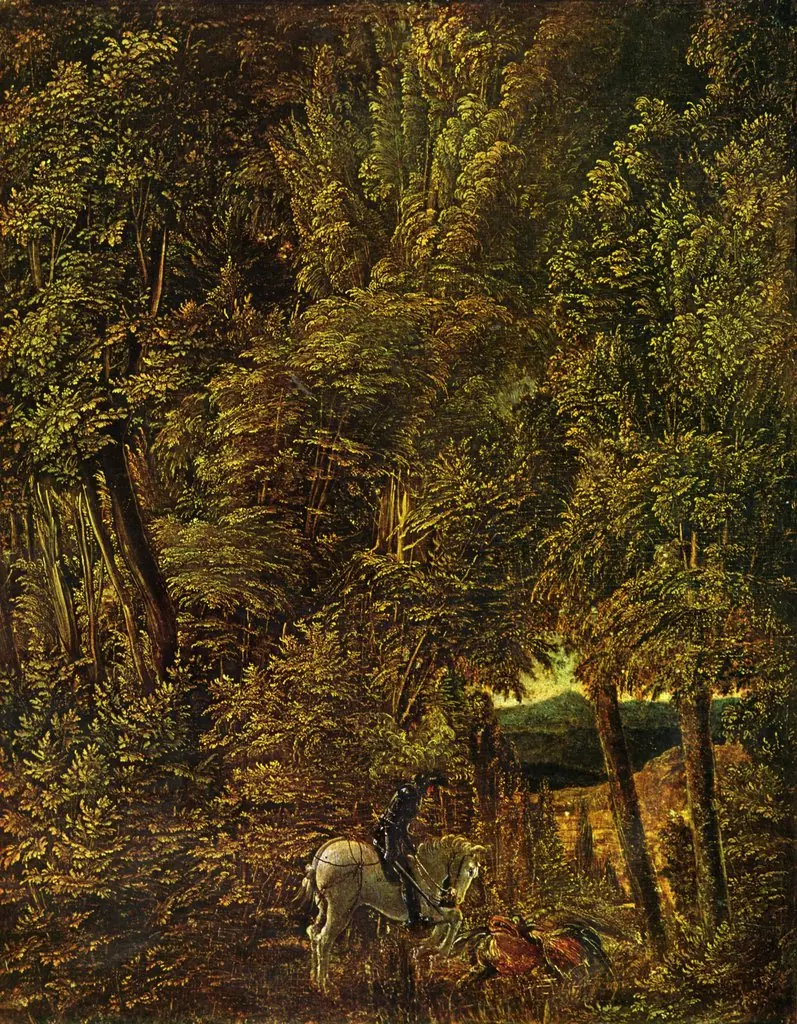 Countryside of Wood With Saint George Fighting the Dragon
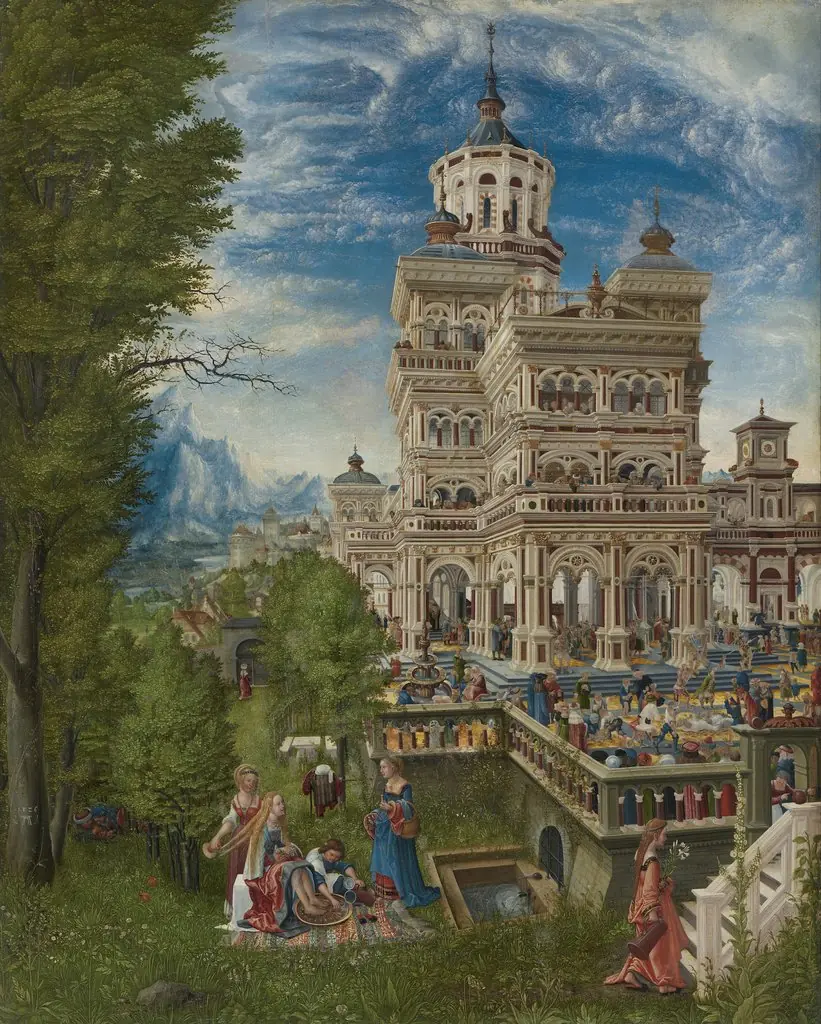 Susanna and the Elders
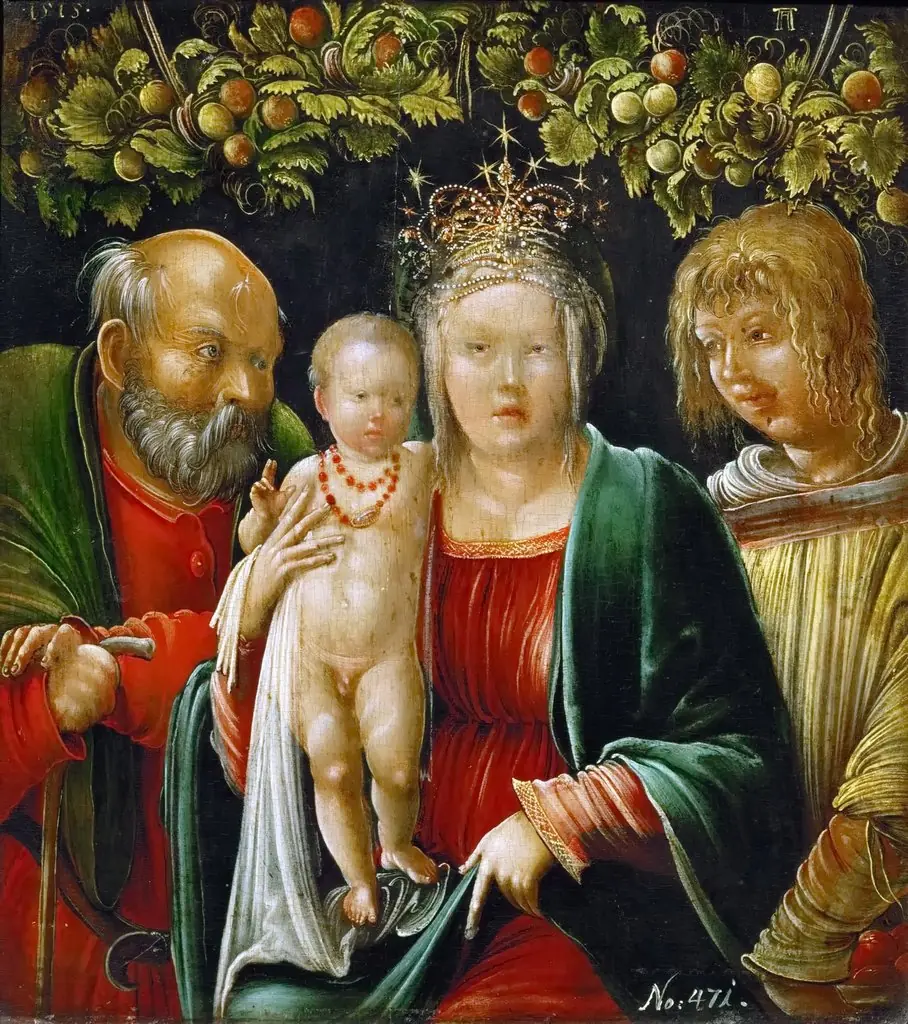 Holy Family with an Angel
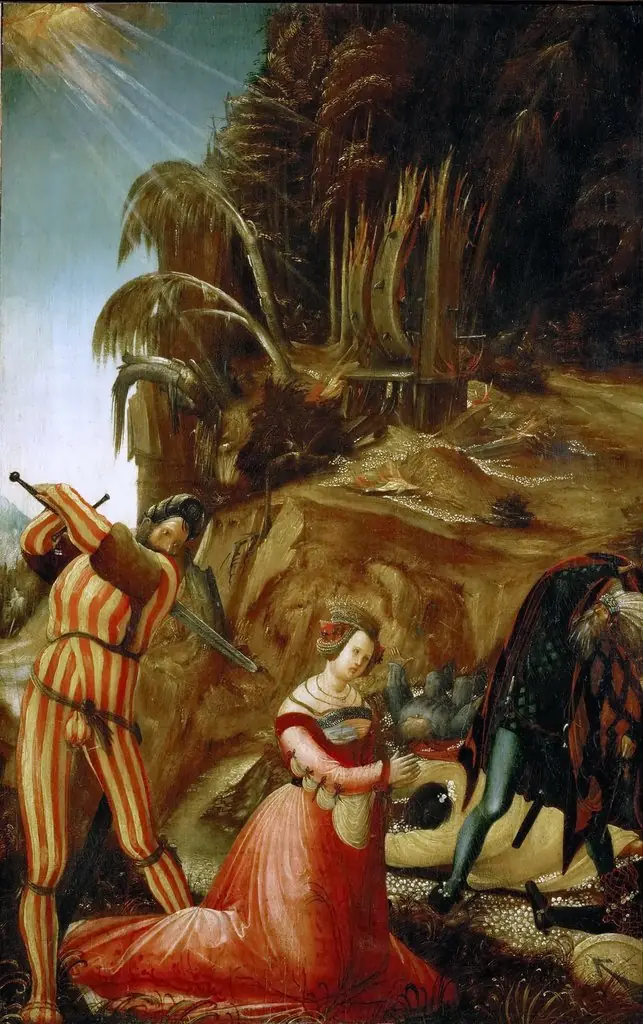 Beheading of St. Catherine
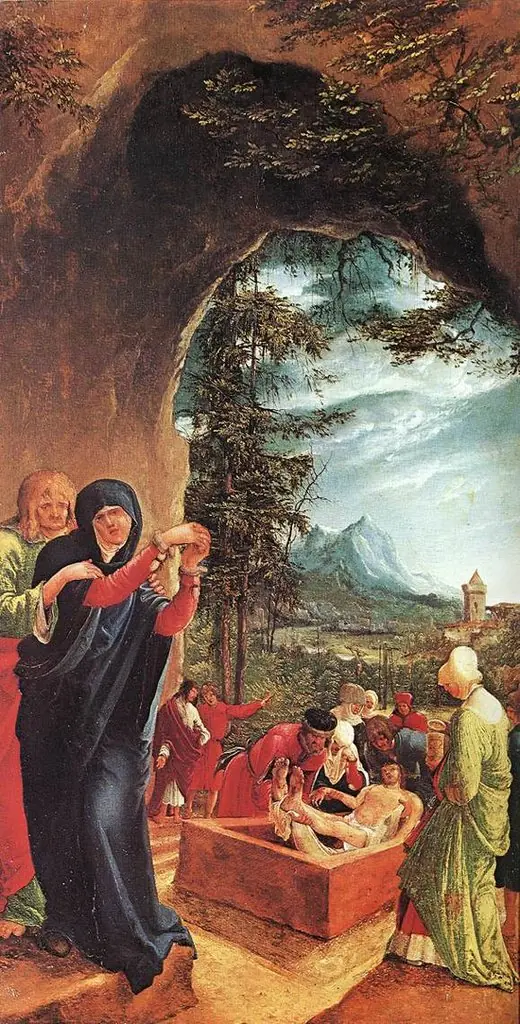 Entombment of Christ
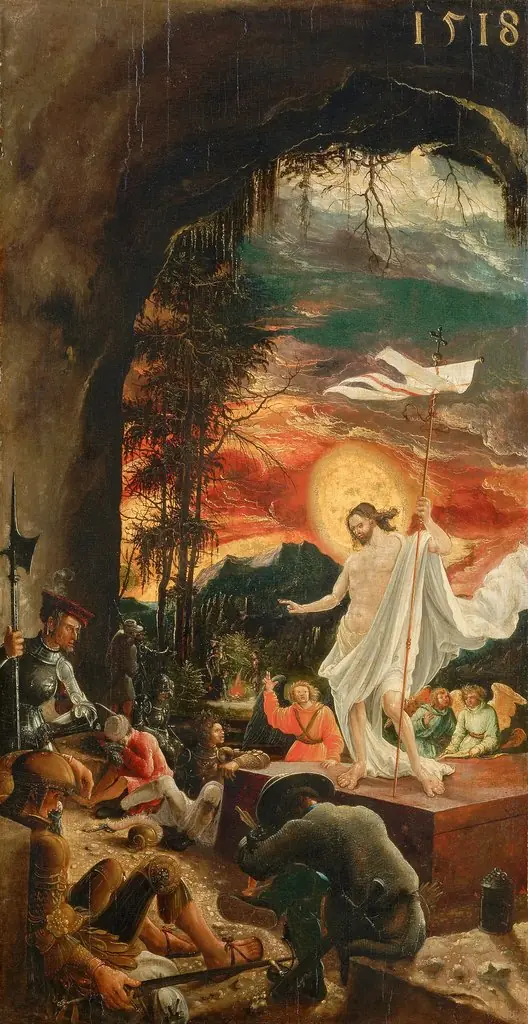 Resurrection of Christ
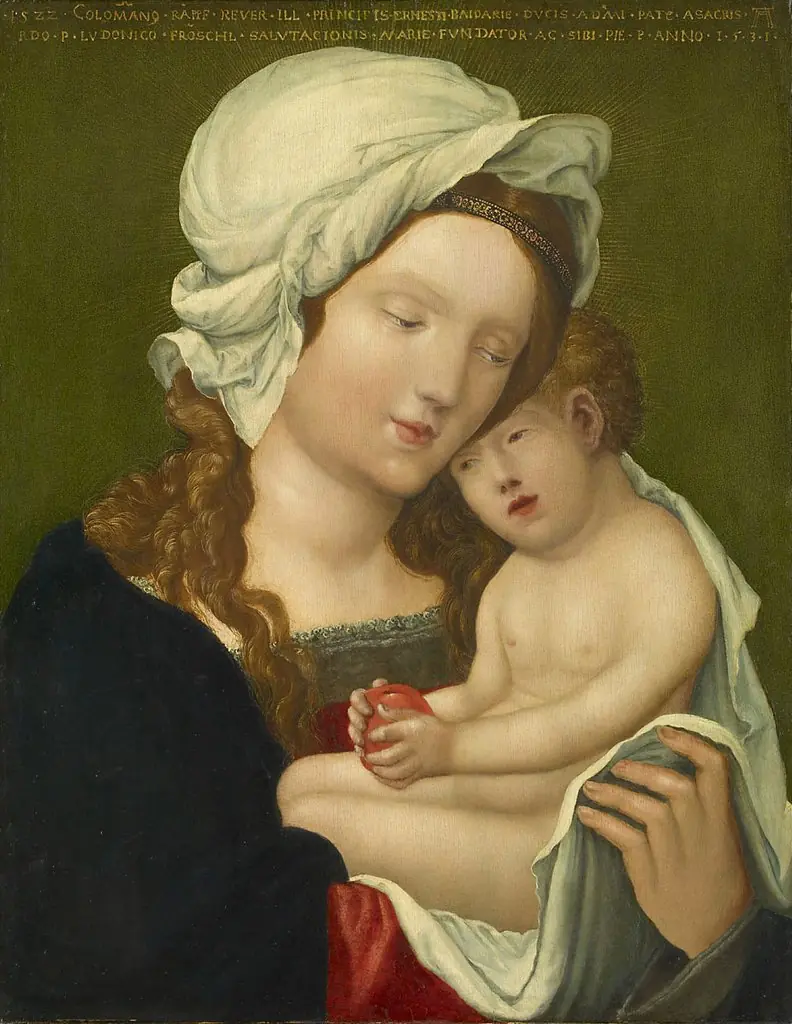 Virgin and child
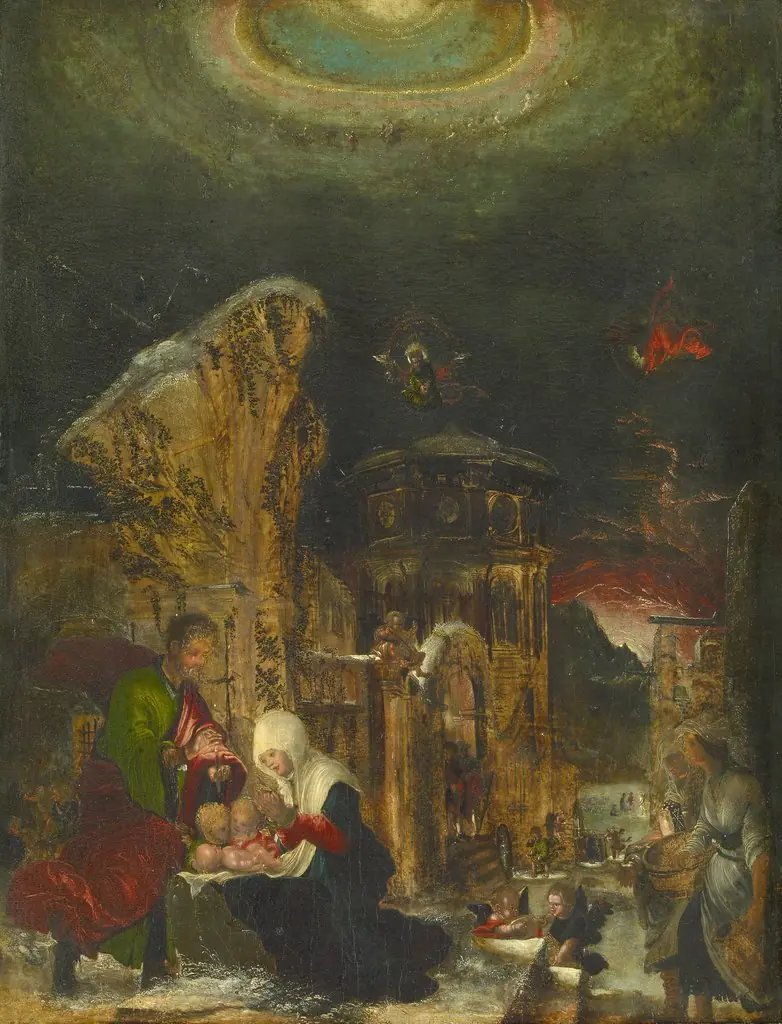 Nativity of Christ
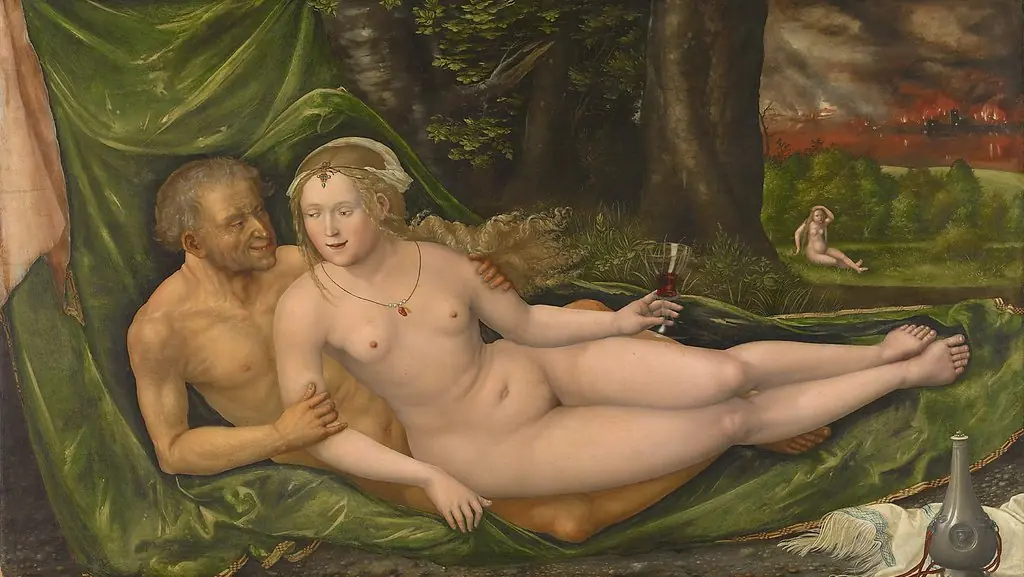 Lot and his daughters
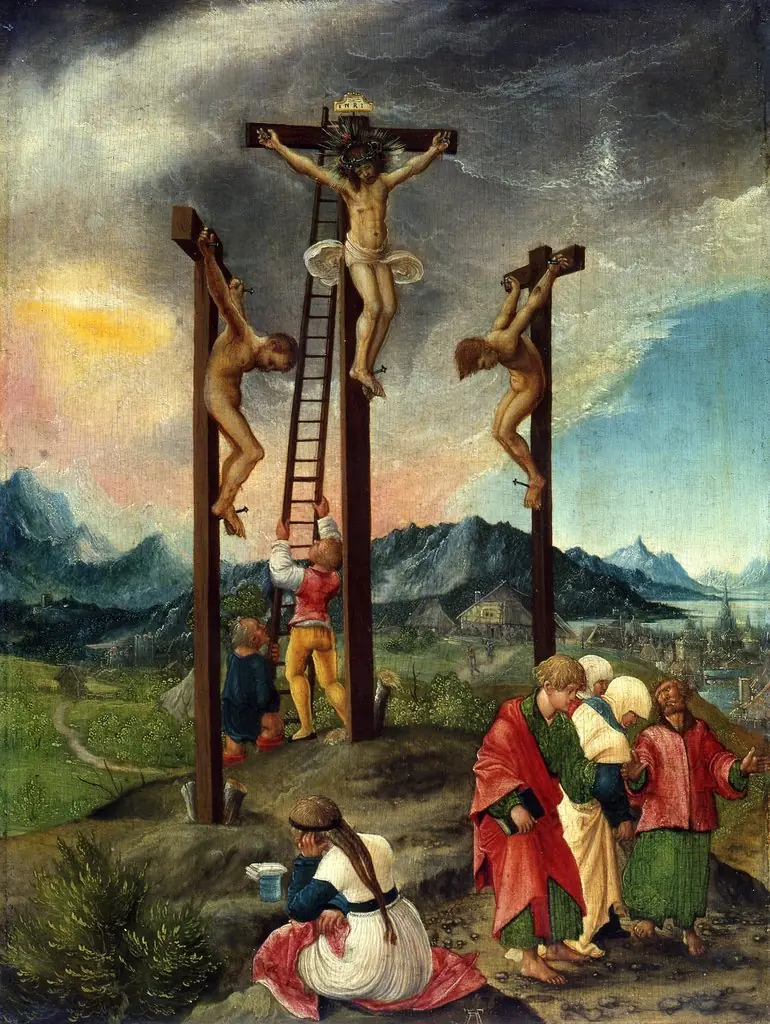 Christ on the Cross between the Two Thieves
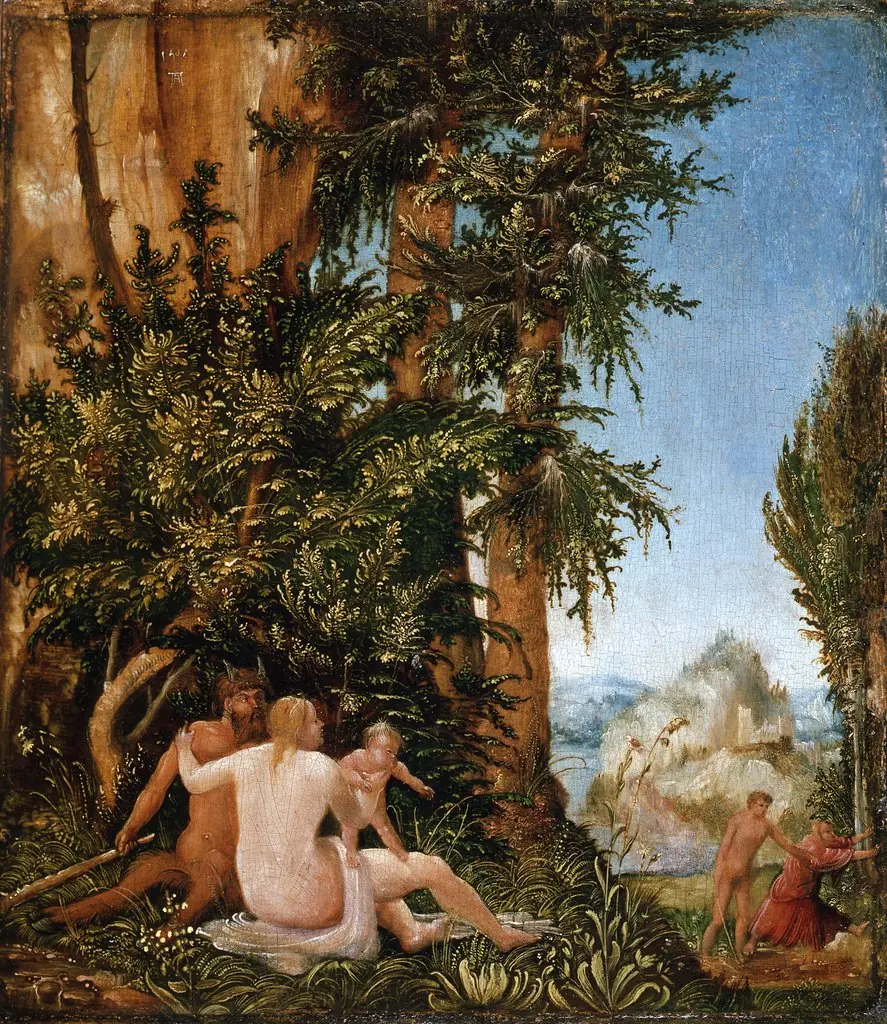 Landscape with Satyr Family
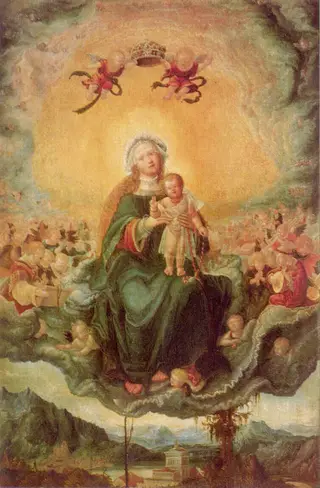 Maria mit dem Kinde in der Glorie; (Rückseite: Maria Magdalena am Grab Christi)
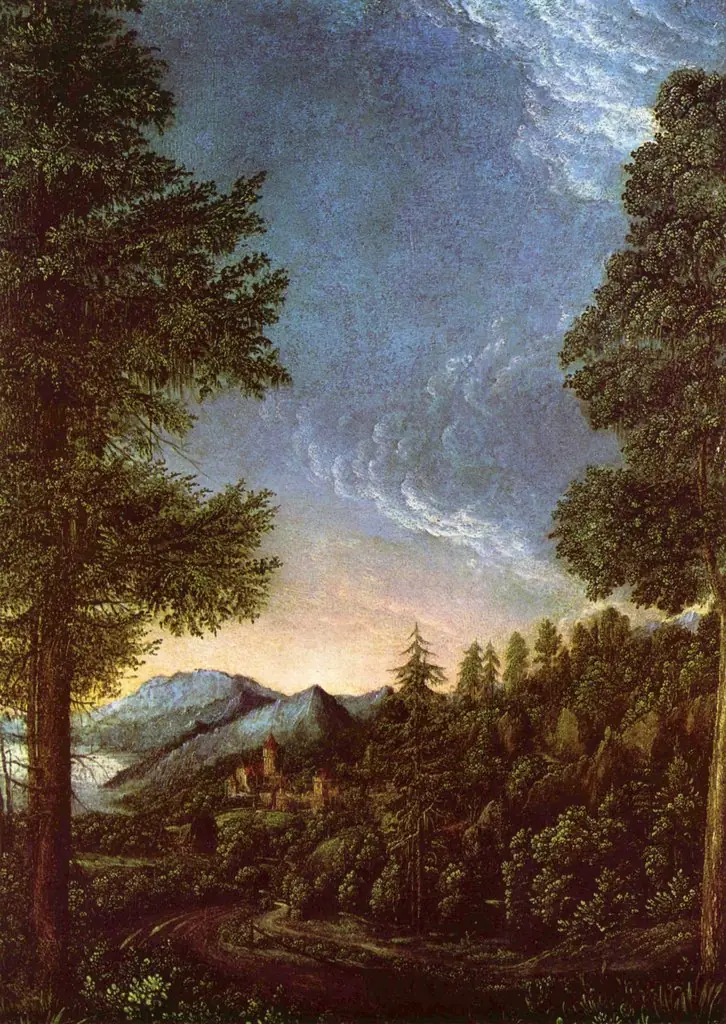 Landscape of Danube near Regensburg
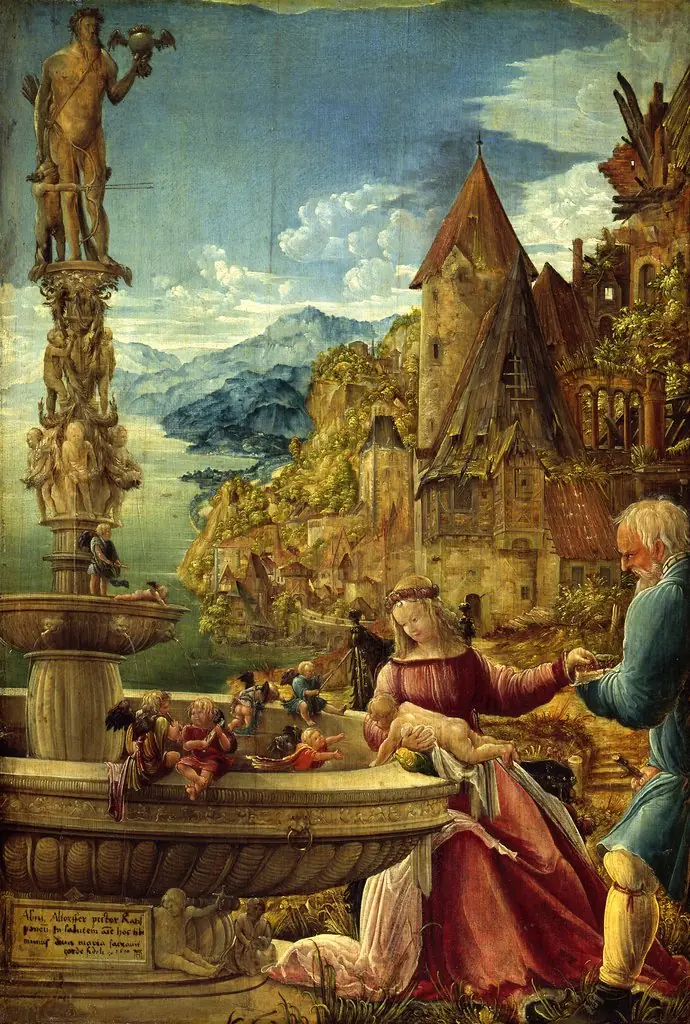 Rest on the Flight to Egypt
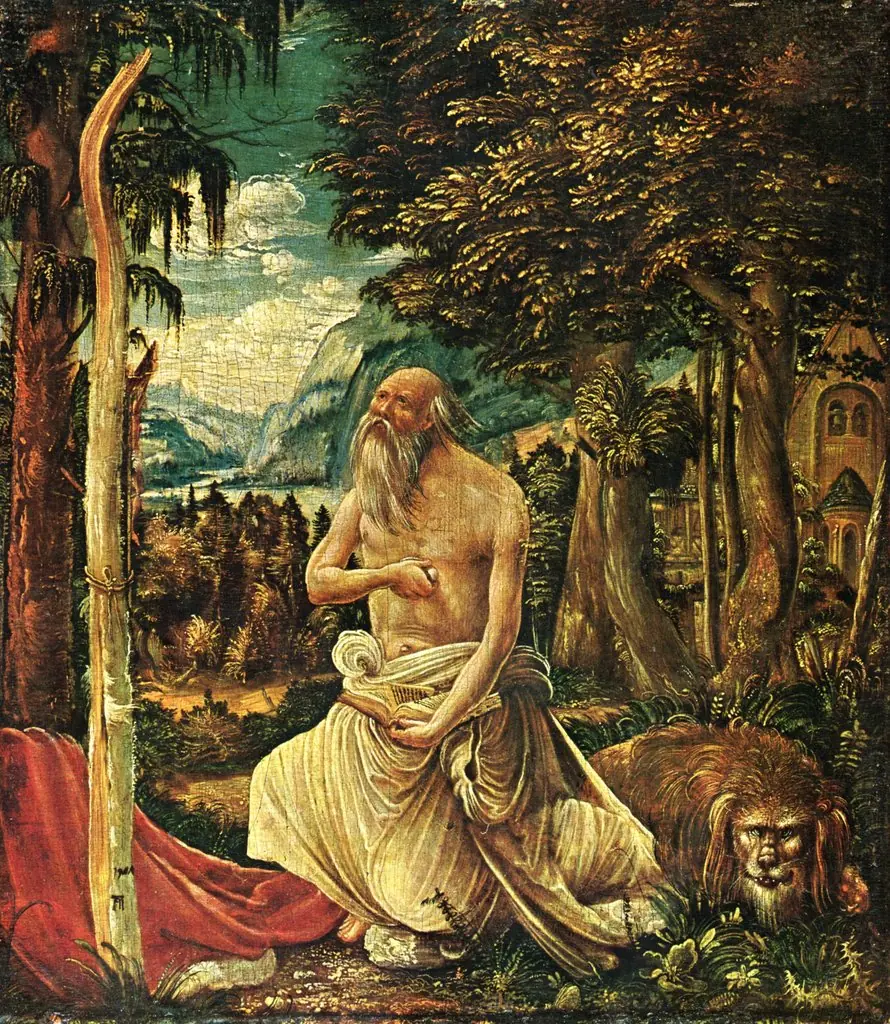 Penitent Hieronymus
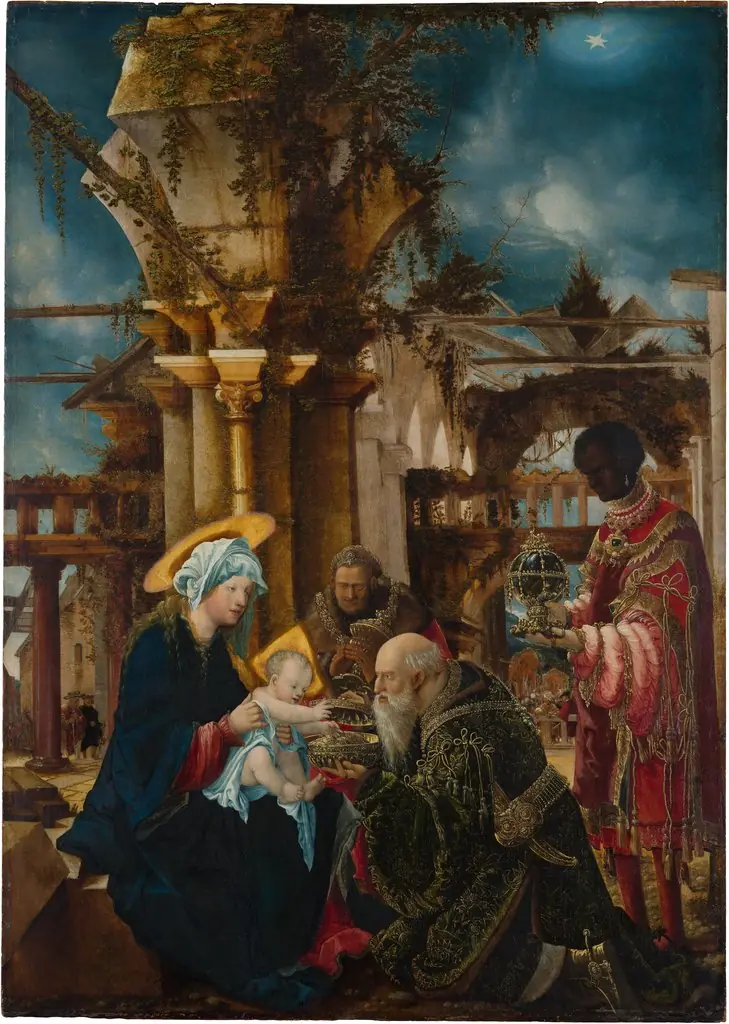 The Adoration of the Magi
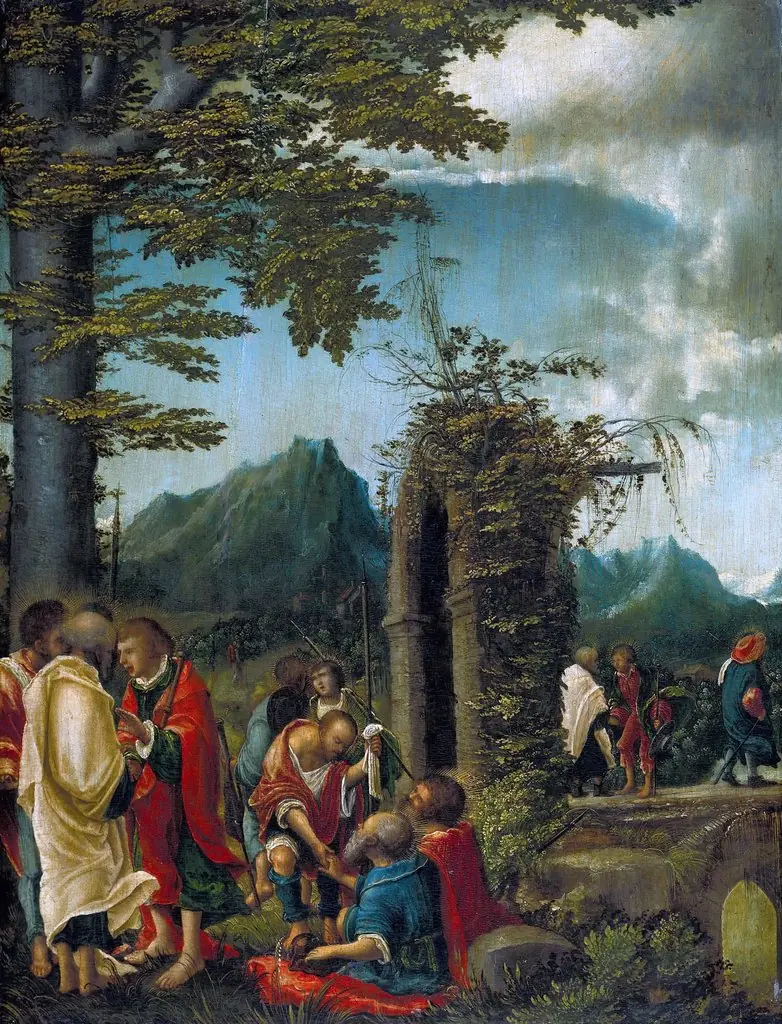 Communion of the Apostles
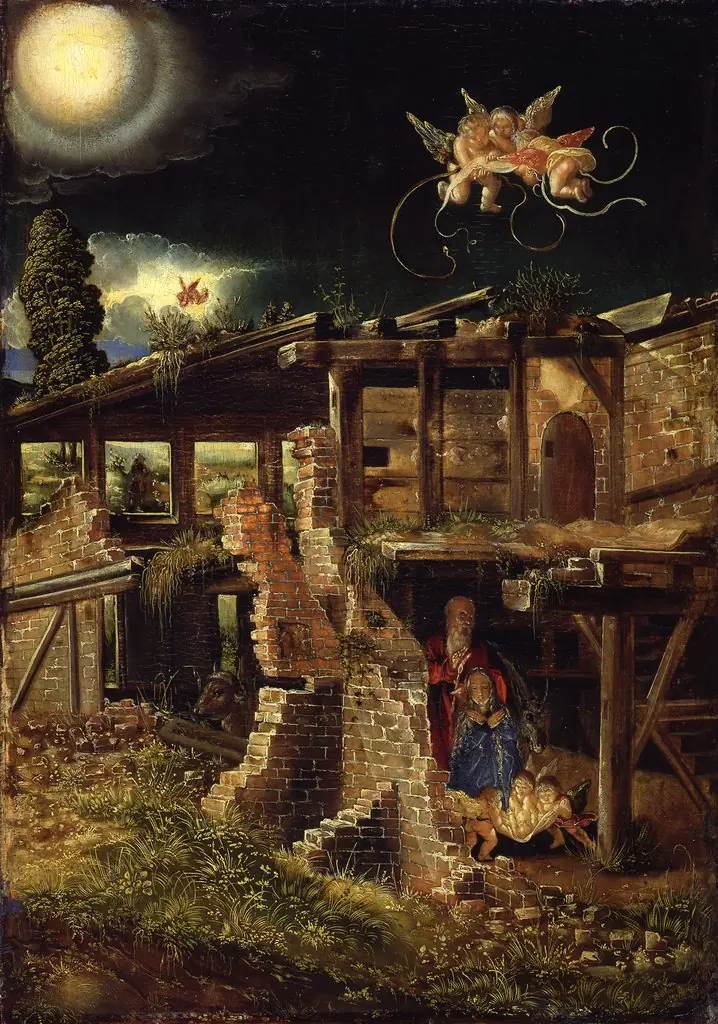 The Birth of Christ
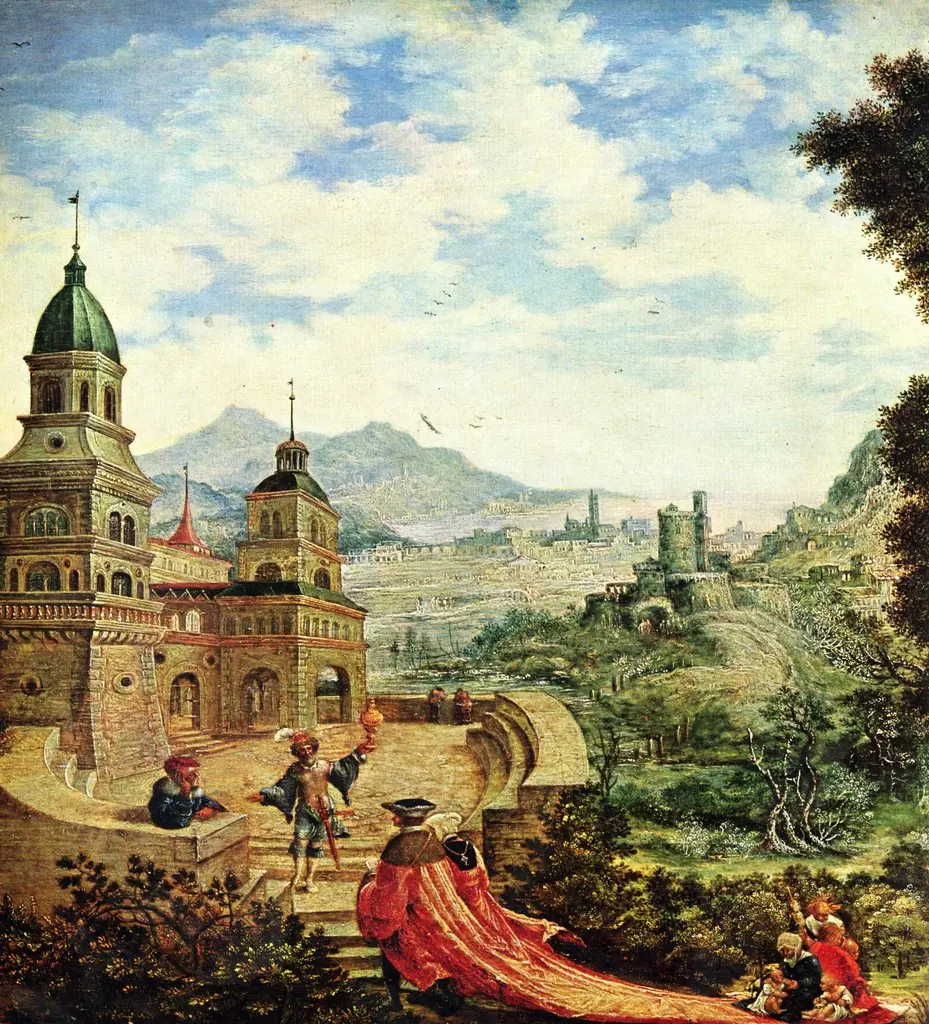 Begging Sits on Pride's Train
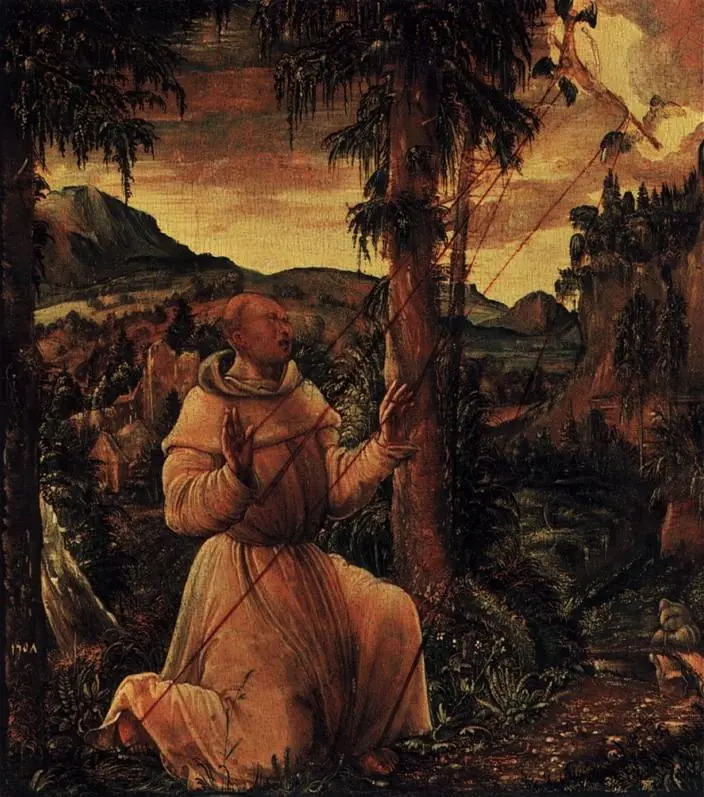 Stigmatization of Saint Francis
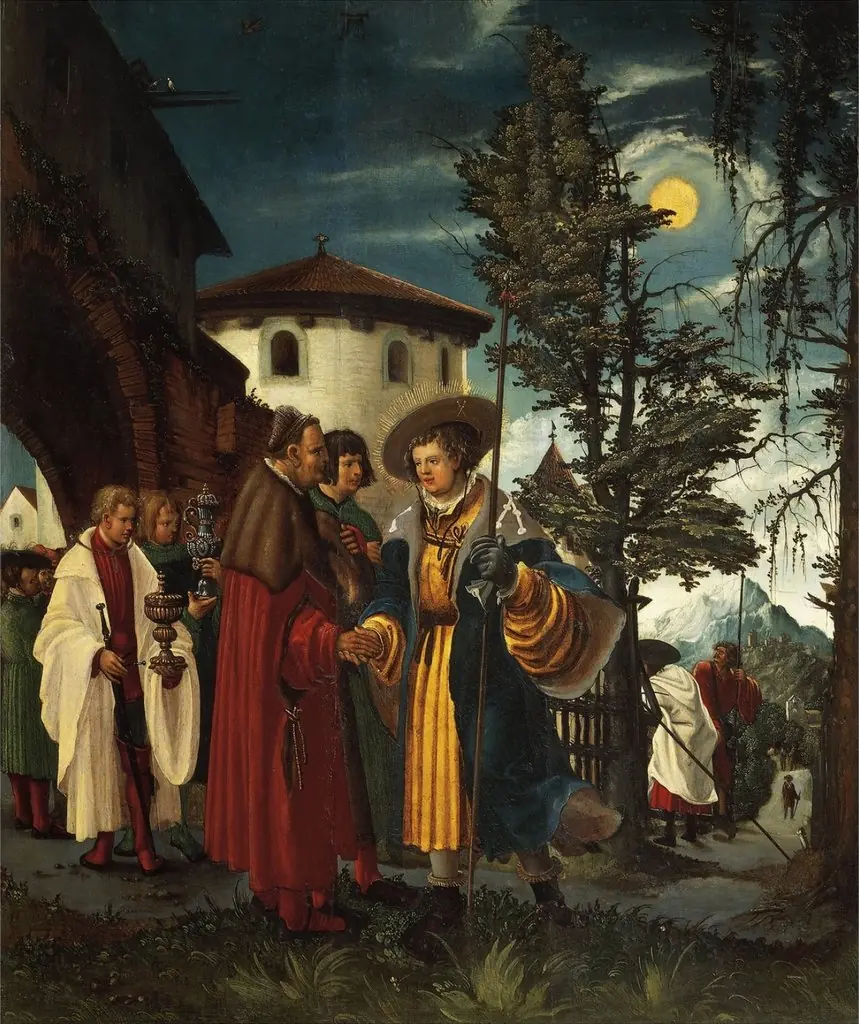 The Departure of Saint Florian
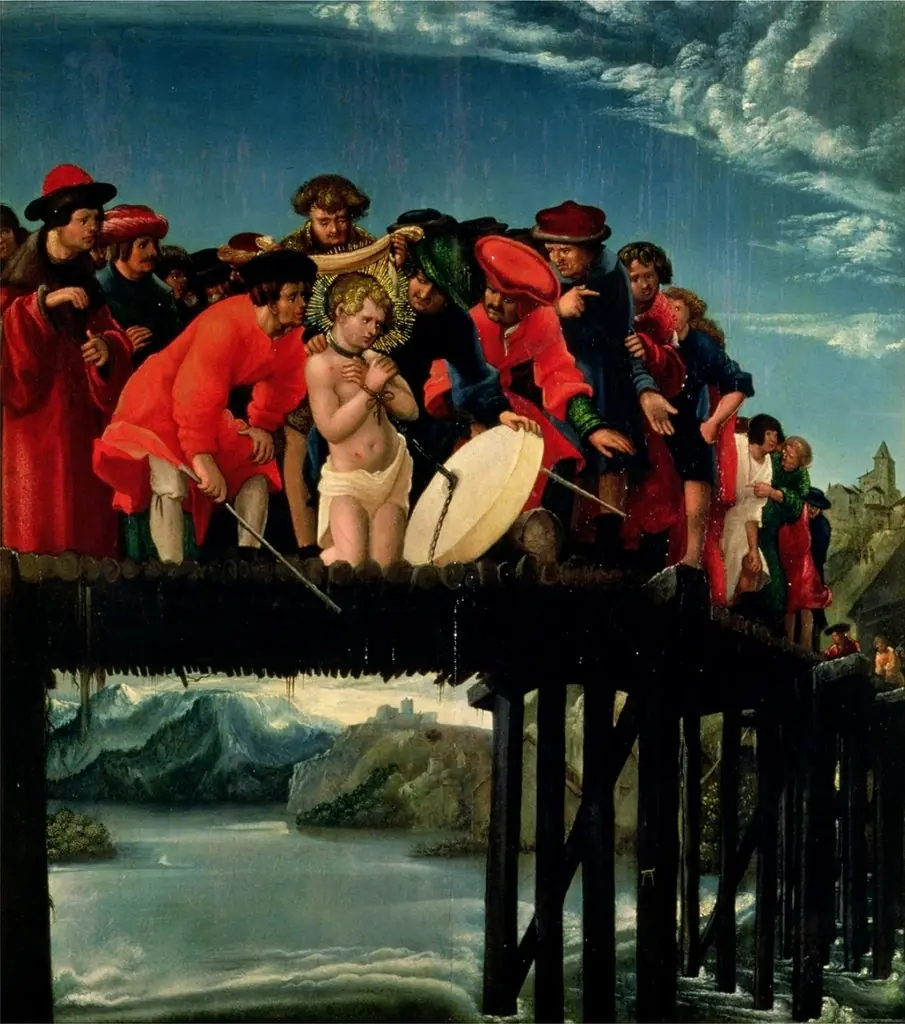 The Martyrdom of Saint Florian
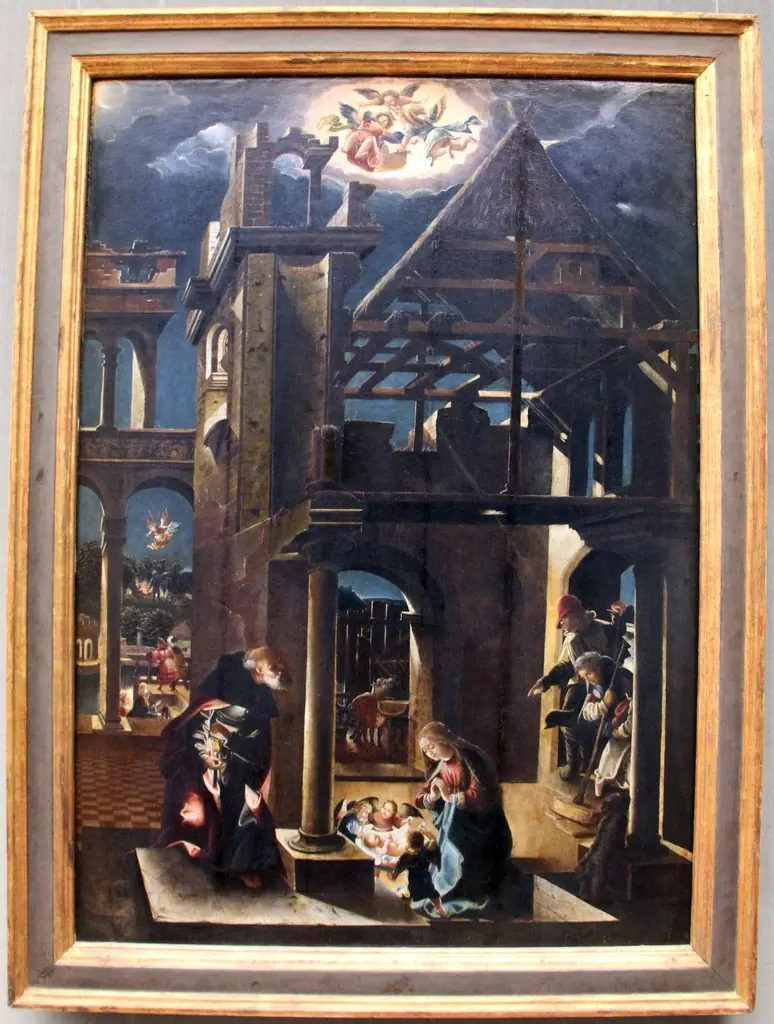 The Adoration of the Shepherds
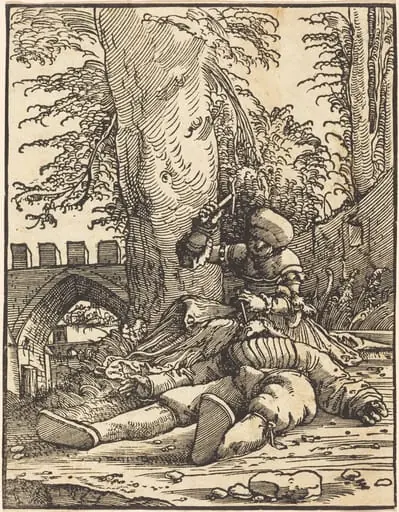 Jael and Sisera
261 works in the catalog · 24 shown
Collections represented


Artists in a similar vein