Artwork
Roman Shepherd-Boy
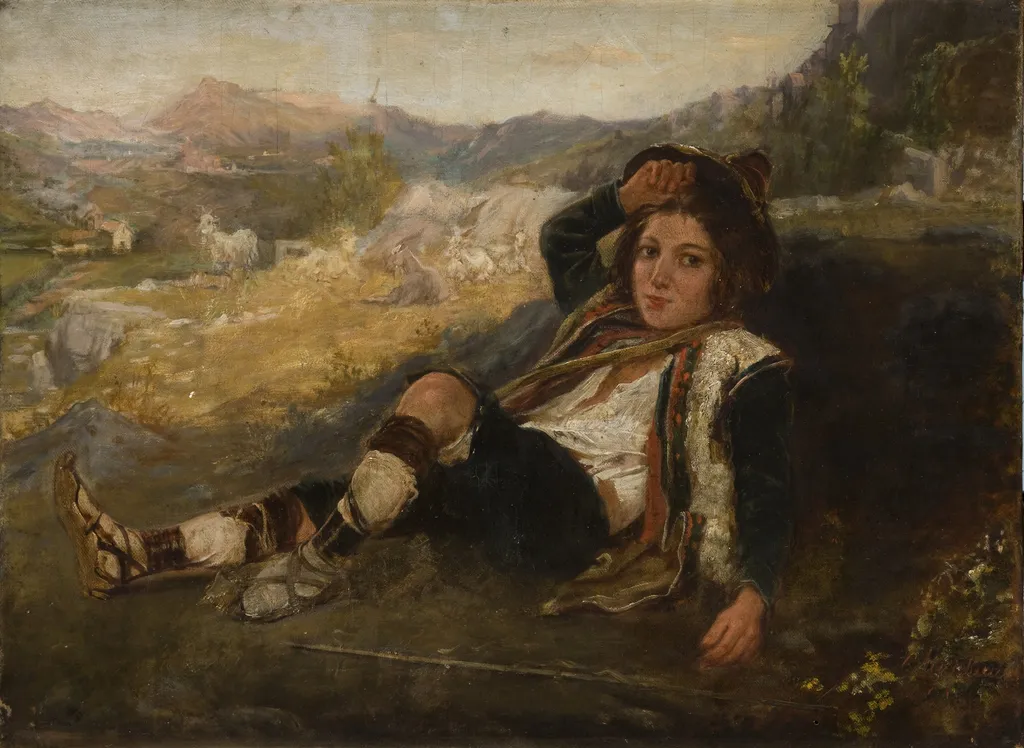
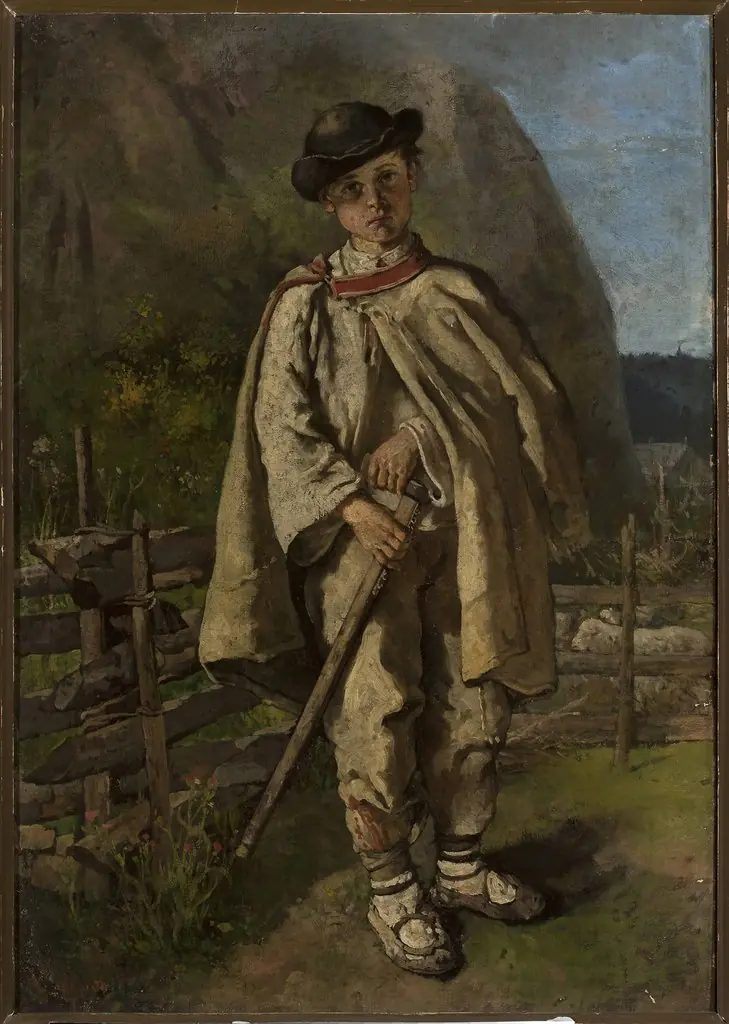
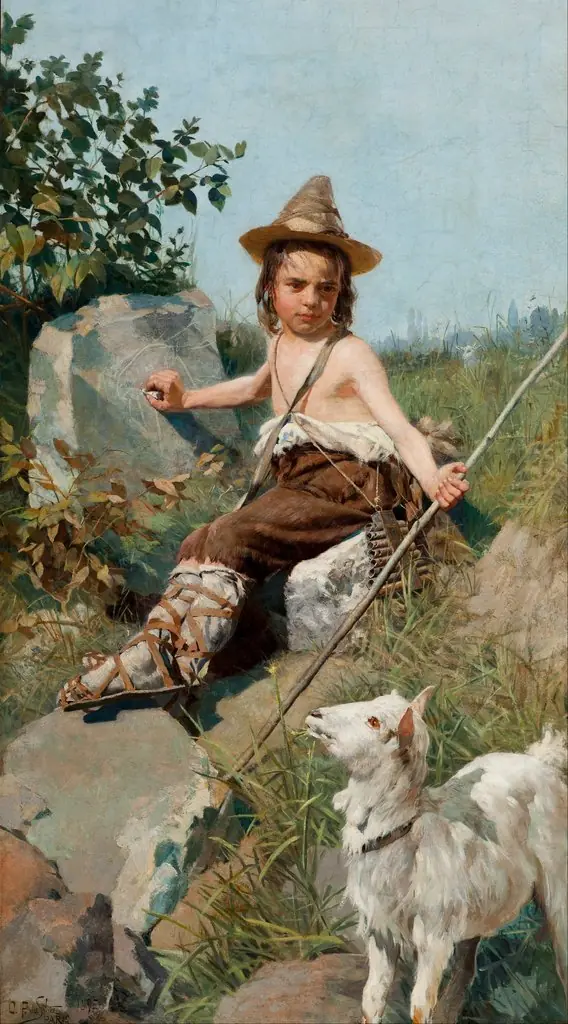
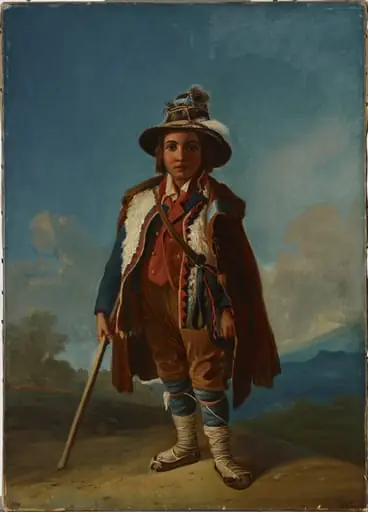
Roman Shepherd-Boy is an oil painting by Aleksander Stankiewicz. It dates from 1868 and is held in the collection of the National Museum in Kraków.
About this work
Overview
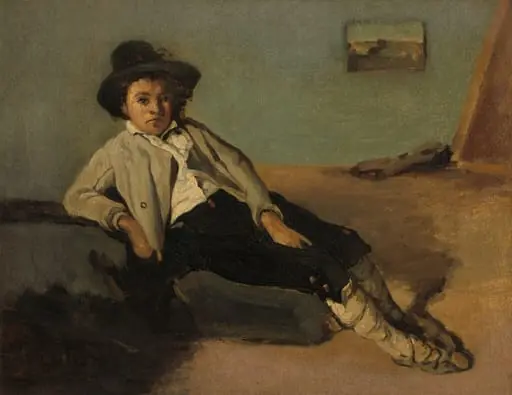
His posture is relaxed yet posed, with his right arm resting on his knee and his left hand touching his forehead, suggesting a moment of pause or reflection.
Roman Shepherd-Boy, painted by Aleksander Stankiewicz in 1868, is an oil on canvas work that exemplifies the artist's engagement with genre scenes and Orientalist themes prevalent in 19th-century Russian art. The composition centers on a young shepherd boy seated on the ground, gazing directly at the viewer with a contemplative expression. He is dressed in a white shirt, black trousers, and a hat, accented by a vibrant red and yellow scarf around his neck.
His posture is relaxed yet posed, with his right arm resting on his knee and his left hand touching his forehead, suggesting a moment of pause or reflection. The background features a landscape that situates the figure within a natural setting, likely evoking the Roman countryside. Created during a period when Stankiewicz was gaining recognition for his detailed and atmospheric depictions of rural life, this work reflects his skill in capturing the textures of clothing and the subtleties of human expression.
The painting stands as a representative example of Stankiewicz's contribution to the realist movement in Russia, blending ethnographic observation with a romanticized view of peasant life.
Subject & Meaning
The central figure is a young shepherd, seated on the ground and gazing outward. He is dressed in a plain white shirt, dark trousers, a simple hat and a bright red‑yellow scarf around his neck, while his left hand rests on his forehead. The composition invites contemplation of rural life and the quiet dignity of pastoral labor.
Technique & Style
Executed in oil on canvas, Stankiewicz employs a subtle chiaroscuro that models the boy’s form against a softly lit landscape. The background recedes through layered hills, scattered trees and distant mountains, creating atmospheric perspective. Brushwork varies from fine detail in the figure’s clothing to broader, blended strokes in the scenery, enhancing the sense of depth.
History & Provenance
Created circa 1868, the painting entered the National Museum in Kraków’s holdings, where it remains on display. Its acquisition reflects the museum’s 19th‑century focus on Polish artists who engaged with broader European themes, such as the Mediterranean countryside depicted here.
Own this work as a print
Artist & collection