Artwork
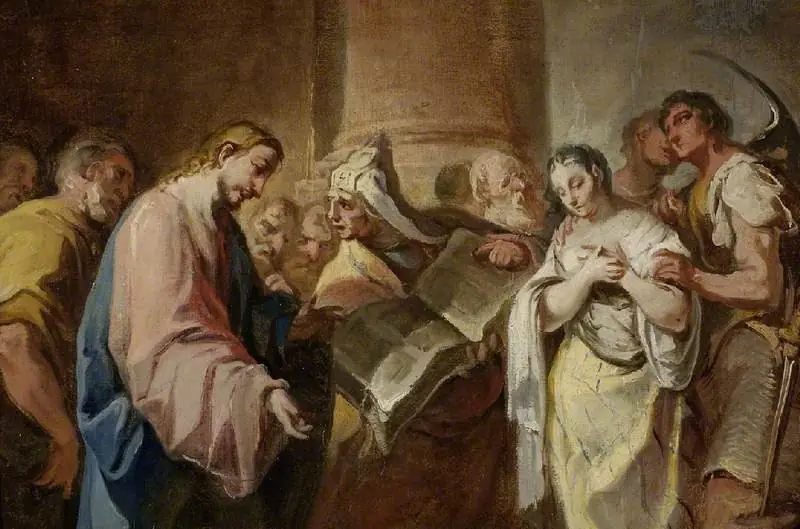
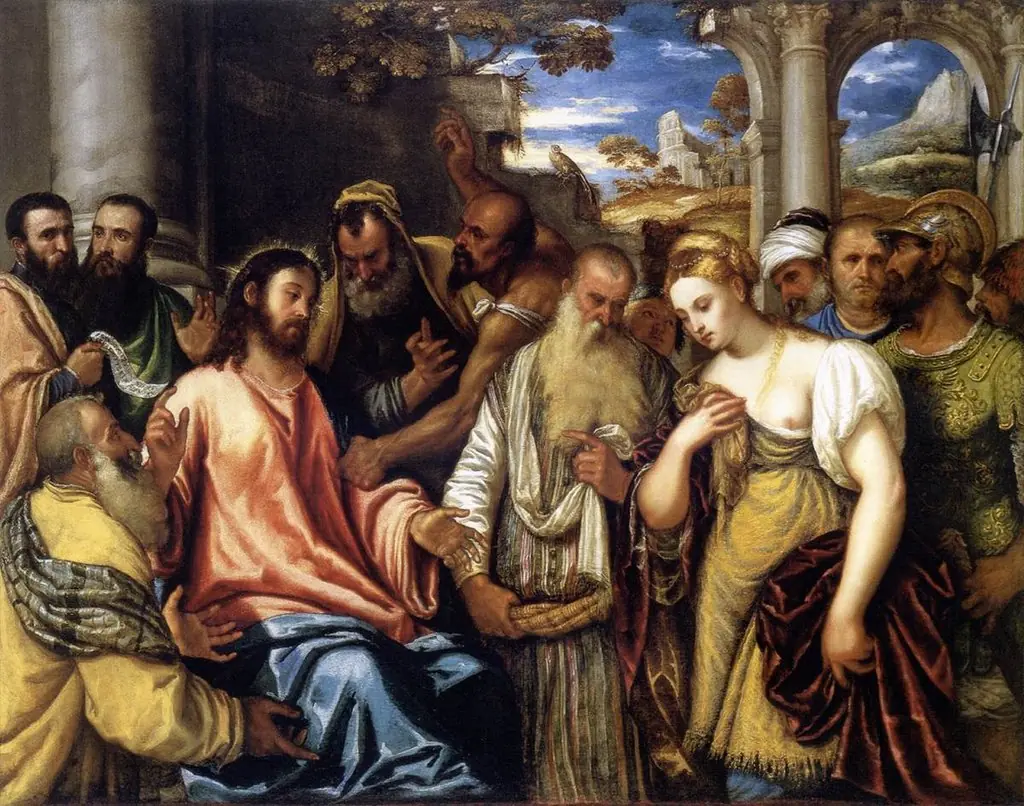
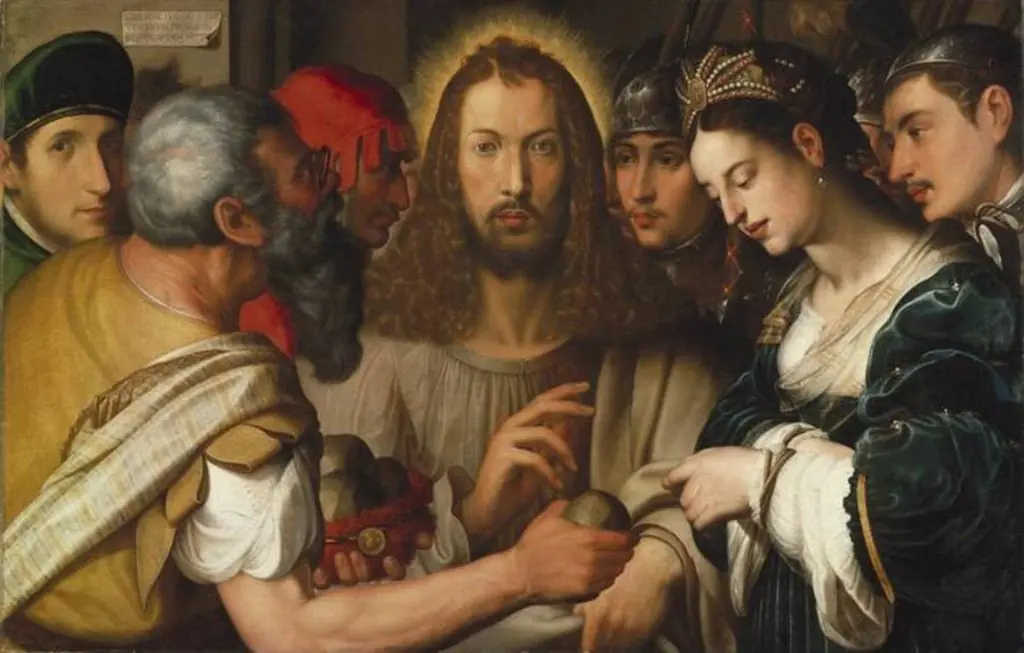
Christ and the Woman Taken in Adultery
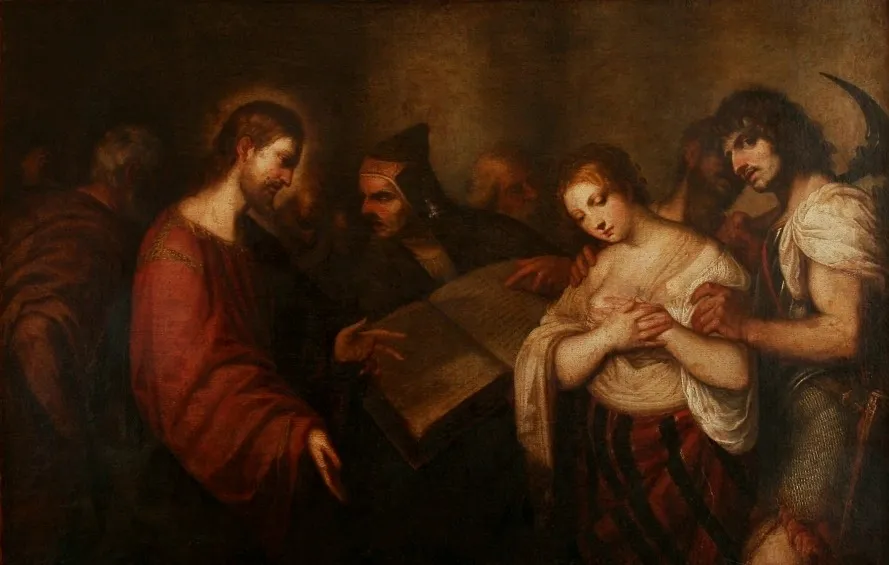
Christ and the Woman Taken in Adultery is an oil painting by the Early Baroque Italian artist Alessandro Varotari. It dates from 1630 and is held in the collection of the Kunsthistorisches Museum.
About this work
Subject & Meaning
The composition captures the tension between divine compassion and legalistic judgment, reflecting Counter-Reformation themes of grace.
The painting portrays the biblical scene of Jesus confronting the scribes and Pharisees who bring a woman accused of adultery, a moment emphasizing mercy and forgiveness. The composition captures the tension between divine compassion and legalistic judgment, reflecting Counter-Reformation themes of grace. Depicted as a religious work by Alessandro Varotari, the artwork belongs to the Venetian school and was created for Archduke Leopold Wilhelm of Austria, who owned it as part of his painting collection at the Kunsthistorisches Museum.
Symbolically, the figure of Christ intervenes to spare the woman from stoning, embodying themes of compassion over retribution. The setting underscores the narrative’s moral lesson, aligning with devotional practices of the period.
Technique & Style
The work is executed in oil paint on canvas, a standard support for Venetian painting of the period. Its substantial horizontal format, measuring 138 cm in height by 234 cm in width, suits the multi-figure narrative composition typical of large-scale religious canvases produced within the Venetian school tradition to which Varotari belonged.
Stylistically, the painting reflects the Venetian school's emphasis on religious subjects, with the handling of oil on canvas allowing for the layered color and tonal modeling associated with that tradition. As a religious work, its formal qualities are organized around the central interaction between Christ and the woman taken in adultery, the principal subject of the composition.
History & Provenance
Alessandro Varotari, also known as Il Padovanino, created the oil-on-canvas painting Christ and the Woman Taken in Adultery in 1630. The work measures 138 cm in height and 234 cm in width. Its earliest recorded ownership traces to Archduke Leopold Wilhelm of Austria, who included the piece within his extensive private collection of paintings.
The Archduke's collection later entered the holdings of the Kunsthistorisches Museum in Vienna, where the artwork remains part of the museum's permanent painting collection today. The creation of the piece aligns with the Venetian school movement and depicts the biblical narrative of Jesus and the woman accused of adultery.
The painting is held by the Kunsthistorisches Museum in Vienna. It entered the collection of Archduke Leopold Wilhelm of Austria before being accessioned into the museum's Painting collection. Exhibition history is documented only through its presence in the museum's permanent display of religious artworks, without further exhibition records provided in the sources.
Overview
Alessandro Varotari, known as Il Padovanino, executed the oil painting Christ and the Woman Taken in Adultery in 1630. The work belongs to the late‑Mannerist and early‑Baroque phase of Venetian painting and is presently part of the Kunsthistorisches Museum’s collection in Vienna.
Artist & collection
Artist
Alessandro Leone Varotari (4 April 1588 – 20 July 1649), also commonly known as Il Padovanino, was a Venetian painter of the late-Mannerist and early-Baroque Venetian school, best known for having mentored Pietro…