Artwork
Miss Bruce
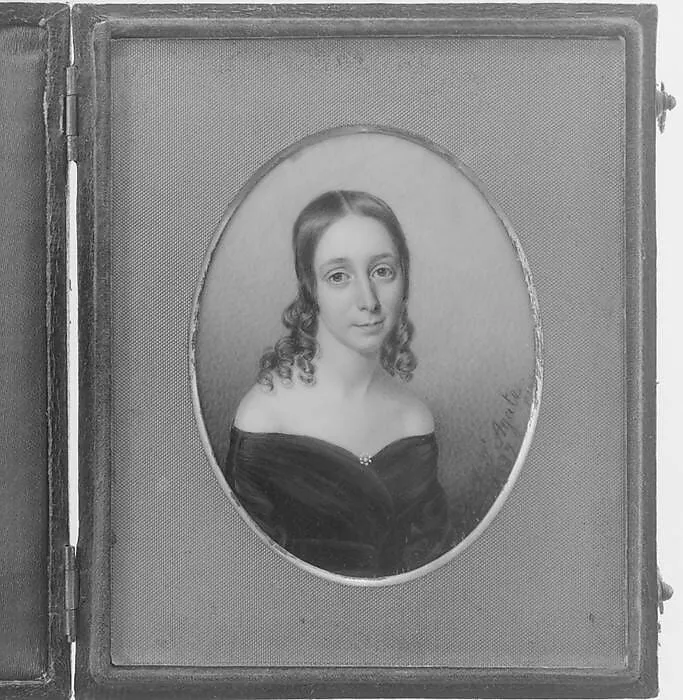
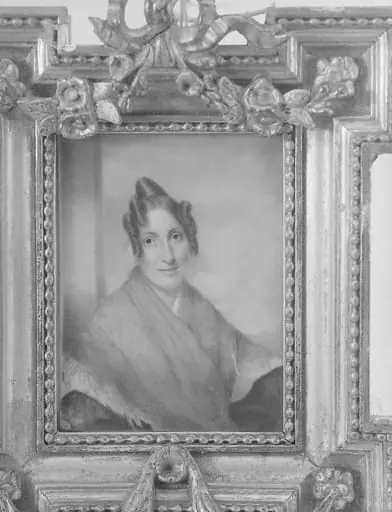
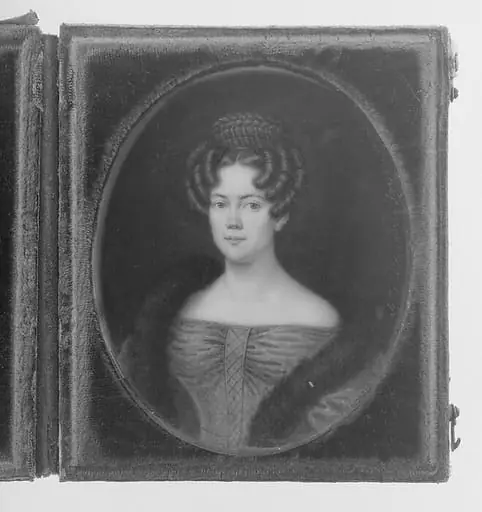
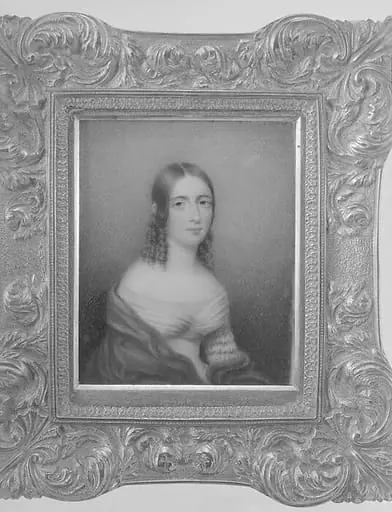
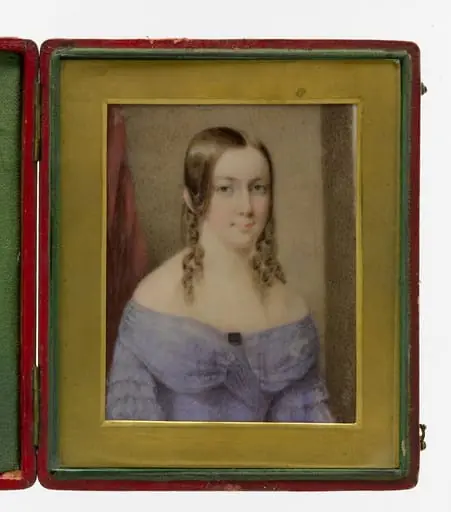
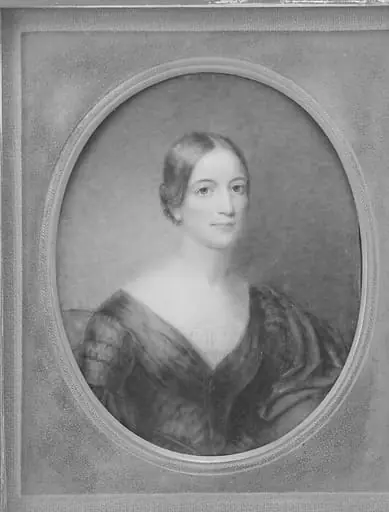
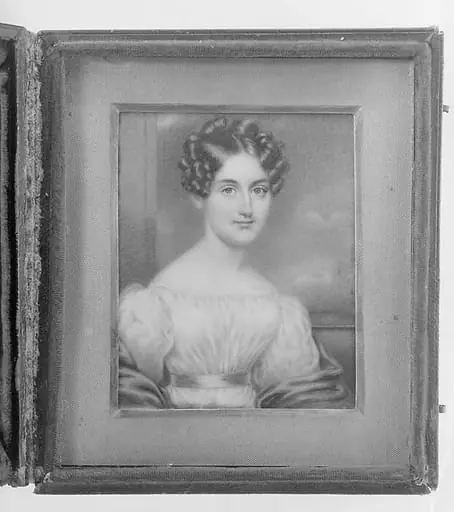
Miss Bruce is a watercolor painting by the American Folk Art artist Alfred Thomas Agate. It dates from 1837 and is held in the collection of the Metropolitan Museum of Art.
About this work
Artists used ivory because it glows when light shines through, making skin look alive.
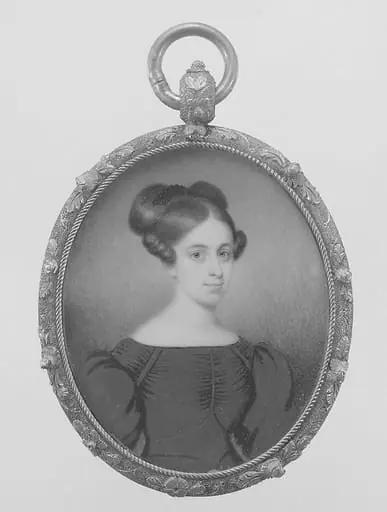
A woman in a dark dress looks straight at you, her face lit softly. Tiny brushstrokes build her skin and the lace collar. The background is plain, so your eyes stay on her.
This is a watercolor on ivory, thin as a playing card. Artists used ivory because it glows when light shines through, making skin look alive. Agate painted it in 1837, when most portraits were oil on canvas.
If you like how light plays on faces, look up the technique: watercolor.
Technique & Style
The work titled Miss Bruce, painted by Alfred Thomas Agate in 1837, is executed in watercolor on an ivory support, a medium that yields a luminous surface and subtle tonal modulation characteristic of early-19th-century portrait miniatures. Agate's handling emphasizes fine linear detail and a restrained palette, focusing on the sitter's facial expression and delicate drapery. The composition presents a three-quarter view of a woman, rendered with careful attention to anatomical accuracy and soft shading.
As part of The American Wing's collection at the Metropolitan Museum of Art, the piece is catalogued as a portrait and retains the stylistic qualities of Agate's mature practice.
History & Provenance
Alfred Thomas Agate created Miss Bruce in 1837, executing the work as a watercolor on ivory portrait within the genre of American portraiture. The piece is classified under The American Wing and depicts a woman. It entered the collection of the Metropolitan Museum of Art, where it remains on view.
No explicit record of a commission or patronage, nor specific accession number, is provided in the available sources.
Overview
Alfred Thomas Agate, an American artist, created Miss Bruce in 1837. This watercolor on ivory is a miniature portrait, characteristic of the American folk art tradition. The work is held within The American Wing, reflecting its place in the nation's artistic heritage. Agate was known for his diverse practice, encompassing not only portraits but also landscapes and scientific illustrations.
Subject & Meaning
The painting presents a woman, identified as Miss Bruce, gazing directly forward with a softly illuminated countenance. Her dark attire and composed demeanor are typical of portraiture from the period, which aimed to capture the likeness and character of individuals. As a genre, portraiture served to document personal identity and social standing, often within a domestic or private context.
Context
Alfred Thomas Agate developed his skills under the tutelage of his brother and later Thomas Seir Cummings in New York. By the late 1830s, he was exhibiting his work at the National Academy of Design, establishing his presence in the art world. While oil on canvas was the predominant medium for larger portraits during this era, Agate's use of watercolor on ivory reflects a specialized practice within the broader field of American art.
Artist & collection
Artist
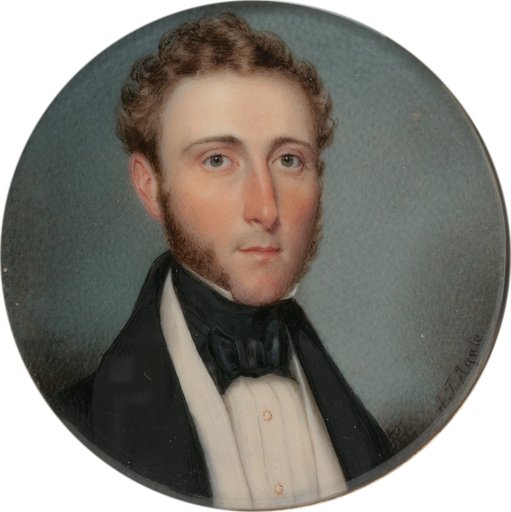
Alfred Thomas Agate (February 14, 1812 – January 5, 1846) was an American painter and miniaturist.