Artwork
Thomas Dillard
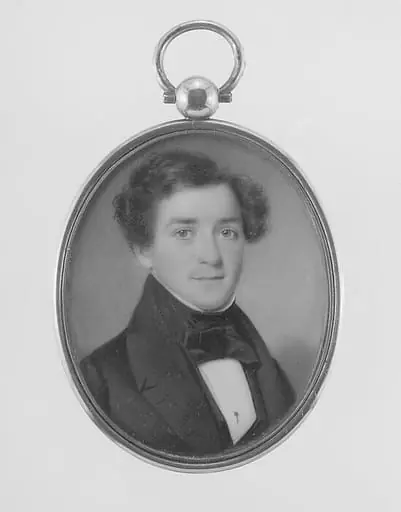
Thomas Dillard is a watercolor painting by the Romanticist artist Jean Christophe Alexandre. It dates from 1834 and is held in the collection of the Metropolitan Museum of Art.
About this work
Overview
The use of ivory as a support allows light to penetrate the translucent watercolor washes, creating a luminous quality distinct from oil or canvas painting.
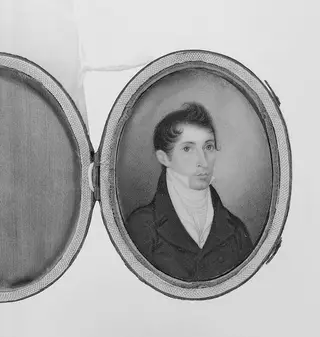
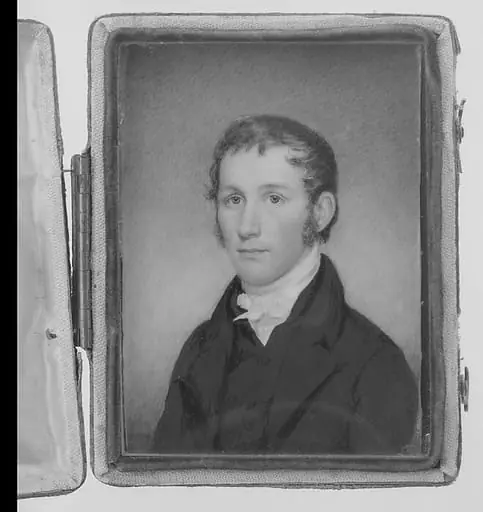
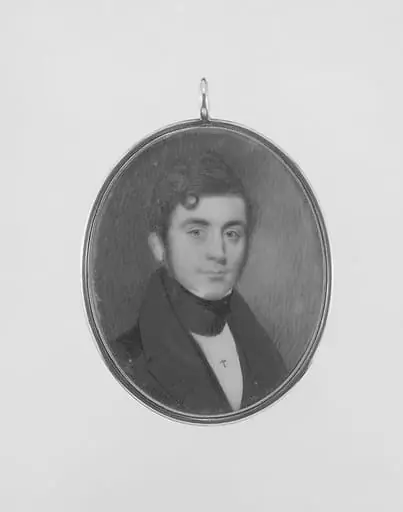
Created in 1834 by Jean Christophe Alexandre, this work is a miniature portrait of Thomas Dillard executed in watercolor on ivory. The composition features a small, oval format depicting a young man with dark hair, dressed in a high-collared coat. Dillard is portrayed with a smooth complexion, his lips slightly parted and his gaze directed just past the viewer, a common convention in portraiture of the era to suggest engagement with the world beyond the frame.
The use of ivory as a support allows light to penetrate the translucent watercolor washes, creating a luminous quality distinct from oil or canvas painting. This technique was standard for portable miniatures intended for personal possession and intimate viewing. Alexandre, active during the height of the miniature painting tradition before the advent of photography, utilized the medium's delicacy to capture the sitter's likeness with precision.
The work serves as a representative example of early 19th-century portraiture, reflecting the period's aesthetic preferences for refined detail and the social function of the miniature as a cherished, handheld object.
Subject & Meaning
The portrait depicts a youthful man with dark hair, elegantly attired in a high-collared coat. His smooth complexion and subtly parted lips suggest a moment of quiet contemplation, while his gaze, directed slightly beyond the viewer, imbues the image with a sense of introspection. This portrayal reflects the era's preference for idealized yet accessible representations of individuals.
Technique & Style
Alexandre utilized watercolor on a thin ivory support, a technique that allowed for a subtle translucency. The artist meticulously applied color in successive, delicate layers, a method known as glazing. This careful buildup of pigment created a luminous, lifelike quality in the depiction of the sitter's skin, contributing to the portrait's refined and intimate aesthetic.
Context
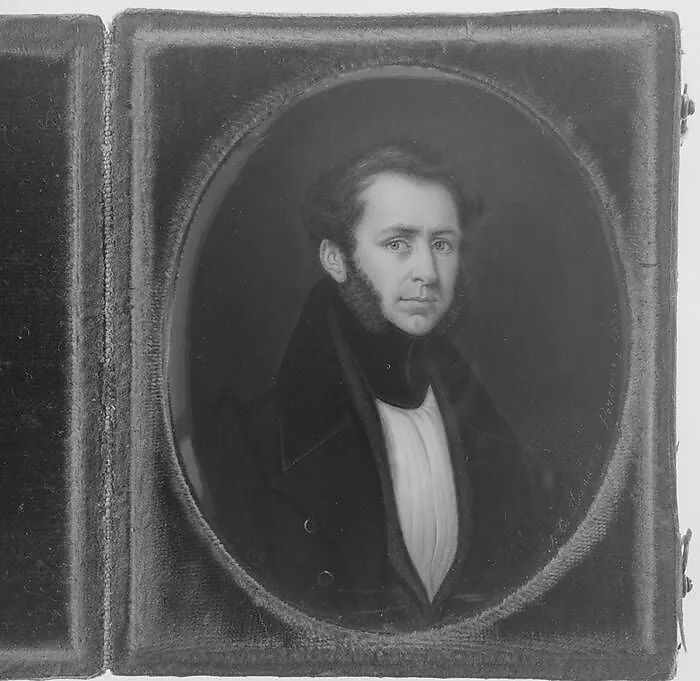
As a miniature, Thomas Dillard was designed for personal possession and portability, serving a function akin to modern-day photographs. These small-scale portraits were often carried by individuals as cherished keepsakes, allowing them to keep images of loved ones close, whether for sentimental reasons or as a discreet display of affection.
Artist & collection
Artist
Jean Christophe Alexandre had a knack for catching people at their most ordinary, like Thomas Dillard in 1834, staring straight out of a tiny ivory square with a face that looks like it’s about to ask for the time.