Artwork
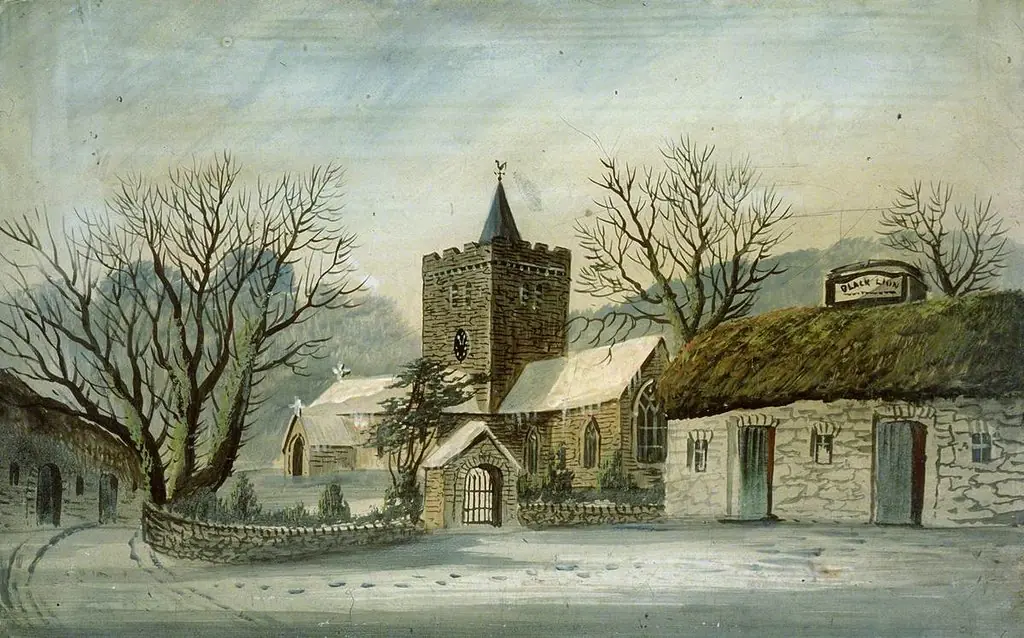
Church and Inn, Llanbadarn Fawr
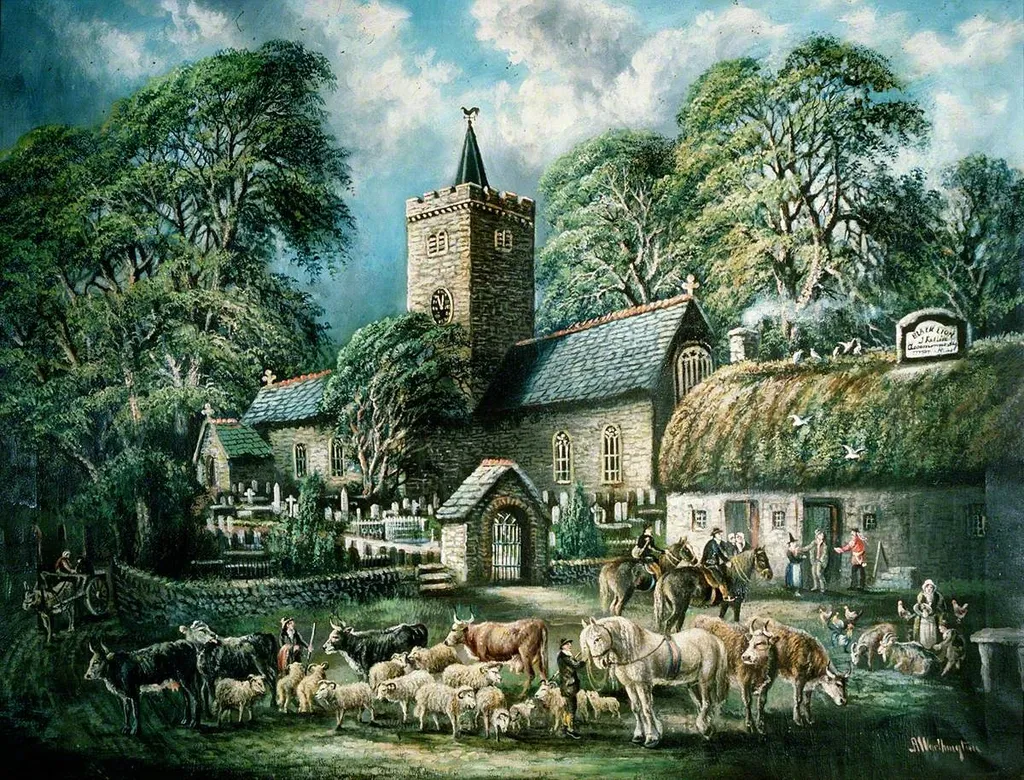
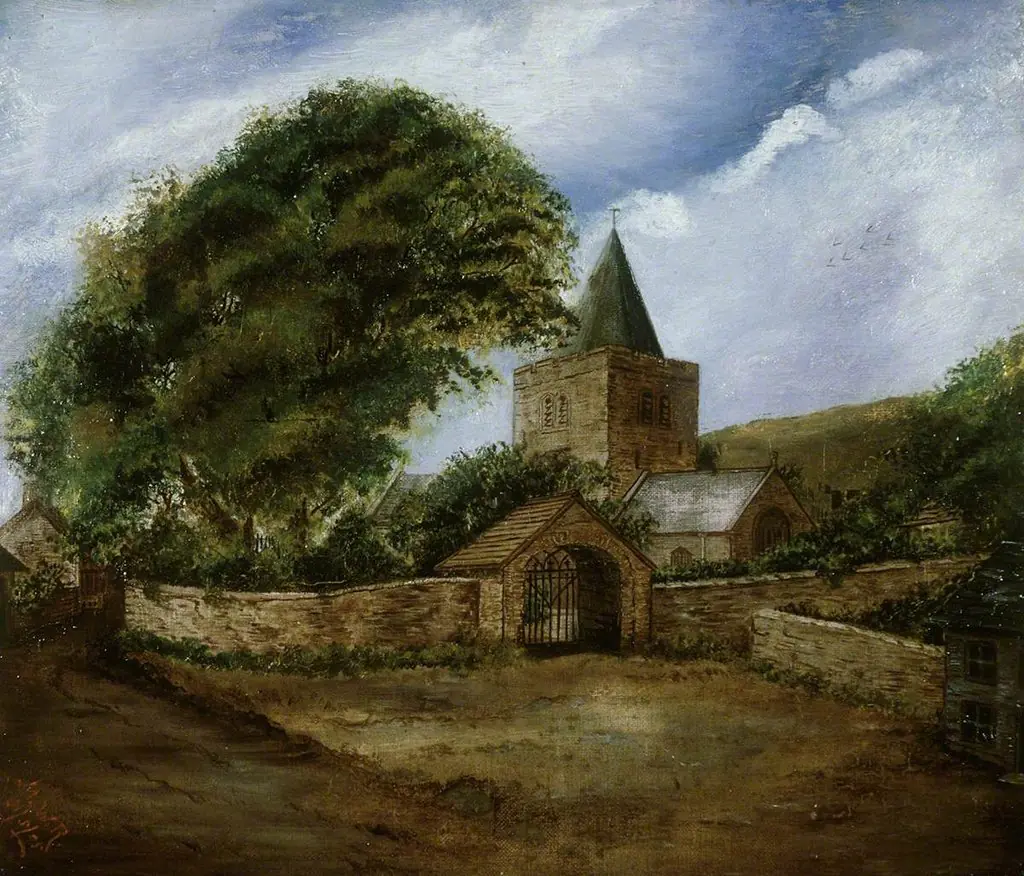
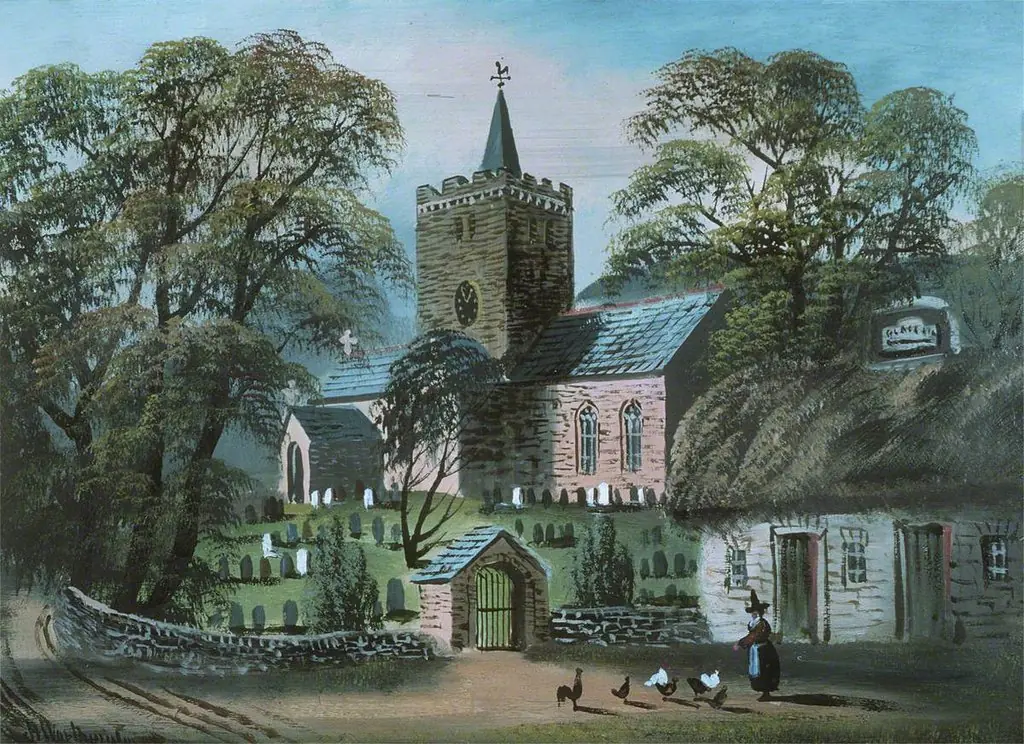
Church and Inn, Llanbadarn Fawr is an oil painting by the Impressionist artist Alfred Worthington. It dates from 1895 and is held in the collection of the National Library of Wales.
About this work
Overview
Measuring 100 by 125 centimetres, the work depicts St Padarn's Church and an adjacent inn in the village of Llanbadarn Fawr, near Aberystwyth in Wales.
Church and Inn, Llanbadarn Fawr is an oil on canvas landscape painting by Alfred Worthington, dated 1889. Measuring 100 by 125 centimetres, the work depicts St Padarn's Church and an adjacent inn in the village of Llanbadarn Fawr, near Aberystwyth in Wales. The painting is held in the National Library of Wales, having been acquired in 1954 as a gift from Mrs W. R. Hankey, and is catalogued under accession number PB02641. It forms part of the library's Framed Works of Art collection and is designated as public domain. The painting exemplifies Worthington's practice of documenting Welsh locales for both local and tourist markets, representing a characteristic example of late nineteenth-century British regional landscape painting.
Subject & Meaning
The painting's central subject is St Padarn's Church, a stone building with a square clock tower and pointed spire, identified as the main subject of the composition. To the right stands a thatched-roof inn, displaying a sign, which source material identifies as the Black Lion, a popular scene that Worthington painted repeatedly. The foreground presents a herd of cattle, sheep, goats, and a white horse gathered near human figures, including riders on horseback and people standing near the inn entrance. A small graveyard with crosses appears beside the church. The depiction combines ecclesiastical architecture, rural commerce, and agricultural life, presenting an integrated view of village society. The inclusion of productive animals and human activity around both sacred and secular buildings suggests a narrative of everyday rural continuity, where church and inn serve as complementary social anchors of the community.
Technique & Style
The work is executed in oil on canvas with a detailed and precise handling. Light falls from the upper left, casting shadows to the right, creating a structured sense of illumination across the scene. The palette consists of deep greens, browns, and grays with touches of red and white on figures. Architectural elements receive a smooth finish, while foliage is rendered with more textured brushstrokes, demonstrating Worthington's differentiated approach to varied surfaces. The composition is organised around the vertical accent of the church tower, balanced by the horizontal spread of the inn and the gathering of animals and figures in the foreground. The treatment of the sky, with billowing clouds against patches of blue, contributes to the atmospheric quality typical of Victorian landscape conventions. A signature appears in the lower right corner.
History & Provenance
The painting is dated 1889, placing it within Worthington's mature period after he had established himself in Aberystwyth. The work was gifted to the National Library of Wales by Mrs W. R. Hankey in 1954, entering the collection under accession number PB02641. It is now held in the National Library of Wales Framed Works of Art collection. The painting has been digitised and made available through public domain channels, with a digital copy hosted on Wikimedia Commons since 2019. No extensive exhibition history is recorded in the available sources, though its presence in a national collection ensures continued public access.
Context
Alfred Worthington was born in Kent and moved to Aberystwyth in 1870, where he initially worked as a photographer before gaining recognition as a painter. He produced many hundreds of oil paintings of Aberystwyth and the surrounding area, with marine paintings forming a particular focus, though the Llanbadarn Fawr scene became one of his most popular subjects. His output was directed toward both the local and tourist markets, reflecting the commercial dimensions of Victorian landscape production. A collection of his works is held at Ceredigion Museum, Aberystwyth. The painting's depiction of St Padarn's Church participates in a broader nineteenth-century tradition of documenting Welsh ecclesiastical architecture and rural scenery, contributing to visual constructions of Welsh identity and heritage during a period of increasing tourism and cultural documentation.
Legacy
The painting's enduring significance lies partly in Worthington's repeated treatment of this particular scene, which source material identifies as one of his most popular subjects. This repetition indicates the motif's commercial viability and its resonance with contemporary viewers. The work's preservation in the National Library of Wales ensures its continued availability as a document of late nineteenth-century Welsh landscape and built environment. Its public domain status, confirmed through Art UK, facilitates broad dissemination and scholarly access. The painting contributes to understanding Worthington's practice as a prolific regional artist whose work bridged local documentation and tourist souvenir, occupying a significant if understudied position within Victorian Welsh art production.
Artist & collection
Artist
English painter in the 1880s–90s, Worthington captured Welsh coastal life and village scenes in oil.