Artwork
Swedish landscape
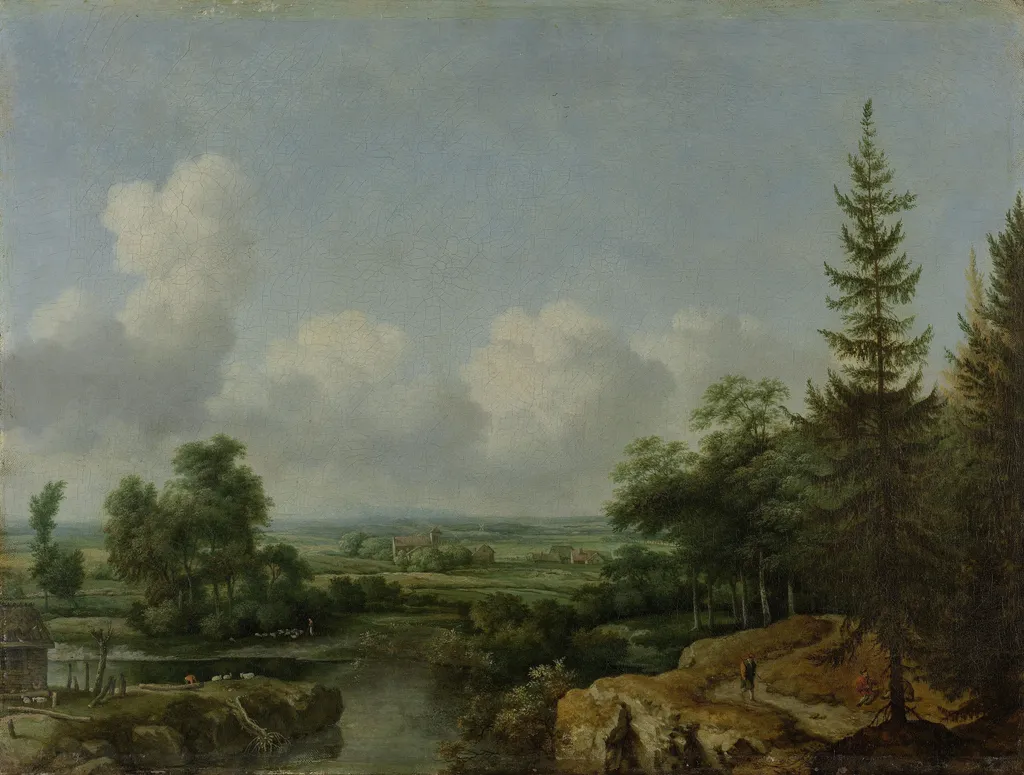
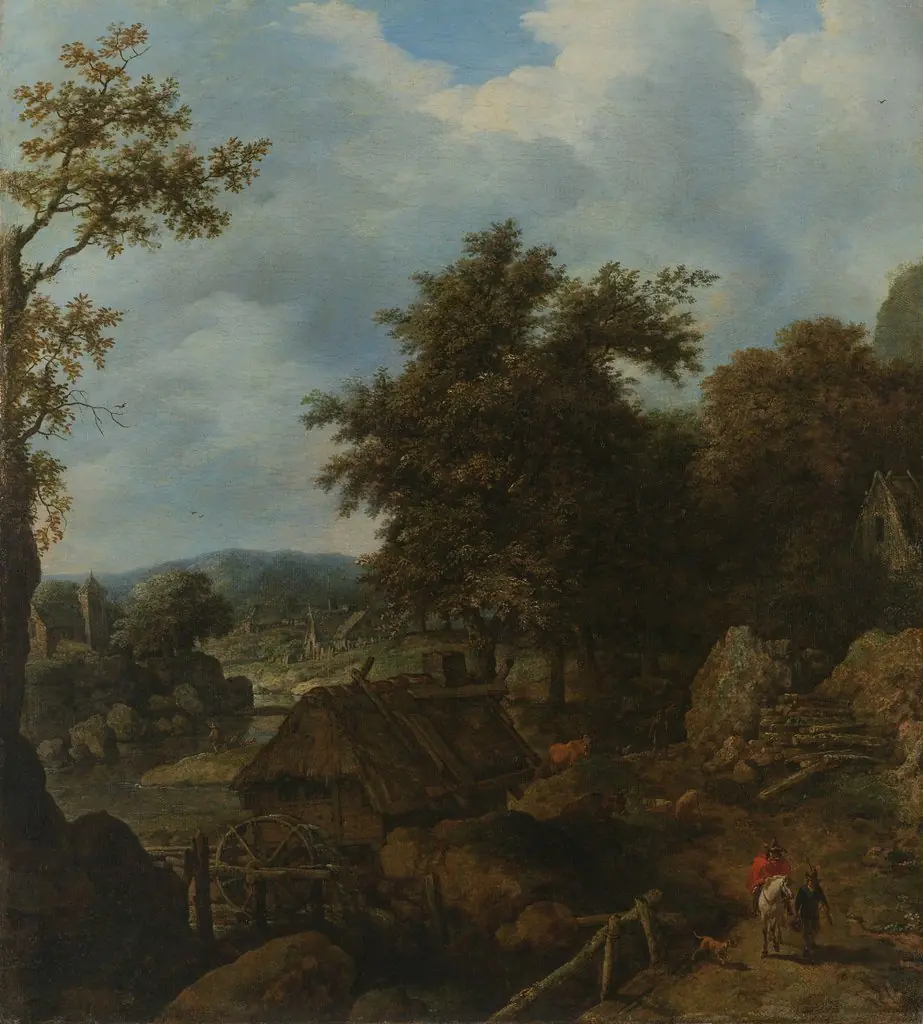
Swedish landscape is an oil painting by the Dutch Golden Age artist Allart van Everdingen. It dates from 1662 and is held in the collection of the Rijksmuseum.
About this work
Subject & Meaning
The work represents a Swedish landscape, a subject chosen because the artist, Allaert van Everdingen, traveled through Norway and Sweden between 1644 and 1645.
The painting depicts a vast, hilly landscape featuring a farm with sheep on the left foreground alongside a small river. Across the water, a goose girl tends to her flock, while the right side shows the edge of a forest with a walker on a path near a tall, narrow pine tree. In the distance, a village comprising a church and several farmhouses is visible.
The work represents a Swedish landscape, a subject chosen because the artist, Allaert van Everdingen, traveled through Norway and Sweden between 1644 and 1645. The iconography likely reflects a commission by the Trip brothers, who held business interests in Sweden, connecting the scenic depiction to their commercial activities in the region.
Technique & Style
Allaert van Everdingen painted this Swedish landscape in 1662 using oil paint on canvas. The work measures 48 cm in height and 62.5 cm in width. It depicts a broad, hilly scenery with a farmhouse and sheep in the foreground, a woman with geese by a river, a wooded edge with a walker, and a distant village.
The painting is signed 'EVERDINGEN' in the lower right and is housed in the Rijksmuseum. It was first recorded in the museum in 1816, likely displayed as a supraporte in the Trip family’s house built between 1660 and 1662.
The technique employs layered oil paint to render atmospheric depth and textured terrain, characteristic of Dutch Golden Age landscape approaches adapted to Nordic subjects. The composition balances naturalistic detail with compositional rhythm, using diagonal pathways and layered spatial recession. The surface retains its original canvas support without visible damage, indicating stable handling through centuries.
History & Provenance
The work is signed ‘EVERDINGEN.’ and dated to around the mid-1660s, following Allaert van Everdingen’s documented travels in Norway and Sweden during 1644–45. Its subject, a broad, hilly Swedish vista with a farm, river, goose-herd, forest edge, and distant village, aligns with motifs observed during those travels.
The painting’s early provenance is unclear. It is first recorded in 1816 at the Rijksmuseum, then housed in Amsterdam’s Trippenhuis, built 1660–62 for the Trip brothers, Lodewijk and Hendrick, who had commercial interests in Sweden. Its placement as a supraporte in their residence suggests a possible commission or early ownership by the Trip family.
The painting Swedish landscape by Allaert van Everdingen is held in the collection of the Rijksmuseum in Amsterdam. It was first recorded at the museum in 1816, when the institution was still located in the Trippenhuis, a building originally commissioned by the Trip brothers between 1660 and 1662. The work likely served as a supraporte within that residence during the 17th century.
While the provenance prior to 1816 remains unclear, the museum has maintained custody of the piece since its initial documentation. No specific inventory or accession number is provided in the available sources, nor is there a detailed exhibition history recorded beyond its continuous presence in the museum's holdings.
Context
Allaert van Everdingen’s Swedish Landscape (1662) is historically significant for its depiction of Scandinavian scenery, a subject directly informed by the artist's travels to Norway and Sweden between 1644 and 1645. The work is widely attributed to Everdingen due to its specific subject matter and the signature located on the lower right. Art-historical scholarship suggests the painting was likely commissioned by the brothers Lodewijk and Hendrick Trip, who held commercial interests in Sweden and owned the Trippenhuis, where the canvas may have originally functioned as a supraporte.
Although the precise provenance prior to 1816 remains unclear, the painting's presence in the Trippenhuis collection links it to a prominent Dutch family with direct ties to the region depicted. Currently held by the Rijksmuseum in Amsterdam, the work exemplifies Everdingen's unique contribution to Dutch landscape painting through his rare focus on northern European terrain.
Overview
Swedish landscape is a 1662 oil painting by Allaert van Everdingen, a Dutch Golden Age artist known for his landscapes and prints.
Own this work as a print
Artist & collection
Artist
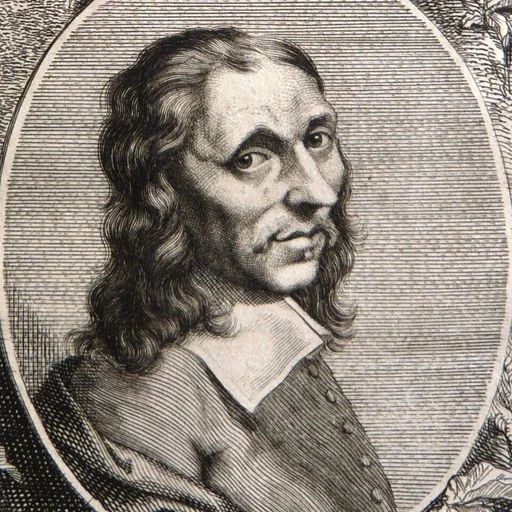
Allaert van Everdingen (Dutch pronunciation:; bapt. 18 June 1621 – 8 November 1675 (buried)), was a Dutch Golden Age painter and printmaker in etching and mezzotint.

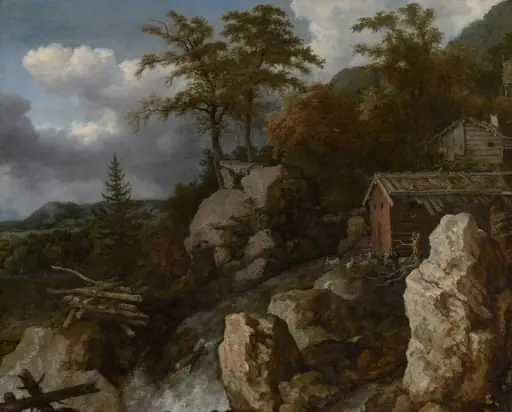 Waterfall with Log Cabins
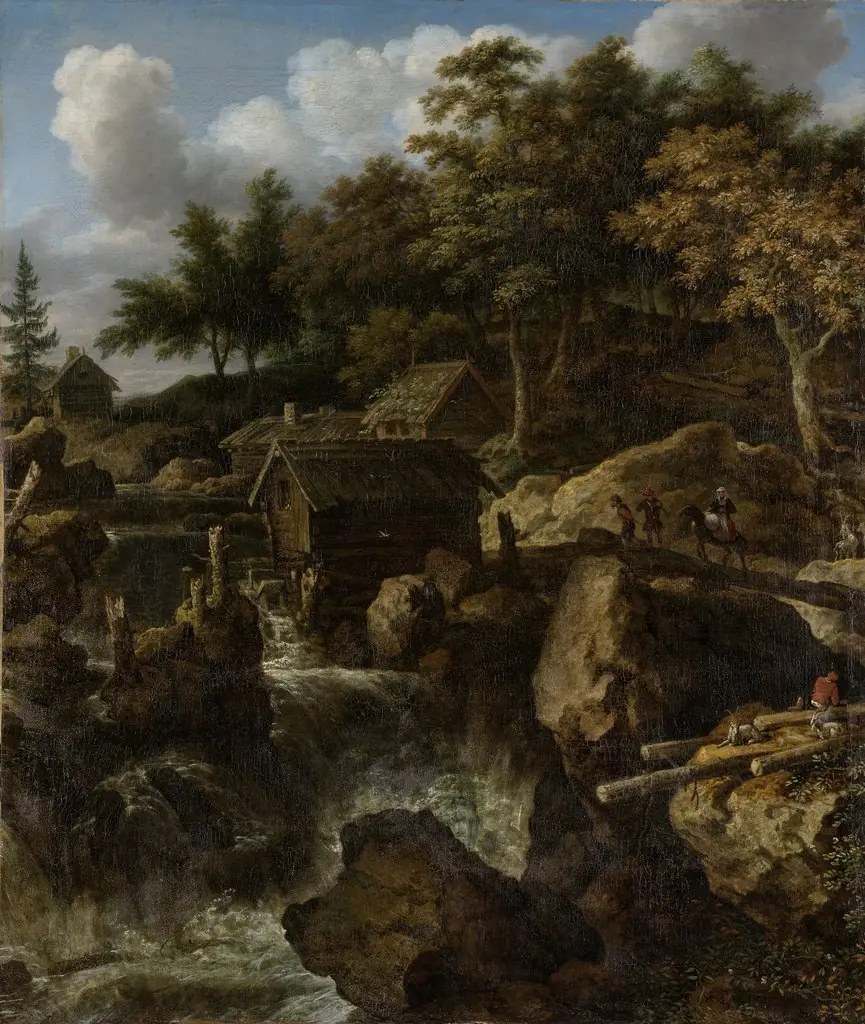 Swedish landscape with a waterfall
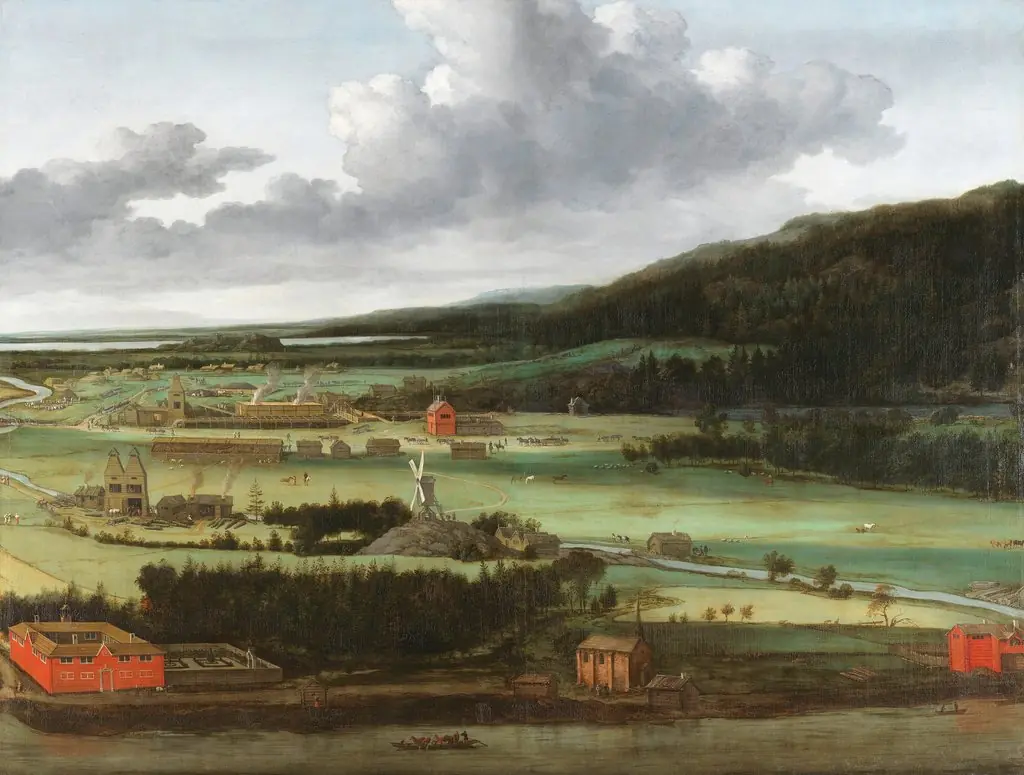 Hendrik Trip’s Cannon Foundry in Julitabruk, Sweden
- Swedish landscape with a watermill
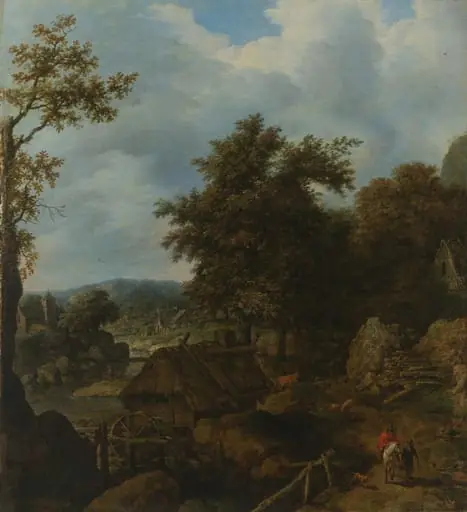 Swedish Landscape with a Water Mill
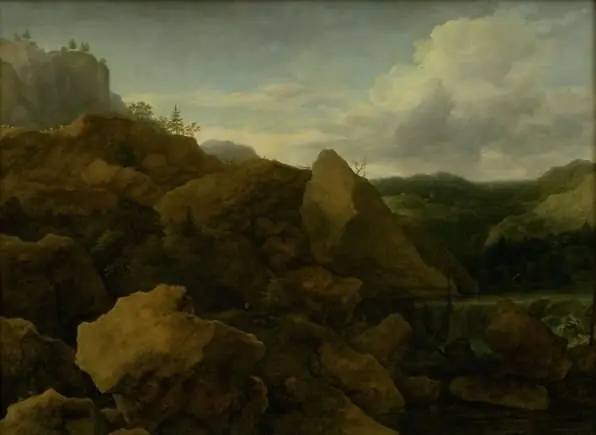 Mountain Landscape with Waterfall
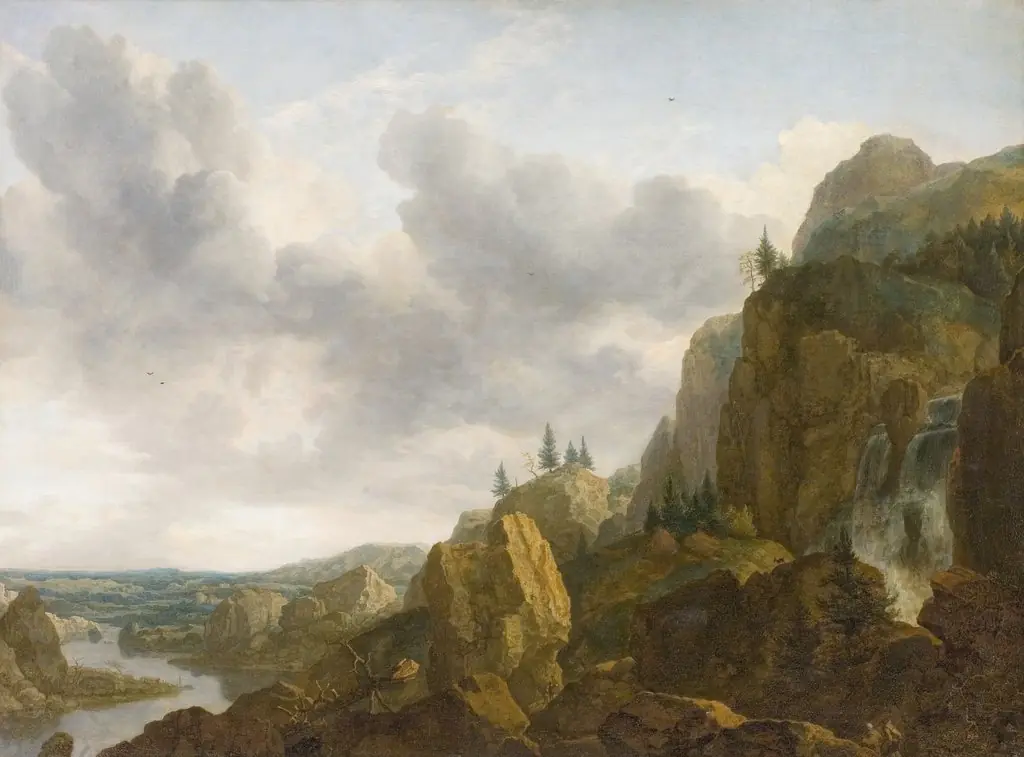 Northern Mountain Landscape with Waterfall
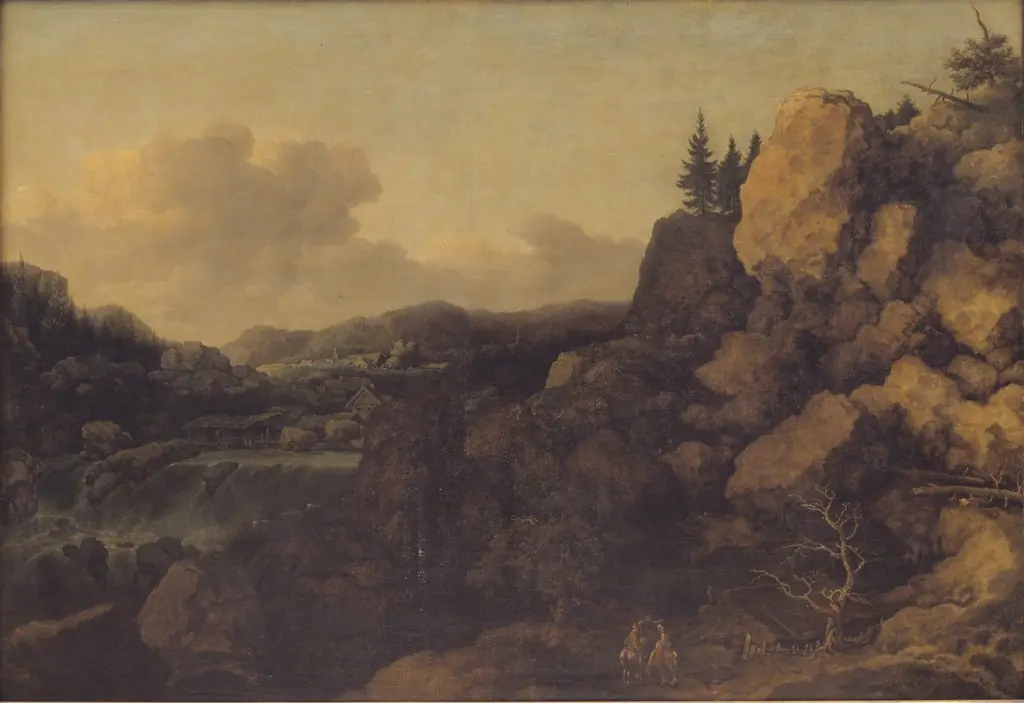 Mountain Landscape with a Couple of Horsemen in the Foreground