Artwork
The Pass of the Hermus
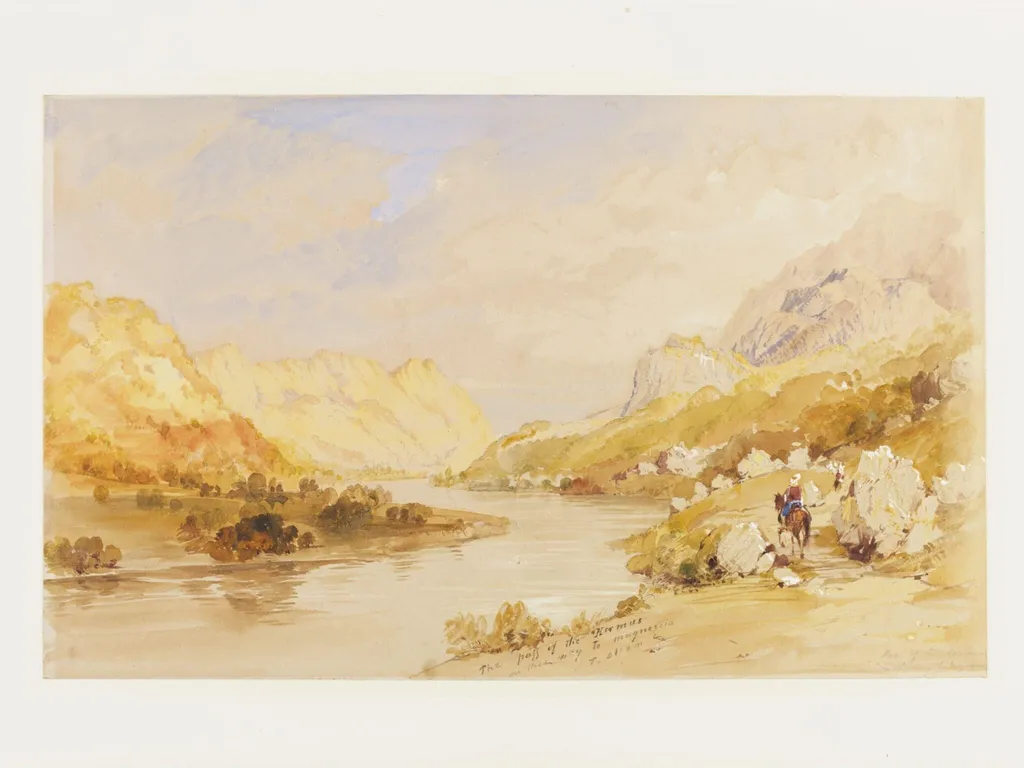
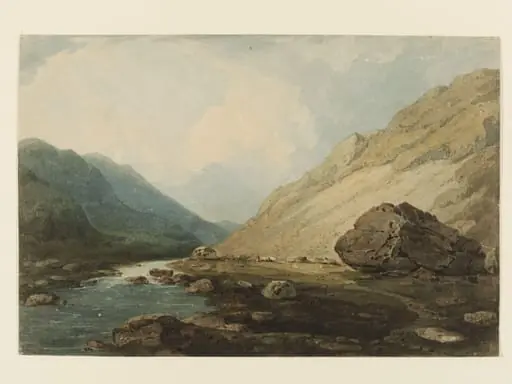
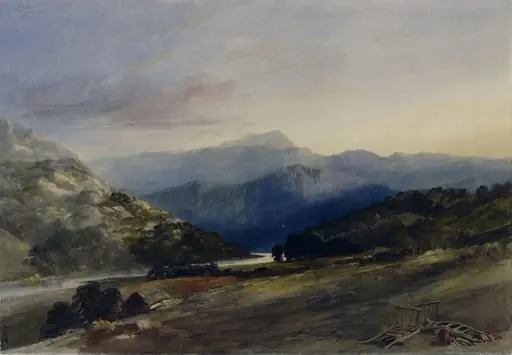
The Pass of the Hermus is a watercolor work on paper by the British Romanticist artist Thomas Allom. It dates from 1838 and is held in the collection of the Victoria and Albert Museum.
About this work
Overview
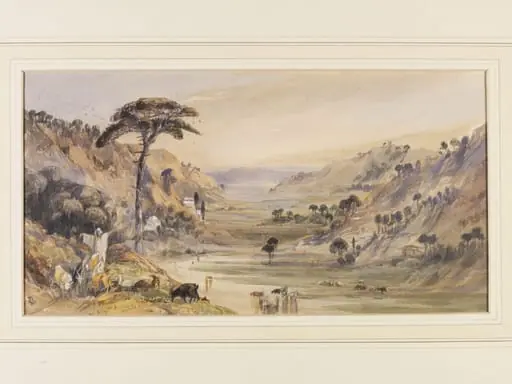
The Pass of the Hermus is a watercolour painting created by Thomas Allom in 1838. It depicts a serene landscape with a winding river and golden hills.
Subject & Meaning
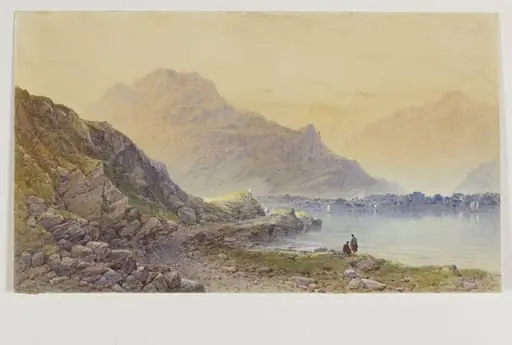
The painting shows a river cutting through hills under a soft sky, with two riders on horseback on a rocky bank. The title suggests it represents a real location, the Pass of the Hermus, although the scene is rendered in a loose, interpretive style.
Technique & Style
The watercolour is executed in a sketchy, spontaneous manner, with quick brushstrokes and blurred edges, suggesting it may have been painted outdoors. Warm colours dominate, including yellows, oranges, and pale blues.
History & Provenance
The painting entered the collection in October 1980 through a direct exchange arranged by Rodney Searight, having previously been sold at Albany Gallery for £450.
Own this work as a print
Artist & collection

Artist
Thomas Allom (13 March 1804 – 21 October 1872) was an English architect, artist, and topographical illustrator.