Artwork
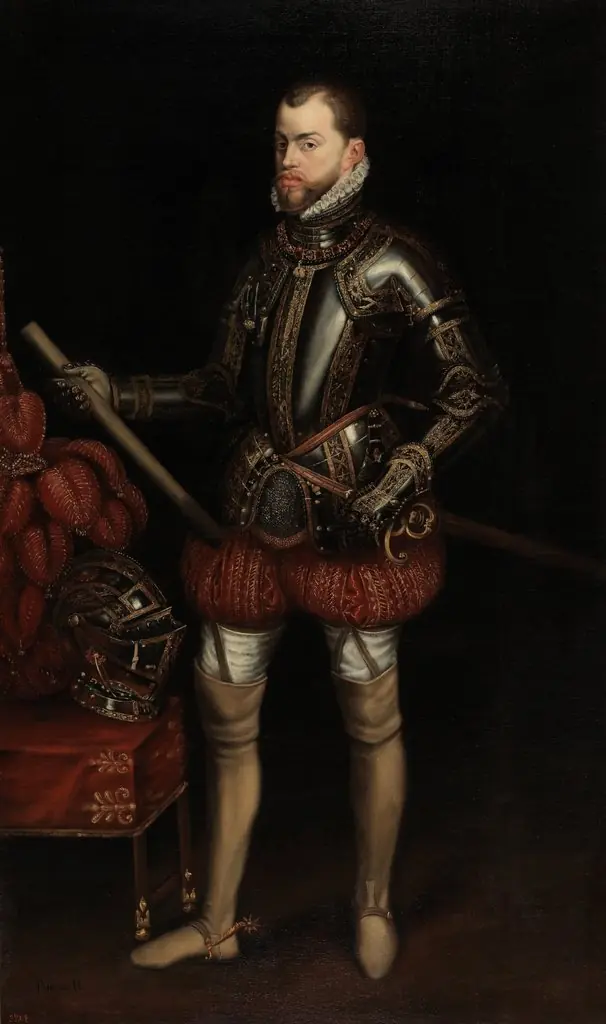
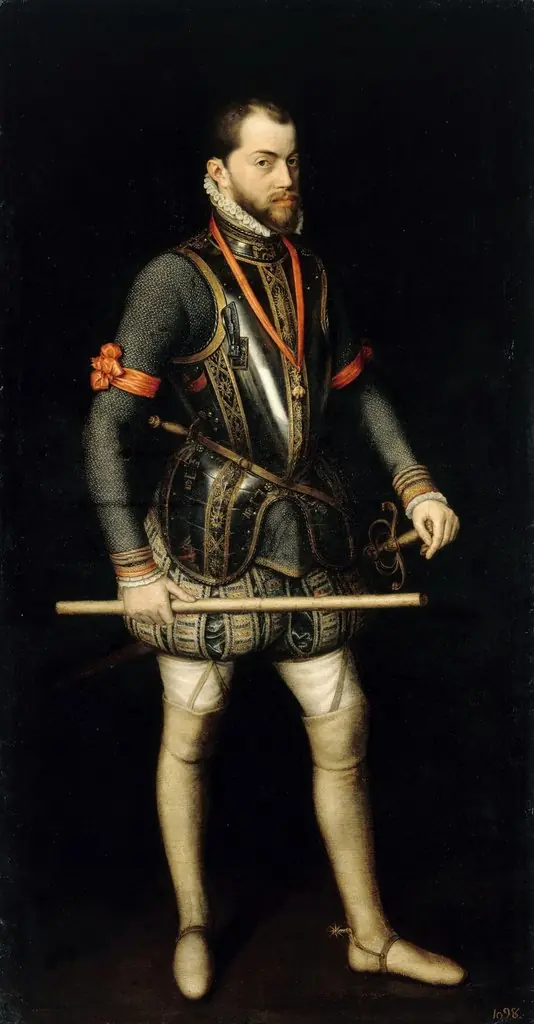
Portrait of Philip II of Habsburg (1527-1598)
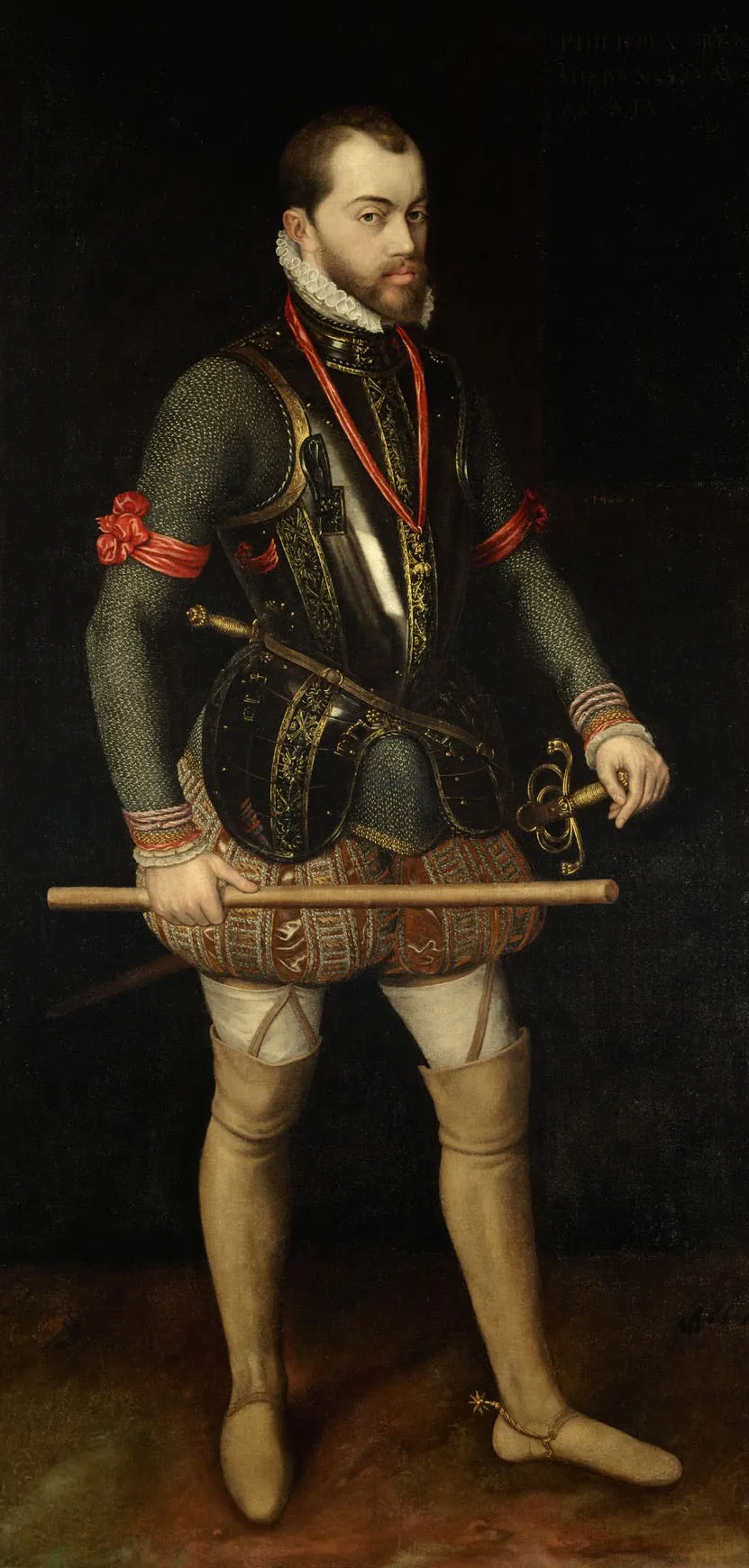
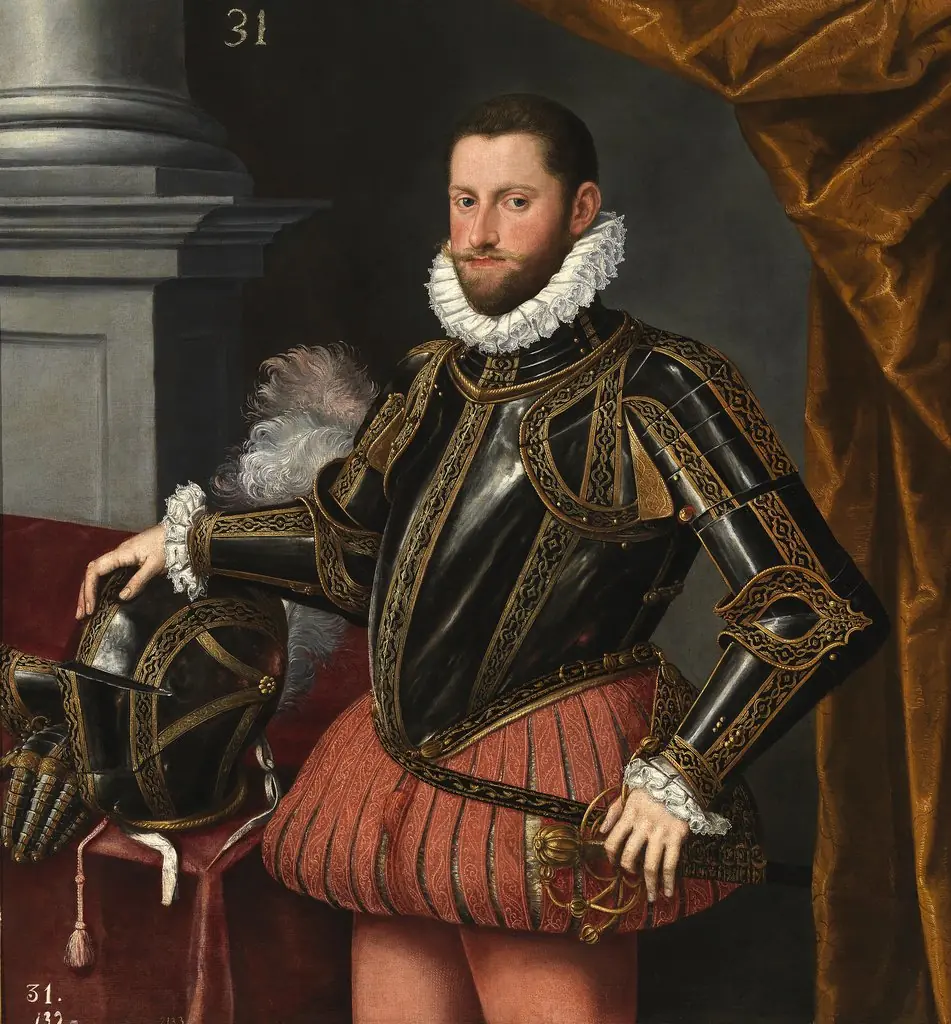
Portrait of Philip II of Habsburg (1527-1598) is an oil painting by the Early Baroque Italian artist Alonso Sánchez Coello. It dates from 1566 and is held in the collection of the Kunsthistorisches Museum.
About this work
Subject & Meaning
According to the catalogue record, the work is derived from an earlier composition by Antonis Mor, identified as "Philip II at the Battle of St.
The painting is a full-length portrait of Philip II of Habsburg, King of Spain, executed by Alonso Sánchez Coello in 1566. According to the catalogue record, the work is derived from an earlier composition by Antonis Mor, identified as "Philip II at the Battle of St. Quentin," indicating that Coello's portrait reworks an established royal image rather than inventing a new one.
As a state portrait, the canvas presents Philip II as the Habsburg monarch, a role reinforced by its scale and the formal conventions of court portraiture of the period. The work is held at the Kunsthistorisches Museum and located at Schloss Ambras Innsbruck, a site long associated with the Habsburg dynastic memory and the display of imperial portraiture.
By basing his likeness on Mor's earlier image, Coello aligned his portrayal with an authoritative visual tradition of the king, lending continuity to Philip II's royal image across successive Habsburg collections.
Technique & Style
Created in 1566, this portrait is executed in oil paint on a canvas support. The work measures 200 cm in height and 104 cm in width. It was produced by Alonso Sánchez Coello as a version based on an earlier composition by Antonis Mor, specifically the depiction of Philip II at the Battle of St. Quentin.
The painting is classified within the portrait genre, reflecting the formal style associated with the Habsburg court during the mid-sixteenth century.
History & Provenance
The portrait of Philip II of Habsburg was created in 1566 by Alonso Sánchez Coello. The work is an oil painting on canvas that depicts the Spanish monarch and is based on the earlier composition Philip II at the Battle of St. Quentin by Antonis Mor. It measures 200 cm in height and 104 cm in width.
The painting is currently held in the collection of the Kunsthistorisches Museum, specifically located at Schloss Ambras in Innsbruck.
The Portrait of Philip II of Habsburg (1566) is housed at the Kunsthistorisches Museum in Vienna, where it is catalogued under inventory number KH 1265. Its provenance includes display in the exhibition "Royal Portraits of the Habsburg Dynasty" at the Kunsthistorisches Museum in 2018, and it was featured in the traveling exhibition "Habsburgs: Power and Portraiture" at the Kunstmuseum Basel in 2021.
Context
The 1566 portrait of Philip II by Alonso Sánchez Coello is recognized as a work created after the designs of Antonis Mor, reflecting the collaborative nature of Habsburg portraiture in the mid-sixteenth century. Executed in oil on canvas, the painting measures 200 cm in height and 104 cm in width, adhering to the formal conventions established by Mor for depicting the Spanish monarch. Currently held in the Kunsthistorisches Museum at Schloss Ambras Innsbruck, the piece serves as a significant example of Coello's role in disseminating the royal image across the empire.
Its attribution to Coello following Mor's composition highlights the artist's position within the broader context of court portraiture, where fidelity to established royal iconography was paramount.
Overview
This 1566 oil painting by Alonso Sánchez Coello is a portrait of Philip II of Habsburg, King of Spain and Portugal. Executed in the early Baroque Italian style, it showcases Coello's unique blend of Flemish and Venetian influences.
Legacy
While the portrait's direct influence is not broadly documented, it remains a significant example of Coello's work and the early Baroque style in Spanish royal portraiture.
Artist & collection
Artist
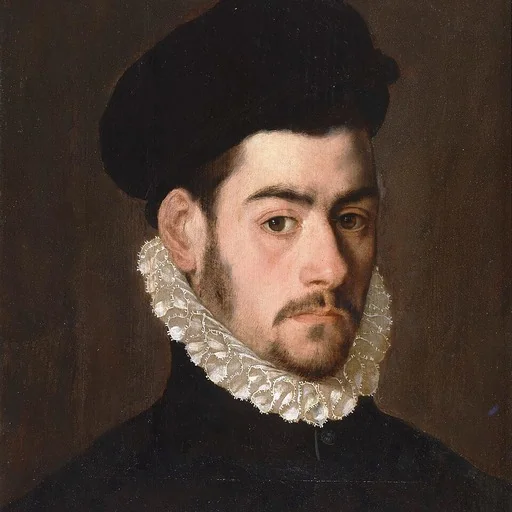
Alonso Sánchez Coello (c. 1531 – 8 August 1588) was an Iberian portrait painter of the Spanish and Portuguese Renaissance. He is mainly known for his portrait paintings executed in a style which combines the objectivity…