Artwork
Philip II in St. Quentin's Armour
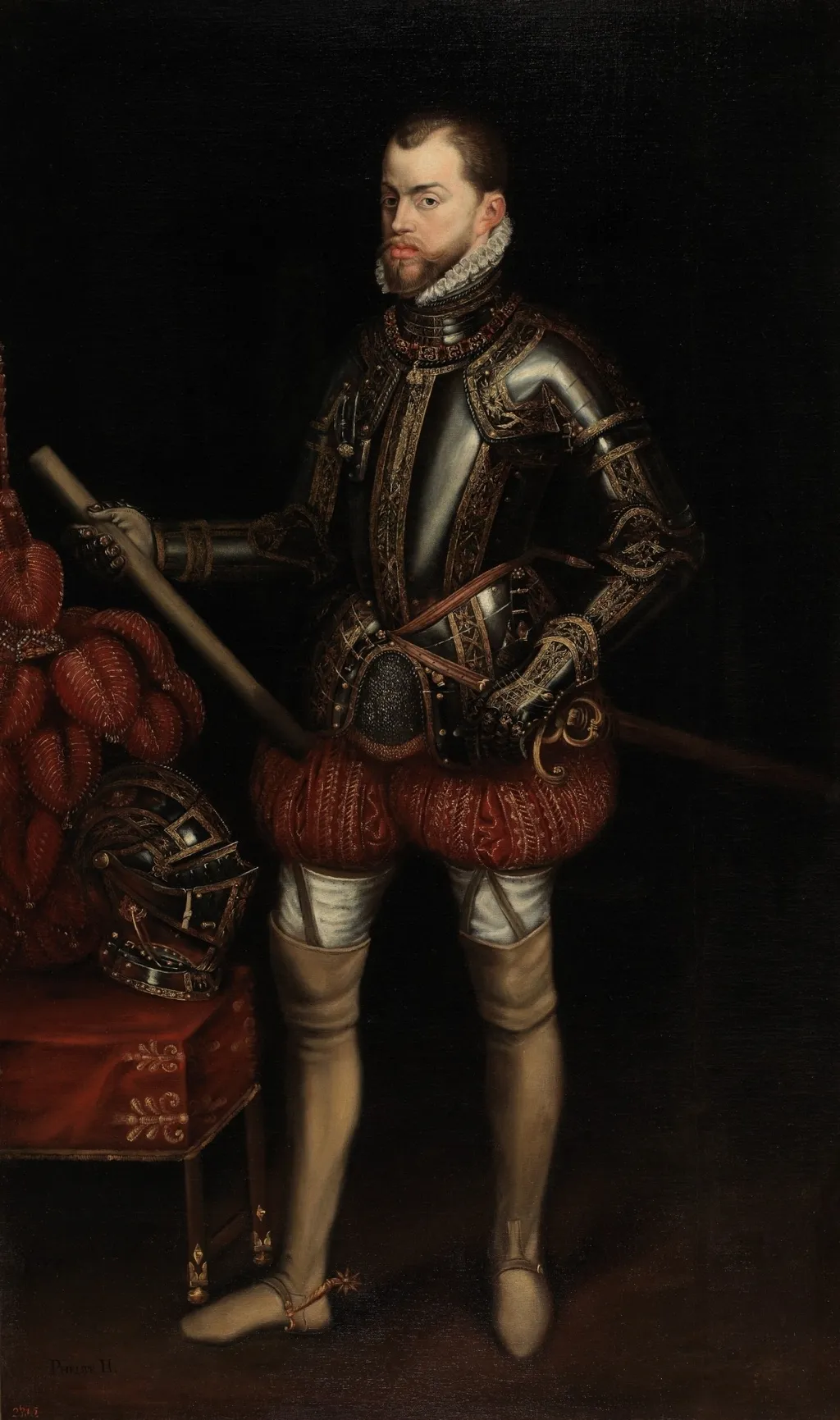
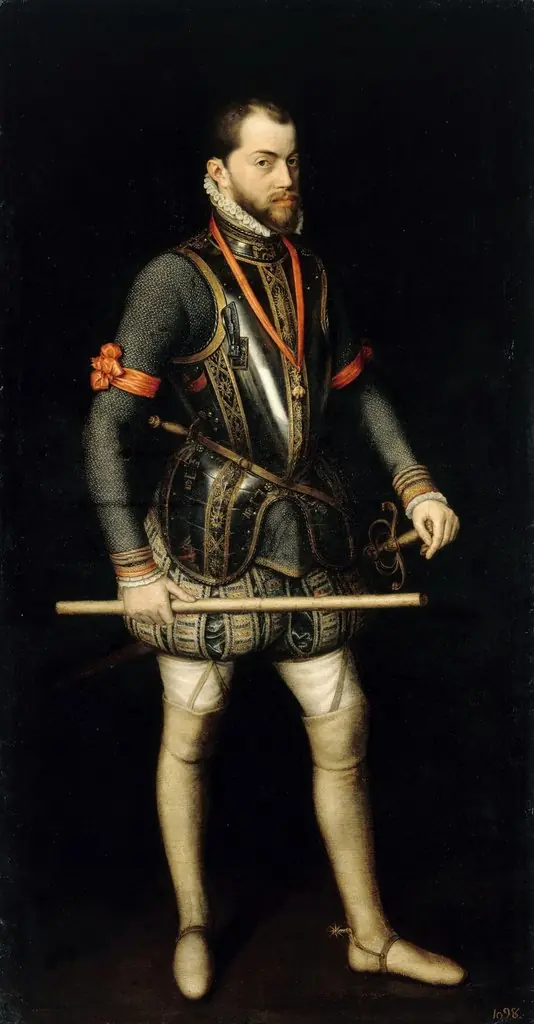
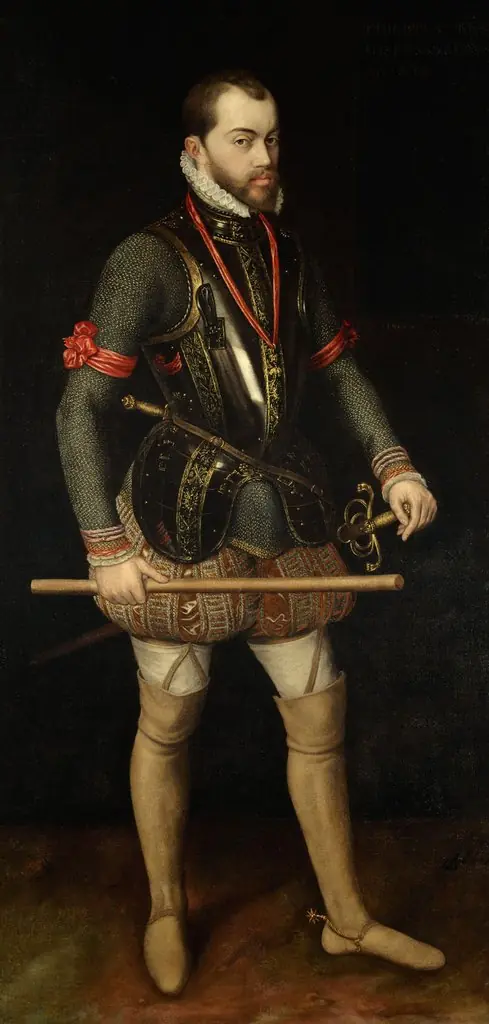
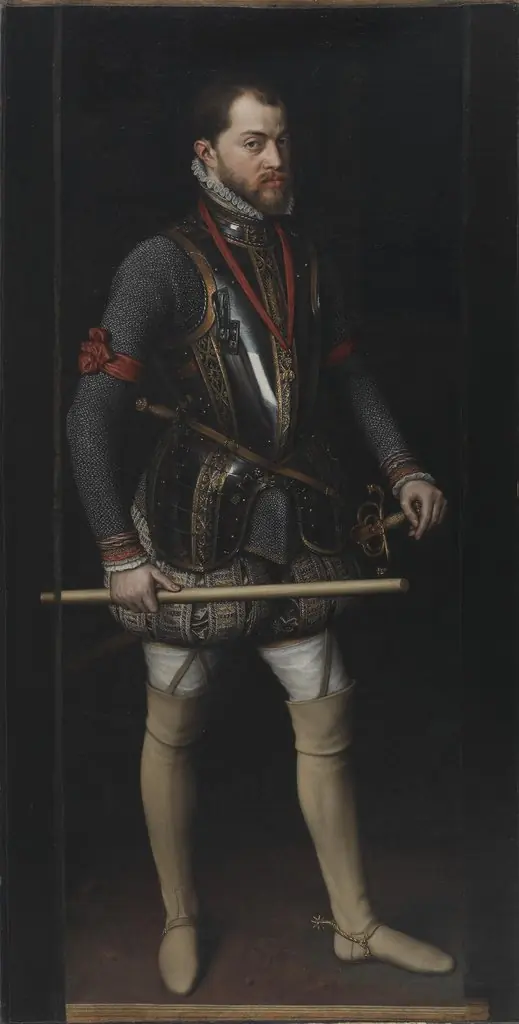
Philip II in St. Quentin's Armour is an oil painting by the Early Baroque Italian artist Unknown. It dates from 1601 and is held in the collection of the Museo del Prado. The work is an oil painting portraying a solitary figure in full armor before a dark backdrop.
About this work
Subject & Meaning
The portrait's focus on a combat helmet reinforces the martial subject matter, anchoring the sitter's identity to a celebrated moment in his reign.
The painting portrays Philip II of Spain, shown wearing the armour associated with the Battle of St. Quentin. By depicting the king in this specific suit of armour, the work commemorates his military role in the engagement, presenting him as a sovereign-leader identified through the very equipment he wore on the battlefield. The portrait's focus on a combat helmet reinforces the martial subject matter, anchoring the sitter's identity to a celebrated moment in his reign.
The image is a posthumous likeness rather than a life study: it was produced in 1601, after Philip II's death, and is based on an earlier composition depicting him at the Battle of St. Quentin. As a derived portrait, its meaning lies less in capturing a living likeness than in preserving and propagating an iconic image of the king as warrior-monarch, sustaining the visual memory of his command at St. Quentin for posterity.
Technique & Style
The work is an oil painting on canvas, measuring 207 cm in height and 123 cm in width. Executed in 1601, it portrays Philip II of Spain in the armament associated with the Battle of St. Quentin, rendered in a style derived from the portraiture of Anthonis Mor.
History & Provenance
The painting is dated to 1601 and is executed in oil on canvas, depicting Philip II of Spain in the armour associated with the Battle of St. Quentin. It was produced as a work after Anthonis Mor, deriving from an earlier portrait of the king at that engagement.
The work is held in the collection of the Museo del Prado, though it is currently on deposit at the Directorate-General of the Police. No further details of commission, intermediate ownership, or acquisition history are documented in the available sources.
The painting Philip II in St. Quentin's Armour is held in the collection of the Museo del Prado in Madrid. According to available records, the work is currently located at the Directorate-General of the Police. Created in 1601 as an oil on canvas portrait, the piece is attributed to an anonymous artist working after the style of Anthonis Mor.
The work depicts Philip II of Spain wearing a combat helmet, referencing his presence at the Battle of St. Quentin. While the inventory number is not specified in the provided sources, the artwork's institutional home is confirmed as the Prado, with its specific custodial location noted as the police directorate.
Overview
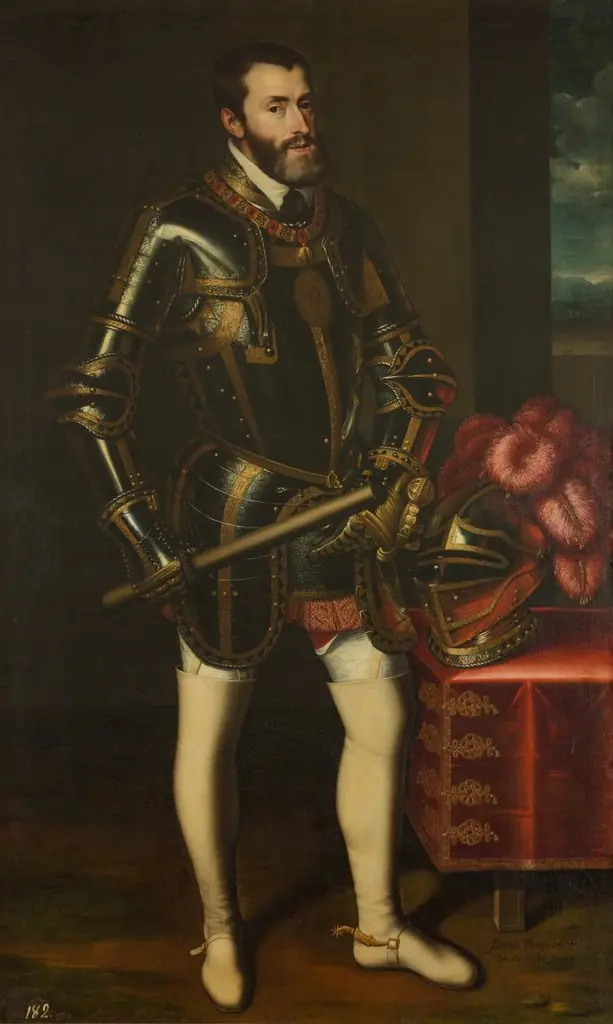
The work is an oil painting portraying a solitary figure in full armor before a dark backdrop. The subject stands upright, sword in his right hand, the left hand resting on the hilt, while a richly draped red and gold cloth hangs over a nearby chair, supporting a helmet. The armor is heavily ornamented with gold detailing and a high, protective collar, and the figure’s gaze is directed straight ahead, conveying a solemn presence.
Context
Produced in the era when European monarchs used portraiture to project political legitimacy, the work aligns with contemporary Spanish court art that combined Renaissance realism with the ceremonial grandeur of Habsburg rule. The emphasis on armor reflects the ongoing military conflicts of the 16th century, particularly the defense of Catholic interests across Europe.
Legacy
As a visual record of Philip II’s self‑presentation, the painting contributes to the corpus of royal portraiture that informs modern understandings of Habsburg power dynamics. Its stylistic choices have influenced subsequent depictions of sovereigns, reinforcing the convention of armor-clad monarchs as embodiments of state authority.
Artist & collection