Artwork
The Dairymaid of Boulogne (Third Plate)
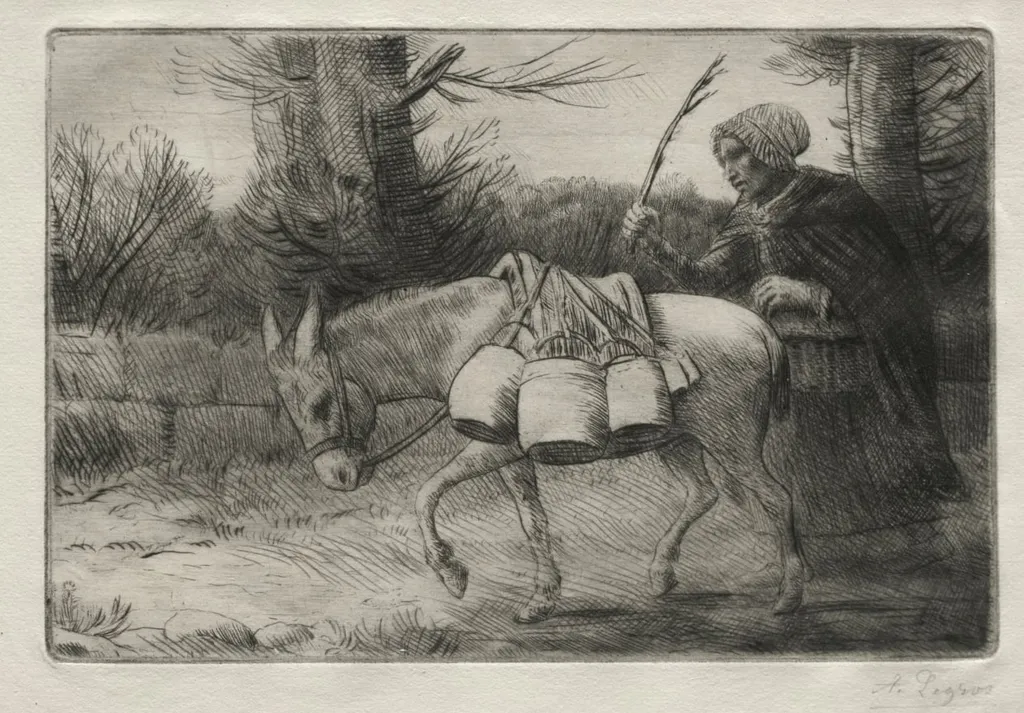
The Dairymaid of Boulogne (Third Plate) is a print by the Impressionist artist Alphonse Legros. It dates from 1884 and is held in the collection of the Cleveland Museum of Art.
- Accession no.
- 1920.601
- Credit line
- Gift of Ralph King
About this work
Overview
As the third plate in a series, it demonstrates the artist's technical refinement in printmaking, using line and cross-hatching to convey texture and weight.
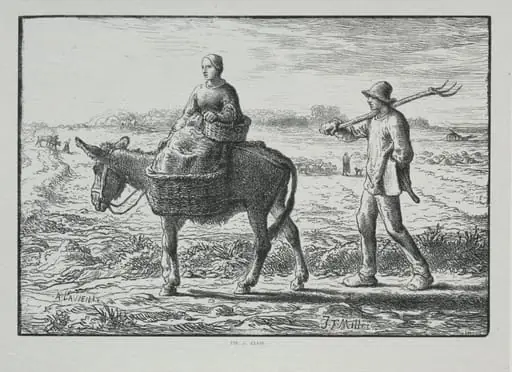
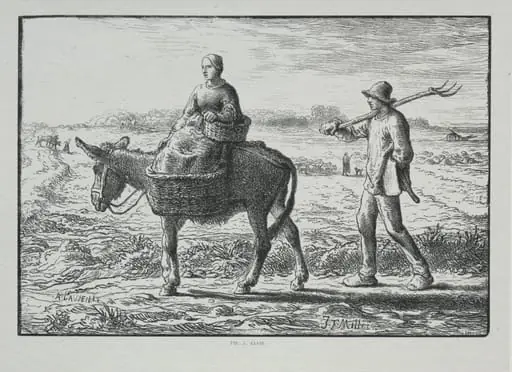
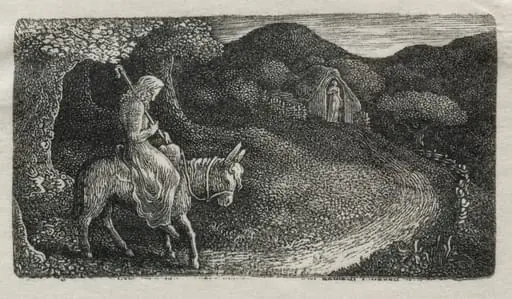
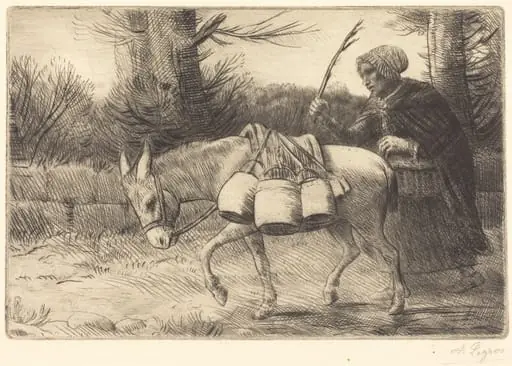
The Dairymaid of Boulogne (Third Plate) is an etching by the French artist Alphonse Legros, created in 1884. The work depicts a rural laborer, likely a milkmaid, standing in a sparse, wooded landscape. She leans heavily on a staff, wearing a hooded cloak that obscures her features, while a donkey laden with heavy sacks rests beside her.
The composition emphasizes the physical toll of agricultural labor through the figures' postures and the tight harness of the animal. Legros renders the environment with bare trees and uneven, muddy ground, utilizing the etching medium to create a range of tonal values that evoke a somber, atmospheric mood. This piece belongs to Legros's mature period, during which he frequently focused on the dignity and hardship of peasant life, a theme central to the Realist movement.
As the third plate in a series, it demonstrates the artist's technical refinement in printmaking, using line and cross-hatching to convey texture and weight. The work reflects Legros's commitment to depicting the unvarnished reality of 19th-century French rural existence, aligning him with contemporaries who sought to elevate the lives of the working class in art.
Subject & Meaning
The image depicts a woman, cloaked and hooded, leaning against a staff while a donkey stands beneath a heavy bundle of sacks. The barren trees and soggy ground suggest a damp, late‑season setting. The load, likely containing milk or other farm produce, underscores the physical demands of rural work and conveys a moment of stillness amid toil.
Technique & Style
Legros employed a fine line engraving technique, allowing subtle gradations of tone that render the mud‑slicked earth and the texture of the animal’s harness. The composition’s restrained palette and precise draftsmanship align with the realist tendency of the late nineteenth century to depict ordinary subjects without romantic embellishment.
History & Provenance
Created in 1884, the print entered the Cleveland Museum of Art’s holdings through acquisition in the early twentieth century, though the exact path of ownership prior to that remains undocumented. Its presence in the museum’s print and drawing department reflects the institution’s commitment to representing European realist printmaking of the period.
Artist & collection

Artist
Alphonse Legros (French pronunciation:; 8 May 1837 – 8 December 1911) was a French, later British, painter, etcher, sculptor, and medallist.